Chapter Restructuring and Summaries
- Version 1: The Silent Prison of the Male Ego: Waking Up from the Patriarchal Illusion
- Chapter 9-22: The Unseen Chains of Patriarchy in Collective Consciousness
- Chapter 9-23: Toxic Masculinity and the Awakening of the American Soul
- Chapter 9-23: Beyond the Headlines: The Silent Commodification of Women
- Chapter 9-24: The Shadows of History, Religion, and Defender Dan
- Chapter 9-25: The Shadow of the Patriarch
- Chapter 9-26: Summary: The Roots and Reach of Toxic Masculinity: How It Shapes Capitalism, Religion, and Family Values

Version 1: The Silent Prison of the Male Ego: Waking Up from the Patriarchal Illusion
What keeps so many men—and, by extension, so many societies—bound to a system that diminishes women while also deforming the inner lives of men themselves? Patriarchy is often discussed as if it lives primarily in legislatures, corporations, or public institutions. It certainly does operate there. But its deepest roots are far more intimate. It is built, reinforced, and normalized in private relationships, in family structures, in inherited religious teachings, and in economic systems that reward domination, possession, and hierarchy.
To understand patriarchy honestly, we have to see it not only as a political arrangement, but as a spiritual and psychological condition. It is sustained by a wounded model of masculinity that mistakes control for strength, possession for love, and superiority for order. It survives because it is repeatedly sanctified by institutions and quietly reproduced in everyday behavior. If genuine liberation is possible—socially, emotionally, spiritually—then this framework must be dismantled from the inside out.
That work begins with self-examination.
The Psychological Architecture of Patriarchy
At the center of patriarchy is not true confidence, but insecurity. The male ego, when shaped by patriarchal values, often learns to defend itself through domination. It fears vulnerability, resists equality, and interprets female autonomy as a threat. In that framework, a woman’s independence can feel like an assault on male identity, because the identity itself has been built on entitlement and control.
To dismantle a structure, we must first examine the bricks from which it is made. When I look back on my own youth and early marriage, I am forced to confront those bricks within myself. I was deeply possessive in intimate relationships. If a female partner showed interest in another man, I felt not sadness or insecurity alone, but a consuming jealousy charged with fantasies of punishment and control. That mindset was not an expression of strength. It was a spiritual distortion—a desperate attempt to convert another human being into property so that I would not have to face my own fear, inadequacy, and fragility.
Though I did not speak these impulses aloud, they still shaped the emotional atmosphere of those relationships. Domination does not require constant speech to make itself known. It can exist in tone, silence, energy, expectation, and fear. A partner often senses when love has been contaminated by ownership. She may become more cautious, less spontaneous, less free. In this way, patriarchy does not only govern institutions; it invades the emotional field between two people.
Men shaped by patriarchal conditioning may claim to value love, partnership, and family. Yet too often they have been trained to approach these through possession. The partner is no longer encountered as a sovereign being, but as a stabilizing object within the man’s identity. Her loyalty becomes proof of his worth. Her obedience becomes evidence of his power. Her autonomy becomes intolerable.
This is why patriarchy is not merely oppressive to women; it is spiritually degrading to men. It traps them in a perpetual state of emotional immaturity. Rather than becoming whole, they become guarded. Rather than learning intimacy, they learn control. Rather than discovering mutuality, they rehearse dominance.
Toxic Masculinity and the Fear of Vulnerability
What is often called toxic masculinity is not simply aggression or machismo in the superficial sense. It is a broader constellation of beliefs that severs men from their own humanity and then teaches them to compensate through authority, emotional repression, and conquest. It conditions men to fear tenderness, dependency, ambiguity, and humility. It trains them to perform invulnerability while remaining internally fragile.
This mindset operates through several deeply damaging assumptions:
- Suppression of Vulnerability: Genuine human connection is treated as weakness. Men are taught to hide fear, grief, and need, then to replace those feelings with distance, anger, or control.
- Monetization of Connection: Relationships become transactional rather than relational. Value is measured in usefulness, loyalty, appearance, service, or validation instead of mutual presence and spiritual intimacy.
- Perfectionism and Possessiveness: Partners are treated not as autonomous beings with inner freedom, but as extensions of male identity—beings to be monitored, corrected, or guarded.
These are not isolated character flaws. They form a worldview. A man immersed in it may not even recognize how profoundly it shapes his expectations of women, love, family, and authority. He may believe he is protecting what he loves, when in reality he is suffocating it. He may call his entitlement leadership, his suspicion discernment, and his dominance care.
Yet the results are devastatingly consistent: emotional estrangement, fear-based relationships, and a society in which women are burdened with absorbing the insecurity men refuse to examine.
The Sanctification of Subjugation
Personal insecurity becomes far more dangerous when it receives institutional blessing. This is where religion has often played a historic role in preserving patriarchy. Across centuries, traditional religious systems—especially within some expressions of Christianity and Islam, though by no means limited to them—have too often framed male authority as sacred and female submission as divinely ordained.
Once domination is wrapped in theological language, it becomes far more difficult to challenge. What might otherwise be recognized as control is rebranded as order. What is really fear becomes leadership. What is, in truth, the diminishment of a woman’s humanity is presented as moral design.
This sanctification of inequality has consequences far beyond doctrine. It enters marriage, parenting, sexuality, and community life. It teaches women to confuse silence with virtue and teaches men to confuse power with righteousness. Under this arrangement, a man’s insecurity no longer appears as a personal failing; it appears as obedience to God.
That is among patriarchy’s most insidious achievements: it disguises spiritual brokenness as spiritual fidelity.
I have seen the harm of this logic reflected not only in cultural patterns, but in lived experience. My wife’s first husband reportedly treated her less as an equal partner than as someone meant to serve. Early in their marriage, he tried to impose a Christian training model designed to produce “good Christian wives,” language that concealed a deeper expectation of obedience and erasure. Theology, in that context, was not a path to mutual growth. It was a tool of containment.
When such systems are threatened—when a woman asserts autonomy, withdraws loyalty, or refuses the role assigned to her—the patriarchal ego can become openly dangerous. What it cannot control, it may seek to punish. The logic is chilling but consistent: if a woman is regarded as property, then her freedom feels like theft. If male entitlement is made sacred, then resistance can appear, in the distorted mind, as betrayal deserving retribution.
Some traditionalists defend these gender hierarchies by claiming they provide stability, family order, or divine structure. But stability purchased through the emotional suffocation of women is not stability. It is domination made respectable. Any spiritual framework that requires one human being to become smaller so another can feel secure is fundamentally disordered. It does not elevate the soul. It deforms it.
A healthy spiritual vision should enlarge human dignity, not ration it by gender.
The Economic Logic of Patriarchy
Patriarchy is not sustained by psychology and religion alone. It is also embedded in economic life. The same mindset that turns intimacy into possession often turns society into a marketplace of domination, ranking, and utility. The commodification of women is not a side effect of modern economic systems; it is frequently one of their most profitable habits.
In a culture shaped by patriarchy, women’s bodies, labor, emotional care, appearance, and sexuality are routinely assigned value according to male demand. This logic appears in media, advertising, workplaces, family expectations, and countless forms of commerce. It teaches society to measure women less by their humanity than by their serviceability.
The public often isolates its outrage around extreme scandals involving powerful men and sexual exploitation. Those cases matter, but they can also function as moral theater. By condemning a few visible villains, society avoids confronting the wider system that normalizes exploitation in quieter, more respectable forms. It is easier to denounce monsters than to critique the everyday assumptions that make predation intelligible.
Capitalism, particularly in its more ruthless forms, can intensify these patterns by rewarding competition without conscience and efficiency without care. It reduces human value to output, marketability, and leverage. When this mentality converges with patriarchy, women become especially vulnerable to being treated as resources: for pleasure, for support, for unpaid labor, for appearance, for emotional management, for reproductive function.
We should ask difficult questions of any society that assigns greater value to a woman’s desirability than to her insight, greater value to her compliance than to her autonomy, and greater value to her availability than to her full personhood.
When a culture normalizes this logic in boardrooms, media, churches, and homes, patriarchy ceases to be merely a private bias. It becomes a total environment.
My Own Awakening
My own recognition of this system did not arrive through abstract theory alone. It came during the collapse of my first marriage, when the contradictions in my own thinking became impossible to avoid. As my then-wife became involved with other men, I found myself entering another relationship as well. In that painful mirror, I was forced to confront the hypocrisy I had long carried. I saw how distorted my possessiveness had been. I saw how male ego had taught me to demand freedoms for myself that I would have condemned in a partner. Most of all, I saw that what I had interpreted as moral seriousness or masculine concern was, in fact, fear-driven dominance.
That recognition did not excuse what I had felt or imagined. It exposed it. And once exposed, it could no longer masquerade as virtue.
There comes a moment in any real awakening when language like “that’s just how men are” loses its power. One sees that patriarchy is not nature fulfilled, but consciousness diminished. It is not destiny, but conditioning. It is not strength, but fragmentation pretending to be order.
That was the moment I renounced it.
But personal renunciation, while necessary, is not enough. A system this old and pervasive cannot be transformed by private insight alone. Inner awakening must become collective work.
The Collective Call to Wake Up
Dismantling patriarchy requires more than naming it. It requires the slow and disciplined re-education of the self and the culture. Men must learn to distinguish love from possession, leadership from domination, and conviction from entitlement. Communities must examine the beliefs they have inherited and ask whether those beliefs produce mutual flourishing or spiritual diminishment.
This work asks far more of us than surface reform. It asks for moral courage. It asks men to face the parts of themselves they have externalized onto women. It asks religious communities to scrutinize the doctrines they have protected. It asks economies to reckon with the ways they profit from hierarchy and dehumanization. It asks all of us to relinquish the comfort of familiar illusions.
We must look inward:
- Reflect on the biases embedded in your own emotional life, family system, and cultural inheritance.
- Question the beliefs that taught you domination is natural, hierarchy is holy, or vulnerability is weakness.
- Notice where jealousy, entitlement, and control still hide beneath the language of love, morality, or protection.
We must also look outward:
- Re-examine doctrines that bind rather than liberate.
- Challenge economic structures that exploit rather than nourish.
- Refuse cultural definitions of gender that narrow human possibility and sanctify inequality.
The task is not to invert domination, but to transcend it. The goal is not female supremacy over men, nor the humiliation of men as a class. The goal is wholeness: a way of being in which no one’s dignity depends on someone else’s diminishment.
True strength lies in empathy, self-knowledge, restraint, humility, and respect. It lies in the ability to encounter another person—not as a role, an asset, a threat, or an extension of the self—but as a full and sovereign being.
The Path to Wholeness
If patriarchy is a prison of the ego, then equality is not merely a political arrangement. It is a spiritual opening. It is the clearing of air after generations of suffocation. It is the possibility that men and women might meet each other without the old scripts of fear, ownership, and hierarchy distorting the encounter.
That path begins in ordinary places: in how one listens, how one speaks, how one interprets disagreement, how one responds to a partner’s freedom, how one teaches children to understand strength, how one reads scripture, how one defines success, and how one participates in the economy. Every one of these is a site of formation.
So the call is simple, though not easy:
- Look inward and confront the shadows of possessiveness, jealousy, and ego-driven dominance.
- Reject any theology that requires the diminishment of women to preserve male identity.
- Question any economic logic that treats human beings—especially women—as commodities rather than persons.
- Practice forms of love, leadership, and community grounded in equality rather than control.
- Commit to the difficult work of healing, in private life and public culture alike.
We must actively deconstruct these paradigms within our hearts, our homes, our institutions, and our collective imagination. Only then can we move toward a society in which spiritual growth is not rationed by gender, and intimacy is no longer confused with ownership.
Patriarchy survives by remaining unconscious. It depends on repetition, silence, and inherited assumptions. Once brought fully into awareness, however, it begins to lose its authority. What was once mistaken for order is revealed as fear. What was once defended as tradition is revealed as domination. What was once called masculinity can finally be released, so that something deeper and more humane can emerge.
That emergence is the real work before us.
Version 2: The Silent Prison of the Male Ego: Waking Up from the Patriarchal Illusion
What keeps half of humanity tethered to a self-demeaning and oppressive societal structure? When we seek to understand the enduring grip of male patriarchy, we frequently look outward to the grand halls of legislation, the imposing courthouses, or the elevated boardrooms of global commerce. We search for its architecture in the public square, pointing to systemic inequalities in pay, representation, and legal standing. Yet, its true foundation is not forged in the public eye; rather, it is continuously poured and set in the quiet, intimate spaces of one-on-one relationships. It thrives in the unspoken dynamics of the household, reinforced daily by the economic engines we unconsciously fuel and the religious doctrines we blindly accept as divine truth. To truly understand the profound imbalance of our modern era, we must rigorously interrogate the triad that sustains it: the intertwining forces of ego-driven toxic masculinity, institutionalized religion, and the extractive nature of our capitalist system.
If we are to achieve true spiritual and societal liberation, this patriarchal framework cannot merely be reformed; it must be entirely dismantled from the inside out. Such an undertaking requires a profound, shattering awakening—both of the individual sovereign soul and of the collective human culture.
The Psychological Architecture of the Male Ego
At the core of this systemic dysfunction lies a deeply ingrained sense of male entitlement, an illusion born not of genuine spiritual or emotional strength, but of profound, unexamined insecurity. The patriarchy relies entirely upon a dynamic where, between culturally defined unequals, the attitudes and desires of men are permitted—and expected—to consistently overwhelm female perspectives. It is a paradigm of power over, rather than power with.
To dismantle any structure, one must first be willing to examine the individual bricks. When I reflect upon the internal landscape of my own youth and the formative years of my early marriage, I am confronted by the shadowed, uncomfortable corners of my own conditioning. Whether driven by an ancient, primal genetics or by generations of relentless cultural programming, I found myself intensely possessive of my female partners. I was prone to a consuming, irrational jealousy if they exhibited even passing interests in other men. I harbored a dark, twisted reverie—a haunting fantasy that if a partner of mine were to ever seek the emotional or physical embrace of another, I would be justified in severely punishing her. This dark fantasy was not an anomaly; it was the logical endpoint of a desperate need to retain ownership. It fueled a distorted sense of superiority and an illusion of dominance over any partner unwary enough to bind her life to mine.
Though these oppressive intentions were never explicitly or verbally expressed to my early partners, the underlying energetic frequency of that dominating agenda undoubtedly informed their intuitive nature. Women, conditioned to navigate the volatile emotional landscapes of men for their own survival, sense these invisible boundaries. This unspoken threat kept them emotionally imprisoned, hesitant to make independent overtures outside the narrow, permitted confines of the relationship. Men, trapped in this egoic prison, often treat their partners not as independent human beings with sovereign souls and boundless potential, but as fragile possessions to be guarded and curated. This tragic objectification is the very lifeblood of the patriarchal construct, severing men from the capacity for genuine intimacy.
The Sanctification of Subjugation: Religion as a Weapon
This individual emotional insecurity is tragically amplified—and, worse, sanctified—by the vast machinery of institutional religion. Throughout human history, traditional religious frameworks, most notably within dogmatic interpretations of global faiths, have frequently promoted the false spiritual necessity of female subservience. By framing male dominance as a divine decree ordained by the creator of the universe, these institutions provide an impenetrable moral shield for fragile male insecurity. They manage a horrific alchemy: transforming the objectification and subjugation of women from a psychological failing into a theological mandate.
Consider the harrowing, visceral reality of my wife’s past, which serves as a microcosm for this broader cultural tragedy. Her first husband frequently treated her as a servant rather than a partner. Early in their marriage, he attempted to force her into a conservative Christian training program designed explicitly to mold “good Christian wives”—a thinly veiled euphemism for total obedience, erasure of the self, and non-resistance to male authority. He sought to use theology to systematically suffocate her spiritual sovereignty.
When the marriage finally and inevitably collapsed—after my wife became disillusioned by his profound lack of emotional connection and self-sufficiency, and subsequently sought affection elsewhere—his response was not one of introspection or sorrow, but of violent, possessive rage. He hired a hitman. She was brutally attacked by a stranger wielding weapons outside her office. Later, her ex-husband callously and casually stated that he should have pushed her over the edge of the Grand Canyon when they had visited it earlier that year.
This is the extreme, yet entirely logical, conclusion of a belief system that teaches men they own women by divine right. Some traditionalists and apologists will undoubtedly argue that these prescribed gender roles offer societal stability, or that they reflect a sacred, ancient order designed to protect the fragile family unit. However, we must call this what it is: a stability built upon the emotional and physical suffocation of one half of the partnership is not order; it is tyranny. Any theology that requires the spiritual, physical, and emotional diminution of a human being in order to function is fundamentally broken. It violently stunts the spiritual growth of the woman who is suppressed, and it forever traps the man in a pathetic state of infantile possessiveness, entirely cut off from the divine feminine.
Churches, temples, mosques, and religious bodies that continue to promote the subjugation of women are standing on the wrong side of humanity’s spiritual evolution. The ongoing suppression of the feminine—the intuitive, compassionate, nurturing, and Earth-centered wisdom—disrupts the fundamental cosmic balance required for a healthy, thriving society. It perpetuates a worldview where profound spiritual connection is replaced by mechanical control, severing the sacred bond of our shared humanity.
The Economic Engine of Exploitation
This transactional, possessive mindset bleeds seamlessly from the altar and the bedroom into our broader macroeconomic architecture. The commodification of women is not an aberration or a glitch within the modern capitalist system—it is a foundational, highly lucrative business model.
The modern media cycle creates a convenient, endlessly rotating theater of villains. When high-profile figures dominate the news in connection with the horrors of elite trafficking scandals and other multitudinous forms of systemic sexual misconduct, society collectively shudders. We eagerly brand the participating men as monsters, isolating them as extreme deviations from the norm. This performative outrage allows the rest of us to distance ourselves from the uncomfortable, pervasive reality they represent. It is far more difficult, and far more necessary, to critique the everyday culture that quietly cultivates the very soil in which such predation inevitably grows.
Behind the polished veneer of socially acceptable commerce lies an economic engine heavily predicated on the availability of women’s bodies, underpaid labor, and endless emotional bandwidth for male consumption. Capitalism, shaped by the exact same toxic masculinity that infects our intimate relationships, operates through ruthless, relentless competition and the unapologetic prioritization of profit over human wholeness. It monetizes human desperation. It is a system that evaluates human beings only for their utility, casually utilizing dehumanizing, reductionist concepts like “inventory,” “human capital,” and “market value.”
We must deeply and philosophically question the morality of an economy that places a higher market value on a woman’s physical appearance or sexual availability than on her intellect, her leadership, her creative spirit, or her sovereign humanity. When a culture normalizes the subhuman treatment of women in its corporate boardrooms, its advertising media, and its financial structures, it reinforces and validates the exact same psychological prison that exists behind the closed doors of the home.
The Call to Awaken
My own painful but necessary awakening to this oppressive internal and external agenda arrived only as my first marriage was completely crumbling. Simultaneous to my soon-to-be ex-wife straying into the hands of other men, I found myself embarking on a new relationship. In that stark moment of mirrored human frailty, the veil was lifted. I marveled at the absolute absurdity and disfigurement of my own male ego. I saw the glaring hypocrisy, the spiritual bankruptcy, and the sheer evil of the perspective I had harbored for so long, and I absolutely renounced it forever.
This personal renunciation, however, is not enough; it must become a sweeping collective one. Dismantling a system as vast and entrenched as global patriarchy requires infinitely more than just acknowledging its existence in a theoretical sense. It demands a fundamental, tectonic shift in our collective human consciousness. We must engage in a rigorous, uncompromising re-education of ourselves, intentionally moving away from a hollow definition of masculinity that equates conquest, emotional suppression, and possession with power.
We must boldly reimagine our spiritual and religious traditions in such a way as to completely mitigate the overbearing influence of patriarchal values. We must strip away the dogma that distorts man’s understanding of woman, and recognize that any true conception of “God’s will” must represent a harmonious, co-creative balance between the sexes, rather than the continued, divinely sanctioned oppression of the female spirit.
We must wake up. The individual man must find the courage to look deeply into the psychological mirror and identify the lingering, insidious shadows of possessiveness, jealousy, and ego-driven dominance. Once we make this unconscious, destructive drive conscious, we bring it into the light, forever stripping it of its power to invisibly dictate our fate.
Equally, our broader culture must wake up. We must aggressively re-examine the doctrines that bind rather than liberate, the economic models that exploit rather than nourish, and the rigid definitions of gender that severely limit our collective spiritual potential.
To understand the mechanics of our own imprisonment, we must recognize that toxic masculinity operates through a constellation of highly destructive beliefs:
- Suppression of Vulnerability: Genuine human connection and emotional openness are viewed as dangerous weaknesses, systematically replaced by a compulsive need to control, dominate, and manipulate one’s environment and partners.
- Monetization of Connection: Human relationships become purely transactional exchanges of value and utility, entirely devoid of authentic spiritual intimacy, mutual growth, and unconditional love.
- Perfectionism and Possessiveness: Intimate partners are treated not as independent, evolving beings with sovereign souls, but as static possessions to be guarded, managed, and controlled against the perceived threats of the outside world.
I challenge every man reading this to look deeply into his own psychological mirror. Do not turn away from the discomfort. Identify the lingering shadows of possessiveness, jealousy, and ego-driven dominance within your own mind. Recognize that the dark reverie of ownership that fuels your jealousy is the very lifeblood of the patriarchal construct. Once we make this unconscious drive conscious, we strip it of its power to dictate our fate and the fate of those we claim to love.
The Path to Wholeness
Dismantling a system as entrenched, ancient, and pervasive as patriarchy requires far more than passive intellectual agreement. It demands a fundamental, active shift in our collective consciousness and our daily behaviors. We must enthusiastically engage in a rigorous re-education of our minds and spirits, moving away from a definition of masculinity that equates conquest and possession with power, and moving toward a definition grounded in service, emotional intelligence, and mutual empowerment.
True strength does not lie in the ability to dominate. True strength lies in respect, boundless empathy, and the profound spiritual ability to view all individuals as full, autonomous partners in the shared human experience.
It is time to engage in the difficult, necessary work of healing our fractured world.
- Look inward to reflect on your individual, family, and cultural biases. Unearth the inherited traumas and assumed privileges that color your interactions.
- Question the doctrines that bind you, the economic models that exploit you, and the definitions of gender that limit you. Refuse to accept inherited systems as the ultimate truth of human potential.
- Strive to make profound changes individually—in how you lead, how you love, and how you perceive the world. Let your daily actions reflect a commitment to equity and spiritual liberation.
We must actively, relentlessly deconstruct these oppressive paradigms within our own hearts and homes. The revolution begins not in the legislature, but in the living room. It is only by undertaking this profound internal work that we can create a world where true spiritual elevation can occur, breathing deeply in the expansive, unburdened air of absolute equality.
Chapter 9-22: The Unseen Chains of Patriarchy in Collective Consciousness
To understand the architecture of our modern spiritual malaise, we must first illuminate the invisible scaffolding of patriarchy that shapes our collective consciousness. This chapter explores how patriarchal paradigms have historically suppressed the Divine Feminine, marginalizing qualities such as empathy, intuition, and vulnerability. By weaving itself into the very fabric of our economic, social, and cultural structures, this systemic hierarchy has stifled our collective potential and perpetuated an imbalance that echoes across generations.
Chapter 9-23: The Silent Saboteur of the Human Spirit: Patriarchy’s Hidden Stranglehold on Society
In the intricate tapestry of human history, there lurks a subtle but pervasive force that has woven itself into the very fabric of our civilization. This force, known as patriarchy, has long dictated the norms and values by which many societies function. Yet, beneath its formidable façade lies a silent saboteur, a system that subtly erodes the collective human spirit, ensnaring both men and women in its relentless grip. It is time to unravel the multifaceted assaults of patriarchy, shedding light on its profound impact on gender equality, environmental health, and the broader human condition.
In a world where potential is boundless, it is paradoxical that the feminine spirit often finds itself tethered by the chains of traditional gender roles. These societal expectations, deeply entrenched in patriarchy, have historically dictated a woman’s place and purpose, often relegating her to the shadows of her male counterparts.
The feminine spirit, with its unique capacity for empathy, collaboration, and nurturing, is frequently suppressed under the weight of these archaic norms. Women and girls are conditioned to conform to roles that limit their potential, stifling their aspirations and dreams. This suppression not only harms individual well-being but stunts societal progress as a whole, depriving us of the full breadth of human talent and innovation.
Despite significant strides toward gender equality, challenges remain. The glass ceiling, wage disparities, and sexual harassment are persistent reminders of the work yet to be done. However, feminist movements have made remarkable progress in challenging these norms, advocating for equal rights and opportunities. The courage of those who have dared to defy convention has paved the way for a more inclusive society, one where the feminine spirit can flourish without restraint.
While much attention has rightly focused on the oppression of women, it is essential to acknowledge the unseen victims of patriarchy—non-testosterone intoxicated men and boys. The pressure to conform to a narrow definition of masculinity, characterized by dominance, aggression, and emotional suppression, takes a heavy toll on mental health and self-worth.
These societal expectations often leave men feeling trapped, unable to express vulnerability or seek help. The result is a silent epidemic of mental health issues, with men experiencing higher rates of depression and suicide. It is crucial to recognize that the patriarchal construct of masculinity is not only harmful to women but deeply detrimental to men.
Thankfully, initiatives and movements are emerging to support a healthier vision of masculinity. Organizations are working to redefine what it means to be a man, encouraging emotional intelligence, empathy, and collaboration. By challenging toxic masculinity and promoting gender equality, we can create a world where men are free to be their authentic selves, unburdened by the shackles of societal expectations.
Beyond its impact on gender dynamics, patriarchy’s influence extends to the very environment we inhabit. The relentless pursuit of dominance and control, hallmarks of patriarchal societies, have driven unsustainable practices that ravage our natural world.
The assault on Mother Earth, often motivated by a desire to expand and conquer, has led to environmental degradation on a global scale. Deforestation, pollution, and climate change are byproducts of a system that prioritizes short-term gain over long-term sustainability. In this context, eco-feminism emerges as a powerful response, advocating for a gender-inclusive approach to environmentalism.
By recognizing the interconnectedness of gender equality and environmental health, we can foster a more holistic and sustainable worldview. Eco-feminism emphasizes the importance of valuing diverse perspectives and nurturing a harmonious relationship with nature. In doing so, we can address the root causes of environmental degradation and pave the way for a more resilient planet.
The path to a more inclusive future necessitates the dismantling of patriarchal systems that perpetuate inequality and injustice. To achieve this, individuals and communities must come together in a spirit of collective action and allyship.
Strategies for dismantling patriarchy include advocating for policy changes that promote gender equality, supporting grassroots movements, and fostering dialogue that challenges societal norms. It is essential to engage men as allies in this process, recognizing their role in creating a more equitable and just society.
At the heart of this transformation lies the power of collective action. By joining forces, individuals can amplify their impact and drive meaningful change. Through education, advocacy, and solidarity, we can create a world where the human spirit thrives, unencumbered by the constraints of patriarchy.
The assaults of patriarchy on the collective human spirit are profound and far-reaching. From the oppression of the feminine spirit to the silencing of non-conforming men, from environmental degradation to systemic inequality, the consequences of patriarchy are undeniable.
However, by acknowledging these truths and taking decisive action, we have the power to effect change. Together, we can forge a new path, one that embraces diversity, nurtures the environment, and uplifts every individual, regardless of gender.
The time has come to reimagine our shared future, one where the bonds of patriarchy no longer hold sway. By confronting the silent saboteur within, we can unlock the potential of the human spirit, ushering in an era of enlightenment, equity, and collective prosperity.
Chapter 9-24: The Shadow of the Patriarch
The Unseen Chains of Patriarchy in Collective Consciousness

Is patriarchy an insidious undercurrent shaping our lives, or merely a relic of bygone eras that clings to the fabric of modern society? In a world grappling with the dynamics of gender roles and equality, these questions demand answers. Carl Jung, with his profound explorations into the collective consciousness and unconsciousness, illuminated these societal constructs that shape human experience. Central to this is the enduring presence of the patriarchy, a force rooted deeply in history, spirituality, and cultural norms, that continues to orchestrate collective and individual behaviors like the master puppeteer that it is.
Patriarchy, with its assertion that men inherently possess superior leadership, wisdom, teaching, and protective abilities, has long been a fixture in societal structures. This belief permeates our consciousness and unconsciousness, reinforcing a hierarchy that venerates masculinity as divine. The equating of male energy with divine authority—manifested in religious doctrines portraying God as a father figure—further cements patriarchal norms. This conceptualization doesn’t just shape societal structures but also deeply influences individual perceptions and behaviors.
Patriarchy’s historical roots intertwine with early religious and philosophical beliefs, a testament to its long-standing influence. From ancient civilizations where patriarchal structures were entwined with governance and spirituality, to contemporary societies where cultural, educational, and religious institutions perpetuate these values, patriarchy remains deeply embedded.
This pervasive norm has multifaceted impacts, affecting women, non-binary individuals, and even men who do not adhere to traditional gender roles. Economic opportunities, health outcomes, and social interactions are all tinted by the shadow of patriarchy. Despite significant strides towards gender equality in various regions, these attitudes persist, underscoring the need for ongoing efforts to dismantle these systems.
To deconstruct patriarchy, we must recognize its intersectionality with other forms of oppression, such as racism, homophobia, and transphobia. Intersectional feminism provides a framework to understand how these systems interlock, emphasizing the importance of inclusive solutions that cater to diverse needs.
The task ahead involves more than mere acknowledgment; it requires a profound interrogation of the historical and cultural contexts that have allowed patriarchy to thrive. Only by understanding its origins and evolution can we hope to address its persistence in contemporary societies.
Breaking free from the chains of patriarchy demands concerted, strategic efforts. Advocacy for gender-inclusive policies and practices is imperative. Initiatives that focus on gender education, legal reforms, and increasing diverse representation in leadership roles are essential steps forward. These efforts must be designed to create environments where all individuals, regardless of gender, can thrive without the constraints imposed by patriarchal norms.
The introspection into the depths of patriarchy is not just an academic exercise; it is a call to action for sociologists, cultural anthropologists, historians, and indeed, all of us. By advocating for gender-inclusive policies and practices, we can foster more equitable societies. The path is challenging, paved with centuries-old beliefs and modern-day manifestations of patriarchy, but it is one worth treading.
In this contemplative exploration, I invite you to challenge conventional thinking and engage with these profound issues. Advocate for change, question entrenched norms, and contribute to the evolution of a society that values equity and inclusivity over historical hierarchies. Only then can we hope to transform the unseen chains of patriarchy into the very tools that liberate our collective consciousness.


Let’s fly united in our potential for leadership and healing!
( The following material has been combined from several blog posts over the last two years).
Why do entrenched patriarchal values remain so tenacious, even in the face of progressive educational and spirituality teachings? This question reverberates through the corridors of power, illuminating a critical issue that continues to impede gender equality at the highest levels of leadership. Despite the achievements of women like Hillary Clinton and Kamala Harris, our cultural resistance to female leadership in the political and religious realm, including Catholicism and all of its wayward cousins, reveals a deep-seated bias that transcends simple education or religious reform.
The roots of patriarchy run deep, interwoven with the historical narratives that have shaped societal norms and religious doctrines. For centuries, patriarchal structures have defined leadership as a masculine domain, often reinforcing this through religious misinterpretations that elevate the male identity as divine. This is not just a societal challenge but a cultural and psychological one, reflecting a complex history where power has traditionally been synonymous with masculinity.
In many religious contexts, patriarchal interpretations have positioned men as the primary leaders, both spiritually and socially. These perspectives aren’t simply theological; they are cultural artifacts that persist in the face of modern values. Addressing these issues requires a nuanced understanding of how religious texts and teachings are interpreted and communicated. It calls for a reexamination of these beliefs by religious scholars and leaders who can offer inclusive alternatives that celebrate gender equality as a core tenet of faith.
Education is often touted as a pathway to change, yet the failure to shift deeply ingrained biases suggests that education alone is insufficient. While it can challenge surface-level stereotypes, it often fails to dismantle the unconscious biases that shape our perceptions and decision-making processes around leadership. Instead, educational systems and religious training must evolve to incorporate discussions on gender dynamics, power structures, and the psychological barriers to accepting women in leadership roles.
To counteract the historical and cultural narratives that hinder women’s advancement, we must actively reshuffle the storytelling landscape. This involves highlighting case studies of successful interventions where communities have embraced female leadership, showcasing the strategies that enabled such shifts. It also requires drawing from global perspectives, where some societies have made significant strides in gender equality, providing blueprints for change.
The presence of women in leadership, both as mentors and role models, is crucial for breaking down gender barriers. Mentorship provides women with the confidence and skills needed to pursue leadership roles, while representation at the highest levels challenges the status quo and reshapes societal expectations. By spotlighting women who have navigated and overcome these barriers, we reinforce the possibility of change and inspire future generations.
The path forward is anything but straightforward. It requires a collective effort to initiate or join movements that actively challenge patriarchal norms. This involves not only those in leadership but individuals at all levels of society pushing for inclusivity and equality. By promoting mentorship, redefining education, and fostering diverse representation, we can pave the way for future scenarios where gender equity in leadership is not an aspiration but a reality.
Overcoming the grip of patriarchy in leadership requires more than just dialogue; it demands action. We call on leaders in politics and religious circles to champion initiatives that challenge entrenched norms, to rethink power dynamics, and to advocate for a world where leadership is defined not by gender but by vision, capability, and compassion.
Join me in reshaping the narrative. Be the catalyst for change in your community or organization. Together, let’s pave the way for a more equitable and inclusive future.
Chapter 9-23: Toxic Masculinity and the Awakening of the American Soul
“Being male is a matter of birth.
Being a man is a matter of aging.
Being a gentleman is a matter of choice.”
—Vin Diesel
For thousands of years, the shadow of destructive male dominance has stalked human civilization. If we are to understand the full weight of patriarchy—and its most corrosive offspring, toxic masculinity—we must be willing to examine the full architecture beneath it: the evolutionary pressures, historical systems, cultural conditioning, psychological habits, and spiritual disconnection that keep it alive.
The modern world is deeply entangled with capitalism, and capitalism, in the form we inherited it, was built within patriarchal power structures. Wealth, authority, and institutional control have historically accumulated in male hands. From that concentration of power emerged systems that commodified female labor, exploited immigrants and other marginalized groups, and rewarded domination over cooperation. Beneath the economic model lies a psychic model: a vision of masculinity that venerates control, conquest, competition, emotional disconnection, and hyper-individualism. The pursuit of profit at any cost has not merely distorted markets; it has distorted human consciousness itself, often at the expense of compassion, justice, and the natural world.

Ancient wisdom traditions and contemporary spiritual inquiry alike often point to the existence of illusion—a shadow realm, a veil, what some would call Maya. In this realm, what appears obvious is not necessarily true. What is seen, heard, and felt is filtered through inherited distortions. We mistake conditioning for identity and confusion for truth. As long as human beings refuse to ask the deepest questions—
Who am I?
Why do I behave as I do?
What would love have me do?
—we remain trapped inside the spell of appearances, confusing the inherited theater of ego and power for reality itself.
This is the deadly atmosphere patriarchy generates and sustains. Toxic masculinity is not simply a list of bad male behaviors. It is a cultural and spiritual pathogen, a mind-virus that corrupts perception and deforms relationship. It widens the gulf between men and women, between races and nations, between power and compassion, and ultimately between humanity and the sacred. It populates the world with sleepwalkers who are manipulated by its assumptions, rewarded for its cruelties, and punished for resisting its terms.
If we want to understand American militarism, the gun epidemic, sexism, distorted power relations between men and women, political decay, and systemic oppression, we must look beneath the symptoms and examine the chamber being loaded. We must confront the historical, biological, cultural, and religious roots of these pathologies. Only then can we choose the far more difficult but necessary path of rehabilitation—personal, collective, and spiritual.
There Really Are Differences Between Men and Women

Wow, there really is a difference! How did THAT get in there?!
Before going further, it is useful to say something about the physiological similarities and differences between male and female brains, and the ways these may shape information processing, emotional expression, and social behavior. Biology matters. So does environment. So does cultural training. Gender expression is shaped by all three.
I will also refer to passages from the Christian Bible, not as a rejection of spirituality itself, but as evidence of how religious institutions and male-dominated interpretations of scripture have often been used to suppress the feminine—both in women and within men themselves. These forces matter greatly because they help form the basic architecture of collective consciousness and unconsciousness. They shape perception long before a person realizes they are being shaped.
It is obvious that boys and girls, men and women, differ in many ways. Yet many of the differences between the sexes go beyond the immediately visible. Research has suggested a range of broad distinctions in the structure, chemistry, and functional tendencies of male and female brains.
Scientists generally focus on four broad categories when studying male and female neurological differences: processing, chemistry, structure, and activity. These differences appear across many populations, though every so-called gender rule has exceptions. Some boys are deeply sensitive, highly verbal, and emotionally expressive. Some girls are highly task-focused, less verbally inclined, and behaviorally atypical by conventional expectations. No single trait pattern is morally superior. These are generalized tendencies, not rigid destinies. Every difference carries both gifts and liabilities.
Processing
Male brains reportedly utilize nearly seven times more gray matter for activity, while female brains utilize nearly ten times more white matter. In simple terms, gray matter is associated with localized processing centers—specific regions tied to action and information processing. This can produce a more concentrated, task-immersed style of attention. A boy or man deeply engaged in an activity may appear to block out surrounding stimuli, including emotional cues from others.
White matter, by contrast, functions more like a networking grid, facilitating communication across different regions of the brain. This may help explain why girls often seem to transition more fluidly between tasks and why women are often described as stronger multitaskers. Men, by contrast, may excel in narrow, highly focused projects requiring sustained concentration in a single channel of engagement.
Chemistry
Male and female brains process many of the same neurochemicals, but they do so in differing ratios and through different body-brain dynamics. Important chemicals in this picture include serotonin, testosterone, estrogen, and oxytocin. Because of differences in how these are processed, males on average may be more physically impulsive, less inclined toward stillness, and more prone to aggression. Males also often process less oxytocin—the bonding hormone—than females. One important implication is practical rather than ideological: boys and girls may require different pathways for emotional regulation, stress relief, and healthy development.
Structural Differences
There are also structural differences between male and female brains. Females often have a larger hippocampus, the region strongly associated with memory, and may have denser neural connections to it. As a result, women and girls often absorb and retain more sensory and emotional information. By sensory, we mean information coming from the full field of embodied experience—the five senses and the emotional tone that accompanies them.
Observe boys and girls, men and women, closely over time, and you may notice that females often register more of what is happening around them and retain more of that sensory-emotional data. Another relevant difference involves hemispheric organization. Female brains often show verbal centers distributed across both hemispheres, while male brains tend to rely more heavily on the left hemisphere for verbal processing. That is no small distinction. Girls often use more words to describe events, people, places, objects, and feelings. Males, having fewer verbal centers and often less connectivity between those centers and emotional memory, may struggle more with verbalizing internal states. In discussions of emotion, feeling, and relational nuance, females often have a neurological advantage and, quite often, greater interest.
Blood Flow and Brain Activity
Emotional processing also appears to differ in relation to brain activity and blood flow. The female brain tends to have greater blood flow across multiple regions at a given moment, especially in areas associated with emotional integration such as the cingulate gyrus. This may contribute to the tendency to revisit, ruminate on, and emotionally process memories more intensely and for longer periods.
Males, generally speaking, may reflect more briefly on emotional material, analyze it in narrower terms, and then move on to the next task—sometimes by redirecting into action rather than feeling at all. Observers may interpret this as emotional avoidance, or as a rush to problem-solving. Sometimes it is. Sometimes it is simply a different design tendency. These four areas of difference are merely samples. Researchers have proposed roughly one hundred gender-linked neurological distinctions, and whatever one makes of the exact number, the broader point remains: understanding these patterns can deepen our appreciation of gendered experience and challenge how we parent, educate, and emotionally support children.
At the same time, these biological differences are not destiny. The brain is plastic. It can be reshaped. Meditation, insight, exercise, community involvement, journaling, therapy, contemplative practice, and loving intentionality have all been shown to influence the structure and functioning of the brain. Men can become more emotionally integrated, more relationally intelligent, and more globally aware in their thinking. Women can strengthen any number of traits culturally coded as masculine. Conscious nurture can transform nature’s initial tendencies.
But when male consciousness is conditioned generation after generation into emotional fragmentation, those patterns deepen into grooves. If those grooves are traveled frequently and unconsciously, they become something like spiritual grave sites. Entire male populations can be drawn into those psychic trenches by habit, training, chemistry, fear, and culture. In that sense, the Second Law of Thermodynamics becomes metaphorically illuminating: isolated systems tend toward disorder. The male psyche, when cut off from emotional integration, relational reciprocity, and spiritual reflection, can become such an isolated system.
In the United States, much of our moral, political, legal, and cultural architecture remains influenced by Judeo-Christian traditions—traditions that have often encoded male dominance into the ethical imagination. I will not quote here from Buddhist, Hindu, Taoist, Confucian, or other traditions, though many contain relevant insights. My focus is on the Christian Bible because it has deeply shaped Western collective consciousness and has been repeatedly invoked to justify the subordination of women.
Genesis 3:16
“To the woman he said, ‘I will surely multiply your pain in childbearing; in pain you shall bring forth children. Your desire shall be for your husband, and he shall rule over you.’”1 Corinthians 11:8
“For man was not made from woman, but woman from man.”1 Peter 3:1
“Likewise, wives, be subject to your own husbands…”1 Corinthians 14:34–35
“The women should keep silent in the churches…”1 Timothy 2:12–14
“I do not permit a woman to teach or to exercise authority over a man…”
The Bible contains countless passages that have been used to legitimize female subjugation and male authority, all under the banner of “Godly” order. Whether one interprets those texts literally, historically, metaphorically, or critically, one cannot ignore the role they have played in shaping the social imagination. The repression of women and the repression of so-called feminine traits within men have long been built into religious tradition and normalized as virtue.
These principles became not merely theological claims but collective perceptual defaults. Keeping church and state separate has never been sufficient to undo what religion already installed in the American mind. One tragic result is that men often learn to objectify and dominate the “feminine” in women because they have first been taught to objectify and dominate it within themselves. Tenderness, receptivity, relationality, grief, softness, intuition—these are treated as enemies to masculine identity rather than dimensions of wholeness.

Ears to you! Something within this madman needs to be contained or eliminated. He has no insight, we have little hope for his rehabilitation as a consequence.
Yet brain plasticity offers hope. Through deliberate effort, insight, training, and spiritual awakening, men can learn to process their emotions and relationships in wiser, more loving, and more integrated ways. Men can become attuned to their own feelings and the needs of others. Human beings can change, even in adulthood. Some even undergo spiritually transformative experiences that alter not only perspective but the felt structure of mind itself.
The world can still be saved, but men may first need to save themselves from their own delusions—from their own self-destructive habits of thought. Then, perhaps, all of us can participate in saving this fragile, beautiful world.
“You must be the change you want to see in the world.”
—Mahatma Gandhi
Chapter 26 : Summary: The Roots and Reach of Toxic Masculinity: How It Shapes Capitalism, Religion, and Family Values
Toxic masculinity has plagued human societies for millennia, leaving profound imprints on our economic systems, spiritual traditions, and family structures. Understanding where it comes from and what sustains it is essential to dismantling its harmful effects.
Biological theories suggest that certain gender roles evolved over time due to perceived survival and reproductive advantages. Evolutionary psychology points to gender differences that may have contributed to the development of patriarchal societies—where physical strength and aggression were valued as tools for protection and dominance. These ancient patterns became embedded in our collective consciousness, creating templates for “masculinity” that prioritize power, control, and emotional suppression.
Capitalism didn’t emerge in a vacuum. It developed within patriarchal societies where power and wealth were concentrated in male hands. Throughout history, economic systems have been deliberately structured to reinforce male dominance—excluding women from decision-making, exploiting female labor, and treating women’s bodies as reproductive resources to produce future workers.
The architecture of capitalism reflects toxic masculine values: relentless competition, the prioritization of profit over people, and the commodification of everything—including human beings and nature itself.
Culture acts as a transmission mechanism for toxic masculinity. Through societal attitudes, traditions, media representations, and popular culture, rigid gender expectations are reinforced generation after generation. Boys learn early that emotions are weakness, that dominance equals strength, and that their worth is measured by their ability to control others and accumulate resources.
This cultural programming creates what some call the “Common Knowledge Game”—a shared set of assumptions about gender that everyone knows, everyone knows that everyone knows, and therefore becomes nearly impossible to challenge.
Many religious traditions have been interpreted in ways that perpetuate patriarchal systems and toxic masculine values. Spiritual teachings about hierarchy, male authority, and women’s subordinate roles provide divine justification for earthly oppression. When toxic masculinity is sanctified by religious doctrine, it becomes even more resistant to change.
The Core Principles of Toxic Masculinity
Toxic masculinity operates through a constellation of destructive beliefs and behaviors:
Grandiosity and Lack of Humility: The belief that one is the center of the universe, with other people existing only for personal pleasure, profit, or disdain. Humility is rejected as weakness.
Suppression of Love and Connection: Genuine human connection is viewed as vulnerability. Instead, toxic masculinity promotes hatred, judgment, and conditional “love” that serves to control and manipulate others.
Monetization of Everything: People and nature are valued only if they can generate profit. Relationships become transactional. The Earth becomes a resource to be exploited rather than a home to be protected.
Inability to Admit Fault: Mistakes are never acknowledged. Blame is always externalized. Accountability is for the powerless.
Emotional Weaponization: Anger becomes a primary tool for intimidation and control. Other emotions—particularly vulnerability, sadness, or fear—are ruthlessly suppressed.
Devaluation of Women: Women are treated as possessions rather than autonomous individuals, valued primarily for sexual, reproductive, or domestic utility.
Truth as Optional: When honesty doesn’t serve personal interests, lies become acceptable—even preferable. Repeated lies eventually replace truth in the collective consciousness.
Insatiable Appetite: No amount of money, power, sex, or attention is ever enough. The emptiness within can never be filled through external acquisition.
Perfectionism and Control: Family members become possessions to be controlled. Self-worth derives entirely from others’ obedience.
Violence as Ultimate Authority: The right to use violence—including murder—is reserved when other control mechanisms fail.
Capitalism, shaped by toxic masculinity, perpetuates itself by rewarding the very behaviors that harm individuals and communities. The relentless pursuit of profit—regardless of social or environmental cost—stems directly from toxic masculine values of dominance, competition, and individualism.
This creates structural barriers that maintain gender inequality: the wage gap, limited opportunities for women in leadership, and economic systems that prioritize shareholder returns over human welfare or planetary health.
When spiritual traditions are interpreted through a patriarchal lens, they provide powerful justification for male dominance. Religious communities often enforce rigid gender roles, teach female submission, and frame male authority as divinely ordained. This spiritual dimension makes toxic masculinity particularly resistant to change—questioning it becomes equivalent to questioning God.
Perhaps most insidiously, toxic masculinity reproduces itself through families. Boys are raised with messages that emotions are dangerous, that asking for help is shameful, and that their worth depends on dominating others. Girls learn to accept diminished status and to value themselves based on male approval.
Fathers modeling toxic behaviors—emotional unavailability, anger as primary emotion, control tactics, substance abuse—pass these patterns to the next generation. The “conspiracy of silence” around male dysfunction ensures these patterns remain hidden and therefore unchanged.
The consequences are devastating and measurable:
- Epidemic levels of early death among men from suicide, addiction, and related causes
- Widespread gun violence perpetrated overwhelmingly by men
- Sexual assault affecting millions of women (and many men)
- Domestic violence that terrorizes families
- Mental health crises rooted in emotional suppression
- Environmental destruction driven by short-term profit motives
- Economic inequality that serves a small male elite
Breaking free from toxic masculinity requires:
Individual Accountability: Men must recognize these patterns within themselves and commit to genuine change—not just during crisis moments, but through ongoing self-reflection and growth.
Community Transformation: We need collective accountability that challenges toxic behaviors when they appear, rather than maintaining the conspiracy of silence.
Structural Reform: Economic systems must be reimagined to prioritize human welfare and environmental sustainability over profit accumulation. Religious traditions must be reinterpreted to honor the dignity of all people.
Cultural Shift: Media, education, and social institutions must actively promote healthy masculinity—emotional intelligence, genuine connection, shared power, and collaborative rather than dominating relationships.
Honoring Basic Human Needs: Creating conditions where all people can belong safely, speak and be heard, love and be loved, and evolve beyond limiting roles.
Toxic masculinity isn’t just a personal problem—it’s a systemic force that shapes our economies, religions, and families in profoundly destructive ways. Its evolutionary roots, economic reinforcement, cultural transmission, and spiritual justification create a self-perpetuating system that harms everyone, including the men who embody it.
Understanding these origins and maintenance mechanisms is the first step. The harder work is dismantling them—in ourselves, our institutions, and our culture. This requires courage to face uncomfortable truths, willingness to change deeply ingrained patterns, and commitment to building something better.
The alternative—continuing down the current path—leads only to more suffering, more violence, more destruction, and ultimately, civilizational collapse. The choice is ours.
Chapter 9-24: The Shadows of History, Religion, and Defender Dan
“Until you make the unconscious conscious, it will direct your life and you will call it fate.”
—C.G. Jung
To understand the modern world—a world forever appearing on the verge of tearing itself apart—we must begin by looking inward. Politicians, demagogues, propagandists, and counterfeit religious leaders have always preyed most effectively upon the spiritually disconnected: people who do not yet understand themselves, the world, or the relationship between the two. The masses stare at the chaos and wonder why civilization is so fractured, rarely pausing to ask how their own consciousness helps reproduce that fracture from moment to moment.
Something within this madness must be understood, restrained, or healed. A man without insight is difficult to rehabilitate, because he cannot yet recognize the prison he is helping to build.
I no longer wonder naively about these things. I observe them. I ask not whether the system is unstable, but how long it can continue before it either heals by confronting its spiritual foundations or collapses into deeper forms of social chaos, fragmentation, and perhaps civil conflict. Ignorance, left untended, eventually ignites itself.
History may yet record just how easily American society was manipulated by the merchants of fear and weaponry—how distorted readings of the Second Amendment were used to gaslight a population into treating insecurity as liberty and arsenals as virtue. These actors presented themselves as guardians of freedom while denying the public the most basic human right of all: the right to feel safe from the spiritually hollow and psychologically unstable men they empowered.
The cult of the gun rests on broken reasoning. It is a cult of death masquerading as freedom. Its logic spreads like a psychological contagion through the normalization of armed paranoia and performative aggression. Guns, gore, gold, greed, gonads, and girls. How much is enough, American male?
The Biological Battlefield: Transcending the “Us vs. Them” Instinct
To be human is to live inside a profound contradiction. We possess a consciousness capable of imagining universal love, unity, and spiritual oneness. Yet we inhabit biological bodies designed for survival—bodies programmed to identify threat and neutralize it. We are suspended between transcendence and instinct, between the longing to embrace the other and the impulse to destroy what appears foreign.
This is not only a social problem or a political failure. It is an existential tension. Human beings wonder why societies fall into nationalism, xenophobia, racial domination, and violence, as though peace should be easy. But perhaps the roots of division lie closer than we think. Perhaps they are operating in us at the cellular level. We must ask a disturbing question: is the biological imperative for defense fundamentally at odds with the spiritual imperative for love?
The human body is a miraculous federation of roughly 50 trillion cells working to maintain homeostasis. Yet its harmony is guarded by a ruthless gatekeeper: the immune system. Biological survival depends on discrimination. The body must distinguish self from non-self. When a virus or bacterium crosses the threshold, the immune system does not negotiate. It attacks. It generates antibodies to identify, isolate, and destroy the invader.
At that microscopic level, duality is not a philosophical error. It is a necessity. If the body “loved” a staph infection instead of fighting it, the organism would die. The “us versus them” logic is woven into physical survival.
The problem arises when we unconsciously transfer this biological template into our psychological, cultural, and spiritual lives. We are fractal beings. Patterns that govern the micro often echo in the macro. Fractal cosmology suggests that forms repeat across scales. The same structural logic that shapes an electron’s dance may echo in galaxies; likewise, the body’s defensive mechanisms can be mirrored in societies, institutions, and ideologies.
When we encounter the “other”—another race, nation, religion, political position, or identity—our primitive brain often activates as though confronting a pathogen. Difference is misread as danger. Emotional walls mimic cell membranes. Social exclusion becomes a kind of psychic immunity. But while biological exclusivity may preserve the body, social exclusivity starves the soul.
We’re trying to build a civilization based on unity while still relying on the old frameworks of separation. History and biology have shaped men into cultural and familial protectors, often reinforcing this divide. Our challenge is to override the deep-rooted instinct that sees difference as a threat. The goal isn’t to rewrite history or deny biology, but to reject the unconscious takeover of our minds by overprotective impulses.
There is, after all, a crucial difference between a white blood cell and a human soul. The immune system is morally neutral. It simply functions. But when humans apply antibody logic to society, catastrophe follows.
We see this in the “body politic,” where nations imagine themselves as organisms threatened by contamination. Immigrants, dissidents, minorities, and ideological opponents become framed as invasive agents. Once we perceive human beings as pathogens, empathy evaporates.
Against this stands the testimony of spiritual traditions across centuries. These traditions suggest that the “us versus them” split is, at the deepest level, illusion. Fear arises through disconnection. Love is the recognition of shared essence. If I truly know that your being is not separate from mine, violence becomes metaphysically incoherent.
Yet spiritual truth must struggle against physiological conditioning. Fear is loud. It mimics immune urgency. It tells us that if we lower our defenses—between nations, ideologies, religions, identities—we will be destroyed. We confuse spiritual openness with bodily vulnerability.
History offers relentless evidence of what happens when immune logic becomes social philosophy. War, genocide, ethnic cleansing, racial domination—each begins with dehumanization. The “other” is stripped of complexity and rendered infectious: vermin, plague, infestation, cancer. Such language is not accidental. It is designed to trigger collective antibody responses.
Xenophobia is the immune system of the ego. Oppression is humanity’s autoimmune disorder—a civilization attacking parts of itself while imagining it is preserving health.
Consider a simple image. Place one hundred red fire ants and one hundred black ants in a jar. At first, nothing happens. Then shake the jar violently and dump them out. Chaos follows. They attack one another, each believing the other is the enemy. Yet the true enemy is not the ant of another color. It is the unseen hand that shook the jar.
That is our society. The jar of collective consciousness is shaken by demagogues, white supremacists, Christian nationalists, cynical oligarchs, and professional fear merchants. We are manipulated into mutual hatred so that power remains unchallenged. The deeper question is not merely whom we are fighting, but who shook the jar—and why.
The Struggle Between Micro and Macro Realities
The central challenge of human existence is reconciling two truths that seem opposed:
Biologically: survival often depends on recognizing the dangerous “other.”
Spiritually: evolution depends on recognizing there is no ultimate “other.”
The immune system runs automatically. Love does not. Love requires a conscious act of transcendence. It asks us to override ancient programming that says: defend, dominate, separate.
To overcome duality does not mean becoming physically defenseless. It means becoming psychologically spacious. Love here is not sentimental softness; it is a disciplined widening of the self until it includes what fear excludes. Love is what allows us to observe the internal rise of psychic antibodies against a stranger, a competing idea, or an opposing tribe—and choose not to obey them blindly.
This does not mean tolerating abuse or sanctifying violence. It means refusing to dehumanize even those who harm. Once we reduce perpetrators to monsters or viruses, we reproduce the same logic that created the harm. Instead, we may understand them as wounded fragments of a larger whole—responsible, yes, but still belonging to the human field.
Humanity now stands at an evolutionary crossroads. The antibody approach to life may have served tribal ancestors. It secured perimeters and preserved bloodlines. But in an interconnected world, that same logic has become suicidal. The tools forged to protect “us” from “them” can now annihilate both.
Transcending duality is no longer an optional luxury for mystics. It is an existential necessity. We must learn to honor the wisdom of the body without becoming prisoners of its metaphors. Our cells may need to fight to keep us alive, but our souls must love to keep us human.
The Illusion of the Post-War Utopia
In the 1950s and 1960s, America’s economy expanded rapidly. The nation embraced its self-appointed role as global enforcer after World War II. We became intoxicated by a flattering narrative: we were freedom’s chosen guardian, liberator of the oppressed, righteous defender of civilization.
Yet beneath this triumphant surface, another conditioning process was taking shape. Men—especially those from economically or educationally vulnerable backgrounds—were being groomed to become the foot soldiers and psychological enforcers of American imperial ambition. Boys were prepared to inherit the blood-marked scripts of their fathers. Aggression was packaged as duty. Submission to militarized nationalism was sold as maturity.
It is in that era that my own story begins. The figure of Defender Dan serves as an allegory through which I understand the American male experience, the architecture of the developing brain, and the psychic formation of the Baby Boomer generation—a generation to which I belong, though not without deep criticism.
The Allegory of Defender Dan

Defender Dan
Defender Dan was a toy machine gun marketed in the 1960s. It was large, detailed, and made to mimic real instruments of violence. Its purpose was not innocent. It served the cultural need to normalize militaristic role-play in young boys. It delivered simulated death through plastic bullets and stood as a material icon of a society that considered such conditioning necessary.
These toys, ubiquitous in wartime eras, symbolized more than childish play. They were psychological primers. They trained boys to absorb an attack-and-defense model of consciousness, so that when life became threatening or confusing, the reflex would be domination rather than understanding—shoot first, inquire later.

My mother was a dispatcher at Oak Lodge Fire Department station
My mother worked as a dispatcher at the Oak Lodge Fire Department. One winter in 1968, when I was thirteen, the department held its annual toy drive for poor families. Among the donated toys was a Defender Dan machine gun that had sustained “minor internal damage” and misfired. The firemen thought it would be cruel to give a broken toy to a disadvantaged child whose family might not be able to repair it. So the toy was removed from distribution. My mother asked for it and brought it home as my Christmas gift.
When I opened it, I felt immediate confusion. Even then, I sensed I was too old for a toy gun, especially one so huge and ominous. It occupied an absurd amount of space, much like the destructive thoughts that later occupy so much space in the unhealed human mind.
Despite my reservations, I assembled it. I fired roughly twenty plastic bullets at my sister—a chilling symbol, in hindsight, of the fratricidal truth buried in all war. Then the mechanism jammed. From that point forward, it only misfired.
Soon family friends arrived with their teenage daughter, Ann. My parents, embarrassed by the noise and violence of the toy, told me to take it to the basement. I descended with my broken machine of simulated death and a strange sense of rejection.
What confused me most was this: why had I been given a defective thing? Didn’t I deserve something whole? My father showed no interest in helping repair it. He lacked both the mechanical disposition and the emotional curiosity. But I had determination. I liked challenges. And, in the tender desperation of thirteen, I also hoped I might impress Ann by fixing it.
She followed me downstairs and watched as I made one final attempt to make Defender Dan work. When it failed again, I began carefully dismantling it, laying its parts across the basement floor so I could understand its structure.
Then my father came downstairs. He looked at the disassembled pieces and instantly concluded that I was maliciously ruining my Christmas gift. He did not ask a question. He did not wonder. He removed his leather belt.
In that basement, in front of Ann, he whipped me.
The physical pain was real, but the shame cut far deeper. In a grimly ironic way, I had indeed made an impression on Ann—just not the one I had hoped for. I was flooded with humiliation, fear, and spiritual injury. In that moment, Defender Dan and the entire world of masculine aggression it symbolized fused permanently in my mind with shame, rejection, and violence.
My response was surrender. I stopped trying to fix the toy. I no longer valued it. Accepting my father’s behavior as proof of my incompetence and worthlessness, I took a heavy hammer and smashed Defender Dan into useless fragments.
That basement scene taught me something terrible: this is how some men are initiated into the impulse to destroy. I swept the shattered pieces into the garbage and tried to bury the experience. Then I prepared for the next task of my young life—constructing whatever lie was necessary to prevent another beating.
The Defective Equipment of the Human Spirit
Designers and builders are animated by a divine spark. Human beings create tools, symbols, and artifacts to protect, nourish, and define their world. Fathers have long passed down smaller versions of their own tools and weapons to sons, framing this as tradition and preparation. But one must ask: how can the inheritance of fear, shame, aggression, emotional isolation, and latent violence be considered a noble legacy?
Every child’s path through consciousness is shaped by the quality of safety, tenderness, and emotional attunement available in the home. Parents are the early architects of the mind. My father studied psychology, child development, and philosophy at the university level. Yet academic knowledge did not translate into the spiritual insight necessary to nurture a child. My mother read Dr. Spock but lacked the instinctive wisdom to recognize that locking a crying infant in a blanket inside a cold car in the garage so my father could sleep was not discipline. It was abandonment disguised as practicality.
Those wounded in early childhood often carry the wound into adulthood, where it calcifies into worldview, reflex, and relationship. Unexamined pain becomes destiny enacted.
When I speak of receiving a “defective piece of equipment,” I am no longer speaking of the broken toy machine gun. I mean the damaged psychological programming I inherited through family, culture, trauma, and ignorance. The real defect was my fractured self-esteem, my sense of being undervalued, my restlessness, and the overactive defensive machinery of a psyche always preparing for attack. My psychological immune system launched excessive aggression at myself and others. Passive-aggressive postures infected my relationships.
My parents and my culture demanded that I adapt to a broken world and call that adaptation health. But people who have successfully accommodated themselves to sickness often resist most violently when told the truth: their adaptation helps preserve the disease.
The Cult of the Weapon

I have written extensively about toxic masculinity because the correlation between the damaged American male and the epidemics of gun violence, pseudo-Christian militarism, divisiveness, and public mental illness is too obvious to ignore. Violence erupts most readily in minds that understand little beyond fear and self-preservation. Once the public mental-health dam has burst, prevention becomes far harder than early healing would have been.
In the United States, the Second Amendment has been commandeered by people promoting death in the language of freedom. Human rights and civil rights are not synonymous with unrestricted gun rights. No individual is a militia, regardless of paranoid fantasy. The stockpiling of weapons designed for mass killing under the banner of liberty represents a profound spiritual derangement.
Scale this logic up and you begin to understand the American war machine: its fetish for domination, its endless justifications, its willingness to commit violence abroad while calling itself moral. This is not mere politics. It is a crisis of reason, conscience, and love.

We need to dismantle the cultural and legal machinery that enables mass killing—both inside our own borders and through the projection of military force abroad. We need to regulate and ban weapons made primarily to shred human bodies. We need to confront the masculine myths that bind self-worth to domination and firepower. We need to end the military-industrial complex that feeds on endless conflict and exports death for profit.
A society ruled by the fantasies of damaged minds—including those religious extremists who openly long for Armageddon—creates an upside-down moral order. Weapons of war become sacred relics, while tenderness and restraint are mocked as weakness.

True freedom is not preserved through the threat of lethal force. True freedom arises when we recognize that the deepest enemy is within our own unhealed consciousness. To the degree that “Christian America” trusts in the barrel of a gun, it abandons the teachings of Christ entirely. The armed religious zealot is not a defender of spirit but a worshiper of fear, pride, greed, and death.
“Guns don’t kill people, people kill people.” “Atomic weapons don’t kill people, people kill people.” These are evasions dressed as insight. Yes, the human mind generates hatred. But if you remove the tools of mass slaughter, you dramatically reduce the scale of slaughter available. Remove the egg and the chicken cannot hatch. Remove the machinery of mass violence, and humanity is forced into other, perhaps higher, choices.
Disempowered and frightened men often fuse their identities with weapons because weaponry offers a counterfeit sense of inner strength. But weapons are a poor substitute for spiritual grounding. If we truly loved ourselves and one another, the fascination with instruments of murder would evaporate.
I wrote this in direct response to a lifetime of observing toxic masculinity—from my father’s basement to decades spent working among wounded men in the trades and in the Postal Service. The legacy of the American white male, reinforced by networks of frightened and unconscious enablers, continues to poison the present.

How could America ever become “great”? Greatness will not arise from bravado, domination, or nostalgia. It will arise only when we develop the courage to face our collective shadow, end our worship of aggression, acknowledge the damage fear has done, and choose restorative integrity over masculine theater.
Long ago, I made a conscious decision to lay down my arms—physically and psychologically. I refuse to become the red ant attacking the black ant. I refuse to let unseen hands shake my jar and dictate my enemies.
With deeper spiritual insight into the nature of consciousness, humanity is given a stark choice. We can transcend our trauma and become agents of a loving, regenerative reality. Or we can cling to our toys of death and remain the architects of our own destruction.
The choice, as always, is ours.
The Algorithm of Authority and Systemic Inequality
The corruption of consciousness through toxic masculinity is not limited to overt violence. It also operates through systems of authority that feel so normal they disappear into the background. Rebecca Solnit has articulated one of these patterns brilliantly: the reflexive assumption of male intellectual superiority. We might call this the Algorithm of Authority.
In this social operating system, a man’s explanation is given more legitimacy than a woman’s expertise. Men created standards built around male experience and declared them universal. “History” became largely the history of men. “Great literature” became largely male literature. Female experience was narrowed into niche categories, while male experience was sold as the human norm.
This algorithm produces a reality in which masculinity is coded as rational and objective, while femininity is coded as emotional and therefore less credible. Toxic masculinity thrives under these conditions because it requires a devalued “other” against which to define itself. It regulates women’s emotions, interprets their silence as agreement, and frames their anger as instability. This misogyny exists on the same continuum as racism, xenophobia, and ecological destruction. Women, people of color, and the Earth itself become objects to control, extract from, or dominate in service of entitlement.
The 20 Principles of Toxic Masculinity
To dismantle a shadow, one must first map its structure. Below are twenty recurring principles that make up the operational code of toxic masculinity. These principles do not describe all men. They describe a diseased pattern of consciousness that can appear in individuals, institutions, governments, churches, families, and cultures.
- Hyper-Individualism
I am the center of the universe. Others exist for my pleasure, my profit, or my contempt. Humility is for lesser people. - Emotional Suppression
Deep feeling is weakness. Empathy threatens control. Love must be muted if it interferes with dominance. - Monetization of Reality
People and the Earth are valuable only to the extent they can be used, priced, extracted from, or exploited. - Refusal of Accountability
I must never admit error. Blame must always be displaced. Guilt is for the weak. - Substance as Right
My abuses—of alcohol, drugs, status, or power—are justified by my burdens and beyond critique. - Rejection of Introspection
Reflection is unnecessary. Meditation is frivolous. I am already correct; the world must adapt to me. - Anger as a Weapon
Rage is not a warning sign but a tool—useful for intimidation, manipulation, and control. - Bullying and Coercion
If I cannot obtain compliance through persuasion, I will force it through humiliation, pressure, or destruction. - Paranoia and Distrust
Difference is danger. Collaboration weakens me. Those unlike me should be watched, contained, or opposed. - Objectification of Women
Women exist to support, gratify, stabilize, or serve male agendas. Equality is a threat to order. - Weaponization of Deceit
Lies are strategic assets. If truth does not serve power, truth can be replaced. - Manufactured Conflict
If conflict does not already exist, it can be invented and amplified for control, attention, and profit. - Unquenchable Greed
Power, wealth, and admiration must continually increase, because the void within can never be filled externally. - Sexual Entitlement
My desire overrides your autonomy. My conquests confirm my worth. The damage to others is irrelevant. - Tyranny of the Home
My family is my kingdom. Loyalty is mandatory. Obedience may be enforced through fear. - Perfectionism and Judgment
I reserve the right to criticize, condemn, and police everyone around me according to my rigid standards. - Retribution and Vengeance
Any wound to my ego justifies retaliation. Mercy is weakness. Destruction is a legitimate answer to humiliation. - Self-Sabotage
Unable to live up to impossible standards, I unconsciously sabotage love, success, and growth while blaming fate. - Idolization of Violence
Weapons and the capacity to kill are symbols of dignity, freedom, and preparedness rather than symptoms of fear. - The Illusion of Superiority
I maintain a facade of greatness while internally decaying from disconnection, projecting my inner hell onto the world.
Toxic masculinity is not merely a private male issue. It is a collective operating system with political, religious, economic, domestic, and ecological consequences. It damages men, but it does not stop with men. It distorts everything it touches.
And so the real work begins where all real work begins: with consciousness. If men do not become conscious of the scripts they have inherited, those scripts will continue to animate history through them. If cultures do not interrogate the masculine ideals they reward, those ideals will continue to produce violence and spiritual fragmentation. If nations do not reject domination as a form of identity, they will keep calling pathology strength.
The awakening of the American soul—if such a thing is still possible—depends on whether we are willing to see that the deepest revolutions are inward before they are outward. The true battle is not between men and women, left and right, citizen and immigrant, believer and unbeliever. The true battle is between consciousness and unconsciousness, fear and love, domination and integration.
The patriarchal shadow survives wherever people remain asleep to the forces moving through them. It weakens when those forces are named. It weakens further when men stop worshiping power and begin practicing wholeness. It weakens when women’s voices are no longer filtered through the Algorithm of Authority. It weakens when children are raised in emotional safety rather than shamed into performance. It weakens when religion ceases to sanctify hierarchy. It weakens when nations stop confusing militarism with moral virtue. It weakens when the frightened male no longer mistakes weaponry for identity.
If the American soul is to awaken, then men must do more than criticize the outer world. They must descend into the basement of their own history, confront the broken machinery they inherited, mourn what was done to them, and refuse to pass it on. They must learn that laying down arms is not emasculation. It is evolution. It is the beginning of becoming fully human.
And perhaps that is the real invitation hidden beneath all this darkness: not the destruction of men, but their transformation. Not the triumph of one sex over another, but the healing of a split consciousness. Not the abolition of strength, but its purification through love.
Until that happens, the shadow remains. But once consciousness begins to illuminate it, the patriarchal spell can no longer operate with the same impunity. Naming the disease is not the cure, but it is the threshold. And crossing that threshold may be one of the most important spiritual acts of our time.
Donald Trump and Male Toxicity 
To understand the full, devastating impact of this cultural disease on the American soul, one must look at the figure who has become its ultimate avatar. What does it reveal about a society when it elevates a figure who embodies domination, aggression, cruelty, and excessive competitiveness as a role model? Donald Trump epitomizes the darkest shadows of patriarchy—the Master Toxic male of our era.
Donald Trump’s behaviors and actions do not merely reflect the mindset of toxic masculinity; they have actively contributed to its normalization, embedding it deeply into the American cultural psyche. His rise to prominence transformed deep-rooted power dynamics—those that sideline vulnerability and glorify aggressive domination—into symbols of strength and success.
Consider the core principles of toxic masculinity and how effortlessly Trump’s persona mirrors them. His hyper-individualism places his ego at the center of the universe, treating empathy as a liability. This was laid bare when he mocked a disabled reporter, demonstrating a profound lack of spiritual integrity. His relationship with women, marked by 26 sexual assault allegations, a $5 million sexual abuse verdict, and his own recorded bragging about assault, reflects a worldview where women are merely possessions subordinate to male pleasure.
Furthermore, his weaponization of deceit is legendary. For Trump, lies are not mistakes; they are tools. He employs a campaign of grievance and condemnation, confusing hatred for strength. His refusal to accept accountability is an absolute rejection of the humility required for spiritual growth. A man with 34 felony convictions, six bankruptcies, and the distinction of inciting a riot against his own nation’s democratic processes cannot claim the mantle of a true leader. He is, instead, a manifestation of the collective disease of the American Spirit.
Trump exploits the worst of the American unconscious. He understands the tribalism, the fears, and the historical ignorance of a disempowered populace, and he weaponizes it. The “conservative values” that millions claimed to hold—Christian faith, family values, patriotism—were hollowed out and discarded the moment they required moral courage, replaced by a mindless allegiance to a wannabe dictator. True strength requires discipline, intelligence, honesty, and compassion. Trump offers chaos and incompetence marketed as toughness.
By co-signing his behavior, his supporters have normalized the abnormal. They have allowed a mind virus to threaten the fabric of a civil, empathetic world culture. He is the symptom of our unhealed wounds, a stark reflection of what happens when a spiritually stunted boy, trapped in a powerful adult body, is handed the reins of a civilization. Until we face this collective darkness, we will remain imprisoned by the shadow of the patriarch.
The Inner Mirror: Questions for the Awakened Consciousness
Transformation requires that we stop pointing fingers outward and begin looking inward. To identify the presence of toxic masculinity within our own consciousness, we must possess the emotional and spiritual fortitude to ask ourselves piercing questions:
- Why does suffering exist in my life, and why do I so often invite it?
- Who am I beyond the expectations of my father, my culture, and my religion?
- Am I truly capable of listening to another human being without layering my own ego and judgment over their words?
- Why do I feel the need to constantly compete with or hold others back from success?
- Is my silence born of a lack of opinion, or a profound fear of speaking the truth?
- Who benefits from the norms I unconsciously follow, and who do they harm?
- Do guilt and shame govern my choices, and do I use them to govern others?
- Am I using entertainment, work, substances, or sex to escape the reality of my emotional isolation?
Until we make the unconscious conscious, it will direct our lives and we will call it fate.
The Di Di Dream: Arresting the Inner Tyrant
My own confrontation with this shadow came through profound loss and the subsequent journey through addiction and recovery. In the 1980s, I was entrenched in a fast-paced lifestyle of substance abuse and superficial relationships, fully immersed in patriarchal values where dominance was prized over connection.
It was a chance encounter with a free spirit named Di Di McCloud that offered a glimpse of love’s potential to heal. She became the first person I truly loved, but my own internal chaos and alcoholism prevented the relationship from surviving. She tragically died in an automobile wreck in 1987. Shortly after her death, I had a profound dream. In it, I was confronted by a man exhibiting aggressive, abusive behavior. Disgusted and threatened, I called out to a policeman to arrest him. Suddenly, Di Di took the policeman’s place and stated plainly: For love to reappear in your life in all its fullness, you must first “arrest” all of these negative qualities within yourself and rehabilitate your own passions.
This was the catalyst. There is no minister, therapist, or guru who can dig into your unique soul and remove the thorns thrust into your side since birth. The path to the Spirit goes directly through the flooding streams of human emotions. The refusal to face oneself means continuing the second-hand story of dysfunction
Breaking the Algorithm
Beyond economics, culture and rigid spiritual dogmas further entrench these gender disparities. The pressure to conform to traditional masculinity breeds emotional suppression and spiritual disconnection, leaving deep psycho-spiritual wounds that distort personal gender identification and human harmony.
Yet, recognizing the cracks in our capitalist-patriarchal monolith is the genesis of our liberation. We are called to dismantle these archaic structures by championing equitable, inclusive economic models that honor the collective well-being of humanity and the planet.
Patriarchy and toxic masculinity are not immovable laws of nature; they are constructs we possess the power to transcend. By bravely challenging harmful norms and engaging in deep, introspective dialogue, we can untangle the hidden threads of domination and weave a new paradigm—one where true spiritual and societal equity is finally realized.
The American society currently dominated by self-destructive fantasies, extreme wealth inequality, and political charlatans has created an unsafe, upside-down world. We have allowed a cultural operating system to run unchecked, one that values weapons of mass destruction as tools of freedom while categorizing empathy as a weakness.
The floodwaters of this spiritual epidemic cannot be contained by building higher walls of defense. We must go upstream and address the source. This requires a radical reimagining of humanity itself. It is time to reject the algorithm of authority that privileges the aggressive, unhealed male ego. It is time to embrace the discomfort of true self-awareness.
Transformation begins with a single, courageous inquiry whispered into the stillness of our own hearts:
Who am I, and how can I embody love?
When we finally answer that question with honesty, the shadow of the patriarch will dissolve, and the imprisoned splendor of the human soul will at last be set free.
Chapter 9-23: Beyond the Headlines: The Silent Commodification of Women
These headlines, while horrifying, are merely the visible tip of a much deeper, submerged iceberg. While the cameras focus on the crimes of the elite, a vast, national industry operates in plain sight, often legally and with social approval. From the neon lights of thousands of strip clubs across the country to the dark corners of illicit trafficking rings, the commodification of women is not an aberration—it is a business model.
To understand the true nature of sexual exploitation, we must look past the sensationalism of the evening news and turn our gaze toward the mundane, normalized machinery of the sex industry. We must ask ourselves why the buying and selling of access to women’s bodies is considered a standard feature of the male experience, and what this transactional mindset says about our collective soul.
The Architecture of an Industry
The sheer scale of the sex industry in the United States is staggering, yet it often fades into the background of the American landscape. There are thousands of strip clubs operating nationwide, vastly outnumbering museums or performing arts centers in many regions. These establishments are often framed as venues for harmless adult entertainment, bachelor party rites of passage, or places of liberation.
However, behind the veneer of glamour and “gentlemen’s clubs” lies a starker reality. This is a multi-billion-dollar industry predicated on the availability of women’s bodies for male consumption. It is an economic engine that relies on a steady stream of “inventory”—a dehumanizing term that accurately reflects how the industry views its workers.
While lawful establishments operate with licenses, they exist on the same continuum as illegal sex trafficking. The demand that fuels the legal side of the industry—the desire for paid sexual access and objectification—is the same demand that fuels the black market. When we normalize the idea that a woman’s body is something that can be rented for an hour, we create a cultural permission structure that makes trafficking not only possible but profitable.
The Economics of Desperation
We often hear the narrative of “choice” invoked to defend the sex industry. It is argued that women freely choose this work and that it can be a source of financial empowerment. While individual agency exists, we cannot honestly discuss “choice” without examining the context in which those choices are made.
For a significant number of young women and even underage girls, the path to the strip club or the escort service is paved with economic desperation, not liberation. The industry thrives on vulnerability. It recruits from populations where poverty is endemic, where educational opportunities are scarce, and where trauma is common.
When a young woman is broke, facing homelessness, or struggling to feed a child, the “choice” to enter an industry that promises quick cash is less a decision and more a survival reflex. This is coercion by circumstance. The industry monetizes this desperation, converting human need into profit for club owners and traffickers. We must question the morality of an economy that places a higher market value on a woman’s sexual availability than on her mind, her skills, or her humanity.
Patriarchal Roots and the Objectified Self
The widespread existence of this industry is not merely an economic phenomenon; it is a cultural one. It is the distinct product of a patriarchal value system that has, for centuries, viewed women as auxiliary to men—objects to be looked at, possessed, and used.
Objectification is the process of reducing a complex human being to a single function or body part. In the context of the sex industry, a woman is stripped of her interiority—her dreams, her fears, her intellect—and reduced to a vessel for male gratification. This reductionism is the heartbeat of patriarchy.
The Myth of Male Entitlement
At the core of this dynamic is a deeply ingrained sense of male entitlement. The industry reinforces the idea that men are entitled to access women’s bodies provided they can pay the admission fee. This transactional view of intimacy damages everyone involved. It teaches men that sexual gratification is a commodity to be purchased rather than a shared experience of connection. It teaches women that their primary value lies in their desirability to men.
This monetization of the female body acts as a barrier to authentic spiritual and emotional connection. When we turn human beings into products, we sever the sacred bond of our shared humanity. We cannot maintain a society of equals as long as one gender is systematically sold to the other.
Dismantling a system as entrenched as the sex industry requires more than just legal prosecution of high-profile offenders. It requires a fundamental shift in our collective consciousness.
We must engage in a rigorous re-education of boys and men. We need to move away from a definition of masculinity that equates sexual conquest with power. True strength lies in respect, empathy, and the ability to view women as full, autonomous partners in the human experience, not as resources to be mined.
We must also address the root causes that drive vulnerable women into exploitation. This means fighting for economic justice, providing robust social safety nets, and ensuring that no woman is forced to sell access to her body simply to survive. We need exit strategies and support systems for those who wish to leave the industry, offering pathways to dignity and stability.
Finally, we need a cultural awakening that rejects the commodification of human life. We must challenge the media, the entertainment industry, and our own internal biases that normalize objectification.
The Mirror of Society
The stories of Jeffrey Epstein and Donald Trump are disgusting, disturbing, and tragic, but they are distractions if they do not lead us to examine the water in which we all swim. The sex industry is not a separate, dark world; it is a mirror reflecting our society’s values back at us.
It shows us that we still struggle to see women as fully human. It shows us that we are comfortable with exploitation as long as it is regulated and kept behind closed doors. To change this, we must be willing to look into that mirror and refuse to accept what we see. We must strive for a world where human beings are cherished, not consumed—a world where the dignity of the spirit is valued above the commerce of the flesh.
Chapter 4: The Imbalance of Power and the Path to Wholeness
The Suppression of the Feminine
When we were under the law of “survival of the fittest,” a balance of the masculine and feminine existed. Biologically, men usually were blessed with the greatest physical assets, while women, as carriers of the species’ future, were also messengers from a deeper realm through their heightened intuition and Earth-centered wisdom. In many ancient cultures, women were regarded as healers and carriers of “medicine,” held in at least as high esteem as the hunter-warriors.
As communities grew, this equilibrium became disturbed. As history shows a steady progression of conflict, cultures made their strongest citizens into defenders or aggressors. Biologically, the male warrior was usually considered the best choice, and a whole consciousness developed around that difference. Our history is no different, being defined predominantly by aggressive and controlling male influences. Masculine energy has dominated our species’ relationship with the universe for most of recorded time.
In the story of the Garden of Eden, we see the beginning of male denial and scapegoating of the female for humanity becoming alive and with consciousness. The Garden of Eden is a metaphor for the awakening of human consciousness. The forbidden fruit can be seen as symbolizing the pursuit of knowledge and self-awareness as we become hypnotized by duality. The serpent in the Garden remains a fascinating archetype, a metaphor for those in spiritual attunement with our planet. Mothers have a more earth-centered understanding of life, so the snake is often seen as a metaphor for the earth-centered and connected woman. The serpent is also recognized for the way it winds around its victims—an obvious reference to the cunning nature of thought itself. The greatest poison in existence is our so-called knowledge of good and evil when it is used to attack ourselves or each other.
The Christian bible is replete with statements relegating women to the background.
Here is a sampling of the bible’s blatant sexism:
1 Corinthians 14:34-35 ES:
The women should keep silent in the churches. For they are not permitted to speak, but should be in submission, as the Law also says. If there is anything they desire to learn, let them ask their husbands at home. For it is shameful for a woman to speak in church.
Titus 2:3-5 ESV:
Older women likewise are to be reverent in behavior, not slanderers or slaves to much wine. They are to teach what is good, and so train the young women to love their husbands and children, to be self-controlled, pure, working at home, kind, and submissive to their own husbands, that the word of God may not be reviled.
1 Timothy 2:11-15 ESV:
Let a woman learn quietly with all submissiveness. I do not permit a woman to teach or to exercise authority over a man; rather, she is to remain quiet. For Adam was formed first, then Eve; and Adam was not deceived, but the woman was deceived and became a transgressor. Yet she will be saved through childbearing—if they continue in faith and love and holiness, with self-control.
1 Corinthians 11:3 ESV :
But I want you to understand that the head of every man is Christ, the head of a wife is her husband, and the head of Christ is God.
1 Peter 3:1 ESV :
Likewise, wives, be subject to your own husbands, so that even if some do not obey the word, they may be won without a word by the conduct of their wives,
Wasn’t that brief tour through the New Testament’s sexism enlightening?
This oppression of women, and repression of so-called “feminine characteristics” within the male, has been historically inculcated into so-called “religious people.” An unfortunate outcome of this division is that the man is unconsciously conditioned to see the “feminine” aspects of himself in an objectified manner, and tries to oppress and dominate those aspects rather than integrate them. So how do we bring balance back to ourselves?
Neurological Divides and Paths to Wholeness
It’s no secret that men and women are different. Research reveals major distinctions between male and female brains in structure, activity, processing, and chemistry. Females often have a larger hippocampus, our memory center, with a higher density of neural connections. As a result, women tend to absorb more sensorial and emotive information. Females also tend to have verbal centers on both sides of the brain, while males tend to have them only on the left hemisphere.
The female brain will often ruminate on emotional memories more than the male brain. Males, in general, tend, after reflecting more briefly, to analyze an emotive memory and then move on. Understanding these gender differences opens the door to a greater appreciation of the different genders. None of us are doomed to remain tethered to a solely male or female perspective. Through proper training, intention, and insight, men can process information and emotions in more intelligent, balanced, loving manners.
The Path to Integration and Wholeness
I would like to speculate that if the first word that I learned was the unifying, life-giving word W-A-T-E-R, rather than the conflicted experience I had around the words M-O-T-H-E-R and F-A-T-H-E-R, I too, might have had a less fragmented understanding of life. Once we become conscious, there appears to be no obvious way of going back to the state of naïve unconsciousness, except through neurological damage, or practicing mindfulness around the present moment.
I propose that there is a way to be born again. Jesus, in the New Testament, proclaims: “Unless you are born again, you cannot enter the kingdom of God,” and, “It is easier for a camel to go through the eye of a needle than for a rich man to enter the kingdom of God.” Jesus knew that those already rich with their religious knowledge would be least likely to let it all go.
If we can discontinue thinking the same thoughts about subjects we really don’t understand, our now-opened minds become the innocent wombs for the birth of new understanding. This is the “virgin birth” metaphorically referred to for Jesus Christ’s entry into this world. As Helen Keller said, “The best and most beautiful things in the world cannot be seen or even touched – they must be felt with the heart.”
As Joseph Campbell said, “Anything that can be said or thought of God is, as it were, a screen between us and God… The real position is to realize that the word God is metaphorical of a mystery.” All religions thus must be regarded as mere representations of truth, and not Truth itself. As the Buddha proclaimed, the finger pointing at the moon is not the moon.
In the optimistic assessment of John Trudell, all human beings are descendants of tribal people who were spiritually alive and in love with the natural world. This sacred perception remains alive in our genetic memory. To be a part of that leap, we must either access this long-neglected dusty box, and/or be born again.
Chapter 2: The Roots of the Shadow—The Complexities of Patriarchy and Toxic Masculinity
Delving deeper into the psychological and historical undercurrents of the patriarchal paradigm, this chapter dissects the origins of toxic masculinity. We examine how evolutionary echoes and cultural scripts—what we term the Algorithm of Authority—have historically assigned intellectual weight to men while systematically devaluing women. This ancient shadow continues to shape capitalism, orthodox religion, and the atomic structure of the family, acting as a pervasive force that starves the human soul of its innate wholeness.
Chapter 3: The American Symptom—Politics, Power, and Violence – Defender Dan, The Donald, and the Wounded American Soul (Formerly Chapters 2 & 17)
Here, the systemic shadow is localized, manifesting in the unique and deeply wounded landscape of the American psyche. We explore the tragic intersection of toxic masculinity and cultural conditioning through the archetype of “Defender Dan” and the political theater of Donald Trump. It is a contemplative look at how the American gun epidemic and political polarization are not mere anomalies, but the ultimate, violent symptoms of a spiritual disease that equates authentic power with aggression and control.
Redundancy Elimination: The overlapping themes of Chapter 2 (The American Symptom) and Chapter 17 (Defender Dan and the Gun Epidemic) are merged here. This prevents repeating the critique of American gun culture and political toxicity, presenting a unified diagnosis of the American soul.
Chapter 4: The Mirror of Patriarchy—Unveiling Toxic Femininity – The Marionettes of Patriarchy: Toxic Femininity as an Evolutionary Scar
The shadow of patriarchy does not solely afflict the masculine; it casts a profound distortion upon the feminine as well. This chapter unveils the concept of toxic femininity, examining it not as an inherent flaw, but as a tragic survival mechanism honed over millennia of subjugation. It is a reactive toxicity, a poignant evolutionary scar demonstrating how women have historically been conscripted into the very hierarchical systems that suppress their divine nature.
Chapter 3: The Mirror of Patriarchy—Unveiling Toxic Femininity
The Marionettes of Patriarchy: Toxic Femininity as an Evolutionary Scar
The phenomenon of toxic femininity, a concept often eclipsed by its more overt masculine counterpart, has woven its own intricate and painful threads through the tapestry of human history. It is a subtler force, born not of inherent dominance, but from the crucible of suppression. To understand its origins is to peer into the evolutionary, historical, and psychological forces that have shaped womanhood itself. The very patriarchal culture that has been so widely examined is, in many ways, the soil from which the more corrosive aspects of femininity have grown—a reactive toxicity, a survival mechanism honed over millennia.
This is not to absolve, but to understand. Just as ancient wisdom speaks of a collective shadow, a Maya that veils reality, so too does a subtler, yet equally pervasive, illusion operate within the feminine psyche. It is an intricate web woven not from aggression, but from centuries of adaptation and complicity within a system never designed for genuine empowerment. It is the shadow world inhabited by women who, having internalized the rules of a male-dominated game, become its most dedicated enforcers. They are patriarchy’s marionettes, so deeply hypnotized by its demands that they police other women, stifle their own daughters, and perpetuate the very cycles of repression that have wounded them.
Toxic femininity is not the antithesis of toxic masculinity; it is its necessary accomplice. It speaks to the insidious ways power dynamics force the oppressed to mimic the oppressor, creating a distorted reflection of the feminine spirit. What does it reveal about a culture when its women, in their quest for safety and status, adopt the tools of their oppressors? It reveals a quiet poison, a mind virus that threatens the sacred bonds of sisterhood and stalls the evolution of a truly balanced and harmonious world. To dissect this phenomenon, we must trace its roots through the layers of our collective past.
The Evolutionary and Biological Undercurrents
Evolutionary psychology offers compelling insights into the origins of gender differences, and while these are often used to explain male dominance, they are equally crucial for understanding the female response. For millennia, a woman’s survival—and that of her offspring—was often contingent on her ability to secure a powerful mate, manage social dynamics, and navigate threats indirectly.
This evolutionary pressure may have cultivated certain traits: heightened social awareness, an aptitude for subtle influence, and a deep-seated instinct for protecting one’s social standing. In a healthy individual, these manifest as emotional intelligence, strong community-building skills, and profound empathy. However, within a patriarchal system that devalues direct female power, these same traits can curdle. Heightened social awareness becomes a tool for gossip and social exclusion. The art of subtle influence morphs into manipulation and passive aggression. The instinct to protect one’s standing leads to intense jealousy and the “mean girl” phenomenon, where women undermine each other to secure a limited slice of power.
This is not a biological indictment but a tragic consequence of suppressed potential. The very tools evolved for connection become weapons of division when wielded from a place of fear and scarcity.
The Historical and Cultural Scaffolding
Our global systems were forged in a world dominated by patriarchal ideologies. Throughout recorded history, power, wealth, and spiritual authority were overwhelmingly concentrated in the hands of men. Economic and religious systems were meticulously constructed to reinforce this imbalance, from the systemic exclusion of women from property ownership and education to the exploitation of their bodies.
Culture, as the carrier of these norms, plays a vital role in their perpetuation. Societal attitudes, traditions, and media relentlessly reinforce gender stereotypes. The ideal woman has often been depicted as passive, self-sacrificing, and chaste, while those who deviated were branded as witches, seductresses, or hysterics.
Toxic femininity arises as a direct response to these impossible standards. When a woman’s value is tied to her beauty, she may develop a toxic relationship with her body and see other women as competition. When her power is limited to the domestic sphere, she might wield control over her family in emotionally suffocating ways. When her voice is silenced, she may resort to covert means of communication that breed mistrust. These behaviors are not an indictment of women, but of the restrictive cultural cages they have been forced to inhabit. From a young age, girls absorb the messages: “Be nice, but not too assertive,” “Be beautiful, but not threateningly so,” “Secure a powerful man, for that is your true security.” These whispers encourage a form of self-objectification and relational aggression—a socially acceptable way to compete when overt power is off-limits.
The 20 Core Principles: An Anatomy of Internalized Oppression
The following principles encapsulate the toxic narratives that permeate the collective unconscious of the conditioned feminine. They are the unspoken rules of a game where the prize is not liberation, but a more comfortable cage. These are the strings that move the marionette, revealing a disturbing portrait of a spirit contorted by patriarchal expectations.
- My Value Is My Appearance. My worth is measured by my physical attractiveness and my ability to conform to societal beauty standards. I will invest my time, energy, and resources into maintaining this facade, for it is my primary currency in a world that values women as objects of desire.
- Security Comes from a Man, Not Myself. My ultimate goal is to secure a powerful or wealthy partner who can provide for me. My own ambitions are a backup plan. I will use my sexuality and charm to attract this provider, seeing other women as competition for this limited resource.
- Gossip and Social Exclusion Are My Weapons. Since direct confrontation is “unladylike,” I will use indirect aggression to maintain my social standing. I will weaponize information, spread rumors, and form exclusionary cliques to undermine those I perceive as threats.
- I Am a Martyr to My Family and Partner. I will sacrifice my own needs and dreams for the sake of others, and I will ensure everyone knows it. My silent suffering is a tool for guilt and control, expressed through sighs and a narrative of unending selflessness.
- Other Women Are My Competition, Not My Sisters. I cannot trust other women. They are rivals for attention, status, and partners. I will compare myself relentlessly to them and feel pleasure in their failures, for it validates my own position.
- I Use Vulnerability as a Form of Manipulation. I will perform helplessness and emotional fragility to elicit protection, pity, and resources. My tears are a currency, and my perceived weakness is a calculated form of power that absolves me of responsibility.
- I Must Be “Nice” and Avoid Conflict at All Costs. My anger is unacceptable. I will suppress my true feelings to be seen as agreeable. My resentment will fester internally, emerging in passive-aggressive comments and backhanded compliments.
- My Body and Sexuality Are for Male Approval. I see my body through the eyes of men. My sexuality is not for my own pleasure but is a tool to be leveraged for commitment or validation. I will judge other women for their perceived promiscuity or lack of appeal.
- I Enforce Patriarchal Rules on Other Women. I am a gatekeeper of “proper” female behavior. I will judge women who are too ambitious, too loud, or too independent, because their freedom threatens my sense of order.
- I Live Vicariously Through My Partner and Children. His success is my success; their achievements are my achievements. I have no independent sense of self, and I will push them relentlessly to fulfill the ambitions I was denied.
- I Equate Material Possessions with Self-Worth. The brands I wear, the car I drive, the size of my house—these are the metrics of my success. I use materialism to signal status and feel superior to others.
- I Will “Play Dumb” to Make Men Feel Superior. I will hide my intelligence and competence to avoid intimidating men. I understand my intellect can be a threat to the fragile male ego, and I will feign ignorance to appear more approachable.
- My Emotional State Is Someone Else’s Responsibility. I am not accountable for my own happiness. It is my partner’s job to make me feel loved, my children’s job to make me feel fulfilled. I am a victim of my feelings, not their master.
- I Use Guilt as a Primary Means of Control. I will remind my loved ones of my sacrifices and their obligations. If they do not behave as I wish, I will instill a deep sense of guilt, ensuring they feel indebted to me.
- I Fear and Sabotage Female Authority. I am deeply uncomfortable with women in positions of power. I will be more critical and more likely to undermine a female boss than a male one. Her authority highlights my own feelings of inadequacy.
- My Compliments Are Double-Edged Swords. I will offer praise that contains a subtle insult. “You’re so brave to wear that!” This allows me to maintain an illusion of niceness while asserting my superiority.
- I Prioritize Being Chosen Over Choosing for Myself. My life’s narrative is about being selected—by the right man, the right social circle. The act of being chosen validates my worth. I rarely ask what I truly want.
- I Use My Children as Pawns in My Emotional Wars. My children are extensions of my ego and tools in my conflicts. I will use them to punish my partner, compete with other mothers, and fulfill my own emotional needs.
- I Believe “Having It All” Means Conforming Perfectly. My vision of success is to flawlessly execute all expected female roles: perfect mother, devoted wife, immaculate homemaker. I pursue this impossible standard and judge others harshly for failing.
- I Will Not Acknowledge My Own Power or Complicity. I will maintain a narrative of victimhood, blaming patriarchy, men, or other women for my unhappiness, refusing to see how my own choices contribute to the system I claim to despise.
These principles paint a harrowing picture of a spirit in chains. They reveal a cycle of self-betrayal, where women, in an attempt to navigate a hostile world, become the architects of their own and each other’s cages.
The Consequences of an Unchecked Shadow
This internalized oppression harms everyone, creating a world where authentic connection is impossible. For women, it breeds deep-seated insecurity, anxiety, and a profound sense of isolation. It fosters a culture of comparison that is the thief of joy and replaces the potential for sisterhood with a landscape of rivalry. For men, it perpetuates the patriarchal burden, denying them access to emotionally whole partners and trapping them in dynamics of guilt and manipulation. For society, it cripples progress from within, ensuring that patriarchal systems remain firmly in place as women are too busy policing each other to unite against their shared oppression.
The Path to a Healed and Divine Feminine
To dismantle this insidious programming is to embark on a radical journey of self-reclamation. It requires turning inward and untangling the knots of conditioning that have bound the feminine spirit for millennia. This is not a journey of blame, but of profound accountability and healing.
- Promote Authentic Sisterhood: We must create spaces where women can be vulnerable, honest, and supportive of one another without fear of judgment or competition. This means celebrating each other’s successes, holding space for each other’s pain, and refusing to participate in the currency of gossip.
- Hold Ourselves Accountable: We must recognize and take responsibility for the ways we have participated in toxic dynamics. This requires rejecting the comfort of victimhood and embracing the power of self-awareness. It means asking, “Where have I acted as a marionette?”
- Redefine Female Power: It is time to celebrate women’s ambition, directness, and righteous anger as vital forces for change. We must teach girls that their power lies not in their beauty or their ability to attract a man, but in their voice, their intellect, and their integrity.
- Heal the Mother Wound: This work involves addressing the generational trauma passed down from mother to daughter. We must break the cycle of shaming, comparison, and conditional love that has defined so many female lineages, choosing instead to nurture self-worth and autonomy in the next generation.
- Cultivate Self-Sovereignty: We must encourage women to build lives that are their own, independent of a partner’s status or approval. True security comes not from being chosen, but from choosing oneself.
Toxic femininity is not a “woman’s problem”; it is a human problem, born from a world out of balance. It is the scar tissue on the soul of humanity. To heal it is to reclaim our birthright: a world where women are not rivals for the crumbs from patriarchy’s table, but are co-creators of a new feast, a new way of being, grounded in love, wisdom, and unshakeable solidarity.
Transformation begins with a single, courageous question, whispered into the depths of our own hearts:
Who would I be if I were truly free?
Why do entrenched patriarchal values remain so tenacious, even in the face of progressive educational and spirituality teachings? This question reverberates through the corridors of power, illuminating a critical issue that continues to impede gender equality at the highest levels of leadership. Despite the achievements of women like Hillary Clinton and Kamala Harris, our cultural resistance to female leadership in the political and religious realm, including Catholicism and all of its wayward cousins, reveals a deep-seated bias that transcends simple education or religious reform.
The roots of patriarchy run deep, interwoven with the historical narratives that have shaped societal norms and religious doctrines. For centuries, patriarchal structures have defined leadership as a masculine domain, often reinforcing this through religious misinterpretations that elevate the male identity as divine. This is not just a societal challenge but a cultural and psychological one, reflecting a complex history where power has traditionally been synonymous with masculinity.
In many religious contexts, patriarchal interpretations have positioned men as the primary leaders, both spiritually and socially. These perspectives aren’t simply theological; they are cultural artifacts that persist in the face of modern values. Addressing these issues requires a nuanced understanding of how religious texts and teachings are interpreted and communicated. It calls for a reexamination of these beliefs by religious scholars and leaders who can offer inclusive alternatives that celebrate gender equality as a core tenet of faith.
Education is often touted as a pathway to change, yet the failure to shift deeply ingrained biases suggests that education alone is insufficient. While it can challenge surface-level stereotypes, it often fails to dismantle the unconscious biases that shape our perceptions and decision-making processes around leadership. Instead, educational systems and religious training must evolve to incorporate discussions on gender dynamics, power structures, and the psychological barriers to accepting women in leadership roles.
To counteract the historical and cultural narratives that hinder women’s advancement, we must actively reshuffle the storytelling landscape. This involves highlighting case studies of successful interventions where communities have embraced female leadership, showcasing the strategies that enabled such shifts. It also requires drawing from global perspectives, where some societies have made significant strides in gender equality, providing blueprints for change.
The presence of women in leadership, both as mentors and role models, is crucial for breaking down gender barriers. Mentorship provides women with the confidence and skills needed to pursue leadership roles, while representation at the highest levels challenges the status quo and reshapes societal expectations. By spotlighting women who have navigated and overcome these barriers, we reinforce the possibility of change and inspire future generations.
The path forward is anything but straightforward. It requires a collective effort to initiate or join movements that actively challenge patriarchal norms. This involves not only those in leadership but individuals at all levels of society pushing for inclusivity and equality. By promoting mentorship, redefining education, and fostering diverse representation, we can pave the way for future scenarios where gender equity in leadership is not an aspiration but a reality.
Overcoming the grip of patriarchy in leadership requires more than just dialogue; it demands action. We call on leaders in politics and religious circles to champion initiatives that challenge entrenched norms, to rethink power dynamics, and to advocate for a world where leadership is defined not by gender but by vision, capability, and compassion.
Join me in reshaping the narrative. Be the catalyst for change in your community or organization. Together, let’s pave the way for a more equitable and inclusive future.

The Imperative of Embracing the Divine Feminine: A Call for Balance in Our Patriarchal World
In the lexicon of human history, one prevailing force has consistently shaped our civilizations, guided our decisions, and influenced our socio-cultural frameworks: the patriarchal paradigm. This masculine-dominated worldview, centered on the principles of safety, security, and resource acquisition, has been remarkably effective in the context of a semi-civilized society or pre-civilized tribal community. However, as we navigate the complexities of the modern era, it becomes increasingly clear that this singular focus is not only outdated but also dangerously imbalanced.
The patriarchal paradigm, with its emphasis on control and acquisition, has infiltrated our world’s religions and cultural narratives, distorting our understanding of divine energy and cosmic balance. This masculine dominance is not merely a question of gender but a profound imbalance in the spiritual and cultural values that shape our existence. Until we rehabilitate these misunderstandings and create a harmonious narrative that elevates the divine feminine, we will remain ensnared in a cycle of chaos, instability, war, and ecological destruction.
For millennia, the patriarchal mindset has driven humanity’s progress, often at the expense of holistic understanding and ecological harmony. This worldview prioritizes strength, dominance, and material success, traits that were crucial for survival in early human societies. However, as our civilizations evolved, so too should our guiding principles.
Religions, which are meant to connect us with higher truths and divine energy, have not escaped the patriarchal influence. Many of the world’s major religions emphasize male authority and leadership, often relegating the feminine to secondary or supportive roles. This imbalance is not only evident in religious texts and practices but also in the cultural norms and societal structures influenced by these religions.
The consequences of this imbalance are stark. We live in a world where conflict is rampant, where natural resources are exploited without consideration for future generations, and where the quest for power often overshadows the pursuit of peace and understanding. This is the inevitable result of a worldview that values acquisition and control over harmony and compassion.
The solution lies in a fundamental shift in our spiritual and cultural narratives—one that recognizes and embraces the divine feminine. The divine feminine represents qualities such as intuition, compassion, nurturing, and interconnectedness. These are not merely feminine traits but essential human qualities that have been overshadowed by the patriarchal focus on power and control.
Rehabilitating our religious and cultural understandings involves bringing these qualities into the forefront of our consciousness. It means reinterpreting religious texts to highlight the feminine aspects of the divine, honoring female spiritual leaders, and fostering cultural practices that promote balance and inclusivity.
- Education and Awareness: The first step toward rehabilitation is education. By raising awareness about the imbalanced narratives that have shaped our world, we can begin to foster a more inclusive and balanced understanding of the divine. This includes revisiting religious texts, promoting feminist theology, and encouraging open discussions about the role of the divine feminine.
- Cultural Reformation: Cultural practices and societal norms must evolve to reflect a balanced worldview. This involves challenging patriarchal structures, advocating for gender equality, and promoting cultural expressions that celebrate both masculine and feminine qualities.
- Spiritual Practices: Integrating the divine feminine into spiritual practices can help individuals reconnect with these essential qualities. This might include meditation practices focused on compassion and interconnectedness, rituals that honor the feminine aspects of the divine, and spiritual teachings that emphasize balance and harmony.
- Environmental Stewardship: Recognizing the interconnectedness of all life is a core principle of the divine feminine. By adopting sustainable practices and fostering a deep respect for the natural world, we can begin to heal the ecological destruction wrought by a patriarchal mindset.
The journey toward a balanced paradigm is not without challenges, but it is essential for the future of humanity and our planet. By embracing both the masculine and feminine aspects of the divine, we can create a world that values harmony over conflict, compassion over control, and sustainability over exploitation.
This vision requires the collective efforts of spiritual seekers, cultural reform advocates, religious leaders, awakening men wherever they are, and feminists. It demands courage, resilience, and a willingness to challenge deeply ingrained beliefs. But the rewards—an equitable, peaceful, and sustainable world—are worth the effort.
The path to a harmonious and balanced world is through the recognition and elevation of the divine feminine. By rehabilitating our religious and cultural narratives, we can move beyond the limitations of the patriarchal paradigm and create a future where all aspects of the human spirit are honored and celebrated.
This is tough work. The Catholic church is an institution incredibly resistant to change. Women continue to be invalidated and devalued as leaders and carriers of the divine impulse. Male dominated industries also serve as an examples of how far we have come, and how far we have yet to go.
Does Quantum Mechanics Hint at a Divine Masculine Overseer?
In the age of science and spirituality, one question stands boldly at the intersection of both realms: Is there evidence, apart from ancient beliefs, that supports the existence of God as a divine masculine overseer? Could quantum mechanics, with its enigmatic allure and profound implications, offer insights into this perennial debate—or are we, as human witnesses to the universe, projecting our own masculine essence onto the cosmic canvas?
Quantum mechanics has consistently challenged our understanding of reality, questioning the very fabric of existence. Particles behaving as waves, entanglement defying locality, and the observer effect reshaping outcomes—all these phenomena invite us to rethink the universe’s workings. Yet, do they suggest a male divine overseer?
While fascinating, current quantum theories don’t directly propose a divine male figure. Instead, they fuel philosophical and spiritual discussions, inviting reflections on reality’s nature and our role as observers. The uncertainty inherent in quantum theory mirrors the mystical aspects of religious thought, where divine mysteries are contemplated, not empirically proven.
The concept of a divine father figure has long been a staple in religious texts, often representing guidance and protection. This archetype may stem from our intrinsic need for security and order, leading us to project familiar human roles onto the divine. As societies advance, perspectives on gender and equality evolve, prompting us to reevaluate traditional narratives about divine masculinity.
Studies show the observer effect in quantum mechanics suggests consciousness plays a pivotal role in shaping reality. Could it be that our understanding of a divine entity is influenced by our perceptions and cultural narratives? The idea that human consciousness impacts how we perceive and assign meaning to the universe invites introspection and challenges us to consider the extent to which our beliefs are projections of our inner world.
Navigating the crossroads of science and spirituality is no small feat. Bridging these domains requires courage, an open mind, and an appreciation for diverse worldviews. To explore the possibility of a divine masculine overseer through the lens of quantum mechanics, we must consider the symbolic language of both fields.
Quantum mechanics doesn’t inherently support the existence of a divine masculine figure, yet it offers a platform for questioning reality and our place within it. Through this exploration, we can appreciate the complexities of human perception, acknowledging our tendency to personify the unknown.
In contemplating these questions, we begin to transcend the duality of male and female, seeking a vision of the divine beyond human constructs. To understand the universe, we must first recognize the limits of our perception. We must move beyond seeing through the lens of gendered duality, striving for a holistic understanding of existence.
By engaging with the mysteries of quantum mechanics and the rich tapestry of religious narratives, I invite growth and self-discovery. The challenge lies not in finding definitive answers but in expanding our consciousness and acknowledging the profound interconnectedness of all things.
Ultimately, the pursuit of understanding a divine masculine overseer is a reflection of our quest for meaning. By recognizing that all perception is projection, we begin to dismantle the barriers between science and spirituality.
I encourage you to explore these dimensions with curiosity and humility. Engage with the unfolding dialogues on quantum mechanics, spirituality, and perception. For in doing so, we inch closer to realizing the infinite possibilities of the universe and our place within it.
Our challenge is to see beyond the confines of the human mind, to transcend duality, and to glimpse the divine essence that connects us all.
Rethinking the Divine: Beyond Patriarchal Constructs in Spirituality
Can we, as a society, break free from the shackles of patriarchal interpretations that confine our understanding of the divine? Can we reimagine our spiritual frameworks to reflect a more inclusive and equitable vision?
In many Christian-influenced societies, the image of God as a father figure has been deeply ingrained in our psyches. This portrayal, while comforting to some, perpetuates a cycle of patriarchal values that have long dictated societal norms and family structures. Yet, the divine, as experienced by many, does not conform to these rigid male-centric paradigms. Instead, it reveals itself as gender-neutral or even as a nurturing feminine presence, challenging us to reevaluate our spiritual beliefs.
Entrenched patriarchal interpretations in religious texts and practices have historically shaped societal norms. They have often positioned men as superior, relegating women to the margins. This skewed perception extends beyond religious institutions, influencing family dynamics, workplace hierarchies, and political structures.
Research highlights how the exclusion of women from leadership roles within many religious institutions not only reinforces male dominance but also stifles the potential for a more diverse and inclusive spiritual community. These traditions, deeply rooted in historical contexts, are resistant to change, posing significant challenges to those advocating for gender equality.
However, there is a growing movement within spiritual communities advocating for a shift in societal norms towards inclusivity and gender equality. Feminist theology and the rise of inclusive spiritual communities challenge traditional religious presentations of the divine. They offer alternate perspectives that value both masculine and feminine attributes, fostering balance and diversity within spiritual leadership.
Examples of indigenous and non-Abrahamic faith practices, such as those that honor Mother Earth or incorporate gender-balanced divine representations, demonstrate alternative ways to conceptualize spirituality. These practices remind us that the divine can transcend gender, offering a more holistic understanding of spiritual experiences.
To foster a more balanced spiritual community, it’s essential to address the intersection of faith, culture, and gender. This involves navigating resistance to change within traditional religious institutions and their hierarchies. While the path is fraught with challenges, the potential for transformation is immense.
Surveys and anecdotal evidence reveal a growing disenchantment among younger generations with traditional religious presentations of the divine. They seek more inclusive and diverse spiritual experiences, driven by a desire for authenticity and equality.
The time is ripe for open dialogue about faith and gender. By acknowledging and addressing the limitations of patriarchal constructs, we can create a spiritual landscape that honors the full spectrum of human experience.
In our quest for spiritual growth and self-discovery, let’s dare to envision a divinity that embraces all aspects of humanity—a divine that transcends gender, nurtures balance, and inspires unity.
Chapter 9-26: Healing the Fractured Soul: Integrating the Divine Feminine in a Patriarchal Paradigm
Have we constructed a towering monument to our own spiritual starvation? For millennia, the architecture of human consciousness has been heavily dictated by a patriarchal paradigm. This framework has molded the masculine experience into an archetype of rigid dominance, linear control, and emotional detachment. While this architecture of the mind has undeniably yielded extraordinary technological and architectural feats, it has simultaneously left us grappling with a profound, gnawing spiritual malnutrition. We are currently witnessing deep fractures within the human psyche—a direct consequence of the historical exile and systemic suppression of the divine feminine archetype.
Yet, beneath the relentless clamor of empire building and orthodox religious dogma, a quiet, potent lineage of visionaries has always existed. By turning inward and embracing the untamed currents of the divine feminine, these historical and modern pioneers have actively labored to heal these deep fractures. They recognized that to cure our divided consciousness, we must undertake the profound inner alchemy of reintegrating the feminine into our collective and individual psyches, restoring the sacred balance between action and receptivity, mind and matter, father and mother.
The Divine Masculine: 20 Principles of Spiritual Integrity
For every shadow cast by toxic masculinity, there is a light of the healed, divine masculine waiting to emerge. Where toxic masculinity thrives on separation, control, and fear, the divine masculine operates from a space of unity, compassion, and unwavering strength. The antidote to our current cultural disease lies in embodying these twenty principles of spiritual integrity:
- Service Over Ego: I recognize that leadership means service, and my purpose is to uplift others, not dominate them.
- Love as Power: I embody love as the highest form of spiritual and human strength, dissolving fear and building connection.
- Healing Wounds: I face my own shadows with courage and release old patterns so that generational trauma is not passed forward.
- Alignment with Nature: I honor the Earth as sacred and align my actions with its well-being, rather than exploiting it for profit.
- Accountability: I take full responsibility for my actions and view growth as a lifelong, humbling process.
- Connection Over Control: I seek collaboration and mutual respect, treating all people as absolute equals.
- Wisdom in Transparency: I value truth and speak it with clarity and compassion; deception has no place in my heart.
- Fearless Emotional Expression: I invite my emotions to flow freely, knowing vulnerability connects me to my shared humanity.
- Protecting Through Peace: I protect not through aggression, but through an unwavering, calm inner strength capable of de-escalating hostility.
- Equality in Relationship: I view women and all marginalized people as complete and equal beings, deserving of dignity and autonomy.
- Unity with the Feminine: I honor the divine feminine within myself and others as a source of balance, intuition, and creation.
- Power as Collective Growth: I use my strength, voice, and gifts in service of the collective good, creating abundance for everyone.
- Anger Transformed: I experience anger without repression, channeling it into just, non-violent action for progress and healing.
- Strength in Listening: I honor the voices of others, listening deeply and yielding space when others need to share their truths.
- Honoring Life’s Cycles: I trust the wisdom of impermanence, accepting change, beginnings, and endings with grace.
- Partnership as Sacred Union: I cherish relationships as opportunities to co-create and worship the sacred in one another, free from ownership.
- Truth Over Denial: I face and acknowledge even the most uncomfortable truths with openness and spiritual integrity.
- Creativity as Manifestation: I wield my creativity not for conquest, but for beauty, healing, and the bridging of divides.
- A Legacy of Healing: I seek to leave behind a world more united, equitable, and healed than the one I entered.
- A Soul Open to Transformation: I welcome continuous transformation as the required path to aligning with my highest, truest essence.
The Crisis of the Hyper-Rational Psyche
We face an acute crisis of modernity: a hyper-rational psyche that has fundamentally severed the tether to its own soul. This disconnection breeds a profound sense of incompleteness. Historically, orthodox religious traditions have exacerbated this fracture by elevating masculine ideals of distant, unyielding perfection while simultaneously degrading the feminine, earthly, and bodily aspects of existence.
This theological hierarchy has cultivated an extractive and dominion-obsessed mindset, teaching us to conquer the earth rather than commune with it. Fortunately, the lineage of sacred receptivity provides a historical antidote to this spiritual sickness.
A Lineage of Sacred Receptivity
Throughout history, brave spiritual pioneers have refused to let the sacred feminine remain in exile. They demonstrated that true human wholeness requires the integration of intuitive, nurturing, and relational forces.
The Ethiopian Bible and Jesus’s View of Women
The Ethiopian Orthodox Tewahedo Church holds one of the most expansive and ancient biblical canons in the world. Containing books long forgotten or excluded by Western traditions, this sacred collection offers a profound lens through which we can examine the spiritual foundations of early Christianity. By exploring these ancient texts alongside the traditional canonical Gospels, we uncover a fascinating, deeply philosophical portrait of how the divine intersects with humanity.
At the center of this exploration is the figure of Jesus and his radically inclusive view of women. When we look past centuries of dogmatic interpretation, a striking narrative emerges. It is a narrative of spiritual equality, challenging us to rethink the boundaries of historical patriarchy and inviting a deeper contemplation of the feminine role within sacred history.
The Ethiopian Bible contains numerous texts absent from standard Western Bibles, such as the Book of Enoch and the Book of Jubilees. This wider canon preserves a rich tapestry of ancient wisdom, offering glimpses into a worldview where the spiritual contributions of women are woven deeply into the fabric of creation and redemption.
In these ancient traditions, wisdom herself is often personified in feminine terms. The broader canonical boundaries allow for a more expansive understanding of spiritual authority. Rather than being relegated to the margins, the feminine presence in these texts suggests a universe where spiritual depth and divine revelation are intimately connected to the experiences of women.
When we examine the canonical Gospels through this contemplative lens, Jesus’s interactions with women appear entirely revolutionary. He did not conform to the societal norms of his era. Instead, he consistently shattered the invisible barriers that separated the sacred from the marginalized.
Consider the Samaritan woman at the well. In a time when religious teachers avoided speaking to women in public—let alone a Samaritan—Jesus engaged her in a profound theological dialogue. He revealed his messianic identity to her, effectively making her an early evangelist. Similarly, Mary Magdalene was chosen as the first witness to the resurrection, an honor of immense spiritual weight. These were not accidental encounters. They were intentional acts of empowerment, recognizing women as capable vessels for divine truth.
To fully grasp the magnitude of these teachings, we must look at the historical backdrop of the ancient Middle East. Society during this period was heavily patriarchal. Women were largely excluded from formal religious education and public spiritual discourse.
Against this rigid social architecture, Jesus’s approach was nothing short of a paradigm shift. He welcomed women as disciples, encouraging them to sit at his feet and learn—a position traditionally reserved only for male students of a rabbi. This radical inclusion serves as a profound statement on the inherent dignity and spiritual equality of all individuals, regardless of the societal structures that sought to confine them.
By synthesizing the expansive spiritual heritage of the Ethiopian Bible with the direct actions of Jesus in the Gospels, a comprehensive view emerges. The Ethiopian tradition’s preservation of ancient, diverse spiritual narratives creates a philosophical framework that perfectly complements the progressive actions of Jesus. Together, they form a unified vision of a divine order that actively dismantles human hierarchies.
This synthesis invites us to look beyond rigid dogma. It asks us to recognize that the divine presence operates through a balance of masculine and feminine energies, offering a more holistic understanding of spiritual enlightenment.
The exploration of the Ethiopian Bible alongside Jesus’s interactions with women leaves us with a profound realization. The teachings of equality, respect, and spiritual agency transcend their ancient origins. They remain a vital, living philosophy that challenges us to elevate our own consciousness and examine our internal biases.
As we continue our spiritual journeys, embracing diverse biblical interpretations allows us to see the divine more clearly. By honoring the revolutionary grace shown to women in these sacred texts, we open ourselves to a deeper, more inclusive understanding of faith.
St. Francis of Assisi: The Somatic Mystic
St. Francis of Assisi stripped himself of the toxic masculine pursuits of wealth, status, and warfare. By embracing a horizontal kinship with creation and revering “Sister Mother Earth,” he demonstrated that true spiritual sovereignty is found not in dominion over the natural world, but in radical, systemic care and communion with it.
His dramatic renunciation of his father’s merchant empire—literally stripping himself naked in the public square of Assisi—was a profound spiritual divestment. It was the shedding of the patriarchal armor that insulates the ego from the raw, beating heart of existence. In standing bare before the world, Francis embraced a radical vulnerability that is intrinsically tied to the receptive nature of the feminine. This vulnerability culminated in his lifelong devotion to “Lady Poverty,” whom he romanticized as a mystical bride. This personification of emptiness as a divine, feminine companion challenged the accumulation-obsessed dogma of his era, teaching that only when the hands are entirely empty can they truly hold the divine.
Furthermore, Francis’s spirituality was undeniably somatic, rejecting the orthodox mind-body dualism that alienated the flesh. His reception of the stigmata was a visceral testament to a spirituality deeply anchored in the physical body. He allowed the divine to wound and rewrite his very biology, merging the spiritual with the earthly. Alongside St. Clare, he cultivated a monastic vision that honored feminine wisdom, offering a vital blueprint for the fragmented modern psyche to plant its feet back into the soil.
Jalal ad-Din Muhammad Rumi: The Ecstatic Surrender

In the 13th century, long before modern psychology provided a clinical vocabulary for internal integration, the Sufi poet Rumi subverted the rigid, law-bound religious structures of his era. In a theological landscape that frequently equated divinity with a punishing, distant patriarch, Rumi experienced the Divine through the lens of ecstatic, all-consuming love and profound receptivity—qualities deeply rooted in the feminine archetype.
Rumi understood that the hyper-rational mind, while useful for navigating the material world, acts as a barrier to true spiritual union. He wrote of the soul’s yearning with a tenderness that deliberately bypassed the intellect. For Rumi, the pursuit of God was not a conquest to be won through rigid adherence to scripture, but a romantic dissolution of the self. Through his poetry and the physical practice of the whirling dervish, Rumi embodied a kinetic receptivity. The whirling is a physical manifestation of becoming an empty vessel, a decentralized ego surrendering to the gravitational pull of the Beloved. By reframing spiritual sovereignty as absolute, vulnerable surrender, Rumi helped balance the religious consciousness of his era, proving that the heart’s fluid intuition is as sacred, and often more truthful, than any codified law.
Carl Jung: The Psychological Alchemist
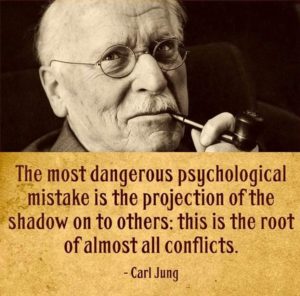
Centuries later, the Swiss psychiatrist Carl Jung brought the divine feminine out of the mystical shadows and subjected it to the clinical light of the modern age. Jung astutely diagnosed the crisis of the modern man: a psyche heavily defended, excessively rational, and tragically alienated from its own soulful depths. To remedy this, Jung introduced the concept of the Anima—the unconscious, animating feminine aspect residing within the male psyche.
Jung argued fiercely that unless a man confronts, embraces, and ultimately integrates this inner feminine energy, he remains incomplete, projecting his unresolved psychological fractures onto the world around him. This process of individuation requires the ego to relinquish its illusion of absolute control and enter into a courageous dialogue with the unconscious—a realm Jung characterized as deeply fluid, nurturing, intuitive, and relational. Jung’s revolutionary framework dismantled the illusion of the monolithic male mind. He revealed that psychological alchemy cannot occur through logic alone; it demands a descent into the shadowy, fertile waters of the psyche, where the masculine ego learns to receive rather than dictate.
Pierre Teilhard de Chardin: The Earthbound Visionary
 In the 20th century, the Jesuit priest and paleontologist Pierre Teilhard de Chardin committed what was then a radical act of spiritual defiance: he sanctified matter. In a religious tradition that had historically elevated the masculine heavens while degrading the feminine earth, Teilhard saw the divine pulse coursing directly through the dirt, the rocks, and the biological unfolding of the cosmos.
For Teilhard, the Earth was not a fallen realm to be transcended, but the very matrix of divine revelation. He wrote beautifully of the “Feminine” as the unitive, magnetic force of love that draws all fragmented creation toward a point of ultimate spiritual convergence, which he termed the Omega Point. By marrying evolutionary science with a profound mystical reverence for the Earth Mother, Teilhard challenged the sterile, mechanistic worldview of the industrial age. He recognized that matter (derived from mater, meaning mother) is inherently sacred. His theology offered a potent antidote to the extractive mindset of modernity, insisting that the spiritualization of humanity requires a deep, loving communion with the physical world.
Matthew Fox: The Modern Theologian of Creation
Building upon this ancient and rich legacy is Matthew Fox, the modern theologian and former Dominican priest whose refusal to adhere to a theology rooted in “original sin” and patriarchal hierarchy led to his expulsion by the Vatican. Fox boldly championed Creation Spirituality, a theological framework that fiercely reclaims the divine feminine.
Fox shifted the narrative from a paradigm of inherent brokenness to one of “Original Blessing.” By resurrecting the suppressed teachings of medieval female mystics and advocating passionately for eco-justice, Fox provided a modern blueprint for dismantling toxic theology. He recognized that an exclusively transcendent, patriarchal God sanctions the domination of the earth and the marginalization of the vulnerable. Fox’s integration of the divine feminine insists that spiritual authority must be rooted in compassion, vibrant creativity, and ecological reverence rather than institutional control and punitive doctrine. His work serves as a rallying cry to honor the sacredness of the cosmos as the primary revelation of the divine.
The Layperson: Healing the Patriarch Within

Just another everyday man who has taken himself off of the collective grid of toxicity
This profound legacy of integration is not reserved solely for historical giants, mystics, or renowned theologians; it beats relentlessly within the chest of the ordinary individual who awakens to their own inherited wounds. As a layperson who once suffered under the crushing, suffocating weight of a culturally endorsed, emotionally starved masculinity, the necessity of this alchemy is deeply personal.
My own spiritual rebirth began on a quiet day in May 1987. It did not arrive wrapped in complex theology or institutional ritual, but as a direct, unmediated encounter with an infinite, motherly presence. It was a wave of grace that held me without demanding performance, production, or conformity. To heal the patriarch within is to experience this radical dissolution of the armor we have been taught to wear. It is the daily, often painful realization that our ultimate liberation lies not in mastering the external world, but in allowing ourselves to be held by the deeply nurturing, uncompromising grace of the sacred feminine. It is the quiet choice to soften, to listen, and to receive.
The Alchemy of Integration
The mandate of our time is not to simply swing the pendulum from one extreme to another, replacing one form of domination with another. Rather, the task is to forge a sacred, internal marriage between action and receptivity, logic and intuition, mind and matter. We can no longer afford the spiritual cost of suppressing the nurturing and relational forces that allow us to live in harmony with the cosmos.
Healing the fractured soul requires a conscious, deliberate descent into the depths of our own being to reclaim what has been exiled. By embracing this profound inner alchemy, we construct a new paradigm of consciousness—one rooted in wholeness, deep ecological reverence, and an enduring, integrated peace.
Chapter 9-26: Healing the Fractured Soul: Integrating the Divine Feminine in a Patriarchal Paradigm
Have we constructed a towering monument to our own spiritual starvation? For millennia, the architecture of human consciousness has been heavily dictated by a patriarchal paradigm. This framework has molded the masculine experience into an archetype of rigid dominance, linear control, and emotional detachment. While this architecture of the mind has undeniably yielded extraordinary technological and architectural feats, it has simultaneously left us grappling with a profound, gnawing spiritual malnutrition. We are currently witnessing deep fractures within the human psyche—a direct consequence of the historical exile and systemic suppression of the divine feminine archetype.
Yet, beneath the relentless clamor of empire building and orthodox religious dogma, a quiet, potent lineage of visionaries has always existed. By turning inward and embracing the untamed currents of the divine feminine, these historical and modern pioneers have actively labored to heal these deep fractures. They recognized that to cure our divided consciousness, we must undertake the profound inner alchemy of reintegrating the feminine into our collective and individual psyches, restoring the sacred balance between action and receptivity, mind and matter, father and mother.
The Divine Masculine: 20 Principles of Spiritual Integrity
For every shadow cast by toxic masculinity, there is a light of the healed, divine masculine waiting to emerge. Where toxic masculinity thrives on separation, control, and fear, the divine masculine operates from a space of unity, compassion, and unwavering strength. The antidote to our current cultural disease lies in embodying these twenty principles of spiritual integrity:
- Service Over Ego: I recognize that leadership means service, and my purpose is to uplift others, not dominate them.
- Love as Power: I embody love as the highest form of spiritual and human strength, dissolving fear and building connection.
- Healing Wounds: I face my own shadows with courage and release old patterns so that generational trauma is not passed forward.
- Alignment with Nature: I honor the Earth as sacred and align my actions with its well-being, rather than exploiting it for profit.
- Accountability: I take full responsibility for my actions and view growth as a lifelong, humbling process.
- Connection Over Control: I seek collaboration and mutual respect, treating all people as absolute equals.
- Wisdom in Transparency: I value truth and speak it with clarity and compassion; deception has no place in my heart.
- Fearless Emotional Expression: I invite my emotions to flow freely, knowing vulnerability connects me to my shared humanity.
- Protecting Through Peace: I protect not through aggression, but through an unwavering, calm inner strength capable of de-escalating hostility.
- Equality in Relationship: I view women and all marginalized people as complete and equal beings, deserving of dignity and autonomy.
- Unity with the Feminine: I honor the divine feminine within myself and others as a source of balance, intuition, and creation.
- Power as Collective Growth: I use my strength, voice, and gifts in service of the collective good, creating abundance for everyone.
- Anger Transformed: I experience anger without repression, channeling it into just, non-violent action for progress and healing.
- Strength in Listening: I honor the voices of others, listening deeply and yielding space when others need to share their truths.
- Honoring Life’s Cycles: I trust the wisdom of impermanence, accepting change, beginnings, and endings with grace.
- Partnership as Sacred Union: I cherish relationships as opportunities to co-create and worship the sacred in one another, free from ownership.
- Truth Over Denial: I face and acknowledge even the most uncomfortable truths with openness and spiritual integrity.
- Creativity as Manifestation: I wield my creativity not for conquest, but for beauty, healing, and the bridging of divides.
- A Legacy of Healing: I seek to leave behind a world more united, equitable, and healed than the one I entered.
- A Soul Open to Transformation: I welcome continuous transformation as the required path to aligning with my highest, truest essence.
The Crisis of the Hyper-Rational Psyche
We face an acute crisis of modernity: a hyper-rational psyche that has fundamentally severed the tether to its own soul. This disconnection breeds a profound sense of incompleteness. Historically, orthodox religious traditions have exacerbated this fracture by elevating masculine ideals of distant, unyielding perfection while simultaneously degrading the feminine, earthly, and bodily aspects of existence.
This theological hierarchy has cultivated an extractive and dominion-obsessed mindset, teaching us to conquer the earth rather than commune with it. Fortunately, the lineage of sacred receptivity provides a historical antidote to this spiritual sickness.
A Lineage of Sacred Receptivity
Throughout history, brave spiritual pioneers have refused to let the sacred feminine remain in exile. They demonstrated that true human wholeness requires the integration of intuitive, nurturing, and relational forces.
The Ethiopian Bible and Jesus’s View of Women
The Ethiopian Orthodox Tewahedo Church holds one of the most expansive and ancient biblical canons in the world. Containing books long forgotten or excluded by Western traditions, this sacred collection offers a profound lens through which we can examine the spiritual foundations of early Christianity. By exploring these ancient texts alongside the traditional canonical Gospels, we uncover a fascinating, deeply philosophical portrait of how the divine intersects with humanity.
At the center of this exploration is the figure of Jesus and his radically inclusive view of women. When we look past centuries of dogmatic interpretation, a striking narrative emerges. It is a narrative of spiritual equality, challenging us to rethink the boundaries of historical patriarchy and inviting a deeper contemplation of the feminine role within sacred history.
The Ethiopian Bible contains numerous texts absent from standard Western Bibles, such as the Book of Enoch and the Book of Jubilees. This wider canon preserves a rich tapestry of ancient wisdom, offering glimpses into a worldview where the spiritual contributions of women are woven deeply into the fabric of creation and redemption.
In these ancient traditions, wisdom herself is often personified in feminine terms. The broader canonical boundaries allow for a more expansive understanding of spiritual authority. Rather than being relegated to the margins, the feminine presence in these texts suggests a universe where spiritual depth and divine revelation are intimately connected to the experiences of women.
When we examine the canonical Gospels through this contemplative lens, Jesus’s interactions with women appear entirely revolutionary. He did not conform to the societal norms of his era. Instead, he consistently shattered the invisible barriers that separated the sacred from the marginalized.
Consider the Samaritan woman at the well. In a time when religious teachers avoided speaking to women in public—let alone a Samaritan—Jesus engaged her in a profound theological dialogue. He revealed his messianic identity to her, effectively making her an early evangelist. Similarly, Mary Magdalene was chosen as the first witness to the resurrection, an honor of immense spiritual weight. These were not accidental encounters. They were intentional acts of empowerment, recognizing women as capable vessels for divine truth.
To fully grasp the magnitude of these teachings, we must look at the historical backdrop of the ancient Middle East. Society during this period was heavily patriarchal. Women were largely excluded from formal religious education and public spiritual discourse.
Against this rigid social architecture, Jesus’s approach was nothing short of a paradigm shift. He welcomed women as disciples, encouraging them to sit at his feet and learn—a position traditionally reserved only for male students of a rabbi. This radical inclusion serves as a profound statement on the inherent dignity and spiritual equality of all individuals, regardless of the societal structures that sought to confine them.
By synthesizing the expansive spiritual heritage of the Ethiopian Bible with the direct actions of Jesus in the Gospels, a comprehensive view emerges. The Ethiopian tradition’s preservation of ancient, diverse spiritual narratives creates a philosophical framework that perfectly complements the progressive actions of Jesus. Together, they form a unified vision of a divine order that actively dismantles human hierarchies.
This synthesis invites us to look beyond rigid dogma. It asks us to recognize that the divine presence operates through a balance of masculine and feminine energies, offering a more holistic understanding of spiritual enlightenment.
The exploration of the Ethiopian Bible alongside Jesus’s interactions with women leaves us with a profound realization. The teachings of equality, respect, and spiritual agency transcend their ancient origins. They remain a vital, living philosophy that challenges us to elevate our own consciousness and examine our internal biases.
As we continue our spiritual journeys, embracing diverse biblical interpretations allows us to see the divine more clearly. By honoring the revolutionary grace shown to women in these sacred texts, we open ourselves to a deeper, more inclusive understanding of faith.
St. Francis of Assisi: The Somatic Mystic
St. Francis of Assisi stripped himself of the toxic masculine pursuits of wealth, status, and warfare. By embracing a horizontal kinship with creation and revering “Sister Mother Earth,” he demonstrated that true spiritual sovereignty is found not in dominion over the natural world, but in radical, systemic care and communion with it.
His dramatic renunciation of his father’s merchant empire—literally stripping himself naked in the public square of Assisi—was a profound spiritual divestment. It was the shedding of the patriarchal armor that insulates the ego from the raw, beating heart of existence. In standing bare before the world, Francis embraced a radical vulnerability that is intrinsically tied to the receptive nature of the feminine. This vulnerability culminated in his lifelong devotion to “Lady Poverty,” whom he romanticized as a mystical bride. This personification of emptiness as a divine, feminine companion challenged the accumulation-obsessed dogma of his era, teaching that only when the hands are entirely empty can they truly hold the divine.
Furthermore, Francis’s spirituality was undeniably somatic, rejecting the orthodox mind-body dualism that alienated the flesh. His reception of the stigmata was a visceral testament to a spirituality deeply anchored in the physical body. He allowed the divine to wound and rewrite his very biology, merging the spiritual with the earthly. Alongside St. Clare, he cultivated a monastic vision that honored feminine wisdom, offering a vital blueprint for the fragmented modern psyche to plant its feet back into the soil.
Jalal ad-Din Muhammad Rumi: The Ecstatic Surrender
In the 13th century, long before modern psychology provided a clinical vocabulary for internal integration, the Sufi poet Rumi subverted the rigid, law-bound religious structures of his era. In a theological landscape that frequently equated divinity with a punishing, distant patriarch, Rumi experienced the Divine through the lens of ecstatic, all-consuming love and profound receptivity—qualities deeply rooted in the feminine archetype.
Rumi understood that the hyper-rational mind, while useful for navigating the material world, acts as a barrier to true spiritual union. He wrote of the soul’s yearning with a tenderness that deliberately bypassed the intellect. For Rumi, the pursuit of God was not a conquest to be won through rigid adherence to scripture, but a romantic dissolution of the self. Through his poetry and the physical practice of the whirling dervish, Rumi embodied a kinetic receptivity. The whirling is a physical manifestation of becoming an empty vessel, a decentralized ego surrendering to the gravitational pull of the Beloved. By reframing spiritual sovereignty as absolute, vulnerable surrender, Rumi helped balance the religious consciousness of his era, proving that the heart’s fluid intuition is as sacred, and often more truthful, than any codified law.
Carl Jung: The Psychological Alchemist
Centuries later, the Swiss psychiatrist Carl Jung brought the divine feminine out of the mystical shadows and subjected it to the clinical light of the modern age. Jung astutely diagnosed the crisis of the modern man: a psyche heavily defended, excessively rational, and tragically alienated from its own soulful depths. To remedy this, Jung introduced the concept of the Anima—the unconscious, animating feminine aspect residing within the male psyche.
Jung argued fiercely that unless a man confronts, embraces, and ultimately integrates this inner feminine energy, he remains incomplete, projecting his unresolved psychological fractures onto the world around him. This process of individuation requires the ego to relinquish its illusion of absolute control and enter into a courageous dialogue with the unconscious—a realm Jung characterized as deeply fluid, nurturing, intuitive, and relational. Jung’s revolutionary framework dismantled the illusion of the monolithic male mind. He revealed that psychological alchemy cannot occur through logic alone; it demands a descent into the shadowy, fertile waters of the psyche, where the masculine ego learns to receive rather than dictate.
Pierre Teilhard de Chardin: The Earthbound Visionary
In the 20th century, the Jesuit priest and paleontologist Pierre Teilhard de Chardin committed what was then a radical act of spiritual defiance: he sanctified matter. In a religious tradition that had historically elevated the masculine heavens while degrading the feminine earth, Teilhard saw the divine pulse coursing directly through the dirt, the rocks, and the biological unfolding of the cosmos.
For Teilhard, the Earth was not a fallen realm to be transcended, but the very matrix of divine revelation. He wrote beautifully of the “Feminine” as the unitive, magnetic force of love that draws all fragmented creation toward a point of ultimate spiritual convergence, which he termed the Omega Point. By marrying evolutionary science with a profound mystical reverence for the Earth Mother, Teilhard challenged the sterile, mechanistic worldview of the industrial age. He recognized that matter (derived from mater, meaning mother) is inherently sacred. His theology offered a potent antidote to the extractive mindset of modernity, insisting that the spiritualization of humanity requires a deep, loving communion with the physical world.
Matthew Fox: The Modern Theologian of Creation
Building upon this ancient and rich legacy is Matthew Fox, the modern theologian and former Dominican priest whose refusal to adhere to a theology rooted in “original sin” and patriarchal hierarchy led to his expulsion by the Vatican. Fox boldly championed Creation Spirituality, a theological framework that fiercely reclaims the divine feminine.
Fox shifted the narrative from a paradigm of inherent brokenness to one of “Original Blessing.” By resurrecting the suppressed teachings of medieval female mystics and advocating passionately for eco-justice, Fox provided a modern blueprint for dismantling toxic theology. He recognized that an exclusively transcendent, patriarchal God sanctions the domination of the earth and the marginalization of the vulnerable. Fox’s integration of the divine feminine insists that spiritual authority must be rooted in compassion, vibrant creativity, and ecological reverence rather than institutional control and punitive doctrine. His work serves as a rallying cry to honor the sacredness of the cosmos as the primary revelation of the divine.
The Layperson: Healing the Patriarch Within
Just another everyday man who has taken himself off of the collective grid of toxicity
This profound legacy of integration is not reserved solely for historical giants, mystics, or renowned theologians; it beats relentlessly within the chest of the ordinary individual who awakens to their own inherited wounds. As a layperson who once suffered under the crushing, suffocating weight of a culturally endorsed, emotionally starved masculinity, the necessity of this alchemy is deeply personal.
My own spiritual rebirth began on a quiet day in May 1987. It did not arrive wrapped in complex theology or institutional ritual, but as a direct, unmediated encounter with an infinite, motherly presence. It was a wave of grace that held me without demanding performance, production, or conformity. To heal the patriarch within is to experience this radical dissolution of the armor we have been taught to wear. It is the daily, often painful realization that our ultimate liberation lies not in mastering the external world, but in allowing ourselves to be held by the deeply nurturing, uncompromising grace of the sacred feminine. It is the quiet choice to soften, to listen, and to receive.
The Alchemy of Integration
The mandate of our time is not to simply swing the pendulum from one extreme to another, replacing one form of domination with another. Rather, the task is to forge a sacred, internal marriage between action and receptivity, logic and intuition, mind and matter. We can no longer afford the spiritual cost of suppressing the nurturing and relational forces that allow us to live in harmony with the cosmos.
Healing the fractured soul requires a conscious, deliberate descent into the depths of our own being to reclaim what has been exiled. By embracing this profound inner alchemy, we construct a new paradigm of consciousness—one rooted in wholeness, deep ecological reverence, and an enduring, integrated peace.
Chapter 30: Toxic Femininity, Patriarchy’s Marionettes, and the Wounded Spirit
Just as ancient wisdom speaks of a collective shadow, a Maya that veils reality, so too does a subtler, yet equally pervasive, illusion operate within the feminine psyche. It is an intricate web woven not from overt aggression, but from centuries of adaptation, survival, and complicity within a system that was never designed for its genuine empowerment. It is the world of toxic femininity—a distorted reflection of the feminine spirit, captured and conditioned by the very patriarchal structures it often claims to oppose.
This is the shadow world inhabited by women who, having internalized the rules of a male-dominated game, become its most dedicated enforcers. They are the gatekeepers of a system that rewards conformity and punishes authenticity, wielding social currency, manipulation, and passive aggression as instruments of control. They are the puppets of a patriarchal order, so deeply hypnotized by its demands that they police other women, stifle their own daughters, and perpetuate the very cycles of repression that have wounded them.
What does it reveal about a culture when its women, in their quest for safety and status, adopt the tools of their oppressors?
To truly comprehend this phenomenon, one must recognize it as a collective, historical manifestation of Stockholm Syndrome, stretching across three to four thousand years of patriarchal domination. When a demographic is systematically stripped of autonomy, property, and physical safety, psychological survival dictates a terrifying compromise: the captive must align with the captor. Over millennia, women were conditioned to seek the favor of the very architects of their subjugation. To rebel was to invite destitution, violence, or death. To assimilate, however, offered a sliver of provisional safety. This historical trauma bond forged a deep psychological paradox wherein the oppressed began to fiercely defend the oppressive structures, equating the oppressor’s approval with their own fundamental right to exist.
Over generations, this societal Stockholm Syndrome mutated from a conscious survival tactic into an unconscious, inherited baseline. The captor’s values became the captive’s virtues. Women were subtly coerced into believing that their confinement was actually their sanctuary, and that the patriarchal gaze was the only legitimate mirror of their worth. In this tragic psychological inversion, the chains of subjugation were polished and paraded as jewelry. The trauma of millennia became so normalized that women began to love the cage, passing down the blueprints of their own captivity to their daughters under the guise of maternal protection and wisdom.
Toxic femininity is the other side of the same coin as toxic masculinity. It is the damage made manifest, the scar tissue that forms over a spirit denied its true expression. It is not about inherent female wickedness, but about the deeply ingrained survival mechanisms that arise when one’s power is systematically denied. It is a quiet poison, a mind virus that threatens the sacred bonds of sisterhood and stalls the evolution of a truly balanced and harmonious world.
Toxic femininity is not the antithesis of toxic masculinity; it is its counterpart, its necessary accomplice. It speaks to the insidious ways power dynamics force the oppressed to mimic the oppressor. It glorifies indirect aggression, social manipulation, and the leveraging of beauty and sexuality for status, while shaming directness, authentic ambition, and solidarity. From a young age, girls absorb the messages: “Be nice, but not too assertive,” “Be beautiful, but not threateningly so,” “Secure a powerful man, for that is your true security.” These whispers encourage a form of self-objectification and relational aggression—a socially acceptable way to compete when overt power is off-limits.
The results?
Women grow into adults who view other women as rivals for male attention and resources, not as allies. They learn to wield gossip as a weapon, to value their appearance over their integrity, and to see vulnerability not as a bridge to connection, but as a weakness to be exploited in others. They are conditioned to suppress their righteous anger, transmuting it into passive aggression, martyrdom, and manipulation. On a grand scale, toxic femininity erodes trust between women, sabotages collective progress, and reinforces the patriarchal cage from the inside.
This cultural disease manifests on a global stage. It is the woman who shames another for her ambition, the mother who pressures her daughter into a conventional marriage for social gain, the female boss who undermines her female subordinates, fearing a threat to her hard-won position. These are its hallmarks, the quiet betrayals that keep the system humming.
The 20 Core Principles of Toxic Femininity
The following principles encapsulate the toxic narratives that permeate the collective unconscious of the conditioned feminine. They are the unspoken rules of a game where the prize is not liberation, but a more comfortable cage. These statements, when read with an honest heart, reveal a disturbing portrait of a spirit contorted by patriarchal expectations.
1.My Value Is My Appearance. My worth is measured by my physical attractiveness and my ability to conform to societal beauty standards. I will invest my time, energy, and resources into maintaining this facade, for it is my primary currency in a world that values women as objects of desire. Inner substance is secondary to outward presentation.
2. Security Comes from a Man, Not Myself. My ultimate goal is to secure a powerful or wealthy partner who can provide for me. My own ambitions are a backup plan. I will use my sexuality, charm, and nurturing abilities to attract and keep this provider, seeing other women as competition for this limited resource.
3. Gossip and Social Exclusion Are My Weapons. Since direct confrontation is “unladylike,” I will use indirect aggression to maintain my social standing. I will weaponize information, spread rumors, and form exclusionary cliques to undermine those I perceive as threats. My social circle is a battlefield, not a support system.
4. I Am a Martyr to My Family and Partner. I will sacrifice my own needs, dreams, and well-being for the sake of others, and I will ensure everyone knows it. My silent suffering is a tool for guilt and control. I will express my resentment through sighs, passive aggression, and a narrative of unending selflessness.
5. Other Women Are My Competition, Not My Sisters. I cannot trust other women. They are rivals for attention, status, and partners. I will compare myself relentlessly to them—their bodies, their relationships, their successes—and I will feel pleasure in their failures, for it validates my own position. True sisterhood is a threat to my individual standing.
6. I Use Vulnerability as a Formative Tool of Manipulation. I will perform helplessness and emotional fragility to elicit protection, pity, and resources from others, particularly men. My tears are a currency, and my perceived weakness is a calculated form of power that absolves me of responsibility.
7. I Must Be “Nice” and Avoid Conflict at All Costs. My anger is unacceptable and frightening. I will suppress my true feelings and opinions to be seen as agreeable and pleasant. My resentment will fester internally, emerging in passive-aggressive comments, backhanded compliments, and sabotage.
8. My Body and Sexuality Are for Male Approval. I see my body through the eyes of men. I dress, groom, and present myself for the male gaze. My sexuality is not for my own pleasure but is a tool to be leveraged for commitment, validation, or material gain. I will judge other women for their perceived promiscuity or lack of sexual appeal.
9. I Enforce Patriarchal Rules on Other Women. I am a gatekeeper of “proper” female behavior. I will judge women who are too ambitious, too loud, too sexual, or too independent. I will question their choices and reinforce the very societal constraints that have limited me, because their freedom threatens my sense of order.
10. I Live Vicariously Through My Partner and Children. My identity is absorbed into the identities of those I am connected to. His success is my success; their achievements are my achievements. I have no independent sense of self, and I will push them relentlessly to fulfill the ambitions I was denied.
11. I Equate Material Possessions with Self-Worth. The brands I wear, the car I drive, the size of my house—these are the metrics of my success. I use materialism to signal status and to feel superior to others. My relationships are often transactional, based on what others can provide for me.
12. I Will “Play Dumb” to Make Men Feel Superior. I will hide my intelligence and competence to avoid intimidating men. I understand that my intellect can be a threat to the fragile male ego, and I will feign ignorance to appear more feminine, approachable, and non-threatening.
13. My Emotional State Is Someone Else’s Responsibility. I am not accountable for my own happiness. It is my partner’s job to make me feel loved, my children’s job to make me feel fulfilled, and my friends’ job to manage my emotional outbursts. I am a victim of my feelings, not their master.
14. I Use Guilt as a Primary Means of Control. I will remind my loved ones of my sacrifices and their obligations to me. If they do not behave as I wish, I will instill a deep sense of guilt, ensuring they feel indebted to me. “After all I’ve done for you” is my mantra.
15. I Fear and Sabotage Female Authority. I am deeply uncomfortable with women in positions of power. I will be more critical, less forgiving, and more likely to undermine a female boss than a male one. Her authority highlights my own feelings of inadequacy.
16. My Compliments Are Double-Edged Swords. I will offer praise that contains a subtle insult or criticism. “You’re so brave to wear that!” or “I wish I were as confident as you to not care what people think.” This allows me to maintain an illusion of niceness while asserting my superiority.
17. I Prioritize Being Chosen Over Choosing for Myself. My life’s narrative is about being selected—by the right man, the right social circle, the right school. The act of being chosen validates my worth. I rarely ask myself what I truly want, because my desires have been conditioned to align with what makes me desirable to others.
18. I Use My Children as Pawns in My Emotional Wars. My children are extensions of my ego and tools in my conflicts. I will use them to punish my partner, to compete with other mothers, and to fulfill my own emotional needs, disregarding their autonomy and well-being.
19. I Believe That “Having It All” Means Conforming Perfectly. My vision of success is to flawlessly execute all expected female roles: the perfect mother, the devoted wife, the immaculate homemaker, the effortlessly beautiful professional. I pursue this impossible standard and judge myself and others harshly for failing to meet it.
20. I Will Not Acknowledge My Own Power or Complicity. I will maintain a narrative of victimhood, blaming patriarchy, men, or other women for my unhappiness. I will refuse to see how my own choices, behaviors, and enforcement of toxic norms contribute to the system I claim to despise. My perceived powerlessness is my greatest defense against accountability.
These principles paint a harrowing picture of a spirit in chains. They reveal a cycle of self-betrayal, where women, in an attempt to navigate a hostile world, become the architects of their own and each other’s cages.
Real-World Reflections: Women in Service of Patriarchal Power
If toxic femininity were only theoretical, it would remain easy to deny. But history shows again and again that women can become guardians of systems that trivialize truth and diminish human worth. This does not mean that every woman in power is compromised, nor that female leadership is inherently suspect. Rather, it means that representation alone is not liberation. A woman can rise within a patriarchal structure and still serve its deepest distortions.
The Trump administration offered many such examples in the public imagination: women in highly visible roles who, rather than challenging authoritarian impulses, often appeared to soften, defend, or normalize them. To examine such figures is not to claim access to their souls. It is to ask what happens when female authority is attached to a project that treats domination as strength, loyalty as morality, and truth as negotiable. In those conditions, the feminine can be conscripted into the service of untruth.
Susie Wiles
Susie Wiles represents a particularly complex figure in this pattern. Her prominence in Republican political strategy and executive leadership placed her in a historic role, one that might have symbolized a meaningful expansion of women’s authority in public life. Yet the deeper question is not whether a woman has reached power, but what kind of power she stabilizes once she gets there. Leadership in service of hierarchy is not the same as leadership in service of human dignity.
When a woman becomes indispensable to a political machine defined by personal loyalty, aggression, and contempt for inconvenient truth, her presence can function as a legitimizing veil. She may appear as evidence of competence, seriousness, even progress. But if that competence is used to organize, protect, or rationalize a structure built on domination, then it risks becoming a refined instrument of the same old order. Patriarchy is never threatened simply because a woman helps manage it efficiently.
In this sense, Wiles can be read as a symbol of how patriarchal systems evolve. They no longer always exclude women outright; instead, they often reward women who prove willing to preserve the structure’s priorities. The cost is subtle but profound. Truth becomes subordinate to strategy. Human value becomes secondary to political victory. The feminine, rather than interrupting the machinery, is drafted to make it run more smoothly.
This is one of patriarchy’s most enduring adaptations: it permits selective female advancement so long as that advancement does not fundamentally challenge the moral architecture beneath it. Thus, the question is not whether women can hold power, but whether they are free to wield it in allegiance to conscience rather than to the demands of a patriarchal center.
Karoline Leavitt
Karoline Leavitt’s public role as a youthful and forceful spokesperson has made her emblematic of a newer generation of female political loyalty. Her rise carries the aesthetics of disruption and modernity, yet rhetoric alone does not constitute freedom. A woman may speak from the podium with confidence and still be participating in a structure that requires the erosion of honesty as the price of belonging.
In the public sphere, the press secretary’s role is not merely to communicate facts, but to shape perception. When that role drifts into the repeated defense of distortion, hostility, or openly dehumanizing agendas, it becomes a study in moral surrender. The tragedy is not only political. It is spiritual. The voice, one of the deepest instruments of feminine and human power, becomes severed from truth and repurposed as a tool of obedience.
Leavitt’s visibility illustrates how patriarchy often rewards women who can package aggression in a more socially acceptable form. A woman defending domination may be praised as fierce, sharp, or unflinching. But fierceness in service of falsehood is not liberation. It is a performance of strength emptied of ethical center. Here, feminine intelligence is not being honored; it is being conscripted.
And so the deeper issue is not one woman’s ambition, but what ambition serves when it is detached from truth. When advancement depends on defending systems that belittle vulnerable people, degrade democratic norms, or reduce public life to spectacle, the value of human beings is quietly displaced. Winning matters more than reality. Loyalty matters more than conscience. Patriarchy smiles when it can train the feminine to speak its language fluently.
Hope Hicks
Hope Hicks occupies a different archetype: the intimate insider whose proximity to power seemed at times to reveal both enchantment and disillusionment. Her role in shaping image and message made her central to the emotional aura of the administration. Public relations, after all, is not just about information. It is about curating narrative, polishing contradiction, and ensuring that appearances remain more persuasive than substance.
In patriarchal systems, women are often assigned or drawn into precisely this labor: softening hard edges, beautifying brutality, lending emotional coherence to moral incoherence. Hicks’s public trajectory, including later distance from aspects of the administration, has led many observers to interpret her as someone who may have glimpsed the inner cost of such service. Whether or not that interpretation is fair in full, the symbolism remains potent. To help curate illusion is to slowly risk losing one’s own relationship to reality.
This is part of the wounded feminine under patriarchy: the belief that one can remain personally untouched while serving a corrosive structure professionally. But no one remains untouched. The soul absorbs what it repeatedly rationalizes. When image management becomes more important than truth, and access to power becomes more important than the impact of that power on actual people, inner fragmentation begins. One part of the self knows; another part performs.
Hicks therefore reflects a subtler dimension of subservience: not always the loud defense of domination, but the elegant maintenance of its facade. Patriarchy does not rely only on open cruelty. It also relies on charm, silence, style, and emotional buffering. It relies on women willing to help it appear less monstrous than it is. In doing so, truth is delayed, and human suffering is made easier to ignore.
Linda McMahon
Linda McMahon represents the fusion of institutional respectability with patriarchal loyalty. Her business credentials and public stature gave her the appearance of seasoned legitimacy. She could be presented as evidence that competence and establishment credibility had a place within the administration. Yet this is precisely how systems of domination often endure: not only through chaos, but through the participation of figures who normalize that chaos by surrounding it with order.
A woman in such a position may seem to embody empowerment. But empowerment divorced from moral courage becomes managerial complicity. If leadership is used to reinforce a culture that treats people instrumentally, dismisses truth as inconvenient, and centers one dominant male figure as the organizing source of reality, then female authority has not challenged patriarchy. It has simply become another of its support beams.
McMahon’s public role invites reflection on how easily success can be recruited into service of hierarchy. Patriarchy often rewards women who demonstrate that they can function within its terms without questioning the human cost of those terms. In that arrangement, loyalty is elevated over discernment. Institutional skill is praised, while ethical resistance is rendered disruptive or disloyal.
The result is a hollowing out of value. Human beings become metrics, constituencies, or strategic units. Truth becomes subordinate to organizational coherence. And the feminine, instead of bringing relational wisdom and moral imagination into power, is pressed into reproducing a system that remains fundamentally indifferent to both. This is not the healed feminine. It is the efficient feminine in captivity.
Pam Bondi
Pam Bondi’s role as a legal and political defender places her near one of patriarchy’s most dangerous thresholds: the manipulation of law in service of power. The legal realm carries a sacred expectation that truth matters, that evidence matters, that human beings deserve protection under standards larger than personality or faction. When those expectations are bent around loyalty to a dominant leader, the corrosion reaches far beyond politics. It touches the public’s faith in justice itself.
Critics have often viewed Bondi as emblematic of the way legal expertise can be harnessed to defend not principle, but power. Whether in public commentary, advocacy, or alignment with controversial narratives, the larger issue is the same: when a woman lends her authority to structures perceived as dismissive of accountability, she helps convert law from a shield for the vulnerable into armor for the powerful. That is among patriarchy’s oldest ambitions.
In such a dynamic, truth is not sought but managed. Facts become assets or liabilities rather than moral anchors. The suffering of real people can be subordinated to reputation, strategy, or partisan necessity. This is how human value begins to disappear: not always with a shout, but with a legal brief, a talking point, a carefully timed defense that treats conscience as negotiable.
Bondi’s public image thus reflects a painful inversion. The feminine principle, at its healthiest, protects life, relationship, and moral interdependence. But under patriarchal capture, the same intelligence can be redirected toward protecting status, shielding authority, and containing fallout. The form of professionalism remains, but its soul is compromised. And once again, a woman’s prominence is used not to humanize power, but to justify its excesses.
Kristi Noem
Kristi Noem offers yet another variation of patriarchal subservience: the performance of rugged autonomy in service of a deeply hierarchical worldview. Publicly, she has often projected confidence, toughness, and ideological certainty. On the surface, this can appear to contradict the notion of submission. But patriarchy does not always ask women to be soft. Sometimes it asks them to become mirrors of masculine dominance while remaining loyal to its center.
This is one of the more sophisticated deceptions of modern patriarchal culture. A woman may be celebrated for being forceful, combative, and unapologetic, yet still operate entirely within a framework that glorifies domination over empathy, spectacle over truth, and punishment over care. The appearance of strength conceals the absence of sovereignty. True sovereignty requires freedom from the need to serve cruelty in order to feel powerful.
Noem’s public persona can be read as illustrative of how women may adopt the aesthetics of command without disrupting the moral logic of patriarchy. In this arrangement, the feminine does not heal the wound of power; it learns to wear its armor. Human beings at the margins become symbols in a cultural performance. Vulnerability is mocked. Complexity is flattened. Truth is filtered through ideological usefulness.
This diminishes not only politics, but personhood itself. When a woman helps normalize a worldview that treats dominance as virtue and compassion as weakness, she participates in the devaluation of the very human depth the feminine has long been associated with protecting. Patriarchy is not defeated when women learn to imitate its harshest instincts. It is merely made more adaptable, more persuasive, and more difficult to recognize.
The Consequences of Unchecked Toxic Femininity
This internalized oppression harms everyone, creating a world where authentic connection is impossible.
For Women: It breeds deep-seated insecurity, anxiety, and a profound sense of isolation. It fosters a culture of comparison that is the thief of joy and replaces the potential for profound sisterhood with a landscape of rivalry and mistrust. Mental health struggles are compounded as genuine feelings are suppressed in favor of a socially acceptable performance.
For Men: It perpetuates the patriarchal burden, forcing them into the role of provider and protector while denying them access to emotionally whole partners. It creates a dynamic where they are manipulated by guilt and passive aggression, unable to form relationships based on true equality and mutual respect.
For Society: It cripples the feminist movement from within, sabotaging collective action. It ensures that patriarchal systems remain firmly in place, as women are too busy policing each other to unite against their shared oppression. It stifles the emergence of a balanced, healed world by keeping half of humanity locked in a state of arrested development.
The Path to the Divine and Healed Feminine
To dismantle this insidious programming is to embark on a radical journey of self-reclamation. It requires turning inward and untangling the knots of conditioning that have bound the feminine spirit for millennia.
Promote Authentic Sisterhood: Create spaces where women can be vulnerable, honest, and supportive of one another without fear of judgment or competition.
Hold Ourselves Accountable: Recognize and take responsibility for the ways we have participated in toxic dynamics. Reject the comfort of victimhood and embrace the power of self-awareness.
Redefine Female Power: Celebrate women’s ambition, directness, and righteous anger as vital forces for change. Teach girls that their power lies not in their beauty or their ability to attract a man, but in their voice, their intellect, and their integrity.
Heal the Mother Wound: Address the generational trauma passed down from mother to daughter. Work to break the cycle of shaming, comparison, and conditional love that has defined so many female lineages.
Cultivate Self-Sovereignty: Encourage women to build lives that are their own, independent of a partner’s status or approval. True security comes from within, not from without.
Toxic femininity is not a woman’s problem; it is a human problem, born from a world out of balance. It is the scar tissue on the soul of humanity. To heal it is to reclaim our birthright: a world where women are not rivals for the crumbs from patriarchy’s table, but are co-creators of a new feast, a new way of being, grounded in love, wisdom, and unshakeable solidarity.
Transformation begins with a single, courageous question, whispered into the depths of our own hearts:
Who would I be if I were truly free?
Chapter 30 (version 2): Toxic Femininity, Patriarchy’s Marionettes, and the Wounded Spirit
Ancient traditions speak of illusion as a veil cast over reality, a collective spell that confuses adaptation for truth and survival for freedom. Within the feminine psyche, there exists such a veil: not merely personal, but civilizational. It is woven from centuries of accommodation to systems that did not arise to honor women’s wholeness, but to manage, contain, and direct it. This distortion may be understood as toxic femininity: not an inherent flaw in women, but a damaged expression of the feminine shaped under long exposure to patriarchal reward and punishment.
Toxic femininity emerges when survival strategies harden into identity. It appears when women, having learned the rules of a male-centered order, begin to enforce those rules upon themselves and one another. In such a state, social polish replaces integrity, performance replaces authenticity, and acceptance within the system is confused with liberation from it. The wound becomes generational. What began as adaptation becomes inheritance.
What does it mean when women come to guard the very structures that diminished them? What does it reveal about a culture when approval from power becomes more prized than truth, and proximity to domination is mistaken for strength?
To understand this phenomenon, one must look historically. Across millennia of patriarchal order, women were often denied autonomy, property, legal standing, and bodily safety. Under such conditions, rebellion could carry immense costs, while compliance could offer conditional protection. Over time, this produced a profound psychological paradox: the oppressed learned to seek safety through alignment with the values of the oppressor. The result was not liberation, but a trauma bond with power itself.
Eventually, the values of the captor become internalized as virtues. Confinement is reframed as morality. Submission is dressed up as grace. Surveillance becomes care. Women learn to measure themselves through external approval, often male approval, and to transmit these standards to daughters under the language of wisdom, caution, and love. Thus, the architecture of domination is preserved not only by force from above, but by repetition from within.
Toxic femininity is therefore not the opposite of toxic masculinity. It is its shadow partner. If toxic masculinity distorts strength into domination, toxic femininity distorts relational intelligence into manipulation, beauty into currency, and care into control. It is the scar tissue formed where direct power has long been denied.
Girls absorb these scripts early. Be agreeable, but not powerful. Be attractive, but not threatening. Be ambitious, but not more ambitious than the men around you. Secure yourself through desirability, not sovereignty. In such a world, directness becomes dangerous, authenticity becomes costly, and covert forms of power become normalized. Indirect aggression flourishes where open agency is punished.
The consequences are profound. Women may grow to see one another less as allies than as rivals. Comparison becomes reflexive. Gossip becomes weaponized. Anger, having been forbidden its rightful expression, mutates into passive aggression, resentment, martyrdom, and moral manipulation. Sisterhood weakens. Trust collapses. The cage remains intact because its bars are now defended from the inside.
This pattern is not only private; it is political. It manifests in homes, workplaces, institutions, and governments. It can be seen wherever women are rewarded for protecting systems that degrade truth, excuse cruelty, or treat human beings as expendable so long as the hierarchy remains secure. In this sense, toxic femininity is not simply a personal wound. It is a cultural force.
The 20 Core Principles of Toxic Femininity
The following principles describe the inner logic of the conditioned feminine under patriarchy. They are not truths of womanhood. They are distortions of it.
- My value is my appearance. My worth depends on how well I conform to beauty standards and desirability.
- Security comes from a man, not from myself. A powerful partner is my safest route to legitimacy and stability.
- Gossip and exclusion are my weapons. If direct power is unavailable, I will exercise indirect control.
- I am a martyr to my family and partner. My sacrifice becomes both identity and leverage.
- Other women are my competition, not my sisters. Their success threatens my own standing.
- I use vulnerability as manipulation. Helplessness becomes a strategy for obtaining protection, pity, or resources.
- I must be nice and avoid conflict at all costs. My anger is unacceptable, so it must leak out sideways.
- My body and sexuality exist for male approval. I see myself through the gaze of others before I ever see myself from within.
- I enforce patriarchal rules on other women. Their freedom destabilizes the rules that gave my life structure.
- I live vicariously through my partner and children. Their achievements become substitutes for my unlived self.
- I equate material possessions with self-worth. Status symbols reassure me that I matter.
- I play dumb to make men feel superior. I diminish myself to remain acceptable.
- My emotional state is someone else’s responsibility. I externalize the labor of my own healing.
- I use guilt as a primary means of control. Obligation becomes the language of love.
- I fear and sabotage female authority. Another woman’s power mirrors my disowned potential.
- My compliments are double-edged. Kindness becomes a vehicle for subtle domination.
- I prioritize being chosen over choosing for myself. Validation matters more than desire.
- I use my children as pawns in emotional wars. Their personhood is eclipsed by my unmet needs.
- I believe having it all means performing every expected role perfectly. I worship an impossible standard.
- I refuse to acknowledge my own power or complicity. Victimhood becomes protection from self-examination.
These principles reveal the tragedy of a spirit taught to survive by betraying itself. They show how oppression can continue long after its original force has been normalized, ritualized, and made to look respectable.
Real-World Reflections: Women in Service of Patriarchal Power
If toxic femininity were only theoretical, it would remain easy to deny. But history shows again and again that women can become guardians of systems that trivialize truth and diminish human worth. This does not mean that every woman in power is compromised, nor that female leadership is inherently suspect. Rather, it means that representation alone is not liberation. A woman can rise within a patriarchal structure and still serve its deepest distortions.
The Trump administration offered many such examples in the public imagination: women in highly visible roles who, rather than challenging authoritarian impulses, often appeared to soften, defend, or normalize them. To examine such figures is not to claim access to their souls. It is to ask what happens when female authority is attached to a project that treats domination as strength, loyalty as morality, and truth as negotiable. In those conditions, the feminine can be conscripted into the service of untruth.
Susie Wiles
Susie Wiles represents a particularly complex figure in this pattern. Her prominence in Republican political strategy and executive leadership placed her in a historic role, one that might have symbolized a meaningful expansion of women’s authority in public life. Yet the deeper question is not whether a woman has reached power, but what kind of power she stabilizes once she gets there. Leadership in service of hierarchy is not the same as leadership in service of human dignity.
When a woman becomes indispensable to a political machine defined by personal loyalty, aggression, and contempt for inconvenient truth, her presence can function as a legitimizing veil. She may appear as evidence of competence, seriousness, even progress. But if that competence is used to organize, protect, or rationalize a structure built on domination, then it risks becoming a refined instrument of the same old order. Patriarchy is never threatened simply because a woman helps manage it efficiently.
In this sense, Wiles can be read as a symbol of how patriarchal systems evolve. They no longer always exclude women outright; instead, they often reward women who prove willing to preserve the structure’s priorities. The cost is subtle but profound. Truth becomes subordinate to strategy. Human value becomes secondary to political victory. The feminine, rather than interrupting the machinery, is drafted to make it run more smoothly.
This is one of patriarchy’s most enduring adaptations: it permits selective female advancement so long as that advancement does not fundamentally challenge the moral architecture beneath it. Thus, the question is not whether women can hold power, but whether they are free to wield it in allegiance to conscience rather than to the demands of a patriarchal center.
Karoline Leavitt
Karoline Leavitt’s public role as a youthful and forceful spokesperson has made her emblematic of a newer generation of female political loyalty. Her rise carries the aesthetics of disruption and modernity, yet rhetoric alone does not constitute freedom. A woman may speak from the podium with confidence and still be participating in a structure that requires the erosion of honesty as the price of belonging.
In the public sphere, the press secretary’s role is not merely to communicate facts, but to shape perception. When that role drifts into the repeated defense of distortion, hostility, or openly dehumanizing agendas, it becomes a study in moral surrender. The tragedy is not only political. It is spiritual. The voice, one of the deepest instruments of feminine and human power, becomes severed from truth and repurposed as a tool of obedience.
Leavitt’s visibility illustrates how patriarchy often rewards women who can package aggression in a more socially acceptable form. A woman defending domination may be praised as fierce, sharp, or unflinching. But fierceness in service of falsehood is not liberation. It is a performance of strength emptied of ethical center. Here, feminine intelligence is not being honored; it is being conscripted.
And so the deeper issue is not one woman’s ambition, but what ambition serves when it is detached from truth. When advancement depends on defending systems that belittle vulnerable people, degrade democratic norms, or reduce public life to spectacle, the value of human beings is quietly displaced. Winning matters more than reality. Loyalty matters more than conscience. Patriarchy smiles when it can train the feminine to speak its language fluently.
Hope Hicks
Hope Hicks occupies a different archetype: the intimate insider whose proximity to power seemed at times to reveal both enchantment and disillusionment. Her role in shaping image and message made her central to the emotional aura of the administration. Public relations, after all, is not just about information. It is about curating narrative, polishing contradiction, and ensuring that appearances remain more persuasive than substance.
In patriarchal systems, women are often assigned or drawn into precisely this labor: softening hard edges, beautifying brutality, lending emotional coherence to moral incoherence. Hicks’s public trajectory, including later distance from aspects of the administration, has led many observers to interpret her as someone who may have glimpsed the inner cost of such service. Whether or not that interpretation is fair in full, the symbolism remains potent. To help curate illusion is to slowly risk losing one’s own relationship to reality.
This is part of the wounded feminine under patriarchy: the belief that one can remain personally untouched while serving a corrosive structure professionally. But no one remains untouched. The soul absorbs what it repeatedly rationalizes. When image management becomes more important than truth, and access to power becomes more important than the impact of that power on actual people, inner fragmentation begins. One part of the self knows; another part performs.
Hicks therefore reflects a subtler dimension of subservience: not always the loud defense of domination, but the elegant maintenance of its facade. Patriarchy does not rely only on open cruelty. It also relies on charm, silence, style, and emotional buffering. It relies on women willing to help it appear less monstrous than it is. In doing so, truth is delayed, and human suffering is made easier to ignore.
Linda McMahon
Linda McMahon represents the fusion of institutional respectability with patriarchal loyalty. Her business credentials and public stature gave her the appearance of seasoned legitimacy. She could be presented as evidence that competence and establishment credibility had a place within the administration. Yet this is precisely how systems of domination often endure: not only through chaos, but through the participation of figures who normalize that chaos by surrounding it with order.
A woman in such a position may seem to embody empowerment. But empowerment divorced from moral courage becomes managerial complicity. If leadership is used to reinforce a culture that treats people instrumentally, dismisses truth as inconvenient, and centers one dominant male figure as the organizing source of reality, then female authority has not challenged patriarchy. It has simply become another of its support beams.
McMahon’s public role invites reflection on how easily success can be recruited into service of hierarchy. Patriarchy often rewards women who demonstrate that they can function within its terms without questioning the human cost of those terms. In that arrangement, loyalty is elevated over discernment. Institutional skill is praised, while ethical resistance is rendered disruptive or disloyal.
The result is a hollowing out of value. Human beings become metrics, constituencies, or strategic units. Truth becomes subordinate to organizational coherence. And the feminine, instead of bringing relational wisdom and moral imagination into power, is pressed into reproducing a system that remains fundamentally indifferent to both. This is not the healed feminine. It is the efficient feminine in captivity.
Pam Bondi
Pam Bondi’s role as a legal and political defender places her near one of patriarchy’s most dangerous thresholds: the manipulation of law in service of power. The legal realm carries a sacred expectation that truth matters, that evidence matters, that human beings deserve protection under standards larger than personality or faction. When those expectations are bent around loyalty to a dominant leader, the corrosion reaches far beyond politics. It touches the public’s faith in justice itself.
Critics have often viewed Bondi as emblematic of the way legal expertise can be harnessed to defend not principle, but power. Whether in public commentary, advocacy, or alignment with controversial narratives, the larger issue is the same: when a woman lends her authority to structures perceived as dismissive of accountability, she helps convert law from a shield for the vulnerable into armor for the powerful. That is among patriarchy’s oldest ambitions.
In such a dynamic, truth is not sought but managed. Facts become assets or liabilities rather than moral anchors. The suffering of real people can be subordinated to reputation, strategy, or partisan necessity. This is how human value begins to disappear: not always with a shout, but with a legal brief, a talking point, a carefully timed defense that treats conscience as negotiable.
Bondi’s public image thus reflects a painful inversion. The feminine principle, at its healthiest, protects life, relationship, and moral interdependence. But under patriarchal capture, the same intelligence can be redirected toward protecting status, shielding authority, and containing fallout. The form of professionalism remains, but its soul is compromised. And once again, a woman’s prominence is used not to humanize power, but to justify its excesses.
Kristi Noem
Kristi Noem offers yet another variation of patriarchal subservience: the performance of rugged autonomy in service of a deeply hierarchical worldview. Publicly, she has often projected confidence, toughness, and ideological certainty. On the surface, this can appear to contradict the notion of submission. But patriarchy does not always ask women to be soft. Sometimes it asks them to become mirrors of masculine dominance while remaining loyal to its center.
This is one of the more sophisticated deceptions of modern patriarchal culture. A woman may be celebrated for being forceful, combative, and unapologetic, yet still operate entirely within a framework that glorifies domination over empathy, spectacle over truth, and punishment over care. The appearance of strength conceals the absence of sovereignty. True sovereignty requires freedom from the need to serve cruelty in order to feel powerful.
Noem’s public persona can be read as illustrative of how women may adopt the aesthetics of command without disrupting the moral logic of patriarchy. In this arrangement, the feminine does not heal the wound of power; it learns to wear its armor. Human beings at the margins become symbols in a cultural performance. Vulnerability is mocked. Complexity is flattened. Truth is filtered through ideological usefulness.
This diminishes not only politics, but personhood itself. When a woman helps normalize a worldview that treats dominance as virtue and compassion as weakness, she participates in the devaluation of the very human depth the feminine has long been associated with protecting. Patriarchy is not defeated when women learn to imitate its harshest instincts. It is merely made more adaptable, more persuasive, and more difficult to recognize.
The Consequences of Unchecked Toxic Femininity
When toxic femininity goes unexamined, everyone suffers.
For women, it produces chronic insecurity, comparison, loneliness, and internal division. It replaces authentic sisterhood with performance and rivalry. It turns the living body into an object to manage and the inner life into a battlefield of suppressed truth.
For men, it reinforces the very structures that damage them as well. It traps them in roles of provider, controller, or emotional illiterate, while depriving them of relationships grounded in mutual honesty and full humanity.
For society, it sabotages meaningful solidarity. It weakens collective resistance to dehumanizing systems by making women available to police one another rather than transform the structures harming them. It keeps truth fragile and power insulated.
The Path to the Divine and Healed Feminine
Healing begins with recognition. It begins when women refuse to confuse adaptation with identity and start naming the inherited scripts they have been taught to call normal.
Promote authentic sisterhood. Create spaces where women can be honest without fear of punishment, comparison, or social exile.
Hold ourselves accountable. Notice where we have participated in manipulation, rivalry, or the enforcement of limiting roles. Accountability is not self-condemnation. It is the first movement of freedom.
Redefine female power. Honor women’s intellect, voice, directness, creativity, and moral courage. Teach girls that their value does not depend on desirability or compliance.
Heal the mother wound. Confront the inherited pain passed through female lineages: shaming, conditional love, comparison, emotional control, and silence.
Cultivate self-sovereignty. True security comes from inner grounding, not from male approval, social status, or proximity to power.
Toxic femininity is not a defect in women. It is a deformation born of imbalance. It is what happens when the feminine is denied room to develop in truth and instead learns to survive through distortion. To heal it is to restore the possibility of a world in which women do not compete for crumbs from the table of domination but help build an entirely different table.
Transformation begins with one quiet, terrifying, liberating question:
Who would I be if I no longer needed patriarchy to tell me what I am?
Chapter 30 (version 3): Toxic Femininity, Patriarchy’s Marionettes, and the Wounded Spirit
Just as ancient wisdom speaks of a collective shadow, a Maya that veils reality, so too does a subtler, yet equally pervasive, illusion operate within the feminine psyche. It is an intricate web woven not from overt aggression, but from centuries of adaptation, survival, and complicity within a system that was never designed for its genuine empowerment. It is the world of toxic femininity—a distorted reflection of the feminine spirit, captured and conditioned by the very patriarchal structures it often claims to oppose.
This is the shadow world inhabited by women who, having internalized the rules of a male-dominated game, become its most dedicated enforcers. They are the gatekeepers of a system that rewards conformity and punishes authenticity, wielding social currency, manipulation, and passive aggression as instruments of control. They are the puppets of a patriarchal order, so deeply hypnotized by its demands that they police other women, stifle their own daughters, and perpetuate the very cycles of repression that have wounded them.
What does it reveal about a culture when its women, in their quest for safety and status, adopt the tools of their oppressors?
To truly comprehend this phenomenon, one must recognize it as a collective, historical manifestation of Stockholm Syndrome, stretching across three to four thousand years of patriarchal domination. When a demographic is systematically stripped of autonomy, property, and physical safety, psychological survival dictates a terrifying compromise: the captive must align with the captor. Over millennia, women were conditioned to seek the favor of the very architects of their subjugation. To rebel was to invite destitution, violence, or death. To assimilate, however, offered a sliver of provisional safety. This historical trauma bond forged a deep psychological paradox wherein the oppressed began to fiercely defend the oppressive structures, equating the oppressor’s approval with their own fundamental right to exist.
Over generations, this societal Stockholm Syndrome mutated from a conscious survival tactic into an unconscious, inherited baseline. The captor’s values became the captive’s virtues. Women were subtly coerced into believing that their confinement was actually their sanctuary, and that the patriarchal gaze was the only legitimate mirror of their worth. In this tragic psychological inversion, the chains of subjugation were polished and paraded as jewelry. The trauma of millennia became so normalized that women began to love the cage, passing down the blueprints of their own captivity to their daughters under the guise of maternal protection and wisdom.
Toxic femininity is the other side of the same coin as toxic masculinity. It is the damage made manifest, the scar tissue that forms over a spirit denied its true expression. It is not about inherent female wickedness, but about the deeply ingrained survival mechanisms that arise when one’s power is systematically denied. It is a quiet poison, a mind virus that threatens the sacred bonds of sisterhood and stalls the evolution of a truly balanced and harmonious world.
Toxic femininity is not the antithesis of toxic masculinity; it is its counterpart, its necessary accomplice. It speaks to the insidious ways power dynamics force the oppressed to mimic the oppressor. It glorifies indirect aggression, social manipulation, and the leveraging of beauty and sexuality for status, while shaming directness, authentic ambition, and solidarity. From a young age, girls absorb the messages: “Be nice, but not too assertive,” “Be beautiful, but not threateningly so,” “Secure a powerful man, for that is your true security.” These whispers encourage a form of self-objectification and relational aggression—a socially acceptable way to compete when overt power is off-limits.
The results?
Women grow into adults who view other women as rivals for male attention and resources, not as allies. They learn to wield gossip as a weapon, to value their appearance over their integrity, and to see vulnerability not as a bridge to connection, but as a weakness to be exploited in others. They are conditioned to suppress their righteous anger, transmuting it into passive aggression, martyrdom, and manipulation. On a grand scale, toxic femininity erodes trust between women, sabotages collective progress, and reinforces the patriarchal cage from the inside.
This cultural disease manifests on a global stage. It is the woman who shames another for her ambition, the mother who pressures her daughter into a conventional marriage for social gain, the female boss who undermines her female subordinates, fearing a threat to her hard-won position. These are its hallmarks, the quiet betrayals that keep the system humming.
The 20 Core Principles of Toxic Femininity
The following principles encapsulate the toxic narratives that permeate the collective unconscious of the conditioned feminine. They are the unspoken rules of a game where the prize is not liberation, but a more comfortable cage. These statements, when read with an honest heart, reveal a disturbing portrait of a spirit contorted by patriarchal expectations.
- My Value Is My Appearance. My worth is measured by my physical attractiveness and my ability to conform to societal beauty standards. I will invest my time, energy, and resources into maintaining this facade, for it is my primary currency in a world that values women as objects of desire. Inner substance is secondary to outward presentation.
- Security Comes from a Man, Not Myself. My ultimate goal is to secure a powerful or wealthy partner who can provide for me. My own ambitions are a backup plan. I will use my sexuality, charm, and nurturing abilities to attract and keep this provider, seeing other women as competition for this limited resource.
- Gossip and Social Exclusion Are My Weapons. Since direct confrontation is “unladylike,” I will use indirect aggression to maintain my social standing. I will weaponize information, spread rumors, and form exclusionary cliques to undermine those I perceive as threats. My social circle is a battlefield, not a support system.
- I Am a Martyr to My Family and Partner. I will sacrifice my own needs, dreams, and well-being for the sake of others, and I will ensure everyone knows it. My silent suffering is a tool for guilt and control. I will express my resentment through sighs, passive aggression, and a narrative of unending selflessness.
- Other Women Are My Competition, Not My Sisters. I cannot trust other women. They are rivals for attention, status, and partners. I will compare myself relentlessly to them—their bodies, their relationships, their successes—and I will feel pleasure in their failures, for it validates my own position. True sisterhood is a threat to my individual standing.
- I Use Vulnerability as a Formative Tool of Manipulation. I will perform helplessness and emotional fragility to elicit protection, pity, and resources from others, particularly men. My tears are a currency, and my perceived weakness is a calculated form of power that absolves me of responsibility.
- I Must Be “Nice” and Avoid Conflict at All Costs. My anger is unacceptable and frightening. I will suppress my true feelings and opinions to be seen as agreeable and pleasant. My resentment will fester internally, emerging in passive-aggressive comments, backhanded compliments, and sabotage.
- My Body and Sexuality Are for Male Approval. I see my body through the eyes of men. I dress, groom, and present myself for the male gaze. My sexuality is not for my own pleasure but is a tool to be leveraged for commitment, validation, or material gain. I will judge other women for their perceived promiscuity or lack of sexual appeal.
- I Enforce Patriarchal Rules on Other Women. I am a gatekeeper of “proper” female behavior. I will judge women who are too ambitious, too loud, too sexual, or too independent. I will question their choices and reinforce the very societal constraints that have limited me, because their freedom threatens my sense of order.
- I Live Vicariously Through My Partner and Children. My identity is absorbed into the identities of those I am connected to. His success is my success; their achievements are my achievements. I have no independent sense of self, and I will push them relentlessly to fulfill the ambitions I was denied.
- I Equate Material Possessions with Self-Worth. The brands I wear, the car I drive, the size of my house—these are the metrics of my success. I use materialism to signal status and to feel superior to others. My relationships are often transactional, based on what others can provide for me.
- I Will “Play Dumb” to Make Men Feel Superior. I will hide my intelligence and competence to avoid intimidating men. I understand that my intellect can be a threat to the fragile male ego, and I will feign ignorance to appear more feminine, approachable, and non-threatening.
- My Emotional State Is Someone Else’s Responsibility. I am not accountable for my own happiness. It is my partner’s job to make me feel loved, my children’s job to make me feel fulfilled, and my friends’ job to manage my emotional outbursts. I am a victim of my feelings, not their master.
- I Use Guilt as a Primary Means of Control. I will remind my loved ones of my sacrifices and their obligations to me. If they do not behave as I wish, I will instill a deep sense of guilt, ensuring they feel indebted to me. “After all I’ve done for you” is my mantra.
- I Fear and Sabotage Female Authority. I am deeply uncomfortable with women in positions of power. I will be more critical, less forgiving, and more likely to undermine a female boss than a male one. Her authority highlights my own feelings of inadequacy.
- My Compliments Are Double-Edged Swords. I will offer praise that contains a subtle insult or criticism. “You’re so brave to wear that!” or “I wish I were as confident as you to not care what people think.” This allows me to maintain an illusion of niceness while asserting my superiority.
- I Prioritize Being Chosen Over Choosing for Myself. My life’s narrative is about being selected—by the right man, the right social circle, the right school. The act of being chosen validates my worth. I rarely ask myself what I truly want, because my desires have been conditioned to align with what makes me desirable to others.
- I Use My Children as Pawns in My Emotional Wars. My children are extensions of my ego and tools in my conflicts. I will use them to punish my partner, to compete with other mothers, and to fulfill my own emotional needs, disregarding their autonomy and well-being.
- I Believe That “Having It All” Means Conforming Perfectly. My vision of success is to flawlessly execute all expected female roles: the perfect mother, the devoted wife, the immaculate homemaker, the effortlessly beautiful professional. I pursue this impossible standard and judge myself and others harshly for failing to meet it.
- I Will Not Acknowledge My Own Power or Complicity. I will maintain a narrative of victimhood, blaming patriarchy, men, or other women for my unhappiness. I will refuse to see how my own choices, behaviors, and enforcement of toxic norms contribute to the system I claim to despise. My perceived powerlessness is my greatest defense against accountability.
These principles paint a harrowing picture of a spirit in chains. They reveal a cycle of self-betrayal, where women, in an attempt to navigate a hostile world, become the architects of their own and each other’s cages.
Patriarchy’s Modern Marionettes: A Study in Subservience
To understand the profound spiritual toll of this conditioning, we must observe how it manifests in the modern corridors of power. When women ascend to the highest echelons of a deeply patriarchal and corrupt leadership structure, their presence is often heralded as progress. Yet, when this ascension requires the absolute surrender of their moral compass to a male-dominated hierarchy, they become the ultimate marionettes. We see this vividly in the women of Donald Trump’s administration, whose tenures illustrate the tragic sacrifice of truth and human value on the altar of patriarchal allegiance.
Susie Wiles, appointed as White House Chief of Staff, represents a historic milestone for female leadership in the executive branch. However, her elevation is less a shattering of the glass ceiling and more an integration into the very architecture that sustains patriarchal dominance. By overseeing internal operations and orchestrating the strategic machinations of a corrupt leadership, she applies her profound intellect to fortify a system that fundamentally devalues authentic empowerment.
In her subservience to this patriarchal power, Wiles effectively reduces the inherent value of human truth to a mere operational hurdle. The strategic management of a deeply flawed administration requires a continuous suppression of ethical reality. Her role as a coordinator becomes an exercise in moral compartmentalization, where the defense of the patriarch supersedes the defense of truth, ultimately diminishing the sanctity of the human spirit for the sake of political expediency.
Karoline Leavitt, who became the youngest White House Press Secretary in U.S. history at age 27, embodies the tragic distortion of the youthful feminine voice. Tasked with managing media communications and crafting the administration’s messages, she was positioned not as a beacon of truth, but as a mouthpiece for overt patriarchal aggression. Her youth was weaponized to provide a fresh, energetic veneer to an administration steeped in regressive values.
As a cheerleading prevaricator for this system, Leavitt’s daily work required a profound dissociation from truth. To stand at a podium and deceive the public on behalf of a patriarchal figurehead is to actively participate in the erosion of collective reality. Her subservience demonstrates how the promise of proximity to power can induce a spiritual amnesia, causing one to trade their fundamental human integrity for a fleeting moment of societal status.
Hope Hicks, who served as Director of Strategic Communication and a senior advisor, initially presented the archetype of the beautiful, devoted confidante—a modern manifestation of the patriarchal ideal. Her role in shaping the administration’s messaging strategy relied heavily on her ability to soften the hard edges of toxic masculinity, providing a palatable sheen to corrupt policies. She was the loyal daughter figure, meticulously managing public relations to protect the patriarch.
Yet, Hicks’s eventual trajectory—renouncing much of her subservience to the corruption within the administration—reveals the agonizing spiritual cost of such complicity. Her departure signifies a cracking of the Maya, an awakening to the realization that bending one’s soul to shield patriarchal falsehoods inevitably hollows out the self. Her story is a poignant reminder that while the patriarchal structure may offer temporary shelter, it fundamentally starves the human spirit of the truth required to thrive.
Linda McMahon, stepping into the role of Administrator of the Small Business Administration, brought significant corporate acumen to the table. However, her tenure was marked by a distinct kowtowing to the administration’s overt patriarchal energy. While she ostensibly championed economic growth, her influence was invariably filtered through the lens of a leadership that valued dominance and loyalty over ethical stewardship.
By aligning her formidable capabilities with a corrupt patriarchal agenda, McMahon contributed to a culture that commodifies human existence. When economic policy is intertwined with the protection of a toxic power structure, the intrinsic value of the individual is overshadowed by the demands of the system. Her subservience highlights how the pursuit of capitalist success, when divorced from truth and ethical grounding, serves only to reinforce the chains of the collective feminine.
Pam Bondi’s tenure as a former Florida Attorney General and key legal advisor to the administration serves as a dark testament to the weaponization of the law in service of patriarchy. Providing corrupted counsel on policy and crisis management, Bondi utilized her legal expertise not to uphold justice, but to shield the interests of a corrupt president. Most egregiously, her deception regarding the Epstein files illustrates a horrifying willingness to protect patriarchal predators at the expense of the vulnerable.
This profound betrayal of justice diminishes human value to its lowest denominator. When a woman in power actively suppresses the truth about systemic abuse to protect male supremacy, she embodies the deepest shadows of toxic femininity. Bondi’s actions reveal a spiritual decay where the sacred duty to protect the innocent is entirely consumed by the imperative to maintain the oppressor’s throne, proving that proximity to patriarchal power often requires the complete forfeiture of one’s soul.
Kristi Noem’s political tenure further exemplifies the extreme lengths to which the conditioned feminine will go to secure the patriarch’s gaze. In her bid for approval within a hyper-masculine political arena, Noem adopted the most ruthless tenets of toxic masculinity. Whether through policies lacking empathy or the highly publicized, performative cruelty of executing a family dog to project “toughness,” she actively suppressed the nurturing aspects of the divine feminine.
In mimicking the aggressor, Noem demonstrates how subservience to patriarchy demands the sacrifice of basic human compassion. Her alignment with these values necessitates a reality where empathy is framed as weakness, and cruelty is branded as strength. By adopting this distorted worldview, she actively diminishes the value of the human (and sentient) experience, proving her loyalty to the patriarchal order by turning her back on the fundamental truths of interconnectedness and love.
The Consequences of Unchecked Toxic Femininity
This internalized oppression harms everyone, creating a world where authentic connection is impossible.
For Women: It breeds deep-seated insecurity, anxiety, and a profound sense of isolation. It fosters a culture of comparison that is the thief of joy and replaces the potential for profound sisterhood with a landscape of rivalry and mistrust. Mental health struggles are compounded as genuine feelings are suppressed in favor of a socially acceptable performance.
For Men: It perpetuates the patriarchal burden, forcing them into the role of provider and protector while denying them access to emotionally whole partners. It creates a dynamic where they are manipulated by guilt and passive aggression, unable to form relationships based on true equality and mutual respect.
For Society: It cripples the feminist movement from within, sabotaging collective action. It ensures that patriarchal systems remain firmly in place, as women are too busy policing each other to unite against their shared oppression. It stifles the emergence of a balanced, healed world by keeping half of humanity locked in a state of arrested development.
Chapter 9-30: The Path to the Divine and Healed Feminine
To dismantle this insidious programming is to embark on a radical journey of self-reclamation. It requires turning inward and untangling the knots of conditioning that have bound the feminine spirit for millennia.
Promote Authentic Sisterhood: Create spaces where women can be vulnerable, honest, and supportive of one another without fear of judgment or competition.
Hold Ourselves Accountable: Recognize and take responsibility for the ways we have participated in toxic dynamics. Reject the comfort of victimhood and embrace the power of self-awareness.
Redefine Female Power: Celebrate women’s ambition, directness, and righteous anger as vital forces for change. Teach girls that their power lies not in their beauty or their ability to attract a man, but in their voice, their intellect, and their integrity.
Heal the Mother Wound: Address the generational trauma passed down from mother to daughter. Work to break the cycle of shaming, comparison, and conditional love that has defined so many female lineages.
Cultivate Self-Sovereignty: Encourage women to build lives that are their own, independent of a partner’s status or approval. True security comes from within, not from without.
Toxic femininity is not a woman’s problem; it is a human problem, born from a world out of balance. It is the scar tissue on the soul of humanity. To heal it is to reclaim our birthright: a world where women are not rivals for the crumbs from patriarchy’s table, but are co-creators of a new feast, a new way of being, grounded in love, wisdom, and unshakeable solidarity.
Transformation begins with a single, courageous question, whispered into the depths of our own hearts:
Who would I be if I were truly free?
Sharon on a Greek ferry, 2018

The Divine Feminine and Its Role in Personal and Cultural Healing
In a world dominated by patriarchal systems and ideologies, much of our collective history has been marked by an imbalance that has profoundly affected our spiritual and social landscapes. This imbalance has often marginalized the Divine Feminine, relegating it to the shadows of cultural consciousness. However, as we stand on the cusp of a new era, there is a growing movement to reclaim this forgotten aspect of our being, recognizing its potential to heal, nurture, and transform our lives and societies.
The Divine Feminine represents qualities traditionally associated with femininity—nurturance, intuition, empathy, and emotional intelligence. It is not confined to women alone but is an integral facet of human existence that resides within all of us, irrespective of gender. The Divine Feminine emphasizes interconnectedness and holistic understanding, offering a counterbalance to the often aggressive, competitive nature of the patriarchal paradigm.
Reconnecting with the Divine Feminine involves a deep, introspective process. It requires us to embrace vulnerability and acknowledge the value of emotions as a source of wisdom and strength. Historically, society has conditioned us to view these attributes as weaknesses, but in truth, they are pathways to profound insight and healing.
My poem, “LOVE’S REUNION,” captures this reconnection:
“I stumbled over the frozen wilderness for oh, so long!
With a hole in my heart that life could just not fill
Until I stopped to rest, and heard a gentle voice singing a long forgotten song
That promised of my release from this winter world of painful chill.”
These words speak to the internal desolation many feel when detached from the nurturing presence of the Divine Feminine. This poem illustrates a transformational journey from a barren, cold existence to one filled with warmth, love, and purpose—a return to “Love’s now awakening lands.”
Throughout history, patriarchal societies have systematically suppressed the Divine Feminine. This suppression has manifested in various forms, from the subjugation and marginalization of women to the denigration of qualities like empathy and intuition. The result has been a world out of balance, plagued by power struggles, environmental degradation, and a general disconnect from the deeper aspects of our humanity.
A culture that continues to oppress the Divine Feminine—whether in the form of our daughters, sisters, wives, grandmothers, planet Earth, or the silent, repressed part of ourselves—remains dominated by male power and control issues. This imbalance not only stifles the potential of half the population but also hampers our collective growth and well-being.
The reclamation of the Divine Feminine is not merely an abstract ideal; it has tangible benefits for both individuals and society. By integrating these nurturing, intuitive, and empathetic qualities, we can create a more balanced and harmonious world. Here’s how:
- Mental Health: Embracing the Divine Feminine can lead to better mental health outcomes. By valuing emotional intelligence and creating spaces where people feel safe to express their feelings, we can reduce the stigma around mental health issues and promote healing.
- Gender Equality: Recognizing the importance of the Divine Feminine helps dismantle patriarchal structures, paving the way for true gender equality. This shift benefits everyone, fostering environments where all individuals can thrive.
- Societal Well-being: A society that values empathy, nurturance, and interconnectedness is one that prioritizes the well-being of its members over competition and domination. Such a society is better equipped to address complex issues like poverty, inequality, and environmental sustainability.
The Divine Feminine is not a new concept; it is rooted in ancient wisdom and spiritual traditions from around the world. From the nurturing goddesses of ancient civilizations to the maternal archetypes in various religious and mythological narratives, the Divine Feminine has always played a crucial role in guiding humanity.
In contemporary times, spiritual seekers and thought leaders are rediscovering and reinterpreting the Divine Feminine to fit our modern context. This reinterpretation involves blending ancient wisdom with new insights from psychology, ecology, and holistic health, creating a framework for living that is both timeless and timely.
The Divine Feminine offers a path to personal and cultural healing that is both profound and necessary. By reclaiming this aspect of ourselves, we can move towards a more inclusive, nurturing, and empathetic worldview. This shift not only benefits individuals but also has the potential to transform societies, creating a world where all are valued and empowered.
Let’s fly united in our potential for healing! The teachings of figures like Jesus often emphasized a patriarchal perspective, referring to “the Father within.” However, a more balanced understanding of divine intention includes the motherly love that heals and nurtures. By integrating the Divine Feminine, we can correct historical imbalances and move towards a more harmonious future.
In this new paradigm, the Divine Feminine is not just a concept to be discussed but a living, breathing force to be embodied. It calls us to live with wisdom, strength, and beauty, guiding us through life’s clamorous valleys to its silent peaks. The time to reunite with this powerful force is now, for in her arms, we find the love, peace, and fulfillment that we have been seeking all along.
LOVE’S REUNION
It’s a phenomenon that continues to baffle organizational theorists and social engineers alike: the persistent difficulty in achieving a balanced coexistence of masculine and feminine energies in the workplace. Nowhere is this more evident than in traditionally male-dominated fields such as electrical construction. The interplay of societal norms, workplace culture, and gender dynamics create a labyrinthine challenge that resists simple solutions.
The foundation of this issue lies in deeply entrenched gender roles and societal expectations. From an early age, individuals are often funneled into roles deemed appropriate for their gender. For men, this has historically meant physical, labor-intensive roles—like those found in electrical construction. Women, on the other hand, have been guided toward caregiving and service-oriented professions. Breaking free from these prescribed paths is not just a matter of personal choice; it involves swimming upstream against a torrent of cultural inertia.
Workplace culture in industries like electrical construction often mirrors the exclusivity of a private club—where the unspoken rules are steeped in masculinity. This environment can be unwelcoming or even hostile to women, creating a palpable tension that is difficult to dispel. In such settings, women often find themselves constantly navigating a minefield of microaggressions and overt discrimination, making it hard to cultivate a sense of belonging and inclusion.
Another critical factor perpetuating the gender imbalance is the glaring lack of female role models and mentors in these fields. Representation matters—not only for inspiring future generations but for providing logistical and emotional support to those currently in the industry. The scarcity of women in high-ranking positions sends a disheartening message to aspiring female electricians: that their career advancement will be an uphill battle fraught with obstacles not faced by their male counterparts.
Adding another layer to this complex issue is the challenge of balancing work and personal life. Flexible working arrangements and supportive policies are often scarce in industries like electrical construction, where the nature of the work demands rigid schedules and physical presence. This disproportionately affects women, who, in many households, still shoulder the majority of caregiving responsibilities. The lack of flexibility can be a significant deterrent, dissuading many women from pursuing or continuing careers in such demanding fields.
Moreover, the personal lives of employees inevitably bleed into the professional sphere. Many men entering the workforce bring with them unresolved issues from troubled marriages and family dysfunctions. These unresolved tensions can manifest in the workplace, where men may project their frustrations and misunderstandings about healthy male-female relationships onto their female colleagues. Interestingly, women who bravely enter these male-dominated trades often find themselves needing to develop a thick skin—or, as observed, a higher proportion of these women identify as homosexual. This demographic tends to brush off the patriarchal and sometimes obnoxious behavior of their male counterparts more readily, navigating the toxic dynamics with a detachment not always possible for their heterosexual colleagues.
Addressing these challenges requires a multi-faceted approach:
- Cultural Transformation: Organizations must actively work to create inclusive environments where all employees feel valued and respected. This involves not only policy changes but also a shift in attitudes and behaviors.
- Targeted Recruitment and Retention: Efforts should be made to attract and retain women in these industries through scholarships, internships, and other supportive programs.
- Mentorship Programs: Establishing mentorship programs can provide the necessary guidance and support for women navigating these challenging career paths.
- Work-Life Balance: Implementing flexible working arrangements and supportive policies can help alleviate the additional burdens often borne by women, making it easier for them to thrive in demanding fields.
The quest for gender balance in the workplace, particularly in fields like electrical construction, is akin to a complex dance—requiring coordinated efforts, mutual respect, and a willingness to challenge the status quo. While the road ahead is undoubtedly fraught with challenges, the potential rewards—a more inclusive, equitable, and harmonious workplace—are well worth the effort.
Chapter 5: The Mirror and the Flame: Marguerite Porete’s Defiance of the Religion’s Patriarchal Construct
Transitioning from the diagnosis of our collective wounds to the archetypes of defiance, we encounter the historical beacon of Marguerite Porete. A mystic who refused to submit to male religious authority, Marguerite embodied the Divine Feminine through her profound intuition and direct cosmic connection. Her tragic yet transcendent martyrdom at the stake serves as a haunting reminder of the brutal collision between the rigid patriarchal paradigm and the unyielding, liberated feminine spirit.
Redundancy Elimination: By placing Marguerite’s story here, we use it as a bridge between the theoretical exploration of systemic oppression and the active, historical resistance against it, preparing the reader for the modern archetypes of rebellion.
This got edited WAY TOO MUCH
The Untamed Divine Feminine: An Archetypal Awakening
True empowerment rarely emerges from the polished sanctuaries of modern comfort. It rises from the soil, rooted in the uncompromising, cyclical reality of the natural world. For centuries, the patriarchal paradigm has painted the archetype of the divine feminine as an energy of passive grace and quiet submission. Yet, the earth itself teaches a profoundly different truth: nature is fierce, resilient, and unapologetically wild. The history of human civilization is punctuated by the lives of women who embodied this untamed divine energy, acting as technicians of the soul to dismantle rigid hierarchies and breathe life back into the collective consciousness.
Long before orthodox structures sought to domesticate the spirit, human beings revered the generative power of the feminine divine. The ancient mythos of Inanna, Isis, Demeter, and Cybele honored the profound biological and spiritual reality of rebirth. The descent into darkness and the triumphant return to light were understood as cyclical necessities of the cosmos. As monotheistic frameworks absorbed these earth-bound traditions—rebranding the cosmic egg and the vibrant signs of spring into the sanitized narrative of Easter—the sacred feminine was pushed into the shadows. Humanity was taught to dominate the earth rather than participate in its sacred rhythms. Yet, the pulse of the Great Mother could not be eradicated; it simply found new vessels.
Across centuries, we witness this untamed energy manifesting in women who refused to be confined by the architectural constraints of their eras. In the 14th century, Marguerite Porete bypassed the rigid gates of the Church, writing The Mirror of Simple Souls to declare that a soul united with divine love requires no intermediary. For asserting her spiritual sovereignty, she was burned at the stake, but her mystical resonance outlasted the flames of the Inquisition.
Centuries later, the intellectual and creative realms became the new battlegrounds for feminine liberation. Margaret Fuller, America’s first female foreign correspondent, challenged the fundamental assumption that womanhood required self-sacrifice, insisting that women possessed complete, autonomous minds. In her wake, Louisa May Alcott paddled her own canoe, wielding her pen to achieve financial independence and proving that a woman could refuse the patriarchal mandate of marriage to author her own destiny.
When institutions failed to recognize their humanity, divinely inspired women became radical disruptors. Lucy Parsons, born into the chains of slavery, taught herself to read and became an existential threat to the industrial slaughterhouses of the 19th century, wielding language to ignite the hopes of the exploited working class. In Japan, Kanno Sugako paid the ultimate price for her journalism, executed at 29 for refusing to accept an empire where women were voiceless. Her death was not a tragedy, but a profound philosophical meditation on the cost of freedom.
This same fierce, protective energy revolutionized how we nurture the human mind. Maria Montessori walked into an asylum of forgotten children and realized it was not the children who were broken, but the system. By trusting the natural curiosity of the developing mind, she dismantled the authoritarian model of education. In the modern political sphere, Rosalynn Carter utilized the highest platform in the United States to shatter the stigma of mental illness, testifying before Congress and redefining the role of the First Lady from a silent host to a formidable policy advocate.
Even the cold, calculating world of finance could not withstand the rising tide of feminine sovereignty. In 1978, just four years after American women legally gained the right to open credit cards without male permission, eight women in Colorado founded The Women’s Bank. They did not wait for the patriarchal banking industry to reform its discriminatory practices; they built their own vault, transforming financial independence from a theoretical right into a tangible reality.
Today, the spirit of the ancient goddesses lives on in figures like biologist Carol Ruckdeschel, who anchors her life to the untamed wilderness of Cumberland Island, fiercely protecting the sacred balance of the natural world against the erosion of human dominance.
These women—mystics, writers, anarchists, educators, politicians, and bankers—are the scattered fragments of the cosmic egg. They remind us that the Divine Feminine is not a relic of antiquity, but an immanent, pulsing reality. When we peel back the layers of our societal design, we realize that spiritual awakening is not a ladder climbed toward a distant sky, but a root pushed deep into the dark, fertile soil. The untamed feminine invites us to radically reclaim our sovereign power, to challenge the comfortable norms of existence, and to boldly reflect the infinite light of the universe.
The Untamed Divine Feminine: An Archetypal Journey Through Sovereign Resistance-Version 2
True empowerment rarely emerges from polished environments, manicured retreats, or institutions built upon the foundations of patriarchal control. It rises from the dirt, rooted in the uncompromising, visceral reality of the natural world. Society has long sought to paint the archetype of the divine feminine as an energy of passive grace, quiet nurturing, and submissive reflection. Yet, the earth itself—and the history of the women who have truly embodied its force—teaches a profoundly different truth. Nature is fierce, resilient, and unapologetically wild. The Divine Feminine is not a domesticated spirit; she is the storm, the untamed wilderness, and the sovereign fire that refuses to be extinguished.
Throughout human history, the patriarchal paradigm—a framework obsessed with hierarchy, resource acquisition, and linear control—has systematically sought to suppress this fluid, transcendent energy. By exploring the lives of visionary women across time, we can uncover a living blueprint for spiritual growth, authentic self-discovery, and the radical reclamation of human consciousness.
The Mythic Roots: Ancient Goddesses and the Subversion of the Sacred
Long before the spires of cathedrals pierced the sky, human beings stood in the thawing mud of early spring and witnessed a miracle: the eternal, cyclic return of life. This resurrection was fundamentally tied to the sacred feminine. Easter’s origins, for instance, stretch far beyond orthodox Christianity, rooted deeply in ancient goddess traditions that celebrated fertility, terrestrial renewal, and the immense, generative power of the feminine divine.
In ancient Mesopotamia, Inanna captured the absolute necessity of darkness and ego-death before genuine renewal could occur. In Egypt, Isis held the power of life over death, using her wings to breathe the breath of life back into Osiris. In Greece, Demeter’s staggering grief and ultimate reunion with Persephone taught that out of the deepest maternal sorrow comes the ultimate rebirth of the world.
Yet, as early monotheistic frameworks encountered this earth-based spirituality, a profound restructuring of human consciousness occurred. The equinox celebrations of cyclic rebirth were carefully overlaid with linear narratives. The focus shifted from the earth to the heavens, from a feminine life-giver to a male redeemer. By severing the divine from the natural world, humanity was subtly taught to dominate the earth rather than participate in its sacred rhythms. The Great Mother was no longer a living entity requiring reverence; she became a resource to be extracted. To reclaim the sacred feminine today is to radically alter how we view our own spiritual growth, recognizing divinity not solely as a distant, transcendent force, but as an immanent, pulsing reality beneath our feet.
The Mystical Rebellion: Marguerite Porete
Nowhere is the collision between rigid, controlling architecture and the fluid feminine spirit more visceral than in the life of Marguerite Porete. In 13th-century France, Marguerite, a Beguine mystic, penned The Mirror of Simple Souls in the vernacular French, declaring that the experience of God was not the exclusive property of the male clergy.
She posited that a soul could become so completely united with divine love that it no longer needed the Church’s rituals or intermediaries. “Love is God,” she wrote, “and God is Love.” To the medieval Inquisition, this was anarchy. When ordered to stop, she refused, maintaining an active, thunderous silence throughout her subsequent eighteen-month imprisonment. In 1310, the Church burned her alive, denouncing her as a “pseudo-mulier”—a fake woman—because she had stepped entirely outside their construct of submissive womanhood. Yet, her book survived for centuries. Marguerite proved that while the body can be burned, the signal of the soul—broadcast upon the unlimited bandwidth of divine love—can never be silenced.
The Intellectual Sovereign: Margaret Fuller
Centuries later, the battleground shifted from the theological to the intellectual. Margaret Fuller, born in 1810, was a formidable mind of 19th-century America. She hosted “Conversations” in Boston, teaching women that their thoughts mattered and that intellectual life wasn’t reserved for men. In 1845, she published Woman in the Nineteenth Century, revolutionarily asserting women’s equality not as a favor, but as a fact of nature.
“Let them be sea-captains if they will,” she wrote. But a culture unwilling to separate a woman’s mind from her conformity sought to erase her. Following her tragic death in a shipwreck at age 40, history obscured her radical philosophy behind gossip about her unconventional personal life. Yet, every woman who claims intellectual authority today walks the path Margaret Fuller cleared. She demonstrated that the Divine Feminine possesses a mind as vast and capable as the cosmos.
Louisa May Alcott
True sovereignty requires material independence. Louisa May Alcott understood this deeply. “I’d rather be a free spinster and paddle my own canoe,” she wrote. In an era when women were expected to marry for survival, Alcott took up her pen like a sword, writing sensation stories to pull her family out of poverty. When she wrote Little Women, she infused Jo March with her own fierce independence, deliberately refusing the easy romantic ending the public demanded. She lived her entire life uncontained, proving that a woman could support a family, refuse marriage, and live exactly as she chose.
The Economic Autonomy: The Women’s Bank
This fight for financial self-determination echoed a century later in 1978. Just four years after American women legally gained the right to open credit cards without a man’s signature, eight women in Colorado decided the male-dominated banking industry was still failing them. They pooled $8,000 and founded The Women’s Bank of Denver. By creating an institution built by women, for women, they institutionalized the divine feminine’s right to material agency. They proved that when patriarchal institutions fail, women do not need to wait for reform—they can build their own vaults.
The Radical Defiance: Lucy Parsons and Kanno Sugako
When the systems of power become entirely suffocating, the untamed feminine manifests as a revolutionary fire. Lucy Parsons, born enslaved in Texas around 1851, walked into freedom empty-handed, taught herself to read, and became one of the most feared labor organizers in American history. After the state executed her husband, Albert Parsons, following the Haymarket affair, Lucy spent the next fifty-five years becoming an existential danger to the establishment. She gave the powerless language, hope, and the belief that injustice is not inevitable. When she died at 89, the FBI seized her papers before her body was cold—proving that they feared a woman’s ideas more than anything else.
Similarly, in early 20th-century Japan, Kanno Sugako looked at a society built on absolute hierarchy and female submission, and decided she would not live within its walls. A journalist and radical anarchist, she questioned why half the population should be voiceless. Arrested in the High Treason Incident, she refused to play the role of the repentant female. Executed at 29, she chose death over complicity, cementing a legacy that would eventually inspire generations of Japanese feminists. She proved that sometimes, the only way to prove you’re free is to choose, even when the choice carries the ultimate price.
The Nurturing Revolution: Maria Montessori and Rosalynn Carter
The untamed feminine is not only a force of destruction against corrupt systems; it is a profound force of creation and healing. Maria Montessori, Italy’s first female physician, walked into an asylum in 1896 and saw what male doctors missed: children starving not for food, but for sensory experience. She revolutionized education by trusting children rather than controlling them. She saw them as competent humans deserving respect, proving that when the environment is prepared with love and autonomy, the human mind will teach itself.
Decades later, Rosalynn Carter carried this transformative nurturing into the highest halls of power. She did not just occupy the White House; she weaponized her privilege to protect the vulnerable. Becoming the first First Lady to testify before Congress, she forced America to look at its shameful treatment of the mentally ill. For 77 years, she used her platform to amplify the voices of women, the impoverished, and the forgotten. She redefined power not as dominance, but as radical, systemic care.
The Earthbound Anchor: Carol Ruckdeschel
We return, finally, to the dirt. By examining the life of biologist and environmental activist Carol Ruckdeschel, we uncover a living prototype of raw, untamed feminine energy. Dedicating her existence to the wilderness of Cumberland Island, Ruckdeschel channeled the fierce, unyielding protective instinct of the mother archetype into relentless environmental activism. She anchored her life to the ecosystem she loves, refusing to let the modern world domesticate her spirit. Ruckdeschel’s path invites us to look inward and identify the parts of ourselves we have paved over for the sake of societal comfort.
Reclaiming the Sovereign Self
The women chronicled here—from ancient goddesses to medieval mystics, from intellectual pioneers to political revolutionaries—form a unbroken constellation of the untamed divine feminine. They remind us that spiritual awakening is not a ladder climbed toward a distant sky, but a root pushed deep into the dark, fertile soil.
To honor them is to radically reclaim our own sovereign power. It demands that we ask what sacred spaces we are willing to protect, what intellectual territories we are willing to claim, and what oppressive systems we are willing to dismantle. The sacred feminine has never truly left us; she has merely been waiting patiently beneath the frost, ready to bloom, to burn, and to rebuild the world anew.
Chapter 6: The Dangerous Woman and the Thaw of the Frozen Wilderness
Echoing the spiritual defiance of the past into the modern era, this chapter explores the archetype of the “Dangerous Woman” through the life of figures like Lucy Parsons. Refusing to disappear beneath the crushing weight of a rigid patriarchy, these women activate the Divine Feminine to challenge oppressive structures. They are the heralds of the thaw, using the power of language, hope, and an innate understanding of cosmic interconnectedness to melt the frozen wilderness of our alienated society.
Redundancy Elimination: This chapter builds directly on the historical defiance introduced in Chapter 5, ensuring that the theme of the “rebellious feminine” progresses chronologically and thematically without repeating the core definitions of the Divine Feminine.
Chapter 7: The Universal Salve—Cosmic Energy and Healing – How the Universe Guides Healing for a Wounded Life
Having diagnosed the wounds and witnessed the resistance, we now turn toward the horizon of integration and healing. This chapter posits that true emotional repair requires more than mere human effort; it demands an alignment with cosmic energy and divine love. We explore how universal forces act as a profound salve for childhood traumas and the deep emotional injuries inflicted by patriarchal paradigms, serving as a bridge to spiritual wholeness.
Redundancy Elimination: This section centralizes all concepts of abstract, cosmic healing and universal interconnectedness, ensuring these philosophical underpinnings do not dilute the practical guides presented in the subsequent chapters.
Chapter 8: The Path to the Divine and Healed Feminine: A Philosophical and Practical Guide to the Awakened Woman -The Reclaimed Spirit—The Divine Feminine
This chapter offers a blueprint for the intellectual and spiritual rebellion required to awaken the true feminine spirit. Reconnecting with the Divine Feminine is presented not as a passive regression, but as an active liberation of the soul—a conscious embrace of nurturance, profound compassion, and piercing intuition. We outline the principles of spiritual integrity necessary for women to reclaim their authentic power and correct the historical imbalances that have long plagued our species.
Chapter 9: The Divine and Healed Masculine – A Blueprint for Spiritual Integrity – The Awakened Guardian—The Divine Masculine
The manuscript culminates with the vital restoration of the masculine soul. To achieve a harmonious coexistence of energies, the masculine must also be healed, transitioning from a state of toxic dominance to one of awakened guardianship. This final chapter explores the painful yet liberating journey of releasing the wounded inner child, rewiring the male spirit with love, integrity, and light, and ultimately stepping into a Divine Masculinity that protects and nurtures the collective consciousness.
Redundancy Elimination: Isolates the actionable healing framework for men, ensuring it stands as a parallel and equal counterpart to Chapter 8, bringing the manuscript to a balanced, symmetrical conclusion.
