- Chapter 27 (final?): Breaking the Silence — May 24, 1987 and the Restoration of the Human Heart
- Chapter 27 (4): Breaking the Silence—Restoring the Circuitry of the Divine Feminine
- (version 1): Exploring the Nature of Divine Visions and Revelations
- (version 2): Breaking the Silence: The Transformational Power of Spiritual Experience
- Chapter 14: Revisiting May 24, 1987: Breaking the Silence: A Journey Through Trauma to Spiritual Rebirth
- Chapter 27: Healing the Fractured Soul: Integrating the Divine Feminine in a Patriarchal Paradigm
- Chapter 27: Breaking the Silence—Restoring the Circuitry of the Divine Feminine
- Exploring Healing Through Cosmic Energy and Divine Love ~~How the Universe Guides Healing for a Wounded Life
May 24th material (below)
Chapter 27 (final?): Breaking the Silence — May 24, 1987 and the Restoration of the Human Heart
There are dates that mark the calendar, and there are dates that divide a life into before and after. May 24, 1987, was such a date for me. It did not arrive with thunder from the heavens, nor with the endorsement of any church, seminary, or institution. It came quietly, in the middle of ordinary time, while I was driving through the West Hills of Portland, Oregon, still fragile in early sobriety, still carrying the wreckage of a life that had nearly destroyed itself. Yet in one overwhelming moment, the ordinary world opened, and through that opening I encountered a form of love so absolute, so nurturing, and so healing that I have spent the decades since trying to understand it, honor it, and speak of it faithfully.
What happened that day was not an isolated religious event detached from the rest of my life. It was the flowering of a long history of pain, deprivation, longing, rebellion, addiction, despair, and searching. It was also, I believe, a revelation not only about my own life, but about the human condition itself. My experience on May 24, 1987, cannot be understood apart from the family that formed me, the culture that miseducated us all, the religious frameworks that alienated me, the economic order that trained parents to neglect what mattered most, and the deep imbalance created when human beings divide themselves against their own emotional and spiritual nature.
I do not tell this story to place myself on a pedestal. If there is anything sacred in what happened to me, it is not because I was more worthy than anyone else. Quite the opposite. It happened in the aftermath of collapse. It happened to a man who had been badly wounded, morally compromised, spiritually disillusioned, and for years unable to live in truth. If grace can find someone there, then the story belongs to everyone. The light that reached me is not mine alone. It belongs to that hidden place in all of us that still remembers love, even after long seasons of exile.
A Soul Formed in Absence
The first wound in my life was not dramatic in the way the world usually measures drama. It did not announce itself as violence, catastrophe, or scandal. It came as absence. In many ways, absence is the most difficult injury to name, because it leaves behind no obvious bruise, only a vacancy where something essential should have been.
My earliest months unfolded in a postwar American culture intoxicated by efficiency, authority, and the promise of scientific management. The country had learned how to organize armies, factories, and supply chains, and it increasingly brought that same mentality into the nursery. Parenting, once guided by instinct, tradition, intimacy, and embodied wisdom, was being handed over to schedules, manuals, experts, and formulas. Care became procedural. Nurture became something measured. The household itself began to reflect the industrial order.
My mother was not cruel. My father was not a monster. They were people of their time, carrying burdens they did not create and obeying advice they had been taught to trust. My mother, unable to breastfeed and pressed by the demands of life, followed the prevailing wisdom as best she could. My father worked hard. Both were shaped by a culture that honored endurance more than tenderness, control more than attunement, and productivity more than emotional presence.
And so, when I cried at night, disturbing the fragile order of an overworked household, I was sometimes placed in the family car in the garage, wrapped in a blanket, isolated so that others could sleep. Warm, perhaps. Protected from the weather, perhaps. But alone. Alone in the way that matters most to an infant soul.
The body remembers what the mind cannot narrate. Long before I had language, I had imprint. Long before I had theology, I had nervous system. Long before I could form an idea about God, I was already learning something about whether existence was safe, whether love would come when called, whether my distress would be met or managed, held or exiled.
This is not merely autobiography. It is part of a much larger human story. We still underestimate how profoundly early bonding shapes a person’s sense of self, safety, trust, and belonging. The developing child does not simply need food, shelter, and cleanliness. The child needs attuned presence. Touch. Gaze. Warmth. Response. What modern language might call secure attachment, older spiritual traditions might simply call being welcomed into life.
When this welcome is fractured, the consequences are not always immediately visible. But they echo. In me, they echoed as delayed speech, nightly terrors, bed-wetting, and a chronic sense of not belonging. There was a haunting alienness in me from the beginning, as though I had been dropped into a world whose emotional language I was expected to speak without ever having been properly taught.
The Personal Wound and the Cultural Wound
To tell this story honestly, I must resist the temptation to blame individuals for what was also systemic. My parents made mistakes, yes. But they did so within a civilization that had already made a deeper mistake: it had begun to treat human beings as units of performance before honoring them as creatures of relationship.
The postwar order rewarded discipline, stoicism, upward mobility, and conformity. Men were tasked with provision, women with impossible forms of domestic and emotional labor, and children were often expected to adapt to the machinery rather than be cherished in their helplessness. The economy did not ask what the soul required. It asked what the schedule required. It did not ask what kind of tenderness nourished human flourishing. It asked what kind of order preserved output.
This is one expression of what I have come to think of as the fundamental disease of the human spirit: the preference for systems over souls, power over love, hierarchy over relationship, performance over presence. Religion has often reinforced this disease. Economics has rewarded it. History has normalized it. Gender conditioning has embodied it.
The injury was not only familial. It was civilizational.
Our society has long organized itself around a distorted image of strength. In men, this distortion often appears as emotional suppression, competitive isolation, domination, and the fear of vulnerability. Boys are trained early to sever themselves from tenderness in order to qualify as masculine. Tears become suspect. Sensitivity becomes weakness. Dependency becomes shameful. A deep inner life is often hidden behind posture, humor, anger, or ambition. Men learn to perform competency while starving inwardly for touch, truth, and approval.
Women, though burdened differently, have suffered under the same imbalance. They have been idealized and diminished, adored and controlled, needed and silenced. The feminine has been welcomed where it serves male order and resisted where it expresses sovereign wisdom, power, or spiritual authority. Women have too often been assigned the labor of human feeling while being denied equal authorship of culture, theology, and history. The world has wanted the fruits of feminine nurture while suppressing the full dignity of feminine being.
I am aware that men and women are not identical, biologically or psychologically. There are differences in embodiment, in hormonal patterns, in reproductive experience, and often in modes of relational development. But the great spiritual error has not been recognizing difference; it has been weaponizing difference. We turned complementarity into hierarchy. We turned mystery into domination. We turned the living polarity of masculine and feminine into a social caste system of souls.
In such a world, both sexes suffer, though not in the same way. Men are often exiled from the very emotional capacities that could humanize them. Women are often burdened with carrying those capacities without full cultural power to shape the world. The result is collective imbalance: a civilization brilliant in technique and impoverished in love.
Why Religion Failed Me
It is impossible to understand my spiritual experience without understanding my early revulsion toward organized religion. I was not a rebel because I wanted to sin more efficiently. I was revolted because the religious language I encountered seemed to mirror the emotional structure of my wound.
I heard of God the Father. I heard of law, sin, obedience, judgment, salvation. I heard of hierarchy and authority. I heard of worthiness defined from above. But I did not encounter the kind of love that could find a broken, frightened, ashamed human being and hold him in his fragmentation. The religion I saw often seemed to speak in the language of command before it spoke in the language of compassion.
For a soul already marked by disconnection, that mattered immensely.
When religion presents the divine chiefly as masculine authority, and when that authority is filtered through institutions shaped by patriarchy, trauma, and fear, then many people do not experience God as refuge. They experience God as surveillance. They do not hear invitation. They hear demand. They do not feel welcomed into being. They feel measured against an impossible standard.
This is one reason so many reject religion while still longing for the sacred. It is not always that they reject transcendence. Often they reject the damaged container in which transcendence was offered to them.
My own rejection began young. Church did not feel like truth to me. It felt like theater around an absence. The stories were grand, the claims were enormous, but something in me remained unconvinced because what was being offered did not heal the wound I actually had. I did not need another authority figure telling me how unworthy I was. I needed an experience of reality so loving that worthiness would cease to be the question.
The Long Descent
If early deprivation prepared the ground, adolescence intensified the weather. I did not move cleanly into manhood. I staggered toward it burdened by insecurity, alienation, and unmet longing. At school, my natural affinity for the gentler company of girls left me feeling out of step with boys who seemed more fluent in the rituals of masculine belonging. I often felt too much and understood too little. I wanted connection but lacked the inner stability to sustain it.
Romantic disappointments deepened old wounds. My first marriage failed. Other relationships failed. Each collapse seemed to confirm a suspicion already installed in me long ago: that I was somehow unchosen, that I did not have the capacity to make healthy relationship choices, that in some general sense I was unfit, and that I was somehow unmoored from whatever current carried others toward ordinary human happiness.
From adolescence into adulthood, alcohol and drugs became my counterfeit sacrament. They promised relief, access, enlargement, transcendence. In truth they delivered anesthesia, distortion, dependence, and further fragmentation. For fifteen years, I participated in a slow-motion demolition of my own life. Addiction became a substitute spirituality: a ritualized alteration of consciousness in pursuit of the freedom, comfort, and belonging I did not know how to achieve sober.
Yet addiction is never merely about appetite. It is often a relationship to pain. Beneath the substance lies the wound. Beneath the compulsion lies a prayer malformed by despair. A person reaches for the chemical because he does not know how else to regulate the anguish of being alive inside himself.
By January 28, 1986, I had reached the nadir. That day, already freighted with the public tragedy of the Challenger explosion, became for me a private emblem of total collapse. I had once imagined a life of discipline, flight, purpose, perhaps even transcendence through achievement. Instead, I had become the ruins of my own intentions. I attempted to end my life.
When I survived, I did not wake into gratitude. I woke into a strange, bitter conditionality. I reloaded the pill bottle. I made a private arrangement with the universe. If there were no truth worth living for, I would finish what I had begun. That ultimatum was desperate, but it was also sincere. Somewhere beneath the wreckage, some part of me still wanted reality to answer.
The Underworld and the Beginning of Sobriety
The year that followed was a shadow passage. I drifted through Portland’s underworld among addicts, hustlers, damaged souls, and people who had fallen beneath the polished narratives of ordinary society. There is horror in such worlds, but there is also a rough kind of truth. Masks are thinner there. Pretense burns off. People living near the edge often reveal, with painful clarity, what respectable society hides better: loneliness, terror, hunger for love, and the improvisations by which human beings survive their own spiritual homelessness.
Somewhere in that terrain, I encountered people who helped redirect me. I began to sober up in March of 1987. Sobriety was not merely the removal of substances. It was the terrifying restoration of unfiltered consciousness. For years I had outsourced feeling to chemicals. Now I had to inhabit my own mind, my own body, my own history.
Around this time, I came upon Jack Boland’s tape series, Twelve Steps to a Spiritual Experience. Those teachings helped me understand that recovery was not simply moral correction or behavioral restraint. It was transformation. Something in me responded immediately. The twelve-step path suggested that despair, failure, and surrender could become openings rather than endpoints. It implied that the soul could be rebuilt from ruins, and that spiritual experience was not reserved for clergy, saints, or the officially devout. It could happen to the broken. It could happen to the willing. It could happen to those who had finally run out of lies.
Prayer entered my life differently then. Meditation entered my life. Nature entered my life not as scenery, but as presence. I began to sense, faintly at first, that reality was not mute. There was a hum returning to existence, a low current beneath the noise. I was only two months sober on May 24, 1987, but two months of honesty can sometimes prepare a person for what decades of pretense never could.
May 24, 1987
It was a Sunday. I was driving along Canyon Boulevard through the West Hills on my way to see my lifelong friend Randy. The day itself was ordinary enough. But inwardly, I had become porous. The static that had filled my mind for years had thinned. I was raw, receptive, and unknown even to myself.
Then it happened.
As I drove, the atmosphere changed. The world did not disappear, but it became permeable to another order of reality. Into my consciousness came an image of extraordinary force: the Mona Lisa, but not as the world usually knows her. She was nursing a baby.
The vision was not merely visual. It was total. Sensory. Emotional. Spiritual. It arrived with overwhelming certainty, accompanied by what I later called divine horripilation, a tingling force that ran through me and raised the hair on my body. More importantly, it carried a love unlike any I had ever known. Not affection. Not romance. Not approval. Not even what most people mean by comfort. This was absolute maternal love: infinite, unconditional, nourishing, intelligent, and utterly without condemnation.
In that moment, the vacancy at the beginning of my life was met.
What had been absent in infancy came rushing toward me in spiritual form. What had not been given by circumstance was given by grace. The universe itself, if I may say it this way, mothered me. I felt held from the inside out. The loneliness of the garage, the anguish of childhood, the shame of addiction, the sorrow of failed love, the violence I had turned against myself — none of it disqualified me. None of it stood as an obstacle to this love. It reached me without bargaining.
I had to pull over. I got out. I fell to my knees and wept.
Not from despair. From recognition.
I had spent years wanting to die because I did not know this was possible.
Why the Mona Lisa?
It has taken me years to understand why consciousness, or God, or the greater field of being, chose that image. Why the Mona Lisa? Why not Jesus? Why not Mary as she is conventionally depicted? Why not some explicitly religious icon?
Part of the answer, I believe, is that the communication came in the symbolic language most capable of healing my actual wound. The spiritual imagination does not always obey institutional boundaries. It often works more intimately, more psychologically, more artistically. It meets us where our deepest need and our deepest receptivity converge.
I later encountered interpretations suggesting that Leonardo da Vinci may have invested the Mona Lisa with aspects of the feminine soul, perhaps even elements of his own inner feminine life. Whether historically exact or not, the symbolism resonated. Leonardo represented creativity, sensitivity, curiosity, synthesis, the marriage of intellect and imagination. The feminine dimension in that image was not sentimental weakness. It was mysterious generativity. It was the power that nurtures life without domination.
To me, the Mona Lisa nursing a child became the perfect emblem of what had been missing in both my life and my culture: the Divine Feminine.
By this I do not mean a simplistic reversal in which we replace God the Father with an equally rigid Goddess concept. I mean something more foundational: the recognition that reality contains, and human wholeness requires, qualities long associated with the feminine — nurture, receptivity, relational intelligence, compassion, embodiment, intuition, creative gestation, and the capacity to hold life rather than merely organize it.
The tragedy of patriarchy is not only that it harms women. It also deprives men of access to these life-giving capacities within themselves. It creates a spiritually maimed humanity. A civilization that suppresses the feminine principle becomes efficient but loveless, productive but ungrounded, powerful but unhealed. It can build empires and still not know how to soothe a crying child.
My vision did not give me a theory. It gave me an experience. And from the experience, the theory had to follow.
The Re-Mothering of the Soul
The deepest meaning of May 24, 1987, is that I was spiritually re-mothered.
That phrase may sound strange to some readers, but I know of no more accurate one. Something in me that had been frozen at the point of earliest deprivation was reached by a form of love vast enough to cross time. This was not regression. It was restoration. It was not fantasy. It was encounter. It did not erase history, but it altered my relationship to history by revealing that the wound was not final.
There are moments in life when healing does not arrive as explanation, but as presence. The intellect may later help us contextualize what happened, but in the moment itself, healing is often preconceptual. It happens in the register beneath argument. It rearranges the nervous system, the moral imagination, the possibilities of identity.
For me, the re-mothering of the soul meant that I no longer had to interpret my whole life through deficiency. The absence was real. The damage was real. But it was not the whole truth of me. Beneath trauma there remained an untouched capacity to receive love. The vision reached that capacity and awakened it.
This, I believe, is one of the great hopes for wounded humanity. We are not limited forever to the emotional terms under which we first entered life. What was broken early can be met later. What was denied in history can be restored in spirit. There are forms of grace that do not erase injustice but nonetheless prevent injustice from having the last word.
Randy, the Minister, and the Conspiracy of Silence
When I arrived at Randy’s house that day, I was visibly transformed. He had known me in my drinking years. He had seen damage. He had seen darkness. Now he looked at me and knew something had happened.
He said, in effect, that I looked different — peaceful, changed, alive. When I tried to describe the experience, Randy himself began to feel it physically. He felt tingling. The hair on his arms stood up. Something of the field I had entered was touching him too. Yet even then, he hesitated. Such an experience, he said, was not for him right now.
I understood. The ego protects its arrangements. We do not easily surrender our familiar misery, much less our inherited frameworks of what is possible.
I had a similar response from a Baptist minister. Hoping perhaps for validation or shared language, I instead found theological management. My experience was gently but unmistakably pushed back toward acceptable categories. A vision of the Mona Lisa nursing a child did not fit approved religious symbolism. It was too feminine, too artistic, too unlicensed, too alive.
That encounter taught me something painful but important: many institutions claim to mediate the sacred while remaining deeply uncomfortable with direct spiritual experience, especially when it bypasses their authority.
This is what I call the conspiracy of silence. People have real experiences of mystery, grace, guidance, awe, visitation, profound intuition, and universal love — and then say little or nothing because they fear ridicule, doctrinal correction, psychological dismissal, or social exile. The result is tragic. Humanity is starved not only for spiritual experience, but for honest testimony about spiritual experience.
I do not claim that every vision is infallible or beyond interpretation. Human beings can be mistaken. We can project. We can distort. Discernment matters. But skepticism becomes another prison when it is used to dismiss everything that exceeds the reigning materialist or doctrinal framework. The mystery of consciousness is deeper than our current permissions.
The Human Story Inside My Story
If my experience meant only that I personally survived and felt loved, it would still matter greatly to me. But over time I came to see that the event illuminated larger realities about the fractured human condition.
The human being is often imbalanced at the root. We are born needing love and enter cultures organized around fear. We need belonging and inherit hierarchy. We need tenderness and are trained into performance. We need truth and receive ideology. We need embodied care and are handed abstractions. We need a spiritual life spacious enough for wonder, grief, paradox, sensuality, and communion, and too often we are given systems obsessed with control.
This imbalance plays out through family life, economics, history, and gender.
It appears in homes where exhausted parents, unsupported by society, cannot provide what they themselves never received.
It appears in economies that treat caregiving as secondary labor while rewarding extraction, speed, and endless measurable output.
It appears in histories written by conquerors, theologians, industrialists, and empire-builders who often mistake domination for order.
It appears in religious institutions that center male authority while suppressing the feminine dimensions of divinity and the intuitive authority of the heart.
It appears in the biology and socialization of men and women alike, not because biology is destiny, but because biological realities are interpreted through culture, then intensified by power. Men are often taught to fear dependency and emotional nakedness. Women are often expected to absorb, soothe, and sacrifice. Both become trapped in roles that only partially honor their humanity.
The result is what we see all around us: addiction, loneliness, relational breakdown, depression, anxiety, violence, spiritual confusion, and the desperate search for substitutes. We are a species trying to medicate the pain of disconnection while preserving the systems that produce it.
The Divine Feminine and the Healing of Civilization
The phrase Divine Feminine can be misunderstood. Some hear it and imagine vague spirituality, ideological inversion, or symbolic decoration. I mean something far more serious. I mean the restoration of a mode of being without which neither persons nor civilizations can remain whole.
The Divine Feminine is that aspect of reality that nurtures life into coherence. It does not dominate. It generates. It does not simply command. It listens, receives, gestates, interrelates, and heals. It values being as much as doing, presence as much as production, mercy as much as justice, intimacy as much as achievement.
This presence exists beyond biological sex, though it may be more culturally associated with the feminine. Men need it no less than women. In fact, men may desperately need permission to reclaim it, because so many of them have been trained to amputate it from themselves in order to function socially.
A healed masculinity would not be weak. It would be integrated. It would retain courage, structure, discernment, and agency while relinquishing domination, emotional illiteracy, and the terror of tenderness. A healed femininity would not be reduced to service. It would stand in full spiritual sovereignty, free to nurture without erasure, to create without permission, to lead without apology.
The future requires this integration. Our species cannot continue under a model in which conquest outruns conscience and efficiency outruns love. We are too technologically powerful and too spiritually underdeveloped for that arrangement to continue without catastrophe.
Mystical Experience and Universal Love
What, then, was the nature of the love I encountered on May 24, 1987? The only language that comes close is universal love. But even that phrase is easily flattened by overuse. I mean something more than benevolence, more than kindness, more than moral approval. I mean a field of being in which all life is held as inherently meaningful.
This love was not sentimental. It did not deny evil, suffering, or responsibility. It was deeper than those things. It was the ground in which even brokenness could be met without annihilation. It was not transactional. It did not ask me to become lovable. It revealed that love precedes all bargaining.
Mystical experience often carries this paradox. It is intimate beyond words and universal beyond possession. One feels uniquely seen and yet simultaneously drawn beyond the narrow story of self. The personal is not erased, but it is transfigured within a larger communion. One recognizes, if only briefly, that separation is not the deepest fact of existence.
This does not mean that all divisions vanish overnight. I still had wounds after the vision. I still had recovery to live, character to build, truths to face, and many limitations to acknowledge. A spiritual experience is not magic. It is an opening. It does not replace the long labor of integration. But it can reveal what integration is for.
Universal love does not make us special. It makes us responsible.
If we have touched it, even faintly, then we know more clearly what our cruelty violates, what our institutions betray, and what our lives might yet serve.
The Obstacles to Transcendence
Hope must not become denial. If I am to end this chapter truthfully, I must acknowledge that transcendence is difficult. The path toward healing is obstructed at every level.
First, there is trauma itself. Trauma narrows the field of possibility. It teaches the body to expect danger, abandonment, humiliation, or collapse. It distorts perception. It makes love hard to trust.
Second, there is addiction in all its forms: not only to substances, but to power, control, resentment, status, ideology, distraction, and self-hatred. Human beings become loyal to what wounds them because the familiar pain feels safer than the unknown freedom.
Third, there are social systems that reward fragmentation. We live in cultures that monetize insecurity, overstimulate the nervous system, isolate individuals, and offer endless substitutes for authentic belonging.
Fourth, there is religious and intellectual arrogance. Dogma can imprison. So can reductionism. Both can prevent a person from entering the humility required for genuine transformation.
Fifth, there is shame. Shame persuades people that what is most broken in them is also what is most final. It makes silence seem safer than revelation.
And finally, there is fear of love itself. This may be the greatest obstacle of all. Real love dissolves false identity. It asks for surrender, honesty, and the relinquishment of old defenses. Many would rather remain defended than be remade.
Even so, I believe healing is possible. Not easy. Not automatic. But possible. And there are remedial steps, practical and spiritual, by which human beings may begin to move toward wholeness.
Begin with honest recognition. Name the wound. Name the absences. Name the family patterns, the social conditioning, the religious injuries, the false beliefs about worth. What is unnamed remains fate.
Seek communities where truth is safer than performance. This may be a recovery room, a therapy office, a spiritual circle, a trusted friendship, or a small group of people committed to honesty. Healing rarely thrives in isolation.
Reclaim the body. Trauma is not only cognitive. Practices of breath, stillness, walking, prayer, contemplation, and gentle embodiment can help restore a person to the present moment where grace can be felt.
Allow symbols to speak. Art, dreams, nature, music, sacred stories, and meaningful images can mediate truths that logic alone cannot reach. The psyche often heals through imagination as much as through analysis.
Make room for grief. No transformation is complete that skips mourning. We must grieve what happened, what did not happen, and who we became in order to survive.
Question inherited theology and inherited culture. If the God you were given resembles your wound more than your healing, keep searching. If masculinity or femininity has been handed to you as a prison, interrogate it. The soul must outgrow every lie that claims divine sanction.
Practice acts of repair. Apology matters. Amends matter. Presence matters. Parenting differently matters. Listening matters. Policy matters too. A humane society would support parental leave, value caregiving, expand access to mental health care, and stop forcing families to sacrifice attachment to economic survival.
Above all, remain open to mystery. Healing does not always arrive through the routes we expect. Sometimes it comes through therapy. Sometimes through recovery. Sometimes through love. Sometimes through nature. Sometimes through a vision on a road in Portland that changes everything.
Love Awaits
I do not believe my life is heroic in the simplistic sense. I was not chosen because I was pure. I was met because I was desperate enough to stop pretending. If there is heroism here, it belongs not only to survival, but to the willingness to tell the truth after survival. And even that is not mine alone.
There is a heroic light in every human being. Not the heroism of conquest, image, or exceptionalism, but the quieter heroism of continuing to seek truth when falsehood would be easier, of remaining reachable when cynicism beckons, of risking love after injury, of refusing to let trauma define the final shape of the soul.
The world is full of people who appear ordinary and are secretly carrying immense spiritual courage. The mother trying to break a generational pattern. The man learning to feel after decades of numbness. The addict choosing one more sober day. The child who survives neglect without losing the capacity for wonder. The elder who softens instead of hardening. The skeptic who admits to longing. The wounded person who dares to believe that love may still be real.
These, too, are miracles.
May 24, 1987, taught me that no matter how far from truth and love we have strayed, the distance is not absolute. The soul can be found. The circuitry can be repaired. The hidden feminine heart of reality still reaches toward us. Universal love is not a fantasy invented by the weak. It is the deepest corrective to a civilization built on imbalance.
I cannot promise anyone a vision like mine. I cannot promise ecstasy, revelation, or immediate peace. But I can say this: the human being is more healable than despair admits. There is more mercy in reality than our systems know how to teach. And the love that reached me did not feel rare in the sense of being rationed. It felt abundant, waiting, patient, and astonishingly near.
Love awaits.
It awaits beneath the defenses.
It awaits beneath the shame.
It awaits beneath the collapsed identities and the inherited lies.
It awaits in the space beyond domination and beyond despair.
It awaits in the heart of every person who has suffered and still dares to ask whether something truer exists.
The time for silence is over.
The time for deeper honesty is now.
May we become brave enough to restore what has been severed, gentle enough to receive what has always been offered, and wise enough to know that whatever light burned through me on that day also burns, however hidden, within you.
Chapter 27 (4): Breaking the Silence—Restoring the Circuitry of the Divine Feminine
The human soul acts much like a conductor of energy, carrying within it an extraordinary capacity for renewal and transmission. I discovered this truth not through theological study or philosophical contemplation, but through the raw crucible of personal devastation and a subsequent, transformative spiritual awakening. What began as a short-circuit of the spirit—a descent into addiction and despair—ultimately became my pathway to understanding the profound healing power that emerges when we courageously confront our deepest wounds and embrace the balancing presence of the Divine Feminine.
If you were to judge by the earlier chapters of this book, An Electrician’s Guide to Our Universe, and a Life, Love, and Death Upon Its Unlimited Bandwidth, you might assume my life followed a schematic of organized progression: a linear path of learning, grounding, and eventual enlightenment. Conventional wisdom often suggests that a life imbued with uncommon knowledge follows a predictable path of religious study and methodical progress toward divine understanding. Nothing could be further from the truth.
My journey was not designed by a spiritually inspired electrical engineer; it was an installation by an unqualified plumber, a chaotic entanglement of misconnected and disconnected wires, of crossed signals and blown fuses. This chapter is not merely a personal testimony, but an invitation to examine how trauma—particularly that which stems from the suppression of the feminine principle and rigid religious conditioning—can become the very catalyst for our most profound spiritual evolution. By sharing this intimate journey, I hope to illuminate how we can repair the broken connections that plague not just our individual lives, but our collective bandwidth.
The Roots of the Short Circuit: Early Trauma
Before we can understand the unlimited potential of healing, we must first inspect the entire human network where the wound arose. We must acknowledge the pervasive sources of trauma that shape our earliest experiences of self and world. The foundation of a soul, beyond genetics and biology, rests in the tender moments of connection and care during our formative years. When these moments are fractured, they leave behind cracks that reverberate through adulthood.
My own journey into trauma began early, rooted in a profound maternal absence during my most vulnerable months. In the triumphant wake of the Second World War, the American household underwent a quiet transformation. The nation, intoxicated by the promise of scientific progress and industrial efficiency, allowed the ethos of productivity to permeate the sacred space of the nursery. Mothers and fathers surrendered their ancient, intuitive wisdom to the clinical authority of experts.
Dr. Benjamin Spock emerged as the preeminent architect of this domestic paradigm. His manual on baby and child care became the gospel for an anxious generation, promising order, discipline, and efficiency. Yet, beneath the veneer of this medical expertise lay a subtle crisis: the transformation of the home into a miniature factory. Child-rearing became a metric of adherence to rigid timetables, where the methodical extinguishing of cries overshadowed the delicate, unstructured art of nurturing a soul.
Consumed by the relentless demands of the era and unable to breastfeed, my mother adhered to this prevailing doctrine. To accommodate the need for a quiet, orderly house, I was frequently “garaged”—swaddled in a warm blanket but physically exiled to the family car to weep in isolation. This mechanical approach prioritized discipline over comfort, severing the spiritual tether that naturally binds a caregiver to their newborn. Those solitary nights left a foundational wound of disconnection—a severance of the primary circuit of human warmth.
This early deprivation manifested as delayed speech, recurring nightmares, and a haunting sensation of existing as an alien component within the vast machinery of the world. At school, my natural resonance with the gentler, more empathetic company of girls left me profoundly alienated from male peers who were seamlessly integrating into their prescribed, rigid societal roles.
This personal trauma was a microcosm of a far broader collective wounding. The mid-twentieth century engineered a culture that exalted economic output over relational bonds. It codified gender roles that conditioned men toward a sterile, competitive individualism, while systematically relegating feminine intuition and emotional vulnerability to subordinate spheres. For me, this collective imbalance crystallized into a deep spiritual revulsion toward organized religion. The orthodox rituals felt hollow, speaking exclusively of a Father God—a disciplinarian figure of hierarchy and judgment that mirrored the cold, scheduled affection of my infancy. The systematic suppression of the Divine Feminine left an entire generation feeling inherently separated from the sacred.
The Descent into Darkness
Adolescence brought no relief, only an amplification of the static. The competitive dynamics of teenage social hierarchies deepened my wounds. What followed was a fifteen-year odyssey through a turbulent landscape of despair and self-destruction. Alcohol and drugs became my primary spiritual practice, a false method of expanding my bandwidth that only served to degrade the signal. Each high promised transcendence but delivered only deeper entanglement.
By 1986, these accumulated wounds reached a breaking point. The pain of disconnection became so overwhelming that I arrived at the logical conclusion of my trajectory. The descent reached its nadir on January 28, 1986. The explosion of the Challenger spacecraft became the exclamation point on my life of failure. I had once aspired to be an Air Force pilot, with hopes of becoming an astronaut; the destruction of the shuttle symbolized the destruction of my own life. It was a calculated assessment that the life I was experiencing held no value worth preserving. I attempted to end my life.
The attempt failed. Waking up in the aftermath, I experienced not relief, but a confused, conditional acceptance. I reloaded my pill bottle—my insurance policy—and issued an ultimatum to the Universe. I demanded that unless I could find a truth worth living for, a truth that resonated on a frequency I could actually feel, I would complete the work of self-destruction.
For the next year, I was sucked into the shadow realm of Portland, Oregon. I lived among the addicted and the forgotten. Yet, in this underworld, I encountered a different kind of wisdom—raw and stripped of pretense. I encountered an undercover DEA agent who possessed the clarity to diagnose the foundational issues underlying my patterns, urging me to achieve sobriety and confront my unresolved issues with paternal authority, both divine and human.
Sobriety began in March 1987. It required a complete restructuring of my relationship with consciousness. Two months into this clarity, I discovered a tape series by Jack Boland titled “Twelve Steps to a Spiritual Experience.” These recordings became my schematic for repair. Boland taught that recovery wasn’t just about abstaining from substances; it was about a profound transformation of the soul. He suggested that the very experiences I had dismissed as destructive could serve as doorways to spiritual understanding. I started to feel a hum of energy returning, but the true surge—the voltage that would reconnect me to the source—was yet to come.
May 24, 1987: The Vision
It was a Sunday. I was driving through the West Hills of Portland, heading toward the home of my lifelong friend, Randy. I had been sober for two months. The static in my head had cleared enough for a new signal to come through.
As I drove along Canyon Boulevard, the air seemed to shift. The mundane scenery of the road dissolved into a feeling of intense, vibrating presence. Suddenly, I was overwhelmed by a vision of extraordinary power and beauty. The image that flooded my consciousness was that of the Mona Lisa. But she was not merely sitting in her enigmatic repose; she was nursing a baby.
This was not a hallucination born of psychosis; it was a complete sensory and emotional encounter with what I can only describe as Infinite Maternal Love. It was a “Divine Horripilation”—a physical manifestation of spirit that caused the hair on my arms to stand up and a tingle to shoot down my spine.
For the first time in my life, the void left by those nights in the garage was filled. I felt enveloped in a profound sense of divine nurturing. It was as though the Universe itself had become my mother, bestowing upon me all the care, warmth, and safety that had been absent in my infancy. The light of this love permeated every corner of my being. It was unconditional. It didn’t care about my addiction, my failed marriage, or my suicide attempt. It simply held me. I had to pull my car over to the curb, fall to my knees, and weep—not from sorrow, but from the sheer magnitude of gratitude.
Decoding the Signal: The Divine Feminine
This vision was my spiritual rebirth. But why the Mona Lisa?
As I integrated this experience, I came to understand the symbolism. Leonardo da Vinci is thought to have painted the Mona Lisa as a representation of his own soul in feminine form, honoring the divine feminine aspect within his consciousness. True creativity, wonder, and compassion emerge from that mysterious, intuitive center. Consciousness presented this image to me because it was the precise frequency I needed to heal. I had been spiritually starved by a patriarchal religious system that offered only judgment. The Divine Feminine—the nurturing, creative, connecting force of the universe—was the missing piece of my circuitry.
This revelation stood in stark opposition to the narratives I had been fed. The suppression of the Divine Feminine is perhaps the most profound spiritual tragedy of our time. For millennia, we have devalued the collaborative in favor of the competitive, severing our connection to the Earth and to one another. Healing our deepest wounds requires the restoration of this sacred balance.
The Conspiracy of Silence
When I arrived at Randy’s house that day, I was vibrating. I hadn’t seen him since my drinking days. When he opened the door, he stepped back in shock.
“Bruce, what has happened to you?” he exclaimed. “You look different. You look at peace. You have changed!”
I told him about the vision and the feeling of universal love. As I spoke, Randy began to rub his arms. “Bruce, what is going on? When you talk, I start to tingle all over. The hair on my arms is standing up!”
He was feeling the resonance of the energy I had tapped into. Yet, even with the physical proof of the energy in the room, Randy pulled back. “Such an experience is not for me right now,” he said. The ego does a fine job shielding us from our greatest good.
I encountered a different, but equally resistant, reaction when I tried to share my experience with a Baptist minister. I sought validation and a shared language. Instead, I encountered the “Conspiracy of Silence.” He attempted to redirect my experience into acceptable theological categories, implying that a vision of the Mona Lisa nursing—of a secular, feminine divine—was invalid because it didn’t fit the dogma of orthodox miracles.
We have a narrow definition of the miraculous, taught that miracles belong only to saints within the walls of a church. But what about the secular spiritual aspirant? What about the electrician, the addict, the mother, the child? I have discovered that these secular moments of transcendence are just as valid as any canonized miracle.
The Path to Healing
What if the most profound experiences of your life were never meant to be kept secret? For too long, this conspiracy of silence has pervaded our collective consciousness, discouraging us from openly sharing our transformative spiritual journeys.
Spiritual awakening is an ongoing process of integration. Based on my own experience, several key elements emerge as essential for anyone seeking to heal from trauma and connect with their authentic spiritual nature upon this unlimited bandwidth:
- Acknowledge and understand your trauma: Healing begins with honest recognition of the wounds we carry, particularly those stemming from gender role conditioning and religious messaging.
- Explore spirituality as a path to healing: Investigate practices that connect you with transcendent love.
- Embrace the Divine Feminine within yourself: Regardless of your biological gender, learning to honor and integrate the feminine aspects—intuition, collaboration, and unity consciousness—is essential to completing your circuit.
- Seek supportive community: Find others committed to genuine spiritual development rather than adherence to rigid doctrine.
- Practice radical honesty: Break the conspiracy of silence. Share your real stories, including your struggles, failures, and secular miracles.
Your story has the power to heal. If you need someone to believe in, start believing in yourself. Open your heart to the divine potential within yourself, everyone, and everything. The time for silence is over. The time for transformation is now.
Will you answer the call?
(version 1): Exploring the Nature of Divine Visions and Revelations
Throughout history, the idea of divine vision or revelation has captivated humanity. From biblical accounts of burning bushes to mystical experiences rooted in meditation or intense reflection, these moments often present themselves as a bridge between the earthly and the transcendent. But what exactly are these occurrences? Are they messages from a higher power, manifestations of our inner consciousness, or perhaps both? I continue to explore the profound nature of divine revelations through historical, personal, and interpretative lenses, offering insight into their purpose, relevance, and potential for transformation.
Divine visions and revelations are extraordinary experiences often described as a connection to a higher power or cosmic truth. They can take the form of visual imagery, auditory messages, or deep, inexplicable knowing and typically occur during moments of intense emotion, desperation, or spiritual seeking. Historically significant figures, from prophets to mystics like St. Teresa of Avila, have often recounted such experiences.
But these instances are not confined to the past or religious texts. Many individuals today report moments of divine clarity or visions, which shape their understanding of themselves and their purpose. What makes them remarkable is their ability to offer guidance, healing, and transformation, especially during crises or moments of profound searching.
On May 24, 1987, I had a life-altering vision born from the depths of despair and a fervent desire for healing. To fully understand its significance, I must share a bit of my own story, one marked by neglect, struggle, and the slow search for meaning.
I was an unintentional casualty of my circumstances as an infant. Unable to breastfeed and consumed by work, my mother could spare little nurturing time. My cries disrupted the household’s night-time peace, often leading to me being placed in a car in the garage so my father could rest after working two jobs. These moments of maternal absence created a void that would follow me for years, reflected in my delayed speech, nightly nightmares, bed-wetting, and an underlying sense of not belonging.
Through my childhood, loneliness felt almost like a constant companion. At school, my over-exuberance while seeking attention often led to disciplinary trouble, while my gravitation toward the gentler company of girls left me feeling further alienated among male peers who seemed more at ease in their world.
Adolescence brought little reprieve from these struggles. Romantic relationships seemed elusive, amplifying insecurities already deeply ingrained. I sought love in what seemed like the only path available, but an ill-fated marriage compounded feelings of inadequacy and despair. After its dissolution in 1984, two more failed relationships deepened my wounds.
By 1986, life had reached a breaking point. No longer able to see a way forward, I attempted to end my life. Yet, even in the depths of despair, something stirred. Following that night, I embarked on a one-year odyssey into darkness, navigating the shadows of Portland’s criminal underworld, my pain masked by substance use. Yet, this descent became an unlikely crucible, leading to the profound realizations that would eventually surface.
Emerging from the void in March 1987, I began a search for spiritual healing. I sought clarity, peace, and above all, the divine. With sincere devotion, I revisited the teachings of Alcoholics Anonymous and, for the first time, considered that perhaps the divine dwelled within me, unnoticed all these years.

Two months into sobriety, my yearning for healing culminated in a vision. I saw the figure of the Mona Lisa, serene and timeless, nursing a baby. This image stayed with me for an entire week, during which I felt enveloped in a profound sense of maternal love and nurturing. It was as though the infinite maternal care withheld in my childhood was now being bestowed upon me in divine form.
The experience was more than visual. It was deeply sensory and profoundly emotional. The light of divine motherly love seemed to permeate every corner of my being, bathing me in healing I never anticipated but so desperately needed.
How might one interpret such an experience? The vision seemed layered with meaning, tying my personal history to broader universal truths. Here’s what I believe:
- Healing Maternal Deprivation:
The image of the Mona Lisa nursing urged me to reconcile with my past and the early maternal absences that shaped much of my life. It affirmed that divine love, much like maternal care, is nurturing, unwavering, and universal.
- A Reminder of Divine Presence Within:
For many, including myself in those moments of despair, divine presence feels external, unreachable, almost elusive. Yet, the vision revealed that this nurturing love was not far removed but rooted within my very being.
- The Universality of Divine Communication:
I came to see this vision as a reminder that the divine communicates in ways we are most primed to understand. My yearning for maternal connection, so long denied, became the template for divine revelation.
The vision marked a pivotal turning point in my life. From childhood neglect and alienation to adult struggles with loss and addiction, it seemed as though those years of pain had collided into a moment of divine grace.
The capacity of divine visions and revelations to heal lies not only in their occurrence but in their ability to connect us to our deeper truths. They remind us of who we are beyond our trauma and struggles, illuminating paths we may have never considered.
For anyone reading this who feels lost in their search for meaning, know that divine communication does not always come in grand or mystical ways. It may arrive in stillness, during a sleepless night, or an ordinary moment of reflection. True divine revelations meet us where we are, speak our language, and, most profoundly, remind us of the love that resides within.
Divine visions are not exclusive to prophets or mystics. They belong to humanity’s shared spiritual heritage. By cultivating introspection, nurturing our spiritual desires, and seeking understanding during our darkest hours, we, too, can open ourselves to these profound experiences.
If this exploration resonated with you, I encourage you to take time to reflect on your own life’s journey. What pains linger unconsciously, and what forms of love or truth might bring healing? Perhaps the answers are already within you, waiting to be revealed.
(version 2): Breaking the Silence: The Transformational Power of Spiritual Experience
What if the most profound experiences of your life—the ones that have fundamentally shaped who you are—were not meant to be kept a secret?
But, what if, in the moments when the world needed them most, you were compelled to keep quiet?
For too long, this “Conspiracy of Silence” has pervaded our collective consciousness, discouraging us from openly sharing our transformative spiritual journeys. This silence robs us not only of personal growth, but also of the opportunity to ignite healing and change in those around us.
I know this because I’ve lived it. My life has been marked by moments of profound connection to the Divine and an extraordinary spiritual awakening. Spiritual experience not only lifted me out of the darkest depths of addiction and despair but also revealed a shocking truth that our world—steeped in patriarchal values and resistant to acknowledging higher levels of consciousness—desperately needs to hear.
The institutional structures we often turn to for spiritual guidance—churches, synagogues, mosques—have buried divine energy under layers of dogma, hierarchy, and rigid gender roles. I have experienced a universal love that extends to all beings, great and small. This moment crystallized my understanding of why so many people have rejected organized religion—not because they lack faith, but because these institutions often fail to reflect the expansive truth of the Divine.
Reconciling this truth with societal expectations is no easy task. It requires rejecting the narrow norms that have been imposed on us and courageously stepping into higher awareness. This is the work of personal transformation—and it is not for the fainthearted.
Before my awakening, addiction had consumed my life. Recovery—guided by the 12-step programs of Alcoholics Anonymous, Narcotics Anonymous, and Adult Children of Alcoholics—gave me the tools to rebuild my foundation. But spirituality was the missing link that gave my recovery depth and meaning. And, sometimes, these steps are known to carry those that practice them to new heights of spiritual experience and understanding.
One pivotal moment in my recovery was listening to Jack Boland’s tape series, Twelve Steps to a Spiritual Experience. These recordings helped me move beyond the mechanics of sobriety and into the heart of what it means to live a spiritually rich life. Boland’s teachings introduced me to the idea that recovery is not merely about abstaining from substances; it is about experiencing a profound transformation of the soul.
Through practices like prayer, meditation, and exploring nature, I began to feel truly alive again. I felt unspeakable gratitude for the interconnectedness of all things—a gratitude that continues to sustain me today. This connection to spirit introduced a resilience I never thought possible. It has enabled me to face—and ultimately transcend—the societal stigma and the internal self-doubt that so often accompany both addiction and spiritual seeking.
Today, I share my story not as an act of self-expression alone, but as an act of service, a love letter to humanity in its darkest hours. And, though I also know that many are not interested in this type of material, I will not let that fact discourage me from breaking the conspiracy of silence.
On May 24, 1987, I experienced what I can only describe as a direct encounter with universal love. Driving along Canyon Boulevard toward my friend Randy Olson’s house, I was overcome by a vision of a loving, infinite motherly presence cradling me like an infant. As I drove over the West Hills, that wonderful vision came to me, accompanied by a feeling that I had not had before. The vision of a loving mother, in the image of the Mona Lisa holding a baby, was chosen by my inner spirit to represent this infinite energy, for reasons to be explained later.
For the first time in my life, I felt the true depth of love—a force so overwhelming, so healing, and so inexplicably beautiful that I had to pull my car over to the curb, get out of the car, and fall to my knees. I felt the love of this wonderful UNIVERSE. There is the love we have for each other, for our friends, our pets, our children, our families, but this love that I felt flow into me, and through me, transported me into a heightened awareness, and awe. The beauty was too great to talk about, the feeling so overwhelming, so healing, so resurrecting.
I eventually made it to Randy’s house, and I met with him for the first time since drinking to a blackout fourteen months previous. Randy and I had consumed high levels of alcohol many times together over the years, and the impact of drugs and alcohol had really taken its toll on me. Randy could not believe his eyes when he saw me and loudly exclaimed.
“Bruce, what has happened to you? You look different, you look happy. You look at peace. You have changed!!!”
Yes, I had changed. I started talking to Randy about my experience, and Randy started to get tingling sensations up and down his spine. The hairs on his arms started sticking up straight off of his arms! Randy exclaimed
“Bruce, what is going on. When you talk, I start to tingle all over. What has happened to you?”
“Well, I think that I am having an experience with God, Randy.”, I said.
“Umm, Bruce, such an experience is not for me right now, but I am sure happy that you are having it, because you needed something different in your life really bad, and really quick!”.
How right he was!
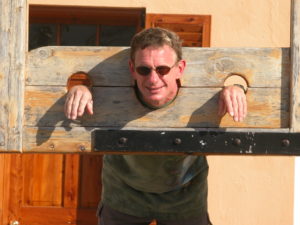
I could not take Randy into my new-found world of love and happiness, I could only share, ever so briefly, my personal experience of it. Such is the way of much of the world, who have adapted in their own unique ways to not experiencing cosmic love. Our egos do a fine job shielding us from our greatest good. Sometimes, it takes a miracle, a transcendent vision, to shake us free from the ego’s pillory.
The image of the Mona Lisa holding a baby is a fascinating, enlightening image. I was later taught to understand that this energy is the Divine Feminine, of which our patriarchal world continues to suppress daily, and has successfully done so, more or less, for at least the last 2000 years. The wonderful feelings that accompanied that vision became known to me as divine horripilation.
It was reported some time back that Leonardo DaVinci had painted the Mona Lisa as a self-portrait of himself, in feminine form. His message is subject to interpretation, but in today’s terms, he was honoring his feminine side, or nature. He saw that the source of all creativity came from this mysterious, non-conscious center within himself where feelings of wonder, awe, mystery, and sensitivity to and compassion for others arises from. His mission was to symbolically represent the divine within himself, through the most effective medium of the day, which was painting.
Consciousness presented this as a healing image to my awareness. I saw how this feminine side carried all of the divine love and deep feelings of goodness that I had ever wanted for myself. I was literally re-birthing myself, and this image of the mother holding the baby represented that new birth to perfection.
Mysterious Image of divine Mother’s love?
This was not the conditional love we exchange in our daily relationships. This was Love itself—a generous, boundless essence that coursed through me like an eternal stream. The universe, which had once felt cold and indifferent, now embraced me as its cherished child.
This was my introduction to the Divine Feminine. It was a revelation that stands in stark opposition to the patriarchal narratives I had so often encountered within religious institutions, where the feminine is diminished and, at times, entirely erased.
My spiritual awakening illuminated an essential truth—the Divine Feminine is not an abstract concept or mere metaphor. It is a vital energy that complements the Divine Masculine, bringing balance, nurturing, and creativity to the cosmos. Yet, for centuries, patriarchal systems have sought to suppress it.
One of the greatest challenges we face in both personal and collective transformation is breaking the silence that fear of rejection and shame enforces. Too often, we feel compelled to “look good,” presenting polished exteriors to the world that we think will be readily accepted while hiding our authentic selves. This tendency creates barriers to honest connection and healing.
Recovery, much like spirituality, thrives on vulnerability. Sharing our stories—our real stories, not the airbrushed versions—is an act of courage that not only liberates us but also invites others to reflect on their own journeys.
It takes strength to defy societal norms that encourage silence about spirituality, addiction, or even emotional suffering. However, each time we speak openly, we chip away at the walls of ignorance, misunderstanding, and judgment.
Spiritual transformation is never just about the individual. When we embrace our own healing, we create a ripple effect that benefits our communities and the larger world. Whether it’s guiding someone else to begin their recovery or simply modeling authentic living, the small acts that stem from spiritual integrity have the power to inspire profound change.
By acknowledging and honoring the Divine Feminine in all of us, by integrating spirituality into recovery, and by sharing our experiences freely, we serve not only ourselves but also the greater good.
If there’s one message, I hope you’ll take away, it’s this: Seek authentic self-discovery. Uncover the layers of self-doubt, shame and conditioning that keep you from experiencing who you truly are. Explore the depths of your spirituality, and don’t be afraid to share your story—no matter how raw or unconventional it may be.
Your story has the power to heal—not just you, but the countless others who need to hear it. Together, we can break the “Conspiracy of Silence,” honor the balance of the Divine Feminine and Masculine, and create a world more open to Love itself.
Are you still attempting to search for your own personal Jesus? Your time is better spent searching for your true nature, rather than preying on Jesus and the collective ignorance surrounding his life and teachings. Then, other spiritually realized people can take their rightful place in your life, as your brothers and sisters in Spirit..
If you need someone to believe in, if you need to believe in a sacred presence that is real, and present for you in this moment, then start believing in yourself. Open your heart to the divine potential in yourself, everyone and everything and open yourself to your highest possibilities.
The time for silence is over.
The time for transformation is now.
Will you answer the call?

The Quiet Crisis of Early Childhood Bonding Disruptions
What shapes the foundation of a soul? Beyond genetics and biology, the earliest moments of nurturing and connection leave an indelible mark on the emotional and psychological blueprint of a developing human being. Yet, in modern society’s relentless pursuit of productivity and achievement, we increasingly sideline these foundational experiences, creating a quiet crisis that remains underexamined and poorly addressed.

Mom, Dad, and Pam, circa 1955
Consider the plight of an infant whose cries in the night are answered not by the warmth of an affectionate parent, but by the cocoon of a warm blanket while being “garaged” in a car to accommodate exhausted parents. Imagine the lingering effects on a child whose earliest bonds are fractured by a mother’s limited ability to breastfeed or her absence due to the demands of a career. These scenarios are emblematic of a larger cultural issue that prioritizes economic output over nurturing bonds, and are my real life experience.

What happens to these children when vital aspects of human development are compromised? What future are we sculpting when care is outsourced, touch is minimized, and time is rationed? What happens when a child is traumatized by lack of nurturing and attention in the formative years? And what healing is possible for the adult who still is impacted by those deficiencies in their upbringing?

The first few years of life are a crucible where emotional, psychological, and even physiological characteristics are cast. Neuroscientists and psychologists alike emphasize the critical importance of secure attachment in early childhood. The unique interplay between a caregiver’s love, attuned presence, and responsiveness directly shapes a child’s ability to trust, empathize, manage emotions, and form meaningful relationships throughout life. This isn’t just anecdotal. Research shows that secure attachment and early bonding literally shape the architecture of the brain, particularly regions responsible for stress regulation, empathy, and social functioning.
Breastfeeding, while often discussed in terms of its nutritional benefits, also serves as a profound vehicle for bonding. Oxytocin, sometimes called the “love hormone,” is released in both mother and child during breastfeeding, cultivating a sense of closeness and attachment. When breastfeeding is absent, either by necessity or choice, this avenue of connection narrows.
When these early experiences are missing or disrupted, the consequences can be far-reaching. Studies link disrupted attachment to a range of long-term challenges, from difficulty in emotional regulation to an elevated risk of depression, anxiety, and insecure attachment patterns in adulthood.
For many modern families, the solution to these challenges lies in non-family caregivers such as babysitters or daycare providers. These caregivers can play an essential role in a child’s development, providing care and nurturing in the absence of parents. However, their ability to fully replicate the unique emotional bond shared between parent and child remains limited.
Although good caregivers can soften the impact of reduced parental involvement, they are unlikely to completely fill the void left by the lack of a consistent, loving parental presence. Psychologists suggest that frequent changes in caregivers or a lack of emotional attunement may exacerbate attachment disruptions, leaving children vulnerable to insecurity and mistrust.
A deeper societal examination reveals the systemic forces at play. The economic structure of modern society often forces parents to prioritize work over early nurturing, despite the profound long-term effects this may have on their children. For mothers, the pressure is magnified. Many women face impossible choices in balancing the demands of a competitive workforce with the emotional and physical labor of parenting.
This isn’t just a personal struggle; it’s a societal dilemma fueled by inadequate parental leave policies, high childcare costs, and cultural narratives that undervalue caregiving roles. When the nurturing years are left unsupported, we witness a ripple effect across generations, where children inherit the voids left by institutional neglect of families.

The scars of disrupted early bonding rarely fade. Adults who experienced insecure attachments as infants may struggle with forming trusting and fulfilling relationships. Research also links such disruptions to increased risks of developing anxiety disorders and depression later in life. These outcomes extend beyond individual suffering to a societal level, contributing to public health challenges, social disconnectedness, and rising mental health concerns.
By failing to create an environment that supports early bonding experiences, we limit the full potential of human flourishing. The cost of “efficient” parenting today may be an epidemic of emotional inefficiency and instability tomorrow.
If we are to address this profound issue, we must begin by recognizing the critical importance of parental presence and early bonding in a child’s life. Here are steps we, as a society, can take to reverse the trend of prioritizing productivity over nurturing:
- Advocate for policy changes such as extended parental leave, affordable childcare, and breastfeeding-friendly workplaces.
- Promote awareness campaigns that emphasize the importance of early bonding for healthy child development.
- Support parents with resources, such as counseling, education programs, and flexible work schedules, to help them balance their careers and family responsibilities.
- Redefine societal values, celebrating caregiving as a vital and honorable role while challenging the narrative that productivity solely defines self-worth.
Consider the immense untapped potential of a world where every child’s early emotional and developmental needs are met with care and intention. By reshaping societal priorities and structures, we hold the power to cultivate a generation better equipped to lead, empathize, and connect.
This isn’t just about parenting; it’s about fostering a more compassionate, emotionally resilient society. We must ask ourselves difficult questions about the systems we’ve built and the prices we’re willing to pay for progress.
If we continue to deprive future generations of the foundation they so desperately need, we risk creating a world of individuals perpetually seeking connection in all the wrong places. But if we choose awareness and change, we can build a future marked by secure attachments, stronger communities, and unparalleled human potential.
The time to act is now. Society requires us, as individuals and communities, to reevaluate what we prioritize. Start by reflecting on your role within this dynamic and consider how we can collectively realign our systems to support both family growth and broader societal health.
Together, we can reclaim the nurturing bond that every human being deserves.
The Silent Epidemic of Our Age ~How Societal Shifts and Childhood Trauma Fuel Mental Health Crises
Why do so many individuals in our modern world feel unseen, unheard, and unanchored? What does it say about society when suicide is a leading cause of death in certain populations?
We stand at a crossroads in human history, confronting a silent epidemic that continues to grow in scale and consequence while being too often ignored. Mental health crises have become a defining challenge of our age, one exacerbated by sweeping societal shifts, the erosion of community empathy, and the enduring scars of childhood trauma.
It’s time for an honest, unflinching exploration of how we arrived here and what must change for individual healing and collective transformation to occur.
Modern culture prizes individual success, enterprise, and self-actualization above all else. Throughout much of history, communities operated with a shared sense of responsibility for one another. Empathy, connection, and collective well-being formed the fabric of thriving societies.
Today, that fabric has been frayed by the threads of hyper-individualism. When success becomes synonymous with self-reliance and autonomy, vulnerability is treated as weakness. People suffering from mental health challenges are stigmatized, often left to grapple silently with their struggles.
Social media exacerbates this isolation, presenting curated portraits of success that lead individuals to internalize feelings of inadequacy and failure. The polished exteriors mask the inherent messiness of human imperfection, perpetuating the harmful belief that personal struggles are abnormal. The result? A society where emotional suppression and loneliness thrive, leading to skyrocketing rates of anxiety, depression, and suicide.
Communities thrive when the value of collective support outweighs the obsession with personal achievement. Healing requires us to reconnect with the sense of shared humanity largely lost in today’s culture.
Childhood trauma doesn’t remain confined to the early years of life; it ripples outward, influencing adult relationships, self-worth, and the ability to address stressors effectively. The Adverse Childhood Experiences (ACE) study highlighted a stark reality: early trauma significantly contributes to long-term mental and physical health challenges, from higher risks of depression and anxiety to chronic illnesses such as heart disease.
Neuroscientific research confirms that childhood trauma alters brain development, particularly in regions governing emotional regulation, empathy, and stress responses. When left unaddressed, these changes create cascading problems that persist across future generations.
Societal change must prioritize early intervention. By investing in trauma-informed approaches in schools, healthcare, and community programs, we can mitigate the lasting effects of adverse experiences and empower individuals to rewrite destructive patterns.
Mental health crises thrive in silence. To dismantle stigma, society must shift its paradigm toward open, empathetic dialogue. Denying or concealing struggles amplifies isolation, while sharing stories humanizes the experience of mental health challenges.
From a personal perspective, one encounter clearly illustrates this truth. Decades ago, I stood on the precipice of despair, burdened by layers of unresolved childhood trauma. A fleeting attempt to seek connection ended in rejection, encapsulating the cold indifference haunting much of modern society. Yet surviving that moment catalyzed a profound realization—that the silence surrounding mental health serves as both a barrier and a battleground. More than anything, breaking away from shame and speaking openly is where societal healing must begin.
Key Actions:
- Encourage conversations about mental health in families, workplaces, and public forums.
- Share personal narratives of resilience to normalize vulnerability.
- Build and fund community spaces where individuals can feel safe letting down their guard.
A path forward exists, but it requires radical shifts in priorities, understanding, and support systems. Here are some actionable ways society can begin to tackle the mental health crisis at its root.
To counteract the loneliness fostered by individualism, institutions and leaders must invest in rebuilding community connections. Policies promoting group engagement, volunteerism, and peer-led mental health programs could serve as hubs for reconnection.
Schools represent critical ground for identifying at-risk children. By training educators to recognize signs of trauma and offering resources for intervention, we can provide support before wounds fester into lifelong scars.
One of the most significant barriers to mental health support is cost and availability. Expanding access to affordable therapy, counseling, and community mental health services, especially in underserved regions, is paramount.
While technology can isolate, it also holds immense potential for connecting individuals with care. AI-powered tools, teletherapy platforms, and crisis intervention apps have already shown promise but must be deployed with ethical oversight.
Business leaders, policymakers, and educators must serve as advocates for mental health awareness. By modeling empathetic leadership and prioritizing wellness initiatives, they can set the tone for inclusive, supportive environments.
At its heart, the silent epidemic reflects more than individual struggles. It signals a societal failure to extend empathy where it’s most needed. Each interaction, whether between neighbors, colleagues, or loved ones, carries an opportunity to choose compassion over indifference.
We need a cultural shift that redefines success—not as a measure of individual achievement but as a collective commitment to seeing and supporting one another. Empathy must return to the forefront of human interactions, permeating policies, workplaces, and everyday experiences.
Begin with small acts of connection in your own life. Reach out to a friend, colleague, or family member who might be struggling. Advocate for the integration of mental health discussions in your workplace. Join or support organizations advancing mental wellness initiatives. Together, these micro-changes can initiate macro shifts.
The march toward a mentally healthier society begins with breaking the silence. It’s a truth steeped in both ancient wisdom and modern neuroscience—healing arises when individuals feel seen, heard, and supported.
We must collectively stand against the tide of isolation and indifference by fostering environments rooted in empathy, resilience, and proactive care. It’s not enough to merely hope for change; we must embody it.
For those ready to take the next step, there are abundant resources and professionals ready to guide you on your path to healing. Together, we can rewrite the narrative, remembering that mental health is not an individual burden but a shared responsibility.
This is a call to action for all of us—to listen, to learn, and, most importantly, to lead with compassion and connection. Because when we choose to see beyond ourselves, we reclaim the humanity that binds us.
Nobody should have to attempt suicide, and go through years of despair and darkness, to finally find the divine light switch to turn their life back on.
Nobody.
Chapter 14: Revisiting May 24, 1987: Breaking the Silence: A Journey Through Trauma to Spiritual Rebirth
The human soul carries within it an extraordinary capacity for renewal—a truth I discovered not through theological study or philosophical contemplation, but through the raw crucible of personal devastation and subsequent spiritual awakening. What began as a descent into addiction and despair ultimately became my pathway to understanding the profound healing power that emerges when we courageously confront our deepest wounds and embrace the transformative presence of the Divine Feminine.
This is not merely a personal testimony, but an invitation to examine how trauma—particularly that which stems from rigid gender roles and religious conditioning—can become the very catalyst for our most profound spiritual evolution. Through sharing this intimate journey, I hope to illuminate pathways toward healing that honor both our individual struggles and our collective need for authentic spiritual connection.
The Roots of Collective Trauma
Before we can understand the healing journey, we must first acknowledge the pervasive sources of trauma that shape our earliest experiences of self and world. Two primary wellsprings of collective wounding have dominated human consciousness for millennia, creating patterns of separation that echo through generations.
The first source emerges from the unconscious acceptance of rigid gender roles that extend far beyond biological distinctions between male and female. These culturally imposed expectations create artificial boundaries that limit the full expression of our humanity. Men are conditioned toward competitive individualism, encouraged to suppress emotional vulnerability, and taught to measure worth through dominance and achievement. This paradigm not only traumatizes masculine energy but also systematically devalues the collaborative, nurturing qualities that represent the essence of feminine wisdom.
Women, conversely, face their own constellation of limiting expectations. Religious traditions have often relegated feminine voices to subordinate positions, while broader cultural narratives reduce women to roles defined by their relationships to others—as objects of desire, vessels of procreation, or support systems for male achievement. These imposed limitations deny the profound creative and spiritual power that the feminine principle represents.
The second major source of collective trauma emerges from religious teachings that fundamentally misconstrue human nature and worth. From childhood, many of us absorb messages about our inherent sinfulness, our separation from the divine, and our need for external salvation. These doctrines create deep wounds of unworthiness that can persist throughout our lives, obscuring our recognition of the sacred presence that dwells within our very being.

My own journey into trauma began early, rooted in maternal absence during my most vulnerable months. Unable to breastfeed and consumed by work responsibilities, my mother could offer little of the nurturing presence my infant soul craved. Nights spent crying alone in a car in the garage, away from the household’s peace, created a foundational wound of disconnection that would echo through my formative years.
This early deprivation manifested as delayed speech, recurring nightmares, and a persistent sense of not belonging in the world around me. At school, my attempts to gain attention often resulted in disciplinary trouble, while my natural affinity for the gentler company of girls left me feeling alienated from male peers who seemed more at ease in their prescribed roles.
Adolescence brought little relief from these struggles. The competitive, often cruel dynamics of teenage social hierarchies amplified my existing wounds, while romantic relationships remained elusive mysteries that deepened my sense of inadequacy. An ill-fated early marriage and its subsequent dissolution in 1984 further compounded feelings of failure and despair.
By 1986, these accumulated wounds had reached a breaking point. The pain of disconnection from love, from purpose, from any sense of belonging in the world became so overwhelming that I attempted to end my life. Yet even in that darkest moment, something deeper stirred—a recognition that there might be pathways through suffering that I had not yet discovered.
What followed was a year-long descent into Portland’s criminal underworld, my consciousness numbed by substance abuse as I navigated the shadows of society. Yet this apparent destruction was actually a necessary dissolution, breaking down the false structures of identity that had never truly served my authentic being.
Recovery began in March 1987 with my engagement with Alcoholics Anonymous and other 12-step programs. These frameworks provided essential tools for rebuilding my foundation, but it was the integration of genuine spiritual practice that gave my healing both depth and meaning. Through the guidance of teachers like Jack Boland, whose tape series “Twelve Steps to a Spiritual Experience” became a crucial influence, I began to understand that recovery extends far beyond abstaining from substances—it represents a profound transformation of the soul itself.
Two months into this new journey, on May 24, 1987, my yearning for healing culminated in an experience that forever altered my understanding of both divine love and my own nature. While driving through the West Hills toward a friend’s house, I was overwhelmed by a vision of extraordinary power and beauty.
The image that came to me was that of the Mona Lisa, serene and timeless, nursing a baby. But this was not merely a visual experience—it was a complete sensory and emotional encounter with what I can only describe as infinite maternal love. For an entire week, I felt enveloped in a profound sense of divine nurturing, as though all the maternal care that had been absent in my earliest months was now being bestowed upon me in transcendent form.
The light of this divine motherly love seemed to permeate every corner of my being, healing wounds I had carried since infancy. I had to stop my car on Canyon Boulevard, fall to my knees, and offer my gratitude to a Creative Force that had finally found me receptive to its presence.
Understanding the Vision’s Deeper Meaning
This profound experience revealed layers of meaning that continue to unfold in my understanding. The choice of the Mona Lisa as the vessel for this divine communication was not arbitrary—Leonardo da Vinci himself is said to have painted this masterpiece as a self-portrait in feminine form, honoring the divine feminine aspect within his own consciousness. His message, interpreted through contemporary understanding, represents the recognition that all true creativity emerges from the mysterious, intuitive center where wonder, compassion, and sensitivity to others arise.
The image of the divine mother nursing represented my own spiritual rebirth. I was literally being re-mothered by the universe itself, receiving the unconditional love and nurturing that forms the foundation for all healthy development. This was not the conditional love we exchange in daily relationships, but Love itself—a generous, boundless essence that flows eternally through creation.
More significantly, this vision introduced me to the Divine Feminine—not as an abstract concept or theological metaphor, but as a living, healing presence that complements and balances the Divine Masculine. This revelation stood in stark opposition to the patriarchal religious narratives I had encountered, where feminine wisdom is diminished or entirely erased from spiritual understanding.
The suppression of the Divine Feminine represents one of the most profound spiritual tragedies of our time. For centuries, patriarchal systems have systematically devalued the collaborative, nurturing, and intuitive qualities that the feminine principle embodies. This suppression has created a profound imbalance not only in our spiritual understanding but in our approach to relationships, governance, and our connection to the natural world.
The Divine Feminine brings qualities essential for our collective healing: the capacity to nurture growth rather than demand performance, to seek unity rather than perpetuate division, to honor the interconnectedness of all life rather than fragment existence into competing parts. When we suppress these qualities—whether in individuals or in society—we create the conditions for the very trauma and disconnection that plague our modern world.
My vision revealed that healing our deepest wounds requires not only personal work but also the restoration of this sacred balance. The maternal love I experienced was not simply divine comfort for my individual pain—it was a revelation of the healing presence that humanity desperately needs to rediscover.
The journey toward spiritual healing and recovery requires both inner work and practical engagement with transformative practices. Based on my own experience and continued exploration, several key elements emerge as essential for anyone seeking to heal from trauma and connect with their authentic spiritual nature.
Acknowledge and understand your trauma. Healing begins with honest recognition of the wounds we carry, particularly those stemming from gender role conditioning and religious messaging about our fundamental worth. This acknowledgment is not about blame or victimization, but about creating the foundation for transformation.
Explore spirituality as a path to healing. Traditional recovery programs, while essential, often lack the spiritual depth necessary for complete transformation. Investigate practices that connect you with transcendent love—whether through prayer, meditation, time in nature, or other contemplative disciplines.
Embrace the Divine Feminine within yourself. Regardless of your biological gender, you carry within you both masculine and feminine spiritual qualities. Learning to honor and integrate the feminine aspects—intuition, collaboration, nurturing, and unity consciousness—is essential for balanced spiritual development.
Seek supportive community. Recovery and spiritual growth thrive in environments of authentic sharing and mutual support. Find others who are committed to genuine spiritual development rather than adherence to rigid doctrinal positions.
Practice radical honesty about your experience. One of the greatest barriers to healing is our tendency to present polished versions of ourselves to the world. True spiritual growth requires the courage to share our real stories, including our struggles and failures.
Breaking the Conspiracy of Silence
Perhaps the most crucial aspect of spiritual healing is our willingness to break what I call the “conspiracy of silence” that surrounds authentic spiritual experience. Too often, fear of judgment or rejection keeps us from sharing the very experiences that could offer healing to others who desperately need to hear them.
When I shared my vision with others, I encountered a range of responses—from Randy’s physical reaction of tingling and raised arm hair to the Baptist minister’s attempt to redirect my experience into acceptable theological categories. These responses taught me that genuine spiritual experience often challenges established frameworks and may not be immediately welcomed by those invested in conventional approaches.
Yet sharing our authentic spiritual experiences—no matter how unconventional—serves not only our own integration but also provides permission for others to acknowledge their own encounters with the sacred. Each time we speak honestly about our spiritual journey, we create space for others to explore their own deeper truths.
Spiritual awakening is not a single event but an ongoing process of integration and deepening understanding. The vision of May 24, 1987, marked the beginning of my conscious relationship with divine love, but the work of embodying that understanding in daily life continues to this day.
This integration involves constantly choosing love over fear, connection over separation, and authentic expression over conformity to expectations that do not serve our highest good. It means recognizing that our individual healing contributes to the collective healing our world desperately needs.
The Divine Feminine presence that revealed itself in my vision continues to guide my understanding of what it means to live from spiritual authenticity. This guidance manifests not as external commands but as an inner knowing that draws me toward choices that honor both my own deepest nature and the interconnected web of life of which we are all part.
The time for spiritual pretense and surface-level healing has passed. Our world faces challenges that require the deepest wisdom traditions have to offer, integrated with courage to transcend the limitations of past religious and cultural conditioning.
If my story resonates with your own longing for authentic spiritual connection, I encourage you to begin or deepen your own exploration. This might involve sharing your experiences in the comments below, joining our community forum to connect with others on similar journeys, or exploring related resources that honor both the masculine and feminine aspects of spiritual development.
Consider seeking support from therapists or spiritual advisors who understand the integration of recovery work with authentic spiritual practice. Begin implementing practices like prayer, meditation, and conscious time in nature that can open you to direct spiritual experience.
Most importantly, have the courage to break your own conspiracy of silence. Your story—no matter how unconventional or challenging—has the power to heal not only your own wounds but also to provide hope and guidance for countless others who need to hear that transformation is possible.
Remember to acknowledge and honor the Divine Feminine in all of us, by integrating spirituality into recovery, and by sharing our experiences freely, we serve not only ourselves but the greater good that our world desperately needs.
The time for silence is over.
The time for transformation is now.
Will you answer the call?
Chapter 27: Healing the Fractured Soul: Integrating the Divine Feminine in a Patriarchal Paradigm ( a bigger version exists)
Have we constructed a towering monument to our own spiritual starvation? For millennia, the architecture of human consciousness has been heavily dictated by a patriarchal paradigm. This framework has molded the masculine experience into an archetype of rigid dominance, linear control, and emotional detachment. While this architecture of the mind has undeniably yielded extraordinary technological and architectural feats, it has simultaneously left us grappling with a profound, gnawing spiritual malnutrition. We are currently witnessing deep fractures within the human psyche—a direct consequence of the historical exile and systemic suppression of the divine feminine archetype.
Yet, beneath the relentless clamor of empire building and orthodox religious dogma, a quiet, potent lineage of visionaries has always existed. By turning inward and embracing the untamed currents of the divine feminine, these historical and modern pioneers have actively labored to heal these deep fractures. They recognized that to cure our divided consciousness, we must undertake the profound inner alchemy of reintegrating the feminine into our collective and individual psyches, restoring the sacred balance between action and receptivity, mind and matter, father and mother.
The Crisis of the Hyper-Rational Psyche
We face an acute crisis of modernity: a hyper-rational psyche that has fundamentally severed the tether to its own soul. This disconnection breeds a profound sense of incompleteness. Historically, orthodox religious traditions have exacerbated this fracture by elevating masculine ideals of distant, unyielding perfection while simultaneously degrading the feminine, earthly, and bodily aspects of existence.
This theological hierarchy has cultivated an extractive and dominion-obsessed mindset, teaching us to conquer the earth rather than commune with it. Fortunately, the lineage of sacred receptivity provides a historical antidote to this spiritual sickness.
A Lineage of Sacred Receptivity
Throughout history, brave spiritual pioneers have refused to let the sacred feminine remain in exile. They demonstrated that true human wholeness requires the integration of intuitive, nurturing, and relational forces.
St. Francis of Assisi: The Somatic Mystic
St. Francis of Assisi stripped himself of the toxic masculine pursuits of wealth, status, and warfare. By embracing a horizontal kinship with creation and revering “Sister Mother Earth,” he demonstrated that true spiritual sovereignty is found not in dominion over the natural world, but in radical, systemic care and communion with it.
His dramatic renunciation of his father’s merchant empire—literally stripping himself naked in the public square of Assisi—was a profound spiritual divestment. It was the shedding of the patriarchal armor that insulates the ego from the raw, beating heart of existence. In standing bare before the world, Francis embraced a radical vulnerability that is intrinsically tied to the receptive nature of the feminine. This vulnerability culminated in his lifelong devotion to “Lady Poverty,” whom he romanticized as a mystical bride. This personification of emptiness as a divine, feminine companion challenged the accumulation-obsessed dogma of his era, teaching that only when the hands are entirely empty can they truly hold the divine.
Furthermore, Francis’s spirituality was undeniably somatic, rejecting the orthodox mind-body dualism that alienated the flesh. His reception of the stigmata was a visceral testament to a spirituality deeply anchored in the physical body. He allowed the divine to wound and rewrite his very biology, merging the spiritual with the earthly. Alongside St. Clare, he cultivated a monastic vision that honored feminine wisdom, offering a vital blueprint for the fragmented modern psyche to plant its feet back into the soil.
Jalal ad-Din Muhammad Rumi: The Ecstatic Surrender
In the 13th century, long before modern psychology provided a clinical vocabulary for internal integration, the Sufi poet Rumi subverted the rigid, law-bound religious structures of his era. In a theological landscape that frequently equated divinity with a punishing, distant patriarch, Rumi experienced the Divine through the lens of ecstatic, all-consuming love and profound receptivity—qualities deeply rooted in the feminine archetype.
Rumi understood that the hyper-rational mind, while useful for navigating the material world, acts as a barrier to true spiritual union. He wrote of the soul’s yearning with a tenderness that deliberately bypassed the intellect. For Rumi, the pursuit of God was not a conquest to be won through rigid adherence to scripture, but a romantic dissolution of the self. Through his poetry and the physical practice of the whirling dervish, Rumi embodied a kinetic receptivity. The whirling is a physical manifestation of becoming an empty vessel, a decentralized ego surrendering to the gravitational pull of the Beloved. By reframing spiritual sovereignty as absolute, vulnerable surrender, Rumi helped balance the religious consciousness of his era, proving that the heart’s fluid intuition is as sacred, and often more truthful, than any codified law.
Carl Jung: The Psychological Alchemist
Centuries later, the Swiss psychiatrist Carl Jung brought the divine feminine out of the mystical shadows and subjected it to the clinical light of the modern age. Jung astutely diagnosed the crisis of the modern man: a psyche heavily defended, excessively rational, and tragically alienated from its own soulful depths. To remedy this, Jung introduced the concept of the Anima—the unconscious, animating feminine aspect residing within the male psyche.
Jung argued fiercely that unless a man confronts, embraces, and ultimately integrates this inner feminine energy, he remains incomplete, projecting his unresolved psychological fractures onto the world around him. This process of individuation requires the ego to relinquish its illusion of absolute control and enter into a courageous dialogue with the unconscious—a realm Jung characterized as deeply fluid, nurturing, intuitive, and relational. Jung’s revolutionary framework dismantled the illusion of the monolithic male mind. He revealed that psychological alchemy cannot occur through logic alone; it demands a descent into the shadowy, fertile waters of the psyche, where the masculine ego learns to receive rather than dictate.
Pierre Teilhard de Chardin: The Earthbound Visionary
In the 20th century, the Jesuit priest and paleontologist Pierre Teilhard de Chardin committed what was then a radical act of spiritual defiance: he sanctified matter. In a religious tradition that had historically elevated the masculine heavens while degrading the feminine earth, Teilhard saw the divine pulse coursing directly through the dirt, the rocks, and the biological unfolding of the cosmos.
For Teilhard, the Earth was not a fallen realm to be transcended, but the very matrix of divine revelation. He wrote beautifully of the “Feminine” as the unitive, magnetic force of love that draws all fragmented creation toward a point of ultimate spiritual convergence, which he termed the Omega Point. By marrying evolutionary science with a profound mystical reverence for the Earth Mother, Teilhard challenged the sterile, mechanistic worldview of the industrial age. He recognized that matter (derived from mater, meaning mother) is inherently sacred. His theology offered a potent antidote to the extractive mindset of modernity, insisting that the spiritualization of humanity requires a deep, loving communion with the physical world.
Matthew Fox: The Modern Theologian of Creation
Building upon this ancient and rich legacy is Matthew Fox, the modern theologian and former Dominican priest whose refusal to adhere to a theology rooted in “original sin” and patriarchal hierarchy led to his expulsion by the Vatican. Fox boldly championed Creation Spirituality, a theological framework that fiercely reclaims the divine feminine.
Fox shifted the narrative from a paradigm of inherent brokenness to one of “Original Blessing.” By resurrecting the suppressed teachings of medieval female mystics and advocating passionately for eco-justice, Fox provided a modern blueprint for dismantling toxic theology. He recognized that an exclusively transcendent, patriarchal God sanctions the domination of the earth and the marginalization of the vulnerable. Fox’s integration of the divine feminine insists that spiritual authority must be rooted in compassion, vibrant creativity, and ecological reverence rather than institutional control and punitive doctrine. His work serves as a rallying cry to honor the sacredness of the cosmos as the primary revelation of the divine.
The Layperson: Healing the Patriarch Within
This profound legacy of integration is not reserved solely for historical giants, mystics, or renowned theologians; it beats relentlessly within the chest of the ordinary individual who awakens to their own inherited wounds. As a layperson who once suffered under the crushing, suffocating weight of a culturally endorsed, emotionally starved masculinity, the necessity of this alchemy is deeply personal.
My own spiritual rebirth began on a quiet day in May 1987. It did not arrive wrapped in complex theology or institutional ritual, but as a direct, unmediated encounter with an infinite, motherly presence. It was a wave of grace that held me without demanding performance, production, or conformity. To heal the patriarch within is to experience this radical dissolution of the armor we have been taught to wear. It is the daily, often painful realization that our ultimate liberation lies not in mastering the external world, but in allowing ourselves to be held by the deeply nurturing, uncompromising grace of the sacred feminine. It is the quiet choice to soften, to listen, and to receive.
The Alchemy of Integration
The mandate of our time is not to simply swing the pendulum from one extreme to another, replacing one form of domination with another. Rather, the task is to forge a sacred, internal marriage between action and receptivity, logic and intuition, mind and matter. We can no longer afford the spiritual cost of suppressing the nurturing and relational forces that allow us to live in harmony with the cosmos.
Healing the fractured soul requires a conscious, deliberate descent into the depths of our own being to reclaim what has been exiled. By embracing this profound inner alchemy, we construct a new paradigm of consciousness—one rooted in wholeness, deep ecological reverence, and an enduring, integrated peace.
Chapter 27: Breaking the Silence—Restoring the Circuitry of the Divine Feminine
The human soul acts much like a conductor of energy, carrying within it an extraordinary capacity for renewal and transmission. I discovered this truth not through theological study or philosophical contemplation, but through the raw crucible of personal devastation and a subsequent, transformative spiritual awakening. What began as a short-circuit of the spirit—a descent into addiction and despair—ultimately became my pathway to understanding the profound healing power that emerges when we courageously confront our deepest wounds and embrace the balancing and healing presence of the Divine Feminine.
If you were to judge by the earlier chapters of this book, “An Electrician’s Guide to Our Universe,” you might assume my life followed a schematic of organized progression: a linear path of learning, grounding, and eventual enlightenment. Nothing could be further from the truth. My journey was not designed by a spiritually inspired electrical engineer; it was an installation by an unqualified plumber, a chaotic entanglement of misconnected and disconnected wires, and of crossed signals and blown fuses.
This is not merely a personal testimony, but an invitation to examine how trauma—particularly that which stems from the suppression of the feminine principle—can become the very catalyst for our most profound spiritual evolution. By sharing this intimate journey, I hope to illuminate how we can repair the broken connections that plague not just our individual lives, but our collective bandwidth.
The Roots of the Short Circuit: Early Trauma
Before we can understand the unlimited potential of healing, we must first inspect the entire human network where the wound arose from. We must acknowledge the pervasive sources of trauma that shape our earliest experiences of self and world.
The foundation of a soul, beyond genetics and biology, rests in the tender moments of connection and care during our formative years. When these moments are fractured, they leave behind cracks that reverberate through adulthood. My own journey into trauma began early, rooted in a profound maternal absence during my most vulnerable months.
Surviving Dr. Spock: A Reflection on 1950s Parenting
In the triumphant wake of the Second World War, the American household underwent a profound and quiet transformation. The nation, intoxicated by the promise of scientific progress and industrial efficiency, allowed the ethos of productivity to permeate the sacred space of the nursery. Mothers and fathers surrendered their ancient, intuitive wisdom to the clinical authority of experts, seeking empirical formulas for the cultivation of human life.
Dr. Benjamin Spock emerged as the preeminent architect of this domestic paradigm. His manual on baby and childcare became the gospel for an anxious generation, promising order, discipline, and efficiency. Yet, beneath the veneer of this medical expertise lay a subtle crisis: the transformation of the home into a miniature factory. Child rearing became a metric of adherence to rigid timetables, where scheduled feedings and the methodical extinguishing of cries overshadowed the delicate, unstructured art of nurturing a soul.
My own early years were forged in the crucible of this stoic philosophy. Consumed by the relentless demands of the era and unable to breastfeed, my mother adhered to the prevailing doctrine of the time. To accommodate the need for a quiet, orderly house, I was frequently “garaged”—swaddled in a warm blanket but physically exiled to the family car to weep in isolation. This mechanical approach prioritized discipline over comfort, severing the spiritual tether that naturally binds a caregiver to their newborn.
Those solitary nights, echoing in the dark, left a foundational wound of disconnection. It was a severance of the primary circuit of human warmth. This early deprivation manifested not only as delayed speech and recurring nightmares, but as a persistent, haunting sensation of existing as an alien component within the vast machinery of the world. At school, my desperate attempts to command attention resulted in disciplinary friction. Finding a natural resonance with the gentler, more empathetic company of girls, I found myself profoundly alienated from male peers who were seamlessly integrating into their prescribed, rigid societal roles.
This personal trauma was merely a microcosm of a far broader collective wounding. The mid-twentieth century engineered a culture that exalted economic output over the delicate cultivation of relational bonds. It codified gender roles that conditioned men toward a sterile, competitive individualism, while systematically relegating feminine intuition and emotional vulnerability to subordinate spheres.
For me, this collective imbalance crystallized into a deep spiritual revulsion toward organized religion. Even in my youth, orthodox rituals and sacred texts felt distinctly hollow. They spoke exclusively of a Father God—a disciplinarian figure of hierarchy and judgment that mirrored the cold, scheduled affection of my infancy. The divine embrace was notably absent. This systematic suppression of the Divine Feminine in our spiritual narratives engineered a profound tragedy, leaving an entire generation feeling unworthy and inherently separated from the sacred.
As the decades have unspooled, our collective consciousness has finally begun to awaken from this clinical slumber. Modern developmental psychology has initiated a profound correction, recognizing that a child is not a machine to be programmed, but a spirit requiring deep cultivation. We now understand that holding a crying infant is not a failure of discipline, but a fundamental act of human compassion.
The legacy of the 1950s serves as a poignant reminder of how easily a society can lose touch with its innate, instinctual wisdom. As we reflect on the clinical advice that shaped an entire generation, we are called to heal these foundational wounds. To transcend the sterile era of mere productivity, we must courageously embrace the messy, deeply unstructured reality of love, trusting ourselves to nurture the future with open hearts and deeply attentive spirits.
The Descent into Darkness
Adolescence brought no relief, only an amplification of the static. The competitive dynamics of teenage social hierarchies deepened my wounds, while romantic relationships remained elusive mysteries. By 1984, an ill-fated early marriage and its subsequent dissolution compounded my sense of failure.
At age fifteen years old, and for the following fifteen years, I wandered through a landscape of despair, attempting to numb the pain with substance abuse. Alcohol and drugs became my primary spiritual practice, a false method of expanding my bandwidth that only served to degrade the signal. Each high promised transcendence but delivered only deeper entanglement in cycles of craving. Friends faded away, family relationships crumbled under the weight of broken promises, and employment vanished along with my reliability.
The descent reached its nadir on January 28, 1986. You have already read the story in a previous chapter.
Driven by the collapse of my marriage and a secondary love interest, and my own insouciance in the face of overwhelming odds, I decided to check out. This wasn’t an impulsive decision born of temporary sadness; it was a calculated assessment that the life I was experiencing held no value worth preserving. I had begun the rumination on my end when my addictions started at age 15, telling myself that if I could not escape their pillory by 30 years of age, I would kill myself. So, at 30 years of age I attempted to end my life.
The attempt failed. Waking up in the aftermath, I experienced not relief, but a confused, conditional acceptance. I was amazed at the coincidences that had prevented my departure, yet furious at a universe that kept me trapped in a meaningless existence.
In that moment of faux empowerment, I issued an ultimatum to the Universe. I reloaded my pill bottle—my insurance policy—and spoke into the void. I demanded that unless I could find a truth worth living for, a truth that resonated on a frequency I could actually feel, I would complete the work of self-destruction.
I began a search for Truth.
For the next year, I was sucked into the underworld of Portland, Oregon. I lived among the addicted, the lost, and the forgotten. Yet, here in the shadow realm, I encountered a different kind of wisdom—raw, unfiltered, and stripped of pretense. I lived without any inhibiting self-consciousness or shame as I plumbed the depths of human existence. I encountered an angel who lifted me away from certain death, eventually allowing me to embark on a new, sober journey.
Sobriety began in March 1987. It required a complete restructuring of my relationship with consciousness. For fifteen years, I had relied on chemicals to mediate reality. Now, I had to face the raw input of existence.
Two months into this clarity, I discovered a tape series by Jack Boland titled “Twelve Steps to a Spiritual Experience.” These recordings became my schematic for repair. Boland taught that recovery wasn’t just about abstaining from substances; it was about a profound transformation of the soul. He suggested that the very experiences I had dismissed as destructive—addiction, loss, despair—could serve as doorways to spiritual understanding.
I began to implement practices like prayer, meditation, and conscious time in nature. I started to feel a hum of energy returning. But the true surge, the voltage that would reconnect me to the source, was yet to come.
May 24, 1987: The Vision
It was a Sunday. I was driving through the West Hills of Portland, heading toward the home of my lifelong friend, Randy. I had been sober for two months. The static in my head had cleared enough for a new signal to come through.
As I drove along Canyon Boulevard, the air seemed to shift. The mundane scenery of the road dissolved into a feeling of intense, vibrating presence. Suddenly, I was overwhelmed by a vision of extraordinary power and beauty.
The image that flooded my consciousness was that of the Mona Lisa. But she was not merely sitting in her enigmatic repose; she was nursing a baby.
This was not a hallucination born of psychosis; it was a complete sensory and emotional encounter with what I can only describe as Infinite Maternal Love. It was a “Divine Horripilation”—a physical manifestation of spirit that caused the hair on my arms to stand up and a tingle to shoot down my spine.
For the first time in my life, the void left by those nights in the garage was filled. I felt enveloped in a profound sense of divine nurturing. It was as though the Universe itself had become my mother, bestowing upon me all the care, warmth, and safety that had been absent in my infancy.
The light of this love seemed to permeate every corner of my being. It was unconditional. It didn’t care about my addiction, my failed marriage, or my suicide attempt. It simply held me. I had to pull my car over to the curb, fall to my knees, and weep—not from sorrow, but from the sheer magnitude of gratitude.
Decoding the Signal: The Divine Feminine
This vision was my spiritual rebirth. I was literally being re-mothered by the Cosmos. But why the Mona Lisa?
As I integrated this experience over the coming weeks and years, I came to understand the symbolism. I had read some historical accounts where Leonardo da Vinci was thought to have painted the Mona Lisa as a representation of his own soul in feminine form, honoring the divine feminine aspect within his consciousness. This interpretation recognized that true creativity, wonder, and compassion emerge from that mysterious, intuitive center.
Consciousness had presented this image to me because it was the precise frequency I needed to heal. I had been wounded by a lack of feminine nurturing, and I had been spiritually starved by a patriarchal religious system that offered only judgment. The Divine Feminine—the nurturing, creative, connecting force of the universe—was the missing piece of my circuitry.
This revelation stood in stark opposition to the narratives I had been fed. The suppression of the Divine Feminine is perhaps the most profound spiritual tragedy of our time. For millennia, we have devalued the intuitive and the collaborative in favor of the dominant and the competitive. We have severed our connection to the Earth and to one another.
My vision revealed that healing our deepest wounds requires the restoration of this sacred balance. The Divine Feminine is not an abstract concept; it is a living, healing presence. It brings the qualities we are starving for: the capacity to nurture growth rather than demand performance, to seek unity rather than division, and to honor the interconnectedness of all life.
The Conspiracy of Silence
When I arrived at Randy’s house that day, I was vibrating. I hadn’t seen him since my drinking days, over two months prior. When he opened the door, he stepped back in shock.
“Bruce, what has happened to you?” he exclaimed.
“You look different. You look at peace. You have changed!”
I tried to explain. I told him about the vision, about the feeling of universal love. As I spoke, Randy began to rub his arms.
“Bruce, what is going on? When you talk, I start to tingle all over. The hair on my arms is standing up!”
He was feeling the resonance of the energy I had tapped into. Yet, even with the physical proof of the energy in the room, Randy pulled back.
“Such an experience is not for me right now,” he said.
I encountered a different, but equally resistant, reaction when I tried to share my experience with a Baptist minister. I sought context, validation, a shared language. Instead, I encountered the “Conspiracy of Silence.” He attempted to redirect my experience into acceptable theological categories, implying that a vision of the Mona Lisa nursing—of a secular, feminine divine—was invalid because it didn’t fit the dogma of White Jesus miracles.
This is the barrier we face. We have a narrow definition of the miraculous. We are taught that miracles belong to saints and prophets within the walls of a church. But what about the secular spiritual aspirant?
What about the electrician, the addict, the mother, the child?
I have discovered that these “secular” moments of transcendence are just as valid as any canonized miracle.
Whether it is a vision of Christ, a moment of awe in nature, or the Mona Lisa nursing a child, the core essence is the same.
Breaking the Conspiracy of Silence
What if the most profound experiences of your life—the ones that fundamentally shaped who you are—were never meant to be kept secret? What if, in the moments when the world needed them most, you were compelled to keep quiet? For too long, this “conspiracy of silence” has pervaded our collective consciousness, discouraging us from openly sharing our transformative spiritual journeys. This silence robs us not only of personal growth but also of the opportunity to ignite healing and change in those around us.
I know this because I’ve lived it. My life has been marked by moments of profound connection to the Divine, culminating in an extraordinary spiritual awakening. This experience lifted me from the darkest depths of addiction and despair and revealed a shocking truth that our world—steeped in patriarchal values and resistant to acknowledging higher levels of consciousness—desperately needs to hear. The institutional structures we often turn to for spiritual guidance—churches, synagogues, mosques—have buried divine energy under layers of dogma, hierarchy, and rigid gender roles. In a moment of absolute clarity, I experienced a universal love that extends to all beings, great and small. This crystallized my understanding of why so many people have rejected organized religion—not because they lack faith, but because these institutions often fail to reflect the expansive, unconditional truth of the Divine.
Reconciling this truth with societal expectations is no easy task. It requires rejecting the narrow norms imposed on us and courageously stepping into a higher awareness. This is the work of personal transformation—and it is not for the fainthearted. After reading the earlier chapters in this book, it would be easy to assume that I had led a fairly well-organized life with sufficient native spiritual and emotional intelligence to find my greatest good without too many problems. Nothing could be further from the truth. Conventional wisdom often suggests that a life imbued with uncommon knowledge follows a predictable path: religious study, gradual enlightenment, and methodical progress toward divine understanding. My journey shattered this assumption entirely.
This chapter is not merely a personal testimony but an invitation to examine how trauma—particularly that which stems from rigid gender roles and religious conditioning—can become the very catalyst for our most profound spiritual evolution. Through sharing this intimate journey, I hope to illuminate pathways toward healing that honor both our individual struggles and our collective need for authentic spiritual connection.
The Roots of Collective Trauma
Before we can understand the healing journey, we must first acknowledge the pervasive sources of trauma that shape our earliest experiences of self and world. Two primary wellsprings of collective wounding have dominated human consciousness for millennia, creating patterns of separation that echo through generations.
The first source emerges from the unconscious acceptance of rigid gender roles that extend far beyond biological distinctions between male and female. These culturally imposed expectations create artificial boundaries that limit the full expression of our humanity. Men are conditioned toward competitive individualism, encouraged to suppress emotional vulnerability, and taught to measure worth through dominance and achievement. This paradigm not only traumatizes masculine energy but also systematically devalues the collaborative, nurturing qualities that represent the essence of feminine wisdom. Women, conversely, face their own constellation of limiting expectations. Religious traditions have often relegated feminine voices to subordinate positions, while broader cultural narratives reduce women to roles defined by their relationships to others—as objects of desire, vessels of procreation, or support systems for male achievement. These imposed limitations deny the profound creative and spiritual power that the feminine principle represents.
The second major source of collective trauma emerges from religious teachings that fundamentally misconstrue human nature and worth. From childhood, many of us absorb messages about our inherent sinfulness, our separation from the divine, and our need for external salvation. These doctrines create deep wounds of unworthiness that can persist throughout our lives, obscuring our recognition of the sacred presence that dwells within our very being.
My own journey into trauma began early, rooted in maternal absence during my most vulnerable months. Unable to breastfeed and consumed by work responsibilities, my mother could offer little of the nurturing presence my infant soul craved. Nights spent crying alone in a car in the garage, away from the household’s peace, created a foundational wound of disconnection that would echo through my formative years. This early deprivation manifested as delayed speech, recurring nightmares, and a persistent sense of not belonging. At school, my attempts to gain attention often resulted in disciplinary trouble, while my natural affinity for the gentler company of girls left me feeling alienated from male peers who seemed more at ease in their prescribed roles.
Religious dogma, which provided structure and meaning to many others, became an object of total scorn. The sacred texts, the rituals, the promises of salvation—all of it felt hollow, disconnected from any authentic experience of the divine. This wasn’t mere rebellion; it was a complete spiritual revulsion that began in grade school and eventually left me adrift in a world devoid of meaning. Adolescence brought little relief. The competitive, often cruel dynamics of teenage social hierarchies amplified my existing wounds, while romantic relationships remained elusive mysteries that deepened my sense of inadequacy. An ill-fated early marriage and its subsequent dissolution in 1984 further compounded feelings of failure and despair.

Exploring Healing Through Cosmic Energy and Divine Love ~~How the Universe Guides Healing for a Wounded Life
Have you ever wondered why certain moments in life feel profoundly connected, as if a higher force is nudging you toward healing and balance? For many, the long-term effects of childhood deprivation or emotional wounds form echo that ripple through adulthood, shaping mental resilience, self-perception, and human relationships. But what if healing doesn’t solely rely on human intervention? What if cosmic energy, divine love, and universal connection could play an essential role in mending those deeply rooted scars?
There is an interplay between universal forces, divine visions, and symbolic gestures of love as catalysts for profound healing. Combining insights from psychology, spiritual seeking, and even artistic interpretations, we will explore how humans can reconnect with these energies to address wounds stemming from parental neglect, societal pressures, and the weight of unspoken emotional injuries.
Early childhood is a time of immense emotional and psychological development, laying the groundwork for how individuals perceive themselves and the world around them. However, the absence of nurturing or equitable care during these formative years can leave cracks in this foundation.
Research confirms that disrupted attachments and inadequate caregiving contribute to long-term emotional struggles. Symptoms often manifest as mistrust in relationships, anxiety, or even subconscious resentment. These repercussions are vividly depicted in storytelling mediums, like Michael Keaton’s My Life or the South Korean series When Life Gives You Tangerines, where imbalances in parental attention cast long shadows over adulthood.
Yet the question arises—can we repair what’s broken when time has passed, and childhood wounds linger? The answer lies in both human efforts and something far greater.
When life calls for reconciliation, human gestures of love, though imperfect, can act as bridges toward emotional repair. Consider the pivotal parenting moments in the stories mentioned above.
- The Circus Scene in My Life
When Michael Keaton’s character faced terminal cancer, his parents staged a backyard circus to address a cherished childhood moment they had denied him. Though such an act cannot erase years of deprivation, it is a powerful acknowledgment of the emotional inequity he experienced.
- The Pork Chops in When Life Gives You Tangerines
A long-festering family wound centered on inequity is met with a symbolic yet heartfelt recompense when an adult son’s mother offers son Eun-myeong all the pork chops he was once denied. While late, these gestures reflect an essential truth—humans attempt to heal through recognition and symbolic acts of love.
These acts, though limited by human imperfection, reflect a deeper necessity for healing rooted in acknowledgment and compassion. Yet, these symbolic reconciliations often leave a crucial void, underscoring the need for something greater than human effort.
I still remember the minimally supportive childcare centers and sometimes questionable babysitters my mother placed me with when I was under five years of age. I did not fully know of the emotional trauma and physical deprivation I experienced at the hands of my parents until I was twenty years old. An acquaintance of my father informed me of my baby body being isolated into a garaged car many evenings because of my cries kept my overworked father awake. When I confronted my parents with that information, they were unaware that this deprivation was harmful to my developing life. My mother mentioned studying Dr. Spock’s authoritative books and applying his wisdom as best she could. Of course they were sorry for their ignorance, but the damage had been done.
The path to deeper healing often transcends what human gestures such as an apology or human amends could ever bring. Mystical experiences and divine visions can create a bridge between the wounded soul and a higher cosmic balance.
Divine Visions as Catalysts for Healing
Throughout history, individuals have reported profound visions during moments of emotional despair or spiritual seeking. These visions often communicate personalized, transcendent truths designed for the receiver’s unique wounds. Take the story of me having seen the Mona Lisa nursing a child. For someone deprived emotionally in childhood like I was, this vision became a maternal archetype, integrating personal pain with universal truths.
- Healing Deprivation
The image symbolized unconditional, divine love. Its nurturing essence transcended early maternal absence, providing a spiritual re-parenting experience.
- Accessing The Universal Connection
Such visions aren’t coincidental. They occur as divine communication that uses forms resonating with individual consciousness. Whether representing maternal love or cosmic unity, these visions offer healing by aligning personal wounds with the abundance of universal energy.
You don’t need a life-altering vision to begin connecting with cosmic energy. Healing begins with practices that encourage introspection and invite divine connection.
- Meditative Reflection
Daily contemplation or meditation can help unveil subconscious wounds and provide clarity, opening a space for universal energy to flow into areas of hurt.
- Symbols of Reconnection
Surrounding oneself with meaningful symbols, such as artwork or objects that convey nurturing or balance, can evoke feelings of connectedness.
- Intention Setting
Invoke cosmic energy intentionally by setting goals that focus on forgiveness, resilience, or universal truth. This practice aligns you with forces beyond the earthly plane.
At the core of these experiences is love—not the conditional, transactional love of human relationships, but a boundless, infinite force. When parents offer symbolic reparations, or visions remind us of deeper truths, they act as conduits for this divine love.
This universal love manifests in ways tailored to individuals’ wounds. It may appear as a parental apology, the sunset at the end of a difficult day, or even an inexplicable sensation of peace. The Great Spirit, or cosmic energy, meets us at our breaking points, urging us to heal by connecting with a force far greater than our own.
The path to healing involves opening ourselves to both human attempts at reconciliation and the infinite power of divine love. If you are carrying the weight of childhood deprivation or emotional scars, consider these steps forward:
- Reflect on moments of symbolic connection in your life. How have they shaped your healing journey?
- Explore spiritual practices, such as meditation or journaling, to invite universal energy into unresolved areas.
- If you are a parent or caregiver, reflect on how your actions contribute to your child’s emotional development. Small gestures of acknowledgment and love can create lasting impact.
By combining human compassion with divine connection, we can create spaces where healing transcends limitations. The universe is always seeking to guide us toward harmony and balance. Will you allow it to?
Take the first step today.
Open yourself to experiences that nurture, heal, and align you with the vastness of cosmic energy and love.
We will find what our soul truly needs, if we consciously search for it.