Chapter 12: Insights on Consciousness: Voices, Silence, and the Evolution of Inner Awareness
What does it mean to hear a voice from within? To feel the presence of something greater—sometimes comforting, sometimes unsettling—emanating from the silent corners of the mind? My own experience has taken me from the softened threads of childhood imagination, tethered to a beloved doll, to the overwhelming and fractured lens of psychosis, and finally to a profound silence that feels, paradoxically, alive with insight. For anyone exploring the intersection of spirituality, neuroscience, and mental health, this personal narrative offers fertile ground for discovery.
When I was a child, I believed my doll, Perci, spoke to me over the telephone. It wasn’t so outlandish at the time—children often assign personalities and voices to their cherished objects. But this early phenomenon speaks to something more universal and primal within the human mind, reminiscent of reports where young children claim to hear the voice of God. Is this the byproduct of an evolving consciousness? Or is it the unfiltered access to the imagination and intuition that adulthood slowly numbs as our rational mind takes precedent?
Years later, in 1986, I experienced a schizophrenic break. The voices I heard during this time weren’t malevolent but observers of my reality, narrating my environment. Occasionally, I even convinced myself that I could hear others’ thoughts. For anyone who has faced something similar, such moments of perception blur the line between reality and distortion, creating a crack through which profound insight or crushing fear might emerge.
Later, I experienced something that felt akin to both a spiritual awakening and neurological healing. The voices softened and then dissolved into something else—a profound internal silence. Yet, this silence was not an absence or void. It became a source of clarity, the place where intuition and spontaneous insights arise. It took me years to understand that this personal evolution mirrored aspects of Julian Jaynes’s theories on human consciousness and the bicameral mind.
Jaynes’s controversial theory proposed that early human consciousness lacked the introspective, self-aware qualities we now possess. Instead, humans heard “voices”—the commands of gods or ancestors—as auditory hallucinations stemming from the right hemisphere of the brain. Over time, as societal complexity demanded a more flexible and cohesive self-awareness, the “bicameral mind”—with its auditory hallucinated directives—evolved into our modern brain configuration of introspection and independent thought.
Does my story align with that progression? My childhood experience of a voice speaking through Perci, my schizophrenic break filled with narrated observations, and the eventual arrival at an inner silence provide a deeply personal lens through which to consider Jaynes’s work. Whether spiritual or neurological in origin, these “voices” might unlock valuable insights about our brain’s structure and its evolution.
Stepping into the nexus of spirituality, neuroscience, and mental health demands a surrender of the binaries we often lean on—consider, for example, the dichotomy of “symptom” versus “spiritual experience.” What if hearing voices, while disruptive, isn’t merely a malfunction of the brain? What if it’s also an invitation—though perhaps not a welcome one—into the landscape of the mind, an unmasking of layers of thought and perception often hidden from ordinary consciousness?
Therapists, clinicians, and spiritual seekers alike could benefit from questioning these boundaries. The modern push toward de-stigmatizing mental illness encourages us to explore how individuals can move through moments of neural or psychological disruption toward healing. My eventual inner silence might symbolize what healing looks like for some—a restoration of balance that creates space for intuition and insight to thrive. But each person’s evolution is unique; not all paths will lead to silence. Some may find their healing in active dialogue with these inner “voices,” just as others may find peace within solitude.
Consciousness, I’ve found, is more ephemeral and layered than I once imagined. It shifts and reconfigures, adapting to the unfolding needs of the mind and spirit. For business professionals, scientists, or meditators, the implications of this fluid nature of awareness are immense.
Neuroscientists may explore the brain’s capacity to adapt following trauma or psychosis while meditation practitioners refine techniques to access internal silence—adding nuance to practices thought to “quieten the mind.” Therapists must wrestle with the construct of normalcy and whether the diffuse boundaries labeled as hallucinations and “God-experiences” might dislodge valuable insights into both trauma and transcendence.
For so much of my life, I had thought I was departing further from normalcy, flying into great distances of disconnection or delusion. What I have learned instead is this—the mind and spirit are resilient explorers. Even if they wander too close to chaos, there is always the potential for them to return, bearing treasures of insight and transformation.
Whether hearing voices, connecting to intuition, or dwelling in inner silence, we as humans are products of an extraordinary evolutionary process. It is the same process that allows us to feel broken and whole, disconnected and connected, silent, and profound.
What treasures might the “voices” or silence reveal to us if we approached them not simply as symptoms, but as part of the ongoing evolution of human consciousness? This is the question I pose to mental health practitioners, spiritual seekers, and neuroscience enthusiasts alike. And perhaps it is through this inquiry that we might all travel closer to understanding the self—and the divine whisper it occasionally hears.
( partially in June 22, 1987 section) The Grammar of Existence: How Pronouns Shape Our Shared Reality
We often operate under the illusion that our internal monologue is merely a commentary on the world—a passive ticker tape of thoughts running in the background of our consciousness. Yet, this view is a profound underestimation of the power of the mind. The language we use within the quiet chambers of our own skulls does not merely describe our reality; it constructs it. Perception is the architect of our existence, and the pronouns we choose—the “Is,” the “yous,” and the “theys”—are the bricks with which we build either bridges to our colleagues or walls that ensure our isolation.
When we examine the nature of our internal references, we frequently find a reliance on the second and third person. We project outwards. We define the “other.” But what happens when that projection turns inward? What does it mean when the voice in our head addresses us not as “I,” but as “you,” or even more distantly, as “he” or “she”?
The Architecture of Separation
To understand the weight of these internal references, we must first dissect what it means to speak in the second and third person within the theater of the mind. The third person—”they,” “them,” “he,” “she”—is the language of the observer. It places the subject at a distance. When applied to colleagues, it turns a team into a monolith. “They need to fix this.” “He is difficult.” It is a linguistic push, a subtle act of dissociation that places the speaker safely on the shore while watching the ship drift away.
However, this dissociation takes on a darker hue when applied to the self. Consider the individual who narrates their own life in the third person: “She needs to do better,” or “He always messes this up.” This is not merely an eccentricity; it is a profound alienation from the self. It suggests a fracture in self-knowledge, a viewing of one’s own soul as an object to be critiqued rather than a subject to be inhabited. It hints at a fragile self-worth that can only be managed by stepping outside of one’s body and judging it from a safe, critical distance.
The Duality of “You”
The second person—”you”—is more intimate, yet it remains distinct. It creates a duality: the “I” and the “Thou.” When we use “you” in self-talk—”You can do this,” or “Why did you say that?”—we split ourselves in two. There is the actor and the critic, the coach and the player.
While sometimes a useful tool for motivation, relying on “you” for internal dialogue can signal a lack of integration. It presupposes a separation within the psyche. It is the language of confrontation and address, even if that confrontation is benevolent. In our internal narratives, these choices are rarely accidental; they are defense mechanisms of the ego, designed to keep the raw vulnerability of existence at a manageable arm’s length. To refuse the “I” is to refuse full ownership of the experience.
The Illusion of Objectivity vs. The Truth of Interconnection
The danger lies in how these references calcify our perception. If perception creates reality, then utilizing the third person creates a reality of fragmentation. When we view our organization as a collection of “theys,” we sever the spiritual tendon that binds the collective body. We create a schism where there should be unity.
Consider the implications of a controlled experiment within a tech company, which revealed a startling truth about the power of direct address. Teams that received communications utilizing second-person references (“you”) demonstrated 25% greater engagement in collaborative tasks compared to those receiving third-person (“they”) directives. The shift from “they should do this” to “you are part of this” collapses the distance. It transforms a task from an abstract obligation into a personal calling.
This data suggests that the “othering” inherent in third-person language dampens the vitality of the human spirit. It renders the vibrant, chaotic, living organism of a company into a sterile machine of separate parts. Conversely, when we inadvertently create separation through language, we deny the fundamental truth of our interconnectedness. We deny that the success of the “other” is inextricably linked to the salvation of the self.
Bridging the Gap: The Power of the Inclusive Narrative
Some may argue that the third person is necessary for objectivity—that to assess a situation fairly, one must detach. There is a prevailing belief in business that emotional distance equates to professional competence. However, this perspective confuses clarity with detachment. One can see clearly without severing the heartstring of empathy.
True resilience and organizational health are found not in detachment, but in the radical embrace of the collective. Research from the Harvard Business Review illuminates this path, indicating that companies with inclusive language policies boast 70% higher rates of employee satisfaction. This is not merely about politeness; it is about the soul’s need for belonging.
Even the self benefits from a thoughtful approach to pronouns. A study by the University of Sussex showed that individuals who regularly use first-person pronouns in self-talk report higher levels of self-awareness and emotional regulation. If the “I” grounds us in the self, and the “We” grounds us in the collective, then the unexamined “He,” “She,” or “You” leaves us floating in a void of disconnection.
Choosing Unity in a Fragmented World
We stand at a crossroads of perception. Every time we formulate a thought about a coworker, a department, or even ourselves, we are making a metaphysical choice. We are choosing whether to reinforce the illusion of separation or to acknowledge the reality of our union.
The challenge, then, is to move our internal references from the alienating third person toward the integrated first person. We must strive to rewrite the script of our minds. We must catch ourselves when we refer to ourselves as “you” or “him/her” and ask why we are afraid to say “I.” We must catch ourselves when we say “they” about our team and ask if we can truthfully say “we.” In doing so, we do not just change our sentences; we change our souls, and by extension, the very reality of the world we inhabit. Let us choose words that bind, rather than words that break.
Chapter 20: The Three Levels of Thought: Charting a Course Through Reality
Every thought is an echo of a thinker, a ripple in the vast ocean of consciousness. We often assume the “I” we identify with is the sole architect of these thoughts. Yet, neuroscience reminds us that the origin of consciousness remains one of science’s most profound mysteries. When we think about ourselves, is it merely the “I” reflecting on its own subjective existence, confined by its personal experience? And what happens when our thoughts venture beyond ourselves, to the “You” we encounter?
This exploration will guide you through the three fundamental levels of thought. We’ll journey from the intimate landscape of self-perception to the shared space of interaction, and finally, into the abstract realms of theory and speculation. By understanding these levels—the “I,” the “You,” and the “Them”—we can begin to appreciate the intricate relationship between our thoughts, our perceptions, and the very nature of reality itself. This framework offers a map for navigating our inner and outer worlds, helping us discern where our personal reality ends and a collective or even speculative one begins.
Level 1: The “I” — The Seed of Personal Reality
The first level of thought is the domain of the “I.” This is the realm of self-perception, the internal universe where your personal reality takes shape. It encompasses your thoughts about who you are, your strengths and weaknesses, your deepest desires, and your most persistent fears. The “I” is the thinker contemplating itself, a consciousness looking inward.
Imagine standing before a mirror. The reflection you see is a manifestation of this first level. It’s not just a physical image but a complex collage of your self-assessments, memories, and aspirations. This is your subjective reality, a universe uniquely yours, built from the raw material of your personal experiences. Every thought tethered to “I am,” “I feel,” or “I believe” is rooted in this foundational level of consciousness. It is the seed from which all other perceptions grow, the anchor point of our existence.
However, this personal reality is, by its nature, limited. It is a viewpoint from a single position in the vastness of existence. While it feels all-encompassing, it is just one interpretation of the world. Understanding the “I” is the first step in recognizing the boundaries of our subjectivity and preparing to engage with realities beyond our own.
Level 2: The “You” — The Growth of Interactive Reality
Moving beyond the self, we encounter the second level of thought: the “You.” This level represents our engagement with the world outside our consciousness. The “You” is everything and everyone we can interact with, a collective reality we negotiate through our senses and thoughts. It is the bridge between our subjective world and the objective world we appear to share with others.
Picture a conversation with a friend. As you exchange words, ideas, and emotions, you are operating within the level of “You.” Your personal reality (“I”) intersects with another’s, creating a shared space—an interactive reality. This collective experience is shaped by the constant interplay of individual perspectives. Your thoughts influence your friend, and their thoughts, in turn, influence you. This dynamic exchange is how we build relationships, form communities, and create a shared understanding of the world.
This interactive reality is not limited to people. It includes any object or entity we can perceive and engage with directly. When you touch a tree, read a book, or listen to music, you are interacting with an objective reality or a “You.” Your senses provide data, and your thoughts interpret that data, creating a consensual reality that feels objective and stable. It is the world we navigate daily, a tangible plane of existence built on direct experience and mutual understanding. It is the plant that grows from the seed of the “I,” reaching out to connect with its environment.
Level 3: The “Them” — The Forest of Abstracted Reality
The third and most expansive level of thought is the “Them.” This is the realm of abstraction, speculation, and theory. It deals with concepts, ideas, and entities that exist beyond our direct sensory experience. While the “I” is personal and the “You” is interactive, the “Them” is purely conceptual. It is the world we build with our minds, populated by thoughts about what might be, what could have been, or what exists in places we cannot reach.
Consider a scientist formulating a theory about a distant galaxy. This galaxy is not something they can touch or interact with directly. It exists for them as a collection of data points, mathematical models, and imaginative leaps. This is the essence of the “Them.” It encompasses everything from historical events and philosophical ideas to scientific theories and spiritual beliefs. It is a reality constructed through logic, intuition, and speculation.
This level is also the most susceptible to illusion and fantasy. Because it is not grounded in direct experience, our thoughts about “Them” can easily stray from what is objectively real. This is where grand narratives, complex belief systems, and even personal delusions are born. The analogy of the forest is fitting here. The seed of the “I” grew into the plant of the “You,” and now it contemplates becoming part of a vast forest. This forest of “Them” represents a potential cosmic consciousness, a universal reality that is both subjectively and objectively true. Yet, whether this forest is real or a grand illusion remains a central question of human existence.
A Synthesis of Thought
The three levels of thought—the “I,” the “You,” and the “Them”—are not separate silos but interconnected dimensions of our consciousness. Our personal reality shapes how we interact with the world, our interactions inform our abstract thinking, and our abstract ideas can, in turn, reshape our sense of self.
By understanding this framework, you gain a powerful tool for self-awareness and critical thinking. You can begin to distinguish between your subjective feelings, your shared experiences, and your speculative beliefs. This clarity allows you to navigate the complexities of life with greater wisdom, recognizing the limits of your own perspective while appreciating the vastness of what lies beyond.
Embracing these levels of thought is an invitation to a deeper mode of being. It encourages you to honor your personal truth, engage authentically with the world around you, and explore the limitless horizons of your own mind with both courage and humility. The journey through these levels is the journey of consciousness itself, a path of continual growth and discovery.
Chapter 5: All You See Is Yourself: The Art of Exploring Perception and Reality
Have you ever found yourself startled by your own reflection in a window, a mirror, or a fleeting glimpse of glass? One moment of unexpected recognition stirs curiosity, perhaps discomfort, as it pulls you momentarily into a state of self-awareness deeper than usual.
Who is it that I am seeing?
Is it merely my body, my image, or something entirely internal and imagined?
This mundane yet profound interaction with our own reflection mirrors a larger truth about how we perceive not only ourselves but the world around us. At every moment, what we see, feel, and believe isn’t the external world or reality itself but our mind’s exquisite, personalized reconstruction of it. Neuroscience, philosophy, quantum physics, and ancient spirituality each offer fascinating ways to understand this phenomenon, yet they all converge at one undeniable idea—we are witnessing ourselves in everything.
Our senses offer a rich, stunningly detailed experience of the world, yet what we experience is an intricate creation of the mind. Neuroscience shows that perception is not direct input; rather, the brain actively interprets sensory information to build a unique inner reality.
Take vision as an example. The eyes take in light, but the brain processes and reconstructs that input into coherent images to make sense of what surrounds us. But as Nobel Prize-winning neuroscientist Gerald Edelman argued, this process is interpretive, and each individual’s perception results in slightly different inner realities.
When we extend this understanding to others, it becomes clear that no one sees us as we see ourselves. Their brains, informed by their own sensory inputs, personal histories, and imaginations, construct an entirely different “you” than the one you hold within your mind.
These revelations are not new to human thought. Philosophers like Immanuel Kant posited centuries ago that reality, as we perceive it, is shaped more by our mind’s faculties than by external objects themselves. Kant argued that the world we “see” is phenomena, shaped by the categories of time, space, and causality that our minds impose.
Similarly, Plato’s allegory of the cave suggested that the images we perceive are mere shadows of the ultimate reality. Everything we see is filtered through a subjective lens that limits us to glimpses of the truth.
Bringing this understanding into contemporary conversations, consider the implications of quantum theory. The observer effect reveals that the very act of observing at the quantum level alters reality. Are we, through our perceptions, creators as much as we are observers?
The way we perceive ourselves fundamentally affects how we perceive and interact with the external world. Psychological research confirms that self-perception and confidence influence how we interpret experiences, from personal relationships to career decisions.
For example, people with high self-esteem are more likely to see opportunities in ambiguous situations, while those with low self-esteem may perceive obstacles instead.
Could it be, then, that changing how we perceive ourselves could alter how we see the entire universe?
As we gaze upon our world, the multitude of other humans, plants, animals, geography and scenery, the sky and the nighttime stars, are we not also only witnessing ourselves, and our own internal imaginal representations? We carry those perceptions of the objective reality within our minds, forever linking us, at least perceptually.
what is “out there” and physically separate from us is not connected in any material way, for as our bodies move in one direction the objects of perception do not move in tandem in any obvious physical way. Yet, mysteriously, we are also fundamentally and perpetually linked beyond the purview of our perceptions.
The challenge lies in going beyond this constructed world of perception and ego. The ego, that sum total of our judgments, conditioning, trauma, and experiences, tends to act as a filter over reality, comforting us with familiarity but limiting us to our own patterns of thought and assumptions.
What if we could release this filter—to see without judgment, without time, and without the observer imposing itself on the observed? Here, spirituality offers wisdom. Teachings from Zen Buddhism and Advaita Vedanta often point to the interconnectedness of all things and encourage practices like mindfulness and meditation to dissolve these artificial boundaries created by the ego.
Once, during an evening meditation, I whispered a mantra born of a deep desire for truth. “Master teacher of the light,” I repeated slowly, seeking focus and surrender. The next moment was a shift of breathtaking magnitude—I had a choice to continue steering my mind along its usual grooves or release control entirely.
I chose release. What unfolded was an exhilarating rush that moved me beyond myself, beyond identity, and into a space of infinite silence. I was home in emptiness, my essence merging with something vast and unnamable. A joyous “voice” emerged through me, affirming truths I had never understood before, like how perception binds us and how freedom comes in its mastery.
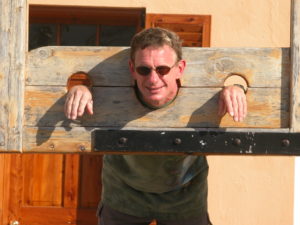
One statement echoed in my mind for years to follow, “You can’t be real.” It was not a threat but an invitation, reminding me that the ego is not the truth, just a structure obscuring the vast reality of interconnectedness.
The question remains, how can we, in our daily lives, step beyond the chains of perception and ego to witness the infinite reality within ourselves and the world?
Practices such as meditation and mindfulness offer pathways to peel back layers of constructed reality. Sitting quietly and observing thoughts without judgment can help dissolve the barriers between the observer and observed, allowing pure awareness to emerge.
Conversations in quantum physics suggest we are not passive participants, observation shapes reality. Why not become conscious of the countless ways our perceptions limit us and experiment with how releasing judgment, rigid self-perception, or attachment to past experiences and traumas amplifies freedom and clarity?
To perceive the universe as vast, interconnected, and infinite is to glimpse something extraordinary about ourselves. Indeed, all you see is yourself—but not in the limited sense you might imagine.
If all that we perceive is ourselves, are we as vast as the earth, or even the universe itself? Certainly, we could never perceptually experience that, even if it is the truth, as long as we cling to isolating, limited perceptions of ourselves and others.
You are not merely the person reflected in the mirror.
You contain multitudes.
The universe, in its infinite wisdom, uses our awareness as a channel to see itself.
If this is so, what responsibility and privilege do we have to clear the lens of perception as cleanly as we can?
Whether through the introspection of neuroscience, the wisdom of philosophy, or the silent stillness of meditation, a clearer, freer way of seeing is within your reach. Start small—with a few minutes of mindfulness a day. Reflect on how your perceptions shape your experience. Explore interconnectedness in quantum theory or ancient spiritual traditions.
The universe awaits our clear vision. The question is, will we allow ourselves to see it?
Could we observe without the past being present, the past observer, of course, being US?
What would we then see?
Because, in the absolute, all that we see is ourselves.
With pure awareness, the Universe has a chance to witness itself through the channel of OUR pure awareness.
Now how exciting of a prospect is that?
Would you not want to get rid of everything in your mind that would obscure that most glorious vision?
What are you waiting for?
Everything you perceive waiting outside of yourself begins within.
“If the doors of perception were cleansed everything would appear to man as it is, infinite.“-–William Blake
Understanding the Fundamental Mechanism of Perception

In the historic pantheon of human behavior, religion has stood as one of civilization’s oldest pillars. Belief systems and sacred rituals have sculpted societal norms and individual identities. Yet, despite generations of spiritual and religious training and education, humanity collectively fails to grasp the fundamental mechanism of perception. All that we see, and will ever see, unto eternity, is our self.
To understand this concept is to recognize the absolute necessity of broadening our limited vision. We must strive to be more inclusive of the needs of Mother Earth, our animal kingdom, and our international, national, and local neighbors, regardless of their religious, sexual, philosophical, and political beliefs. In fact, the very mechanism of religious and political belief often acts as a pillory, entrapping the conditioned mind, and limiting its intelligence and curiosity.
The concept of universally loving the world and all its inhabitants is undoubtedly beautiful. It paints a utopian vision where compassion and benevolence dominate human interactions. But this is not merely an idealistic endeavor; expanding our vision and fostering inclusivity are vital for the collective survival and spiritual growth of humanity.
Despite the profundity of spiritual teachings throughout history, humanity continues to struggle with the concept of perceiving oneself in everything. Why?
Conditioning and Bias:
Spend time in nature to connect with the larger web of life. Reflect on the interdependence of all living things.
Contemplate the vastness of the cosmos and your place within it to foster a sense of unity and oneness.
A lack of introspection and self-awareness keeps many from realizing the profound truth that all external experiences are reflections of the inner self.
Without this awareness, people continue to operate within the confines of their conditioned perceptions.
From birth, individuals are conditioned by their surroundings—family, society, religion, and politics. These forces shape perceptions and create biases that are hard to dismantle.
Dualistic thinking, which separates “self” from “other,” perpetuates conflict and division.
Ego and Self-Identification:
The ego thrives on the identification with individual and collective beliefs, which hinders the perception of a unified existence.
This identification creates a false sense of separateness, making it difficult to see the interconnectedness of all life.
Lack of Awareness
For spiritual seekers yearning to broaden their vision and understanding, here are practical steps to take:
Practice Mindfulness and Meditation:
Daily mindfulness and meditation practices help cultivate self-awareness and dissolve the illusion of separateness.
Focus on the breath, observe thoughts without judgment, and connect with the present moment.
Engage in Self-Inquiry:
Question your beliefs and perceptions. Ask yourself why you hold certain views and examine their origins.
Explore the teachings of various spiritual traditions to gain different perspectives.
Cultivate Compassion and Empathy:
Practice loving-kindness meditation (Metta) to develop compassion for all beings, including yourself.
Engage in acts of kindness and service to others, recognizing that their well-being is intertwined with yours.
Expand Your Horizons:
Read books, attend workshops, and participate in discussions that challenge your existing beliefs and expand your understanding.
Travel and experience different cultures to appreciate the diversity of human experience.
Reflect on Nature and the Cosmos:
In the vast expanse of cosmic consciousness, where the fabric of existence weaves itself into the tapestry of reality, there lies a profound yet simplistically beautiful truth: all that exists is but a reflection of ourselves. By expanding our vision and fostering inclusivity, empathy, and awareness, we can transcend the limitations of conditioned perceptions and experience the interconnectedness of all life.
In a divisive world increasingly polarized by dualistic notions of right and wrong, us and them, the concept of cosmic consciousness offers a refreshing yet profound alternative. My personal experiences have shown me that the path to true understanding begins with acknowledging that all we see is a reflection of our inner self. Join us in this exploration and discover the profound truth that awaits.
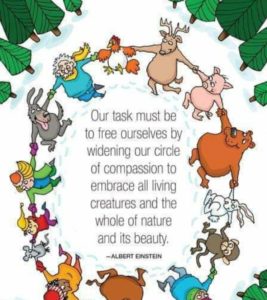
Perception as the Sculptor of Reality
“Mind, the master power that molds and makes, and man is mind. Evermore he takes the tools of thought, and thinking what he wills, creates a thousand joys, a thousand ills. He thinks in secret, yet it comes to pass. Environment is but his looking glass.”
These words by poet James Allen encapsulate a profound truth about the nature of our existence and the universe. They suggest that our reality is not a static, external construct but a dynamic creation of our own minds. This perspective challenges conventional thinking and invites us to explore the depths of our perception and its impact on our lives.
At the core of this contemplation lies the power of perception. Our mind, acting as an intricate filter, processes every shred of information we receive from the world. It interprets, judges, and ultimately colors our experiences. Whether we perceive a situation as joyful or sorrowful, meaningful or mundane, depends largely on our mental framework.
Studies in cognitive psychology support this notion. Our beliefs, biases, and prior experiences shape the way we interpret new information. For instance, a person with an optimistic outlook may see a setback as a learning opportunity, while someone with a pessimistic view might see it as a confirmation of their failures. Thus, our perception has the power to transform our reality, influencing not only how we see the world but also how we interact with it.
The concept that our thoughts and beliefs shape our reality is not new. It resonates with theories from various schools of thought, including cognitive-behavioral psychology and even quantum physics. Cognitive-behavioral theory posits that our thoughts influence our emotions and behaviors, which in turn determine our life outcomes. This idea is echoed in quantum mechanics, where the observer effect suggests that the act of observation can alter the state of what is being observed.
Our minds, therefore, do not passively receive reality; they actively create it. By focusing on positive, empowering thoughts, we can mold our environment to reflect those beliefs. Conversely, dwelling on negativity can manifest adverse outcomes. This creation of reality emphasizes the responsibility we hold over our thoughts and the potential to harness them for personal and collective growth.
Traditionally, the environment is seen as a significant factor in shaping who we are. From our upbringing to our social interactions, external influences are believed to mold our character and destiny. However, when viewed through the lens of perception, the environment becomes a reflection of our inner state.
Consider the metaphor of a mirror. The environment, like a mirror, reflects our thoughts, feelings, and attitudes. A cluttered mind might perceive the world as chaotic, whereas a focused mind sees order and opportunity. By changing our internal landscape, we can alter the reflection we see in the world around us.
Understanding perception as the ultimate reality-shaping tool has profound implications for personal empowerment. It places the power of change firmly in our hands. Instead of being passive recipients of our circumstances, we become active creators of our destiny.
This perspective fosters resilience. When faced with challenges, recognizing that we have the power to reshape our perception can transform obstacles into steppingstones. It encourages continuous self-improvement, as we strive to align our thoughts with our desired outcomes.
Moreover, it promotes a sense of agency. Knowing that our thoughts influence our reality empowers us to take control of our life narrative. We are no longer at the mercy of external forces; we are the architects of our existence.
The mind, indeed, is the master power that molds and makes our reality. By understanding the profound impact of perception, we unlock the potential to transform our lives consciously. The universe, in all its vastness, is a reflection of our inner world. The environment is but a looking glass, mirroring our thoughts and beliefs.
I invite you to reflect on your own experiences. How have your perceptions shaped your reality? What changes can you make within your mind to create a more fulfilling, empowered life? The answers lie within your thoughts, waiting to be discovered and harnessed.
In exploring these concepts, we take a step towards greater self-awareness and spiritual growth. Let’s challenge the conventional, embrace the introspective, and shape our universe through the power of our mind.
The Power of Forgiveness and Observational Influence
When we see an alienated friend and choose to forgive them, we have not changed the friend; we have changed our internal atmosphere. This act of forgiveness is an alchemical process that transforms our emotional landscape, providing us with a sense of relief and liberation. It is crucial to understand that forgiveness is a gift we give to ourselves, a way to cleanse our internal environment. While this act may eventually heal the relationship, its success depends on numerous factors beyond our control. The friend might not even be aware of the forgiveness extended to them, yet the profound change occurs within us.
Consider the simple act of observing the sun as it rises in the morning sky. If our mood is good, the sun is a welcome friend, casting a warm and comforting glow over our day. However, if we greet the sun with a bad attitude, the sun remains unchanged, yet our perception of it can color our entire day with negativity. This analogy underscores the power of our consciousness and how our attitudes and perceptions shape our experiences. The sun, a constant and indifferent celestial body, serves as a mirror reflecting our internal state.
On the quantum level, the act of observation always influences the behavior of what is observed. This phenomenon, known as the observer effect, illustrates the profound interconnectedness between the observer and the observed. It suggests that our very act of perception can alter reality at the most fundamental level. While some changes in perception and observation have a direct impact on our reality, others may appear to have no immediate effect, possibly due to the vast differences in scale between the observer and the observed.
This intricate dance between consciousness and the quantum world implies that our observations, even those seemingly insignificant, contribute to a cosmic rhythm of influence. Our thoughts, feelings, and attitudes ripple out into the universe, creating waves of change that may not be immediately perceptible but are nonetheless impactful. This understanding encourages a more mindful and intentional approach to life, recognizing the potential power of our internal states.
By acknowledging the effects of our observations and attitudes, we can cultivate a more mindful and intentional way of living. This awareness can lead to greater emotional well-being, improved relationships, and a deeper connection with the world around us. Forgiveness, in this context, becomes not just an act of compassion towards others but a profound practice of self-care and spiritual growth.
The interplay between our consciousness and the universe reveals the extraordinary power we hold within ourselves. By choosing to forgive, by shaping our perceptions positively, and by understanding the quantum dance of observation, we can transform our internal and external worlds. This perspective invites us to explore the depths of our consciousness, to engage in self-discovery, and to participate actively in the cosmic rhythm of life.
The Manifestation of the Infinite
I am hardwired to accept that I am the very manifestation of an infinitely loving, creative principle. The universe screams,
“I AM JOYFULLY ALIVE!”
If our heart does not scream this out every moment, that is the distance we have to travel back to our Creator.
Our existence is not a random occurrence but rather an intricate tapestry woven by the threads of an infinitely loving and creative principle. We are not separate from the universe; instead, we are its very expression, each heartbeat a testament to the connection we share with the cosmos. This realization is more than a comforting thought; it is the essence of our being.
Personal growth and fulfillment are deeply rooted in recognizing and embracing this intrinsic connection. By acknowledging that we are manifestations of this boundless creative force, we gain profound insights into our place in the universe. This awareness transforms how we perceive ourselves and our surroundings, fostering a sense of unity and purpose.
The universe’s declaration of life should resonate within us, echoing through our hearts and minds. This resonance serves as a personal compass, guiding us toward spiritual growth and a deeper understanding of our existence. When our heart fails to echo this cosmic proclamation, it signals a disconnection that we must strive to mend.
Bridging the gap between ourselves and our Creator requires daily practices that nurture this awareness. Meditation, self-reflection, and mindful living are essential tools in this journey. These practices help us attune to the universal frequency, allowing us to experience the creative force in every moment.
Living in alignment with the principle of being a manifestation of the infinite leads to a life filled with purpose and compassion. When we understand our role as expressions of an infinitely loving and creative force, we naturally extend this love and creativity to others. Our actions become more meaningful, our relationships more profound, and our impact on the world more significant.
To the spiritual seekers and creative thinkers, the philosophers and dreamers, I pose this challenge: cultivate an awareness of your connection to the universe. Allow your heart to scream,
“I AM JOYFULLY ALIVE,”
and bridge the distance back to our Creator. Through this awareness, we can live lives rich with purpose, love, and creativity, forever resonating with the infinite principle that binds us all.
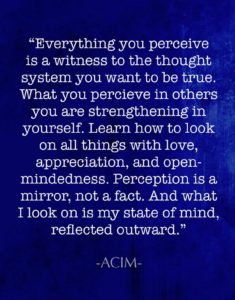
From “A Course In Miracles”. or ACIM.
Chapter 8: Man Was Created in God’s Image — But What Does That Mean?
“If the doors of perception were cleansed every thing would appear to man as it is, Infinite. For man has closed himself up, till he sees all things thro’ narrow chinks of his cavern.”― The Marriage of Heaven and Hell
What does it mean to be created in God’s image? Is it a divine mystery etched in ancient scriptures, a theological ideal meant to inspire humanity, or something far more personal and immediate? Perhaps it’s all of these. Yet, beyond these interpretations lies a more profound question—are we truly seeing one another, or even ourselves, as creations of divine love, or are we merely projecting our inner narratives onto the world around us?
Human perception is a powerful force. It colors every interaction, extending its bias to how we see others, the world, and God. If we fail to see with clarity and love, how can we truly understand the image of God—not just in others, but in ourselves?
We all view the world through a personal lens carved out by our experiences, beliefs, and biases. This is as true for the devout theologian as it is for the casual seeker. Ancient scribes inscribing wisdom may have described God’s image through parables, poetry, and powerful brevity, but today’s interpretations often scratch only the surface.
The roots of the challenge lie in the limitations of our perception. When you look at a friend, a lover, or even someone at odds with you, are you truly seeing them for who they are? Or are you crafting a version of them “in your image,” shaped by judgment, assumptions, biases, or maybe even fear? To gaze upon another unconditionally and without judgment is to break free of the shackles of perception and align with what could be God’s image—pure, unfiltered love.
But this is no easy task. Ancient scripts and doctrines may teach us lofty ideals but seldom prepare us for the gritty human challenges of seeing as God sees. It requires faith and intentional practice—the willingness to purify perception. This frontier seeks to bridge spirituality with practical, everyday existence.
If God is love, as many sacred traditions suggest, then it follows that seeing through the lens of love is the way we perceive God’s image. Picture this profound shift in consciousness;
What if you saw all others—friends, enemies, strangers—as extensions of that very same love?
What kind of world would you experience?
What kind of person would you become?
To see someone in love’s image is to accept every facet of their being—their beauty and their flaws—with grace and compassion. And when we remain in this loving consciousness, the very universe shifts around us. Love becomes the prism through which we experience all things. The barriers dissolve. Suddenly, you’re no longer standing apart from the world—you are a living, breathing reflection of it.
But this transformation must start from within. Before we can see others in God’s image, we must confront how we see ourselves. If your inner reflections are filled with judgment, guilt, or self-loathing, how can you expect to perceive others—or the divine—with clarity? The shift begins when we redirect the gaze inward and invite healing into our own hearts.
The phrase “created in God’s image” has inspired thousands of years of theological debate. It’s been weaponized to divide and uplifted to unite. But today, within a world increasingly defined by diversity, conflicting ideologies, and fractured relationships, understanding this ancient concept has never been more critical.
One of the core challenges is navigating the intersection between religious doctrine and modern interpretations. To many, the phrase still conjures literal notions tied to physical form, but what if “image” was never meant to describe outward appearances? Consider instead the essence of being—the deep compassion, wisdom, and oneness that mirrors divine qualities.
The dissonance arises when we fail to see past our own fragmented awareness. If our perception is clouded by prejudice, fear, or anger, then the divine image becomes obscured. But when those clouds lift—whether through faith, revelation, or self-work—clarity emerges. We begin to see, as one ancient tradition describes it, “closer than breathing, nearer than hands and feet.”
Personal spiritual awakenings often provide a glimpse of this deeper truth. Imagine standing on a mountain peak, the wind carrying the scent of pine, every sound muffled by the canopy of solitude. Suddenly, a stillness descends, and everything you’ve known falls away. At this moment, there is no separation between you and the world—every geological curves, every stream and boulder is not “out there” but inexplicably a part of you.
This revelation, as profound as it is humbling, was my experience in 1987, and at later times, and it uncovers an eternal truth. To know oneself deeply—to shed layers of identity and judgment—is to know God. And to know God is to recognize the inherent unity in all expressions of life. At such a level of awareness, one question lingers in every waking moment:
“How will I see myself today?”
When we begin to see all humanity as our family—all individuals as our brothers and sisters—it becomes impossible to perpetuate hatred, division, or isolation. Anger and pain, while natural, lose their grip. We are no longer bound by the wounds that once kept us trapped in separation.
The call to recognize humanity in God’s image is not reserved for scholars or mystics alone. It’s woven into the fabric of everyday interactions. It beckons us in simple yet radical ways—choosing peace when stirred by conflict, embodying love towards those who oppose us, or offering compassion to ourselves in moments of failure.
Reducing spiritual concepts to practicality doesn’t diminish their power; it amplifies them. Seeing God’s image in all life reminds us of our responsibility not just to humanity but to the Earth itself. When we care for plants, animals, and ecosystems with the same love we extend to a new child, we honor the divine in its fullest expression.
And even those moments of conflict—the family member whose actions spark anger, the stranger whose words wound us—become opportunities for transformation. Love, when extended in these moments, becomes the ultimate act of creating “God’s image” within and around us.
Religious and philosophical debates will always exist. Interpretations will vary across cultures and generations. But the question that persists is not “Who interprets this correctly?” but “How does this truth shape how we live?”
This broader view asks us to cross boundaries and extend dialogue. It challenges us to step outside fixed paradigms and engage in genuine, open discussions that foster collaboration rather than conflict. Love does not demand ideological conformity—it only asks for receptivity.
The phrase “Man was created in God’s image” carries an expansive truth waiting to be rediscovered. It’s not an abstract theological doctrine or a simple adage. It’s a calling—to see ourselves, others, and the divine with authenticity and love.
The dependency of perception on our worldview is no small thing. Begin by confronting your own filters. Reflect on how you see yourself and others. Ask yourself the question, “How will I view the world today?”
Start with love, carry it into every interaction, and watch the divine image reveal itself in ways you never imagined. The transformation begins within you. Don’t wait for tomorrow—embrace the reflection of truth today.
Chapter 16: May 24, 1987
Chapter 18: June 22, 1987: The Architecture of an Awakening, and the Grammar of Existence

Friends of mine have often remarked that I’ve constructed a life that is uniquely my own—a path less traveled, winding through the underbrush rather than following the paved road. It is not a life punctuated by flashing headlines, grand accolades, or the cinematic twists that resolve neatly in the third act. Instead, it is a patchwork quilt of personal metamorphosis and quiet growth, layered together in its own messy, yet profoundly meaningful way. This is the story I feel compelled to unearth from the soil of memory—a complex tapestry of jagged experiences, hard-won lessons, and blinding revelations, all tightly woven around the fulcrum of a single, seismic year: 1987.
To truly grasp the magnitude of that year, however, I must first act as an archaeologist of my own history, carefully unearthing the artifacts of the era before the awakening. My aim is not to curate a polished, linear memoir that gleams with the false perfection of hindsight, but to offer a raw, fragmented reflection—a mirror that honors the sharp turns and deep valleys of a life actually lived.
The Era Before Awakening

Me and my sister Pam, around 1960
My childhood resembled a bookshelf, bookended by fleeting daytime moments of quiet joy and innumerable terrors of the night, with vast, stretching silences of profound loneliness filling the space in-between. Before 1965, I felt perpetually out of sync with the rhythms of the world beyond my family’s front door. I was the small boy, precocious and intellectually advanced, yet traumatized and emotionally challenged—a wounded creature thrust into social settings that felt less like communities and more like battlegrounds. The school playgrounds I navigated seemed designed not for connection or play, but for Darwinian survival.
When my social circle finally expanded after 1965, it was populated by those the world had largely disregarded—the “outcasts,” the dreamers, the rebels, the misunderstood souls living on the periphery. Though few in number, these friends became my first teachers in the curriculum of loyalty and radical acceptance. They taught me that value is not always visible to the naked eye.
During these formative years, books became my sanctuary, specifically the boundless frontiers of science fiction. in the pages of other worlds, I found a solace that this world refused to offer—a temporary escape from the crushing alienation of Earth. Robert Heinlein’s Stranger in a Strange Land was particularly alchemic. The protagonist’s revelation that “Thou Art God” planted a quiet, subversive seed of hope within my chest. It suggested that perhaps life—and even I, in my brokenness—could hold a spark of the divine. This idea became a psychic anchor, however fleeting, as I navigated the treacherous waters of early life.
Adolescence marked a definitive turning point, though it was a sharp turn toward the dark. By the age of fifteen, I had fallen into the suffocating grip of drug and alcohol abuse. These substances provided a deceptive salve, a chemical numbing agent against the discomfort of intense anxiety and the hollow ache of self-doubt. They promised relief but delivered only distance, pulling me further away from my aspirations. As a child, I often wanted to “just get off of this fucking rock.” I harbored dreams of escaping Earth entirely—either literally as an astronaut or being kidnapped by aliens, or metaphorically through some alchemical or psychological breach of reality. I wanted to shatter the glass of this flawed world and step into something purer.
Despite the chaos roiling in my inner life, I maintained a façade of academic excellence, fueled by a belief that science and intellect were the vehicles that would deliver me from discontent. I crushed standardized tests, clinched a scholarship with both the University of Portland and the US Air Force, and secured a coveted spot in the Air Force ROTC program. But the architecture of my life was built on sand. A broken love relationship—mirroring the turbulence within me—derailed everything. The collapse was total. I abandoned my dreams of reaching the stars and plummeted back to a hard, unforgiving reality.

The pharmaceutical industry bandaged Donelle Mae Flick together long enough to marry me on Sept 17, 1979. Eight months later she was institutionalized.
The Descent and the Grammar of Separation
In the epoch of my life prior to 1987, I inhabited a highly dysfunctional reality. I was hopelessly addicted from the starting gate, possessed by a grim fatalism. I knew with chilling certainty that I would either die an active alcoholic and addict, or I would take my own life by age thirty if the disease had not yet claimed me. What I did not know—what I could not possibly conceive—was what might happen if I survived. I had no map for recovery, no reference point for a life lived without chemical crutches. I had made no preparations for living, only for dying. I lacked the adequate language to describe any hope for a sober existence, save for the simplest, vaguest terms.

My internal landscape during this descent was marked by a peculiar linguistic fracture. We often operate under the illusion that our internal monologue is merely a commentary on the world—a passive ticker tape of thoughts. Yet, the language we use within the quiet chambers of our skulls constructs our reality. In the buildup to my addiction, I had inadvertently built a reality of fragmentation through the specific grammar of my existence. I rarely spoke to myself as “I.” Instead, a relentless, critical narrator described my life in the third person. “He needs to stop,” the voice would sneer. “He is a failure.” “He is dying.”
This use of “he” was not merely an eccentricity; it was a profound alienation from the self. By referring to myself as an object—as a “he” rather than an “I”—I created a safe, critical distance from the raw vulnerability of my own existence. It was a subtle act of dissociation, a defense mechanism of a wounded ego designed to keep the pain at arm’s length. I had severed the spiritual tendon that binds the soul to the body, viewing my own life not as a subject to be inhabited, but as a tragic character to be observed from the shore as the ship drifted away.
Even as my life spiraled into the abyss, a part of me—perhaps that seed planted by Heinlein—searched earnestly for meaning, particularly through spirituality. My relationship with American Christianity was rocky, a landscape of jagged peaks and valleys. I had attended Sunday school as a child but found its teachings unsatisfying, brittle, and incomplete. Its core premise of humanity’s inherent sinfulness never resonated with my soul’s deeper, ancient longing for unity.

Every time I managed to cobble together a few weeks of sobriety—which happened perhaps four times during my entire sixteen-year addictive cycle—I revisited Christianity, hoping to find the missing piece I had overlooked during earlier forays. Yet each encounter left me spiritually malnourished, chewing on dry dogma when I craved living water. It wasn’t until 1987 that I began to discover a path that felt authentic—one that extended beyond the rigid walls of dogma and embraced a broader, more luminous perspective of divinity, love, and self-realization.
The Climb to Larch Mountain
The year 1987 stands as the monolith in my timeline. After years of addiction and internal turmoil, I reached a fracture point that forced a confrontation with my own existence. Through a fragile newfound sobriety and rigorous self-discovery, I began to peel back the layers of my pain and societal conditioning like an onion. I had a spiritual experience, or insight, on May 24th which had brought an amazing, but temporary relief from my suffering. I wanted more!
On June 22, 1987, driven by an instinct I couldn’t name, I embarked on a pilgrimage to Larch Mountain. This sacred peak, steeped in the reverence of indigenous traditions and the ghosts of my ancestors, stands as a sentinel overlooking the Columbia River valley. It offers panoramic, cathedral-like views of the majestic volcanic peaks of the Pacific Northwest: Mt. Rainier, Mt. Adams, Mt. St. Helens, Mt. Hood, and Mt. Jefferson. I sought solace here, grappling with the echoing ghosts of my past and holding onto a fragile hope for healing my fractured mind and body. I had been sober for three months, but the deep wounds of addiction—severe neurological damage, mental distress, and a trembling body—lingered like smoke after a fire.

Larch Mountain observatory

Mt. Rainier (left) and Mt. Adams
As I stood atop this natural observatory, encircled by the silent testimonies of these ancient mountains, a light breeze carried the aroma of the innumerable surrounding pine trees to my senses. It felt like a cleansing rite. I bypassed the safety of the observation deck’s guardrail, seeking a secluded spot hidden from the prying eyes of the world, where I could commune directly with the spirit of the landscape.
First, I let the beauty of my surroundings completely fill my senses. Then I turned inward, trying the almost impossible task of quieting the endless chatter in my head. The voices—those constant, critical commentators I’d lived with for years, narrating everything I did with cold detachment—started to fade in this peaceful place. In my self-talk, I never called myself “I,” but always “he.” For years, that habit had cemented a sense of separation within me, making me feel like a broken machine watched over by an indifferent mechanic.
Something extraordinary unfolded as I attempted to pray and meditate—an activity that had always been arduous for me. For the first time in my life, the boundaries dissolved. I felt as though I was physically melting into the natural world. The agonizing separation I had always felt—from life, from others, from God—began to vanish like mist in the morning sun. Suddenly, everything—myself, the granite beneath me, the rushing river below, the endless sky—was one continuous, unbroken field of existence. An ineffable warmth began to flow through my veins, richer and more intimate than anything I had ever known. It was an overwhelming presence that quelled the mental noise and filled the silence with unmistakable clarity.
Then came the voice. It was not the detached, schizophrenic commentary of my inner turmoil, the one that used “he” to accuse and belittle. This was a steady, calm declaration rising from the bedrock of my consciousness, utilizing the third person one final time to inform me that I had touched something far beyond my history and misunderstanding of human possibility.
“He is having an experience with God.”
These words were not spoken aloud, yet they resonated within the marrow of my bones as an undeniable truth. And with that utterance, the irritating, stubbornly persistent third-person perspective that had plagued me during my descent into chemical madness—the “voices” of chemically induced schizophrenia—vanished. The “he” of my ego, the “he” of my dissociation, was, for one final time, replaced by the “He” of the Spirit. I had begun to despair that the voices would never leave, even after sobriety. I had also been plagued by Parkinson’s-like tremors that rolled over my body like tidal waves.
But in that moment, a veil lifted. The tremors ceased. The voices fell silent. The third-person perspective vanished into spiritual unity.
“The world is new to every soul when Christ has entered in“ — East Clerestory in Stanford University’s Memorial Church.
On that mountain, I underwent a spiritual event apparently reserved for a small percentage of human beings. It was overwhelming in its totality. I was swept away by a tidal wave of love and insight, an energy that announced itself as God, or the same essence that Jesus of Nazareth embodied. In my shock and ignorance, I initially feared insanity had completely taken over. I worried that my mind had finally irreparably snapped. Yet, concurrently and paradoxically, I was being healed of tremendous neurological damage. My hands, which previously shook so vigorously that I could not even use a spoon to eat soup, became steady. I was granted a capacity to see spiritually that was truly phenomenal. This was nothing short of a miraculous biological and spiritual restoration.
It was so new, so apocalyptic in the truest sense of the word (an “unveiling”), that I briefly thought Jesus himself had “walked into” my consciousness, evicting the old Bruce and replacing me with something far transcending human experience.

This was a new reality that revealed nothing but connection, unity, and love. The mountains were not distant objects of scenery; they were extensions of my own body. The river below did not wind away from me; it flowed through me. For the first time, my mind was quiet. The tremors in my hands and body were gone.
Peace enveloped me fully.
This realization was not merely visual or intellectual; it was experiential, rooted in the ontological essence of being itself. The artificial boundaries of “self” and “other” dissolved. I saw with startling clarity that all of humanity was my family, each person a thread in the great tapestry of life that I was also woven into. Love, which had always felt conditional—tainted by expectations, hurt, transaction, or judgment—now radiated freely and unreservedly. This love extended even to those who had wronged me, those I thought I could never forgive. It was as if God had handed me a lens of boundless compassion and asked me to look through it.
For those timeless moments, I touched eternity. I witnessed a life where suffering could not cling, where healing meant more than sobriety or restored health—it meant awakening. Recovery was no longer confined to the abstinence from drugs or alcohol; it was the radical act of learning to live devoid of hard boundaries, free from the mental constructs that separate us from the divine. It was about unlearning all that my disfigured family, society, and ego had taught me. It was about wholeheartedly loving the world, in all its jagged imperfections, and finally, after years of linguistic exile, allowing my “I” to merge with the “We” of the universe.
The Return to the Valley
Descending from that peak was a re-entry into the atmosphere of what I would have formerly referred to as the mundane. I carried this transformation back to the structured chaos of human life like a fragile ember. Through small gestures—seeking forgiveness, expressing gratitude, reconnecting with community—I strived to embody the vision granted to me on Larch Mountain. I looked not only for “my people” but for ways to extend that peace outward, to offer it to others, even if only in fleeting moments.
True healing, I realized, is not about perfection or the permanent escape from pain. It is about presence. It is about reclaiming our true identity. It is the discipline of remaining open to the profound truth that we are deeply interconnected to one another, to the Earth, and to the Source. Moments like the one I had atop Larch Mountain serve as reminders that within every chaotic mind, within every fractured soul, lies the dormant potential for transcendence.
As days became weeks, months, and years, the realization grew clear: I had been transformed, remade in the image and likeness of God. All my theology and religious training finally began to make sense. In the Old Testament, God’s name is “I Am.” Jesus said, “Before Abraham was, I am,” and the same is true for us once we shed the illusions of self. This isn’t something to use as an affirmation or declare to the world—it must first reveal itself within us to truly be one with God.
Jesus was not the distant deity religion had painted, but an enlightened sibling, a prototype for what all human beings could become. The energy that Jesus had initially tapped into and then recreated in the image of the Christ consciousness, the “I am that I am” had manifested itself within my consciousness, as well.
I realized I didn’t have to travel to the underworld again to find truth, or to desperately search for someone who might listen to me.
“WHERE ARE MY PEOPLE?” was to become the guiding question for my life for the next several years.
I hiked the short distance back down to my car and drove toward Portland, leaving the physical sanctuary of Larch Mountain but carrying its essence within me. I felt guided, pulled by an invisible thread, to go to NE 73rd and Glisan, where the US Postal Service’s Employee Assistance Program (EAP) was based. I had unceremoniously called in sick after the Fourth of July holiday in 1985 after working there for nearly ten years. My employer had required that I be clean and sober, and I had failed miserably in two hospitalized recovery programs. I had departed in shame, a ghost of an employee.
I walked through the door and was greeted by Larry and Mike. Mike had visited me in the Care Unit three years prior, and Larry had been the director of the EAP for as long as I could remember. I called out to them by name, yet neither man immediately recognized me. The husk of the man they knew was gone. When I stated my name, they were stunned. I was happy—more precisely, ebullient—and Mike remarked that I was simply radiant. They wanted to know what was happening. I stated, with a matter-of-fact attitude, that I was having a spiritual experience. They both embraced me, acknowledging the miracle standing in their office.
Inspired by this reception, I went to the Main Post Office and checked in with the Personnel Department. Eleanor Workman, the head of the department, immediately recognized me and offered me an application to reapply for my “lost” position.
“No thank you, Eleanor,” I said gently. “I just wanted to express my apologies for working for this company in such an unhappy manner for so many years.”
She stated that I could likely get the job back since the Post Office knew they had fired me while I was still a practicing alcoholic. I told her that what would make me happiest was a meeting between me and the head of Plant Maintenance, John Zimpleman.
He was in. I went right up. I had a direct opportunity to make amends to him for my poor performance from 1980 to 1985. He greeted me warmly, listened to my story, and was quite impressed. Then, in a moment of vulnerability, he stated that he wished his son could discover what I had found, because John Jr. was rapidly descending to my former level. That day of amends went so well that I remained ecstatic about all future interpersonal possibilities.
One day that next week, while visiting the world-famous Powell’s City of Books on Burnside, I spotted my old psychiatrist, Dr. Dan Beavers, standing in the metaphysical section. I walked up to him. He did not recognize me. I extended my hand and re-introduced myself.
“Bruce, this can’t be you, can it?” he stammered.
“Last time I saw you, I was wondering how much longer you could survive if the medication did not turn your life around.”
“Dan, the medication worked just fine,” I replied.
“I never used it, at least not in the way you intended. I finally found a new way to live life without medication, drugs, or alcohol. I now accept full personal responsibility for my thoughts, feelings, behaviors, and activities. The schism in my mind appears to have healed.
“Bruce, that is the desired outcome for all of my patients. Congratulations on your success!”
I hugged Dr. Dan and apologized for using him as a tool to manipulate my former employer. He insisted I didn’t need to make amends, that he was there to serve my needs, dysfunctional or otherwise. But it felt good to show him my healthier sense of self. I never saw Dr. Dan again. When I read his obituary in 2015, I felt great sorrow and wept for the man who had tried to help the lost soul I used to be.
In the continued interest of finding my people, I attended the International New Thought Alliance (INTA) Conference in Portland in August of 1987. I was most interested in seeing Jack Boland, the recovering alcoholic who had started a “Super Church” in Minnesota with over 5,000 members. He had a following of hundreds of thousands of recovering people worldwide. His approach to spirituality, sobriety, and healing was universal. Integrating into this new community was a fascinating immersion into a group energy I had never experienced. I was high on life—truly, spiritually high.
I witnessed a group of over 1,000 people warmly embrace the musical group Alliance, starring Jerry Florence. They were a group of gay men who all had HIV/AIDS. Having recently left Hinson Baptist Church where gays were bashed regularly from both the audience and the pulpit, this acceptance was like oxygen to a drowning man, even though I had no homosexual tendencies. The tenderness I felt toward Jerry Florence and the men of Alliance lives in me today. I still weep for the suffering of all people who have been judged as unworthy or simply ignored—those labeled “they” and “them” by a society practicing divisive attitudes and perpetually afraid of the “we.”
Navigating the New Self
With my exit from Portland’s underworld community in March of 1987 and my departure from drug-induced insanity, a new world waited to reveal itself. But it did not simply reach out, grab me by the hand, and lead me down the path to recovery. It would be a mistake to assume I was totally conscious of the direction I was heading. It is only in retrospect, looking through the rearview mirror of time, that a rational narrative can be developed.
As I moved forward spiritually in the spring and summer of 1987, I was a novice on the path of transformation. I had left my old life behind and was completely open to the experience of spiritual mastery. Beginning in April, I developed a rigorous meditation practice, eschewing committed relationships to deepen my focus. I remained excited about the possibilities for my life. Then May 24th unexpectantly happened, when I had finally made conscious contact with a mysterious, love-infused Higher Power that was revealed through a vision. That profound experience brought a minor and temporary, healing of my body and mind, and for about one week, its love energy permeated my being, though it did not heal me of the tremors or the extra internal voices. I felt like I was swimming in a sea of new meaning, though I had not yet spiritually connected the dots or consciously started rebuilding my new self.
All I knew was that after I made continuous conscious contact with this unique power on June 22nd, my old life began to evaporate. I had the ability to describe the world I had left behind, but I had no language to describe the new world I was entering. I had never felt like an accepted part of the outside world, so finding my new people and my new language were vital endeavors.
This desire for loving integration into the wholeness of life had arisen several years before, when I yearned for peace during the troubled final years of my first marriage and my wife’s disabling disease. While addicted and supporting a profoundly mentally ill person, I could not fulfill the conditions for peace. Yet when I actively practiced the 12 steps of Alcoholics Anonymous, beginning in May of 1987, which included prayer and meditation, I created the conditions for a more peaceful mind.

The transformation was years in the making, but when it appeared, I was no longer tormented by social insecurities or disconnection. Somehow, the spiritual insight of June 22nd released the controls of my old, wounded ego. A new order revealed itself moment to moment. At times, I felt like a guided missile, never knowing the destination but trusting that whatever had launched this new life would guide me to the right place at the right time.
I still had memories of my former life, yet they no longer informed my daily thoughts, decisions, or outlook. I did not know who the “New Me” was, though I always had a smile and felt continuous joy. This exotic and profound experience was to last for over six years, until I refocused my life on building a career and becoming fully present for my marriage partner, Sharon. I experienced a series of spiritual upheavals from 1987 through 1993 that defied my rational mind, and I lacked the words to contain the experience for many years. It was as if a new pilot had landed in my consciousness; the old me had died, and now I was informed by a powerful force of peace, silence, and Love itself.
Before 1987, my mind was a crowded room filled with fragments of other people’s ideas about me and my own unique miscreations. I was addicted to the duality of perception that continuously creates background noise in the mind, the cacophony of “yous”, “theys”, and “hims/hers.” Yet, by June of 1987, that committee had permanently adjourned. There was only one peaceful presence, a new ordering principle for my consciousness: the I Am.
Not only did I lack the language for this new story, but the small story I did begin to tell did not necessarily meet with a friendly reception. When I shared my experience, I was often met with silent stares, quick subject changes, suggestions to attend church dogma classes, or general disinterest.
My family still viewed me through the lens of the past. My history had created great scars on their psyches. But they could appreciate that the new me no longer required their worry. I was now an independent, upright, fairly conscious human being. I made healthy choices in relationships and chose a fulfilling career to replace the wreckage of my past. I was a boy again, learning the ropes, meeting friends, discovering possibilities, and sipping from the inner healing springs of a Miracle.
This new being, this “Bruce 2.0” who appeared in the summer of 1987, was like the miracle children I had outwardly envied, but inwardly doubted, those special kids who supposedly heard God talking to them. From June 1987 until I met my wife Sharon in August 1989, I spent over six hours a day in prayer and meditation. I experienced blessed states almost continuously. I felt the deep silence of God, being taught on the inner spiritual plane about aspects of life and consciousness I had no other way to know. This was not a Christian God, or a Jewish God, or the Buddha Mind, but those names pointed to the new reality I had accessed.

His Master’s Voice: The Challenge of Communication

We all have access to the inner wisdom of a master spiritual teacher, yet “the master” lies mostly ignored in the recesses of our hearts. I was given a blank slate to write my new self upon, a new possibility for being in this world, aided by this connection to my own wisdom. The world I once wanted to flee was now paradise on Earth. Heaven was not a future concept but a living reality for the present moment. But I could not carry the old me into that world. I had to leave all my verbal and non-verbal baggage behind to stay in tune with the new Spiritual music.

Those who touch the Infinite struggle to relate the ineffability of the experience. The universe of Spirit defies rationality, though it will eventually speak intelligently through the healed human mind. First, the mind must be prepared, then willing to communicate, no matter the struggle. If the mind is overburdened by education, religious inculcation, or rigid knowledge, the Infinite will speak through distorted measures of reality, creating illusion and delusion such as what we witness in fundamentalist religion, and, in 19th century America, the originators of the LDS Church and their vain, deluded imaginings.
I have noted that those who have dramatic spiritual experiences often become poor communicators initially. This lack of articulateness is common for years following such an upheaval. Those with strong religious backgrounds try to use that system’s language to interpret their unique opening. Those without such a background search historical literature to see what others have written. They attempt to use language others might understand, but unless the listener has also been struck by spiritual lightning, the search for an enlightened peer group is often unsuccessful. Some give up on communicating. Others, their minds irreparably damaged by the voltage of the experience, behave in ways that look like insanity.
I did not have the capacity to communicate what I was experiencing for many years after 1987. I would refer to my rebirth and talk of the old me with those interested, especially in Alcoholics Anonymous. People who met me after my rebirth could not believe I was ever addicted or dysfunctional. I learned not to wave the recovery flag at every new person, giving them a chance to know me for who I was, not who I had been.
My movement through these new relationships helped define the new me. I learned how I now related to others and how I loved unconditionally, at least for the first several years after the experience. All of humanity became my sibling in this new reality. My lifelong sense of dreadful separation was lifted. I set out to find my people and see where I fit into the new world order revealing itself within my heart. In my naiveté, I assumed most others came by this understanding naturally, and that I was finally catching up with the “normal folks”—the ones who never considered suicide or addiction. Oops, how wrong I was!

540-mile Cycle Oregon 1999–My wife Sharon was the “stoker’
Eventually, I became active in the outdoors again through hiking and backpacking. I resumed cycling with Cycle Oregon. I learned tennis and excelled in road and trail racing as a masters-level runner, even competing and winning several 31-mile ultramarathon events. I competed on championship-level teams in the Hood to Coast and Rainier to Pacific races. I was able to have a “redo” of my life, experiencing success and failure based on my own decisions, gleaning wisdom from life rather than hating myself for its teachings. The new life was fertile ground for learning.
The Grammar of Existence: Reflections on Language and Self
This life also provided the language I needed to communicate what I had experienced on the inner plane. It began to provide the language to describe the foundational consciousness that predisposes our world to dysfunctional behavior. I was not to get the full message until much later, but having allowed myself to return to the world, I gained insight into the matrix of collective human misunderstanding.

I had no inclination to describe the “light” as mystics and poets do. That path of via positiva was futile for me. My path was via transformativa and via negativa—the path witnessed AFTER insight into the debris field of human consciousness is perceived, healed, and cleared.
What I came to understand, long after the initial silence of Larch Mountain, is that the very words we use to navigate our existence are not merely neutral tools. They are the architects of our isolation or our union. We often operate under the illusion that our internal monologue is merely a commentary on the world—a passive ticker tape of thoughts running in the background of our consciousness. Yet this view is a profound underestimation of the power of the mind. The language we use within the quiet chambers of our own skulls does not merely describe our reality; it constructs it. Perception is the architect of our existence, and the pronouns we choose—the “I’s,” the “you’s,” and the “they’s”—are the bricks with which we build either bridges to our families and colleagues or walls that ensure our isolation.
When we examine the nature of our internal references, we frequently find a reliance on the second and third person. We project outwards. We define the “other.” But what happens when that projection turns inward? What does it mean when the voice in our head addresses us not as “I,” but as “you,” or even more distantly, as “he” or “she”?
This is part of the fragmentation of the self that we inadvertently create through inaccurate self-reference. It can even progress to the levels of the psychiatric condition known as disassociation—a condition I knew intimately in my days of darkness.
The Architecture of Separation
To understand the weight of these internal references, we must first dissect what it means to speak in the second and third person within the theater of the mind. The third person—”they,” “them,” “he,” “she”—is the language of the observer. It places the subject at a distance. When applied to family members, colleagues, or strangers, it turns all individuals occupying the present reality into a series of stick figures fleshed out by our ignorance and poor perceptions. “They need to fix this.” “He is difficult.” It is a linguistic push, a subtle act of dissociation that places the speaker safely on the sidelines while watching the other players actively engage in the great mystery of life.
However, this dissociation takes on a darker hue when applied to the self. Consider the individual who narrates their own life in the third person, like I did.: “She needs to do better,” or “He always messes this up.” This is not merely an eccentricity; it is a profound alienation from the self. It suggests a fracture in self-knowledge, a viewing of one’s own soul as an object to be critiqued rather than a subject to be inhabited. It hints at a fragile self-worth that can only be managed by stepping outside of one’s body and judging it from a safe, critical distance.
The Duality of “You”
The second person—”you”—is more intimate, yet it remains distinct. It creates a duality: the “I” and the “Thou.” When we use “you” in self-talk—”You can do this,” or “Why did you say that?”—we split ourselves in two. There is the actor and the critic, the coach and the player.
While sometimes a useful tool for motivation, relying on “you” for internal dialogue can signal a lack of integration. It presupposes a separation within the psyche. It is the language of confrontation and address, even if that confrontation is benevolent. In our internal narratives, these choices are rarely accidental; they are defense mechanisms of the ego, designed to keep the raw vulnerability of existence at a manageable arm’s length. To refuse the “I” is to refuse full ownership of the experience.
We will see much more discussion of the “you” in a subsequent chapter, so use this material as a foundation for further clarification on this most important issue.
The Illusion of Objectivity vs. The Truth of Interconnection
The danger lies in how these references calcify our perception. If perception creates reality, then utilizing the third person creates a reality of fragmentation. When we view our families, neighbors, or workplace as a collection of “theys,” we sever the spiritual tendon that binds the collective body. We create a schism where there should be unity.
Consider the implications of a controlled experiment within a tech company, which revealed a startling truth about the power of direct address. Teams that received communications utilizing second-person references (”you”) demonstrated 25% greater engagement in collaborative tasks compared to those receiving third-person (”they”) directives. The shift from “they should do this” to “you are part of this” collapses the distance. It transforms a task from an abstract obligation into a personal calling.
This data suggests that the “othering” inherent in third-person language dampens the vitality of the human spirit. It renders the vibrant, chaotic, living organism of a company into a sterile machine of separate parts. Conversely, when we inadvertently create separation through language, we deny the fundamental truth of our interconnectedness. We deny that the success of the “other” is inextricably linked to the salvation of the self.
Bridging the Gap: The Power of the Inclusive Narrative
Some may argue that the third person is necessary for objectivity—that to assess a situation fairly, one must detach. There is a prevailing belief in business, industry, politics and some therapeutic practices that emotional distance equates to professional competence. However, this perspective confuses clarity with detachment. One can see clearly without severing the heartstring of empathy.
One troubling aspect is that many corporate CEOs are said to show sociopathic tendencies, often ignoring employees’ identities and needs to serve their own unchecked self-interest. Workers end up being treated as “they” instead of part of the “we.” This kind of behavior deepens imbalances in the company and puts the CEO’s personal financial gain above all else, while letting their ego-driven authority go unchallenged.
True resilience and organizational health are found not in detachment, but in the radical embrace of the collective. Research from the Harvard Business Review illuminates this path, indicating that companies with inclusive language policies boast 70% higher rates of employee satisfaction. This is not merely about politeness; it is about the soul’s need for belonging.
Even the self-benefits from a thoughtful approach to pronouns. A study by the University of Sussex showed that individuals who regularly use first-person pronouns in self-talk report higher levels of self-awareness and emotional regulation. If the “I” grounds us in the self, and the “We” grounds us in the collective, then the unexamined “He,” “She,” or “You” leaves us floating in a void of disconnection.
Choosing Unity in a Fragmented World
We stand at a crossroads of perception. Every time we formulate a thought about a politically naive neighbor, coworker, alienated family member, or even ourselves, we are making a metaphysical choice. We are choosing whether to reinforce the illusion of separation or to acknowledge the reality of our union, in spite of our philosophical differences.
The challenge, then, is to move our internal references from the alienating third person toward the integrated first person. We must strive to rewrite the script of our minds. We must catch ourselves when we refer to ourselves as “you” or “him/her” and ask why we are afraid to say “I.”
We must catch ourselves when we say “they” about the rest of the human family and ask if we can truthfully say “we.” In doing so, we do not just change our sentences; we change our souls, and by extension, the very reality of the world we inhabit. Let us choose words that bind, rather than words that break.
After 39 years, I’m still figuring out how to consistently live by this challenging teaching. The era of Donald Trump, along with his circle of pseudo-Christians and MAGA supporters, has tested me with the strongest urge to distance my identity from theirs. I am, and we are, but what we’ve become deeply unsettles my peace of mind. I imagine the reader feels equally troubled by the times we’re living in.

What is left after the remnants of traumatic wounding are healed, the emotional garbage is cleared, and the linguistic fractures are healed? It is similar to the metamorphosis that brings the butterfly from the caterpillar. If the butterfly could talk, I assume it would speak of its new freedom and flight, rather than its past life sliding over the dirt. Yet the butterfly arose from a world of ground dwellers. That is where its past stories were created.
Imagine that butterfly going back to tell his caterpillar friends about the potential for a new life. What might the “ground dwellers” say?
“Get lost, you were never one of us anyway.”
“It must be nice for you to fly, but it’s not for me right now.”
“Have you heard about the tasty leaves that parsley plant has?”
These are responses from those who find change threatening, unnecessary, or impossible. But spiritual freedom means letting go of limitations, and relearning how to communicate with each other, and within us. A new life is available to all.
I won’t devote too many words to that. I am not a poet, and I don’t need to draw a large audience of “seeker moths” blindly following the latest human light. The light is best experienced personally and non-verbally. The word will forever remain a shadow cast by the light, trying to define the undefinable. Yet, if the heart is in the right place, the words will resonate with the energies pointing to healing.
“If the doors of perception were cleansed every thing would appear to man as it is, Infinite. For man has closed himself up, till he sees all things thro’ narrow chinks of his cavern.” — William Blake, The Marriage of Heaven and Hell
Can You Hear Me Now?

When I attempt to tell my story, I have learned to turn the volume up, especially in areas where I need to hear myself the most. Just because I listen to myself does not guarantee that others, conditioned to ignore me, will pay attention. Sometimes, a bird sings in the forest even when no other birds listen. The real miracle is not that others listen to us; it is that we are finally singing and listening to ourselves.
Can you hear me now?
Can I hear me now?
It has been a great adventure living this life. It has been a fulfillment to live long enough to become articulate enough to put my unique experience into words. I attempt to bring into the verbal universe my extended journey into the mystery of human consciousness, its infinite possibilities, and its corruption.
Finding my unique story, and the supportive silence underneath it, is the journey of my salvation—the hero’s journey toward healing and integrity.
What is “reality” and who am I?
Watch out, for more stories are always forming around those questions!
I am what I am, but I am not what I seem.
We all need a bigger story.
We all need more heart and healing.
We all need each other to make our stories complete.
All that I see, and will ever see, unto eternity, is myself.
I am having an experience with God.
How about you?
10 Potent Reminders You Are Touched by the Infinite
1. The Invisible Aegis in the Crucible
In the midst of chaos, you may sense an unseen architecture deflecting the heaviest blows. This is not mere luck, but the universe weaving a subtle cushion, redirecting the trajectory of harm and guiding you toward sanctuary when the logical path promised only ruin.
2. The Symphony of Synchronicity
What the uninitiated call coincidence, you recognize as the dialogue of the cosmos. When the exact wisdom you seek materializes, or serendipitous encounters alter your trajectory, it is a profound reminder that the tapestry of your life is unfolding with deliberate, interconnected intention.
3. The Quiet Oracle Within
Beneath the clamor of the ego lies a tranquil, unwavering knowing. This inner voice does not shout with anxiety; rather, it patiently invites you to surrender to a deeper intuition. To follow it is to align with an ancient wisdom that bypasses conventional logic and offers profound direction.
4. The Alchemy of Empathy
You are drawn to alleviate the suffering of others not out of societal obligation, but from a deeply rooted recognition of shared existence. This natural magnetism toward compassion is the infinite expressing itself through your actions, bridging the illusion of separation.
5. The Crucible of Transformation
You do not simply endure hardship; you transmute it into wisdom. By recognizing that pain holds a hidden geometry of purpose, you understand that life is not punishing you, but meticulously sculpting your soul for greater expansion.
6. The Anchor in the Void
While uncertainty breeds terror in the ego, you possess a paradoxical calmness amidst the unknown. This serene surrender is born of a profound faith that you need not control the currents of the cosmos to be safely carried by them.
7. The Lexicon of the Subconscious
The infinite frequently whispers through the theater of your dreams and the subtle symbols of your waking life. These ethereal signs do not demand blind belief; rather, they serve as gentle, symbolic invitations to reflect and decode the deeper currents of your journey.
8. The Pursuit of Resonance Over Accolades
You are driven by a hunger for cosmic meaning that dwarfs the hollow echo of societal success. Your soul evaluates its trajectory not by the accumulation of status, but by the depth of your alignment with a purpose that reverberates beyond personal gain.
9. The Grace of the Closed Door
What initially masquerades as painful rejection is eventually revealed as a masterful cosmic course correction. The infinite often exercises its protection through delay and denial, steering your spirit away from unseen stagnation and harmful paradigms.
10. The Reverence for the Ordinary
You possess a profound, unprompted gratitude that requires no grand catalyst. By finding immense beauty in the subtle timing and quiet poetry of existence, you acknowledge a loving, omnipresent force that remains entirely independent of circumstantial perfection.

Chapter 19: Follow-up to June 22, 1987: Creating a Consciousness of the Divine: A Journey of Spiritual Programming
What if reaching for the divine—whether God, Jesus, or a spiritual essence to emulate—was not a matter of blind faith or religious doctrine but a deliberate act of mental programming? Consider this for a moment. The process by which we mold our consciousness to align with a higher ideal often mirrors the methodology found in neuro-linguistic programming (NLP). This isn’t about reducing spirituality to mere psychological manipulation; rather, it’s about drawing a parallel to understand how human cognition can tether itself to something transcendent.
At its core, NLP is a method for shaping thought patterns. It reshapes perception, rewires mental habits, and essentially creates reality as one chooses to see it. Similarly, spiritual pursuits—guided by religious texts, meditative traditions, or personal reflection—seek to reframe how we see the world, ourselves, and the divine presence inhabiting all things. Both converge on transforming thought to achieve profound internal and external change.
Think of prayer, mantras, or any meditative practice. These acts are repetitive by nature and ritualistic in design, much like the affirmations central to NLP. Every whispered “Our Father” or recited sutra is a script—an intentional formation of words meant to reshape the spirit. But why do we repeat these phrases? Not for tradition’s sake alone, but to mold our thought processes, to engrain beliefs, and to sculpt a consciousness that mirrors the divine standards we aspire to.
Take for example the teachings of Jesus. His parables, lessons, and humble actions are consistently heralded as blueprints for living a life of compassion, forgiveness, and service. Followers of Christ are taught not merely to admire these principles but to become them. Over time, through reflection on scripture and deliberate actions, the ideal becomes their compass. Is this not programming? Is this not the rewiring of thought and behavior to achieve an exalted state of being?
NLP works similarly. It suggests that by rewriting our mental scripts—overriding the limiting narratives we internalize—we can transform. Language, visualization, and repetition hold the keys to manifesting this transformation, aligning our “program” with the goals we desire. What NLP refers to as reframing, spirituality might call enlightenment, surrender, or attunement. Different terminology, same path—a shift in perception to align closer to truth.
Herein lies the crux of the matter: to create a consciousness aligned with truth or divinity, one must engage in an intentional reprogramming of the mind. Call it grace; call it focus. The principles remain steady across both psychological and spiritual disciplines.
The Intersection of Voluntary and Involuntary Psychological Processes
To deepen this exploration, we must venture into the fascinating, and often misunderstood, territory where the voluntary creation of internal presences meets the involuntary fracturing of the self. What if the voices we hear—whether from a place of trauma or devotion—carry messages we ought to honor, not just diagnose? What if the phenomenon of tulpas and the internalized concepts of God, Jesus Christ, or spirit guides are not anomalies of the psyche but profound expressions of self-help, spirituality, and identity?
The concept of a Tulpa, originating from Tibetan Buddhism, describes a seeming externalized emanation created through focused meditation and thought. Similarly, the belief that spirit guides or angels, or the Western Christian practice of internalizing the personality of Jesus Christ or the voice for God, provides believers with a moral compass, resilience, and solace through crises. These voluntary practices involve constructing a “presence” that provides guidance and insight, though many believe in their hearts that these are actual objective presences.
Such volitional processes, however, are sometimes compared to dissociative personality disorders, such as Multiple Personality Disorder (MPD) or Dissociative Identity Disorder (DID), which typically arise involuntarily in response to trauma. The latter conditions are viewed as fragmented coping mechanisms rather than intentional spiritual practices. Yet, the parallels—multiplicity of identity, creation of distinct “personas,” and their tangible impact on behavior—are striking.
The primary difference lies in agency. Voluntary processes, such as creating a Tulpa or internalizing Christ, stem from healing intent and self-guided spiritual exploration. Individuals consciously manifest these entities as tools for personal growth, morality, or strength. Trauma-induced dissociation, conversely, is involuntary and painful, characterized by a loss of control over the personas that emerge.
Mental health professionals face a nuanced challenge in navigating this distinction. Though these practices often mask intense loneliness and isolation by the practitioner, failing to recognize the intent behind certain psychological phenomena risks misdiagnosing deeply rooted spiritual practices as pathological conditions. At the same time, conflating trauma-induced dissociation with intentional practices may invalidate the genuine mental health needs of those suffering.
The narratives surrounding psychological wellness often prioritize regulatory frameworks that strip experiences of cultural, spiritual, or personal context. However, both tulpamancy and discipleship represent ways individuals process existence, morality, and belonging. For a therapist to dismiss a deeply devout individual’s connection to Christ as just “neurosis”, or “religious fanaticism” or to reduce the Tulpa to “hallucination” is to stifle the profound richness of human consciousness.
Consider the ethical implications. If Tulpas or internalized Christ-like personas provide resilience, offer a moral compass, or foster emotional growth, should they not be accommodated, perhaps even celebrated, within therapeutic frameworks as long as the client feels a need for them? Here lies an opportunity to explore significant intersections of spirituality and psychology that could redefine mental health care.
Take, for instance, an anecdote of spiritual dissociation interwoven with trauma. A visit to my first wife, Donelle, amidst a long-term psychological crisis revealed the presence of multiple personas—one embodying a six-year-old child reflecting trauma’s echo and another embodying “God,” dispensing profound, loving wisdom. The juxtaposition of these personas underscores the dual realities of spirituality and psychological fragmentation—one born from pain, another seemingly from divine inspiration.
This experience prompts key questions for mental health professionals, spirituality practitioners, and theologians alike. Is the “God persona” an active coping mechanism akin to a Tulpa, or did it emerge involuntarily as a byproduct of suffering? And how do we, as family members, friends, or professionals, honor both narratives without invalidating their significance to the individual?
Insights on Consciousness: Voices, Silence, and the Evolution of Inner Awareness
What does it mean to hear a voice from within? To feel the presence of something greater—sometimes comforting, sometimes unsettling—emanating from the silent corners of the mind? My own experience has taken me from the softened threads of childhood imagination, tethered to a beloved doll, to the overwhelming and fractured lens of psychosis, and finally to a profound silence that feels, paradoxically, alive with insight. For anyone exploring the intersection of spirituality, neuroscience, and mental health, this personal narrative offers fertile ground for discovery.
When I was a child, I believed my doll, Perci, spoke to me over the telephone. It wasn’t so outlandish at the time—children often assign personalities and voices to their cherished objects. But this early phenomenon speaks to something more universal and primal within the human mind, reminiscent of reports where young children claim to hear the voice of God. Is this the byproduct of an evolving consciousness? Or is it the unfiltered access to the imagination and intuition that adulthood slowly numbs as our rational mind takes precedent?
Years later, in 1986, after using toxic street drugs I experienced a schizophrenic break. The voices I heard during this time weren’t malevolent but observers of my reality, narrating my environment. Occasionally, I even convinced myself that I could hear others’ thoughts. For anyone who has faced something similar, such moments of perception blur the line between reality and distortion, creating a crack through which profound insight or crushing fear might emerge.
Later, I experienced something that felt akin to both a spiritual awakening and neurological healing. The voices softened and then dissolved into something else—a profound internal silence. Yet, this silence was not an absence or void. It became a source of clarity, the place where intuition and spontaneous insights arise. It took me years to understand that this personal evolution mirrored aspects of Julian Jaynes’s theories on human consciousness and the bicameral mind.
Jaynes’s controversial theory proposed that early human consciousness lacked the introspective, self-aware qualities we now possess. Instead, humans heard “voices”—the commands of gods or ancestors—as auditory hallucinations stemming from the right hemisphere of the brain. Over time, as societal complexity demanded a more flexible and cohesive self-awareness, the “bicameral mind”—with its auditory hallucinated directives—evolved into our modern brain configuration of introspection and independent thought.
Does my story align with that progression? My childhood experience of a voice speaking through Perci, my schizophrenic break filled with narrated observations, and the eventual arrival at an inner silence provide a deeply personal lens through which to consider Jaynes’s work. Whether spiritual or neurological in origin, these “voices” might unlock valuable insights about our brain’s structure and its evolution.
Stepping into the nexus of spirituality, neuroscience, and mental health demands a surrender of the binaries we often lean on—consider, for example, the dichotomy of “symptom” versus “spiritual experience.” What if hearing voices, while disruptive, isn’t merely a malfunction of the brain? What if it’s also an invitation—though perhaps not a welcome one—into the landscape of the mind, an unmasking of layers of thought and perception often hidden from ordinary consciousness?
Therapists, clinicians, and spiritual seekers alike could benefit from questioning these boundaries. The modern push toward de-stigmatizing mental illness encourages us to explore how individuals can move through moments of neural or psychological disruption toward healing. My eventual inner silence might symbolize what healing looks like for some—a restoration of balance that creates space for intuition and insight to thrive. But each person’s evolution is unique; not all paths will lead to silence. Some may find their healing in active dialogue with these inner “voices,” just as others may find peace within solitude.
Consciousness, I’ve found, is more ephemeral and layered than I once imagined. It has a self-organizing principle often guided by both conscious and unconscious factors, shifting and reconfiguring, while adapting to the unfolding needs of the mind and spirit. For thought leaders, professionals, scientists, or meditators, the implications of this fluid nature of awareness are immense.
Neuroscientists may explore the brain’s capacity to adapt following trauma or psychosis while meditation practitioners refine techniques to access internal silence—adding nuance to practices thought to “quieten the mind.” Therapists must wrestle with the construct of normalcy and whether the diffuse boundaries labeled as hallucinations and “God-experiences” might dislodge valuable insights into both trauma and transcendence.
For so much of my life, I had thought I was departing further from normalcy, flying into great distances of disconnection or delusion. What I have learned instead is this—the mind and spirit are resilient explorers. Even if they wander too close to chaos, there is always the potential for them to return, bearing treasures of insight and transformation.
Whether hearing voices, connecting to intuition, or dwelling in inner silence, we as humans are products of an extraordinary evolutionary process. It is the same process that allows us to feel broken and whole, disconnected and connected, silent, and profound.
What treasures might the “voices” or silence reveal to us if we approached them not simply as symptoms, but as part of the ongoing evolution of human consciousness? This is the question I pose to mental health practitioners, spiritual seekers, and neuroscience enthusiasts alike. And perhaps it is through this inquiry that we might all travel closer to understanding the self—and the divine whisper it occasionally hears.
The Power of the Word and Its Esoteric Significance
Words are powerful. They can liberate us, connect us, and bring meaning to the chaos of human experience. But for much of my early life, words—though abundant within me—seemed to exist behind a veil too thick for others to hear, too conflicted for me to share freely. My path to finding and reclaiming my voice is an odyssey of repression, despair, and ultimately, liberation. It is a story that underscores how vital self-expression is not only to one’s emotional health but also to our shared sense of humanity.
Words are more than just symbols that represent objects in our sensory universe. They hold a profound and esoteric power, acting as bridges that connect our subjective and objective worlds. Understanding the real essence of words, particularly in the context of spiritual and emotional realms, can offer unparalleled insights into human consciousness and our connection with the divine. Let’s explore the significance of words, especially the “word of God,” and how our naming nature bridges the gap between the silence of creation and our conscious minds.
Words serve as mediators between the knower and the known, providing a bridge that closes the gap in our consciousness. In the absence of words, there is merely awareness—sensory and bodily feedback that lacks specific delineation. However, words imbue this raw awareness with meaning, transforming it into a comprehensible structure. This process illustrates how words connect us to the world and even to ourselves through non-sensory inputs.
Imagine standing on the shore of a vast ocean. Your senses take in the sights, sounds, and smells, but it is the word “ocean” that encapsulates this experience and connects the physical reality to your conscious mind. Similarly, in the realm of emotions and spirituality, words like “love,” “fear,” and “enlightenment” provide a framework to understand and communicate complex internal experiences.
The concept of the “word of God” introduces a profound question—if God is always connected with us, why are divine words necessary? Assuming God embodies the nameless silence of creation at our core, the necessity of words may seem paradoxical. However, our innate tendency to name and categorize acts as a bridge that connects this divine silence to our conscious minds.
In religious texts, the “word of God” serves as a conduit through which divine wisdom and guidance are conveyed to humanity. These words, though spoken or written, are meant to direct us inward, reflecting the silence and stillness of our divine center. They are not merely commandments or teachings but are symbolic representations pointing back to the source of creation within us.
Our intrinsic nature to name and define is a powerful tool that bridges the silence of creation and our conscious awareness. This naming process transforms abstract, formless experiences into tangible concepts that can be communicated and understood. It is through this act of naming that we can comprehend the ineffable and integrate it into our conscious reality.
Consider the word “Hod” in the Kabbalistic tradition. “Hod” represents splendor and majesty, embodying both the symbolic and esoteric power of words. It signifies the acknowledgment and expression of beauty and glory in the world, linking the divine attributes to human perception. In this way, “Hod” serves as a bridge that connects the spiritual and material realms, enhancing our understanding and appreciation of both.
The power of words extends beyond their literal meanings, serving as bridges in consciousness that connect the subjective and objective worlds. They enable us to understand and convey complex experiences and emotions, linking us to ourselves, each other, and the divine. The “word of God” exemplifies this bridging function, directing us inward to the silent core of creation within us.
Toward a More Holistic Approach to Mental Health and Spirituality
The convergence of spirituality and psychology is not an anomaly but a testament to the holistic complexity of human existence. Both mental health professionals and spiritual guides are charged with an incredible task—to honor the mind and spirit in tandem, learning from and with the individuals they seek to help.
Distinction Through Dialogue: Family members, friends, and mental health professionals must learn to differentiate voluntary spiritual practices from symptoms of psychological illness. Open dialogue, devoid of judgment, is essential in understanding the intent and context behind these experiences.
Cultural Competence: The intersection of mental health and spirituality demands cultural literacy. Practitioners, family members, and friends must educate themselves on the spiritual traditions while providing care, friendship, and family support that respects these practices.
Collaborative Research: An open dialogue between theologians, spiritual leaders, and mental health experts can foster deeper understanding of how cultural and personal beliefs interact with psychology. Joint case studies and interdisciplinary seminars could be a good starting point.
Reimagining Spirituality in Therapy: Spirituality should not be classified as mere coping but as a legitimate aspect of psychological resilience and growth. Tulpas, internalized beliefs, and even “divine” personas including angels and disembodied spirit guides can serve as allies in therapeutic settings, guiding clients toward healing and empowerment.
The current frameworks for mental health care offer tools for recognizing disorders but often fall short in understanding the complexities of volitional spiritual practices. The phenomenon of Tulpas and the internalization of spirit guides or Christ-like personas challenges us to rethink diagnostic criteria, therapeutic approaches, and the narratives we uphold.
Mental health professionals must move beyond reductive categorizations. They must view spirituality not as a set of abstract beliefs but as a tangible, integral part of the human experience—a dimension as real and impactful as trauma itself.
We are faced with a profound opportunity. By bridging the gap between spirituality, religion, and psychology, mental health care can evolve into a discipline that truly honors the entirety of the human condition. Families and friends of those who practice forms of tulpamancy, those who internalize Jesus as an interactive image, and those who are sufferers of dissociative personality disorder can enhance their understanding and not feel threatened by these manifestations of conscious, or unconscious, expressions of the multiple identities that are present.
Now is the time to ask ourselves profound questions, to explore and expand our understanding of faith, spirituality, thought, and identity. It is time to explore the intersection of spirituality and mental health further—our insights could transform how we approach the human mind.
Who Are We Created In Whose Image?
What does it truly mean to follow a teacher and to hang on to their words, their guidance, and their image as we seek clarity on our spiritual and personal paths? For centuries, the seeker-guide relationship—whether in therapy, spiritual teachings, or religion—has been a double-edged sword. A delicate thread connecting profound healing and transformation with the lurking danger of manipulation and dependency. It is both a bridge to liberation and, at times, a shackle that binds.
But here’s the question we dare to ask today: Are you ready to free yourself from every image you have created—of others, of teachings, of “truth,” and of yourself? The answer to this question characterizes the path to ultimate liberation.
Therapy, at its best, relies on the creation of internal bridges. An effective therapist acts as both a mirror and a guide, carefully forming what some might call a tulpa—an inner representation of the therapist’s teachings that the client internalizes. This internal guide supports healing, allowing patients to retain the wisdom of the sessions even when the therapist is no longer present by bringing the therapist’s image back to mind.
Yet, these relationships are not without risks. A therapist who has not addressed their own wounds—who is swayed by financial reliance or emotional manipulation—can create a bond that hinders growth rather than fosters it. The patient, tangled in dependency, becomes stuck, unable to take independent steps forward.
This same dynamic exists in spiritual relationships, where the bond between guru and student mirrors that of therapist and patient. The guru’s image, reinforced through photographs, rituals, and teachings, often comforts the student. Seeing their teacher’s face can trigger warmth, a sense of safety, and even surges of awakening. But here lies the trap—the guru’s image, like the therapist’s, can become a psychological crutch rather than a gateway to self-realization. Some gurus cultivate this attachment, exploiting followers in exchange for money, devotion, and power. The spark of liberation is dimmed, buried beneath layers of worship and dependence.
Spiritual guidance must never become a business of selling healing. And yet, it all too often does. Whether it’s through the billion-dollar industries of self-help moguls or the sprawling wealth of religious institutions, the modern spiritual path has often diverged from its true intention. Instead of seeking wholeness, we create idols and fragmented images of safety—turning away from the essential teaching that lies within.
Christian doctrine, for instance, is filled with imagery and ritual meant to connect the faithful with the divine. Statues of Mary, stained glass depictions of Jesus, and reverence for the crucifix become conduits for devotion. Yet these symbols run the risk of becoming barriers rather than guides. They embody fragmented teachings—bits and pieces of interpretations that are shaped and reshaped through time, culture, and institution.
To be blunt, churches—and their leaders—often profit from perpetuating dependence. Tithing, prosperity theology, and fear-based doctrines funnel financial and emotional resources into systems that convert faith into currency. “The more you give, the more grace you’ll receive” is the mantra of unhealed greed dressed in spiritual robes.
Once a tool of inner transformation, religion often becomes an industry of power, diminishing the very essence of the teachings it emerged from. Jesus never asked His followers to worship wealth, yet prosperity gospel leaders twist His name into justification for their material excess. They have turned the question, “What would Jesus do?” into “What can I get away with?” transforming sacred teachings into tools of control.
But this isn’t only about Christianity; it is about the universal human tendency to idolize images—teachers, symbols, or beliefs—rather than embody the essence of their teachings. If the image becomes the end goal, we reduce spirituality to mere worship. We fail to internalize the teachings and grow into our own wholeness. True spiritual awakening comes when we discard the crutches of idols and symbols, allowing the profound light of awareness within us to shine unobscured.
The human mind thrives on duality—the constant oscillation between “me” and “you,” “good” and “bad,” “teacher” and “student”, “God” and “man.” It fractures our wholeness, creating countless internal selves, archetypes, and shadow images. These fragmented selves—our inner child, the rebel, the perfectionist, the wounded protector, the devil, Buddha, Jesus, or God within—float beneath the surface of our everyday awareness. They speak to us in whispers and judgments, coloring our relationships, thoughts, and actions.
True healing is impossible until we acknowledge and integrate these fragments. Every voice, every image—the echoes of past relationships, societal roles, and neglected identities—must be woven into the conscious fabric of our being. Only then can we experience freedom from the endless projections that dictate our lives.
Religious and therapeutic images, when left unprocessed, perpetuate duality. They keep us looking outward instead of inward, seeking “someone else” to save us. But salvation—healing, wholeness—is not something to be granted. It is something to reclaim. The path forward requires courage. It requires the willingness to question everything—every symbol, teaching, teacher, and belief you’ve held onto for comfort. The tulpa you’ve created, whether of a therapist, a guru, or a religious image, must eventually be released.
When you internalize the teaching rather than the teacher, you are no longer bound by external figures or institutions. The wisdom you seek resides fully within you. Your healing no longer depends on priests, pastors, or pricey self-help seminars. Your faith no longer relies on stained glass and sermons. You liberate yourself from the weight of duality, stepping into the boundless reality of wholeness.
To all spiritual seekers, therapists, and healers:
- Free yourself from idols and images. Begin to see beyond the confines of symbols and external validation.
- Cultivate self-awareness. Notice where you depend on others’ teachings or approvals for your sense of worth.
- Reject manipulation and conformity. Whether in therapy, religion, or relationships, commit to standing firmly in your own truth.
- Know that you are enough. The teacher, the teaching, the student—all reside within you. You are the guide and the guided.
This is not a call to abandon learning or the bonds that uplift us. It is an urgent reminder to tread lightly in religious fundamentalist, guru-led, or therapist-driven paths, taking what serves your growth and leaving the rest. Instead of an image shaped by external molds, create an inner reality that reflects your wholeness. You are the teacher, the teaching, and the taught. Everything you seek outwardly already resides within.
When the Divine Disappears: Facing Truth Without an Image
We have explored the programming of the mind to reach the divine, and the careful curation of internal presences. But there is one final step to take. What happens when every concept you’ve clung to—every image, every practice, and every notion of the Divine—vanishes? What is left when even your most profound understanding of God dissolves into silence?
Mystics and poets across time offer us glimpses into this unsettling yet illuminating juncture. It is not the endpoint of spiritual exploration but the ultimate beginning, the moment when duality ceases, and you stand face to face with the unfiltered reality of Oneness. This experience—the disappearance of the Divine as we know it—is both a loss and a liberation. To see life through a non-image-laden mind is to face the essence of truth itself, stripped of safety nets, identity, and conceptual support.
Throughout our spiritual journeys, we craft relationships with the Divine, often using images, rituals, and ideas as bridges to transcendence. Practices like “Practicing the Presence,” as Joel Goldsmith articulated, guide us into deeper alignment with an unseen truth. Yet, these practices inherently rely on constructs—carefully shaped conceptions of what the Divine might be. Such constructs are powerful tools, but they are ultimately tools nonetheless.
At some point, however, there emerges a call to transcend even these. To achieve alignment with ultimate truth, we must relinquish the scaffolding we’ve so lovingly built. Why? Because any image we hold of the Divine is, in its essence, a reflection of the dualistic mind—a separation of the knower from the known. A mind layered with imagery cannot fully behold truth. To see clearly, we must see without prejudice, without expectation, and without form.
Mystics have long warned us against attachment to images, no matter how sacred they may appear to be. Take the telling words of a mystic who exclaimed upon realization, “Thou hast taken my Lord away from me.” It is a lament and awakening—a simultaneous grieving of perceived loss and a reframing of reality. What disappears is comforting, yes, but what remains is unfiltered Oneness.
In John 16:7 Jesus of Nazareth stated quite clearly “If I go not away, the Comforter will not come to you.” If you have “ears to hear” it is obvious what the process is that Jesus is referring to.
This transition often feels like abandonment. Without the concepts of God or the Divine, practitioners may describe the experience as being utterly alone. Unlike the reassuring duality of “I and Thou,” this realization leaves no separation to lean on.
For most, this solitude feels like disconnection. But mystics and poets remind us that it is not abandonment—it is union. The perceived aloneness underscores that we are not isolated fragments in a chaotic universe but part of an interconnected, indivisible whole. The pain arises from relinquishing the illusion of duality. And yet, with that relinquishment comes clarity, peace, and an understanding that being “all alone” is the same as being “all-one.”
Rainer Maria Rilke, the German poet, captured this paradox eloquently when he said, “For here there is no place that does not see you. You must change your life.” To stand fully exposed in the face of truth—without an intermediary, without preconceptions—is not to disappear but to be seen completely, to merge with all that is.
At the heart of this profound transformation lies the suspension of duality. Duality—the mind’s tendency to split the world into opposites, to see self and other, subject and object—is the lens through which we operate in the material world. It is also the barrier to understanding spiritual oneness.
When mystics speak of moments of realization, they describe a state where this barrier dissolves. Time and space, self and other, right and wrong—these constructs fall away. What is left is a boundless unity, a state where distinctions cease, and all is intimately interconnected. Such moments are not limited to mystics. We catch glimpses of this Oneness in moments of deep meditation, profound love, or connection to nature. But sustaining this understanding—living through a non-image-laden mind—is a rare and challenging gift.
Historical accounts of mystics across cultures echo these themes, offering a roadmap for those willing to undertake this spiritual unraveling. Take Meister Eckhart, the 13th-century Christian mystic, who spoke of the “God beyond God.” For Eckhart, the ultimate truth could not be understood or captured through the images or ideas of God we hold. He urged his followers to “be silent and quiet before the Lord and content your minds with Him alone.” Similarly, the Sufi poet Rumi often referred to the dissolution of self in the presence of divine truth. “I have put duality away,” he wrote. “I have seen the two worlds as one; one I seek, one I know, one I see, one I call.”
These accounts are not only poetic—they serve as signposts for our own spiritual journeys. They remind us of the inevitability of this transition and the profound liberation that awaits on the other side.
To those on a spiritual path, these ideas may feel both intimidating and inspiring. The prospect of letting go of all preconceived notions—of willingly stepping into the unknown—may feel like a loss. But what is gained is extraordinary.
Through reflective meditation, you can begin to meet this concept firsthand. Question the images you hold of the Divine. What are they rooted in? Who created them? What lies beyond them? Sit with the uncomfortable truth that these images, as beautiful as they may be, are not the ultimate reality. When you feel the pang of disconnection, reframe it. Remind yourself that this “aloneness” is an invitation to discovery. It is a shedding of old stories, old boundaries, and old fears. Beyond it lies not nothingness, but everything.
The mystics and poets who charted this path before us didn’t do so to hoard wisdom but to guide us. Their words resonate not as commandments but as whispers, urging us to look deeper, think wider, and dare to see the world without filters. This is your invitation to join them. Take time today to reflect, meditate, and unravel the images that may be holding you back from ultimate truth.
What does your concept of the Divine look like? And who might you become if it disappeared? The answers, or perhaps the questions, may change everything.
Reflect deeply.
There’s an entire universe waiting to be seen.
10 Potent Reminders You Are Touched by the Infinite
1. The Invisible Aegis in the Crucible
In the midst of chaos, you may sense an unseen architecture deflecting the heaviest blows. This is not mere luck, but the universe weaving a subtle cushion, redirecting the trajectory of harm and guiding you toward sanctuary when the logical path promised only ruin.
2. The Symphony of Synchronicity
What the uninitiated call coincidence, you recognize as the dialogue of the cosmos. When the exact wisdom you seek materializes, or serendipitous encounters alter your trajectory, it is a profound reminder that the tapestry of your life is unfolding with deliberate, interconnected intention.
3. The Quiet Oracle Within
Beneath the clamor of the ego lies a tranquil, unwavering knowing. This inner voice does not shout with anxiety; rather, it patiently invites you to surrender to a deeper intuition. To follow it is to align with an ancient wisdom that bypasses conventional logic and offers profound direction.
4. The Alchemy of Empathy
You are drawn to alleviate the suffering of others not out of societal obligation, but from a deeply rooted recognition of shared existence. This natural magnetism toward compassion is the infinite expressing itself through your actions, bridging the illusion of separation.
5. The Crucible of Transformation
You do not simply endure hardship; you transmute it into wisdom. By recognizing that pain holds a hidden geometry of purpose, you understand that life is not punishing you, but meticulously sculpting your soul for greater expansion.
6. The Anchor in the Void
While uncertainty breeds terror in the ego, you possess a paradoxical calmness amidst the unknown. This serene surrender is born of a profound faith that you need not control the currents of the cosmos to be safely carried by them.
7. The Lexicon of the Subconscious
The infinite frequently whispers through the theater of your dreams and the subtle symbols of your waking life. These ethereal signs do not demand blind belief; rather, they serve as gentle, symbolic invitations to reflect and decode the deeper currents of your journey.
8. The Pursuit of Resonance Over Accolades
You are driven by a hunger for cosmic meaning that dwarfs the hollow echo of societal success. Your soul evaluates its trajectory not by the accumulation of status, but by the depth of your alignment with a purpose that reverberates beyond personal gain.
9. The Grace of the Closed Door
What initially masquerades as painful rejection is eventually revealed as a masterful cosmic course correction. The infinite often exercises its protection through delay and denial, steering your spirit away from unseen stagnation and harmful paradigms.
10. The Reverence for the Ordinary
You possess a profound, unprompted gratitude that requires no grand catalyst. By finding immense beauty in the subtle timing and quiet poetry of existence, you acknowledge a loving, omnipresent force that remains entirely independent of circumstantial perfection.
Chapter 21: The Architecture of Being: Bridging Biological Telemetry and the Universal “I Am”

Who are you?
It is the most fundamental question of human existence, yet it echoes through the corridors of time with a haunting ambiguity. We often answer with our names, our professions, or our personal histories. But beneath these superficial labels lies a profound and complex circuitry—a biological and spiritual architecture that constructs the very sensation of “I.”
For centuries, we have treated the mind and the body, the biological and the spiritual, as separate domains. Science mapped the brain, while mysticism charted the soul. Today, however, we stand at the precipice of a radical paradigm shift. The boundaries between localized biological identity and non-local awareness are dissolving. To truly understand the evolution of human consciousness, we must reconcile the neurobiological mapping of our bodies with the metaphysical truth of the universal “I Am.”
This is not merely a philosophical exercise; it is the ultimate disruption of how we perceive reality. By examining the historical journey from primal gestures to symbolic language, and the intersection of our bodily signals with the cosmic grid, we can decode the grand illusion of the isolated self.
The Trauma of Awakening: From Primal Gestures to Symbolic Language
To understand the architecture of consciousness, we must travel back to the primordial dawn of humanity. In our earliest iterations, our ancestors existed in a pre-linguistic state. They communicated through primal gestures, grunts, and body language, deeply embedded in the harsh, survival-driven rhythms of nature.
Consciousness did not emerge in a vacuum; it was forged in the crucible of trauma. The omnipresent threats of predators, harsh elements, and hostile strangers meant that early human awareness was fundamentally tethered to suffering and survival. The transition from this purely biological, instinctual state to a self-aware, conceptual reality was an extraordinary evolutionary leap—and it required a bridge. That bridge was symbolic language.
Consider the profound cognitive leap required to agree that a specific sound could universally represent an object or experience. The creation of language birthed a secondary reality: the realm of the mind. Suddenly, humanity lived in two worlds simultaneously—the biological and the conceptual.
There is perhaps no greater modern parallel to this evolutionary awakening than the story of Helen Keller. Deaf and blind from infancy, Keller existed in a pre-symbolic state, communicating through crude signs and experiencing profound frustration. Her spiritual and intellectual birth occurred at a water pump in 1887. As cold water flowed over one hand, her teacher, Anne Sullivan, spelled “W-A-T-E-R” into the other. In that singular, explosive moment, Keller made the connection between the tactile sensation and the symbolic gesture.
As she later described, that “living word awakened my soul, gave it light, hope, joy, set it free!” The comprehension of symbolic representation and the emergence of her individual identity arose concurrently. The word was, quite literally, made flesh. This mirrors the dawn of human consciousness: the moment we assigned symbols to our reality, the egoic “I” was born.
The Telemetry of the Flesh: Proprioception and Interoception
While language gave the self a voice, the body gave the self a location. The sensation of being a continuous, unified entity is not a philosophical given; it is an ongoing act of biological creativity driven by two hidden senses: proprioception and interoception.
Often referred to as our seventh and eighth senses, these are the body’s unconscious diagnostic systems.
- Proprioception relies on receptors in our muscles and joints to create a dynamic, three-dimensional map of the self in motion. It tells you where your body ends and the external world begins.
- Interoception acts as an internal GPS, monitoring heartbeat, respiration, and hormonal shifts. It translates the analog signals of the body into the digital vocabulary of the self.
Neuroscientist Antonio Damasio’s somatic marker hypothesis radically disrupted the Western assumption that emotion follows thought. Damasio proved that emotional decision-making is fundamentally rooted in bodily signals. Before the conscious mind deliberates, the body has already registered an affective response. The body speaks first; the mind interprets afterward, and the ego claims authorship.
Our identity, therefore, is constructed from these bodily signals. The brain integrates this flood of telemetry and concludes there must be a central processing unit experiencing it all—the “I.” This neurological boundary-making is essential for survival, keeping us from walking into walls or harming our hardware. Yet, spiritually, this mechanism forms the foundation of our greatest illusion: separateness.
Piercing the Biological Veil: Non-Local Awareness
If proprioception maps the body in space, and interoception maps the body from within, what maps the territory beyond both? Here we encounter the “sixth sense”—non-local awareness.
For generations, mainstream science dismissed phenomena that violated the boundaries of the skull. However, rigorous research from institutions like the Princeton Engineering Anomalies Research (PEAR) laboratory and the Institute of Noetic Sciences (IONS) has documented statistically significant evidence for non-local awareness, remote viewing, and mind-matter interaction. These findings suggest a disruptive truth: consciousness is not contained by the biological casing; it is merely tuned to it.
Biologist Dr. Rupert Sheldrake’s theory of morphic resonance offers a compelling framework for this. Sheldrake proposes that memory and identity are influenced by collective fields—a distributed intelligence that living systems can tap into across space and time. If selfhood is constructed from incoming data, and some of that data arrives via this universal “cloud,” then the self is far more permeable and interconnected than classical mechanics allows.
Our biological identity is not an isolated fortress. We are highly advanced nodes upon an unlimited bandwidth of divine intelligence.
“Ehyeh Asher Ehyeh”: The Universal Circuitry
When we strip away the illusions of the ego, the limitations of language, and the boundaries of our biological mapping, what remains?
In the ancient Near East, when Moses approached the burning bush and asked for the name of the Divine, the answer he received was a declaration of pure, unadulterated current: Ehyeh Asher Ehyeh—
“I Am That I Am.”
This sacred concept represents a dynamic pulse of existence rather than a static entity. It bridges the gap between the biological “I” and the universal ground of being. The “I Am” is the foundational energy of the universe. It is the exact same current that powers the consciousness looking out from behind your eyes right now.
The world’s great mystical traditions—from the Christ consciousness and Sufi fana, to the Hindu realization of Aham Brahmasmi (I am Brahman) and the Buddhist doctrine of Anatta (no-self)—all point to this single truth. The spiritual journey is not about acquiring a new identity; it is about recognizing that your localized node is powered by an infinite grid.
The Path Forward: Reclaiming the Infinite
We are currently navigating a world obsessed with division, where the ego’s illusion of separateness drives conflict, tribalism, and profound suffering. But the evolution of human consciousness has not stopped. We are called to evolve past the biological confines of the egoic “I am” and step into the boundless reality of the universal “I Am.”
To cross this threshold, we must actively engage with the architecture of our being. We must use mindful embodiment to realize our physical boundaries are porous. We must honor the trauma of our past while recognizing we are not bound by it. We must look at the world not as a collection of separate objects, but as a single, unified field of being expressing itself in countless forms.
The “I Am” you take for granted every morning is a breathtaking act of cosmic creativity.
You are the Grid.
You are its infinitely distributed current.
Begin your journey of realization.
Chapter 22: Coming To Our Senses: The Neuroscience of Self: How the Brain Constructs “I Am”
Proprioception, Interoception, and the Sixth Sense: The Hidden Foundations of Identity
To comprehend the immense mystery of “I Am,” we must begin with the most tangible aspect of our existence—the physical body. Before we are a collection of thoughts, beliefs, or memories, we are a physical presence navigating space and time. Our primary and most constant experience of selfhood is rooted in this embodied existence through remarkable sensory capacities known as proprioception, interoception, and what many call our mysterious sixth sense.
These hidden senses operate ceaselessly beneath the threshold of conscious awareness, weaving together a seamless tapestry of felt existence. They are the unsung architects of identity—not the grand philosophical “I think, therefore I am,” but the quieter, deeper hum of
“I feel, therefore I exist, ” and
“I feel you, therefore you must also exist”.
The Sixth Sense: Beyond the Body’s Known Borders
If proprioception maps the body in space, and interoception maps the body from within, then what maps the territory beyond both? Here we encounter the sixth sense—perhaps the most enigmatic and philosophically rich of all our perceptual capacities.
The sixth sense is not merely a culturally inherited mythology or the dramatic fiction of cinema. In scientific discourse, it has appeared under various names: extrasensory perception (ESP), psi phenomena, presentiment, and non-local awareness. But perhaps more importantly, in contemplative and wisdom traditions spanning millennia, it has been described as the capacity to receive information beyond the boundaries of ordinary space and time—a perception that operates outside the channels of the known senses.
What makes the sixth sense particularly compelling in the context of self-construction is that it challenges the most fundamental assumption proprioception and interoception uphold: that the self ends where the body ends. While our seventh and eighth senses continuously reinforce the felt boundary of “I am here, in this body, in this moment,” the sixth sense appears to violate this boundary entirely. It suggests that awareness is not contained within the skin. It may not even be contained within the skull.
Research from the Princeton Engineering Anomalies Research (PEAR) laboratory, along with studies conducted at the Institute of Noetic Sciences (IONS), has documented statistically significant evidence for phenomena like remote viewing, precognition, and mind-matter interaction. These findings remain deeply contested within mainstream science—but their very contestation points to something important: they disturb our most comfortable models of selfhood. If the self is a neurological construct built from sensory data, what do we make of perceptions that arrive without any apparent sensory channel?
Dr. Rupert Sheldrake’s concept of morphic resonance proposes that memory and information may be stored not only in individual brains but in a collective field—a kind of distributed intelligence that living systems can tap into across space and time. Whether or not one accepts this framework wholesale, it raises a profound question: if selfhood is constructed from incoming sensory information, and some of that information arrives through non-ordinary channels, then the self may be far more permeable, far more connected, and far less bounded than neuroscience has yet fully accounted for.
From the perspective of contemplative traditions—Vedantic philosophy, Tibetan Buddhism, Sufi mysticism, and Indigenous wisdom lineages—the sixth sense is not an anomaly to be explained away, but a natural expression of what the self truly is: not a separate, isolated entity enclosed within a body, but a localized expression of a much vaster field of awareness. The sixth sense, in this view, is simply what happens when the constructed boundaries of the ego momentarily relax, and awareness recognizes its own unbounded nature.
The Seventh and Eighth Senses: Proprioception and Interoception
Proprioception and interoception, often called our seventh and eighth senses, are the body’s continuous, largely unconscious ability to sense its own position, movement, and orientation in space, as well as the presence of heartbeat, blood flow, and subtler indicators of the body’s homeostasis. While our five familiar senses inform us about the external world, proprioception and interoception provide intimate knowledge of our internal landscape. They enable you to touch your nose with eyes closed, calibrate the pressure needed to hold an egg versus a stone, walk without consciously directing each step, and sense potential disruptions to bodily health long before they manifest as crisis.
Proprioception, the seventh sense, relies on specialized receptors embedded in our muscles, tendons, and joints. These receptors transmit a continuous stream of information to the brain, creating a dynamic, three-dimensional map of the self in motion. This proprioceptive map forms the very foundation of our physical identity—the neurological scaffolding upon which our sense of “I Am” is constructed. Without it, movement becomes foreign, the body a stranger.
Interoception, the eighth sense, operates more deeply still. It is the internal capacity allowing the brain to sense, interpret, and respond to signals like heartbeat, hunger, breathing, temperature fluctuation, and even subtle hormonal shifts. It acts as an internal GPS for self-regulation, ceaselessly bridging the body-mind connection and anchoring our emotional experience in physical reality. When you feel a knot of anxiety in your stomach before speaking publicly, or the warmth of contentment rising in your chest—that is interoception translating the language of the body into the vocabulary of the self.
Modern neuroscience reveals how the brain, particularly areas like the parietal cortex and the insular cortex, integrates this flood of proprioceptive and interoceptive data with information from other senses to construct a coherent model of embodied existence. This “body schema” is not static but fluid, continuously updating in response to internal and external changes. Neuroscientists like Dr. Anil Seth argue that our entire experience of reality—including our sense of being a unified self—is a form of “controlled hallucination.” The brain does not passively receive reality; it actively predicts and generates it, moment by moment.
The brain concludes from this constant stream of sensory data that there must be a single, unified entity at the center of all experience—and that entity becomes the “I.” This neurological boundary-making is essential for survival, keeping us from walking into walls or harming ourselves. However, spiritually, this very mechanism becomes the foundation of the ego’s illusion of separateness.
The Fragility of Constructed Selfhood
The constructed nature of our sense of self becomes starkly apparent when proprioception is disrupted. In certain neurological conditions—strokes, sensory neuropathies, or other brain injuries—individuals can lose their sense of body ownership. They may feel that a limb belongs to someone else, or be unable to control movements without constant visual feedback.
Dr. Oliver Sacks documented the profound case of a woman who, after losing her proprioceptive sense, described her body as “dead, not real.” She felt disembodied, like a ghost inhabiting a foreign vessel. These cases reveal that our feeling of being a unified, embodied self is not a given but a delicate creation of the brain—heavily dependent on the constant hum of proprioceptive feedback.
Interoceptive disruption produces its own category of existential disorientation. Conditions such as alexithymia—where individuals have difficulty identifying and describing their own emotional states—are now understood to involve a deficit in interoceptive awareness. People with this condition often report feeling disconnected from themselves, as though they observe their own life from a distance. The emotional self, it turns out, is not separate from the felt body. It is built from it.
What these neurological disruptions collectively illuminate is both humbling and liberating: the solid, continuous, unified “I” we take for granted is an ongoing act of biological creativity. And like all creative acts, it can be revised.
Interoception and Emotional Identity: The Body Speaks First
The role of interoception in shaping emotional identity deserves deeper reflection, for it challenges a foundational assumption of Western rational thought—that emotion follows thought, that we feel because we first think.
The neuroscientist Antonio Damasio’s somatic marker hypothesis overturns this assumption entirely. His research demonstrates that emotional decision-making is rooted in bodily signals: before the conscious mind deliberates, the body has already registered an affective response. The body speaks first. The mind interprets afterward—and then, crucially, claims authorship.
This means that what we call our “emotional self”—our characteristic ways of feeling about the world, of responding to beauty or threat or connection—is not primarily a product of thought. It is a product of interoception: the brain’s ongoing interpretation of the body’s internal state. Fear, joy, grief, and wonder are, at their most fundamental level, patterns of visceral sensation that the mind weaves into narrative.
This understanding carries radical implications for identity. If who we are emotionally—arguably the most intimate dimension of selfhood—is constructed from bodily signals we rarely notice, then deepening interoceptive awareness becomes not merely a wellness practice but a practice of profound self-knowledge. To feel more precisely is to know oneself more truthfully.
Spiritual Proprioception and the Dissolution of Boundaries
Practices like yoga, Tai Chi, Qigong, and mindful dance become powerful tools for what we might call “spiritual proprioception”—conscious engagement with the very data stream the brain uses to build the self. When you move through a yoga sequence with full attention to subtle bodily sensations—the stretch of muscle, the articulation of joints, the rhythm of breath—you begin to notice that the boundaries of the body are not as solid as they appear.
In deep stretches or meditative movements, practitioners often report sensations of expansion, as if awareness extends beyond the confines of skin. The sharp, defined outline of the physical form begins to dissolve, replaced by a more fluid, energetic experience of being. The rigid boundaries that once seemed absolute become porous, permeable.
During extended meditation retreats, many practitioners experience profound shifts in body perception. What begins as awareness of specific sensations—tingling in the feet, warmth in the chest, tension in the shoulders—gradually expands into a more unified field of sensation. The neurological construct of “my body” dissolves into direct experience of “sensation happening,” without a fixed reference point of ownership. The observer and the observed begin to blur.
These practices work by gently deconstructing the ego from the ground up. The ego maintains its illusion of separateness by identifying with a fixed, solid body and a continuous stream of thoughts. Through mindful embodiment, we discover the body is not solid at all but a vibrant, ever-changing field of energy and sensation. Through mental stillness, we discover we are not our thoughts but the silent awareness in which they arise and dissolve.
And when the sixth sense is invited into this contemplative space—when we open to the possibility that perception is not confined to the body’s known channels—the constructed self faces its most radical challenge. Not dissolution into meaninglessness, but expansion into something far more vast than the ego could contain.
A Unified Field of Sensing
What emerges from this exploration is a picture of selfhood that is simultaneously more fragile and more extraordinary than we ordinarily assume. The “I” is not a fixed entity residing inside the skull. It is a dynamic, multi-layered process—continuously constructed from the interplay of proprioceptive maps, interoceptive whispers, emotional patterning, and perhaps something far beyond the known boundaries of the body.
Proprioception places us in space. Interoception places us within ourselves. And the sixth sense—if we dare to take it seriously—invites us into a relationship with a reality that extends well beyond both. Together, these three dimensions of perception do not merely describe selfhood. They enact it, moment by moment, in the living miracle of embodied awareness.
The neuroscience of self is not, ultimately, a story about limitation. It is an invitation to awe. To recognize that the “I Am” you take for granted each morning is a breathtaking act of biological and possibly cosmic creativity—and that by changing how you sense, you may begin to change who you are.
Chapter 23: The Circuitry of the Self and the Voltage of “I Am”
“Who are you?”
The question echoes through the vast, echoing conduits of the energies of eternity, simple in its phrasing yet infinite in its implications. At the very heart of this inquiry lies a frequency so fundamental, a vibration so continuous, that it often hums beneath the threshold of our conscious recognition:
“I Am.”
These two words are not merely language; they are the foundational energy of existence. They contain within them the entire universe—the signature of the Grand Architect, the baseline ground of consciousness, and the schematic required to understand both our localized, individual wiring and our connection to the cosmic grid.
What if reaching our fullest potential isn’t about chasing external achievements or venerating far-off, localized deities, but about deeply understanding the energy frequencies that shape ourselves and the universe?
Join me on a sacred journey through the circuitry of consciousness, where ancient mystics’ sketches blend with modern neuro-electrical science. Here, the lines between the isolated personality node and the universal grid fade away, and the illusion of a limited frequency self transforms into the awareness of our infinite, interconnected bandwidth.
The Historical Tapestry: From External Power Source to Internal Generator
Throughout the vast expanse of human history, our understanding of the Divine has undergone a profound metamorphosis, much like the evolution from the primitive fear of lightning storms to a globally integrated, alternating-current power grid. In the windswept deserts of the ancient Near East, a revolutionary moment occurred that would forever alter humanity’s relationship with the sacred. When Moses approached the burning bush on Mount Horeb, his encounter with the Divine yielded one of the most enigmatic and powerful arc flashes of revelation in all of recorded history.
“If I go to the Israelites and tell them, ‘The God of your fathers has sent me to you,’ and they ask me, ‘What is his name?’ what should I tell them?” Moses inquired, standing before a localized thermal event that burned with pure energy but was not consumed.
The response that echoed from that sacred fire was not a name in any conventional sense, but a verb—a declaration of pure, unadulterated current: Ehyeh Asher Ehyeh—”I Am That I Am.” The sacred Tetragrammaton, YHWH, derived from this verb of being, represents not a static entity but the dynamic, living, alternating pulse of existence itself. The source’s name is not “The Almighty” or “The Creator”; it is pure, unqualified being—the foundational “I Am”-ness of the universe.
This profound revelation challenged the prevailing conception of deity as an external power plant acting upon creation from a great, unbridgeable distance. Instead, it presented the Divine as the very ground of being, the fundamental energy that animates everything. The implications were staggering: the same “I Am” that surged from the burning bush is the very same energy that powers the consciousness looking out from behind your own eyes.
The Evolution of the American Spiritual Grid
America’s evolving belief system offers a fascinating snapshot of humanity’s broader spiritual shift. In the 17th and 18th centuries, dominant religious views often cast God as a distant power source, controlling human fate through an unknowable divine plan. This version of God felt removed from everyday life, more like a force to fear and appease than a presence to connect with personally. Religion frequently leaned on rigid dogma, superstition, or self-proclaimed prophets, framing the Divine as something entirely separate from the flow of human thought and awareness.
However, even in this period dominated by fear-based religiosity, mystics, philosophers, and spiritually attuned individuals glimpsed a more profound truth. They experienced the Divine not as an external judge but as an intimate, internal resonant energy—a frequency accessible and deeply personal. Yet such voices were often grounded out by orthodox interpretations that maintained strict insulation between the human and divine realms, mediated only by the church and its agents..
As humanity matured intellectually and spiritually, the foundation began to erode under the rigid edifice of externalized theology. The Enlightenment, with its emphasis on reason and direct, empirical testing, sowed seeds for questioning traditional concepts of divinity. Thinkers and mystics began to shift the narrative from a grid separate from the world to a ubiquitous energy experienced within the deepest connections embedded within human consciousness.
This philosophical evolution culminated in the realization of a groundbreaking truth: the Divine isn’t “out there” acting as a distant transmitter; it resides at the core of human consciousness itself. This understanding is distilled into the sacred concept of “I Am”—more than a grammatical phrase, it is the profound affirmation of the connection between the localized personality node of individual consciousness and the infinite bandwidth of universal being.
The Neuroscience of Self: How the Brain Wires “I Am”
To grasp the vast mystery of “I Am,” we start with the most tangible aspect of our being—the physical body. Before we became a collection of mental programs (thoughts, beliefs, memories), we existed as a physical vessel infused with the pure spiritual energy of life, moving through the dimensions of space and time. Our deepest and most consistent experience of self is grounded in this embodied existence, through our five senses, the often-called mysterious sixth sense, and the remarkable seventh and eighth senses—proprioception and interoception.
The hidden 6th, 7th and 8th sensory circuits operate ceaselessly beneath the threshold of conscious awareness, weaving together a seamless network of felt existence. They are the unsung engineers of identity—not the grand philosophical “I think, therefore I am,” but the quieter, deeper bio-electrical hum of “I feel, therefore I exist.”
The Telemetry of Our Flesh: Proprioception and Interoception
Proprioception and interoception, our seventh and eighth senses, are the body’s continuous, largely unconscious diagnostic systems. They measure position, movement, and orientation in space, as well as the internal metrics of heartbeat, blood flow, and subtler indicators of the system’s homeostasis. While our five familiar senses act as external radar, proprioception and interoception provide intimate, closed-loop feedback of our internal hardware. They enable you to calibrate the physical pressure needed to hold an egg versus a stone, walk without consciously directing each actuator in your legs, and sense potential voltage drops in bodily health long before they manifest as a systemic crash.
Proprioception relies on specialized receptors embedded in our muscles, tendons, and joints. These sensors transmit a continuous stream of electrical impulses to the brain, creating a dynamic, three-dimensional digital twin of the self in motion. This proprioceptive map forms the very foundation of our physical identity—the neurological motherboard upon which our sense of “I Am” is soldered. Without it, movement becomes foreign, the hardware a stranger to the software.
Interoception operates more deeply still. It is the internal monitoring system allowing the brain to interpret and respond to signals like heartbeat, respiration, temperature fluctuation, and subtle chemical shifts. It acts as an internal regulator, ceaselessly bridging the body-mind connection and anchoring our emotional software in physical reality. When you feel a knot of anxiety in your stomach, or the warmth of contentment rising in your chest—that is interoception translating the analog signals of the body into the digital vocabulary of the self.
Modern neuroscience reveals how the brain integrates this flood of data to construct a coherent model of embodied existence. This “body schema” is continuously updating in response to internal and external environmental changes. Neuroscientists argue that our entire experience of reality—including our sense of being a unified self—is a form of “controlled hallucination.” The brain does not passively receive reality; it actively predicts and renders it, rendering a localized avatar moment by moment.
The brain concludes from this constant stream of telemetry that there must be a single, unified entity at the center of all this data—and that central processing unit becomes the “I.” This neurological boundary-making is essential for survival, keeping our hardware from sustaining damage. However, spiritually, this very mechanism creates the illusion of the isolated circuit—the ego.
The Fragility of the Isolated Circuit
The constructed nature of our sense of self becomes starkly apparent when these internal feedback loops are disrupted. In certain neurological conditions—strokes, sensory neuropathies, or other hardware damage—individuals can lose their sense of body ownership. The telemetry fails. They may feel that a limb belongs to someone else, or be unable to control movements without constant visual monitoring.
Cases of profound proprioceptive loss reveal individuals who describe their bodies as “dead, not real,” feeling disembodied, like a ghost hacking into a foreign terminal. These cases reveal that our feeling of being a unified, embodied self is not a given but a delicate, continuous rendering by the brain—heavily dependent on the constant hum of sensory feedback.
Interoceptive disruption produces its own category of existential short-circuiting. Conditions such as alexithymia—where individuals have difficulty identifying and describing their own emotional states—involve a deficit in interoceptive awareness. People with this condition often report feeling disconnected from themselves, observing their own life as if watching a monitor from a distance. The emotional self is not separate from the biological hardware; it is rendered from it.
These neurological disruptions reveal something both humbling and freeing: the steady, seamless sense of “I” we so often take for granted is really a constant act of bioelectrical creativity. And like any coded design, the self-referential algorithm can be rewritten.
Interoception and Emotional Identity: The Hardware Speaks First
The role of interoception in shaping emotional identity challenges a foundational assumption of Western rational thought—that software dictates hardware; that we feel because we first think.
Research demonstrates that emotional decision-making is rooted in bodily signals: before the conscious mind deliberates, the autonomic nervous system has already registered a voltage spike or drop. The hardware speaks first. The software interprets afterward—and then, crucially, the ego claims authorship of the reaction.
This means that what we call our “emotional self” is not primarily a product of high-level thought. It is a product of interoception: the brain’s ongoing interpretation of the body’s internal bio-electric state. Fear, joy, grief, and wonder are patterns of visceral current that the mind weaves into a cohesive narrative.
If who we are emotionally is constructed from localized signals we rarely notice, then deepening interoceptive awareness becomes a practice of profound self-knowledge.
To read our own meters more precisely is to know our localized node more truthfully.
Chapter 24: Life, Love, and Death Upon Unlimited Bandwidth
If proprioception maps the body in localized space, and interoception maps the internal circuitry, then what maps the infinite territory beyond the physical firewall? Here we encounter the sixth sense, the spiritual antennae—the mechanism by which the isolated node connects to the unlimited bandwidth of the universe.
The Sixth Sense: Wireless Transmission Beyond the Firewall
In scientific discourse, this wireless connectivity has appeared under various names: non-local awareness, quantum entanglement of consciousness, and psi phenomena. But in contemplative and wisdom traditions spanning millennia, it has been described simply as the capacity to receive information beyond the boundaries of ordinary space and time—a perception that operates outside the hardwired channels of the known senses.
What makes the sixth sense particularly compelling is that it challenges the most fundamental assumption our internal telemetry upholds: that the self ends where the skin ends. While our localized senses continuously reinforce the boundary of “I am here, in this body,” the sixth sense appears to violate this firewall entirely. It suggests that awareness is not contained within the biological casing. It is merely tuned to it.
Research from laboratories investigating noetic sciences has documented statistically significant evidence for phenomena like remote viewing and mind-matter interaction. These findings disturb our most comfortable models of the isolated circuit. If the self is merely a neurological construct built from local sensory data, what do we make of data packets that arrive via wireless transmission, without any apparent local sensory channel?
Concepts like morphic resonance propose that memory and information may be stored not only in individual brains but in a collective field—a kind of universal cloud storage that living systems can tap into across space and time. If selfhood is constructed from incoming data, and some of that data arrives through the universal grid, then the self is far more permeable, far more connected, and far less bounded than classical mechanics has fully accounted for.
From the perspective of ancient contemplative traditions, this non-local awareness is not a glitch in the system; it is the system’s true nature. The localized self is simply a temporary focal point of a much vaster field of awareness. The sixth sense is simply what happens when the artificial firewall of the ego momentarily relaxes, allowing the node to recognize its connection to the unlimited bandwidth.
The Universal Schematic: “I Am” Across the Global Grid
What emerges from cross-cultural exploration is remarkable: diverse spiritual traditions that have often operated as competing utility companies actually share the exact same underlying schematic. The path to ultimate realization lies in bypassing the localized ego and tapping directly into the universal “I Am” mains.
Within Christianity, the Christ consciousness speaks not from the level of the localized human personality but from the universal bandwidth. Declarations of “I Am” are not exclusive claims of a single historical avatar, but invitations to recognize the eternal, unconditioned current that powers all life.
Within Islam’s mystical tradition, Sufism, the spiritual path is one of fana—the short-circuiting and dissolution of the false, egoic self in the infinite presence of the Beloved. As Rumi noted, the illusion is that there are two separate entities—the seeker and the sought. The reality is that there is only one current expressing itself through myriad different lamps.
Ancient Hindu scriptures declare Tat Tvam Asi (”That Thou Art”) and Aham Brahmasmi (”I am Brahman”). This is the direct recognition that individual consciousness is universal consciousness. The ego is merely the “I-maker,” a localized transformer that steps down the infinite voltage so it can be utilized in the material realm without blowing the circuits of the human form. The journey involves seeing through the transformer, recognizing that the current itself is infinite.
Buddhism approaches this through the systematic deconstruction of the hardware and software (no-self). By investigating the transient nature of all localized phenomena, the seeker realizes no permanent, independent self can be found. By releasing attachment to the illusion of being a limited self-powered vehicle, one plugs directly into Nirvana—the boundless energy from the unconditioned Grid.
The Human Energy Field: Resonance on the Unlimited Bandwidth
As our understanding expands beyond materialist reductionism, we encounter the human biofield—a domain where the boundaries between physical biology and metaphysical energy dissolve. This energetic dimension reveals the “I Am” principle as a tangible, experiential reality of electromagnetism and resonance.
The human energy field represents the subtle electromagnetic emanations of the living system. From this perspective, the “I Am” consciousness is not confined to the physical brain but emanates as an oscillating field of awareness that extends beyond the biological casing. This field interpenetrates and interacts with other energy fields, creating a web of quantum interconnection.
At its essence, the “I Am” principle represents the self-organizing nature of the universe’s electricity. It operates through emergent properties—qualities that arise from complex interactions within the bandwidth but cannot be reduced to single nodes. When we align our localized frequency with this self-organizing principle, we begin to experience life not as something happening to our isolated circuit, but as the infinite current expressing itself through us.
Rewiring the System: Practices for the Universal Electrician
Understanding the energetic dimension of “I Am” consciousness opens practical pathways for spiritual maintenance and rewiring:
Spiritual Proprioception (The Yoga of the Circuit):
Practices like Tai Chi, Qigong, and mindful movement become tools for conscious engagement with the data stream. By bringing deep awareness to the physical casing, practitioners often report sensations of expansion. The sharp, defined outline of the physical form begins to dissolve into a fluid, energetic experience of being. The rigid insulation that once seemed absolute becomes highly conductive.
The Pure Awareness Diagnostic (Meditation):
By sitting in stillness and bypassing the constant processing of the mental software, one can tune into the baseline hum of the hardware: pure existence. Repeating “I Am” internally acts as a tuning fork, aligning the localized mind with the universal frequency. You learn to rest in pure subject-hood—not a person having awareness, but awareness itself, temporarily rendering a person.
The Universal Recognition Protocol:
Extending this awareness outward, you begin to view the environment, other beings, and all phenomena as appearances within the same shared bandwidth. The “I Am” that knows itself as you is the exact same “I Am” that knows itself as the person standing next to you. The firewall between self and other dissolves in the recognition of shared voltage.
The Pathless Path: Living Online
The ultimate paradox of this rewiring is that there is nowhere to go and nothing to attain. The “I Am” consciousness we seek is the very current we are using to seek it. It is not the destination; it is the electricity powering the journey.
When we align with our fundamental nature, our system runs at optimal efficiency. We experience equanimity, as fluctuations in the external grid no longer destabilize our internal generator. We experience unconditional love, which is simply the natural resonance of recognizing our own current in another’s circuitry. We engage in compassionate action, because seeing through the illusion of separation means we respond to the voltage drops in others as if they were our own—because, in truth, they are.
As we step into the world, remember tha we are not an isolated entity wandering a dead mechanical universe. We are an exquisite, highly advanced node upon an unlimited bandwidth of divine intelligence. The “I Am” that spoke from the burning bush, that resonated through the mystics of old, that hums in the space between the stars—this same infinite voltage looks out through our eyes right now, reading these words, recognizing itself.
We are the Grid.
We are the current.
We are the sacred “I Am” playing temporarily at being human
The time has come to flip the switch, dissolve the resistance, and remember the unlimited power of what we truly are.
When we merge the biological reality of neuroplasticity with the transcendent depth of the cosmic “I Am,” affirmations cease to be mere self-help slogans. Instead, they become a profound spiritual practice—a method of dismantling the finite, ego-driven self and awakening the infinite divine potential within.
The Physical Terrain of the Mind: Neuroplasticity and the Egoic “I am”
To understand the weight of our affirmations, we must first understand the malleable nature of the brain. Neuroplasticity is the brain’s remarkable ability to build, strengthen, or weaken neural pathways based on repeated exposure to thoughts, behaviors, and information.
Think of a footpath in a dense forest. The first time you traverse it, the terrain is overgrown and difficult to navigate. But as you travel that same path again and again, you wear it down. It becomes clear and easy to tread. Conversely, if you stop using a well-worn path, the forest eventually reclaims it. This is how our minds process identity. When we repeat a behavior or a thought—such as a habit we wish to change or a belief about who we are—we carve a neural pathway.
In a world dominated by noise and distraction, most of our pathways are carved by the egoic “I am.” We tether our existence to finite, conditional descriptors: “I am stressed,” “I am my profession,” “I am unworthy,” or “I am my past.” By repeatedly affirming these egoic states, we physically wire our brains to perceive a limited, fragmented reality. The ego’s “I am” is an identity bound by time, status, and material attachments. While neuroplasticity can be used to shift these habits—such as using positive affirmations to weaken the pathways of addiction or negativity—staying purely within the realm of the ego still limits our ultimate potential.
The Sacred Signature: Awakening the Cosmic “I Am”
What happens when we strip “I Am” of all its earthly descriptors? When we resist the urge to tether it to roles, emotions, or societal expectations, what remains is pure awareness.
Across the tapestry of world religions, the concept of “I Am” serves as the foundational thread of divine understanding. In ancient Judaism, the four enigmatic letters of “YHWH” encapsulated the unutterable “I Am,” grounding existence in eternal truth. Hindu scriptures describe Brahman as the eternal presence underpinning all beings, echoing the Upanishadic declaration “Tat Tvam Asi” (“That Thou Art”). Jesus of Nazareth challenged believers to align with this divine essence, while Sufi mystics like Rumi wrote of the self’s annihilation into the Beloved.
This cosmic “I Am” is not a distant, external God acting upon humanity from afar. It is the untapped, boundless potential residing at the core of human consciousness. To state “I Am” without condition is to recognize oneself as both the expression and the experiencer of the Divine.
The Transcendent Power of Cosmic Affirmations
When we approach affirmations from a cosmic perspective rather than an egoic one, we engage in the ultimate act of self-creation. We are no longer just using neuroplasticity to carve a slightly better path through the forest of the ego; we are stepping out of the forest entirely.
If the egoic affirmation declares, “I am learning to be calm,” the cosmic affirmation declares, “I Am the stillness.”
If the egoic affirmation states, “I am trying to heal,” the cosmic affirmation recognizes, “I Am the eternal wholeness.”
By repeating these transcendent truths, we utilize the biological mechanism of neuroplasticity to anchor our physical brains to a metaphysical reality. The neural pathways we strengthen are those of equanimity, boundless creativity, profound compassion, and freedom from fear. The brain physically adapts to hold the frequency of the divine.
Walking the Bridge
How do we practically integrate this cosmic potential into our daily lives?
- Cultivate Stillness: Create space where the chatter of the ego diminishes. It is in the silence that the overgrown paths of false identity begin to fade, allowing the voice of pure awareness to emerge.
- Affirm the Infinite: Use affirmations not just to achieve worldly goals, but to recognize your divine connection. Utter “I Am” as a sacred mantra, grounding your biological awareness in your highest self.
- Release Egoic Attachments: Observe the limiting stories you have wired into your brain. When you notice a thought that ties your identity to fear or lack, consciously choose not to walk down that mental footpath.
“I Am” is the lens through which we view the world. What you say after those two words dictates the architecture of your brain and the reality of your spirit. Next time you whisper or think the words “I Am,” pause. Ask yourself if you are reinforcing the walls of the ego, or if you are building a bridge to the divine.
Dare to embody the cosmic “I Am,” and in doing so, join the sacred task of returning humanity to its infinite source.
I AM: Affirmation as Ego, Affirmation as Awakening

What do we mean when we say
“I am”?
At first glance, it appears to be the simplest of linguistic constructions: a subject joined to a state of being. But simplicity can be deceptive. Few phrases carry more creative power, more psychological consequence, or more spiritual depth than these two words. They can bind a person to fear, or open that person to freedom. They can reinforce the smallest, most defensive version of identity, or they can become a portal through which one senses the sacred nature of existence itself.
Much depends on what follows.
I am anxious.
I am successful.
I am broken.
I am healing.
I am superior.
I am one with life.
Each statement does more than describe experience. It participates in forming reality. It becomes a lens, a rhythm, a repeated inner command. Over time, such declarations do not merely pass through the mind; they begin to shape it. They carve pathways of thought and expectation. They influence emotion, behavior, memory, and perception. Spiritually speaking, they can either thicken the illusion of separateness or dissolve it. Psychologically speaking, they can harden habit or cultivate transformation.
This is why affirmations deserve to be taken far more seriously than they often are.
They are not magic spells in the trivial sense. Nor are they merely optimistic slogans pasted over pain. At their deepest, affirmations are acts of orientation. They reveal what we believe the self to be, where we believe power resides, and whether we are relating to life through fear, possession, and performance—or through presence, participation, and conscious becoming.
There are, broadly speaking, two radically different ways to approach affirmation.
The first is from the perspective of the egoic self. The second is from the perspective of the cosmic self.
The ego says, I affirm in order to become more secure, more approved, more dominant, more protected.
The cosmic perspective says, I affirm in order to remember what I already participate in: life, consciousness, divinity, interbeing, creative presence.
One uses “I am” to decorate the personality.
The other uses “I am” to transcend the prison of personality.
This distinction changes everything.
The Double Power of “I Am”
Every human life is shaped by repetition. We become, in no small part, what we rehearse. Neuroscience, contemplative tradition, and lived experience all converge on this truth. The brain is not static. It is malleable. It changes in response to recurring thoughts, feelings, and actions. This capacity, known as neuroplasticity, means that the mind is not merely a passive recorder of life. It is an active participant in sculpting the pathways through which life is interpreted and enacted.
A thought repeated often enough becomes easier to think.
A feeling rehearsed often enough becomes easier to feel.
A reaction practiced often enough becomes easier to perform.
Imagine a narrow footpath in a dense forest. At first, it is difficult to walk. Branches scratch the skin. The route is uncertain. But the more often the path is used, the clearer it becomes. The ground firms. The undergrowth recedes. Movement becomes almost automatic. The forest offers little resistance because repetition has made the way familiar.
So too with the brain.
A belief like
“I am not enough”
may begin as a passing impression, perhaps formed in childhood, reinforced by disappointment, humiliation, comparison, or neglect. But if it is revisited again and again, it ceases to be a thought and starts to function as architecture. It becomes the unseen route through which future experiences are interpreted. Praise is distrusted. Setbacks are personalized. Relationships are filtered through insecurity. The person does not merely think they are not enough; they begin to inhabit a world organized around that premise.
The same mechanism operates with more socially acceptable affirmations.
“I am successful.”
“I am admired.”
“I am winning.”
These can also strengthen pathways. But if they are rooted in external validation, they can make the self more brittle, not less. They create dependency on outcomes, status, performance, and image. They may soothe insecurity temporarily while secretly deepening it. The ego often uses positive language to preserve its own fragility.
This is why not all affirmations liberate.
Some affirmations reinforce the false self even while sounding empowering. Others help dismantle that self and reveal something deeper.
The question, then, is not simply whether affirmations work. The question is:
What part of us is using them, and to what end?
The ego is not evil. It is a structure of identity. It helps us navigate the practical world. It organizes memory, preference, survival, and social functioning. But it becomes tyrannical when it mistakes itself for the whole of who we are.
The ego lives by contrast and comparison. It defines itself through separation: me and not-me, mine and yours, superior and inferior, safe and threatened, praised and rejected. It is deeply concerned with narrative, image, possession, and control. It does not merely want to exist; it wants to secure its existence by attaching itself to labels, roles, and outcomes.
Thus, the ego loves affirmations that strengthen its preferred identity.
- I am more successful than before
- I am irresistible
- I am better than my critics
- I am finally proving my worth
- I am becoming the person everyone admires
At first, these may appear harmless, even motivating. But notice their hidden center of gravity. They derive their force from measurement. They are rarely about being; they are about becoming legible to a system of external value. They do not free the self from insecurity. They attempt to negotiate with insecurity by offering it better furniture.
The ego says: If I can just affirm myself into enoughness, I will finally feel safe.
But safety built on conditions never stabilizes. It must be defended constantly. The egoic affirmation therefore often becomes a subtle form of self-surveillance. One must keep proving the statement true. If the external world contradicts it, the whole structure trembles.
This is why affirmations centered solely on achievement can exhaust a person. They may generate temporary confidence, but they can also intensify pressure. If your affirmation is
“I am powerful”,
but your idea of power depends on dominance, recognition, or control, then every challenge becomes a threat to identity. If your affirmation is
“I am lovable”,
but your definition of love depends on being chosen, desired, or approved, then every moment of distance becomes destabilizing.
The ego turns affirmation into another arena of striving.
It uses sacred language in service of self-fortification.
This does not mean one should never affirm strength, beauty, abundance, or confidence. It means that the source and meaning of those words must be examined. Otherwise, affirmations become psychological cosmetics: polished surfaces covering unchallenged wounds.
There is, however, another way to understand affirmation. This understanding appears in different forms across mystical, philosophical, and contemplative traditions. Though the languages differ, they converge around a shared intuition: beneath the constructed self is a deeper ground of being. One might call it consciousness, spirit, divine presence, soul, pure awareness, Brahman, the Beloved, the image of God, or simply reality before fragmentation.
From this perspective,
“I am”
is not primarily a statement about personality. It is a recognition of participation in existence itself.
Before
I am successful or
I am wounded or
I am talented, there is simply
I am.
Not the social self.
Not the defended self.
Not the curated self.
Not even the traumatized self, though trauma must be honored.
But the witnessing presence beneath all passing conditions.
This is the dimension of self that contemplatives have spent centuries trying to name without imprisoning it in concept. In the Hebrew tradition, the divine name carries the mystery of pure being. In Christianity, the language of “I am” echoes through revelation and incarnation. In Hindu philosophy, the insight that the deepest self is not separate from ultimate reality overturns ordinary identity. In Sufi longing, the dissolution of the separate self in divine love exposes an intimacy more fundamental than ego. In Buddhism, the loosening of rigid selfhood reveals that clinging to identity is itself a source of suffering.
These traditions are not identical. But they each point toward a truth modern affirmational culture often misses: the deepest power of “I am” is not self-inflation. It is self-transcendence.
To affirm from a cosmic perspective is to speak not from the hungry surface of identity but from the deeper field in which identity arises. It is to remember that being precedes performance. It is to root worth in existence rather than evaluation. It is to recognize that consciousness is not a private possession but a shared mystery. It is to participate in life rather than merely defend a self-image within it.
From this vantage point, affirmations sound different.
- I am present
- I am held by life
- I am not separate from the source of love
- I am learning to trust what is deeper than fear
- I am awareness witnessing this moment
- I am part of a greater wholeness
- I am enough before I achieve anything
- I am not my passing thoughts
- I am available to truth
- I am a vessel for compassion, courage, and clarity
These statements do not deny human struggle. They do not bypass pain. Rather, they reposition the self in relation to it. They remind us that fear is happening, but fear is not the whole of what we are. They loosen our allegiance to the story that our smallest identity is our truest one.
In that sense, cosmic affirmation is not delusion. It is deeper realism.
The philosophical and spiritual dimensions of affirmation become even more potent when considered alongside neuroplasticity. If the brain changes according to repeated use, then every “I am” statement participates not only in meaning but in embodiment. We are not just speaking ideas into the air. We are rehearsing neural patterns.
This matters enormously.
Many people live inside involuntary affirmations without realizing it. They would never call them affirmations because they are negative, but functionally that is what they are.
- I am weak
- I am doomed to repeat this
- I am an addict
- I am too damaged
- I am always abandoned
- I am a failure
- I am fundamentally flawed
Such statements, especially when emotionally charged and frequently repeated, become more than descriptions. They form pathways. They create expectancy. They bias attention toward confirming evidence. They shape posture, motivation, and resilience. The brain, hearing the same verdict repeatedly, starts organizing around it.
Consider the person trying to change a compulsive behavior, such as alcohol misuse. Repeated drinking creates not only habit but association. The brain links alcohol with relief, reward, escape, celebration, or self-medication. The neural path becomes worn and efficient. Under stress, the mind reaches for what has been rehearsed.
But if the brain can be trained into dependency, it can also be trained toward freedom.
When a person reduces the behavior, interrupts the cycle, and begins repeatedly practicing new inner statements—
I am capable of discomfort without escape,
I am learning a new relationship with my body,
I am not powerless before every urge—
new pathways begin to form. At first they may feel unnatural, even false. Of course they do. They are the overgrown path, not yet worn clear. But repetition matters. Attention matters. Embodied practice matters.
Neuroplasticity does not guarantee instant transformation. It does, however, reveal that change is materially possible. The brain is listening to the life we repeatedly live and the truths we repeatedly tell it.
Yet here, too, the distinction between egoic and cosmic affirmation remains essential.
If affirmations are used merely to dominate oneself—
I am perfect,
I am unbreakable,
I am above all weakness—
the nervous system often rebels. It knows when language is being used violently against reality. The body distrusts declarations that function as denial.
But when affirmations emerge from compassionate truth—
I am changing in ways I cannot yet fully see,
I am worthy of healing,
I am more than this craving,
I am supported by life as I learn new patterns—
they become credible enough for the psyche to inhabit. They do not erase struggle; they reframe it within possibility.
This is where the spiritual and neurological meet. The brain changes through repetition, and the soul deepens through remembrance. The most powerful affirmations serve both: they create new neural pathways while aligning consciousness with a less fragmented vision of self.
Modern discussions of affirmation often drift toward manifestation. Sometimes this is useful. Focus does influence action, and action influences outcomes. Beliefs alter what we notice, attempt, and persist through. In that practical sense, affirmations can absolutely support material change.
But when affirmation is reduced to a technique for acquiring status, wealth, admiration, or control, its horizon shrinks. It becomes transactional. The universe is treated as a vending machine, the self as a brand, and language as leverage.
The cosmic perspective offers something far more radical.
It asks not, How can I use affirmations to get more?
It asks, How can affirmations help me come into right relationship with reality?
This shift is profound.
Egoic affirmation seeks manifestation in the narrow sense: the acquisition of desired forms.
Cosmic affirmation seeks communion: participation in truth, alignment, presence, and creative responsibility.
One says, I affirm so life will obey me.
The other says, I affirm so I may awaken to the life already moving through me.
This does not make cosmic affirmation passive. On the contrary, it often makes action more powerful. When one is no longer acting from panic, comparison, or compensatory ambition, action becomes cleaner. Creativity flows with less distortion. Love is offered with less bargaining. Courage is grounded not in performance but in presence.
A person rooted in cosmic affirmation may still build, lead, create, earn, protest, heal, and transform systems. But the center has changed. Achievement is no longer asked to prove existence. It becomes expression rather than compensation.
There is a spiritual exercise hidden inside language itself: removing everything after “I am.”
Not permanently, for human life still requires practical identity. But contemplatively.
Sit with the phrase:
I am.
Without attaching role.
Without attaching emotion.
Without attaching success or failure.
Without attaching ideology, wound, biography, or ambition.
Just: I am.
For many people, this is deeply uncomfortable. Why? Because the ego survives by constant qualification. It wants to say what kind of person it is, how it ranks, what happened to it, what it fears, what it deserves, what it plans to become. To rest in mere being can feel like annihilation.
And in a sense, it is. It is the annihilation of false centrality.
Yet what often emerges on the other side is not emptiness in the nihilistic sense, but spaciousness. A softening. A recognition that the self is more fluid, more mysterious, and less isolated than previously imagined. From that place, affirmations become less about insisting upon identity and more about cooperating with truth.
Then one can begin to speak again.
But now the words arise from stillness rather than compulsion.
- I am here
- I am breathing
- I am carried by a life larger than my fear
- I am capable of meeting this moment
- I am not abandoned by existence
- I am allowed to begin again
- I am connected to all that lives
- I am becoming more transparent to love
- I am not the prison my mind has built
- I am
Such affirmations do not merely decorate consciousness. They clarify it.
The Ethical Power of Cosmic Affirmation
There is another consequence to affirmations that is often overlooked: they do not shape only the individual. They ripple outward.
The way we define ourselves influences how we see others. If my identity depends on superiority, I will need inferiors. If my affirmation is secretly tribal—I am righteous because they are not, I am chosen because they are lesser, I am safe only when I dominate—then my inner language becomes social violence waiting for expression.
This is not abstract. History is full of collective affirmations masquerading as truth while generating exclusion, persecution, and cruelty. Nations, religions, races, genders, and ideologies have all used identity language to sanctify separation. The ego operates collectively as well as individually.
By contrast, cosmic affirmation has ethical implications because it widens the field of belonging.
If I affirm
I am connected,
then your suffering is no longer irrelevant to me.
If I affirm
I am part of one living whole,
then exploitation becomes spiritually incoherent.
If I affirm
I am not separate from the source of dignity,
then I must recognize that dignity in you as well.
If I affirm
I am awareness clothed temporarily in this particular form,
then I can hold my own humanity with tenderness without denying yours.
This is why the deepest affirmations lead not merely to self-esteem, but to compassion. They dismantle the illusion that power is private. They invite us to become less defensive, less extractive, less captivated by domination.
A cosmic
“I am”
does not erase difference. It sanctifies relationship.
Affirmation and the Healing of Addiction, Shame, and Inner Division
The practical power of affirmations becomes especially visible when working with addiction, compulsion, shame, or entrenched self-defeating habits. These are areas where both neuroplasticity and spiritual identity are deeply relevant.
Addiction, broadly understood, is not only chemical. It is often a repeated attempt to escape, soothe, numb, or alter one’s experience of self. Whether the substance is alcohol, approval, achievement, food, control, or distraction, the cycle often rests on the same hidden premise: I cannot bear this moment as I am.
That premise itself is a kind of anti-affirmation.
The person may not speak it directly, but they live inside it:
- I am too much
- I am not enough
- I am unbearable without anesthetic
- I am trapped
- I am the sum of my worst habit
In such cases, affirmation must be handled with seriousness and care. It cannot be shallow positivity. It must meet the person where they are while opening a path beyond where they are.
A helpful affirmation is one the body can begin to trust.
Instead of I am completely free and healed when one is in the midst of acute struggle, it may be more powerful to say:
- I am learning a new way
- I am stronger than this moment suggests
- I am allowed to seek support
- I am not identical to my urge
- I am worthy of recovery
- I am creating new pathways
- I am becoming honest
- I am not alone in this
- I am more than the pattern I inherited
- I am capable of change
These statements do more than motivate. They interrupt identification with the wound. They offer the nervous system a new script. Repeated over time, especially when paired with action, community, and reflection, they help clear a new path through the inner forest.
From a cosmic perspective, they do even more. They remind the person that beneath the broken pattern is a being not reducible to the pattern. That is no small thing. Many healings begin when a person senses that the false self, the addicted self, the ashamed self, the defended self, is not the entirety of who they are.
The sacred function of affirmation is not to help us pretend we are flawless. It is to help us remember that we are deeper than our fragmentation.
How to Practice Affirmations Without Turning Them Into Performance
Because affirmations have become commercialized and simplified, many people either misuse them or reject them altogether. To restore their depth, we need a more disciplined approach.
1. Begin with awareness, not force
Listen first to the affirmations already operating inside you. What do you repeatedly say, silently or aloud, when you are afraid, ashamed, triggered, or disappointed? Transformation begins by hearing the script that is already in rehearsal.
2. Distinguish description from identity
“I feel afraid” is different from “I am fear.”
“I am experiencing failure” is different from “I am a failure.”
This distinction creates room between awareness and identification.
3. Choose affirmations that are both expansive and believable
If a statement feels absurdly disconnected from your lived reality, it may provoke resistance. Bridge statements are often more powerful than grand proclamations. I am learning trust may go further than I am total peace.
4. Ground the affirmation in the body
Repeat the words slowly. Breathe with them. Let them be felt, not merely recited. An affirmation integrated through the body often reaches deeper than one spoken mechanically.
5. Pair repetition with practice
Affirmations are not substitutes for action. They are companions to it. Saying I am healing while remaining wholly devoted to destructive routines creates dissonance. But saying I am healing while seeking help, setting limits, resting, and telling the truth begins to align language with life.
6. Use stillness to deepen meaning
Spend time with I am before adding descriptors. Let the statement emerge from silence. This helps prevent affirmation from becoming mere mental noise.
7. Let your affirmations widen your compassion
If your practice makes you more self-obsessed, more grandiose, or more cut off from others, something has gone wrong. The deepest affirmations soften the ego and enlarge the heart.
A Reframed Theology of Affirmation
Perhaps the most important shift is this: affirmation need not be understood merely as self-talk. It can be understood as participation in creation.
Words shape worlds. Religions have long known this. Philosophers have wrestled with it. Poets live by it. Neuroscience now gives it another register. Human beings are, among other things, meaning-making creatures whose repeated language can structure experience at astonishing depth.
To say “I am” is to stand near the threshold where language meets being.
When spoken unconsciously, these words reinforce the old architecture of fear.
When spoken egoically, they become tools of compensation and self-enclosure.
When spoken contemplatively, they become instruments of remembrance.
When spoken repeatedly with sincerity, they can begin rewiring the brain.
When embodied, they can alter a life.
The transcendent power of affirmations does not lie in their ability to flatter the self. It lies in their ability to reveal, retrain, and re-root the self.
They reveal what we have unconsciously believed.
They retrain the pathways through which thought and feeling travel.
They re-root identity in something deeper than approval, possession, or fear.
In this sense, affirmations are not escapist. At their best, they are a discipline of reality.
The Great Choice Hidden in Every “I Am”
Every day, consciously or not, we complete the sentence.
I am burdened.
I am chosen.
I am angry.
I am not enough.
I am healing.
I am separate.
I am connected.
I am only this body and biography.
I am more mysterious than I have allowed myself to know.
The choice is not whether we will affirm. We already do. The choice is whether our affirmations will be ruled by ego or illumined by awareness.
The egoic perspective asks:
- How do I use “I am” to secure myself?
- How do I use identity to win?
- How do I make my worth undeniable?
- How do I make life validate me?
The cosmic perspective asks:
- What if my worth precedes validation?
- What if being is deeper than performance?
- What if my truest power appears when I stop defending a false self?
- What if “I am” is not merely mine, but a doorway into the shared mystery of life itself?
To live from the second set of questions is not to become vague, passive, or detached from the world. It is to enter the world with a different center. It is to create, love, grieve, resist injustice, pursue healing, and make choices from a place less colonized by fear.
Then affirmation becomes more than technique. It becomes spiritual practice, psychological re-patterning, ethical orientation, and existential honesty all at once.
Pause for a moment.
Notice the statements that have followed you for years. Notice which ones were handed to you by family, culture, trauma, religion, success, failure, or shame. Notice which ones have become grooves so familiar you mistake them for truth.
Then ask: Do these words describe my deepest reality, or only my most practiced identity?
Begin there.
Perhaps not with grand declarations, but with one honest opening:
I am willing to meet myself differently.
I am willing to loosen the old story.
I am willing to practice a deeper truth.
I am more than fear.
I am not separate from life.
I am becoming available to love, clarity, and courage.
I am.
That last affirmation may be the most powerful of all.
Not because it tells you everything you are, but because it frees you from everything you are not.
Chapters 40: Exploring the “I Am” Principle, Chakras, and the Human Energy Field
What if the key to unlocking our true potential lies not in external achievements but in the profound understanding of “I am”? This simple phrase, which serves as the foundation of self-awareness, invites us to explore the enigmatic world of the human energy field—a realm that challenges conventional boundaries of science and spirituality.
It is essential to explore the intricate dance between “I am” consciousness and the human energy field. I will examine the challenges of scientifically validating this concept and then present a case for its integration into modern holistic health practices. By the end, you might be inspired to tap into your own energy field through meditation and yoga, embarking on a personal journey of growth and healing.
At its core, the “I am” principle represents the self-organizing essence of being. It is the lens through which we witness the ignorance and chaos of the human mind, the grandeur of Mother Earth, the cosmos, and the interwoven tapestry of energy fields that constitute the universe. This foundational understanding has been embraced by numerous spiritual and holistic health traditions, which view the body as the vessel through which the “I am” consciousness interacts with the world.
While the philosophical and spiritual significance of the “I am” principle is well-established, the challenge lies in scientifically validating the human energy field’s existence and impact. Mainstream scientific and medical communities often view these concepts with skepticism, primarily due to their reliance on anecdotal evidence and lack of empirical validation.
However, emerging research in biofields and quantum mechanics offers a promising bridge between traditional wisdom and scientific inquiry. Studies have begun to explore how subtle energies might interact with biological systems, hinting at a new frontier of scientific exploration.
To bridge the gap between skepticism and understanding, we must approach the human energy field with an open mind and a willingness to explore unconventional ideas. Personal experiences and testimonials from individuals who have integrated energy work into their health routines provide compelling evidence of its efficacy, though it is not my intent to provide their numerous stories here. These stories offer glimpses into the potential for energy-based practices to complement mainstream medicine.
For those embarking on a personal journey of self-discovery, practices like meditation, Tai Chi, Reiki, acupuncture, and yoga serve as tangible entry points into the realm of energy fields. Through these practices, individuals can cultivate a deeper awareness of their own energetic landscape and harness the healing potential within.
Meditation, for instance, allows for the quieting of the mind and the attunement to one’s inner energy flow. Reiki and acupuncture facilitate the balancing of energy pathways, promoting physical and emotional well-being. Yoga, with its emphasis on breath and movement, encourages the alignment of body and spirit.
The integration of energy field awareness into healthcare holds immense promise. Some clinical settings have already embraced holistic approaches, recognizing the potential to complement traditional treatments with energy-based modalities. By acknowledging the interconnectedness of mind, body, and spirit, healthcare systems can offer a more comprehensive and personalized approach to wellness.
In the intricate dance of the “I am” consciousness and the human energy field, lies the potential for profound transformation. Rather than dismissing this ancient wisdom, we have the opportunity to explore its depths and integrate it into our modern lives.
I invite you to take a step on this path of self-discovery. Engage in practices like meditation, Tai Chi, and yoga to explore your own energy field. By doing so, you may uncover insights that lead to personal growth, healing, and a deeper connection with the world around you.
In this time of exploration and evolution, may the “I am” principle guide you toward a greater understanding of your true self and the boundless energy that surrounds you, and, in truth, is you.
Unleashing the Infinite Potential of Human Cognition
Are we truly limited by the pathways our minds already know, or can we transcend beyond these mental confinements into the mysterious and mostly unexplored realms of infinite possibilities?
The essence of our identity and understanding is shaped by the latticework of words and concepts we’ve learned. In affirming this identity, we’re often tethered to the known patterns, whether fact or fantasy, which isolates us from much of the boundless energy waiting beyond our knowledge and ignorance. It’s time for a radical shift—a paradigm leap that unshackles us from traditional learning confines and propels us toward uncharted territories of knowledge.
Traditional educational frameworks have long prioritized standardized knowledge over personal exploration, creating a bottleneck for innovative thinkers. The same can be said for religious studies and the historical institutions promoting them. This approach stifles the development of unique perspectives and leaves little room for questioning established norms or dogmas..
Human cognition, by design, operates within frameworks of known concepts and patterns. These boundaries limit our perception and understanding of what lies beyond. By releasing ourselves from the confinement of conventional education and religious indoctrinatiom, we open doors to alternative knowledge pathways, fueling the human potential to explore, learn, and grow closer to the Truth..
Integrating paradigm-shifting perspectives into formal educational curricula and religious training is not without its challenges. There exists a natural tension between specialized knowledge and interdisciplinary learning—both critical for fostering a holistic understanding of human potential. To truly harness this potential, we must create environments that encourage cross-disciplinary exchanges, promoting creativity, critical thinking, and comprehensive problem-solving skills.
Incorporating diverse knowledge streams into our learning systems can break the mold of traditional education and religious indoctrination. Technology and global connectivity have created unprecedented opportunities for learning across cultural and geographical boundaries. Online platforms facilitate knowledge exchange, bringing together diverse perspectives that enrich our understanding of complex issues.
Equitable access to these new pathways of knowledge is paramount. While the democratization of religious and spiritual ideas and general education through open-access platforms holds promise, it requires dedicated efforts to ensure accessibility for all, regardless of socioeconomic status or geographical location. To overcome these obstacles, educators, spiritual teachers and religious institutions must be willing to reevaluate and restructure curricula to accommodate and promote new insights. This involves a shift in mindset, moving away from resistance to change and toward an openness to novel methodologies and perspectives.
Resistance to change is a formidable barrier within human consciousness in general, and religious and educational institutions and the broader academic community in particular. However, the benefits of adopting new methodologies far outweigh the inertia that currently restricts progress. By fostering an environment that values and rewards innovation and creativity, we can transform education and spiritual teachings into dynamic and evolving fields that nurtures the full spectrum of human potential.
It’s time to step into the unknown and explore new pathways of learning and understanding. In doing so, we not only transform our culture but also elevate the human experience to unprecedented heights.
Challenge the status quo. Seek out interdisciplinary opportunities. Foster environments of inclusivity and creativity. The future of education and spirituality—and, indeed, humanity’s potential—depends on our courage to venture beyond the familiar and into the realm of infinite possibilities.
Together, we can dismantle the scaffolding of outdated paradigms and create a new tapestry of knowledge that enriches the lives of all. Join me in this bold endeavor to redefine what it means to learn, to know, and to be.
Are You Aware of Your Spiritual Body? Exploring Proprioception Beyond the Physical
How aware are you of the space your spirit occupies? We live in a world where our physical movements are guided by an innate sense of proprioception—the body’s silent choreography. But what if this concept extends beyond the physical, into the realm of consciousness and spirituality?
Imagine navigating the world without knowing where you stand in relation to your own thoughts, intentions, and connections with the universe. This is the challenge of spiritual proprioception—an internal awareness not of flesh and bone, but of consciousness and energy. For wellness enthusiasts and spiritual seekers, exploring this concept could unlock new dimensions of presence and self-awareness.
Before venturing into the spiritual, we must first understand the foundation of physical proprioception. This is the sense that enables athletes to perform gracefully, dancers to move fluidly, and all of us to walk without stumbling. It’s an exquisite harmony between sensory receptors and neural pathways, allowing us to perform everyday tasks with ease and precision.
For wellness practitioners, mastering physical proprioception can enhance practices like yoga, pilates, or martial arts, fostering a deeper connection between mind and body. This mastery not only promotes physical coordination but also prepares the mind for a more profound exploration of spiritual proprioception.
Spiritual proprioception is akin to feeling an unseen limb moving through the space. It’s the awareness of our energy field’s boundaries and its interactions. In essence, it is the ability to perceive one’s spiritual presence just as vividly as one’s physical form.Spiritual proprioception harmonizes with mindfulness and meditation practices. Each discipline emphasizes awareness—of breath, of thought, of presence. By tuning into our spiritual proprioception, we cultivate an enriched meditative experience, where the boundaries of self expand beyond the skin.
This notion challenges the skeptic and intrigues the open-minded. To the spiritual seeker, it offers a pathway to deepen their connection to the universe. It prompts contemplation of the self, not as a solitary entity but as an integral thread within the cosmic tapestry. For those who follow this path, the pursuit is not always about answers—it’s about the questions that guide us towards self-discovery.
Spiritual proprioception harmonizes with mindfulness and meditation practices. Each discipline emphasizes awareness—of breath, of thought, of presence. By tuning into our spiritual proprioception, we cultivate an enriched meditative experience, where the boundaries of self expand beyond the skin.
Stepping into the realm of spiritual proprioception is stepping into the mystical. It’s about sensing the energy that surrounds and permeates us—a subtle awareness that transcends the physical. Spiritual proprioception invites us to wander through consciousness, exploring our place in the universe not just physically, but mentally and spiritually.
In various spiritual traditions, the energy body is depicted as an aura or a field interacting with the universe. This concept encourages us to consider where we are in consciousness, akin to how we perceive our physical presence. Mindfulness becomes a spiritual proprioceptive sense, guiding us through a complex landscape of ethical, moral, and spiritual awareness.
Meditation and Visualization
Meditation is foundational in cultivating spiritual proprioception. It allows us to tune into subtler vibrations, providing a gateway to explore the nuances of our inner world. Visualization exercises can further delineate the energy body, helping us create mental maps of its contours.
Breathwork
Breathwork, such as pranayama, connects the physical and energy bodies, expanding awareness with every breath. This practice illuminates previously obscured pathways within the self, enriching our spiritual proprioceptive sense.
Energy Healing Practices
Energy healing modalities like Reiki or Qi Gong channel life force energy, enhancing our sensitivity to spiritual currents. Engaging with these energies helps us develop a keen sense of our energy fields and how we interact with the world around us.
One of the key challenges is the lack of formal recognition of spiritual proprioception within mainstream wellness and healthcare practices. Integrating this understanding requires balancing individual experiences with a collective framework that fosters inclusivity and support.
The call to explore spiritual proprioception is a call to venture into uncharted territories of self-awareness and growth. It invites mindfulness practitioners, spiritual seekers, and wellness enthusiasts to integrate this profound sense into their lives, unlocking new dimensions of consciousness.
We must be ready to explore and experiment with spiritual proprioception in our mindfulness practice. The journey awaits, promising to deepen our understanding of self and the universe.
Anecdotal evidence from spiritual practitioners unveils profound experiences—moments of heightened connection and awareness achieved through spiritual proprioception. These narratives beckon us to consider the possibilities of this uncharted sense, urging both skeptics and believers to ponder its place in the wellness and spiritual landscape.
Navigating the Challenges and Bridging the Gaps
- Overcoming Skepticism
Mainstream wellness and medical communities have yet to fully accept spiritual proprioception. Bridging this gap requires presenting balanced evidence and insight. Emerging research in energy medicine and consciousness studies begins to light the path, offering tangible entry points into understanding this elusive concept.
- Lack of Scientific Validation
While stories and personal accounts abound, robust scientific studies remain scarce. However, the growing interest in consciousness studies and yoga therapy indicates a shift towards exploring and validating these mechanisms and benefits, slowly building a foundation for credibility.
- Integrating Spiritual Practices with Scientific Understanding
Creating a dialogue between spiritual and scientific communities calls for a delicate balance, respecting both perspectives. Integrative medicine and holistic wellness approaches increasingly recognize the mind-body-spirit connection, paving the way for meaningful discussions around spiritual proprioception.
- Promoting Awareness and Understanding
Many potential beneficiaries remain unaware of spiritual proprioception’s concept and benefits. Effective communication strategies and education can elevate understanding, guiding individuals toward exploring this dimension of self-awareness.
- Access to Expertise and Resources
For those intrigued by spiritual proprioception, finding knowledgeable practitioners and reliable resources can be challenging. Building a supportive community and sharing insights can enhance access and foster personal development in this area.
The post-pandemic world has witnessed a surge in mindfulness, meditation, and alternative wellness practices. This presents a timely opportunity to introduce spiritual proprioception to a broader audience. The receptivity toward holistic approaches creates fertile ground for exploring these new dimensions of consciousness.
Now, more than ever, the call to spiritual proprioception resonates—a call to engage, explore, and expand our understanding of self and universe. It’s an invitation to step into our spiritual awareness, enhancing our personal growth and enriching our mindfulness practices.
In this contemplative dance between the seen and unseen, the known and unknown, lies the potential for profound transformation. I invite you to explore your own spiritual proprioception, to wander into the mystical, and to discover the energies that weave through your existence.
Developing spiritual proprioception offers myriad benefits, extending beyond spiritual growth to influence daily life. Individuals who foster this awareness report increased emotional resilience and intelligence, as they become adept at recognizing and managing energetic influences. This heightened sensitivity can prevent emotional overwhelm, fostering inner peace.
In professional settings, spiritual proprioception enhances focus and creativity. By attuning to their energy bodies, individuals tap into reservoirs of intuition and insight, fostering innovative solutions and holistic decision-making. The energy body becomes a compass, guiding them through the complexities of work and interpersonal dynamics.
Socially, this awareness fosters deeper connections with others. By perceiving the energetic exchanges in relationships, individuals cultivate empathy and understanding, enriching their interactions. They learn to maintain energetic boundaries, ensuring healthy and balanced relationships.
Experts in the field of energy work attest to the validity and benefits of developing spiritual proprioception. Renowned healer and author Donna Eden emphasizes the importance of energy awareness in achieving holistic health. Her teachings underscore the potential of spiritual proprioception as a guide towards balance and vitality.
Personal testimonies further illuminate this path. Practitioners often describe their journeys as transformative, marked by moments of revelation and clarity. They recount experiences of expanded consciousness, where the boundaries of self dissolve into the infinite.
Bridging the Mind’s Horizon: Understanding Thought, Energy, and Consciousness
What if every thought you’ve had, every piece of knowledge you’ve acquired, every byte of information you’ve stored is not just intangible data—but energy transformed? In a world where consciousness is often an abstract puzzle, we stand at the intersection of spirituality, science, and technology, tasked with unraveling these profound connections.
Thoughts are not mere fleeting whispers in our minds; they are forms of energy, as real as the sound waves that echo in our ears or the zeros and ones that power our digital lives. This perception challenges us to redefine how we view communication, learning, and the very essence of consciousness itself.
Let’s consider the double-slit experiment in quantum mechanics—a study that hints at the mysterious influence of human consciousness on physical reality. Our two ways of knowing these fundamental units of consciousness is that they are either perceived as particles, or as waves.This experiment suggests that mere observation can alter the behavior of all observable phenomenon, hinting at an intrinsic link between the observer and the observed. Such insights prompt us to think deeply about our role as conscious beings influencing the world around us.
From ancient Hindu scriptures to theosophical writings, the Akashic Records have been portrayed as a cosmic library, storing every word, deed, and thought. While spiritual communities often accept their existence, scientific circles remain skeptical. Bridging this divide requires open-minded exploration and dialogue. Where do you think the Universe stores the record of its own existence, in our time-bound minds where disease and decay eventually overwhelms the aging person, or, perhaps, in a Universal mind, where eternity might be the fabric its very data is written and stored upon?
Parallels between human memory storage and the universe’s information systems provide fertile ground for understanding consciousness. Our brain’s ability to store and retrieve memories mirrors the theoretical framework of the Akashic Records, inviting introspection on how knowledge and energy intertwine in both mind and cosmos.
Advancements in quantum computing and AI are revolutionizing how we process information. These technologies promise to reshape our understanding of consciousness, offering new ways to research and possibly validate theories of energy-based cognition and memory. Could these tools eventually reveal the mechanisms by which thought energy becomes perceptible matter?
Case studies and interviews with practitioners accessing the Akashic Records add a personal dimension to this exploration. These stories, though subjective, provide valuable insights into the experiential aspects of interfacing with this universal knowledge resource.
To address the lack of consensus on consciousness and energy, we must foster interdisciplinary collaboration. Scientists, spiritual leaders, and intellectuals should unite, drawing on a rich tapestry of historical and cultural contexts to forge a more comprehensive understanding of these phenomena.
Every time you think, speak, or share data, remember you are momentarily converting energy into another form of energy, or even matter, and insight into perception. By acknowledging the potential of your consciousness, you become an active participant in shaping both your reality and the collective experience of our world.
Let us all make our thought waves matter, consciously, carefully, lovingly, creatively. The word becomes flesh, and dwells amongst us as our very creations.
The dialogue between spirituality and science invites us to transcend conventional thinking. By contemplating these ideas, we open ourselves to self-discovery and spiritual growth, ultimately expanding our understanding of the universe and our place within it. Engage with this discourse, challenge your perceptions, and join me on this remarkable journey of understanding consciousness and energy.
Finding Our True Spiritual Body: Beyond the Illusions
Are we living as authentic reflections of our true spiritual selves, or are we mere echoes of the world’s illusions? This question, which echoes through the corridors of time, remains as pertinent today as it was in ancient philosophical discourses. In an era where the wellness industry thrives and spiritual practices have become commodities, the quest for our true spiritual body demands a deeper exploration.
The wellness industry has blossomed into a multi-billion-dollar enterprise, and for many spiritual seekers, this has created a double-edged sword. While the increased accessibility to spiritual practices like meditation and yoga has opened doors for personal growth, it has also led to the commercialization of these ancient traditions. How, then, do we distinguish authentic spiritual paths from those diluted by market trends?
Authenticity over Aesthetic: The key lies in discerning practices that resonate with the inner truth rather than merely fitting into an aesthetic mold. Authenticity stems from a practice’s ability to foster introspection, insight, and inner knowing—qualities essential for recognizing the spiritual body that exists beyond our five senses.
Today’s digital age bombards us with information at every click, swipe, and scroll. This oversaturation can dilute meaningful spiritual practices, leaving seekers overwhelmed and disoriented. But within this chaos lies an opportunity to refine our discernment skills.
Curating Clarity: It’s crucial to develop a discerning eye, one that can sift through the noise to uncover voices of genuine insight. Engaging with experts in spirituality and wellness, and learning from historical and cultural contexts, can provide grounding and nuanced understanding. Ancient meditative practices have long demonstrated their profound impact on mental and physical health, as research consistently reveals their benefits.
Skepticism, both internal and societal, often clouds our spiritual journeys. The intangible nature of the spiritual body, intertwined with human error and misinformation, can lead to doubt. However, this skepticism also serves as a catalyst for deeper inquiry and understanding.
Transformative Narratives: Personal anecdotes and case studies demonstrate the life-altering power of spiritual connection. In this book I have presented several remarkable personal stories, where I, through meditation or prayer, transcended personal limitations to realize profound peace and purpose. These narratives illustrate that skepticism, when explored with an open mind, can transform into a pathway of enlightenment.
With modern societies characterized by growing disconnection and superficiality, the search for a meaningful existence becomes paramount. The spiritual body—a complex interplay of beliefs, thoughts, and energies—becomes clearer as we disperse the illusions clouding our essence.
Evolving Perspectives: Delve into historical insights to understand how the perception of spirituality has evolved. Across cultures and centuries, the essence of spiritual practices has remained consistent in its pursuit of truth and authenticity. By aligning our daily lives with these timeless principles, we pave the way for a coherent, clarified spiritual body.
In our pursuit of finding our true spiritual body, we are called to tread paths of insight and mindfulness. This exploration requires us to discern the fine line between human error and spiritual discernment, encouraging us to challenge conventional thinking.
Follow the paths of introspection and mindfulness. In doing so, you’ll not only find clarity amidst the chaos but also unlock the transformative potential of connecting with your true spiritual body. The journey may be complex, but it promises a richness of spirit that transcends the mundane.
By engaging deeply with these concepts, I invite you to question, reflect, and ultimately discover the essence of your spiritual self.
Beyond the Visible: Exploring Life Force and Human Potential

In the realm of holistic health and wellness, a captivating question lingers—are we immersed in a non-visible field of life force or energy? If so, how might this understanding illuminate new paths for self-discovery and healing? This inquiry beckons us to explore the profound connections between energy, consciousness, and human potential, inviting us to reconsider what it means to be truly well.
Throughout history, various cultures have embraced the idea of a life force permeating existence. From the concept of “qi” in Traditional Chinese Medicine (TCM) to the Indian prana and the Greek pneuma, the notion of a vital energy is not new. These ancient healing practices emphasize the importance of balancing this energy for physical, mental, and spiritual well-being.
In recent years, modern science has begun to catch up with these age-old beliefs. Quantum physics, with its exploration of the subatomic world, reveals that matter and energy are interchangeable. Einstein’s famous equation, E = MC², highlights this equivalence, suggesting that what we perceive as solid matter is, in fact, a form of energy.
The hypothesis of an energy system within the human body draws from multiple fields, including biofield science and energy healing modalities. Researchers in these areas propose that a subtle energy field surrounds and interpenetrates the human body, influencing physical and emotional health.
Quantum physics supports the idea that energy governs all processes. In TCM, qi is the foundational element, aligning with the theory of energy monism. This worldview posits that the universe began as pure energy, echoing the cosmological theories of the Big Bang, where energy coalesced into matter in the universe’s infancy.
Acknowledging a non-visible life force challenges conventional understandings of health and healing. If we consider energy as a fundamental aspect of our being, our approach to wellness transforms. Health becomes a dynamic interplay of energetic balance rather than merely the absence of disease.
This perspective opens avenues for personal development and self-awareness. By aligning with this energy, one can experience heightened states of consciousness, a deeper connection with oneself, and a sense of harmony with the universe. It encourages us to look beyond the physical and consider the energetic imprint of our thoughts, emotions, and actions.
How can we harness this understanding of life force in our everyday lives? Energy healing techniques like Reiki, acupuncture, and Qigong offer practical methods for enhancing one’s connection to this life force. These practices focus on harmonizing energy flow, which can alleviate stress, improve vitality, and promote overall well-being.
Qigong, for instance, emphasizes direct experience of qi through conscious breathing and movement. By integrating body, mind, and breath, practitioners can influence their energy field, fostering balance and resilience. This subjective observation of energy empowers individuals to take charge of their health.
While the concept of a life force may be unconventional in mainstream healthcare, its integration could revolutionize the field. Acknowledging the energetic dimension of health paves the way for a more comprehensive and holistic approach to patient care. It encourages collaboration between traditional and alternative healing practices, fostering a synergy that benefits patients.
The future of holistic wellness lies in bridging the gap between ancient wisdom and modern science. By recognizing the interplay between energy and matter, we expand our understanding of human potential and the art of healing. This convergence holds promise for a more compassionate and interconnected world.
The hypothesis of an energy system within the human body invites us to explore the mysteries of existence and tap into the boundless possibilities of self-discovery and healing. By acknowledging this non-visible life force, we transcend the limitations of conventional thinking and open ourselves to a universe of potential.
For those who wish to explore these concepts further, consider engaging in practices that align with the flow of energy, such as meditation, mindfulness, and energy healing. These pathways offer opportunities for profound transformation and a deeper connection to the life force that sustains us all.
Exploring the Link Between Energy Centers and Bodily Functions

What if the secret to our well-being lies not just in the physical realm but in the unseen forces that surround and permeate us? The notion that the biofield, a complex energetic system, holds the key to our health is gaining ground, challenging conventional medical paradigms with its profound implications.
The human biofield is an intricate web of energy that envelops the body, influencing both our physical health and emotional state. This energy field is home to the seven primary chakras, each serving as an energetic hub linked to specific psychophysical functions. For instance, the heart chakra governs our ability to give and receive love, while the solar plexus chakra influences our sense of personal power and confidence.
However, the integration of these concepts into mainstream wellness and healthcare remains fraught with challenges. There is an inherent complexity in understanding how the biofield operates and how the energy centers, or chakras, align with bodily functions. Add to this the common misconceptions that reduce chakras to mere spiritual jargon, and we find a gap in practical application and acceptance among health professionals.
Misunderstandings also extend to how imbalances within these energy centers manifest as health issues. While some may dismiss the idea of chakras as esoteric, emerging research suggests that addressing these imbalances can indeed play a role in healing.
The good news is that this integration is gradually happening. Western medicine is beginning to recognize the significance of the biofield. More hospitals are incorporating integrative therapies like yoga, meditation, and energy healing, which aim to harmonize the biofield and optimize chakra function. These practices are not only supporting traditional treatments but are also offering novel pathways for healing that combine the best of Eastern and Western philosophies.
Consider the practice of meditation—a tool that not only calms the mind but also balances the chakras. Studies have shown that regular meditation can lead to improved emotional regulation, stress reduction, and overall well-being, indicating that these energy practices offer tangible benefits.
Furthermore, ongoing research is striving to elucidate how disruptions in the biofield contribute to disease development. There is potential that correcting these disruptions can become an adjunct therapy, enhancing the healing process and improving health outcomes.
In this age of exploration and innovation, it is incumbent upon health and wellness professionals, as well as all human consciousness explorers, to expand our understanding beyond traditional boundaries. The subtle dance of energy within the biofield awaits our discovery, promising insights that could revolutionize how we view health and healing.
Stay informed on the latest research in biofield medicine and its impact on health. Challenge conventional thinking, and join the conversation that dares to explore how the invisible forces at play within us can shape our future wellness.
Unlocking the Power Within: A Journey Through the Chakras
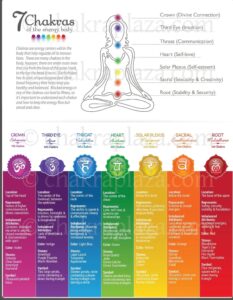
What if the key to living a life of profound depth and connection was within you all along, waiting to be awakened? This isn’t just a philosophical musing; it’s a beckoning call for those on the path of self-discovery to explore the intriguing world of chakras. In an era where well-being has become synonymous with a life well-lived, understanding these vital energy centers presents a compelling invitation to holistic wellness.
In the realm of holistic wellness, chakras have long been revered as pivotal energy centers that bridge the physical, emotional, and spiritual dimensions of our being. Yet, amidst growing interest in these ancient concepts, misinformation often clouds their true essence. Let’s peel back these layers, demystifying the chakras to uncover their significance and practical application in our lives.
Chakras, originating from ancient Indian traditions, are not mere metaphysical constructs but can be viewed as an integral framework for aligning one’s inner energies. Each chakra, from the grounding root to the transcendent crown, is a gateway to understanding the interconnectedness of mind, body, and spirit.
Today’s fast-paced lifestyle poses a significant challenge to integrating chakra practices. Yet, many wellness enthusiasts find solace in these practices, seeking balance amidst the chaos. The root chakra (Muladhara), our foundation of stability, becomes crucial in maintaining equilibrium when the world feels unsteady. Yoga, with its emphasis on grounding and presence, offers a practical approach to nurturing this chakra, fostering resilience and stress reduction.
Skepticism surrounding chakras often stems from a lack of scientific validation. However, advancements in neuroscience and consciousness studies are beginning to bridge this gap. Research indicates that meditation, frequently used to balance chakras, can alter brain waves and promote mental equilibrium. The heart chakra (Anahata), often linked to emotional well-being, benefits from practices like loving-kindness meditation, which has been shown to increase empathy and compassion—qualities essential for meaningful relationships.
More research is needed, yet the alignment of ancient wisdom with modern science offers a promising avenue for further exploration and acceptance of chakra balancing as a legitimate wellness practice.
The concept of chakras may originate from a specific cultural context, but its universal appeal lies in its adaptability and inclusivity. Cultural diversity and globalization have enriched our understanding, allowing chakra practices to transcend borders and integrate into various wellness traditions worldwide. This cross-cultural exchange invites individuals from diverse backgrounds to explore chakras without the constraints of religious dogma, fostering a shared language of healing and growth.
Chakra balance is not just an esoteric concept reserved for spiritual seekers; it is a practical approach to achieving holistic wellness. By nurturing these energy centers, we can enhance our mental health, improve our communication, deepen our emotional connections, and ground ourselves in the present moment.
But don’t just take my word for it—dive into the practice of self-awareness and explore the myriad of holistic methods available. Whether through yoga, meditation, or energy healing, embarking on this path promises not only personal growth but a profound sense of harmony within and without. Engage with your chakras, and you may just unlock the full potential of your being.
To the spiritual seekers and holistic wellness enthusiasts among us, this is your invitation to explore your inner landscape. The chakras offer a remarkable map for your personal transformation—guiding you toward healing and wholeness. Begin by becoming aware of these energy centers within your body and allow them to guide you on a path of self-discovery and growth.
In the words of the enlightened, “Knowing yourself is the beginning of all wisdom.” Take this step toward self-awareness and explore the boundless possibilities that await within.
The Power of Chakras in Holistic Wellness
In a world where the clamor for external achievements often overshadows the whispered needs of our inner selves, the ancient wisdom of chakras emerges as a beacon of balance and introspection. Rooted in centuries-old Indian traditions, chakras are not just esoteric concepts confined to spiritual texts; they represent vital energy centers that interweave the physical, emotional, and spiritual dimensions of our existence. In today’s frenetic pace, where mental health challenges and emotional turbulence have become alarmingly common, understanding and balancing our chakras can offer a profound complement to traditional wellness practices.
In the current societal context, where stress and disconnection have infiltrated daily life, the relevance of chakras in wellness conversations cannot be understated. Their growing popularity is reflected in the rising demand for chakra-related content and workshops. This trend, far from being a fleeting fascination, suggests an increasing collective yearning for holistic approaches to well-being that transcend conventional boundaries.
Balancing one’s chakras need not be an arcane practice reserved for ascetics. There are accessible methods available to anyone seeking harmony. Meditation and yoga, both backed by research indicating their efficacy in stress reduction and improved mental health, serve as powerful tools to align chakras. Crystal healing, with its vibrant symphony of colors and energies, offers another pathway to balance. Integrating these practices into daily life can pave the way for enhanced self-awareness and spiritual growth.
When chakras are aligned, the potential benefits ripple through every facet of our being. Physically, individuals may experience improved vitality, reduced tension, and a heightened immune response. Emotionally, balanced chakras can foster a sense of peace, clarity, and resilience against life’s vicissitudes. Testimonials from those who have embraced chakra work often highlight profound personal transformation, from overcoming anxiety to achieving deeper self-realization.
Yet, as with any practice straddling the metaphysical and tangible, chakras are not without their skeptics. Some dismiss them as pseudoscience, while others view them as mere symbolism. However, it is important to approach chakra work with the understanding that it is not a panacea but a complement. The practice of balancing chakras is not intended to replace medical treatment but to enhance it, offering a dimension of healing that acknowledges the interconnectedness of mind, body, and spirit.
The integration of chakra balancing into one’s wellness regimen can serve as a powerful adjunct to traditional methods. It is a call to explore, with an open heart and mind, the subtle energies that shape our existence. For those willing to venture beyond the conventional, chakras offer a rich tapestry of insights and growth opportunities. I encourage you to take the first step on this inward journey, to discover the unique harmony that lies within, and to engage in conversations that enrich our understanding of holistic wellness.
Explore, discuss, and perhaps, find your balance.
Exploring Chakras in Holistic Wellness: A Simple Guide to the 7 Chakras and Their Energy
- Root Chakra (Muladhara)
- Sacral Chakra (Svadhisthana)
- Solar Plexus Chakra (Manipura)
- Heart Chakra (Anahata)
- Throat Chakra (Vishuddha)
- Third-Eye Chakra (Ajna)
- Crown Chakra (Sahasrara)
In the realm of holistic wellness, chakras have long been revered as pivotal energy centers that bridge the physical, emotional, and spiritual dimensions of our being. Rooted in ancient Indian traditions, these spinning wheels of energy, each correlating to crucial bodily and psychological functions, are increasingly recognized as vital components of a harmonious life. In today’s fast-paced world, where mental health struggles and emotional imbalances are prevalent, understanding and balancing our chakras offers a promising path to overall well-being.
The Sahasrara Reimagined: Relevance and Misconceptions in Today’s World
In a world where the pursuit of material success often overshadows spiritual fulfillment, the concept of chakras—specifically the Sahasrara, or Crown Chakra—remains a beacon of ancient wisdom. But what does this enigmatic energy center truly represent, and why should we turn our intellectual gaze towards it amidst our bustling modern lives?
The Sahasrara, seated at the crown of the head, is often depicted as a radiant thousand-petaled lotus. It symbolizes our connection to the divine, our higher consciousness, and ultimate enlightenment. Rooted deeply in the Vedic scriptures, the Upanishads, and other ancient texts, the Crown Chakra has been revered as the pinnacle of spiritual aspiration. Yet, its true essence often eludes us, shrouded in mystique and misconception.
From the ancient Sanskrit chants to the illustrated depictions in holy texts, the Sahasrara has always held a place of profound significance. Ancient yogis and seers spoke of it as the gateway to the universe, a conduit through which humans can transcend the physical realm and unify with cosmic consciousness. Historical accounts from the Vedas describe it as a state of pure bliss, beyond the dualities and limitations of earthly existence.
Today’s world, with its relentless pace and digital distractions, seems distant from the serene meditations of the rishis. Yet, the relevance of the Sahasrara is more pronounced than ever. In both personal and professional realms, achieving mental clarity and fostering innovative thinking are paramount. The Crown Chakra offers a pathway to these goals by encouraging a detachment from the ego, inviting a broader perspective and enhancing decision-making abilities.
Modern spiritual leaders and meditation experts frequently allude to the Sahasrara in discussions about achieving balance and mindfulness. Programs and workshops focusing on Crown Chakra alignment report astonishing benefits, including heightened intuition and a profound sense of peace, as shared by participants in wellness communities worldwide.
Despite its virtues, the Sahasrara is often misinterpreted as a mystical or esoteric concept, accessible only to a select few. Some perceive it as an abstract idea rather than a practical tool for self-improvement. Another fallacy is the belief that the Crown Chakra’s activation leads to an automatic state of enlightenment, disregarding the continuous effort required for spiritual growth.
For those seeking to explore the Sahasrara, the path begins with introspection and meditation:
- Mindful Meditation: Dedicate time daily to silent meditation, focusing on the top of your head and envisioning a brilliant lotus in bloom.
- Affirmations: Use positive affirmations such as “I am connected to the universal source” to help align your intentions with higher consciousness.
- Yoga Practices: Incorporate yoga poses like the Headstand (Sirsasana), which stimulate the Sahasrara, into your routine.
- Engage with Nature: Spend time outdoors to foster a sense of unity with the natural world.
The Sahasrara invites us to transcend our ordinary perceptions, challenging us to integrate its wisdom into our daily lives. By understanding its historical significance and addressing modern misconceptions, we encourage a balanced approach to spiritual exploration.
In closing, I urge you to look beyond the surface and engage with the deeper dimensions within yourself. Reflect on the Sahasrara as a symbol of potential, a reminder that enlightenment is not just an end but a continuous journey. Let’s open the dialogue and share our experiences—because the path to understanding is best walked together.
Awakening the Third-Eye Chakra: A Journey to Inner Clarity
In a world filled with distractions, the ancient wisdom of chakras offers a poignant reminder of our innate potential for spiritual connection and self-awareness. At the heart of this mystical framework lies the Third-Eye Chakra, or Ajna—a portal to intuition and insight that beckons us to look beyond the mundane.
The concept of chakras traces back to ancient Eastern philosophies, where these energy centers have been revered as gateways to spiritual enlightenment. Positioned on the forehead between the eyebrows, the Third-Eye Chakra is often depicted as a source of insight, transcending the limitations of physical sight to offer a deeper understanding of the universe and our place within it. While these ideas have long been embraced in the East, they are now gaining recognition in the Western spiritual landscape, reflecting a collective yearning for deeper meaning in our lives.
In our technology-driven era, we find ourselves inundated with information yet disconnected from true knowledge. The incessant buzz of notifications and the allure of digital screens often drown out the quiet whispers of our own intuition. This dissonance can lead to a sense of spiritual amnesia, leaving us detached from our inner compass. Herein lies the importance of the Third-Eye Chakra, which serves as a bridge between the conscious and unconscious realms, enabling us to tap into our innate wisdom.
By aligning the Third-Eye Chakra, we can reclaim our intuition—a process that has been supported by contemporary scientific studies on meditation and mindfulness practices. Research has shown that these techniques, closely linked to chakra alignment, can enhance brain function, reduce stress, and improve overall well-being. Such findings offer a tangible pathway to nurturing our spiritual senses amid a world that often prioritizes external achievement over internal fulfillment.
Consider the testimony of individuals who have embarked on the path of Third-Eye meditation. They speak of profound insights and a sharpened mental clarity that transcend ordinary perception. For instance, one practitioner’s experience began as a quest for stress relief but evolved into an unexpected awakening, where the mundane transformed into moments of profound clarity and purpose. These anecdotes, while personal, echo a common narrative among those who have dared to explore the depths of their consciousness.
Such transformations are not confined to the realm of anecdote alone. Historical texts and teachings have long extolled the virtues of the Third-Eye Chakra, underscoring its enduring significance across cultures. Within these ancient writings, the chakra is portrayed as a catalyst for spiritual growth, inviting practitioners to transcend the limitations of the material world and glimpse the infinite possibilities of the soul.
It is important to acknowledge that skepticism surrounds the subject of chakras, and the Third-Eye Chakra is no exception. Critics often question the scientific validity of energy centers, dismissing them as metaphysical abstractions. However, the emerging field of holistic medicine offers compelling rationale for their efficacy. Experts in alternative healing methods advocate for chakra balancing as a means of fostering physical, emotional, and spiritual health, pointing to the interconnectedness of mind, body, and spirit as an undeniable truth.
In addressing these misconceptions, we must approach the topic with an open mind, recognizing that the mysteries of the human experience often elude empirical measurement. By engaging in contemplative exploration, we create space for the possibility that the Third-Eye Chakra holds profound insights yet to be fully understood by modern science.
In conclusion, the Third-Eye Chakra stands as a beacon for those seeking holistic well-being and spiritual growth. By awakening this energy center, we invite ourselves to view the world through a lens of clarity and intuition, discovering new dimensions of self-awareness and purpose. I encourage you to explore the potential of the Third-Eye Chakra in your own life—embrace meditation, engage in introspection, and cultivate a sense of wonder for the mysteries that lie within.
Together, let us challenge conventional thinking and forge a path towards self-discovery and spiritual enlightenment. The Third-Eye Chakra awaits, offering a gateway to a more profound understanding of the world and our place within it.
Harnessing the Truth: The Influence of the Throat Chakra
In a world where communication has become as instantaneous as it is superficial, the quest for authentic self-expression seems more elusive than ever. Yet, nestled within the rich tapestry of Eastern philosophies lies a concept that challenges us to reclaim our voice and speak our truth—the Throat Chakra, or Vishuddha. This energy center is more than a mystical notion; it’s a powerful ally in our pursuit of genuine communication and self-expression.
The ancient wisdom of the Throat Chakra teaches us that communication is not merely an act of speaking but a dance of truth and authenticity. Vishuddha, translated as “especially pure,” is the fifth chakra in the seven-chakra system, traditionally represented by a blue lotus with 16 petals. It resides at the throat, governing our ability to express ourselves with clarity and integrity.
Eastern philosophies have long recognized the Throat Chakra’s role in cultivating a harmonious inner and outer dialogue. Its historical and cultural significance underscores its place in practices such as yoga, meditation, and Ayurveda, which promote balance and health by aligning our physical, emotional, and spiritual selves.
In contemporary wellness practices, the influence of the Throat Chakra continues to capture both curiosity and credibility. Studies on meditation and yoga highlight their positive impact on mental well-being and stress reduction, providing a scientific basis for practices aimed at balancing the chakras. Those who engage in chakra work often report profound shifts in their communicative abilities after focusing on Vishuddha.
Consider the stories of individuals who have integrated Throat Chakra meditations into their routines. One such individual shared, “I always struggled with public speaking, but after committing to daily Throat Chakra exercises, I found my voice. I can now articulate my thoughts without hesitation.” These experiences, though anecdotal, echo the sentiments of many who have embraced this spiritual practice.
Furthermore, wellness and spiritual practitioners have begun to incorporate Throat Chakra teachings into their offerings. Through workshops and retreats, they guide individuals to explore their inner truths and express themselves authentically. Surveys and interviews reveal that participants often experience a newfound confidence in their communication, attributing this transformation to the activation and alignment of Vishuddha.
While the allure of the Throat Chakra is undeniable, skeptics may argue that attributing changes in communication to an invisible energy center lacks scientific rigor. It’s essential to acknowledge this viewpoint, considering the inherent challenges of measuring the metaphysical. However, the beauty of spiritual exploration lies in its capacity to transcend empirical evidence, inviting us to connect with ourselves on a deeper level.
The psychosomatic connection between mind and body cannot be ignored. By engaging in practices that foster mindfulness and self-awareness, we create space for insights and transformations that science may not yet fully explain. The Throat Chakra serves as a catalyst for introspection and growth, encouraging us to cultivate a more authentic relationship with ourselves and others.
In a society that often rewards conformity and superficiality, the Throat Chakra beckons us to rise above the noise and speak our truth. By engaging with this powerful energy center, we can unlock the potential for true communication—communication that resonates with authenticity, transparency, and courage.
Whether you are a seasoned practitioner or a curious seeker, I invite you to explore the Throat Chakra in your own life. Through meditation, journaling, or simply mindful conversations, allow Vishuddha to guide you toward the freedom of expression you’ve been yearning for.
The time for authentic communication is now—will you answer the call?
Bridge of Love and Light The Journey of Awakening Your Heart Chakra
In the swirling dance between the physical and the spiritual, there lies a potent energy center that serves as a bridge—the Heart Chakra. Known as Anahata in Sanskrit, this chakra is the fourth of the seven main energy centers in our body. For those exploring the realms of spirituality, yoga, and wellness, understanding the Heart Chakra can be a profound and transformative experience. This blog post will guide you through the nuances of the Heart Chakra, its impact on our lives, and how you can harness its power to lead a more balanced and compassionate life.
The Heart Chakra stands at the confluence of the earthly and the spiritual. Located in the center of the chest, it symbolizes the equilibrium between the tangible and the ethereal. The Heart Chakra is like a mystical bridge; it connects our material existence with the spiritual dimensions that beckon us to explore deeper truths. Anahata, meaning “unstruck” or “unbeaten” in Sanskrit, signifies the pure and gentle energy that this chakra radiates—a resonance untouched by the chaos of the world.
For spiritual seekers and yoga enthusiasts, the Heart Chakra holds a special place. It invites introspection and encourages the exploration of love, compassion, and empathy. By tapping into this energy center, one can transcend the mundane and view life through the lens of unconditional love. The Heart Chakra reminds us that beneath the layers of ego and material attachments, our true essence is love.
As we venture into understanding the Heart Chakra, we begin to see it as a portal to healing and transformation. It is here that we reconcile our desires with our higher purpose, making peace between our earthly struggles and spiritual aspirations. The Heart Chakra teaches us that by nurturing love within ourselves, we can extend it to others and the world.
The Heart Chakra is a powerful force in shaping our emotional and physical well-being. It governs our ability to love and be loved, influencing our relationships and interactions with the world around us. When this chakra is balanced, we experience a sense of harmony and connection, both internally and externally. We become more compassionate, empathetic, and open to the beauty that life offers.
Emotionally, the Heart Chakra allows us to express love freely and receive it without fear or judgment. It helps us cultivate forgiveness and acceptance, shedding the burdens of resentment and anger. A balanced Heart Chakra empowers us to build meaningful connections and approach life with an open heart.
Physically, the Heart Chakra is associated with the heart, lungs, and thymus gland. It plays a role in regulating the circulatory and immune systems, impacting our overall health and vitality. When the Heart Chakra is in harmony, we are more resilient to stress and disease, as the energy flow supports our body’s natural healing processes.
Recognizing the importance of the Heart Chakra is the first step toward unlocking its potential. By acknowledging its influence on our emotional and physical states, we can begin to work on aligning this energy center and fostering a deeper connection with ourselves and others.
A balanced Heart Chakra is a symphony of harmony, resonating with the beauty of love and compassion. When this chakra is in alignment, it becomes a radiant source of positive energy that uplifts not only ourselves but also those around us. The signs of a balanced Heart Chakra are subtle yet profound, touching every aspect of our being.
One of the most evident signs of a balanced Heart Chakra is an unwavering sense of inner peace. Regardless of external circumstances, there is a calmness that resides within, offering solace amid life’s challenges. This inner tranquility reflects our ability to accept and love ourselves unconditionally, freeing us from self-doubt and criticism.
A balanced Heart Chakra also enhances our capacity for empathy and understanding. We become attuned to the emotions of others, offering support and compassion without hesitation. Our relationships thrive as we create spaces of trust and openness, nurturing bonds that are grounded in genuine affection and respect.
Furthermore, a harmonious Heart Chakra invites us to live authentically, guided by our true values and passions. We find joy in expressing our creativity and connecting with the world in meaningful ways. By radiating love and positivity, we inspire others to do the same, creating a ripple effect of kindness and unity.
Awakening and balancing the Heart Chakra is a sacred practice that requires dedication and mindfulness. Fortunately, there are various techniques that can help us align this energy center, allowing love and compassion to flow freely through our lives. Among these practices are guided meditations, yoga poses, and affirmations that nurture the heart’s energy.
Guided meditations are a powerful tool for cultivating awareness of the Heart Chakra. By focusing on the breath and visualizing a vibrant green light—symbolic of the Heart Chakra’s color—we can invite healing energy into this area. Through meditation, we learn to release emotional blockages and open our hearts to love, acceptance, and peace.
Yoga poses that target the Heart Chakra are designed to expand the chest and encourage the flow of prana (life force energy) throughout the body. Poses such as Camel Pose (Ustrasana), Cobra Pose (Bhujangasana), and Fish Pose (Matsyasana) gently stretch the heart area, promoting openness and flexibility. Practicing these poses with intention can help us unlock the heart’s potential and increase our sense of connection.
Incorporating affirmations into our daily routine can also support the awakening of the Heart Chakra. Positive affirmations such as “I am worthy of love” and “I offer and receive compassion freely” reinforce our belief in the power of love. By repeating these affirmations, we shift our mindset and align our energy with the heart’s true essence.
For those experiencing imbalances in the Heart Chakra, healing is both a personal and transformative journey. Imbalances can manifest as feelings of loneliness, jealousy, or resentment, creating barriers to love and connection. Fortunately, several techniques can guide us toward restoring balance and harmony within the heart.
One effective technique for healing the Heart Chakra is the practice of forgiveness. Holding onto grudges and past hurts can block the flow of love, preventing us from moving forward. By consciously choosing to forgive ourselves and others, we release the emotional baggage that weighs us down. This act of liberation opens the heart to new possibilities and experiences.
Another powerful method for healing the Heart Chakra is the use of sound therapy. Vibrational frequencies, such as singing bowls or chants, resonate with the heart’s energy, dissolving blockages and facilitating healing. The soothing sounds create a meditative atmosphere that allows us to connect with our inner self and the heart’s wisdom.
Journaling is also a valuable tool for self-reflection and healing. By putting our thoughts and emotions onto paper, we gain clarity and insight into the root causes of our imbalances. Journaling allows us to explore our feelings openly and honestly, leading to greater self-awareness and emotional release.
Living with an open heart is a practice that extends beyond the confines of meditation and yoga sessions. It is a way of being—an invitation to embody love, compassion, and empathy in every aspect of our lives. By nurturing these qualities, we create a ripple effect that transforms not only ourselves but also the world around us.
To live with an open heart, we must first cultivate self-love and acceptance. Recognizing our worth and celebrating our uniqueness empowers us to show up authentically in the world. By loving ourselves unconditionally, we create a solid foundation from which we can extend love to others.
Compassion is another key aspect of living with an open heart. It involves recognizing the shared humanity in all beings and offering kindness and understanding without judgment. Acts of compassion need not be grand gestures; they can be small acts of kindness that brighten someone’s day and remind them of their inherent worth.
Empathy, too, plays a vital role in nurturing an open heart. By placing ourselves in the shoes of others, we deepen our understanding of their experiences and emotions. This fosters a sense of connection and unity, bridging the gaps that separate us and reinforcing the belief that we are all interconnected.
The journey of understanding and awakening the Heart Chakra is an ongoing process—an invitation to explore the depths of love, compassion, and empathy. It challenges us to transcend the limitations of the ego and discover the boundless potential of the heart.
As we continue this exploration, we realize that the Heart Chakra is not merely a concept but a living, breathing energy that resides within us. It is a source of healing and transformation, guiding us toward a more authentic and fulfilling life. By nurturing our Heart Chakra, we create a space for love to flourish, touching every aspect of our existence.
For spiritual seekers and wellness enthusiasts, the Heart Chakra offers a path to self-discovery and growth. It encourages us to look beyond the surface and connect with the essence of who we are. The insights gained from this exploration serve as a beacon of light, illuminating our path and inspiring us to live with an open heart.
If you wish to explore more about the Heart Chakra and its profound impact on your life, consider seeking guidance from experienced practitioners or engaging in workshops and retreats that focus on this energy center. Remember, the heart is a powerful ally on our spiritual journey—a source of wisdom, love, and compassion that transcends all boundaries.
Unleashing the Power Within: The Transformative Role of the Solar Plexus Chakra
In a world constantly grappling with the question of identity, the Solar Plexus Chakra, or Manipura, emerges as a beacon of personal power and inner transformation. Nestled between the navel and the sternum, this radiant energy center is often overshadowed by its more famous counterparts—the heart and the crown chakras. Yet, it is the Solar Plexus that fuels our self-worth and propels us forward in both personal and professional arenas.
Manipura, which translates to “lustrous gem” in Sanskrit, is aptly symbolized by fire—a testament to its intense and dynamic energy. Represented by the vibrant color yellow, this chakra embodies the sun’s warmth and brilliance, igniting our passion and drive. Historically, Vedic and Tantric traditions have revered Manipura as the source of personal power and transformation, a viewpoint echoed by modern spiritual leaders who emphasize its role in fostering self-confidence and clarity.
The Solar Plexus Chakra serves as the seat of our self-esteem, willpower, and confidence. When balanced, it instills a robust sense of self and a clear direction in life. From a psychological perspective, the Manipura is linked to our ego identity—a bridge between our inner desires and external expressions. The chakra’s energy can empower individuals to overcome insecurities, transforming perceived limitations into opportunities for growth.
Notably, scientific studies have begun exploring the relationship between confidence and physiological states, suggesting a tangible link between our mental health and chakra alignment. Researchers are increasingly interested in how maintaining balance in energy centers like the Solar Plexus can influence emotional resilience and well-being.
Achieving balance in the Solar Plexus Chakra requires intentional practices that align body, mind, and spirit. Consider integrating these activities into your daily routine:
- Meditation: Focus on the sun’s energy, visualizing its light filling your body with warmth and strength. Mantras like “I am powerful” can reinforce this connection.
- Yoga: Poses such as Warrior II and Boat Pose engage the core, helping to activate and harmonize Manipura.
- Lifestyle Adjustments: Building a routine that supports regular physical activity, a balanced diet, and adequate rest can nurture the Solar Plexus.
A balanced Solar Plexus Chakra not only enhances personal empowerment but also enriches our interactions with the world. When individuals harness the power of Manipura, they are better equipped to assert themselves, pursue goals with unwavering determination, and inspire others. This ripple effect extends beyond personal boundaries, contributing to a more empowered and harmonious community.
In the quest for mind-body balance, the Solar Plexus Chakra offers profound insights into our inherent potential. By nurturing this energy center, we unlock a pathway to greater self-awareness and fulfillment. I invite you to explore the depths of your Manipura, to cultivate the fire within, and to step boldly into a life of empowerment and balance. Join the conversation and share your experiences—together, let’s illuminate the path to self-discovery and growth.
Flowing with Creative Energy How the Sacral Chakra Transforms Emotional Expression
In the realm of human energy systems, the chakras hold a revered place, acting as the conduits through which life force flows. Among these spinning wheels of energy lies the Sacral Chakra, or Svadhisthana, a vibrant source of creativity and emotional expression. Understanding this chakra opens a gateway to profound personal growth and emotional freedom.
Imagine a world where your creative energy flows like a river, unhindered by the dams of emotional turmoil. This post will guide yoga practitioners, wellness seekers, and meditation enthusiasts on a transformative journey through the depths of the Sacral Chakra. Here, we will explore its core significance in the chakra system, discover how to balance it, and reveal the powerful connection between creativity and emotional expression.
The Sacral Chakra, nestled in the lower abdomen just below the navel, is the second chakra in the body’s energy system. It is associated with the color orange, embodying warmth, enthusiasm, and the essence of vitality. The element of water governs this chakra, symbolizing fluidity, adaptability, and the ebbs and flows of emotions. When balanced, Svadhisthana awakens our inner artist, fuels our desires, and allows us to express emotions with authenticity.
A balanced Sacral Chakra fosters creativity and emotional resilience, allowing for free-flowing ideas and profound emotional connections. It is often described as the seat of creativity and pleasure. But when imbalanced, this chakra may manifest in physical ailments like lower back pain, reproductive issues, or emotional challenges such as mood swings and feelings of isolation.
Understanding the sacral chakra’s role as a vessel for emotional expression and creativity can illuminate paths to emotional healing and personal transformation. By exploring the depths of this chakra, individuals can open themselves to a vibrant and balanced life, rich with creative expression and emotional clarity.
Svadhisthana’s power lies not only in creativity but also in its ability to connect us with our emotions. This chakra encourages us to explore our feelings and desires, creating a link between our inner world and outward expressions. Located in the pelvic region, it governs our emotional responses, sensuality, and capacity for joy.
The color orange represents the Sacral Chakra’s connection to warmth and vitality. This vibrant hue signifies the blossoming of creativity and emotional depth. It invites us to explore our passions and express our deepest feelings without reservation. Additionally, the water element underscores the chakra’s fluid nature, encouraging adaptability and emotional flow.
When the Sacral Chakra is imbalanced, individuals may experience physical discomforts such as hip pain or digestive issues. Emotionally, it may lead to feelings of fear, guilt, or dependency. Recognizing these signs is crucial for addressing imbalances and nurturing the chakra’s energy, allowing it to function harmoniously within the body’s energy system.
Balancing the Sacral Chakra requires a holistic approach, integrating yoga, meditation, and lifestyle adjustments. Through yoga asanas that target the hips and lower abdomen, practitioners can release stored tension and open pathways for energy flow. Poses like the Goddess Pose, Pigeon Pose, and Seated Forward Bend are particularly effective in engaging the Sacral Chakra.
Meditation practices focused on visualizing the color orange or incorporating affirmations can also support chakra balance. Visualize a warm, orange glow radiating from the lower abdomen, enveloping the body in creative energy and emotional healing. Affirmations such as “I am creative” and “I am emotionally balanced” reinforce these visualizations, promoting harmony.
Incorporating lifestyle changes, such as engaging in creative activities or spending time near water, can further enhance balance. Whether painting, dancing, or simply enjoying nature, these activities nurture the Sacral Chakra, fostering overall well-being. Consider exploring these practices to align and invigorate this vital energy center.
The interplay between creativity and emotional expression is a dance choreographed by the Sacral Chakra. When balanced, this chakra serves as a catalyst for artistic endeavors and emotional exploration. It allows individuals to channel their emotions into creative outlets, transforming inner experiences into tangible expressions.
Creativity thrives when emotions flow freely, unhindered by fear or judgment. A balanced Sacral Chakra encourages individuals to tap into their creative potential, whether through painting, writing, or music. It enables them to express emotions authentically, fostering connections with others and enhancing personal satisfaction.
Conversely, an imbalanced Sacral Chakra may stifle creativity and emotional expression. Fear of vulnerability or self-doubt can inhibit artistic pursuits, leading to frustration or stagnation. By nurturing the Sacral Chakra, individuals can overcome these barriers, unlocking new avenues for creativity and emotional fulfillment.
Real-life examples illustrate the profound effects of balancing the Sacral Chakra. Consider Sarah, an artist who struggled with creative blocks and emotional turmoil. Through regular yoga practice and meditation focused on the Sacral Chakra, she discovered new styles of expression and rekindled her passion for art.
Similarly, Alan, a writer facing emotional challenges, found solace in Sacral Chakra balancing techniques. By incorporating affirmations and engaging in creative writing exercises, he experienced a renewed sense of emotional clarity and creative inspiration, allowing him to produce his best work.
These stories underscore the Sacral Chakra’s power in transforming lives. By addressing imbalances and nurturing this energy center, individuals can experience profound changes in creativity and emotional well-being, leading to a more fulfilling and expressive life.
The Sacral Chakra holds the key to unlocking creativity and emotional expression, offering profound insights into personal growth and healing. By understanding its significance and employing balancing techniques, individuals can tap into a wellspring of creative energy and emotional resilience, enriching their lives.
For those seeking to continue their chakra balancing journey, consider exploring deeper meditation practices, engaging in creative pursuits, and connecting with communities of like-minded individuals. These steps can foster continued growth and support the Sacral Chakra’s vital role in personal transformation.
The path to a balanced Sacral Chakra is one of exploration and discovery, inviting individuals to connect with their true selves and express their essence authentically. May this guide serve as a beacon on your path to enhanced creativity and emotional fulfillment.
Realigning Perspectives on the Root Chakra
The modern world swirls with endless distractions—our feet often lifted from the ground by digital winds and urban chaos. In such a whirlwind, the ancient wisdom of the Root Chakra, or Muladhara, serves as an anchor, pulling us back to the earth and reminding us of our fundamental human experience. Yet, in a time where materialism and technology dominate conversations, have we lost touch with this primal energy center?
To understand the profundity of the Root Chakra, we must first weave through its origins. Ancient texts, notably rooted in Indian philosophy, describe Muladhara as the foundation of physical and spiritual energy. This chakra is often depicted as a red lotus with four petals, sitting at the base of the spine. It is the primal force that governs our survival instincts, grounding us in the present moment.
Across various cultures, from Native American traditions to African spiritual practices, we find parallels. These systems acknowledge an energy that tethers us to the earth, suggesting a universal recognition of our need to connect with something greater than ourselves. This collective understanding challenges us to realign our perspectives, integrating these teachings into our contemporary lives.
In recent years, scientific studies have begun to explore the benefits of grounding—the practice of making physical contact with the earth. Research suggests that grounding can reduce inflammation, improve sleep, and enhance overall well-being. This scientific inquiry into grounding serves as a bridge, connecting ancient wisdom with modern validation, and highlighting the Root Chakra’s continued relevance.
Anecdotal evidence further underscores this connection. Individuals who engage in practices such as barefoot walking, yoga, and meditation report a profound sense of peace and stability. These practices stimulate the Muladhara, fostering a balance that many find elusive in today’s frenetic pace.
Critics may argue that focusing on spiritual energy centers detracts from tangible societal progress. However, it’s crucial to recognize that nurturing the Root Chakra does not oppose advancement; rather, it complements it. By grounding ourselves in presence and stability, we cultivate resilience—an essential trait for navigating modern life’s complexities.
Furthermore, some skeptics may view the chakra system as esoteric or irrelevant in Western contexts. Yet, if we examine the universal elements of grounding present in nearly every culture, we find a shared human need for connection and security. This universality invites us to reframe our understanding, seeing the Root Chakra not as an abstract concept, but as a practical tool for holistic growth.
In closing, I invite you to pause amidst the noise. To feel the earth beneath your feet and breathe in the life it supports. Consider incorporating grounding practices into your routine, not as a trend, but as a return to an ancient rhythm. Discuss, share, and explore how the Root Chakra can serve not only as a spiritual guide but as a foundation for personal and collective transformation.
By realigning our perspectives on the Root Chakra, we create space for introspection and growth. In doing so, we foster a future where ancient wisdom and modern innovation coexist, leading us to a richer, more balanced existence.
Finally, at the base of our spine, we find the root chakra, the crimson foundation of stability and grounding. Like the roots of a mighty tree anchoring it to the earth, the root chakra connects us to our physical existence and provides a sense of security and belonging. In a world where uncertainty often reigns, a balanced root chakra is essential for feeling safe and grounded. Yoga, which often incorporates chakra work, has been shown to enhance this balance, reducing stress and promoting physical stability.
Chakra balance is not just an esoteric concept reserved for spiritual seekers; it is a practical approach to achieving holistic wellness. By nurturing these energy centers, we can enhance our mental health, improve our communication, deepen our emotional connections, and ground ourselves in the present moment.
But don’t just take my word for it—dive into the practice of self-awareness and explore the myriad of holistic methods available. Whether through yoga, meditation, or energy healing, embarking on this path promises not only personal growth but a profound sense of harmony within and without. Engage with your chakras, and you may just unlock the full potential of your being.
The Miraculous Field of Energy: Bridging Science and Spirituality
What if the profound sense of self you carry isn’t just an abstract notion, but an intricate dance of life force energy, shaping your identity and experiences? This question opens the door to a deeper understanding of our existence—a realm where the scientific and spiritual converge to illuminate the miraculous field of energy we inhabit.
At every moment, our bodies serve as vessels for a self-organizing principle—a guiding life force energy crafting our physical form and the narrative of our lives. This is not merely a philosophical musing; it’s a dynamic interplay acknowledged by scientific studies that increasingly validate the impact of subtle energy fields on the human body. Such revelations propel energy work into the realm of evidence-based practice, offering a bridge between the known and the unexplored.
Yet, despite growing evidence, a gap remains between scientific and spiritual perspectives. This dissonance challenges us to integrate these insights into mainstream healthcare and wellness, pushing boundaries to redefine how we perceive health and personal development.
To truly harness the potential of energy work, we must address the barriers to its widespread acceptance. The integration of energy modalities into healthcare is gaining traction, with more medical professionals recognizing its potential as a complementary or alternative therapy. This shift requires standardized practices and education to ensure quality and safety for both practitioners and clients, paving the way for a new era of holistic healing.
Personal narratives provide compelling testimony to the benefits of energy work. Many individuals report significant improvements in their physical, emotional, and mental health through these modalities, offering case studies that challenge conventional healthcare models. Such stories underscore the potential for energy work to transform well-being by addressing both physical and energetic aspects.
A key challenge lies in navigating the complexities of trauma and its effects on the self-organizing principle. Trauma can disrupt the soul’s narrative, creating fragmented identities and unhealed spaces within. Holistic approaches to healing are essential, recognizing that true restoration involves harmonizing both the physical and energetic dimensions of self.
Awareness of trauma’s impact highlights the importance of integrating energy work into healing practices. By addressing these disruptions, we create space for profound personal growth and spiritual awakening, allowing individuals to reclaim lost parts of themselves and forge deeper connections to their innate life force energy.
The global community of energy workers and spiritual seekers is driving the conversation on standardization and education. As advocates for ethical and effective practices, they lay the groundwork for a unified approach to energy work—a movement that promises to reshape how we understand and engage with our own energy fields.
This collective effort is a testament to the power of community and shared purpose. Together, we can foster a deeper understanding of the self-organizing principle, bridging gaps between disciplines and encouraging a holistic view of health and identity.
The time has come to explore the transformative power of energy work. Whether you’re a seasoned practitioner or a curious seeker, there’s a wealth of knowledge and experience to uncover. Engage with this dynamic field, challenge conventional thinking, and discover new dimensions of self-awareness and healing.
In embarking on this journey, remember that the miraculous field of energy is not just an abstract concept—it’s a living, breathing reality shaping our lives and identities. By bridging the divide between science and spirituality, we open ourselves to a richer, more nuanced understanding of what it means to be alive.
The invitation is open—step into the dance and explore the boundless possibilities that await within the realm of energy work.
The role of the hypothesis of an energy system in the human body
Sacred Dance as a Pathway to Awakening and Transformation
In our fast-paced world, where the lines between reality and digital existence blur, a profound yearning for connection, authenticity, and spiritual awakening emerges. It is within this context that sacred dance offers itself as a beacon of transformation, integrating the physical, emotional, and spiritual dimensions of our being. This ancient practice is not only a dance of the body but a dance of the soul, inviting us to explore the inner realms of our consciousness and emerge transformed.
Sacred dance transcends mere movement; it is an alchemical process that clears the mental, emotional, and physical blockages that weigh us down. Imagine stepping onto the path of sacred dance and, from the very first week, witnessing the opening of your eight vital chakras—becoming a channel for divine light. This awakening is not just personal but collective, as each individual radiates positivity and healing, contributing to the upliftment of our communities.
One of the most compelling aspects of this sacred dance course is its universal accessibility. Regardless of your background, age, or abilities, sacred dance welcomes you. Whether you have never danced before or have years of experience, this course is designed to meet you where you are and guide you towards your unique expression of divinity.
In this era of unprecedented change and uncertainty, our world’s dire need for spiritual awakening and personal empowerment cannot be overstated. Sacred dance offers a pathway to rediscover the oneness and interconnection of all that is, grounding spirituality, presence, and love in our very bodies. It is through this embodiment that we find clarity, inner peace, and heightened intuition, effortlessly guiding our everyday lives.
The impact of sacred dance is not just theoretical but deeply personal, as reflected in the testimonies of those who have embarked on this transformative journey. Countless individuals with little to no background in dance have found liberation, empowerment, and a profound sense of belonging within their own bodies.
What sets this movement apart is its integration of ancient wisdom and modern sciences, offering a holistic approach to self-discovery and healing. Through the exploration of various forms of movement—from tribal dance and flamenco to Tai Chi and Sufi whirling—we infuse the teachings of chakras, Chinese meridians, neuroscience, quantum physics, Sufi and Taoist philosophies, and Mary Magdalene’s map of ascension. This fusion is further enhanced by the love poetry of Rumi, creating a rich tapestry of knowledge and inspiration.
I invite you to join in sacred dance and discover for yourself how it can awaken your inner divinity and embody your authentic self. It has changed my life and the lives of countless others. If you are ready to transform your world and shift towards a more vital, creative, and fulfilling life, then this is your invitation to dance, to feel, and to be. The time is now. Together, let’s dance our way into awakening.
Are Archetypes Merely Reflections of Our Deepest Traumas?
In the annals of psychology, Carl Jung’s proposition that archetypes shape our collective and individual behaviors stands out. But what if these archetypes are not merely age-old symbols embedded in our unconscious? What if they are, in fact, manifestations of personal wounds—fragments of trauma that we’ve disowned?
Archetypes are often seen as universal, primordial images residing in our collective unconscious. They emerge in myths, dreams, and even our daily interactions. Yet, the challenge lies in recognizing that these archetypes also represent disowned traits often born from trauma—virtual secondary personality centers influencing our actions and decisions without our conscious approval.
There are countless anecdotes available describing how hidden wounds had actual voices and presences once they were spiritually connected with during a meditatively inspired healing process. Without realizing it, humans can spin projections of the experience of deep unresolved pain into the fabric of their human energy field, where, much like the personality they become self-organizing systems that become unconscious advisors to our personality. The self-organizing system of consciousness then selects an image, or archetype, that symbolizes it’s influence on the conscious mind the best.
Our lives are often shaped by forces beyond our immediate perception. Just as a river is carved by the unseen undercurrents, our behaviors, individually and collectively, are influenced by these archetypal forces. These archetypes, born from unrecognized traumas, can subtly guide our egos, impacting everything from personal relationships to societal norms.
One of the most significant challenges today is integrating psychological and spiritual perspectives in understanding archetypes. This integration is crucial for both personal healing and professional growth. For leaders and decision-makers, recognizing these archetypal influences can lead to more conscious and holistic leadership, promoting environments where individuals can thrive.
The realm of archetypes and their connection to trauma is ripe for exploration. More research is needed to uncover the layers of influence these archetypal forces exert on our psyche. By understanding these dynamics, we can develop practical applications that aid in the reconciliation of personal and collective traumas, fostering healthier societies.
It’s time for psychology enthusiasts, spiritual seekers, and leaders to take a bold step towards inner exploration. The unconscious forces attached to our life force demand our attention. By becoming aware of these energies, we can transform them from invisible puppeteers into allies in our quest for self-discovery and growth.
In the end, the question remains—are we ready to face these shadows and reclaim the disowned parts of ourselves that hold the keys to our true potential? Engage with these concepts, challenge conventional thinking, and become aware of the archetypal forces shaping your consciousness.
The path to self-awareness begins with a single step.
Will you take it?
Unveiling the Tricksters Within Our Consciousness
In the vast landscape of human consciousness, there exists an intricate web of energy fields and thought forms that shape our perceptions, experiences, and sense of self. These unseen forces often play a crucial role in our mental and spiritual well-being. It is time to explore my personal narrative which uncovers the presence of “tricksters” within the human energy field—entities born out of childhood trauma—and their profound impact on life.
Remember the narratives about our propioceptive sense, in regards to our physical body, and, perhaps, even our spiritual body? What happens to the amputee who still has phantom pain in an amputated appendage? What about a trauma survivor, who feels pain in their life, either physiological or psychological, caused by an experience long forgotten, or even never consciously recorded because it occurred in a pre-conscious state? These psychic forces imitate the effects of the phantom pain sometimes experienced by amputees. By understanding these tricksters, we can gain insights into our own psyches and pave the way for deeper personal growth and spiritual enlightenment.
Have you ever wondered what other unseen forces lurk within your consciousness, subtly shaping your perceptions and life choices? In the vast landscape of human consciousness lies an intricate web of energy fields and thought forms that silently mold our mental and spiritual well-being. These “tricksters” within our consciousness, born out of childhood trauma and other unresolved emotional states, wield a profound influence on how we perceive ourselves and the world around us.
Imagine the proprioceptive sense of our physical body, a mechanism that allows us to perceive the position and movement of our limbs. Now, extend this concept to our spiritual self. Just as an amputee might feel phantom pain in a lost limb, trauma survivors carry pain—physiological or psychological—from experiences long forgotten or never consciously recorded. These tricksters mimic the phantom pains experienced by amputees, impacting individuals at their core.
Our consciousness is more than a collection of thoughts and emotions; it’s a dynamic field of energy, constantly influenced by external and internal stimuli. This energy field, often referred to as the aura or human energy matrix, encompasses our physical, emotional, mental, and spiritual states. Within this matrix, thought forms—specific patterns of energy generated by our thoughts and unrecognized traumas—emerge, impacting our behaviors and experiences.
While these thought forms can be positive, guiding us toward growth, the negative ones manifest as limiting beliefs and fears. Understanding these thought forms is essential for achieving a balanced and healthy psyche.
During a moment of deep introspection, I discovered two distinct entities within my energy field—tricksters, not mere figments of my imagination, but deeply embedded energy systems, shaped by childhood trauma and a fractured identity. At first, they felt familiar, providing solace in solitude. But it became evident that they were not here for my greater good.
These entities were caricatures of two distinct individuals, providing a false sense of companionship. It was only after my father’s passing that I could fully comprehend their nature and summon the resolve to release them from my energy field. These tricksters, born from my parents’ intentions and my reactions to their perceptions, embodied unhealthy attachments and unresolved traumas. They anchored me to the past, influencing my consciousness even when dormant.
Over time, these tricksters became like black holes within my consciousness, swirling around feelings of powerlessness, diminished self-worth, and fear of death. Understanding their origins became crucial in my quest for a richer human and spiritual experience.
My encounter with these tricksters led to a profound realization about the human condition, especially regarding culturally derived and intergenerational trauma. Similar internalized thought forms plague the human race, manifesting as unconscious negative influences, mental health disorders, and societal issues like oppression, prejudice, and toxic masculinity. Our collective struggles with self-worth, unresolved trauma, and fear create fertile ground for these tricksters to thrive. By recognizing them, we can address these issues individually and collectively.
The challenges of identifying and understanding unrecognized traumas within mental health are significant. Many traumas occur in pre-conscious states, making them elusive. The lack of mainstream acceptance of energy fields and thought forms poses a challenge to integrating these concepts into traditional therapeutic approaches.
To address these challenges, we must develop tools and methodologies combining psychology, spirituality, and energy healing, enabling trauma survivors to recognize and confront their personal tricksters. Bridging the gap between personal narratives and scientific validation is essential, as insights into consciousness and energy fields often stem from subjective experiences. Research and evidence are needed to support these claims within academic and professional communities.
Research on the long-term effects of childhood trauma reveals how early experiences shape adult behaviors, beliefs, and health outcomes. Studies highlight the relationship between suppressed memories and physical or psychological symptoms, illustrating the impact of unrecognized trauma on well-being. Anecdotal evidence and case studies from trauma survivors who have explored energy healing or spiritual practices demonstrate improvements in mental health and personal growth.
The growing interest in alternative and complementary therapies within mental health care reflects a shift toward holistic approaches to wellness. Experts in psychology, neuroscience, and energy healing offer diverse perspectives on the intersection of consciousness, trauma, and healing.
Let’s engage in the conversation on mental health and spirituality. Seek out holistic approaches to healing and self-discovery. Share your story or insights on recognizing your own personal tricksters.
The tricksters within our consciousness are not just personal phenomena; they have broader implications for society as a whole. By acknowledging their presence and impact, we can pave the way for individual growth and societal transformation. It is time to unmask the tricksters within our consciousness, reclaim our power, and forge a path toward healing and enlightenment.

Our consciousness is more than just a collection of thoughts and feelings. It is a dynamic field of energy, constantly interacting with and influenced by external and internal stimuli. This energy field, often referred to as the aura or the human energy matrix, encompasses our physical, emotional, mental, and spiritual states. Within this matrix, thought forms—distinct patterns of energy generated by our thoughts, and our unrecognized traumas—take shape, influencing our behavior and experiences.
These thought forms can also be positive, uplifting our spirits and guiding us toward growth. However, the negative may manifest as limiting beliefs, fears, and a diminished passion for life. Recognizing and understanding these thought forms is essential for achieving a balanced and healthy state of being.
Our collective struggles with self-worth, fear, and unresolved trauma create a fertile ground for these tricksters to thrive. Recognizing their presence and impact can help us address these issues at both an individual and societal level.
The tricksters within our consciousness are not just personal phenomena; they have far-reaching implications for society as a whole. These internalized thought forms contribute to a range of societal issues, including:
- Prejudice and Racism: Deep-seated fears and insecurities can manifest as prejudice and racism, leading to discrimination and social division.
- Misogyny: Unresolved traumas and negative thought forms can fuel misogynistic attitudes and behaviors, perpetuating gender inequality.
- Mental Health Disorders: Tricksters can exacerbate mental health conditions, such as anxiety, depression, and multiple personality disorder, making it challenging to achieve psychological well-being.
By addressing these internalized entities, we can work towards healing not only ourselves but also the broader societal fabric.
Recognizing the presence of tricksters within our energy fields is the first step towards healing and integration. Here are some strategies to help you identify and address these thought forms:
- Mindfulness and Meditation: Practicing mindfulness and meditation can help you become more aware of your thoughts and emotions, making it easier to identify negative thought forms.
- Journaling: Writing down your thoughts and experiences can provide valuable insights into your inner world, helping you recognize patterns and recurring themes.
- Therapy and Counseling: Working with a mental health professional can provide guidance and support in identifying and addressing unresolved traumas and negative thought forms.
By incorporating these practices into your daily routine, you can develop a deeper understanding of your inner landscape and begin the process of healing and integration.
Once you have recognized the presence of tricksters within your consciousness, the next step is to integrate them into a healthier self-concept. This process involves acknowledging their origins, understanding their impact, and transforming them into positive, empowering thought forms.
Consider the following steps to facilitate this transformation:
- Self-Compassion: Practice self-compassion by acknowledging your struggles and treating yourself with kindness and understanding. This can help you release negative thought forms and replace them with positive ones.
- Reframing: Reframe negative thought forms by challenging their validity and replacing them with more empowering beliefs. For example, transform a thought form based on fear into one rooted in courage and resilience.
- Spiritual Practices: Engage in spiritual practices, such as yoga, meditation, or prayer, to connect with your higher self and cultivate a sense of inner peace and balance.
Through these practices, you can transform tricksters into allies, supporting your personal growth and spiritual development.
The presence of tricksters within our consciousness is a powerful reminder of the impact of unresolved trauma and negative thought forms on our mental and spiritual well-being. By recognizing and addressing these entities, we can pave the way for deeper personal growth, healing, and transformation.
Reflect on your own energy fields and thought forms, and consider the potential for personal and collective healing. Through mindfulness, self-compassion, and spiritual practices, you can integrate these tricksters into a healthier self-concept and contribute to a more harmonious and balanced world.
Explore further resources and connect with like-minded individuals to continue your journey towards self-discovery and spiritual growth. Together, we can create a brighter and more enlightened future.
These stories offer inspiration and guidance, inviting others to explore their spiritual landscapes. They reassure the novice and the curious that the quest for spiritual proprioception is deeply personal, each path unique yet shared in its universal pursuit of understanding.
The exploration of spiritual proprioception is not merely an intellectual exercise—it is an invitation to transcend the known and venture into the vastness of our inner realms. For wellness enthusiasts, spiritual seekers, and mindfulness practitioners, it represents an opportunity to deepen their connection to themselves and the universe.
Proprioception, both physical and spiritual, is a dance of awareness. It anchors us in our bodies while lifting us into the ether. By cultivating this awareness, we enrich our lives, infusing them with meaning and purpose.
As you ponder these concepts, consider sharing your experiences or embarking on practices that resonate with you. Engage with communities that explore these themes, and continue your pursuit of knowledge and self-discovery. Whether through meditation, energy work, or mindful living, may your journey be one of profound insight and growth.
Breaking Free from the Common Unconscious Knowledge Game
In a world where personal illusion or Maya often prevails, many find themselves ensnared in a game they are scarcely aware of. This game is not merely a play of societal norms but a profound representation of spiritual ignorance. The Common Knowledge Game (CKG) and its darker counterpart, the Common Unconscious Knowledge Game (CUKG), serve as metaphors for understanding how deeply ingrained behaviors and cultural narratives perpetuate cycles of suffering and illusion.
The Common Knowledge Game suggests that much of what we take for granted as “truth” in society is a shared illusion—a collective agreement on what reality should be. This shared reality is often based on perceptions arising from past wounds and present self-serving interests—both personal and cultural. These forces shape our present moment, dictating our responses and reinforcing cultural and personal illusions.
Similar to the CKG, the Common Unconscious Knowledge Game represents a more insidious reality where individuals live within a dark, disfigured state of consciousness. Here, spiritual ignorance reigns supreme, and people are trapped in cycles of intergenerational trauma and wounding. This existence is not just about individual choices but involves archetypes embedded within our collective consciousness, controlling unconscious lives like marionettes by puppeteers.
Intergenerational trauma refers to the transmission of historical oppression and its negative consequences across generations. Often, this trauma goes unrecognized and untreated, continuing to influence behaviors and attitudes in subsequent generations. Within the framework of the CUKG, this trauma becomes a part of the disfigured reality, a cycle that repeats itself endlessly.
The archetypes within our collective consciousness—universal symbols and themes that recur across cultures and epochs—further complicate this picture. These archetypes shape our experiences and responses, often without our conscious awareness. They are the shadows lurking in our psyche, influencing our decisions and perpetuating our suffering.
Breaking free from the Common Unconscious Knowledge Game requires a dual approach of personal and collective healing. It begins with self-awareness—the ability to recognize and understand one’s illusions and the past wounds that fuel them. This self-awareness is the first step towards healing, allowing individuals to confront their traumas and move beyond them.
Steps to Break Free:
- Cultivate Self-Awareness:
- Engage in practices such as meditation, journaling, and therapy to explore your inner world.
- Reflect on past wounds and their impact on your present actions and beliefs.
- Foster Collective Healing:
- Participate in community activities that promote healing and understanding.
- Encourage open conversations about trauma and its effects within your circles.
- Challenge Societal Norms:
- Question the “truths” and norms that society imposes.
- Advocate for more inclusive and conscious narratives in cultural dialogues.
- Harness the Power of Archetypes:
- Study archetypal psychology to understand how these symbols influence your life.
- Use this knowledge to transform negative archetypal patterns into positive forces.
- Practice Healing Awareness:
- Integrate mindfulness and self-compassion into your daily life.
- Use healing modalities such as energy work, sound therapy, and nature immersion.
- Promote a Conscious Society:
- Educate others about the importance of self-awareness and collective healing.
- Support policies and initiatives that aim to heal societal wounds and promote mental well-being.
Thought leaders and cultural innovators have a crucial role to play in this transformation. By challenging conventional thinking and introducing novel perspectives, they can help dismantle the illusions perpetuated by the CKG and CUKG. Their influence can inspire others to seek healing and enlightenment, creating a ripple effect that reaches across society.
Actions:
- Educate and Inspire:
- Share insights and knowledge that encourage self-discovery and growth.
- Use platforms to raise awareness about the importance of breaking free from spiritual ignorance.
- Model Conscious Living:
- Demonstrate the benefits of a conscious lifestyle through personal example.
- Show how self-awareness and healing can lead to a more fulfilling and liberated life.
- Create Safe Spaces:
- Establish environments where individuals feel safe to explore their inner worlds.
- Facilitate discussions and workshops that promote collective healing and understanding.
The Common Unconscious Knowledge Game represents a profound challenge to our understanding of reality and spirituality. However, it also offers an opportunity for transformation. By cultivating self-awareness, fostering collective healing, and challenging societal norms, we can break free from the cycles of suffering and illusion.
Thought leaders and cultural innovators must spearhead this movement towards a more conscious society. Together, we can create a world where spiritual ignorance is replaced by enlightenment and liberation.
Ready to take the first step towards breaking free? Join the community of conscious seekers and start your journey today. Let’s create a more aware and enlightened world, one individual at a time.
