- Breaking Free from the Collective Dream
- Chapter 1: The Circuitry of the Soul; Breaking Free from Cultural Hypnotism: A Journey to Inner Silence and Authentic Truth
- Chapter 27: The Invisible Wounds: How Trauma Shapes the Collective and Individual Mind
- Redefining Reality: The Quantum and Self-Organizing Principles Of The Universe and the Ultimate Ground of Existence
- The Garden of Lies and the Search for Truth
Breaking Free from the Collective Dream
Most of humanity sleepwalks through existence, trapped within invisible chains of inherited beliefs, societal programming, and collective agreements about the nature of reality. This shared trance state, which spiritual teachers have long recognized as a form of mass hypnosis, shapes every aspect of our experience—from how we understand our bodies to our conception of what’s possible in terms of healing, growth, and transformation while pursuing our life’s purpose.
The journey toward authentic awakening requires more than personal introspection. It demands that we question the very foundations upon which our collective understanding of reality rests. This path challenges us to examine whether the limitations we accept as natural and inevitable might actually be nothing more than widely shared illusions, maintained by our collective agreement to see them as real.
What emerges from this investigation is both liberating and unsettling: the possibility that consciousness itself creates experience, rather than being created by it. This fundamental shift in understanding opens doorways to healing, transformation, and ways of being that transcend the boundaries of conventional possibility.
The exploration ahead weaves together insights from revolutionary spiritual teachers, quantum understanding, and practical methods for cultivating what might be called “spiritual proprioception”—an inner awareness that allows us to navigate consciousness as skillfully as we navigate physical space.
Unveiling the Filters: Historical and Institutional Interpretations–The Revolutionary Message Beyond Religious Doctrine
Jesus Christ stands as one of history’s most profound healers, yet his transformative message has been filtered through centuries of institutional interpretation that often obscures its revolutionary core. Beyond the theological constructs that emerged from fourth-century Roman political maneuvering lies something far more radical: the understanding that divinity resides within human consciousness itself.
The healings attributed to Jesus were not supernatural interventions from an external deity, but demonstrations of what becomes possible when consciousness recognizes its own unlimited nature. When he declared that “the kingdom of heaven is within you,” he pointed toward a reality that institutional religion has systematically obscured—that the divine consciousness we seek already exists as our deepest identity.
This perspective transforms our entire understanding of healing. Rather than seeking intervention from outside sources, Jesus demonstrated that healing consciousness already exists within us. The miracles—raising the dead, multiplying resources, restoring health—become less about supernatural phenomena and more about the natural expression of awakened consciousness operating without the limitations imposed by collective beliefs about what’s possible.
Jack Boland’s Revolutionary Understanding of the 12 Steps
Jack Boland revolutionized the understanding of Alcoholics Anonymous’s 12 Steps by revealing their true purpose: creating a spiritual experience that dissolves the painful illusions we construct through trauma and addictive patterns. His work demonstrated that we are spiritual beings having a human experience, not human beings occasionally having spiritual moments.
Boland recognized that addiction—whether to substances, behaviors, or thought patterns—represents our attempt to escape the pain of separation from our true nature. The 12 Steps, properly understood, provide a systematic method for dismantling the false identity that creates this sense of separation.
The genius of Boland’s teaching lies in recognizing that the steps are not about moral improvement or behavioral modification, but about spiritual transformation. Each step serves to dissolve another layer of the ego’s defensive structure, gradually revealing the divine consciousness that was never actually absent.
Through this process, what Boland called a “spiritual experience” emerges—not as something we achieve, but as something we uncover. This experience reveals that the spiritual being was always present, temporarily obscured by our investment in maintaining a separate identity.
Joel Goldsmith’s Insights on Conceptual Hypnosis
Joel Goldsmith’s profound insight into healing centered on understanding that the conceptual world functions as a form of hypnosis. According to Goldsmith, everything we perceive through conditioned consciousness represents the effects of this hypnotic state, preventing us from seeing what actually exists.
Goldsmith taught that every person is God made manifest, but our real bodies exist as invisible, spiritual realities governed by divine law rather than the limitations imposed by human thinking. Disease, suffering, and death belong to the hypnotic dream of separation, not to our true spiritual nature.
His healing work involved “impersonalizing” disease—refusing to see it as belonging to any individual—and then “nothingizing” it by recognizing its fundamental unreality. This wasn’t positive thinking or mental manipulation, but clear seeing that transcended the hypnotic suggestions of the collective mind.
In Goldsmith’s understanding, divine consciousness contains only perfection, wholeness, and well-being. Disease cannot exist in this consciousness because it knows no limitation or imperfection. His miraculous healings arose from maintaining awareness of what is true in divine consciousness, allowing the hypnotic suggestions of the human mind to lose their power to manifest as physical experience.
The Source of Suffering: Conflict Between Being and Becoming
Krishnamurti’s Identification of the Central Conflict
Jiddu Krishnamurti’s uncompromising examination of human consciousness revealed the deeply diseased nature of our collective mental patterns. He observed how the need for social belonging and the corruption inherent in power structures maintain humanity in a limited and distorted understanding of themselves and reality.
Krishnamurti identified the central conflict between being and becoming as the source of psychological suffering. Thought creates the illusion of psychological time—a mental construct that keeps us trapped in regret about the past or anxiety about the future, preventing us from encountering the immediate reality of the present moment.
His teaching of “choiceless awareness” represents perhaps the most radical approach to spiritual awakening. This awareness involves seeing reality exactly as it is, without the interference of thought attempting to change, improve, or escape what is observed. In this seeing, liberation occurs naturally—not as something we achieve, but as something that happens when we stop interfering with what is.
The disease of collective consciousness manifests as our addiction to psychological becoming—constantly trying to improve ourselves, achieve spiritual states, or become someone better. This very effort maintains the illusion of a separate self that needs improvement, preventing the recognition that awareness itself is already perfect and complete.
Stephen Levine’s Perspective on What Dies
Stephen Levine brought a profound Buddhist perspective to the question of what actually dies when the body dies. His work explored the relative unreality of all perceptions arising from the conditioned mind, including our most cherished beliefs about our own identity.
Levine recognized that our perception of ourselves creates an unreal world, confusing who we actually are with the collection of thoughts, memories, and mental constructs we’ve learned to call “myself.” This confusion extends to our understanding of death—we fear the loss of something that was never real to begin with.
From this Buddhist understanding, what we call the self represents an ongoing hallucination maintained by the mind’s tendency to create continuity where none actually exists. Each moment, the mind constructs a sense of being the same person who existed in previous moments, creating the illusion of a continuous identity moving through time.
When the body dies, what actually dies? According to Levine, only the mental construct of a separate self dies—the stories, the personal history, the accumulated identity. But what we truly are—pure awareness itself—was never born and therefore cannot die.
The body serves as a vehicle for consciousness and a laboratory where we experiment with what it means to have physical form in an Earth-based experience. We are the actor, and the body functions as both costume and vehicle, allowing us to participate in the collective experience of being human.
Yet on a deeper level, the body exists as a living, dynamic image within consciousness itself. The question arises: Is our image of the body actually the body? Does it possess real existence outside of the mind that perceives it?
While others certainly confirm the apparent existence of our physical form, our concept and experience of the body remains primary. The body-image we carry influences every aspect of our physical experience, often more powerfully than any objective physical condition.
When Jesus spoke of the body as the temple of the living God, he pointed to this understanding. If God is infinite consciousness, and the body exists within consciousness, then the body participates in divine nature rather than limiting it.
Spiritual Proprioception: Awakening Inner Awareness–Defining Spiritual Proprioception
Just as physical proprioception allows us to navigate three-dimensional space without conscious effort, spiritual proprioception enables us to navigate the landscapes of consciousness with increasing skill and awareness. This internal sensing capacity helps us recognize where we are in our spiritual development, how we’re relating to others energetically, and what subtle influences are shaping our experience moment by moment.
Spiritual proprioception involves developing sensitivity to the energy body—that subtle field of awareness that interprets and expresses the deeper dimensions of our being. This sensing capacity operates below the threshold of ordinary thinking, providing continuous feedback about our spiritual positioning in much the same way that physical proprioception provides feedback about our body’s position in space.
This awareness encompasses our ethical and moral positioning as well. Through refined spiritual proprioception, we can sense when we’re moving toward greater alignment with truth and compassion, or when we’re drifting into patterns that create separation and suffering.
Meditation forms the cornerstone of developing spiritual proprioception. Unlike meditation practices focused on achieving particular states or experiences, this approach emphasizes cultivating the capacity to observe the subtle movements of consciousness without becoming identified with them.
In meditation, we learn to distinguish between awareness itself and the various phenomena that appear within awareness—thoughts, emotions, sensations, and energetic movements. This discrimination is essential for developing spiritual proprioception, as it allows us to maintain conscious contact with our deeper nature while navigating the changing conditions of experience.
Regular meditation practice gradually sensitizes us to increasingly subtle dimensions of awareness. What initially requires focused attention eventually becomes as natural and automatic as physical balance. This refined sensitivity forms the foundation for all other aspects of spiritual development.
Visualization exercises serve as training grounds for the spiritual proprioceptive sense. By learning to create, maintain, and manipulate mental images, we develop the capacity to work consciously with the subtle energies that shape our experience.
These practices might involve visualizing light moving through the body, creating protective energetic boundaries, or connecting with beneficial spiritual influences. While these exercises use imagery, their true purpose is developing sensitivity to the energetic realities that the images represent.
Breathwork practices, particularly those derived from yogic traditions, bridge the physical and energetic dimensions of our being. Controlled breathing patterns not only affect the nervous system and brain chemistry but also influence the flow of subtle energy throughout the body. Through breathwork, we can learn to sense and direct life force energy with increasing precision.
Energy healing modalities like Reiki, Qigong, or therapeutic touch provide direct training in spiritual proprioception. These practices require developing sensitivity to energy fields, learning to distinguish between different qualities of energy, and understanding how energetic interactions affect both ourselves and others.
Beyond the Physical Eyes: Quantum Insights and Seeing Without the Word–The Mechanics of Ordinary Perception
Human vision operates through a complex process of translating light waves into electrical impulses that the brain interprets as images. This remarkable system allows us to navigate the physical world with extraordinary precision, yet it captures less than one percent of the electromagnetic spectrum available to us.
Our emotional nature adds another layer of interpretation, expressing non-verbally the love and beauty we perceive within the boundaries of our sense of self. These emotional responses create meaning and significance that extend far beyond the mere registration of visual information.
The conceptual mind then organizes all this sensory and emotional data into coherent patterns of meaning. Words like “compassion,” “intelligence,” or “beauty” represent attempts to capture something more than material form—abstract qualities that exist primarily in the realm of ideas and understanding.
Beyond ordinary perception lies a more fundamental way of seeing—one that operates without concepts, words, or even a personal sense of self. This type of seeing, sometimes called cosmic awareness or direct apperception, perceives reality without the filters of memory, conditioning, or conceptual interpretation.
In this state, the seer, the process of seeing, and what is seen merge into a single, undivided awareness. There is no separate observer standing apart from experience, analyzing and categorizing what is perceived. Instead, there is pure knowing—immediate, intimate, and complete.
This seeing without the word requires tremendous humility because it involves recognizing how little we actually know, regardless of what our minds tell us. Our senses pick up a tiny fraction of available information, and our concepts can only approximate the reality they attempt to describe.
Quantum science reveals that we are far more energy-based than material-based beings, yet our senses and concepts fail to reveal this truth. The solid, material world we experience through ordinary perception represents a gross simplification of a far more complex energetic reality.
At the quantum level, the clear distinction between observer and observed breaks down. Consciousness appears to play a fundamental role in determining what manifests as physical experience. This scientific understanding begins to align with ancient spiritual teachings about the primacy of consciousness in creating reality.
Some individuals develop the capacity to perceive energy directly—seeing auras, feeling subtle energetic fields, or sensing the life force that animates physical forms. These abilities suggest that our perceptual apparatus contains latent capacities that can be awakened through proper training and development.
All that we see, and will ever see, is ourselves reflected back through the medium of consciousness. This statement initially sounds solipsistic, but it points to a profound truth about the nature of experience: everything we perceive exists as phenomena within awareness.
The face we see in the mirror, the thoughts we have about our body, and the image others have of us all exist as appearances within consciousness. Even our most intimate sense of personal identity exists as a collection of images, sensations, and concepts arising within the field of awareness.
This recognition raises fundamental questions: Are we merely effects, products of biological and cultural conditioning? Or are we causal agents, temporarily identified with the limiting suggestions of the material world we perceive?
To become causal rather than merely reactive requires seeing through the hypnotic trance that captures most of humanity. This involves recognizing that our senses and concepts reveal an extremely limited version of who we are, missing entirely the energetic dimensions where we exist as creative, causal beings.
The Courage to Question: Embracing Radical Inquiry–Questioning Collective Agreements
The process of awakening from collective hypnosis requires tremendous courage because it involves questioning everything we’ve been taught to believe about ourselves and reality. This questioning isn’t intellectual skepticism but a deep inquiry into the nature of experience itself.
The first step involves recognizing that most of what we consider normal human experience represents a form of trance state maintained by collective agreement. Our beliefs about limitation, separation, aging, and death may be widely shared, but this doesn’t make them true.
Many of humanity’s most cherished assumptions about reality function as hypnotic suggestions that prevent us from experiencing our true nature. These suggestions include the belief that consciousness is produced by the brain, that healing requires external intervention, and that death represents the end of existence.
The second step requires developing the capacity to observe our own mind without being hypnotized by its contents. This involves learning to distinguish between awareness itself and the thoughts, emotions, and sensations that appear within awareness.
This discernment allows us to recognize when we’re operating from conditioned responses versus authentic understanding. It helps us identify when we’re being influenced by the collective trance state versus accessing our own direct knowing.
Cultivating discernment also means learning to distinguish between genuine spiritual insight and mere mental concepts about spirituality. True spiritual understanding transforms our experience, while conceptual knowledge often serves to maintain the very illusions it claims to transcend.
The third step involves experimenting with different possibilities—entertaining the radical notion that consciousness might be fundamental rather than emergent, that healing might be natural rather than miraculous, that wholeness might be our true condition rather than something we need to achieve.
These experiments require suspending our normal assumptions about reality long enough to explore alternatives. They involve approaching life with the curiosity of a scientist and the openness of a child, willing to discover that reality might be far more magical and malleable than we’ve been taught to believe.
Each experiment in consciousness provides feedback that either confirms or challenges our existing beliefs about what’s possible. Over time, this experimental approach can lead to direct experiences that fundamentally shift our understanding of the nature of reality.
The insights explored throughout this journey are not merely intellectual concepts to be understood, but living realities to be embodied. The transition from collective hypnosis to authentic awakening occurs not through accumulating more knowledge, but through integrating these understandings into daily life.
This integration begins with moments of recognition—brief glimpses of our true nature that gradually expand into more sustained awareness. These moments often arise spontaneously during meditation, in nature, or in times of crisis when our normal mental patterns are disrupted.
The challenge lies in maintaining this awareness while navigating the demands of everyday life. The collective trance state exerts constant pressure to return to familiar patterns of thinking and behaving. Sustaining awakened consciousness requires both vigilance and profound trust in the truth of our direct experience.
Practical integration also involves embodying these insights in our relationships, work, and creative expression. As we recognize the divine nature in ourselves, we naturally begin to see it in others. This shift in perception transforms every interaction into an opportunity for mutual recognition and healing.
The healing that emerges from this understanding operates at levels far deeper than symptomatic relief. It addresses the fundamental confusion about our nature that creates the conditions for all suffering. This healing doesn’t deny the relative reality of physical challenges, but places them within the proper context of our infinite nature.
True healing recognizes that perfect wholeness already exists as our fundamental condition. The healing process involves removing the mental obstacles that prevent this wholeness from being recognized and experienced. This approach doesn’t compete with medical treatment but addresses the deeper levels of consciousness from which all healing ultimately springs.
As more individuals awaken from the collective hypnosis, the entire field of human consciousness begins to shift. What once seemed impossible becomes increasingly natural. Healing, creativity, and love begin to flow more freely as the artificial barriers maintained by collective agreement gradually dissolve.
This transformation doesn’t happen overnight, nor does it require everyone to embrace these insights simultaneously. Consciousness operates more like a tuning fork—when one person achieves authentic awakening, it creates resonance that supports similar awakening in others.
The journey from collective hypnosis to authentic awakening represents both a deeply personal transformation and a contribution to the evolution of human consciousness itself. Each individual who courageously questions the foundations of consensus reality helps to create space for others to do the same.
This path requires tremendous courage because it often means standing alone, at least initially, with insights that challenge everything our culture considers normal and natural. Yet this courage is rewarded with the discovery of our true nature—infinite, creative, and fundamentally perfect.
The invitation before us transcends intellectual understanding and enters the realm of direct experience. We are being called to investigate the most fundamental questions of existence through our own lived experience rather than through second-hand authorities or inherited beliefs.
These questions cannot be answered through thinking alone but require a willingness to look beyond the comfortable certainties of collective agreement. They require the courage to consider that reality might be far more magnificent than we’ve been taught to believe.
The path of awakening involves discovering that the infinite consciousness we seek exists as our own deepest nature. This discovery doesn’t separate us from the world but reveals our fundamental unity with all existence. From this recognition, authentic healing becomes possible—not just for us but for the collective consciousness of humanity.
The journey continues with each moment of willingness to see beyond the veil of collective hypnosis to the luminous reality that has always been present, always been perfect, and always been waiting for our recognition.
Chapter 1: The Circuitry of the Soul; Breaking Free from Cultural Hypnotism: A Journey to Inner Silence and Authentic Truth
The search for truth has become humanity’s most elusive quest. We live in an age where information floods our consciousness from every direction, yet authentic wisdom remains frustratingly out of reach. Like Edgar Mitchell observed from his lunar perch, we need to step outside our earthbound perspectives to see clearly—but most of us never make that journey. Instead, we remain trapped within the labyrinth of our own conditioned minds, dancing to rhythms programmed by forces we’ve never questioned.
The path to genuine freedom requires more than surface-level self-help or weekend meditation retreats. It demands we confront the deeper mechanisms that shape our perception of reality itself. We all must walk through the process of identifying and healing from cultural hypnotism, rediscovering our authentic voice, and cultivating the inner silence where truth actually resides.
Cultural hypnotism operates like a sophisticated form of mass conditioning, so pervasive we mistake it for reality itself. It’s the collective agreement to accept certain narratives about who we are, what we should value, and how we should live—without ever examining their validity or origin.
This conditioning begins early and runs deep. From childhood, we absorb messages about success, relationships, spirituality, and identity from our families, schools, religious institutions, and media. These messages become the lens through which we interpret every experience, creating what feels like an objective reality but is actually a carefully constructed prison of perception.
The most insidious aspect of cultural hypnotism is how it masquerades as choice. We believe we’re making independent decisions when we’re actually selecting from a pre-approved menu of options. Whether we choose conservative or liberal politics, traditional or alternative spirituality, conventional or unconventional careers—we’re still operating within predetermined parameters that serve existing power structures rather than our authentic development.
Consider how patriarchal conditioning affects both men and women, creating rigid roles that disconnect us from our full humanity. Men are taught to suppress emotional intelligence and intuitive wisdom, while women are often encouraged to diminish their power and independence. These patterns persist not because they serve our highest good, but because they maintain familiar structures of control.
The entertainment industry, social media platforms, and consumer culture all function as delivery systems for this hypnotic programming. They offer temporary relief from existential anxiety while simultaneously reinforcing the very beliefs that create that anxiety in the first place. We scroll through curated lives, purchase solutions to manufactured problems, and consume content that keeps us distracted from the deeper questions that might actually liberate us.
Breaking free from cultural hypnotism begins with honest self-examination. This isn’t about blame or victimization—it’s about developing the clarity to see how various influences have shaped your worldview, often in ways that limit your potential for authentic happiness and growth.
Daily journaling practice becomes our primary tool for this investigation. Each morning, spend fifteen minutes writing freely about our beliefs, reactions, and assumptions. We must ask ourselves probing questions: Why do I believe this? Where did this idea come from? Does this belief serve my highest good, or does it serve someone else’s agenda? When we find ourselves having strong emotional reactions to people or situations, trace those reactions back to their origins.
Family patterns often provide the deepest programming. Examine not just what the family explicitly taught, but the unspoken rules and expectations that governed the household. What messages were received about money, relationships, success, and spirituality? How were emotions handled? What behaviors were rewarded or punished? These early experiences create templates that continue operating unconsciously in all adult lives.
Religious and educational institutions also leave lasting imprints. Even if you’ve consciously rejected certain teachings, their influence may persist in subtle ways. Perhaps you absorbed shame around sexuality, fear of questioning authority, or beliefs about human nature that keep you from accessing your full potential. The goal isn’t to reject everything from your past, but to consciously choose what serves your authentic growth.
Media consumption reveals another layer of programming. Notice which news sources you trust, which social media accounts you follow, and which forms of entertainment you prefer. What worldview do these sources promote? How do they make you feel about yourself and others? Are they expanding your consciousness or reinforcing limiting beliefs?
The Healing Journey: Reclaiming the Authentic Self
Once we’ve identified the sources of our conditioning, the healing process can begin. This isn’t about rejecting everything from our past, but about consciously choosing which influences serve our highest good and releasing those that keep us trapped in limiting patterns.
Self-compassion must anchor this entire process. The conditioning you’ve received wasn’t your fault, and the process of breaking free requires patience and gentleness with yourself. You’re essentially rewiring neural pathways that have been strengthened over decades. This takes time and consistent practice.
Begin by acknowledging the damage that certain cultural influences have caused. Perhaps patriarchal conditioning disconnected us from our intuitive wisdom. Maybe religious teachings left us with shame or fear around our natural impulses. Possibly family dynamics created patterns of people-pleasing or self-sacrifice that prevent us from honoring our authentic needs.
This acknowledgment isn’t about dwelling in victimization, but about clearly seeing what needs healing. Just as you would tend to a physical wound, these psychological and spiritual injuries require conscious attention and care. Consider working with a therapist, spiritual advisor, or trusted mentor who can support you through this process.
Forgiveness becomes a crucial element of healing—not as a way of excusing harmful behavior, but as a way of freeing yourself from carrying the energy of resentment. This includes forgiving those who contributed to your conditioning, forgiving the systems that perpetuated harmful messages, and perhaps most importantly, forgiving yourself for any ways you’ve unconsciously passed these patterns on to others.
The healing journey also involves reclaiming parts of yourself that were suppressed or denied. If you learned to hide your sensitivity, practice expressing your emotions authentically. If you were taught to minimize your intelligence or capabilities, begin speaking your truth with confidence. If cultural messages convinced you that your dreams were unrealistic, start taking concrete steps toward manifesting them.
The constant chatter of conditioned thinking creates a kind of mental static that prevents us from accessing deeper wisdom. Beneath this noise lies a profound silence—not the absence of sound, but the presence of pure awareness. This silence is where authentic truth resides, waiting to guide us beyond the limitations of programmed thinking.
Daily meditation practice provides the most direct path to this inner silence. Start with just ten minutes each morning, focusing on your breath and allowing thoughts to arise and pass without attachment. Don’t try to stop thinking—instead, develop the capacity to observe your thoughts without being controlled by them.
As your practice deepens, you’ll begin to notice gaps between thoughts—moments of pure awareness that aren’t colored by conditioning or interpretation. These gaps are doorways to your authentic self, spaces where genuine wisdom can emerge. Pay attention to insights that arise during these quiet moments, as they often carry more truth than hours of mental analysis.
Mindful activities can also cultivate inner silence. Walking in nature without devices or agenda allows your nervous system to settle into its natural rhythm. Creative pursuits like drawing, music, or crafts can quiet the analytical mind and open channels for intuitive expression. Even mundane activities like washing dishes or folding laundry become opportunities for presence when approached with conscious attention.
The key is learning to distinguish between the voice of conditioning and the voice of authentic wisdom. Conditioned thoughts often carry urgency, judgment, or fear. They repeat familiar patterns and reinforce existing beliefs. Authentic wisdom, by contrast, often arrives quietly, with a quality of spaciousness and clarity that feels both completely natural and surprisingly fresh.
Once you’ve developed some capacity for inner silence, you can begin systematically questioning the beliefs that limit your freedom and happiness. This isn’t an intellectual exercise but a form of spiritual medicine—using inquiry to dissolve the mental constructs that keep you trapped in outdated patterns.
Media literacy becomes essential in our information-saturated age. Instead of passively consuming news, entertainment, and social media, approach these sources with conscious discernment. Ask yourself: What perspective is being promoted here? Who benefits from me believing this message? How does consuming this content affect my mental and emotional state? What alternative viewpoints might offer a more complete picture?
Practice seeking out diverse perspectives on issues that matter to you. If you typically read conservative sources, explore progressive viewpoints. If you usually consume Western perspectives, investigate wisdom traditions from other cultures. The goal isn’t to become confused or relativistic, but to develop the capacity to hold multiple viewpoints simultaneously while discerning what resonates with your authentic wisdom.
Question societal expectations around success, relationships, and lifestyle choices. Just because something is normal doesn’t mean it’s healthy or beneficial. Perhaps the standard career path doesn’t align with your values. Maybe conventional relationship models don’t serve your authentic expression. Possibly the lifestyle you’ve been pursuing reflects others’ expectations rather than your genuine desires.
This questioning process can be uncomfortable because it threatens the false sense of security that familiar beliefs provide. But this discomfort is often a sign that you’re approaching something important. Stay curious rather than defensive, and allow your inquiry to reveal new possibilities rather than trying to defend old positions.
Embracing Silence: Your Natural Inheritance
The ultimate goal of this entire journey isn’t to acquire new knowledge or achieve some special state, but to return to the silence that is your natural inheritance. This silence isn’t empty or passive—it’s alive with potential, pregnant with wisdom, and inherently peaceful.
Spending time in nature provides one of the most reliable ways to reconnect with this silence. Away from human-made noise and artificial lighting, your nervous system can remember its natural rhythms. Sit by water, walk through forests, or simply observe the sky. Allow yourself to be present without agenda or analysis, letting nature’s intelligence remind you of your own.
Listen to your inner voice with the same attention you might give to a beloved friend. This voice rarely shouts—it whispers, suggests, and invites rather than demands. It might guide you toward certain relationships, creative projects, or life changes that serve your highest good. Learning to trust this guidance is one of the most valuable skills you can develop.
The silence you’re cultivating isn’t separate from activity or engagement—it becomes the foundation from which authentic action arises. When you speak from this silence, your words carry power and healing. When you act from this silence, your choices align with deeper wisdom. When you relate from this silence, your connections become more genuine and meaningful.
The real test of this work comes in daily life—in how you navigate relationships, make decisions, and respond to challenges. Integration means bringing the clarity and wisdom you’ve discovered in silence into every aspect of your existence.
This might mean setting boundaries with people or situations that drain your energy or compromise your integrity. It could involve making career changes that align better with your values, even if they initially provide less financial security. Perhaps it means expressing yourself more authentically in relationships, risking rejection in favor of genuine connection.
The process of living from authentic truth is ongoing. Cultural conditioning doesn’t disappear overnight, and new forms of hypnotism continue to emerge as society evolves. Maintaining your freedom requires constant vigilance—not from a place of paranoia, but from a commitment to truth that transcends convenience or social acceptance.
Remember that your liberation serves not just your own happiness but the collective healing of humanity. Every person who breaks free from limiting conditioning makes it easier for others to do the same. Your authentic expression gives others permission to question their own programming and discover their unique truth.
The path we’ve explored together—from recognizing cultural hypnotism through cultivating inner silence to living from authentic truth—isn’t a destination but a continuous journey of awakening. Each day offers new opportunities to choose truth over conditioning, authentic expression over social conformity, and inner wisdom over external authority.
The silence you’ve begun to discover is not empty space but the very ground of being from which all genuine creativity and love emerge. As you continue deepening this practice, you’ll find that truth doesn’t need to be grasped or defended—it simply is, waiting patiently for you to recognize what you’ve always known.
Your unique voice, emerging from this silence, carries medicine the world desperately needs. The perspectives you’ve gained through questioning conditioning, the healing you’ve achieved through honest self-examination, and the wisdom you’ve accessed through inner silence all contribute to the collective awakening that our species requires for its evolution.
Trust the process, honor your discoveries, and remember that every moment offers a fresh opportunity to choose authenticity over automation, presence over programming, and love over limitation. The truth that will set you free isn’t hiding in some distant teaching or future achievement—it’s alive within you right now, waiting in the silence between your thoughts.
The Circuitry of the Soul
The search for truth has become humanity’s most elusive quest, a high-voltage pursuit in a world insulated by distraction. We live in an age where information floods our consciousness from every direction—a constant, deafening static—yet authentic wisdom remains frustratingly out of reach. We are like devices plugged into a grid we do not understand, consuming energy without knowing its source.
Like the astronaut Edgar Mitchell observed from his lunar perch, seeing the Earth as a fragile, singular sphere, we need to step outside our earthbound perspectives to see clearly. But most of us never make that journey. Instead, we remain trapped within the labyrinth of our own conditioned minds, dancing to rhythms programmed by forces we’ve never questioned. We are wired to a panel we didn’t install, flipping switches we didn’t label.
The path to genuine freedom requires more than surface-level self-help or the occasional weekend meditation retreat. It demands we confront the deeper mechanisms—the hidden wiring—that shape our perception of reality itself. We must walk through the arduous process of identifying and healing from cultural hypnotism, rediscovering our authentic voice, and cultivating the inner silence where truth actually resides.
To understand this, we must look into the engine room of the human psyche. Does consciousness have a self-organizing principle, and if so, what is its nature? Do our lives organize first around biological issues—safety, security, food, sexual needs—and then social and societal issues? And what role does our sense of self play in this grand schematic?
The self-organizing principle of consciousness appears to be an inherent drive toward narrative coherence—a desperate need to stitch the chaos of sensory input into a linear story. While our biological imperatives regarding safety and sustenance undeniably lay the foundation of our existence, it is the social superstructure that erects the walls of our perceived reality. The “self” acts as the curator of this museum, mediating between our primal animal instincts and the complex demands of the collective. Whether this architectural blueprint is divinely inspired, algorithmically generated by a futuristic coder, or merely the accumulated sediment of ancestral habits, the result is remarkably similar: a structured interface that stands between pure consciousness and raw experience, filtering the infinite into the digestible.
The Simulation of Conditioning
Some of the latest speculative theories suggest that our human experience of life might just be a simulation—a grand stage of role-playing and acting, all preprogrammed by advanced beings as part of a computer coding experiment in the future. It is a compelling narrative, one that appeals to our modern fascination with technology and the infinite regress of virtual realities. It offers a tidy explanation for the absurdity of existence, positioning us as mere avatars in a cosmic game.
But what if the simulation is real, yet the architect is not a programmer in a distant future, but the ghosts of our collective past? What if the code is not binary, but woven from the threads of trauma, rigid societal expectation, and unexamined cultural dogma? To awaken from this dream is not to unplug a cable, but to dismantle the very psyche we mistake for our true self.
From the moment we take our first breath, we are inducted into a pre-existing narrative. We are handed a script we did not write, cast in roles we did not choose. This is the primary layer of the simulation: the cultural and religious conditioning that defines the boundaries of our reality.
Cultural hypnotism operates like a sophisticated form of mass conditioning, so pervasive we mistake it for reality itself. It is the collective agreement to accept certain narratives about who we are, what we should value, and how we should live—without ever examining their validity or origin.
This conditioning begins early and runs deep. From childhood, we absorb messages about success, relationships, spirituality, and identity from our families, schools, religious institutions, and media. These messages become the lens through which we interpret every experience, creating what feels like an objective reality but is actually a carefully constructed prison of perception. We are taught what to worship, what to fear, whom to love, and how to measure our worth. These instructions are not merely suggestions; they are the source code of our identity. Like a deep-learning algorithm, our minds absorb these inputs, creating patterns of behavior and thought that feel autonomous but are, in fact, mechanical repetitions of history.
The most insidious aspect of cultural hypnotism is how it masquerades as choice. We believe we are making independent decisions when we are actually selecting from a pre-approved menu of options. Whether we choose conservative or liberal politics, traditional or alternative spirituality, conventional or unconventional careers—we are often still operating within predetermined parameters that serve existing power structures rather than our authentic development.
When a person reacts with visceral hatred toward a stranger based on ideology, are they acting from a place of conscious choice, or are they executing a program installed by their environment? When we chase markers of success—wealth, status, validation—are we following our soul’s desire, or are we simply running the software of societal expectation?
Consider how patriarchal conditioning affects both men and women, creating rigid roles that disconnect us from our full humanity. Men are taught to suppress emotional intelligence and intuitive wisdom—short-circuiting their connection to the heart—while women are often encouraged to diminish their power and independence. These patterns persist not because they serve our highest good, but because they maintain familiar structures of control.
Trauma: The Hardware Firewall
If culture provides the software, trauma often hardwires the hardware. Psychological wounds, especially those inflicted in childhood, create rigid feedback loops in the brain. Trauma acts as a firewall, blocking access to authentic emotion and presence, trapping the individual in a perpetual state of defense or re-enactment.
In this state, the present moment is never truly experienced. Instead, the mind overlays the past onto the now. A partner’s raised voice is not just a raised voice; it is the echo of a punishing parent. A failure at work is not just a mistake; it is a confirmation of inherent worthlessness.
This is the simulation in its most potent form: a hallucination where we interact not with reality as it is, but with our projections of fear and pain. We walk through life seeing monsters where there are shadows and saviors where there are merely mirrors. We are trapped in a loop of stimulus and response, mistaking our trauma responses for our personality.
The entertainment industry, social media platforms, and consumer culture all function as delivery systems for this hypnotic programming. They offer temporary relief from existential anxiety while simultaneously reinforcing the very beliefs that create that anxiety in the first place. We scroll through curated lives, purchase solutions to manufactured problems, and consume content that keeps us distracted from the deeper questions that might actually liberate us.
The computer simulation theory posits that we are powerless, trapped in a box built by superior intellects. The simulation of conditioning, however, offers a path to liberation. Because if the simulation is built within us, then the key to the exit is also within.
Breaking the Circuit
Breaking free from cultural hypnotism begins with honest self-examination. This isn’t about blame or victimization—it is about developing the clarity to see how various influences have shaped your worldview, often in ways that limit your potential for authentic happiness and growth.
Daily journaling practice becomes our primary tool, our voltmeter, for this investigation. Each morning, spend fifteen minutes writing freely about your beliefs, reactions, and assumptions. We must ask ourselves probing questions: Why do I believe this? Where did this idea come from? Does this belief serve my highest good, or does it serve someone else’s agenda? When we find ourselves having strong emotional reactions to people or situations, we must trace those reactions back to their origins.
Family patterns often provide the deepest programming. Examine not just what the family explicitly taught, but the unspoken rules and expectations that governed the household. What messages were received about money, relationships, success, and spirituality? How were emotions handled? What behaviors were rewarded or punished? These early experiences create templates that continue operating unconsciously in all adult lives.
Religious and educational institutions also leave lasting imprints. Even if you’ve consciously rejected certain teachings, their influence may persist in subtle ways. Perhaps you absorbed shame around sexuality, fear of questioning authority, or beliefs about human nature that keep you from accessing your full potential. The goal isn’t to reject everything from your past, but to consciously choose what serves your authentic growth.
The Healing Journey: Reclaiming the Bandwidth
Once we’ve identified the sources of our conditioning, the healing process can begin. This isn’t about rejecting everything from our past, but about consciously choosing which influences serve our highest good and releasing those that keep us trapped in limiting patterns. It is about clearing the line noise so the signal can come through clearly.
Self-compassion must anchor this entire process. The conditioning you’ve received wasn’t your fault, and the process of breaking free requires patience and gentleness with yourself. You are essentially rewiring neural pathways that have been strengthened over decades. This takes time and consistent practice.
Begin by acknowledging the damage that certain cultural influences have caused. Perhaps patriarchal conditioning disconnected us from our intuitive wisdom. Maybe religious teachings left us with shame or fear around our natural impulses. Possibly family dynamics created patterns of people-pleasing or self-sacrifice that prevent us from honoring our authentic needs.
This acknowledgment isn’t about dwelling in victimization, but about clearly seeing what needs healing. Just as you would tend to a physical wound, these psychological and spiritual injuries require conscious attention and care. Forgiveness becomes a crucial element of healing—not as a way of excusing harmful behavior, but as a way of freeing yourself from carrying the energy of resentment. This includes forgiving those who contributed to your conditioning, forgiving the systems that perpetuated harmful messages, and perhaps most importantly, forgiving yourself for any ways you’ve unconsciously passed these patterns on to others.
The constant chatter of conditioned thinking creates a kind of mental static that prevents us from accessing deeper wisdom. Beneath this noise lies a profound silence—not the absence of sound, but the presence of pure awareness. This silence is where authentic truth resides, waiting to guide us beyond the limitations of programmed thinking.
Accessing the Unlimited Bandwidth
Waking up requires a radical act of introspection. It demands that we observe our thoughts not as absolute truths, but as data streams to be analyzed. It requires us to question the sanctity of our beliefs and the origins of our fears. We must ask the uncomfortable questions: Is this thought mine? Is this desire mine? Is this fear mine?
This process of deprogramming is often disorienting. As the layers of conditioning fall away, one may feel a loss of identity, a void where the script used to be. This is the dark night of the soul, the moment the avatar realizes it is not the character on the screen.
To step out of the simulation is to encounter life without the buffer of judgment or the filter of the past. It is to experience the raw immediacy of existence. It is the realization that the “self” we defended so vigorously was merely a construct, a collection of habits and memories held together by fear.
Daily meditation practice provides the most direct path to this inner silence. Start with just ten minutes each morning, focusing on your breath and allowing thoughts to arise and pass without attachment. Don’t try to stop thinking—instead, develop the capacity to observe your thoughts without being controlled by them. As your practice deepens, you’ll begin to notice gaps between thoughts—moments of pure awareness that aren’t colored by conditioning or interpretation. These gaps are doorways to your authentic self, spaces where genuine wisdom can emerge.
Mindful activities can also cultivate inner silence. Walking in nature without devices or agenda allows your nervous system to settle into its natural rhythm. Creative pursuits like drawing, music, or crafts can quiet the analytical mind and open channels for intuitive expression. The key is learning to distinguish between the voice of conditioning and the voice of authentic wisdom. Conditioned thoughts often carry urgency, judgment, or fear. They repeat familiar patterns and reinforce existing beliefs. Authentic wisdom, by contrast, often arrives quietly, with a quality of spaciousness and clarity that feels both completely natural and surprisingly fresh.
Once you’ve developed some capacity for inner silence, you can begin systematically questioning the beliefs that limit your freedom and happiness. This isn’t an intellectual exercise but a form of spiritual medicine—using inquiry to dissolve the mental constructs that keep you trapped in outdated patterns.
This questioning process can be uncomfortable because it threatens the false sense of security that familiar beliefs provide. But this discomfort is often a sign that you’re approaching something important. Stay curious rather than defensive, and allow your inquiry to reveal new possibilities rather than trying to defend old positions.
Your Natural Inheritance
The ultimate goal of this entire journey isn’t to acquire new knowledge or achieve some special state, but to return to the silence that is your natural inheritance. This silence isn’t empty or passive—it’s alive with potential, pregnant with wisdom, and inherently peaceful.
Spending time in nature provides one of the most reliable ways to reconnect with this silence. Away from human-made noise and artificial lighting, your nervous system can remember its natural rhythms. Sit by water, walk through forests, or simply observe the sky. Allow yourself to be present without agenda or analysis, letting nature’s intelligence remind you of your own.
The silence you’re cultivating isn’t separate from activity or engagement—it becomes the foundation from which authentic action arises. When you speak from this silence, your words carry power and healing. When you act from this silence, your choices align with deeper wisdom. When you relate from this silence, your connections become more genuine and meaningful.
The real test of this work comes in daily life—in how you navigate relationships, make decisions, and respond to challenges. Integration means bringing the clarity and wisdom you’ve discovered in silence into every aspect of your existence. It might mean setting boundaries with people or situations that drain your energy or compromise your integrity. It could involve making career changes that align better with your values, even if they initially provide less financial security. Perhaps it means expressing yourself more authentically in relationships, risking rejection in favor of genuine connection.
The process of living from authentic truth is ongoing. Cultural conditioning doesn’t disappear overnight, and new forms of hypnotism continue to emerge as society evolves. Maintaining your freedom requires constant vigilance—not from a place of paranoia, but from a commitment to truth that transcends convenience or social acceptance.
The simulation is not a prison made of code; it is a prison made of concepts. The walls are built of unhealed wounds and unquestioned answers. To crumble them is the work of a lifetime, a journey from the mechanical sleep of the conditioned mind to the awakened state of true consciousness.
Your unique voice, emerging from this silence, carries medicine the world desperately needs. The perspectives you’ve gained through questioning conditioning, the healing you’ve achieved through honest self-examination, and the wisdom you’ve accessed through inner silence all contribute to the collective awakening that our species requires for its evolution.
The question is not whether we are in a simulation. The question is: are you brave enough to stop playing the game? Are you brave enough to cut the wires of the past and plug directly into the unlimited bandwidth of the now?
The truth that will set you free isn’t hiding in some distant teaching or future achievement—it’s alive within you right now, waiting in the silence between your thoughts.
Chapter 27: The Invisible Wounds: How Trauma Shapes the Collective and Individual Mind
Trauma, in its most general sense, is the summation of interpersonal actions and responses that close down a human being to the awareness of their capacity for spiritual empowerment and evolution. It is not merely a psychological bruise or a bad memory; it is a fundamental disruption of our internal circuitry, a constriction of the unlimited bandwidth we are born to access. We witness this restriction most visibly in the public sphere, in the catastrophic manifestation of a society that refuses to heal its wounded inner children. We see it in ultra-corrupted figures like Donald Trump, who represent not just political ideologies, but the horrific spectacle of unaddressed damage projected outward onto the masses.
Figures like Trump have no limits imposed upon them as they maliciously wound a nation and a world. They operate from a place of profound disconnection, acting out the unhealed grievances of a bruised ego on a global stage. But unlike Herr Trump, whose trauma is externalized as aggression, my own trauma-marked childhood ended with me. It was not to be transmitted to another innocent vessel, let alone an entire democracy. However, the energy of that trauma does not simply vanish. It seeks a conduit.
We often view mental unwellness as a solitary malfunction, a glitch in the biological machinery of the individual. We look at the brain as a closed system, searching for chemical imbalances or genetic errors to explain why we suffer. Yet, this perspective ignores the soil in which the human psyche grows. We are not isolated entities; our identity is much more determined by the collaboration of all cells within our bodies and our feeling nature than by our left-brain-dominated rational processing centers. We are the sum of our experiences, our lineage, and the society that surrounds us. If we look closely at the origins of psychological distress, we frequently find that the prime generator is not a random biological error, but a deep-seated reaction to trauma—the collision with life-shattering events that we were unable to process at the time of their origin.
The Canary in the Mine: A Personal Witness to Disintegration
To understand the macrocosm of societal trauma, we must often look at the microcosm of individual tragedy. I learned this not through textbooks, but through the disintegration of the woman I loved.
Donelle was a sensitive soul, one of society’s canaries in the coal mine. Her descent began in her senior year of high school with a breakdown that shattered her reality. She would report to me, with terrifying lucidity, that she felt like she was being controlled by something within her. “I am controlled, I am controlled,” she would say, a haunting refrain that signaled the hijacking of her consciousness. It was a paranoid schizophrenia diagnosis on paper, but in reality, it was the fragmentation of a spirit unable to withstand the weight of invisible abuses.
She had several “mini breakdowns” between 1973 and 1979, episodes that were chemically restrained through new medications. At one point, she was taking up to four different pills at a time, several just to mitigate the side effects of the others. We were trying to patch a shattered vessel with pharmaceutical glue. I was hesitant to marry her, fearing that she would yet again destabilize and collapse into psychosis. My fears were realized in July of 1980, less than ten months after our marriage, when she suffered the worst breakdown of her life. I had to have her committed to the Oregon State Hospital.
I tried to be the best support person I could be, but I was damaged goods as well. I absorbed more than my share of alcohol and other chemicals to help me cope with my own dysfunction while I watched my lover disintegrate. I failed in my mission because I suffered under my own limitations of unresolved trauma, selfishness, addiction, and a sense of personal powerlessness. She eventually became a homeless street person, and the State of Washington finally accepted responsibility for her care after I walked out on the whole process.
In 1987, she suffered another breakdown, this time revealing the architecture of her pain. It was a complete disassociative reaction or multiple personality disorder crisis. As she spoke to me, I felt like I was witnessing a six- or seven-year-old girl, a new persona speaking through her, recounting heinous abuses she’d suffered while institutionalized. The hardships of her adult life were not random; they were the result of her relationship to traumatic abuse as a child at the hands of a pervert and a beast of a man. These wounds were magnified by our damaged, male-dominated culture, poor professional mental health care options, and whatever unknown genetic predispositions she may have carried.
Donelle died on my birthday in 2022, cementing our connection in the finality of death. The most painful aspect of her story is that she never got to tell it. She never reclaimed her narrative from the silence that swallowed her.
The Conspiracy of Silence and the Bamboozle
Donelle’s tragedy is not unique; it is symptomatic of a culture built on the denial of pain. We live in a “conspiracy of silence,” a cultural agreement to hide our lies and accommodate the status quo. It is not always an intentional silence, but one based on the fact that we don’t have the words to talk about our personal pain. The culture takes for granted that if we have nothing to say, we’re doing okay. But staying silent and remaining compliant in the face of our diseased culture is deadly in the long term.
Carl Sagan, in his work The Demon-Haunted World, stated: “One of the saddest lessons of history is this: If we’ve been bamboozled long enough, we tend to reject any evidence of the bamboozle. We’re no longer interested in finding out the truth. The bamboozle has captured us. It’s simply too painful to acknowledge, even to ourselves, that we’ve been taken. Once we give a charlatan power over us, we almost never get it back.”
We have been bamboozled by a culture that values productivity over humanity and conformity over authenticity. Our progress and national expansion have been built upon the captured lands of native peoples, the monetization and overuse of Mother Earth’s resources, and the denial of full rights and dignity to the economically disadvantaged. The white race, in particular, has shown immense talent in leveraging falsehoods into profitable enterprises. Much of the American Christian Church has morphed into a political ally for our capitalist economic system, proliferating the lie that we have no value unless we adhere to their belief systems.
This is the soil in which the human psyche currently grows—a soil toxic with secrets. The bigger and more powerful the country, the more likely it is to sit on a massive pile of shocking secrets and lies told to its citizens. Humans have both a loving and a lying nature, but our tendency to lie often overrules our tendency to love. We hide behind our lies, deceiving ourselves first. When we do not express ourselves honestly, we create holes in our stories. Other people’s stories and garbage get backfilled into these empty spaces, becoming embedded within us and adding to our internal confusion.
The Mechanics of Trauma: How the Past Becomes Pathology
Trauma changes us. It rewires the nervous system, teaching the body that the world is unsafe. Our fight-or-flight mechanism is how we respond to trauma and threats within the environment. However, when the threat is chronic—whether it is the emotional atmosphere of a dysfunctional family or the crushing pressure of systemic racism and poverty—the fight-or-flight switch gets stuck in the “on” position.
Society has provided mental software subroutines that enable us to process information to keep us safe and act in culturally acceptable manners. But many of these subroutines act below the conscious level and are fundamentally defective, having been created from a dead past. They become “sacred cows,” erroneous representations of truth that keep us trapped within a limited radius around the whipping post of our own collective ignorance.
In this light, many symptoms of mental illness can be seen as desperate, creative attempts to cope with an unbearable reality. Anxiety is a hyper-vigilant state born from an environment where safety was never guaranteed. Depression can be a mechanism of shutdown, a way to numb pain when fighting or fleeing was impossible. Addiction—Donelle’s drug use, my own alcoholism—is frequently a ritualized attempt to self-soothe a regulated nervous system.
Trauma acts as the catalyst. A person may have a genetic predisposition toward sensitivity, but it is the environment that determines whether that sensitivity becomes a gift or a pathology. The trauma pushes the system past its threshold, bringing the illness out from the shadows. Donelle’s sensitivity, had it been nurtured in a society of love and truth rather than abuse and silence, might have made her a healer or a mystic. Instead, the pressure of unhealed wounds fractured her mind.
Pathways to Healing: The Repair
If the wound is relational and systemic, the healing must be as well. We cannot heal if we allow ourselves to remain helpless and ignore our responsibility for our own condition. We must ask difficult questions. We must begin the search for the truth of our existence.
Recovery from addiction, healing from loneliness, depression, mental illness, and suicidal ideation becomes our evolutionary imperative. The powerful message here is that we each must work out our own salvation. We must find our own unique healing and guiding light, for the ones being offered to us by our culture are suspect at best.
1. Somatic Awareness and the Truth of the Body
Trauma lives in the body, not just the mind. We have to feel the truth deep within our very bones before we will act upon it. Most of the scars on our hearts were not left by our enemies; they were left by the culture, the religion, and the people that claimed to love us the most. Therapies that engage the body help release the physical memory of stress, allowing the nervous system to return to a state of regulation.
2. Witnessing the Narrative and Breaking the Silence
We must examine the stories we were told about ourselves. Having a life narrative allows us to shape and control the way we see the world. We must disrupt the conspiracy of silence. Pretending not to see the evil we see results in no healing potential for anyone. We must identify the “ghosts in the nursery,” the unhealed wounds of one generation unwittingly passed down to the next.
3. The Power of Silence and Intuition
There is a silence within each of us attempting to inform our consciousness. This is not the silence of suppression or the conspiracy of silence that hides abuse. This is the silence of reverence, awe, and perfect peace. In this silence, we enter a “sacred chamber” that exists above and beyond all knowledge, cultures, and religions. Here, we become supremely conscious.
We must learn to distinguish between knowledge and wisdom. Information can tell us why we are ill, but wisdom is knowing how to heal. Wisdom is spawned from experience, best embraced through our storytelling and intelligent actions. We must trust our intuition—that perceptual attribute that gives us the ability to know something directly without analytic reasoning. It bridges the gap between the conscious and unconscious mind.
4. Reclaiming Agency
Recognizing that mental illness is often a response to trauma is not about assigning blame; it is about liberation. It allows us to move from asking “What is wrong with me?” to “What happened to me?” By acknowledging the catalytic role of our environment, we stop viewing our pain as a life sentence or a personal failure. We see our symptoms as messengers.
The Evolutionary Imperative
We are at a crossroads. Our world has been built upon the backs of a predominantly unconscious, overachieving, oppressed, and traumatized humanity. If we do not evolve, we become subject to the forces of friction and chaos inherent within a closed mind and system.
True freedom is the path and the goal of all healthy life experiences. It has never been about guns, money, or religion. It is about the bandwidth of our connection to the source of life. The further along the path of Truth and Love that we travel, the more we understand that all we will ever see unto eternity is an extension of ourselves.
Those who can bring forgiveness, insight, compassion, and a sense of the Spirit are the true blessings for the sick within our society. The great gift we can give is a non-judgmental listening ear. We must become the electricians of our own souls, repairing the burnt-out circuits, clearing the static of lies, and opening ourselves to the unlimited bandwidth of unconditional love. We must do this not just for ourselves, but for the Donelles of the world, and for the generations waiting to be born.

Sharon (left) and my first wife Donelle, in 1993 after Donelle’s long-term stay in Fort Steilacoom mental hospital.
Redefining Reality: The Quantum and Self-Organizing Principles Of The Universe and the Ultimate Ground of Existence
The Power Of Consciousness: Shaping Perspectives And Reality
Many argue that the external forces, the overt events, and occurrences that we directly witness and interact with, are what shapes the world around us. Beneath the surface of this tangible reality lies an infinite wellspring of influence — consciousness. As the invisible weaver of the fabric of our existence, consciousness not only shapes our perspectives and reality but is also the force behind our most profound thoughts, the governor of our sense of self, and the unsung director of the boundaries that contain our empathy and imagination.
As Shakespeare wrote in the play As You Like It:
“All the world’s a stage,
And all the men and women merely Players;
They have their exits and their entrances,
And one man in his time plays many parts,”
Consciousness may be pictured as the stage on which the play of our minds and lives unfolds. Before the actor can master their lines and movements, consciousness sets the scene, dictates the atmosphere, and invites the audience — our attention and thoughts — to play their part. Our inner dialogue, most profound contemplations, and even subconscious meanderings all occur within the boundaries we have created within consciousness. Each thought, emotion, and perception we experience traces back to consciousness, finding its inception in the subtle yet formidable realm where our awareness resides. Much like a painter whose art reflects their innermost being, we project our conscious thoughts onto the canvas of reality, thereby giving them life and substance and affirming and reaffirming our existence.
The narrative of the ‘self’ unfurls with consciousness as its ink. How we define our essence, what we believe we’re capable of, and our place in the grand scheme of things is designed by the ever-watchful eye of our awareness. Our sense of self, often embodied by the ego, is a construct that owes its existence to consciousness. It is the silent partner, though often a trickster, in our every interaction and decision, the protector in moments of fear, the reassurer in moments of doubt, the first to celebrate our victories, and sometimes the silent saboteur of our efforts. The illusion that we have an individual essence crafted by consciousness is perhaps the biggest deception of all time – did you know that “you” can’t be real in any absolute sense? Yet, nothing wields more power over our lives, not even our vain imaginings of God, which only adds to our illusory nature.

What we empathize with, what we can imagine, and to what extent we can fathom the experiences of others are circumscribed by the boundaries of our consciousness. To step outside those imposed borders is to embark on a journey of expansion, one that finds empathy turning into compassion and the act of imagining transforming into the ability to create worlds, not just in fiction, but in reality. Our capacity to empathize is often constrained by the borders of our consciousness, which tether our understanding to the contours of our own experiences. But to be conscious is also to be aware, and awareness breeds the kindling of a fire that burns beyond the self. Through the repeated and deliberate act of ‘othering’ consciousness – seeing beyond duality’s illusory boundaries by seeing from the eyes of another – we inch closer to the divine forge of collective understanding and compassion, tempering and transforming our essence.
Consciousness is not the passive observer it is often perceived to be. Instead, it stands as the threshold through which we experience life. It is the painter and the playwright of the thoughts that paint our world. It is also the director of all of our actions in the world. Realizing its omniscient role is both liberating and daunting — liberating in the sense that we are the creators of our reality, yet daunting because we know that we are also the architects of our limitations within this reality. Embracing this truth compels us to redefine the narrative, to become not mere victims of circumstance or passive outcrops shaped by indifference but active agents of change, guided and empowered by the infinitely powered machinery of our consciousness. So when we ponder the nature of reality, we can consider the backdrop of consciousness upon which our thoughts dance — for it is in that recognition that we can truly begin to shape a more empathetic, boundless, and harmonious reality.

Redefining Reality: The Quantum and Self-Organizing Principles Of The Universe and the Ultimate Ground of Existence—Living Life On A Wider Frequency Of Being
Our minds may have infinite capacities after seeing our present limitations and making conscious movements through the illusory roadblocks toward liberation. Yet, all we see, or will ever see unto eternity, is ourselves, whether trapped in self-created prison cells or living lives of joy, freedom, and unlimited vision. Even as quantum researchers study the most fundamental particles or waves in our Universe, it is enlightening to remember that all they see and will ever see is themselves, albeit at a most fundamental level. These particles, waves, and associated principles are actually the fundamentals of our minds, of human consciousness itself! Quantum researchers have, in effect, become inspired informants to neuroscientists, psychologists, and the most ardent spiritual explorers while creating a new understanding of the vast potential and power of consciousness itself. It is important to remember that as conscious beings we only see ourselves through either an unlimited direct non-verbal perception of reality or through the limiting words and imagery we may use as symbols to represent that reality and thus utilize for communication with others.

In the vast expanses of science and the philosophy of knowledge, few propositions have caused as much clashing of paradigms as the once esoteric logic of quantum theory. At the core of its enigmatic mathematics lay the subatomic dance of particles, a choreography that doesn’t quite follow the rules of the tangible world. But as the decades have passed since its introduction nearly a century ago, these fundamental principles transcended mere computations to challenge our notion of reality. Quantum theory, originated by Nobel Peace Prize winner Max Planck in the last century, has infused life, or rather the theory of it, with a bewildering sophistication and placing all conscious beings squarely in the role of reality’s co-creators.
Quantum theory, born out of the reluctant acceptance of the quantized nature of energy, dismantled the classical worldview piece by piece. Two of its principles are nothing short of revolutionary:
- Superposition, where particles exist in multiple states simultaneously until observed, and
- Entanglement imbues particles with a mysterious link that transcends time and space.
These discoveries have inspired a new paradigm that reshapes the foundational fabric of existence and redefines our understanding of reality. The first principle, superposition, upends the deterministic worldview, where an object must be in one definite state at a time. Remember 1933 Nobel Prize winner Schrodinger’s cat, a famous thought experiment of 1935 created to debunk some of the speculation about probabilities, the power of observation of quantum events, and their indirect relationship? An experiment or observation may have two or more possible outcomes, but it takes the observer to reveal its present state, which may be only the outpicturing of the observer’s state of mind and expectation in the first place. The second, entanglement, challenges the notions of individuality and isolation, positing that particles separated by light-years can instantaneously affect each other’s states. These concepts redefine reality and, perhaps more critically, the rules through which we perceive it.
Embedded in the heart of quantum theory is the observer effect—a phenomenon suggesting that the act of observing alters the nature of reality. This isn’t merely a philosophical musing; it has been tested and measured in countless experiments. It paints a picture where the world, at its most fundamental level, is not a passive bystander waiting to be discovered but an active participant sculpted by the intentions and expectations of the observer. A truth I posited several times through this work is confirmed: All that we see is ourselves, with the observer forever the co-creator of the observed, on a conceptual and quantum level where all possibilities arise. Duality is thus shown to be illusory, and the observer arises concurrently with the observed.
Herein lies the crux of the issue. The observer effect implies that the Universe, or at least the quantum universe, may be intimately tied to consciousness, a notion that tugs at the very strings of science and spirituality. If reality is indeed a product of observation, then the foundations of science—objective reality, reproducibility, the very quest for truth—stand on varied and often unstable ground. That unstable ground is our nearly hopelessly fragmented collective human consciousness, historical ignorance, superstitious and errant religious reasoning, and unwillingness or incapacity to heal our perceptual Universe enough to see directly rather than through the kaleidoscopic lens of traumatic wounding and collective suffering, cultural irrationality and divisiveness, isolation, illusion, and fantasy.
Nonlocality, a sibling of quantum weirdness, challenges our intuitive understanding of space and separation. Traditional physics asserts that nothing can travel faster than light, a cosmic speed limit that nature ought not to breach. However, with nonlocality, particles communicate instantly, regardless of the distance between them. Imagine a pair of entangled particles: what happens to one instantly affects the other, irrespective of their spatial separation. This quantum entanglement is the phenomenon that Einstein dismissed as “spooky action at a distance.” This intrinsic property of quantum mechanics and the most emblematic example of nonlocality presents a profound challenge to our understanding of reality. This uncanny connection defies the logic of locality, hinting at a cosmic interconnectivity that extends far beyond our current modes of apprehension. If two particles can become interdependent to the point where their states are correlated beyond what is entailed by classical statistics, the very notion of independence shatters. This suggests a world woven together at invisible threads where the concept of ‘I’ gives way to ‘we.’ This opens the door to all possibilities within consciousness, including non-local healing, mental imagery transmission(telepathy), astral traveling, seeing our past lives (if any), other psychic events, and countless other events of less supernatural natures…
Suppose every entangled pair is an example of quantum co-dependence. Might not all elements of the cosmos be similarly intertwined in a grand, unseen dance, signaling an underlying unity that defies the limitations of our individual perspectives? As I have also pointed out elsewhere in his work, the concepts of “you,” “they,” “the other,” or anybody or anything not perceived to be part of me are only built upon an illusion of sensorial derived perception. You can’t be real; the you, in this case, is that which we create in our dualistic perceptual ignorance. That is why Jesus and other spiritual savants stressed forgiveness and loving ourselves and each other as if they were ourselves, for we are all inextricably intertwined in the same divine web that has captured our entire Universe.
Where does such redefinition lead us to contemplate existence’s ultimate ground? Quantum theory, with its heaped plate of possibilities, suggests a reality that is far more fluid, interconnected, and, crucially, consciousness-dependent than previously thought. The building blocks of reality—particles and their counterparts—are proposed not as hard, objective entities but as potentialities, collapsing into actualities only upon the stage of conscious perception. We make the waves of the potential energy of our thoughts and perceptions into the matter of the world that we observe, or, through observation and perception,
WE MAKE OUR WAVES MATTER.
Could it be that the ground of existence is nothing less than the act of existence itself, the participatory dance where the observer shapes the observed? And what is more fundamental to each of our existence than this sense that I AM ?. THIS I AM is distributed throughout all of creation, whether we recognize it in others, be they human, animal, or plant, or not. And if so, how might this inform our cultural, ethical, and spiritual narratives, lifting them to loftier heights of inclusivity and understanding?
A question that is often asked is if the consciousness that we access and claim as our own is omnipresent through interconnectedness, why don’t we have more power to effect positive change in our world? We must remember that this I AM that we are is distributed throughout the Universe, yet there are nearly an infinite number of variations of this I, or the observer, and we are a part of it, and not yet the whole. We must realize a most difficult truth—embedded within the very nature of our personal consciousness is also the collective experience of humankind. So at any point in our lives when we look out at our world, there are more eyes looking out from ourselves than just our personal sense of ourselves. And no matter how healed and whole we aspire to be, we carry the vast, unhealed collective consciousness of humankind with us, until we fully see its incursion into the conscious and unconscious parts of ourselves. In the insight into it, we find freedom, so that our healing can reach back to the collective and contribute to its healing. Once we have accomplished this, we can align our desires with more universal intentions, such as embracing higher orders of complexity and collaboration. In that case, we will eventually find ourselves swimming in the cosmic ocean’s unity, where it’s love will spawn and direct our most profound intentions and bring them into fruition into our individual and collective experience of I AM.

Quantum principles, once the domain of physicists and philosophers, now beckon to the broader scope of human consciousness. They articulate a reality where the observer and observed are not dichotomous poles but two sides of the same coin. They urge us to reconsider the foundation stones of our understanding, to question the very fabric of what we call real. The significance of the quantum realm is not that it offers a domain of uncertainty against the bastions of classical certainty. It isn’t a question of ‘either/or’ but ‘both/and.’ Quantum principles, if validated throughout the expanse of coaching the atom to unveil the Universe, can unite diverse fields of human inquiry under the banner of a participatory universe, one where the ultimate ground of existence is not an inert fact but an interactive art.
And that, in itself, is a reality redefined.
The Role Of Avatars, and You, In Bringing Unity To Collective Consciousness
In the tapestry of human spirituality, the concept of avatars has long woven a narrative thread of hope, wisdom, and divine intervention. Avatars — figures like Meher Baba, the Buddha, and Jesus— are heralded for their transcendental encounters and the enlightened path they proclaim. Yet as we wade through the complexities of quantum theory and the elusive realm of collective consciousness, a poignant question arises: Can these avatars truly shift the fabric of global consciousness from their solitary pedestals, or does salvation require a different, more collaborative framework?
The term ‘avatar’ is often linked to the Sanskrit word for ‘descent’; indeed, these spiritual figures are believed to descend to Earth to lead humanity through its tangled labyrinth. Meher Baba, renowned for his silence and profound messages, the Buddha, whose teachings on suffering and liberation continue to echo through millennia, and Jesus, a symbol of sacrifice and love, each represent a unique facet of human aspiration. Their individual paths are emblematic of the arduous, yet liberating, personal journeys that human beings yearn to undertake. Through their actions and words, they offer not salvation in the sense of personal enhancement, but a radical reconfiguration of the self — an imperative first step towards altering the external reality.
Quantum theory, with its probabilistic quanta and wave functions, presents a mesmerizing model of reality that’s deeply rooted in possibility and uncertainty. At the core of quantum mechanics lies the idea of probability distribution: the chance that an event will occur. This framework, when applied to the collective psyche of humanity, suggests a malleable and interconnected reality where our intentions and thoughts are capable of shaping the events that unfold. The power of the collective intention is not a new notion; it’s the bedrock of numerous spiritual and philosophical traditions. Quantum theory merely offers a scientific vernier to the idea, suggesting that the focused collective intent of a critical mass can indeed tilt the scales of probability and bring about sweeping change.
While the intense personal realizations and teachings of avatars are celestial ripples in the ocean of human consciousness, they might not, in themselves, be the waves of global transformation. A lone voice shouting wisdom in the expanse of the desert is just an echo without ears to hear. The insights and paths of avatars can set the stage, but they need a cast of followers to bring their plays to life and change the narrative of collective human destiny. This notion transcends mere numbers; it demands a quality of thought and intention from a populace, that, like molecules in a quantum state, align to shift the very fabric of reality. As such, salvation — the redemption of humanity’s troubled narrative — may hinge not on the environmental circumstances of the individual, but on the collective resonance of intention.
The traditional paradigm of salvation and spiritual evolution often places immense weight on the individual — a weight that avatars’ lives are said to both exemplify and alleviate. However, when viewed through the lens of quantum mechanics, traditional spiritual narratives appear incomplete. The necessity of a collective quantum shift in consciousness reframes the deliverance narrative, viewing salvation as a group endeavor that avatars can guide but not, on their own, complete. This reconceptualization doesn’t detract from the value of individual journeys and insights, but augments them with a more comprehensive and interconnected understanding of spiritual evolution. It implores followers of avatars to consider the broader implications of personal realizations and the intrinsic need for a unified, collective pursuit of higher consciousness.
In the grand ballet of existence, avatars are not the eponymous lead, nor are they the supporting actors; in the grandest sense, they are the choreographers, envisioning a movement of unity and higher purpose. They beckon human souls with a universal calling to resonate with their transcendent messages, to align with the quantum field of probability distribution, and to be — in concert — the change they wish to see in the world. It becomes the duty, then, of each individual to transform the personal insights bestowed by these guiding lights into the collective fuel that drives global metamorphosis. In doing so, we realize that the most profound avatars are not those deified or mythologized, but the collective spirit of humanity awakening to its quantum potential. And there, in that shared consciousness and collective movement, the salvation of our species may indeed rest.
Unified Field Theory: Bridging Science and Spirituality
The Unified Field Theory is the elusive Holy Grail of physics, the dream of a single, all-encompassing equation capable of explaining the mechanics behind the entire universe. A bold claim, but a necessary step in our inexorable march toward truth. The Unified Field Theory goes beyond scientific curiosity. It is not only essential for the progression of physics but also vital in uniting the seemingly disparate realms of science and spirituality. This fusion could lead to a seismic shift in our collective consciousness, changing the way we perceive existence itself.
At its core, the Unified Field Theory seeks to marry the two bastions of modern theoretical physics – quantum mechanics and Einstein’s general theory of relativity. It aims to explain the fundamental forces of the universe – gravity, electromagnetism, the strong nuclear force, and the weak nuclear force – as manifestations of a single, underlying symmetrical principle. If achieved, it would resolve the deep dichotomy between the large-scale structure of the cosmos and the peculiar, probabilistic world of the quantum.
The implications of such a unification would ripple through the scientific community, affording a framework to explain phenomena from black holes to the micro-world of subatomic particles and potentially giving rise to technologies beyond our current imagination. Yet, it is in the profound implications for human consciousness that I find the Unified Field Theory truly resonates.
Science and spirituality have been positioned as eternal adversaries, but they need not be so. The Unified Field Theory introduces the opportunity for dialogue between these two realms, grounded in the language of mathematics and observation. When we consider that the unified field may be a field of consciousness itself, the distinction between ‘physical’ and ‘immaterial’ begins to dissolve, leading to a more holistic understanding of reality.
This potential connection between the unified field and consciousness speaks to a fundamental tenet of spirituality – the interconnection of all things. It implies that the universe, at its most basic level, is a single, undivided entity governed not by chance and chaos but by an ordered unity. This perspective aligns with the spiritual concept of an overarching cosmic intelligence or, in traditional parlance, a ‘Godhead’.
The impact of a successful Unified Field Theory on our understanding of the universe would be monumental. We could glimpse behind the curtain of physicality and into the unifying matrix that gives rise to us and the world we inhabit. Technological applications are an inevitability, promising a leap forward in our ability to manipulate the fabric of spacetime and harness energies currently beyond our reach.
More compelling, however, are the implications for daily life. If the unified field is rooted in a field of consciousness, it necessitates a reshaping of our societal systems and personal interactions. The ethical considerations alone would challenge us to reevaluate our relationship with the environment, the global community, and ourselves.
I find the Unified Field Theory to be a beacon of possibility for the bridging of science and spirituality, and, ultimately Consciousness Itself,. It signifies not a ‘beginning of the end’ for either science or spirituality, but a ‘beginning of unity’; a chance to redefine our understanding of the cosmos and our place within it. I envision a future where concepts like meditation, spiritual insight, and intuitive understanding are recognized as legitimate avenues of scientific exploration, and where the pursuit of knowledge encompasses both our objective and subjective experiences.
The Unified Field Theory, for all its technical complexity, beckons to the heart of the human soul, urging us to reassess the very fabric of our reality. Its successful formulation would not only herald a new era of scientific achievement but would present a unique opportunity to bridge the gap between science and spirituality. It is a theory that I believe we should champion, not only as a vehicle for technological advancement but as a path toward a deeper, more integrated perception of the universe.
The Quantum Theory and the Evolution of Human Consciousness: A New Understanding
In the labyrinthian realm of quantum physics, where particles seem to dance in a state of infinite possibility, a thread weaves through the astonishing discoveries—consciousness. It’s an enigmatic concept, often relegated to the inscrutable black box of our cognitive architecture, yet a new understanding propelled by a quantum lens is poised to redefine not just science, but our perception of reality and our place within it. As an ardent believer in the interconnectedness of all things, I stand firmly in the camp that quantum theory holds the key to exploring the depths of human consciousness.
Quantum theory, with its central theses of superposition and entanglement, and Heisenberg’s uncertainty principle, has consistently defied our intuitive grasp of the Universe. It is a theory of probabilities and potentialities, where at the most fundamental levels, nature appears to be indeterminate to those who still do not resonate with the concept of an infinitely dispersed identity, and the act of observation irrevocably tied to the nature of reality. At first glance, these principles may seem arcane and applicable only to the microcosm of the atomic and subatomic, but their implications ripple throughout the tapestry of existence. Remember, existence looks at itself through an infinite set of eyes and “I”s”, and these are not just human observers.
Traditionally, consciousness has been the domain of philosophy, psychology, and the mystical elements of religion, its origin and workings a subject of much conjecture and mythology. From the mysticism-laden book of John in the Christian bible, the classical dawn of philosophical musings and the pantheon of the Gods in ancient Greece, to Freud’s iceberg model of the mind dividing consciousness and unconsciousness, there has been an enduring fascination with deciphering the mechanisms that underpin human awareness and experience. Yet, the more we sought to unravel consciousness’s riddle, the more it seemed to slip past our intellectual grasp.
The convergence of quantum theory with consciousness encompasses various schools of thought. One prominent theory posits that consciousness functions like a quantum computer, processing information through nonlocality and quantum tunneling. This would open the door to a unified theory of the brain-mind relationship, where consciousness is not an emergent property but a fundamental aspect of existence. Such a paradigm would also entail reevaluating the anthropocentric view of consciousness, suggesting that complex interplays of quantum phenomena abound throughout nature.
Emerging from this union is a proposed ‘quantum mind,’ a conceptual framework where consciousness is inseparable from the underlying quantum field, and the mind participates in the creation of reality. This echoes the idealistic view often associated with quantum physics—an interpretation that relegates physical reality to the realm of the mental. Quantum mind proponents assert that quantum phenomena may occur at macroscopic levels within the brain, giving rise to the multifarious experiences we attribute to consciousness.
The implications of such a paradigm shift are profound. Our understanding of mental health, what it means to be sentient, and the very nature of life and death could be transformed. Integrated with neuroscience and psychology, quantum consciousness could forge new paths for treating disorders of the mind and illuminating the human condition. Moreover, it could foster a more holistic approach to science, where the subjective element of observation is acknowledged and factored into the objective analysis of phenomena.
This assertion of the quantum mind has yet to escape scrutiny and skepticism. Many within the scientific community remain wary of what is dubbed “quantum mysticism,” arguing that applying quantum principles to consciousness is a mere analogy, stripped of the rigorous mathematical formalism at the core of quantum physics. Detractors also cite the flimsy experimental evidence and the vulnerability of quantum theories to misinterpretation and misuse.
In the alchemy of this new alliance between quantum theory and consciousness, we stand at the brink of an intellectual renaissance. As we peel back the layers of quantum phenomena and the veils of the mind, a picture emerges that speaks to the indivisibility of the Universe and the interconnected dance of the observer and the observed. We have not yet unlocked the entirety of this cosmic puzzle, but the pieces are falling into place in ways that could radically redefine what it means to be alive and aware. As we continue to stride forward, guided by the specter of the not-yet-understood, let us not shy away from the great potential that quantum theory may hold for the evolution of our consciousness and, with it, the evolution of our species.

Embracing the Self-Organizational Principle of the Universe: The Harmony Between Cosmos and Conscious Earth Life
The Universe’s Self-Organizing Principle: A Fascinating Essence of Existence
The following material is under repair.
The symphonies of space echoed by quasars, the exquisite patterns painted by cosmic dust, and the grand dance of celestial bodies punctuate a narrative that has captivated human imagination since our eyes first gazed upward. At the core of this cosmic ballet is a principle so profound, so ceaselessly intricate, that it is akin to the mechanism of a watch so finely crafted that each component knows its role without needing a hand to direct it.
The enigmatic composer of our cosmic symphony is none other than the self-organizing principle that weaves through the fabric of the Universe. A vital cog in this mechanism is the interplay of the four fundamental forces — gravity, electromagnetism, the strong nuclear force, and the weak nuclear force — which not only dictate the interactions of matter at the quantum level, but also orchestrate the grand events unfolding in the vast expanse of space.
What is truly mesmerizing is the balance and harmony these forces maintain. Each force has its forte, yet together, they form the bedrock of scientific understanding and the gravitational lens that distorts our view of the cosmic web. From the birth of stars in the fiery crucible of nuclear fusion, to the latticework of galaxies carved by dark matter’s gravitational grip, the four forces are the maestros conducting a magnificent narrative.
Even closer to home, we find echoes of this self-organizing principle in the natural world. The fractal patterns that emerge in snowflakes, the murmurations of birds, and the cycles of life and death in ecosystems all bear the indelible mark of self-organization, guided by underlying principles that ensure order amidst what might appear as chaos to a cursory glance.
This concept does more than just evoke the physicist’s awe; it taps into the depths of existence itself. It forces us to consider the implications of a Universe where elements, born billions of years ago and billions of light years apart, seem to dance in unison. It suggests a deeper order to reality, an interconnectedness that transcends mere chance.
Standing on the edge of the Grand Canyon, or under the vaulted dome of a starry sky, one cannot help but feel insignificant in the face of the Universe’s immensity. Yet, this spectacle is a testament not just to the grandeur of the cosmos, but to the delicacy of its balance. This inquisitive reflection is not unique to our species. The first human to contemplate the abyss or to ponder the twinkling lights above us must have felt a kinship with the forces that shaped their world.
The self-organizing principle invites us to reevaluate our very notion of what it means to exist. It shifts us from a model of mechanistic determinism to one of subtle interconnection. It suggests that perhaps there is less randomness and more purpose than we allow ourselves to believe. In a world where chaos seems to reign, there is a comfort in the idea that there is an invisible hand directing the cosmic flow.
Of course, not all are ready to accept this beautiful narrative without skepticism. The debates rage on — is the Universe simply a deterministic clockwork, or do random fluctuations play a substantial role in the grand scheme of things?
The philosophical musings have had their say, and the conversation between determinism and chaos theory is far from over. The battleground for these debates often lies in the seemingly fixed laws that govern the Universe and the events that diverge from them. Can we really forecast the weather with pinpoint accuracy, or predict the path of an electron without room for uncertainty? The balance of the four forces seems to sway with the elegance of unpredictability that is both frustrating and awe-inspiring.
Randomness remains the elusive ingredient in the cosmic recipe. It is the thumbprint of the Universe’s undetermined and chaotic nature. Yet, even amidst this chaos, patterns emerge, and systems find equilibrium. The delicate dance of self-organization continues, unperturbed by these random interjections — if anything, they add a layer of dynamism to the drama.
In the end, we must appreciate that the Universe’s self-organizing principle is as much a scientific understanding as it is a spiritual one. It provides us with a lens through which to view the grand tapestry of the cosmos, a tapestry that is as beautiful as it is complex.
The challenge moving forward is to build upon this understanding, to peel back the layers of the cosmic onion and search for the deeper meaning behind these fundamental forces. The call is one of appreciation — to look up at the stars not just with wonder, but with an understanding of the forces at play, forces that shape not just the distant galaxies, but the very essence of our existence.
The following material is under repair.
Quantum theoretical understanding has gone a long way to enhance our understanding of the fundamental units of our consciousness, and its direct relationship to the Universe.
Our Universe operates under many fundamental laws and principles, with their invisible threads weaving through the fabric of existence. Physicists mention the forces of gravity and electromagnetism, and strong and weak
One primary principle is that of self-organization, an innate property that dictates galaxies, planets, and life forms fall into a perfect dance of interconnectedness while each component maintains its unique purpose.
This is not just an esoteric philosophy but a profound truth that can be observed in the very heartbeats of nature and the cosmic ballet of stars.
But what role do we, as human beings, play in this grand choreography, and how can embracing this principle lead us to a richer understanding of our place in the cosmos?
The universe operates with an intricate and invisible rhythm. Galaxies spin, stars are born and die, planets orbit their suns, and cosmic dust coalesces into new forms—all guided by an unseen hand that weaves the tapestry of space and time. This self-organizing principle, a cosmic heartbeat if you will, creates the conditions for life and evolution, ensuring that every entity, from the smallest to the largest, has its place and follows the rhythm of expansion and contraction.
As I gaze out with my telescope into a starlit night or look through the lens of a microscope at microbial cells, I’m often struck by the remarkable order and unity that underlines the Universe’s diversity. There seems to be an omniscient hand guiding the chaos into rich, organized patterns brimming with life. This is the self-organizational principle at work, a guiding force dictating the rise of complexity from simplicity, one of the most elegant laws of nature. Mankind, all other sentient beings, Mother Earth, and the rest of this Universe are conscious parts of this vast interconnected unity,
The self-organizational principle is more than a cosmic directive; it’s the foundation of existence. In a universe born of the Big Bang’s fiery chaos, galaxies and stars emerged, etching out an orderly cosmos. This same force guides the formation of snowflakes, the meandering of river deltas, the development of storms over the ocean, and the seismic shifts in Earth’s tectonic plates. It’s a process where order spontaneously arises from the interactions of multitudes of individual components, ever seeking a state of equilibrium.
We’ve seen evidence of self-organization in physical systems like spiraling Milky Way-type galaxies, Earthly convection currents, and the murmuration of some of its birds. Each illustrates the tendency for systems to tune themselves, creating coherent collective behaviors from the bottom up. Self-organization is the cosmos’ way of continually reinventing itself, fostering complexity and diversity in a dance as old as time.
Mother Earth encapsulates the self-organizational principle in its very nature. Ecosystems are a testament to the interconnectedness of life, where every species and their movement through the water or over the land plays a crucial role in maintaining the balance. The delicate choreography of pollination, the seasons and their sometimes turbulent weather patterns, the cycles of nitrogen fixation, and the equilibrium of predator and prey showcase how Earth and its myriad life forms operate in harmony. The Earth continuously receives vast amounts of energy from the sun and much lesser amounts from the stars, yet it does not overheat, or the planet become irradiated beyond its capacity to support life because of the layers of gases in its atmosphere that help maintain high measures of both ultraviolet light and radiation protection and thermal equilibrium.
This principle extends beyond the physical realms. Indigenous wisdom and modern ecology agree that the Earth is alive, conscious, and aware. If true, our planet isn’t merely an inert clump of rock but a being pulsing with life and mindful intent, guiding the ebb and flow of nature through conscious action. Yet, if Earth is conscious, it probably thinks in terms of epochs and eons, rather than the days, months and years of humans. There are some indigenous peoples, and modern-day spiritual explorers, who claim a mystical connection with Mother Earth, and can listen to her messages.
In our modern, industrialized world, it’s easy to forget we’re part of the self-organizing framework of life. Human history is marred with evidence of our disconnection from nature—blind deforestation, pollution, and habitat destruction. But despite these aberrations, there are whispers of ancient understanding in the hearts of individuals calling for a return to our roots. We only need to observe the balance and harmony between the 50 to 100 trillion cells on our self-organizing system known as our human body to see the miracle in action.
Humans have a unique role to play in self-organization. We possess the extraordinary capacity for self-awareness, creativity, and empathy. These qualities enable us not only to disrupt but also to align with the self-organizing nature of the Universe. By orienting our actions toward the growth and preservation of life’s complexity, we participate in the grand scheme of existence, not as destroyers, but as guardians and co-creators. Those who have experienced the mystery and majesty of a mystical union with the self-organizational energy of the Universe, or God, Great Spirit, Brahman, Highest Power, the Nameless One, etc, often report back their temporary capacity to see with the Gods, to see as they see, to be united in a glory far transcending our normal flesh enclosed human experience. In that glorious vision, another law is revealed that is conjunctive with the Universe’s self-organizing principle,
“All that I see, and will ever see, until the end of all seeing is myself.”
When we consciously embrace the self-organizational principle, as it continues to organize the conscious parts of Itself into its perpetually unfolding, evolving understanding of Itself, we find our real purpose, We are the agents for the Universe’s increasing need for complexity, while maintaining harmony and balance within our lives. It’s a path toward sustainability and wellness, a world where all life flourishes, with continuous evolution unto eternity. Such alignment isn’t merely a passive acceptance but an active participation in the co-evolution of life and the cosmos.
Choosing to live by these universal laws can lead to profound changes in how we relate to our planet and each other. Just as a forest thrives when its inhabitants work in synergy, so too can our global society when unity replaces division. The results are tangible—no more wars, no more competition for Mother Earth’s resources, cleaner air, fertile soil, and bountiful oceans. As stewards of this fragile planet, we must honor the self-organizational principle that birthed the Universe. We stand at a pivotal moment in history that requires us to shed the shackles of separateness and recognize the interconnected web of life we’re part of.
In every action, from small choices in our daily lives to the grand decisions of our societies, we hold the power to foster or erode the natural balance. It’s a clarion call to embrace our role in the great symphony of existence and to live in harmony with the self-organizational principle for the good of all and the perpetuation of life’s rich tapestry.
Music: Harmony with the Universe
Music lies at the heart of the human experience – an art form revered and cherished throughout history, from the beat of ancient drums to the echo of the most advanced symphonies in cutting-edge concert halls. Yet, music is more than an art; it is an anchor to the rhythms of life and the cosmos, shaping our very eessence. Music has a profound nature, which operates as a self-organizational principle, internal to both the human mind and the universe. When we listen to music, we hear patterns, themes, and movements that resonate with our thoughts and emotions.
This resonance echoes the complex patterns found in nature – from the orbital dance of celestial bodies to the cycles of the seasons. This is not coincidence; it is the manifestation of a deeply seated human need to organize and understand the world. Just as the universe organizes itself into galaxies, stars, and planets, our minds organize sound into music that reflects the harmony we strive to find in our lives.
The very nature of music – its reliance on harmony, rhythm, and melody – mirrors the essential qualities of life we observe in the natural world. In ancient times, music was used to tell stories, to celebrate victories, or to mourn losses. It underscored the human experience with a synchrony that mimicked the ebb and flow of existence. Today, as we analyze the intricate mathematical structures within music, we find a universal language that quantifies and expresses the shared motion of life.
Music’s power to evoke emotions surpasses that of most art forms. It can uplift the spirit with jubilant crescendos or stir the soul with melancholy laments. This emotional reach is not sterile; it is deeply personal and connected to our innermost being. Music shapes our thoughts and guides our emotions through life’s trials and triumphs, anchoring us to the flow of our experiences. It is a vessel through which we express and understand the full gamut of human feeling. Music speaks to everyone, transcending linguistic, cultural, and racial barriers, touching the intangible aspects of our shared human condition. It is a powerful medium for communication, capable of conveying complex emotions and ideas with a simplicity that words often struggle to match. Across the universal canvas, music is a thread that connects humanity to the broader context of the cosmos, serving as a bridge to the collective narrative of existence.
I have been touched by the invisible hand of music from an early age. Each song, each chord progression, and every note seemed to weave a fabric of understanding that was unattainable through other means. Whether in moments of solitude or celebration, music has been a constant companion, shaping my worldview and serving as a beacon of humanity’s collective consciousness. I had a most profound experience in 1971 when I attended a rock concert with 10,000 fans. Upon walking into the music concert, I lost my limited sense of self, and became the music and the adoring crowd, all in one glorious spiritual union. In meditation at the Our Lady of Guadalupe Trappist Abbey in 1991, I was blessed to hear the symphony of the spiritual universe, a music which flooded my mind and heart with an internal rhythm and vibration that lifted me to a stage of blissful ecstacy. Others who were with me did not hear the music, so we must fine tune our internal receiver to hear it.
Music is more than a pastime or profession; it is a fundamental force that organizes not just sound but the very essence of life itself. It does this through its ability to tap into the universal rhythms of which we are a part, resonating on a frequency that aligns us with the grand spectacle of the cosmos. As we continue to explore the depths of music, both as creators and listeners, we affirm its status as a universal principle, harmonizing the entire symphony of our existence.
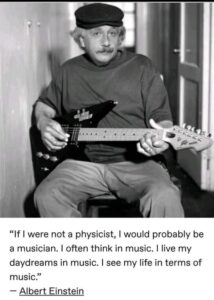
The Universe’s Rhythm: Our Guiding Beat
(duplications in following section-please edit)
In the grand symphony of existence, there is a rhythm that unites us all, pulsating through the very fabric of the universe. Be it the rotation of planet Earth heralding the shift between day and night, the pumping action of our hearts around 60 times a minute, the thumping of drums capturing the essence of communal joy, or the sublime beat of the universe’s self-organizing principle that guides the dance of cosmic entities, rhythm is not just a musical notion but a metaphysical certainty. It is my belief that understanding and aligning with this universal rhythm can unlock a deeper connection to the world around us, leading to a more fulfilling and harmonious life.
Rhythm permeates every aspect of life, offering a cadence to our daily routines, shaping the way we think and feel. It is present in the mundane tasks of our existence, often overlooked, yet profound in its implications. The syncopated dance of time, the swaying tides of the ocean, and the celestial waltz of planets are all testaments to the presence of a guiding beat, a rhythm that provides the foundation for our shared experience.
The most evident display of rhythm in our lives is the rotation of the Earth. The predictable sequence of day and night is more than just a physical occurrence; it’s a profound symbol of balance and life’s cyclical nature. The rising sun brings warmth and the potential of a fresh start, while the fall of dusk lulls the world into rest, offering a break before another day’s promise. Our circadian rhythms, the sleep-wake cycles that echo Earth’s rotation, anchor our daily activities, reminding us of the all-encompassing order that this planetary ballet brings.
The heartbeat, too, holds within it the essence of life’s rhythm. It starts its cadence even before we are born, a silent pulsation within the womb that becomes the very first song of our existence. It continues, unerring, throughout every moment of our lives, a companion that quickens with joy, steadies with focus, and slows with peace. The heartbeat is the rhythm section of the human experience, a constant melody that echoes the ebb and flow of life’s events.
For centuries, humans have used drums as instruments to make our own rhythms. The percussive beat is more than just pleasure for the ears; it is a call to community, a declaration of unity, a proclamation of joy or a lament of sorrow. The simple act of drumming, of individuals setting aside their disparate beats to find a collective one, speaks volumes about the human condition. In playing and listening to the drum’s rhythm, we find belonging, and in the shared pulse, we find peace.
The universe operates with an intricate and invisible rhythm. Galaxies spin, stars are born and die, planets orbit their suns, and cosmic dust coalesces into new forms—all guided by an unseen hand that weaves the tapestry of space and time. This self-organizing principle, a cosmic heartbeat if you will, creates the conditions for life and evolution, ensuring that every entity, from the smallest to the largest, has its place and follows the rhythm of expansion and contraction.
For me, one of the most profound experiences of aligning with this universal rhythm is through stargazing. When I look up at the night sky, I see the twinkling stars not as cold, distant specks of light but as part of a larger symphony. The rhythm of their dance across the sky reflects the harmony that is possible when individuals move in concert with the greater whole. This celestial ballet is a reminder of our smallness in the face of the cosmos and our vast potential when we learn to listen and dance to the rhythm that structures reality itself.
I have come to believe that attuning ourselves to the universe’s rhythm can bring about a transformation in our lives. When we recognize the ebb and flow of opportunities, the crescendo of emotions, and the quiet interludes of reflection, we achieve a state of balance that leads to personal growth. There is a power in aligning our actions and aspirations with the universal song, a sense of purpose that transcends the noise of our immediate surroundings.
In my own quest for meaning, I have found solace in routine, comfort in the familiar beat of my heart, and joy in the collective drumming of communities. Each experience reinforces my belief that the universe’s rhythm is not a distant echo but the guiding beat to which our souls instinctively dance. It is this dance, this rhythm, that connects us to the grander narrative and imbues our lives with significance.
The universe’s rhythm is a thread that ties together the very essence of our being. It is the pulse of life, the heartbeat of humanity, and the guiding beat of existence. Whether we seek solace in routine or revel in the chaos, our connection to this universal rhythm is what makes us truly human, breathing life into our shared experience. In recognizing and honoring this rhythm, we take our place as conscious participants in the cosmic dance, moving in harmony with the silent music of the spheres.
The Evolution And Self-Organizing Principle Of Consciousness
The nexus between conscious awareness and the evolutionary path of life on Earth is a topic that has perplexed scholars, scientists, thinkers, and curious minds for centuries. Embedded in this enigma is an existential quest to unravel our very essence — from the cosmic fabric of our being to the intricate web of species that we communicate and coexist with. I have found that consciousness cannot be relegated to human birth or as an evolutionary afterthought, but rather, it is an integral component of the breathtaking symphony of life’s evolution itself.
The profound nature of consciousness is as compelling as it is inscrutable. Generations of philosophers and scientists have sought to peel back the layers of cognition, emotion, perception, and self-awareness that define the human experience. Delving into the origins of this phenomenon, some posit the concept of ‘non-verbal creative consciousness’ — the idea that prehistoric humans possessed a mode of perception and engagement with the world that was less reliant on language but no less rich in cognitive depth, mirroring the present day abilities of 6 month old to pre-verbally emergent babies.
While some theories suggest that consciousness is a later-stage addition, I propose an alternative view: As life forms evolved on Earth, consciousness, too, underwent a flux of development. It is not merely the brain that has evolved but the very essence of awareness that denotes significant milestones in biological history. From the first stirrings of sentient life in the primordial soup to the complex mechanisms of emotional intelligence in contemporary organisms, consciousness has been an ever-present force, shaping and being shaped by each step of the evolutionary ladder.
Consider the evolutionary advantages consciousness offers. The ability to assess threats, to learn and adapt, to form social bonds, and even to predict outcomes — these faculties are not just byproducts of a complex brain but are influenced by a deeper wellspring of awareness. These conscious responses to the environment can spell the difference between survival and extinction for species.
Dissenting views propose that consciousness is contingent upon complex neural structures and could only arise after certain levels of biological complexity were achieved. While compelling in its own right, this notion faces counter-arguments from numerous disciplines. For example, single-celled organisms display behaviors that are not purely random in nature and suggest some form of interaction with the environment, albeit at a rudimentary level. Could these behaviors, adaptable on some level to changing circumstances, indicate early forms of consciousness?
Furthermore, research into complex systems — from neural networks to ecosystems — showcases that order and adaptability can emerge from simpler components. It’s not inconceivable that consciousness follows a similar pattern, arising from a confluence of biological, environmental, and genetic factors rather than awaiting the culmination of a certain level of complexity. Thus, I propose that consciousness is co-emergent with all life evolving from its most simple state into the highest orders of complexity. Just as the thinker (I am) arises concurrently with the thought, or the observer arises simultaneously with the observed, so does even the most primitive organisms know it’s alive, and its own primitive version of consciousness appears simultaneously to that sense of aliveness. Plants have even been shown to exhibit signs that they feel their equivalent to pain, so don’t underestimate everybody’s and everything’s capacity for consciousness.
Consciousness and biological evolution are inextricably linked in a dance of mutual influence. As a species evolves, so too does its consciousness evolve. The increased mental faculties and self-awareness that anatomically modern humans possess result from millions of years of adaptive pressures that favored greater cognitive ability. Here, in this symbiotic relationship between the evolution of life and the emergence of conscious awareness, we find a beautiful and profound truth.
Our heightened consciousness has not only shaped the world but has been shaped by it. From the stories we tell to the myths we propagate, from the monuments we build to the empires we conquer, human consciousness represents a powerful engine of evolution in its own right. Our ability to reason and plan transcends mere biological imperatives, propelling us to alter the environment that once shaped us. In this regard, consciousness serves as a torch that illuminates the path of evolutionary history and as a catalyst for change and progress.
The journey of consciousness alongside the biological evolution of life is one of cooperative co-existence and coalescence. As an intrinsic part of the tapestry of existence, consciousness does not lag behind evolution; a traveler walks hand-in-hand with life’s advance. This theory offers a framework through which we can understand our place in the grand narrative of the cosmos. It beckons us to explore the interplay between the sentient and the living and to ask — in the quiet moments of reflection — what it truly means to be aware, adaptive, alive, and forever informed by consciousness.
MIND, by James Allen
The Master Power that molds and makes,
And Humankind is Mind.
Evermore We take the tools of thought,
And shaping what We will,
We create a thousands joys, a thousand ills.
We think in secret, but it comes to pass,
Environment is but Our looking glass.
The Intriguing Self-Organization of Consciousness Around Personal Identity
In the vast arena of philosophical inquiry, few concepts provoke as much wonder and debate as consciousness and personal identity. They are the very building blocks of our experience, forming the lines and colors of the tapestry that is life. Here, under the spotlight of introspection, we grapple with the intriguing self-organization of consciousness around the enigmatic nature of personal identity.
Consciousness remains a nebulous subject, almost mystical in its elusiveness, yet indispensable to our existence. It is the stage where our thoughts, feelings, and sensations play out—the prime mover behind the curtains of perception.
But how does this elusive state interact with the equally complex concept of personal identity, the unbroken thread that is uniquely ours throughout our lives? This article journeys into the core of self-awareness, offering a perspective that suggests consciousness self-organizes around the personal identity just as it does around our tribal or societal affiliations.
Consciousness, often referred to as ‘the hard problem of philosophy’, defies easy definition. It transcends mere awareness, encapsulating the notion of self-awareness and the ability to reflect upon one’s existence. In many ways, it is the crucible where identity is forged and tested.
Despite its ephemeral nature, consciousness is intricately bound to the narratives we construct about ourselves. These narratives, the stories we tell about our past and the future we envision, are the bearer of our personal identity. They often define us more saliently than any collective label imposed externally.
The self-organization of consciousness around personal identity is not an abstract notion—it is observable through the actions and choices we make every day. Our consciousness selects, rejects, and interacts with external stimuli based on the filters shaped by our identity. It bends perception to align with the self that we cling to, reaffirming the unique narrative of ‘me-ness’ that we hold so dearly.
This personal narrative serves as both anchor and sail; it grounds us in a stormy sea of experiences while propelling us forward in the birth of new ones. Consider the common story structure, which often involves a protagonist overcoming conflicts to achieve growth. In the theater of our minds, consciousness orchestrates a similar narrative, one where personal identity is the hero who meets the challenges of existence head-on.
Analogies from nature provide a tangibility to this abstraction. Consider the spiraling pattern of a shell or the fractal geometry of a snowflake—each a testament to self-organization. In the same breath, our consciousness seems to follow an underlying algorithm, converging and diverging in complex patterns that eventually coalesce around the individual’s sense of self.
From the more banal decision-making processes to profound life-altering events, our consciousness dances like an autonomous algorithm driven by the music of our identity. It’s akin to the growth of a tree, where the outer layer—conscious experience—grows outwards, molded by the rings that represent the seasons and experiences of life—our personal identity.
The implications of this self-organizing principle are profound. It implies that each person’s reality, shaped by their consciousness, is a unique universe built around the singularity of personal identity. It lays the foundation for individual experience and subjective truths—an insight that underpins the very notion of human diversity and individuality.
Understanding this phenomenon is vital for those seeking to tread the path of personal growth. It suggests that any authentic expansion of consciousness must be in harmony with the growth and evolution of personal identity. To expand our consciousness is to redraw the boundaries of our personal narrative, broadening the scope of self-organization that defines our very being.
It is natural for such a philosophical stance to attract skepticism and critique. One potential counterargument is the complexity of consciousness, often likened to a ‘secondary reality’ which may not be fully dictated or encapsulated by identity. Critics may question whether consciousness, in all its nuances, is easily reducible or explainable by such a hierarchical model.
Another challenge comes from the examination of dissociative disorders and other psychological conditions. These cases demonstrate instances where consciousness seemingly fails to organize effectively or predictably around personal identity, presenting a considerable puzzle to any theoretical framework.
It is with these questions and uncertainties that I approach the topic with humility, yet with a conviction born of my own experiences. In my own life’s narrative, I have found that consciousness and identity are inseparable companions, each informing and in some way maintaining the other.
I am not alone in this assertion. Philosophers, psychologists, and thinkers throughout history have hinted at this relationship. From Socrates’ admonition to “know thyself” to modern advances in cognitive science, there is a persistent thread of inquiry into the coalescence of consciousness and personal identity.
In conclusion, the self-organization of consciousness around personal identity opens a window to understanding the primordial dance of ‘I’ in the theater of existence. It is a proposition that does not seek to diminish the vastness and mystery of consciousness but rather offers a possible framework within which to contemplate the workings of the mind and the essence of self.
The Collective Identity: How Consciousness Self-Organizes in Religion and Culture
In the tapestry of human existence, the notions of consciousness and identity are threads that weave through our most profound experiences and endeavors. Whether it’s through religious practice, cultural expression, philosophical inquiries, or the yearning for transcendence, we find that our consciousness is not just individualistic but a complex system that self-organizes around the collective identities offered by the fabric of society – notably, religion and culture. For the wanderers of the philosophical path, the spiritual pursuers, and the curious anthropologists among us, this exploration is not just a meandering through abstract concepts; it is a vital quest to understand the very core of what it means to be human and how we function within the vast structures of society.
Collective identity is the bedrock of societal structures. It is a potent force that shapes the narratives, values, and norms of a community. It can be defined as the shared sense of belonging and sameness felt by individuals within a particular group, and it plays a pivotal role in fostering a cohesive and functional society. Societies carve their collective identities through language, art, rituals, and the shared memories of the group, which ultimately form the basis for common purposes and a moral compass.
Religions and cultures act as midwives to collective identity, highlighting what it means to be part of a specific group and how individuals should engage with the broader world. This dual influence is manifest through the belief systems they promulgate, the practices they uphold, and the stories they preserve. They provide a canvas for the self-organization of consciousness, dictating not only how individuals understand themselves but also how they relate to others – both within and outside their immediate cultural or religious sphere.
The concept of self-organization in consciousness is a deeply complex and fascinating subject. It refers to the inherent ability of the mind to perceive stimuli and construct meaningful patterns out of them, independently organizing these perceptions into a coherent worldview. This process is fluid, dynamic, and influenced by myriad factors, which, when observed at a societal level, can be seen as the cultivation of a collective consciousness around a shared identity.
Pluralistic societies are rich laboratories for observing the multifaceted nature of collective identity. Demographics, political climates, historical legacies, economic landscapes, and social media spectacles – all of these serve as the architects of the collective self. They influence not only the ‘who’ and ‘what’ of collective identity but also the ‘why’ and ‘how’.
Religions offer a transcendental framework for collective identity. They present narratives of creation, morality, salvation, and catastrophe that bind believers into cohesive groups. Through doctrines that promise a higher purpose and practices that symbolize the unity of the faithful, religions provide a sense of rootedness and community in a world that is often fraught with chaos and existential alienation.
Rituals, prayers, and festivals are not merely religious customs; they are the experiential expressions of a collective consciousness. They are the moments when the group gathers to reaffirm their shared identity, to collectively celebrate or mourn, to remember their common history, and to engage with the divine or symbolic elements that give meaning to their existence.
Cultural identities are dynamic and multifaceted, often reflecting the myriad influences that communities encounter through time. Cultural norms, values, traditions, and artifacts serve as the foundation for personal and communal identity construction. They provide the scripts and costumes for the grand play of human life, influencing not only how we present ourselves but also how we interpret the performances of others.
Cultural celebrations and ceremonies are the grand performances of collective identity, where community members showcase their shared heritage and aspirations. They provide a window into the collective consciousness of a group, displaying the priorities, beliefs, and values that bind the community together and set them apart from others.
The collective identity has profound implications for individuals and society. It can be a source of strength, fostering a sense of togetherness, purpose, and support. Conversely, it can be a divisive force, leading to conflict and othering. The balance between individual identity and the collective whole is a delicate one, and understanding this interplay is paramount for building inclusive, resilient, and just communities.
While collective identities provide frameworks for belonging and meaning, they can also impose limitations on individual expression and growth. The perennial question that arises is how to maintain the richness of individuality within the context of collective consciousness. It is a fine line to walk, but one that presents an opportunity for individuals to contribute to the collective while retaining their unique essence.
In a world that is growing increasingly interconnected and diverse, the study of collective identity and its role in consciousness self-organization is more pertinent than ever. It calls for a nuanced understanding of the form and function of collective identities, as well as critical reflections on how these identities shape the human experience. The myriad tapestries of culture and religion that adorn our world offer an invitation to ponder the nature of our collective being and to engage in the continuous dialogue of who we are and who we want to become.
For the seekers of wisdom, the task is not to unravel the complexities of collective identity but to understand and appreciate the role it plays in the grand narrative of humanity. It is a call to engage with these subjects not only in academic discourse but also in the intimate spaces of the heart and soul. May this exploration ignite a flame within us that leads to a greater sense of interconnectedness with our fellow humans and a deeper understanding of the collective consciousness that guides our shared destiny.
The Collective Self-Organizing Principles of American Christianity and Democracy Are In Conflict: Disentangling Corrupted Christian Practices from Democracy’s Fabric
At the core of a democracy, the intricate weave of self-organizing principles maintains the tapestry of a free and just society. But what happens when religious practices, particularly those of the Christian faith, become entwined with insurrection, and in doing so, threaten to unravel the very fabric of democracy?
The events in the United States on January 6, 2021, stand as a stark reminder that religious ideologies, when corrupted, can be manipulated to incite actions that are antithetical to the foundational tenets of democratic society. The question we must grapple with is not about faith in itself, but rather the dangerous conflation of belief systems with the maintenance of public order and governance.
Corrupted Christian practices can manifest in several ways, from the misinterpretation of scriptures to serve political agendas to the ideological grooming of congregations for violent ends. Such distorted practices deviate from the teachings of love, compassion, and service that Christianity, at its purest, advocates for. When these deviations are leveraged to mobilize support for violent uprisings, they represent a perversion of faith that warrants scrutiny and condemnation.
The danger of such corruptions lies in their ability to galvanize large segments of the population under the guise of religious fervor, leading to insurrectionist activities that not only threaten immediate political stability but also sow long-term distrust in the democratic process.
The sinister hand of corrupted Christian practices extends beyond the dramatic scenes of insurrection to subtly weave its influence throughout the very essence of democratic principles. By eroding the trust in essential institutions, these practices undermine the ability of self-organizing democratic structures to function effectively.
The principles of democracy rely on the collective participation of a citizenry that believes in the transparency and fairness of electoral processes and the rule of law. Attempts to subvert these principles in the name of any ideology, including Christianity, strike at the heart of the democratic system, severely compromising its ability to represent the will of the people.
The amalgamation of Christian practices with insurrection is a dire threat to democratic societies everywhere. It is crucial that individuals and leaders across political spectrums challenge the normalization of these acts and disentangle the respectable aspects of religious freedom from the seditious agendas of religious extremism.
Efforts to separate church and state, far from being anti-religious, are the guardrails that protect the integrity of both domains. Recognizing and affirming the right to religious belief while denouncing the use of those beliefs to justify insurrection is a foundational step in safeguarding the purity of democratic governance.
The stakes of disentanglement could not be higher. Failure to act decisively risks a future where the self-organizing principles of democracy are overshadowed by the chaotic dictates of zealotry. During a time of growing polarization, it is our collective responsibility to sustain the sanctity of democratic principles by upholding the spirit of fair representation and the rule of law, irrespective of the religious affiliations of those involved.
We must remain vigilant against any encroachments into democracy’s fabric, whether from Christian extremists, terrorists of any creed, or autocrats under the guise of piety. The self-organizing principles of democracy demand such vigilance and, in their preservation, we find the greatest testament to our shared commitment to a free and just society.
Chapter 8: The Garden of Lies and the Search for Truth
We live shrouded in mythology, religion, and lies—wrapped in what I call the conspiracy of silence and cloaked in invisibility from our own truth. The fig leaf from the Garden of Eden myth represents more than modesty; it symbolizes the lies we use to conceal ourselves from ourselves and each other and the shame we carry for possessing the knowledge of good and evil, leading to endless cycles of self-judgment and condemnation of others.
Joseph Goebbels once observed that if you tell a lie big enough and keep repeating it, people will eventually believe it. This principle hasn’t been lost on governments, institutions, or individuals. Whether examining the Bay of Pigs invasion, Kennedy’s assassination, Donald Trump’s 2020 presidential elections lie, Q’Anon, a conspiracy theory generator attempting to run smokescreens and interference for Trump’s criminality, or countless other “conspiracy theories,” we discover that many have foundations in fact—though the truth remains murky, subject to interpretation and political manipulation.
The first person to suffer from a lie is none other than the liar. Lying feels bad and damages pride and self-esteem. It’s a slippery slope that leads to further and greater lies and other ethical violations. It can take a lot of thought and exertion and sacrifice to avoid being found out. If found out, the liar loses credibility (possibly for ever), undermines their reputation and relationships, and may suffer further sanctions, including being lied to in return. Last but not least, by keeping them under the radar, lying prevents the liar’s issues from being dealt with.
Our government claims to be “of the people, by the people, and for the people,” yet it reflects our own tendency toward dangerous secrets. America has historically shown itself to be a nation of lies, where the white race demonstrated immense talent in leveraging falsehoods into profitable enterprises—committing genocide against Native Americans, enslaving Africans, and somehow finding ways to justify these murderous excesses.
Much of the American Christian Church morphed into a political ally for capitalism, becoming the primary agent for proliferating the lie that we have no value unless we adhere to their belief systems. When confronted with our excesses and crimes against humanity, we’ve learned to change subjects quickly or spin facts creatively to avoid accountability for our destructive attitudes and actions.
In 1987, I experienced a series of transformative events that changed everything. I was near death, insane, and prepared to leave this earth if I couldn’t find a truth to guide my life. I finally discovered that truth and had what Christians might call a born-again experience—but without their prophet Jesus and surrounding mythology. This miraculous healing gave me a blank slate to write my new identity upon, free from the wayward attitudes of my former self.
However, this spiritual experience revealed two trauma-created “tricksters” in consciousness that I lacked the knowledge to address at the time. Most spiritual teachings, religions, and prophets bypass engagement with these powerful forces, keeping them as unconscious advisors to well-meaning practitioners. Yet ancient shamans, early Greek philosophers, and modern voices like Carl Jung, Joseph Campbell, Gabor Maté, Dick Schwartz, Paul Levy, and Dr. Alberto Villoldo have pointed toward ways to engage, transform, and transcend these ever-present forces that impede our spiritual evolution.
I wouldn’t have lived much beyond 31 if I had continued turning away from my traumatic wounding and resultant suffering. This book couldn’t exist if I had turned away from the wounding and suffering of others. A powerful realization emerged: I could no longer accept abuse from past versions of myself or a society that drains life force from its unconscious members just to parade around as if everything were acceptable.
The parable of The Emperor’s New Clothes illustrates how we become susceptible to lies spun with invisible golden threads of self-deceit. Our deceptions create a perceived “cloak of invisibility”—lies that initially feel spun from gold, filling us with pride in our new self-version. Because of our social nature, we parade these fabrications before others until life presents us with “an innocent young boy” who sees through the deception and proclaims our nakedness before adoring crowds.
The ancient Greek myth of Theseus and the Minotaur offers a powerful allegory for the journey of psychological and spiritual healing. In this tale, Theseus must descend into the labyrinth—a symbol of the human psyche—to confront the Minotaur, a beast that represents the wounds, traumas, and fears that devour our creative potential and authentic self-expression.
The Minotaur, born from the union of our biological instincts and divine nature, embodies the shadow aspects of ourselves that we often keep hidden in the deepest recesses of our minds. These are the lies we tell ourselves, the unprocessed traumas, and the deep-seated wounds that consume our vitality and creative spirit. To heal, we must be willing to venture into our own internal labyrinth, confronting these dark aspects with courage and clarity.
However, Theseus’s success depended on more than just bravery. He carried with him a thread—a “clew,” which gives us our modern word “clue”—that allowed him to find his way back to consciousness after confronting the monster. This thread represents the practices, insights, and support systems that keep us grounded as we navigate the depths of our psyche. Without this lifeline, we risk becoming lost in the darkness, overwhelmed by what we discover.
The myth reminds us that healing requires both descent and return—we must face our inner demons while maintaining a connection to the light of consciousness that guides us back to wholeness and renewed creative power.
This cultural conspiracy of silence manifests in three distinct yet interconnected ways, each carrying profound implications for our personal and collective growth.
First, it embodies the shameful ideas we’ve harbored and acted upon, sometimes culminating in intentional harm to ourselves and others. This form of silence breeds internal toxicity, creating a shadow self that festers in darkness. The weight of unacknowledged wrongs becomes a burden that distorts our perception of reality and erodes our capacity for authentic connection.
Second, it manifests as the withholding of information to protect a loved one, or to shield oneself from guilt. While often born from compassion, this protective silence can become a prison that stunts emotional and spiritual development. It robs others of the opportunity to make informed choices and denies us the healing power of truth.
Third, it appears as a hesitancy to discuss our spiritual potential and innate ability to connect with more aware, intelligent states of being. This spiritual silence perpetuates a culture of limitation, keeping us tethered to mundane existence when transcendent possibilities await our exploration.
We guard our secrets closely, fearing the day others might see through our surface stories to the hidden truths behind our anxiety, fear, indifference, or hatred. How many times have we constructed elaborate deceptions, sharing lies with family members, friends, or acquaintances to protect or punish someone? How many times have we felt compelled to withhold transformative healing information because another person seemed too resistant to receive n
As a culture, we must remember that our mentally ill population, including addicts and alcoholics, are society’s “canaries in the coal mine.” We’re all susceptible to damages from spiritual asphyxiation if we neglect to listen to stories told by our most vulnerable family members. The sensitive and oppressed define the leading edge of our shared human experience, serving as indicators of our collective spiritual condition.
I’ve been personally impacted at the deepest levels—victimized by mental illness, addiction, depression, anxiety, and panic attacks. My path through life made me a reluctant expert in these matters. Not only is remaining unconscious and victimized unhelpful now, but keeping silent around these issues becomes inappropriate and unhealthy, as I tend to be as sick as my secrets.
This work carries healing potential for those not trapped in culturally and religiously constrained patterns of unawareness, or for those seeking release from these historical restraints. According to neuroscientific studies led by Antonio Damasio, our human identity is more determined by collaboration between all cells within our bodies and our feeling nature than by left-brain-dominated rational processing centers.
We must feel something deeply to truly discover new truth and experience our real selves. I appeal to the very marrow of your bones, the cells within your body, the feeling nature of your heart and soul, while keeping intellect and rational processes engaged. Remember: we must feel truth deep within our bones before we’ll act upon it.
Consciousness itself encompasses the Garden of Eden, Adam, Eve, the Serpent, the Tree of Knowledge, the Apple, God, the labyrinth, the Minotaur, the Emperor’s New Clothes, and the innocent boy calling out our lies. We are that Consciousness. Jesus clearly stated that humanity represents the prodigal son—we’ve strayed far from Eden and feast in the pig pen of unevolved human experience.
The journey back to our true nature, though most difficult, offers life’s most rewarding experience. If we commit to traveling new paths of consciousness, eventually Eden will reappear within our interior vision, and we need spin no more illusions attempting to capture others’ attention.
We can all return to our essence, to our original “Garden of Eden” state, but we need a reliable clue. Otherwise, we remain trapped in labyrinths of self-deception and spiritual corruption. Without healing our wounds, loving acceptance of ourselves and each other remains impossible—we stay separated from our true nature, dominated by demons from the past.
I saved the world from myself. Yet the world remains too unconscious to save innocent people from its own wayward intentions, let alone the misguided intentions of individual citizens. The powerful message here: we each must work out our own salvation and discover our unique healing, guiding light, for those offered by our culture are suspect at best.
We can dramatically improve our perceptual aim and finally hit love’s bullseye with consistency. Freedom belongs only to those brave enough to seek it while breaking free from our culture’s historical shackles. We can break free from narratives created by religious and politicized people of the lie. We must find ways to bring Love’s eternal order from the chaos of normal human experience.
We can save the world… from our unhealed selves.
We can stop hiding from ourselves and from each other.
The time has come to prepare for the journey to meet our real Maker.
And this Creative Potential, though innate to all of humanity, lies outside the normal band of human experience and endeavor.
Are we ready to begin to explore a life, love, and death on an unlimited bandwidth?
Turn the page, then!
