- Chapter 6: The Mythology of Meaning: Stories That Wire Civilizations (consider this chapter from the last section)
- Chapter 19: The Evolution of Human Consciousness: The Sacred Architecture of Story
- The Hidden Cost of Oppression: An Intoxicating Cycle of Addiction Di Di Dream 1988: Overcoming Toxic Masculinity Through Self-Reflection
- The Psychological Impact of Divisive Leadership on Society
- The Transformative Power of Confronting Past Pain
- Pain and Growth: A Journey Beyond Suffering
- The Fools We Often Are: A Poetic, Philosophical and Introspective Reflection on Addiction and Suffering From Societal and Personal Issues
- Chapters 20-28: The Duality of Home As A Sanctuary or Source of Trauma
- Remembering Donelle: A Journey Through Love, Loss, and a National Mental Health Crisis (better versions available, check Substack)
- My Search For Truth: A Journey Through the Abyss to Redemption
- Whether We Search For Dysfunction Or Healing, We Find What We Look For
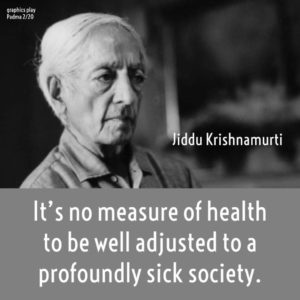
- Navigating a Sick Society: The Imperative for Personal and Collective Healing
- Chapter 33: The Cultural Wounds of Divisive Rhetoric and the Path to Healing
- Chapter 16: The Virus Within Us All
Chapter 19: The Evolution of Human Consciousness: The Sacred Architecture of Story
Over the course of hundreds of thousands of years, human consciousness has undergone a profound evolution, a slow-burning alchemy of mind and spirit. One of the most pivotal moments in this evolutionary trajectory was the introduction of language and symbolic thinking. These cognitive advancements were not merely utilitarian upgrades for survival; they were the keys that unlocked the cage of instinct, allowing early humans to articulate their thoughts and experiences, fundamentally altering their perception of reality.
We must understand the immense evolutionary significance of language and symbolic thinking, the emergence of duality, and the sacred role of storytelling in supporting human development. By understanding these elements, we gain insights into the evolution of consciousness itself—and perhaps, a roadmap for where we go from here.
Language is more than a tool for communication; it is the defining feature of human consciousness. Before the advent of language, our ancestors’ cognitive capabilities were tethered to the immediate, limited to instinctive responses to environmental stimuli. However, the ability to use symbols and language transformed our ancestors’ minds, enabling them to create complex internal representations of the external world. The introduction of language allowed humans to express abstract concepts, share knowledge, and collaborate on a scale previously unimaginable. It facilitated the development of culture, the transmission of knowledge across generations, and the ability to predict and plan for future events. In essence, language became the bedrock upon which human civilization was built.
Yet, this development came with a psychological fracture—the birth of duality. This concept refers to the separation between the knower (the self) and the known (the external world). Language enabled early humans to articulate this distinction, creating a subject/object relationship that set them apart from their environment both biologically and spiritually. This newfound awareness of separation introduced an additional layer of input into human consciousness. The ability to perceive oneself as distinct from the environment allowed for a more conscious engagement with the world. It enabled humans to consider multiple choices and possibilities, transcending purely instinctive responses.
This cognitive flexibility became a crucial survival mechanism, but it also created a void—a longing for connection and meaning. Into this void stepped storytelling. Storytelling emerged not as a frivolous pastime, but as a powerful tool for navigating the complexities of human existence. Through narrative, early humans could convey experiences, share wisdom, and explore hypothetical scenarios. Stories became a means of understanding social dynamics, environmental challenges, and moral dilemmas.
In many ways, storytelling served as a cognitive playground where humans could experiment with different perspectives and outcomes. This narrative exploration fostered empathy, critical thinking, and problem-solving skills. Narrative-inspired dualities—such as good versus evil, hero versus villain, and order versus chaos—have become integral to human cognition. These dualities serve as learning points, prompting individuals to make choices and consider the consequences of their actions. They instill a sense of agency and the perception of free will.
The awareness of duality and the ability to engage with narrative allowed humans to transcend deterministic behaviors. It introduced the concept of moral and ethical decision-making, enabling individuals to evaluate their actions based on broader societal values and principles. But what happens when we look closer at the architects of these stories? To understand the true power of narrative, we must look beyond the general evolution of the species and examine the specific stewards of story who have shaped our cultural DNA.
The Architects of Memory: The Grimm Legacy
Consider the brothers Jacob and Wilhelm Grimm. Most know them for one thing: Grimm’s Fairy Tales. We think of Cinderella, Snow White, Rapunzel—stories that have been told to children for two centuries, adapted into countless films, and embedded so deeply in our culture that we forget they came from somewhere. But the Brothers Grimm didn’t write fairy tales. They rescued them.
Born in Hanau, Germany, in the late 18th century, Jacob and Wilhelm were not mere storytellers; they were philologists and linguists obsessed with the origins of language. In the early 1800s, with the German language fragmenting and threatened by French cultural dominance, the brothers feared the disappearance of the old oral tradition. They recognized that stories passed down from grandmother to grandchild contained ancient wisdom, cultural memory, and the very soul of a people.
Starting around 1806, they traveled the countryside, listening to old women tell stories in kitchens and parlors. They recorded them faithfully—dark, violent, strange, and real. In 1812, they published the first volume of Kinder- und Hausmärchen. These were not sanitized bedtime stories; they were raw folk tales reflecting a harsh existence where death was close. Evil stepmothers, children abandoned in forests, witches in ovens—these narratives were cultural archaeology.
However, the brothers’ legacy extends far beyond folklore. They revolutionized how we understand language itself. Jacob’s Deutsche Grammatik formulated what is now known as Grimm’s Law, a groundbreaking discovery about how consonant sounds systematically shifted as languages evolved. This proved that language evolution wasn’t random; it followed predictable laws. They later tackled the Deutsches Wörterbuch, a comprehensive historical dictionary tracing the evolution of every German word.
Their work reveals a profound truth: stories are not static entertainment. They are the vessels of cultural memory and linguistic history. The Grimms saved stories that would have vanished, proving that oral traditions contained wisdom worth studying. They demonstrated that language itself has a history, evolving according to patterns we can understand. In doing so, they saved the very tools we use to understand how cultures speak, remember, and dream. They were the original scribes of a specific cultural consciousness, ensuring that the spirit of their time would not be lost to the sands of history.
The Sacred Duty of the Scribe
This act of preservation brings us to the role of the scribe in any civilization, particularly one in decline. In the annals of human history, there has always been a need for those who meticulously document the zeitgeist of their era. These individuals are the custodians of our collective memory. The role of the scribe is not merely to record events but to capture the spirit, emotion, and underlying truths of the world in which they live.
We see this sacred duty mirrored in the actions of our departed friend, Akiko Anderson, who returned several Hosegaki Kinumaru flags that she located on some of her world adventures to surviving Japanese families. These flags, once fluttering symbols of soldiers’ hopes and dreams, became solemn relics. Returning them was an act of restoring memory, a bridge between the past and present. Similarly, the act of returning a life story—like Akiko’s—to the world carries the same sacred weight.
Memory is fragile, easily lost or deliberately forgotten. Yet, it shapes our identity. Stories have the power to transcend time and space; they are vessels of wisdom and instruments of change. Each story we preserve becomes a thread in the intricate tapestry of human experience. In a world where narratives are often manipulated or erased, the act of preserving and returning stories becomes a form of resistance against forgetting. It is a declaration that every life matters, and every memory is worth preserving.
This resistance against forgetting finds a powerful echo in the legacy of Edward R. Murrow. On a tense March night in 1954, Murrow sat before a camera with trembling hands to dismantle the tyranny of Senator Joseph McCarthy. In an era suffocated by fear, where accusations replaced evidence and silence was collaboration, Murrow used the scribe’s most potent weapon: the unvarnished truth. By simply showing America the reality of McCarthy’s cruelty through the Senator’s own words, Murrow broke the spell of terror that had gripped the nation. He didn’t just report the news; he preserved the integrity of democratic consciousness, reminding a frightened populace that “we must not confuse dissent with disloyalty.”
Murrow’s broadcast illustrates that the scribe does more than record history; the scribe intervenes in the moral arc of the universe. When he signed off with “Good night, and good luck,” it was a prayer for a society that needed the courage to see clearly. His actions prove that one voice, armed with truth and a medium to share it, can awaken a collective consciousness from a nightmare of its own making. Just as the Grimms rescued cultural memory from the erosion of time, Murrow rescued the American spirit from the erosion of fear, demonstrating that the preservation of truth is the ultimate defense against the darkness of authoritarianism.
Our civilization currently teeters on the brink of a fatal tailspin, fraught with division and dysfunction. Environmental degradation and societal instability threaten our existence. In this time of crisis, the scribe’s role becomes even more vital. The stories captured during this tumultuous period are mirrors reflecting our collective soul—our strengths, our follies, and the consequences of our actions. They offer warnings and wisdom, guiding us through the darkness.
This is the ethical imperative of the storyteller: to tether the narratives of the dead and dying to the living. Just as Akiko honored the past through her mission, and the Brothers Grimm honored the past through their linguistic archaeology, we too must honor the stories that shape our present and future. We are all survivors on this planet, bound by shared experiences of love, loss, hope, and resilience. Returning stories is about recognizing our universal connection.
The Search for Truth in a World of Illusion
“It is what it is, but it is not what it seems.” This paradox lies at the heart of storytelling. We all love a great story. Those who can translate the essence of an experience and convey the emotion of all participating characters become the raconteurs of our culture. Whether novelists, musicians, or playwrights, the best storytellers know that bending the truth can often create a more compelling narrative.
However, we must tread carefully here. While authenticity is valued, stories often manipulate truth to convey deeper messages. This duality is inherent in storytelling. Sometimes, altering facts leads to a more profound understanding or a stronger emotional impact. This does not diminish the value of truth but enhances its resonance.
Yet, we must also recognize that many of our stories—both individual and societal—are steeped in illusion, ignorance, and half-truths. We create stories about our lives, and we listen to the stories told by our parents, religions, and history. Far too many of these are illusory dramas about our attempts to control others and our failed attempts to control our own lives. They have a hypnotic appeal, especially to those who have not undertaken the process of insight and healing.
At some point, we must begin a “search for truth,” lest our entire life experience be lived without integrity. My own journey through addiction and recovery taught me that truth is not a fixed destination but a dynamic, evolving process. From 1971 through 1987, as a practicing alcoholic and drug addict, I was trapped in self-destructive stories reinforced by cultural narratives of hopelessness. It was only by examining my life to its deepest core that I uncovered the sources of my spiritual disease.
Recovery is a powerful metaphor for the pursuit of truth. It requires honesty, vulnerability, and the courage to confront deeply seated fears. It demands that we break free from the “conspiracy of silence” that often surrounds mental illness, addiction, and even the nature of the Divine. Organized religions and political powers often obfuscate the truth underlying existence. Speaking truth to power is difficult, yet essential.
Truth is like continuous rainfall upon rocky mountains. It does not immediately displace the sharp edges of ignorance, but over time, it erodes the roughest terrains to expose deeper layers of existence. To seek truth, we must unburden our minds of cultural inculcation and open ourselves to the profound mysteries that transcend simple explanations.
The Modern Raconteur and the Future of Consciousness
In today’s world, modern raconteurs—whether writers or digital content creators—play a crucial role beyond entertainment. They are influencers with the power to reshape narratives. Technology has democratized storytelling, allowing diverse voices to be heard and creating new opportunities for connection.
We must use this power responsibly. The concept of “losing our minds” can be a metaphor for breaking free from conventional thinking to find personal truth. It is about challenging the status quo and exploring new perspectives. This process of deconstruction and reconstruction is vital for discovering deeper truths about ourselves and the world.
The evolution of human consciousness is a testament to the transformative power of language and storytelling. These cognitive advancements have shaped our perception of reality, introduced the concept of duality, and enabled us to engage with the world in profoundly meaningful ways. By exploring the interplay between language, narrative, and consciousness, we gain deeper insights into our own minds.
As we continue to navigate the complexities of modern existence, we must remember the evolutionary lessons embedded in our consciousness. The ability to articulate thoughts, share stories, and consider multiple perspectives remains our greatest asset. By leveraging these capabilities, we can foster a more empathetic, ethical, and enlightened society.
The duty is ours. We must be guardians of memory, cherishing the stories we inherit—whether they are the ancient folk tales rescued by the Grimms, the life stories of individuals like Akiko, or the hard-won truths of our own personal recoveries. In doing so, we ensure that the legacy of those who came before us continues to illuminate the path for those who will follow.
Let us all be the best that we can be. Let us all “lose our minds,” and find our truth. Reflect on the stories that have shaped your life.
Share them.
Preserve them.
And in doing so, contribute to the rich, infinite tapestry of human experience.
The New Normal of Addiction and Cultural Disease in America
In the modern American landscape, a troubling phenomenon is emerging as an insidious “new normal”: the widespread acceptance of addictive and self-destructive behaviors. This normalization is not only alarming but also represents a cultural disease that urgently needs to be addressed.
One of the most challenging aspects of this crisis is the pervasive denial that envelops those who suffer from alcoholism, addiction and mental illness. It manifests as an ingrained societal resistance to acknowledging the gravity of the issue. Individuals trapped in cycles of addiction—whether to alcohol, drugs, or other vices—often remain oblivious to the destruction they wreak upon their lives and those around them.
To these individuals, the concept of hitting “rock bottom” is not just a cliché but a harsh reality. It is the point where the pain of their affliction becomes so unbearable that it forces a reckoning. This moment of clarity, often resulting from catastrophic events such as job loss, family breakdowns, legal troubles, or near-death experiences, can serve as a catalyst for change. However, the tragedy lies in the fact that such moments are often required to break through the walls of denial.
The impact of addiction and cultural disease extends far beyond the individual. Families are torn apart, communities are weakened, and society at large bears the burden of lost productivity, increased healthcare costs, and the erosion of social cohesion. The normalization of these behaviors not only perpetuates the cycle of addiction but also desensitizes society to its consequences.
Mental health professionals and public health advocates recognize the critical need to address this issue as a public health crisis. Yet, the stigma attached to addiction and mental illness often impedes progress. Empathy and support are essential components of any effective intervention, but they must be coupled with accessible treatment options and systemic changes that prioritize mental health.
What is required is a paradigm shift in how we perceive and respond to addiction and cultural disease. It is imperative to view these issues through the lens of public health rather than moral failing. This shift necessitates a comprehensive approach that includes education, prevention, early intervention, and robust support systems for recovery.
We must advocate for policies that destigmatize mental health treatment and make it accessible to all. Communities should cultivate environments where individuals feel safe to seek help without fear of judgment. By fostering a culture of compassion and understanding, we can begin to dismantle the barriers that keep so many trapped in cycles of addiction and self-destruction.
The normalization of addictive and self-destructive behaviors in American culture is a pressing issue. It is a call to action for public health advocates, mental health professionals, and the addiction recovery community to unite in addressing this crisis. Through collective effort and unwavering commitment, we can create a society where healing and recovery are not just possible but expected—transforming the new normal into one of hope, resilience, and renewed purpose.
If you or someone you know is struggling with addiction or mental health issues, reach out to a professional today. Remember, it’s never too late to find your turning point.
Di Di Dream 1988: Overcoming Toxic Masculinity Through Self-Reflection
I wrote my first love poem in 1984, when I became lovers with a woman by the name of Diane (Di Di) McCloud. I had first met Di Di while she was running with Gary, a cocaine dealer and friend to both me and Randy Olson.
Bruce with a 1984 look
I was to see her two more times in April of 1986. I saw her at a bar in Beaverton, and we traveled to the beach together to Seaside to spend the following evening. She was somewhat distracted, and in the intervening eighteen months since I seen her last she had deteriorated in her appearance, looking a little worn. We drank at the local Seaside bars, until I no longer had any desire to drink anymore. I told her that I was going back to the hotel room, and left her the extra key. She stated that she wanted to keep the party going, and continued drinking and carrying on with some of the local folks. She returned to the hotel room at two in the morning, all excited about some new “friends” that she had made, and the great cocaine that they had shared together. She wanted to bring the two guys back into the hotel room to continue the party. “No thanks, this is where I take my leave!” I announced in a rather angry tone of voice. I grabbed my overnight bag, and headed towards home, even though I was drunk, almost to the point of being in a blackout. Somewhere along Highway 26, beyond the Elderberry Inn, I crashed my car into a guardrail, nearly going over a cliff in the process. I could not get out of the drivers side door, it was so crashed in. I quickly got the car back onto the road, in my attempt to get home before any more trouble befell me. When I finally reached North Plains, I fell asleep at the wheel again, stepped on the accelerator, and rammed into the back of another car at freeway speeds. We both pulled over, and I was able to bribe the owner of the car not to call the police, since I was DRUNK, by writing him a check for $471, which was every last penny that I had in my checking account. My car was totaled, but somehow I was able to make it home, miraculously escaping death or a DUI citation. Di DI called me a month later, wanting to talk, and wanting a copy of the love poem that I had given her two years before. When we met, she told me that the poem was the most beautiful gift that anybody had ever given her, and that she was sorry that she did not find the spot in her life for me. We both cried, and parted company on rather sad terms. She eventually died one year later, when she was killed in a drunken driving related automobile wreck in Lake Oswego. Di Di became a part of myself and my consciousness, and I had one profound dream with her in it, shortly after her death. In the dream, I am confronted by a man exhibiting aggressive, unkind, abusive behavior. In the dream, I am appalled, disgusted, and threatened by his manner. I call out to a policeman, imploring him to arrest that man, and protect all of us from his violence. Di Di then walks up to me in the dream, taking the policeman’s place, and states quite plainly that for love to reappear in my life, in all of its fullness, I must first “arrest” all of these negative qualities within myself, and rehabilitate my own passions, then love will reappear. The dream ends, but the journey continues. Poem Written for Di Di, in 1984. Though hibernating for oh so long, And hiding from the deep pain of winters’ chill, Love reawakens to sing its special song, So for how much longer can we be still? With eyes that melt winters’ deepest snow. A tender touch that always seem to say, That all we will ever need to know, Will be learned along Love’s way. Two minds that were brought together. Two hearts that seek to share. Two bodies that need no tether. Two become one, though still a pair. Heavenly nights and rapturous mornings, Love promises through all of our years. The sweet, stirring music of love sings, For two souls who now have the ears to hear. True love can be the source of dreams, For two hearts continuing to awake.. I pray that we are all each other seems, And share in Love’s next journey taken. Di Di Dream 1988: Overcoming Toxic Masculinity Through Self-Reflection
In a world struggling with the pervasive influence of toxic masculinity, my encounter with love and tragedy set me on an introspective quest for self-improvement. The narrative of “Di Di Dream 1988” explores a profound personal transformation inspired by the love of a free spirit named Di Di McCloud. This life experience highlights how I realized the importance of confronting my internalized negative traits as a means to foster love and enlightenment. Although the results were not immediate, this epiphany placed me on a lifelong path toward self-discovery and spiritual growth.
I was once deeply entrenched in the societal norms perpetuated by toxic masculinity. Living in Portland during the tumultuous ’80s, I was part of a fast-paced lifestyle that revolved around rock and roll and excess. This environment, replete with substance abuse and superficial relationships, threatened to numb the true essence of my being. However, it was a chance encounter with Di Di McCloud that offered me a glimpse of love’s potential to enlighten and heal.
Before my transformational experience, I was lost in the labyrinth of patriarchal values, where power and dominance were prized over empathy and connection. My social circle was dominated by individuals who embodied the very essence of toxic masculinity, perpetuating a cycle of aggressive behavior, emotional detachment, and superficiality. These influences not only affected my relationships but also my perception of self-worth and purpose, leaving me with a yearning for something more meaningful.
The turning point arrived in the form of Di Di, a woman as captivating as she was complex—a reflection of the dualities of life itself. Initially drawn to her beauty and spirit, I soon realized that Di Di represented more than just a romantic interest; she was a mirror reflecting my deepest insecurities and unfulfilled potential. Our connection inspired me to pen my first love poem, an ode to vulnerability and the awakening of my softer side.
The call to action came in a dream following Di Di’s untimely death. Confronted by a vision of aggression and hostility, I implored an authority figure for salvation. Instead, Di Di appeared as my savior, urging me to arrest my own negative traits and rehabilitate my passions. This dream was a catalyst, prompting the realization that the path to genuine love and enlightenment begins with self-accountability and transformation.
The impact of this revelation was not instantaneous; it required years of introspection and the dismantling of long-held beliefs. By acknowledging and confronting the toxic elements within myself, I embarked on an evolutionary path that promised eventual full enlightenment. This personal growth has been characterized by a deeper understanding of love, empathy, and connection—factors that are often overshadowed by superficial societal constructs.
Though the metrics of success are not quantifiable, the transformation is evident. My story serves as a testament to the power of introspection and self-reflection. Each step taken towards recognizing and rehabilitating negative traits contributes to the dismantling of toxic masculinity, paving the way for a more compassionate and connected existence.
The narrative of “Di Di Dream 1988” underscores the importance of facing one’s internal demons to foster personal growth and societal change. By challenging the conventions of toxic masculinity, I learned that true enlightenment lies in self-awareness and transformation. My life experience can serve as an inspiring example for others who grapple with similar issues, highlighting the importance of courage and vulnerability in the pursuit of love and fulfillment.
As we continue to explore the intricate web of collective consciousness that sustains patriarchal norms, I invite you to reflect on your own path to self-discovery. Engage with a community of like-minded individuals who are committed to challenging the status quo and cultivating a more enlightened existence.
If you have not already, it may be time to begin your own transformational journey today.
In the tapestry of human existence, toxic masculinity has woven itself deeply into the fabric of our cultural norms, shaping not only individual behaviors but also societal structures. Its influence extends far beyond the overt displays of aggression and dominance—it permeates religion, politics, capitalism, and the very essence of how we perceive ourselves and others. This pervasive force contributes to the repression of human emotion, the feminine, and the sublime possibilities for existence. But what are the roots and ramifications of this phenomenon, and how can we begin to challenge and dismantle it?
Toxic masculinity refers to the cultural norms and expectations that define “manliness” in narrow and harmful ways. It emphasizes traits like dominance, emotional suppression, and aggression while devaluing attributes like empathy, vulnerability, and cooperation. These values underpin much of what I call the Common Knowledge Game (CKG)—the shared social understanding of self and others.
The CKG perpetuates unconscious, harsh, and inaccurate self-judgments, leading to poor self-esteem in boys from an early age. This is inculcated by fathers, religious institutions, and cultural norms that remain ignorant or fearful of emotions, including anger and grief. The consequences are manifold:
- Suppression of Feelings: Men are trained to ignore or hide their feelings, leading to unaddressed stress and emotional turmoil.
- Loss of Safety: Emotional and physical safety is compromised in homes, schools, and workplaces.
- Lack of Honest Communication: The inability to communicate honestly breeds feelings of not being heard or appreciated.
- Shallow Relationships: Eschewing deep relationships leads to isolation.
- Excessive Competitiveness: An obsession with “keeping up with the Joneses” fosters greed and a relentless pursuit of self-worth in disrespectful environments.
- People-Pleasing: Sacrificing personal integrity to please others results in inauthentic lives.
- Over Dependence on Entertainment: Immersion in superficial entertainment forms a barrier to meaningful social connections.
- Unhealthy Lifestyle Choices: Excessive eating, substance abuse, and lack of physical activity contribute to deteriorating health.
- Sex as Control: Using sex to manipulate or escape emotional reality forms another layer of dysfunction.
- Workaholism: Work becomes an escape, further disconnecting men from family and community.
Toxic masculinity breeds further toxicity in religion, politics, and capitalism. Each domain has incorporated these harmful values, resulting in:
Religious doctrines often reinforce patriarchal structures, emphasizing male authority and control. These frameworks discourage emotional expression and vulnerability, creating spiritual environments that can be more oppressive than liberating.
Political systems, driven by power and control, often reflect the competitive and aggressive traits of toxic masculinity. The result is an environment where empathy and cooperation are sidelined in favor of dominance and personal gain.
Capitalism, with its emphasis on profit and competition, thrives on the principles of toxic masculinity. The devaluation of emotional intelligence and communal well-being in favor of individual success creates a society where exploitation and inequality are rampant.
Women remain the number one oppressed group of humanity, though the blacks/African Americans, native American Indians, and other racial and ethnic groups have not escaped the grasp of white male privilege, masquerading as American Christianity inspired capitalism and politics.Here are some principles of toxic masculinity that I found live in our collective consciousness, and which also lived in unconscious domains of my own mind and heart. I have exaggerated them, and linked them with common monetary, sexual, and personal power dynamics. And yes, these principles, or variations of these themes, are part of the Common Knowledge Game (CKG) fundamentals for erroneous understanding of self and other. If they appear to mimic some of the values and principle’s underlying Donald Trump’s abhorrent behavior, then you are already paying close attention to our collective consciousness, and its dangerous and sometimes catastrophic influence on the affairs of humanity throughout our history.
- I am the center of the Universe. The rest of humanity is here either for my pleasure, for my profit, or for my disdain. I may attend a church occasionally, so that I can create the impression that I worship a higher power than myself. But, I already know that there is no higher power but me. HUMILITY IS NOT AN OPTION FOR ME, and is only for the poor and weak among us.
- Truly loving another human being is a sign of weakness, and thus I must continue to suppress all such impulses so that I can achieve my selfish goals. I will carry on a campaign of hatred, judgement, and condemnation of all people unlike myself, all the while claiming to represent their interests at the highest level of my being (with subtlety, if one is of the passive/aggressive nature) . The ignorant people populating my world will hopefully associate my hateful behavior with their understanding of what love is, thus damaging the hearts and souls of all who may fear, respect, and/or follow me. My schizophrenia will be confusing to others, but may still be normalized, as others that I have influenced model and support my behavior.::
- People, and Mother Nature itself, are most valuable if they can be monetized. If I can’t make money from my relationship with people or our natural surroundings, then I don’t necessarily need them. They will have to prove that they belong in my life in some other selfish, self-serving ways. I choose to neglect the long term effects of my short sighted thinking, because now is the only moment to profit from others, and from the Earth.
- Never admit that I am wrong. Always blame somebody else for my problems. The admission of guilt is a sign of weakness, and only for those who do not have sufficient monetary and legal power. I don’t need your forgiveness for my mistakes, because, as far as you should be concerned, I do not ever make mistakes.
- I have a right to choose how much drugs and alcohol that I consume. I do not need feedback from others telling me that I am abusing my medicine and/or alcohol. I have earned the right to drink as much as I feel like, because I have so much stress in my life, and I make so many sacrifices that I deserve an extra break and release through excessive alcohol and;/or drug consumption. I do not have a problem, and if you think that I have a problem with my chemicals, then it is your misunderstanding, and not my own.
- Never spend any time in self-reflection or meditation. Developing insight is difficult and time-consuming, and I have more important things to do I am already perfect, I always have been perfect, and everybody else needs to change to accommodate my needs. If I am not “perfect” today, I always have someone, or something, else to blame.
- I have a right to use my strong emotions to intimidate and threaten anybody that I need to in order to get my way. My anger is a weapon, to be wielded whenever necessary, and its expression is my first selection from my arsenal of control tools in manipulating and controlling my world.
- If I can’t get my way with another human being, then I will cajole or bully them into submission, or attack their name and character, and/or impugn their dignity, until they either submit, or are discredited by my allies.
- Everybody unlike me should be distrusted. Relationships built through mutual trust and collaboration can be threatening to my short-term goals, and should not be cultivated, as only alliances of hate and distrust are capable of bringing me to my goals.
- The women in our lives are more suited to be our personal possessions than self-sufficient, independent people, and are not to be treated as equals, and are better suited for exploitation for family support, sexual purposes and/or economic gain.
- If I can’t get my way through truth-telling, then the telling of lies becomes my most potent weapon. If I am caught in a lie, then it is only your misunderstanding of my point, and not what I said, that is wrong. If I tell the same lie often enough, then people will start to accept the lie as the truth.
- If there is no conflict currently in progress, then I must start creating the conditions for the next one, and socially position myself so that I can maximize emotional profits and visibility for myself.
- I never will obtain enough money, power, sex, or attention to keep me happy. I must continue to pursue these needs to extremes in order to keep me from becoming depressed and losing my sense of personal value in this world. If I achieve my goals, and I am still unhappy, I must set new goals to attempt to fill that big hole in my heart and soul.
- The powers of my penis reigns supreme. When it is erect, it always points me in the right direction, regardless of the people who may be hurt by my wayward sexual desires. My self-esteem is dependent on how many women that I can convince to make love to me, and nobody is immune from my advances. One is too many, and a thousand is not enough, when it comes to sexual conquests.
- I am the king of my home. I have created my kingdom to serve my selfish needs. If my rules are not honored, and my intentions for the family do not hold up, and family members start to stray, I will coerce, cajole, or threaten all wayward members with violence, if necessary. The family must stay together under my control, no matter what the cost to others might be.
- Perfectionism and full control of others should not be mutually exclusive propositions. I will judge, criticize, and condemn others, and myself, as needed, to bring all of my world into alignment with how I think that it should be. I will compare and contrast my wealth and success with others to establish the best baseline for my expectations and behavior. My wife and my children are first and foremost my possessions. I will direct and control as necessary, and nobody else has any right to criticize my choices in how I provide and care for them. My whole sense of self-esteem is derived by how deeply they honor and obey me, without argument or back talk. I do not want or need alternate points of view, as my view is the only view that is relevant.
- If those closest to me engage in betrayal, and destroy my sacred relationship with my family, I must avenge myself, and destroy all who have threatened my life and values. My wife is my property, and my property alone. If she should ever have an affair with another man, I reserve the right to punish her and my family, up to, and including, murdering them. If I must die in the process, it is a good death for me.
- Self sabotage is my unconscious need, as I fail to achieve my goals. It is my right to destroy my creations even as I destroy myself, so murder-suicide is an acceptable option in the extreme, when my needs have been dishonored, and I feel that I have no more options to achieve my goals, and improve my life situation.
- I have been a failure since I never measured up to my father’s, my church’s, or my society’s standards. I will continue to self-sabotage my success at ever bend in life’s road, and I will see life as a self-fulfilling prophesy of incompleteness and loss. I will not even question that my life has other possibilities for it, and I will resign myself to my depressing fate.
- I reserve the right to murder anybody, when it suits my needs to protect myself. I will justify my possession and use of firearms through quoting the 2nd Amendment of the Constitution, as well as pointing to the fear and threats in our world, and our country as my own justification for stockpiling weapons. I will not listen to reason, as my mind is made up, and you can have my weapons after “prying them from my cold, dead hands” (thanks NRA, and the late mega-asshole Charlton Heston).
This list is the abbreviated list, as aspects of our collective selfishness covers the entire range of human darkness. Men burdened by toxicity tend towards sexism, racism, isolation, poor judgement against all others unlike themselves, and low self-esteem, while men moving towards spiritual healing tend to unite with others in peace and mutual acceptance, and a willingness to share an improving sense of their self with the world.
To challenge toxic masculinity, we must recognize and address its principles and values, both individually and collectively. Here are some steps to begin this transformation:
- Acknowledge and Understand:
- Recognize how toxic masculinity manifests in your own life and the lives of those around you.
- Educate yourself on its impact and origins.
- Promote Emotional Intelligence:
- Encourage the expression of emotions in healthy ways.
- Create safe spaces for vulnerability and honesty.
- Foster Deep Relationships:
- Invest time in building meaningful connections.
- Prioritize empathy and understanding over competition and dominance.
- Challenge Societal Norms:
- Question and resist cultural practices that reinforce toxic masculinity.
- Advocate for inclusive and equitable policies in religion, politics, and business.
- Model Positive Behavior:
- Demonstrate healthy masculinity through actions and words.
- Support others in their journey towards emotional and spiritual growth.
The insidious nature of toxic masculinity has far-reaching impacts on both individual well-being and societal health. By understanding its roots and manifestations, we can begin to dismantle its hold on our lives and create a culture that values emotional intelligence, inclusivity, and the full spectrum of human experience.
The path to this transformation is not easy, but it is necessary. It requires introspection, courage, and a collective effort to redefine what it means to be a man in today’s world. By challenging toxic masculinity, we open the door to a more compassionate, equitable, and fulfilling existence for all.
If you are ready to take the first step towards this change, join us in the ongoing dialogue and action. Together, we can build a society that honors the true essence of humanity.
The Hidden Cost of Oppression: An Intoxicating Cycle of Addiction


After wedding beer keggar at my parent’s home. Don Flick on right (09/17/1979).
Why do people knowingly take deadly risks with abusing prescribed and street drugs and alcohol, which are well known destroyers of lives? This haunting question echoes through emergency rooms, detox and recovery clinics, community centers, and family living rooms across America. To answer it, we must dig deeper—beneath the simple narratives of “poor choices” or “lack of discipline”—and examine the very fabric of our society. Because to understand addiction is to confront the traumas and mental illnesses lurking within our culture, our communities, and ourselves.
Every day in America, people are born into a culture that imposes unrelenting pressures. We are taught, almost from the moment we take our first breath, the rules of a game designed to reward productivity, conformity, and resilience—however oppressive the reality may be. These rules are not just written in laws or policies; they are etched into the expectations of our families, our schools, and our communities.
Stuff your feelings,
Smile through the pain,
Please others,
Prove your worth,
Judge yourself harshly,
Achieve at all costs.
But for some, the weight of these unspoken rules becomes unbearable. Unresolved family traumas, the feeling of social isolation, and the persistent longing to break free from our prescribed identities create wounds too deep for society’s bandages. Mental illness, whether genetically or cultually derived, become lifelong companions for many innocent victims, often resulting in the dreaded “dual-diagnosis” category of human experience.
- A mental health issue that leads to or is associated with substance use
- A substance use disorder that leads to or is associated with a mental health issue
- Substance use that worsens or changes the course of a mental illness
For the vulnerable of society —those most susceptible to despair—drugs and alcohol appear as the ultimate liberators. These intoxicants promise a fleeting escape, a moment of reprieve from a lifetime of quiet suffering.
Through my work with the Trauma Intervention Program, I am called to scenes of unimaginable grief—places where lives shattered by addiction collide with the deathly consequences of overdose. I sit with survivors, friends, and families in their rawest moments, offering compassionate care when words are too fragile for the weight of their anguish. The faces change, the names are different, but the stories often echo the same themes.
For many, addiction is not merely a “poor choice”; it is an attempt to rewrite their relationship with pain. Drugs serve as both the jailor and the key, a paradoxical companion that first promises liberation from their suffering but ultimately takes them hostage in a relentless cycle.
The tragedy, as I have come to understand it, lies in how society has failed these individuals long before substances claimed them. We label them as addicts, but rarely do we ask what they were trying to escape. Rarely do we ask how unresolved familial and cultural traumas might have shaped their suffering.
Recognizing addiction as a symptom of systemic and cultural oppression forces us to confront uncomfortable truths about our healthcare and social support systems. These systems, for all their noble intentions, often fail to address the root causes of addiction, preferring to chase quick fixes instead of offering holistic, long-term solutions.
Consider this:
- The Overdose Crisis: According to the CDC, over 100,000 Americans died from drug overdoses in 2022 alone—a devastating new record. Yet our policies continue to prioritize punishment over harm reduction.
- Gaps in Access to Care: Even when individuals seek help, stigma and discrimination often serve as insurmountable barriers. Many lack access to affordable mental health resources, trauma-informed care, or treatment programs.
- The Stigma Spiral: The societal tendency to shame those who use drugs perpetuates a cycle of isolation, creating deeper wounds and pushing individuals further from hope and healing.
These failures are not merely logistical or bureaucratic; they are philosophical. They reveal a collective unwillingness to view addiction as a deeply empathetic human experience and not simply as a “problem to solve.”
While America wrestles with its self-imposed blind spots, other nations have taken bold steps toward addressing addiction with compassion. Portugal decriminalized all drugs in 2001 and redirected funds into treatment, education, and harm reduction services. The results? Far fewer overdose deaths, significant drops in HIV transmission rates among drug users, and a cultural shift toward treating addiction as a health issue rather than a moral failing.
Similarly, Canada has embraced harm reduction strategies like supervised consumption sites. These centers not only save lives but also provide a vital connection to social and healthcare support.
What can we learn from these models? That sustainable solutions require courage—the courage to confront stigma, challenge punitive policies, and invest in the messy, human work of healing individuals and communities.
The battle against addiction cannot succeed on a patchwork of programs, temporary interventions, or half-hearted initiatives. Instead, it demands a seismic cultural and systemic shift.
Here’s what we must do:
- Reframe Addiction: Treat not just the symptoms of substance use but the societal and personal traumas that drive it.
- Invest in Harm Reduction: Support evidence-based strategies like needldespiteprograms and naloxone distribution to prevent overdose deaths.
- Foster Compassionate Care: Equip healthcare and social workers with the tools to provide trauma-informed and patient-centered support.
- Advocate for Policy Change: Push for legislative action that prioritizes treatment over incarceration, reduces stigma, and ensures healthcare access for all.
The question is no longer,
“Why do people take such chances with drugs?”
Instead, it is,
“What are we doing to create a society so riddled with invisible wounds that substances become an escape?”
It is time to challenge the narratives that have failed us, to speak out against the stigmas that hold us captive, and to demand systems and policies that meet the full complexity of addiction.
To those on the frontlines—healthcare workers, social workers, and even policymakers—I invite you to look deeper. Consider the stories, the faces, and the humanity behind the statistics. And to the general public, I urge you to advocate for empathy over judgment. Engage in conversations about our society’s culture of addiction and ask what role we each play in shaping a world that heals instead of wounds.
Lend your voice.
Demand change.
Together, we can break the tragic cycle of addiction and move toward a future where humanity’s pain is met with compassion instead of scorn.
It starts with a single question, a single conversation, and a shared determination to rewrite the story.
Recovering From Substance Abuse and Creating an Enhanced Life Narrative and Higher Consciousness Through the 12 Steps of Recovery
How did I begin the process of healing from addictions, and finally extricate myself from the trauma inspired illusons created by our culture, families, and addictions? I began practicing the 12 Steps of Alcoholics Anonymous.
In the quest for recovery from addictions, a better life story, or even higher consciousness, many have looked towards spiritual practices, meditation, and self-reflection. One often overlooked yet profoundly impactful method comes from the 12 Steps of Alcoholics Anonymous (AA). Originally designed to help individuals recover from alcoholism and addiction, these steps can also be a guide for anyone seeking to enhance their narrative, elevate their consciousness and make meaningful, positive changes in their lives.
Understanding the Classic 12 Steps of AA
It is important to understand the original framework established by AA, and then see how that simple skeleton can get fleshed out by real life experiences and subsequently derived insight and evolving understanding.
- We admitted we were powerless over alcohol—that our lives had become unmanageable.
- Came to believe that a Power greater than ourselves could restore us to sanity.
- Made a decision to turn our will and our lives over to the care of God as we understood Him.
- Made a searching and fearless moral inventory of ourselves.
- Admitted to God, to ourselves, and to another human being the exact nature of our wrongs.
- Were entirely ready to have God remove all these defects of character.
- Humbly asked Him to remove our shortcomings.
- Made a list of all persons we had harmed, and became willing to make amends to them all.
- Made direct amends to such people wherever possible, except when to do so would injure them or others.
- Continued to take personal inventory and when we were wrong promptly admitted it.
- Sought through prayer and meditation to improve our conscious contact with God, as we understood Him, praying only for knowledge of His will for us and the power to carry that out.
- Having had a spiritual awakening as the result of these steps, we tried to carry this message to alcoholics, and to practice these principles in all our affairs
The Reinterpreted 12 Steps for Higher Consciousness
The original 12 steps serve as a foundation for personal transformation. However, they can be reinterpreted to address broader spiritual and psychological healing and growth, as I have done below. Many people have overcome severe mental health issues and addictions by honestly and resolutely practicing the 12 steps,
Here’s a spiritually reinterpreted version of the 12 steps:
- Through our own extended suffering, we finally found the desire to want it to end. We admitted that when we become self-destructively habituated to any substance, situation, or perception, or judgement and/or lack of forgiveness in our relationships with others, we lose our freedom of choice, bring unnecessary trauma into our lives, and into the lives of others, and, thus, fail to achieve any lasting sense of inner peace and joy. We finally realize that our lives have been lived unconsciously, and have become unmanageable as a result of that neglect.
- With our new found hope and openness for change, came the desire to begin to awaken to higher possibilities for our lives. We realized that, in our essence, we have an interior, though neglected, power that will heal us and restore us to balance, if we pursue it in earnest. We now realize that we have not been living up to our full potential as human beings.
- We made a decision to turn our will, and our lives, over to the care of our higher interior power. We become open to the possibility of embracing a new Truth for our lives. We want to access the power to continuously evolve, and we want to cultivate our heart to be more loving to ourselves and to others. We decide to let go of ANYTHING that impedes our progress towards happiness, healing and wholeness. We realize that without the deepest of desires, and intentions, to change our behavior, we will not be transformed.
- We made a searching and fearless moral inventory of ourselves. We have lived a life without a high sense of self-esteem, and we have made unfortunate choices because of the scarcity consciousness that has resulted from it. We realize that when we find the blocks to our evolution, and become willing to remove them, our new found insight will guide our paths with precision to the Truth of our existence. This is our entrance onto the path of mindfulness and higher consciousness.
- We admitted that we were not being truthful with ourselves and with others, and by talking with another who we may trust, yet not be beholden to, about our errors in judgement and in actions towards our self and others, we can better deal with the shame and self-judgement that so often arises from the deadly secrets that we once felt that we must keep. Just by honestly talking with someone else, our burdens can be lifted. Our secrets need no longer keep us imprisoned, and mentally ill. When two or more people come together in the spirit of truth and honesty, mutual compassion and empathy also become part of the gathering.
- We became entirely willing to let go of our attachments to unhealthy attitudes, behavior, and people. We wish to see clearly, without the limitations of our past, of our family history, and of our cultural conditioning, with all of their embedded trauma.
- We open our hearts through humility and the willingness to change to embrace a new possibility for our life. Our new found sense of connection with our higher interior power inspires us to become more grateful for the gifts that we now have, and we are now spiritually preparing to finally give back to the world in a meaningful, positive way. We want to finally let go of all of the emotional charged memories which keep us trapped in a dead past. Rejoice, for the old demons are being transformed into the new angels!
- While we were unconscious to our higher potential as human beings, we brought emotional, spiritual and perhaps even physical harm to other innocent beings, and we want to try bring healing and peace to those who have suffered from the effects of our ignorance. We realize that through the mirror of all of our relationships, dysfunctional or otherwise, we are granted a view into how we truly see ourselves. We want to see through the eyes of Truth, and not through the pain and suffering that unfulfilled relationships may have brought to us.
- We made direct amends wherever possible to all people we may have brought harm to, except when to do so would bring further injury to them or to others. Our guilt will not be assuaged at the expense of others. We make full application of our new found wisdom, and our renewed desire to bring no harm to any sentient being. We want our world, and our own personal sense of self, to feel safe from further attacks from us, and our honest disclosure of our mistakes to those impacted by our errors in judgement will continue to support that intention.
- We continued to take personal inventory, and, when wrong, promptly admit it. We have become honest with ourselves. We practice mindfulness, and continue to develop our capacity for insight into ourselves. We now know ourselves, and we now know many of the potential impediments to experiencing and expressing the Truth of our being. We no longer solely abide in old modes of thought, and now we are more focused on the beauty of the present moment.
- We sought through prayer and meditation to improve our conscious contact with the Truth of our being, praying only for knowledge of Truth, and the willingness to live within its infinite domain. We now understand that this whole process of recovery is a meditation on life, and that the evolving, healing life that we are now experiencing is our living prayer. Each time we drink from the deep interior waters revealed to us by meditation, more of our painful dreams are dissolved. We finally realize that the capacity to change, to evolve, to grow in our infinite spirit is the whole point of our human existence. We are now traveling upon new paths of consciousness.
- Having had a spiritual awakening as a result of these steps, we attempted to carry our message of recovery to our world, while continuing to practice these principles in all our affairs. We have finally become whole, and are now conscious, caring human beings. We have accepted full personal responsibility for our lives, including healing our past, and keeping our present balanced and harmonious, and we no longer blame others for who we are now. We are now experiencing prosperity on many levels, and have witnessed the healing of ourselves. We have saved the world—from ourselves. Our life is now our truest teacher. We realize that we have no power to bring salvation to others, yet, it is our responsibility to point to the way of healing for others who may still be suffering, and who may finally become interested in overcoming their own limitations.
The Journey from Suffering to Awakening
Creating higher consciousness involves more than just following a set of steps; it requires a deep, ongoing commitment to self-awareness, honesty, and transformation. Recovery is not limited to those struggling with addiction but is a pathway for anyone seeking to heal and grow.
“Be mindful, oh Mankind, of all the painful secrets that we must keep,
For, by our suffering silence, we will not awaken, but just die alone, powerless, and asleep.”
This advice reflects the essence of the 12 steps—breaking the silence, facing our truths, and striving for a higher state of being.
This practice is a wonderful methodology for developing an expanded and insight filled life narrative.
The Voice For Awakening
Realizing higher consciousness involves releasing attachments, transcending conditioned beliefs, and awakening to the present moment’s beauty and sacredness.
Recovery and higher consciousness are about finding your personal truth and making amends with yourself and others. It’s a lifelong process that brings profound peace, joy, and fulfillment. And it creates perfect foundations for better life narratives.
If you’re seeking to elevate your consciousness, consider exploring the 12 steps and reinterpreting them in ways that resonate with your spiritual and psychological needs. Remember, this journey is not just about overcoming addiction; it’s about achieving a higher state of being and living a life filled with purpose, love, and clarity.
It is also about presenting to yourself, and to the world, the best possible life narrative.
It is a long, happy life, for those who finally find the fundamental Truth of existence.
The New Normal of Addiction and Cultural Disease in America (written last year)
In the modern American landscape, a troubling phenomenon is emerging as an insidious “new normal”: the widespread acceptance of addictive and self-destructive behaviors. This normalization is not only alarming but also represents a cultural disease that urgently needs to be addressed.
One of the most challenging aspects of this crisis is the pervasive denial that envelops those who suffer from alcoholism, addiction and mental illness. It manifests as an ingrained societal resistance to acknowledging the gravity of the issue. Individuals trapped in cycles of addiction—whether to alcohol, drugs, or other vices—often remain oblivious to the destruction they wreak upon their lives and those around them.
To these individuals, the concept of hitting “rock bottom” is not just a cliché but a harsh reality. It is the point where the pain of their affliction becomes so unbearable that it forces a reckoning. This moment of clarity, often resulting from catastrophic events such as job loss, family breakdowns, legal troubles, or near-death experiences, can serve as a catalyst for change. However, the tragedy lies in the fact that such moments are often required to break through the walls of denial.
The impact of addiction and cultural disease extends far beyond the individual. Families are torn apart, communities are weakened, and society at large bears the burden of lost productivity, increased healthcare costs, and the erosion of social cohesion. The normalization of these behaviors not only perpetuates the cycle of addiction but also desensitizes society to its consequences.
Mental health professionals and public health advocates recognize the critical need to address this issue as a public health crisis. Yet, the stigma attached to addiction and mental illness often impedes progress. Empathy and support are essential components of any effective intervention, but they must be coupled with accessible treatment options and systemic changes that prioritize mental health.
What is required is a paradigm shift in how we perceive and respond to addiction and cultural disease. It is imperative to view these issues through the lens of public health rather than moral failing. This shift necessitates a comprehensive approach that includes education, prevention, early intervention, and robust support systems for recovery.
We must advocate for policies that destigmatize mental health treatment and make it accessible to all. Communities should cultivate environments where individuals feel safe to seek help without fear of judgment. By fostering a culture of compassion and understanding, we can begin to dismantle the barriers that keep so many trapped in cycles of addiction and self-destruction.
The normalization of addictive and self-destructive behaviors in American culture is a pressing issue. It is a call to action for public health advocates, mental health professionals, and the addiction recovery community to unite in addressing this crisis. Through collective effort and unwavering commitment, we can create a society where healing and recovery are not just possible but expected—transforming the new normal into one of hope, resilience, and renewed purpose.
If you or someone you know is struggling with addiction or mental health issues, reach out to a professional today. Remember, it’s never too late to find your turning point.
THE FOOLS ( written in Care Unit, 1984) You know who we are, there is no need for our names. We may be outwardly different, but inside are the same. Vacationing on chemical trips, playing strange mind games. Perhaps striving for success, and its dubious fame. We remain graceless souls blending into life’s darkest mass. Affirming our uniqueness, though we remain stuck in the same class, As those parading around like winners, but appearing just like an ass. Steering clear of self-awareness, Oh our transparency of glass! Spewing words of wisdom, but with only another dogs’ bark. Seeking to make a good life, but on life’s script just leaving a shit mark. We may eventually see the light, but now life is always so dark. Needing more purifying inner flames, while snuffing every divine spark. Hoping to someday blossom, yet we will never possess Love’s flower. While swimming in intoxicating sweetness, and then drowning in the sour. Never realizing that, over life, we don’t hold any real lasting power. We avoid the dark reality of our lives, by living in a chemical tower. . We may bring up life’s rear, though we think that we should be first. We want all of the best, somebody else deserves the worst! Our life should be more blessed, why on earth do we feel cursed? Our dependency creates overblown bubbles, just waiting to be burst!  The Fools We Are: A Philosophical and Introspective Reflection on Societal and Personal Issues
In 1984, within the confines of the Physician’s and Surgeon’s Hospital Care Unit in northwest Portland, a piece titled THE FOOLS was penned—a visceral, unfiltered commentary on the human experience interwoven with themes of addiction, self-delusion, and societal pressures. This excerpt from my memoir aims to unpack the profound and unsettling truths encapsulated in that poetic work, offering insights for mental health advocates, the addiction recovery community, and thought leaders.
“Vacationing on chemical trips, playing strange mind games / Perhaps striving for success, and its dubious fame”
The pursuit of success is a common narrative in our lives, often glorified and romanticized. Yet, THE FOOLS calls into question the integrity of this pursuit, especially when it’s fueled by escapism and a lack of self-awareness. Many people engage in “chemical trips,” be it substance abuse or other escapist behaviors, to mask their insecurities and inadequacies. This raises a critical question for society and individuals alike—what is the true cost of this relentless chase for success?
“We remain graceless souls blending into life’s darkest mass / Affirming our uniqueness, though we remain stuck in the same class”
The poem paints a vivid picture of existential despair and the loss of individuality. Despite our efforts to assert our uniqueness, many of us become part of a faceless mass, struggling with the same issues and vices. This paradox highlights a significant societal issue—while we aim to stand out, we often conform to destructive patterns that bind us together in a shared experience of suffering and mediocrity.
“Spewing words of wisdom, but with only another dog’s bark / Seeking to make a good life, but on life’s script just leaving a shit mark”
In our attempts to appear wise and enlightened, we often fall short, revealing our ignorance instead. The poem’s raw imagery underscores the dissonance between our intentions and our actions. Many of us try to create a meaningful existence, yet we leave behind trails of missed opportunities and unrealized potential. This calls for a deeper introspection and a reevaluation of our life choices and the values we uphold.
“We may eventually see the light, but now life is always so dark. / Needing more purifying inner flames, while snuffing every divine spark”
The struggle between light and darkness is a recurring theme in literature and philosophy, and THE FOOLS captures it poignantly. The notion that we need “purifying inner flames” indicates a yearning for spiritual growth and enlightenment. However, the simultaneous act of “snuffing every divine spark” reflects our self-sabotaging tendencies. This paradox is a powerful reminder of the inner conflicts that many of us face, particularly those grappling with addiction and mental health issues.
“Never realizing that, over life, we don’t hold any real lasting power / We avoid the dark reality of our lives, by living in a chemical tower”
The poem concludes with a sobering truth about the illusion of control. Despite our efforts to dominate our surroundings and dictate our destinies, we often find ourselves powerless in the grand scheme of things. The “chemical tower” serves as a metaphor for the artificial constructs we build to shield ourselves from harsh realities. For individuals in recovery and those advocating for mental health, this is a stark reminder of the importance of confronting, rather than escaping, our problems.
“Our dependency creates overblown bubbles, just waiting to be burst!”
Dependency, whether on substances, people, or societal validation, creates a fragile existence. These “overblown bubbles” are precarious and temporary, underscoring the need for more sustainable and authentic ways of living. For thought leaders and advocates, this line is a call to action to promote healthier lifestyles and support systems that foster resilience and self-reliance.
THE FOOLS serves as a powerful critique of the human condition, encouraging us to examine our lives with honesty and courage. It challenges conventional thinking and urges us to move beyond superficial successes and escapism towards genuine self-discovery and spiritual growth. For mental health advocates, the addiction recovery community, and thought leaders, this poem is both a mirror and a guide—reflecting our flaws while illuminating the path to a more enlightened existence.
If we are to heed the lessons within THE FOOLS, we must strive to cultivate self-awareness, nurture our inner flames, and break free from the cycles of dependency that imprison us. Only then can we hope to transform our lives and, by extension, the world around us.
I invite you to join the conversation. Share your thoughts on the societal and personal issues raised in THE FOOLS and explore how we can collectively foster a more aware, compassionate, and empowered community.
PAIN (Written In Care Unit, 1984)
Growing without roots, with a will that won’t bend, Weathering life’s storms, which never seem to end. No longer waiting for the sun that was once promised to arise, How could truth’s light possibly shine in dimmed eyes? Having reached with futility for all the high goals of life, With no spiritual growth, while consumed by inner strife. Devoid of healing affection, and a stranger to real love, Unrealistic hope was what my failed dreams were all made of. Despair meets each day, summer has now changed into fall, Looking at life, I am totally disgusted by it all. Dying of loneliness, and holding life by only a thread, With me rotting inside, hopefully, I soon will be dead. Pain, Why? Pain and Growth: A Journey Beyond Suffering
**Growing without roots, with a will that won’t bend,
Weathering life’s storms, which never seem to end.**
These lines capture the essence of a profound human experience—pain. Often perceived solely as suffering, pain is an inevitable part of life, yet it holds within it the seeds of spiritual growth and transformation.
In our society, pain is frequently viewed as an adversary to be conquered or an affliction to be endured. However, this perspective overlooks the intricate relationship between emotional pain and spiritual growth. Pain, in its rawest form, forces us to confront our vulnerabilities, exposing the fissures in our souls that need mending. This confrontation, though uncomfortable, is the precursor to genuine growth.
When we understand pain as a catalyst rather than an obstacle, we begin to see it for what it truly is—a teacher. It demands introspection, compelling us to seek deeper meaning and understanding. Thus, pain becomes a crucial element of our spiritual evolution.
To weather life’s relentless storms, one must cultivate “resilient roots.” These are the deep, foundational beliefs and values that anchor us, providing stability amid chaos. Without resilient roots, we are like trees with shallow roots, easily toppled by the first gust of adversity.
Building resilient roots involves a conscious effort to develop a strong inner life. This includes fostering a robust spiritual practice, whether through meditation, prayer, or mindfulness. It also involves nurturing a sense of purpose and aligning our actions with our core values. When we have these resilient roots, we can withstand life’s tempests and emerge stronger.
**No longer waiting for the sun that was once promised to arise,
How could truth’s light possibly shine in dimmed eyes?**
Unrealistic expectations are often at the heart of personal despair. We set lofty, sometimes unattainable goals for ourselves, believing that achieving them will bring ultimate happiness. Yet, when reality falls short, we are left in a chasm of disappointment and disillusionment.
Reevaluating our definition of success and happiness is paramount. True fulfillment comes not from external achievements but from inner contentment. By releasing unrealistic expectations and accepting life as it is, we free ourselves from the perpetual cycle of striving and suffering.
**Devoid of healing affection, and a stranger to real love,
Unrealistic hope was what my failed dreams were all made of.**
Love and connection are the antidotes to emotional pain. They are the threads that weave us back into the fabric of life, mending the tears caused by suffering. Psychological studies have shown that meaningful relationships and social connections significantly impact our mental well-being, reducing stress and fostering resilience.
Anecdotally, many find that love—whether from a partner, family, or community—provides the strength needed to overcome life’s challenges. Love is not merely a feeling but an active force that heals, nurtures, and transforms. It is through love that we find the courage to confront our pain and the capacity to grow beyond it.
**Despair meets each day, summer has now changed into fall,
Looking at life, I am totally disgusted by it all.**
Addressing pain effectively requires a holistic approach that integrates spiritual, mental, and emotional well-being. This means recognizing that pain is multifaceted and requires a comprehensive strategy to heal and grow.
- Spiritual Well-being: Engage in practices that nourish your soul. This could be through meditation, prayer, or spending time in nature. Cultivate a sense of purpose and align your actions with your core values.
- Mental Well-being: Practice mindfulness and cognitive reframing to shift negative thought patterns. Seek therapy or counseling if needed to process and heal from past traumas.
- Emotional Well-being: Foster deep, meaningful relationships. Surround yourself with a supportive community that encourages vulnerability and authenticity. Practice self-compassion and kindness.
**Dying of loneliness, and holding life by only a thread,
With me rotting inside, hopefully, I soon will be dead.**
Pain, Why?
Pain is not merely an adversary; it is a profound teacher that guides us toward deeper self-understanding and spiritual growth. By building resilient roots, reevaluating our expectations, and harnessing the power of love and connection, we can transform our pain into a source of strength and wisdom.
To all spiritual seekers, personal growth enthusiasts, and mental health advocates, I urge you to view pain not as a curse but as a crucible for transformation. Integrate a holistic approach to address pain, and you will find that the very suffering you once sought to escape becomes the foundation upon which your truest self is built.
Remember, growth often stems from the most challenging experiences. In the words of Khalil Gibran, “Out of suffering have emerged the strongest souls; the most massive characters are seared with scars.”
If you’re ready to explore this deeper path of healing and growth, join our community of like-minded individuals. Together, we can turn pain into power and suffering into strength.
Pain Revisited
Though the dark cloud looms on the horizon, it is also hidden within myself. It hovers in the distance, just beyond my reach, as it patiently waits for my most vulnerable moment. I then feel the initial mist from its clouds, and I know that I am its target. A piercing wind picks up, hugging me with its frozen arms, and I vainly look for protection.
As the torrential downpour begins, I feel my tenuous sense of peace and safety eroding beneath my feet. It strips back layer upon layer of my consciousness, exposing a bedrock bereft of sanity and hope. Exposing long-forgotten mental relics, threatening old, unhealed memories, and dangerous old habits. Stinging, piercing, hurting me at my core, obscuring visions of glorious, yet impossibly distant futures. Washing away all tenuously held possessions of sanity and hope. Uprooting the feeble foundation of a life desperately, but futilely, attempting to, yet again, reconstruct itself. Carrying a powerless, helpless, desperate soul back into toxic chemical valleys, amid a dark, swirling depression. Ravaging, drowning, then decaying.
Pain, why again?
Pain is often regarded as an agent of pure destruction. It tears through our lives, leaving scars and emotional wreckage in its wake. But what if pain also holds the blueprint for our most profound personal growth and resilience? Could it be that pain, in all its ferocity, is a necessary force, guiding us toward deeper self-understanding and development?
I revisit the concept of pain—not merely as an affliction to be endured but as a catalyst for transformation. By reexamining our relationship with pain, we can begin to view it not as an enemy to be vanquished but as a teacher, revealing essential truths about our existence.
The idea of “necessary pain” suggests that certain struggles and challenges are integral to our emotional and mental maturation. When we confront pain head-on, we emerge stronger, more resilient, and better equipped to handle life’s inevitable hardships. This is not to romanticize suffering but to acknowledge its role in shaping who we are.
Consider the process of muscle growth. To build strength, muscles must first be broken down through exercise. This micro-damage triggers the body’s healing mechanisms, leading to greater strength and endurance. Similarly, emotional and psychological pain can act as a crucible, refining our character and enhancing our capacity for empathy, wisdom, and compassion.
Avoiding or suppressing pain may offer temporary relief, but it often leads to greater suffering in the long run. Unaddressed pain festers, manifesting in destructive behaviors, chronic anxiety, and emotional numbness. True healing requires us to face our pain, to sit with it, and to understand its origins and implications.
This process is neither quick nor easy. It demands courage and a willingness to explore the darkest corners of our psyche. Yet, it is through this exploration that we can begin to transform our pain into a source of empowerment. By acknowledging and accepting our pain, we reclaim control over our lives and open the door to genuine healing.
How can individuals and society as a whole change their relationship with pain? The first step is to shift our perception. Instead of viewing pain as an adversary, we can start to see it as a guide. This shift requires a cultural change, where emotional and psychological struggles are not stigmatized but recognized as part of the human experience.
Support systems—such as mental health resources, community groups, and open dialogues—play a crucial role in this transformation. They provide safe spaces for individuals to express their pain and receive validation and support. As we collectively move toward acceptance and understanding, we create an environment where healing and growth are possible.
My own encounters with pain have been tumultuous yet enlightening. I have faced storms that left me feeling shattered and hopeless. However, each episode of pain has also brought with it invaluable lessons. I have learned to recognize my vulnerabilities, to seek support, and to cultivate resilience.
One particular episode stands out—a period of deep depression following a significant personal loss. The pain was all-consuming, threatening to pull me into an abyss. Yet, through the support of loved ones, I began to unravel the layers of my suffering. In doing so, I discovered a wellspring of inner strength and a renewed sense of purpose.
Pain is an inescapable aspect of the human condition. While it can be devastating, it also holds the potential for profound transformation. By revisiting our understanding of pain and viewing it through a lens of growth and resilience, we can harness its power to propel us toward healing and self-discovery.
For mental health advocates, personal growth enthusiasts, and thought leaders, this perspective offers a path to deeper empathy and more effective support for those in pain. It encourages us to engage in meaningful conversations about our struggles and to foster environments where healing and transformation can flourish.
In our collective journey, may we find the strength to face our pain, the wisdom to understand it, and the courage to transform it into a source of empowerment.
Like Grandfather, Like Grandson?

2014 photo when he used our car to get his driver’s license. He was 17 years old at the time. We gave him this car four years later.
My wife Sharon and I recently received several phone calls from one of our grandsons, Jasper In recent years He has stayed in touch with his grandmother Sharon through text messaging and phone calls. To a much lesser degree he has also kept in touch with me. We have not seen him since 2018, when he came to our house from. California to accept a free used car. Jasper was involved with several crimes, some of a fairly serious nature, while living in California while hanging out with his so-called cousins. He called us one evening four years ago, after a night of heavy alcohol abuse with his roommates. While playing with a loaded gun. It discharged, and a young woman fatally shot herself. Jasper was already on probation for a felony conviction from a year previous, and now was jailed after calling 911 to bring emergency personnel to the scene, and then disappearing. He was jailed for over a year, and released to the care off his mother, who lived in Kansas. He immediately began using drugs such as meth, and eventually became suicidal. He was forced into mental health care, and sobriety, ultimately taking residence in a local recovery home, the Oxford House, where he was frequently drug tested to check on his sobriety. He gradually rebuilt his life, gainng a measure of self-esteem and purpose when he finally got a job. He moved out from the Oxford House into a duplex with another recovering man, but there were no more checks on his sobriety and he refused attendance at recovery meetings because he did not like to talk about himself with others. He stayed sober, as far as we know, for nearly a year, and established himself as a full time worker at a production plant, with many fellow workers who were not yet US citizens. By the way, Jasper is of Guatemalan and Caucasian heritage, and born in America. The car that he was borrowing from his mother had failed and he sought help from us to buy another car. We wouldn’t cosign a car loan, because Jasper was unreliable and often hid or misrepresented important information. We offered to give some money to him to help with the down payment, which somehow got him into a new car at the urging of an aggressive car salesperson. They figured out he should be able to afford the car insurance and monthly car payments, plus basic living expenses, even though his income was not very high. In late October, he called us, reporting on the suicide death of his best friend Axel from when he was running with the wolves in California. Jasper was devastated, and we all knew this was going to be a dangerous time for him, as he does not process difficult feelings well. Two weeks later, Sharon received a call at midnight, from a Nebraska policeman, who had delivered Jasper to a psychiatric medical facility after he totaled his brand new car, and was found wandering the roads attempting to get hit by motor vehicles. Sharon was sent an email by her estranged daughter, Jasper’s mother Hayley, that indicated Jasper was using meth again, and was psychotic from its use. Jasper called us two days later, and he was a mess. He had no memory of why he drove to Nebraska, he did not know what day of the week it was, and he said that he no longer knew what was reality. He said he was hearing voices, and showed quite convincing evidence of a psycotic break from reality, though he talked with both of us. I am a recovering individual, and have been in recovery for 40 years. My relapse in 1985-1987 took me into the underworld society of methedrine manufacture, distribution, and personal drug abuse. After one year of abuse I had tremors, occasional convulsions, and severe mental illness similar to what our grandson was now experiencing. After abstinence of three months from use, and a full time search for spiritual healing, I returned to a better than normal state, having a total healing experience precipitated by a series of remarkable spiritual experiences. Yet Jasper was never interested in my experience, strength, and hope, only his own distorted needs. He is not unique. Yet, during this last phone call I regurgitated some distressing aspects of my story with him to try to give him hope for his own recovery. Could he even hear me over the internal noise generated by his psychosis? I know one phone call will not get him to recovery, or even give him the will to live again. I had an amazing story for my own recovery, and there has always been little interest expressed by others in learning more about it, so Jasper just continued to reinforce the temptation for me to believe that my life experience and wisdom has little value to others. Finding Recovery and Healing Through Shared Stories
In the tangled web of family histories, patterns often repeat themselves, leaving us to wonder if we’re bound by destiny or free will. Having been fortunate enough to find recovery from substance abuse over 40 years ago, I now watch my grandson, Jasper, wrestle with the demons of addiction. His recent descent into methamphetamine use and the chaos that follows makes me reflect on my own past struggles. Can my story of healing serve as a lighthouse for him, guiding him to safer shores? This question is not just personal; it touches the broader conversation about the influence of shared experiences on individual recovery.
Let’s face it—stories resonate. They form the bedrock of our cultures, shaping identities and moral compass. My own story of transformation from a methamphetamine addict to a person graced with sobriety has been my anchor. It began in a place of psychological torment and despair, where I experienced tremors, hallucinations, and a profound sense of alienation. Through a series of spiritual experiences and support from communities like Alcoholics Anonymous, I found redemption and healing. But can this narrative truly inspire others to find their own path to recovery? My message may be only uniquely mine, for no one has taken a healing journey like me, which I had named in 1986 after a suicide attempt
“my search for truth”.
Personal anecdotes hold immense power, but they are not a one-size-fits-all solution. While my story is woven with triumphs and insights, Jasper remains resistant to its lessons. He’s mired in his own struggles—legal troubles, substance abuse relapses, and mental health crises. Despite this, sharing my experience with him remains an act of hope, a way to plant seeds of possibility.
Stories alone, however, are rarely sufficient. Recovery, particularly from substances as destructive as methamphetamine, often requires professional intervention—therapy, medical treatment, and sometimes medication. In Jasper’s case, his episodes of psychosis and dangerous behaviors underscore the urgency for expert help. Addiction alters brain chemistry and behavior, often necessitating a multifaceted treatment approach.
Support from professionals provides the structure and expertise necessary to address both the physical and psychological dimensions of addiction. Therapy can unearth underlying issues, while medication may stabilize mood and reduce cravings. Programs like Oxford Houses offer an environment where sobriety is the norm, yet Jasper’s reluctance to engage with these resources poses another hurdle.
While professional help is crucial, the role of family cannot be overstated. Families offer unconditional love, a sense of belonging, and the emotional nourishment that can catalyze recovery. Sharon and I have endeavored to offer Jasper these very things, even when he was difficult to reach emotionally and physically. Our support is not without limits, but it is steadfast.
Yet, family involvement is not without its challenges. Enabling behaviors, lack of boundaries, and unaddressed family dynamics can complicate recovery efforts. It’s essential to strike a balance—providing support without facilitating dependency.
Some may argue that stories of recovery, particularly those involving spiritual or miraculous elements, can set unrealistic expectations. Critics suggest that they may inadvertently lead some individuals to believe that recovery should happen suddenly and without struggle. Indeed, my own experiences with spiritual epiphanies do not diminish the hard work and ongoing commitment required to maintain sobriety.
Another potential counterpoint is the emphasis on familial ties. People often recover in spite of, not because of, their families. Dysfunctional family systems can perpetuate cycles of addiction, necessitating a careful, individualized approach to family involvement.
Spiritual experiences, familial support, and professional intervention each have their place in the tapestry of recovery. Jasper’s battle with addiction is a stark reminder that while stories can inspire, they cannot replace the structured support systems necessary for sustainable recovery.
If you know someone struggling with addiction, share your story, but also encourage them to seek professional help. Engage in open conversations, foster environments of acceptance and support, and challenge the stigmas surrounding addiction. Most importantly, remember that every recovery path is unique, as varied and complex as the individuals who walk them.
In closing, my hope is that Jasper—and others like him—find their own path to healing. Whether through spiritual revelation, professional guidance, or the unwavering support of loved ones, may their stories be ones of resilience, growth, and newfound freedom.
Let’s continue to share our stories, not as prescriptions, but as possibilities—lighthouses guiding those adrift back to shore.
The Psychological Impact of Divisive Leadership on Society
Have you ever wondered why some leaders seem to bring out the worst in us? The phenomenon of divisive leadership is not new, but its psychological implications are perhaps more significant now than ever before. This article aims to explore the profound effect such leadership has on individuals and society, offering expert insights and practical solutions for mental health professionals.
Leaders hold a unique place in our social fabric. Our brains are wired to pattern ourselves after those who exhibit successful traits, a survival mechanism that dates back to our early ancestors. When leaders exhibit integrity and morality, we are more likely to emulate these qualities. However, when leaders display divisive and morally questionable behaviors, the impact can be deeply unsettling.
For many, the knee-jerk reaction to leaders like Donald Trump has been one of anger or even hatred. It’s crucial to understand that this emotional response, while natural, can become corrosive if left unchecked. Anger can be constructive, motivating us to address injustices and engage in meaningful action. However, when anger morphs into hatred, it becomes a dark force that imprisons us in the past, preventing us from responding to new challenges effectively.
Understanding the psychological dynamics at play is essential for mental health professionals. Research indicates that divisive leadership can exacerbate rates of anxiety, depression, and stress among individuals. This impact extends beyond personal well-being, affecting societal cohesion and increasing polarization.
Mental health professionals are uniquely positioned to mitigate these effects. Here are some strategies to consider:
- Promote Empathy and Compassion:
-
- Strengthen clients’ ability to cope with political and social turmoil by teaching them skills such as problem-solving, stress management, and adaptability.
- Highlight case studies or examples of community resilience and effective interventions. For instance, initiatives where communities came together to counteract divisive rhetoric have shown promising results.
- Encourage clients to see leaders not just as authority figures but as human beings with their flaws and vulnerabilities. This shift in perspective can reduce the intensity of negative emotions.
- Use techniques like mindfulness and emotional regulation to help clients manage their reactions.
- Address Institutionalized Hatred:
- Work with clients to identify and dismantle internalized beliefs that contribute to collective hatred. This includes exploring family histories, cultural narratives, and personal experiences.
- Facilitate group therapy sessions where individuals can share their experiences and support each other in overcoming divisive influences.
- Foster Psychological Resilience:
Consider the case of a community deeply affected by polarizing political rhetoric. Mental health professionals in this community organized forums for open dialogue, allowing residents to express their fears, hopes, and frustrations. These forums not only provided emotional relief but also fostered a sense of unity and purpose. Participants reported lower levels of stress and a renewed commitment to collaborative problem-solving.
Another example involves individual therapy sessions focusing on the concept of “predictive coding,” where the brain forms perceptions based on prior beliefs. By helping clients understand how their minds create mental models, therapists can guide them in reshaping these models to be more inclusive and less reactive.
The role of mental health professionals in promoting well-being during tumultuous political climates cannot be overstated. By addressing the psychological impact of divisive leadership, fostering empathy, and building resilience, therapists can make a significant difference in their clients’ lives and, by extension, society.
We invite you to engage in constructive dialogue on leadership and mental health. Share your experiences, insights, and strategies with your peers. Together, we can create a more empathetic and resilient society, capable of navigating the challenges of divisive leadership with wisdom and grace.
By understanding the psychological dynamics of leadership and actively working to counteract its negative effects, we can transform anger into constructive action and hatred into understanding. Let’s lead by example, fostering a culture of compassion and resilience in an increasingly polarized world.
Engage with us: Participate in our upcoming webinar on “Leadership and Mental Health” to explore these topics in greater depth. Register here and join the conversation.
Why We Must Rise Above Toxic Leadership
Have you ever wondered why some leaders seem to thrive on negativity, broadcasting their disdain and divisiveness while evading accountability? The very nature of this behavior and its impact on society is worth dissecting, especially in our polarized political landscape.
Donald Trump’s tenure as President was marked by a relentless stream of negative energy. This one-way transmission of toxicity had a profound impact, not only on politics but also on public discourse and mental well-being. Leaders like Trump rarely make themselves vulnerable to the very negativity they propagate, creating a cycle where the public feels increasingly disillusioned and disempowered.
Jesus, among other wise figures, warned us about the dangers of judgment. “Do not judge, or you too will be judged,” he said. But what happens when this teaching is misunderstood or misapplied? It can enable truly harmful individuals to continue their behavior unchecked. Trump supporters, for instance, often see in him a reflection of their own unhealed wounds and celebrate his audacity rather than feeling compelled to strive for better.
In today’s world, social media has become a double-edged sword. It offers a platform for leaders to connect with constituents but also amplifies divisive rhetoric. The challenge lies in fostering genuine two-way communication. Leaders must leverage these platforms to listen as much as they speak, creating a dialogue rather than a monologue.
One-way communication patterns fuel mental health issues within the general public. When people feel unheard and powerless, stress and anxiety levels rise. Leaders need to break this cycle by being open to feedback and showing a willingness to change based on constructive criticism.
Creating authentic dialogue is more challenging than it seems. It requires leaders to be vulnerable, admit mistakes, and commit to continuous improvement. This not only humanizes leaders but also builds trust and fosters a more engaged community.
Traditional and new media play a pivotal role in shaping public perception. Responsible journalism should focus on facts and balanced reporting, avoiding sensationalism that exacerbates division. Leaders, in turn, must engage with the media transparently, using it as a tool for positive influence rather than manipulation.
Leaders face immense pressure to conform or remain silent, especially when their views clash with the prevailing societal norms. However, integrity demands that they stay true to their values, even when it’s unpopular. This courage to stand firm can inspire others to do the same, creating a ripple effect of positive change.
The world constantly reminds us of how far we are from healing. Toxic capitalism, patriarchy, politics, and religion all contribute to our collective wounds. Yet, we retain the freedom to choose and the responsibility to amend our actions. Personal growth and community engagement are crucial for a better future.
Donald Trump’s behavior is a stark reminder of what happens when we allow our darkest traits to go unchecked. He embodies a mix of qualities, weighted heavily towards the negative. Our task is not to hate but to understand and rise above such energy. We must channel our empathy towards those willing to change and grow, rather than wasting it on those who refuse to evolve.
It’s time to commit to personal growth and community engagement. We must acknowledge our wounds, heal them, and use our experiences to foster a more inclusive and empathetic society. Engage with your community, hold your leaders accountable, and strive to be the change you wish to see.
Together, we can rise above the negativity and build a future grounded in mutual respect and understanding. Let’s commit to this journey today for a better tomorrow.
The Power of Forgiveness and Empathy in a Fragmented World
What if the key to healing our fractured world lies not in technological advancements or political reforms, but in something as profoundly simple and deeply human as empathy and forgiveness?
Forgiveness is not about excusing or forgetting the wrongs done to us. Rather, it’s about releasing ourselves from the chains of resentment and anger that bind us to the past. Empathy, on the other hand, is the bridge that connects our hearts, allowing us to see the world through the eyes of another.
In today’s digital age, human connection is often reduced to fleeting interactions on screens. The rise of social media and digital communication, while connecting us globally, paradoxically isolates us individually. We must strive to foster genuine empathy and positive human connections amidst this digital fragmentation.
Insight: Research from the University of Michigan has shown a significant decline in empathy among college students over the past 30 years. This trend highlights the urgent need for intentional efforts to cultivate empathy in our increasingly disconnected world.
Forgiveness does not mean turning a blind eye to injustice. It means freeing ourselves from the corrosive effects of hatred while still holding individuals and institutions accountable for their actions. True forgiveness allows us to act with clarity and strength, without being clouded by negative emotions.
Case Study: In South Africa, the Truth and Reconciliation Commission, led by Desmond Tutu, demonstrated how a nation could confront its painful past while fostering forgiveness and healing. This balance between accountability and empathy helped the country move forward from apartheid.
Our society often equates worth with productivity, leaving little room for introspection and emotional well-being. Yet, mindfulness and conscious living are crucial for fostering empathy and understanding. By being present in the moment, we can connect more deeply with ourselves and others.
Example: Companies like Google and Aetna have implemented mindfulness programs for their employees, resulting in improved mental health and increased productivity. These initiatives show that prioritizing mindfulness can lead to both personal and professional benefits.
Our global civilization suffers from a deep-seated “disease of the spirit,” manifested in hatred, indifference, and division. To heal, we must challenge and transform the societal and cultural norms that perpetuate these negative states.
Insight: The Dalai Lama and Archbishop Desmond Tutu, in their book “The Book of Joy,” discuss how compassion and forgiveness are essential for overcoming the suffering that plagues humanity. Their insights remind us that spiritual healing is a collective endeavor.
To transcend our individual and collective limitations, we must cultivate higher consciousness through four pillars:
- Via Negativa: Negate what is not real to see what might be real. Question ingrained beliefs and biases.
- Via Positiva: Affirm the inherent goodness in life. Read mystical poets and saints, and practice gratitude.
- Via Transformativa: Re-create or re-birth yourself through education and mystical connection. Emerge with a new understanding of self.
- Via Creativa: Co-create with the Universe through art, music, writing, and other expressions. Tap into your innate abilities.
We did not create the world as it is, nor can we control or cure it entirely. But we can evolve. By fostering empathy and practicing forgiveness, we can address the “disease of the spirit” that afflicts us. Each of us has infinite potential, and together, we can bring healing to our shared consciousness and our planet.
Call to Action: Seek out opportunities to practice empathy and forgiveness in your daily life. Whether it’s through personal relationships, community involvement, or professional interactions, your actions can create ripples of positive change. Let’s collectively choose to fill the spaces between the dots with love and understanding, and in doing so, connect the lines of our shared human experience.
In the words of Matthew 9:17, “Neither do people pour new wine into old wineskins. If they do, the skins will burst; the wine will run out and the wineskins will be ruined. No, they pour new wine into new wineskins, and both are preserved.”
By letting go of old paradigms and creating new ones rooted in empathy and forgiveness, we can preserve and enrich our collective human spirit for generations to come.
The Transformative Power of Confronting Past Pain

The Duality of Home As A Sanctuary or Source of Trauma
“Home” is perhaps the most evocative word in the English language. It encapsulates safety, warmth, and belonging—qualities that Shakespeare himself eloquently romanticized. Historically, home was the birthplace of most individuals, serving as the epicenter of life, love, and sustenance. It is where meals are shared, where laughter resonates through the walls, and where one’s identity is nurtured. Yet, this idyllic perception of home is not universal. It is time to unravel the paradox of home as both a sanctuary and a source of profound trauma.
The traditional view of home is one of refuge. It is the place where our needs are met, our wounds are healed, and where we find solace in a world that is often chaotic and unforgiving. But what happens when this sanctuary becomes a prison? What happens when those who should protect and honor us become neglect us at crucial times, or even become our tormentors?
This paradox is a grim reality for many. Domestic violence, psychological abuse, and familial trauma turn the concept of home into a living nightmare. For those affected, the very walls that should shelter become confining barriers, and the people who should offer love become sources of unimaginable pain.
The psychological ramifications of abuse and trauma within the home are profound and far-reaching. Victims often experience deep-seated issues such as:
- Chronic Anxiety and Depression: The constant state of fear and apprehension can lead to long-term mental health issues.
- Post-Traumatic Stress Disorder (PTSD): Recurring flashbacks, nightmares, and severe anxiety are common among those who have experienced domestic trauma.
- Attachment Disorders: Victims often struggle with forming healthy relationships due to broken trust and emotional scars.
- Identity and Self-Worth Issues: The erosion of self-esteem and identity can cripple an individual’s ability to lead a fulfilling life.
These psychological impacts extend beyond the individual, influencing societal structures at large. The cycle of abuse perpetuates itself, leading to generational trauma and creating a breeding ground for further societal issues.
Acknowledging and addressing domestic abuse and trauma within the family unit is crucial. It requires a multi-faceted approach involving communities, institutions, and policymakers. Here are some key strategies:
- Education and Awareness: Raising awareness about the signs of domestic abuse and the importance of mental health can empower victims to seek help.
- Community Support: Creating safe spaces for victims to share their experiences and receive support is vital. Community advocates and support groups play a crucial role in this.
- Institutional Intervention: Schools, workplaces, and healthcare providers should be equipped with the resources to identify and assist victims of domestic abuse.
- Policy Implementation: Governments must enforce stringent laws and provide resources to support victims and penalize perpetrators effectively.
To truly address the issue, we must redefine the concept of home. Home should not merely be seen as a physical space but as a sanctuary of safety and respect.
- Creating Safe Spaces: Encourage the creation of environments where individuals feel safe, respected, and valued.
- Fostering Open Communication: Promote open dialogue within families to address issues before they escalate into abuse.
- Empowerment Through Education: Equip individuals with the knowledge and skills to create and maintain healthy relationships.
- Holistic Healing: Offer therapeutic interventions that address not just the symptoms but the root causes of trauma.
In reimagining home as a place that transcends physical boundaries to embody safety, respect, and love, we can begin to heal the wounds inflicted by domestic trauma. Social workers, mental health professionals, community advocates, and trauma therapists are at the forefront of this transformation. By challenging the conventional romanticized view of home and addressing the harsh realities faced by many, we can create a society where every individual has a sanctuary to call home.
If you or someone you know is experiencing domestic abuse, seek help. Empower yourself and others by joining our community of advocates working tirelessly to redefine what it means to be “home.”
Join the conversation.
Make a difference.
Redefine home.

Gather Up, by Athey Thompson
I shall gather up
All the lost souls
That wander this earth
All the ones that are broken
All the ones that never really fitted in
I shall gather them all up
And together we shall find our home.
“Society’s Healing Begins at Home: Why It’s Time We Shatter the Silence on Domestic Trauma”
In the serene order of a family’s portrait—smiles frozen in time, moments captured in the stillness of a frame—often lies overbearing silence. It’s the kind of silence that harbors more than just secrets; it breeds fear and shame, the kind that festers beneath the surface like a quiet poison. This is an all-too-common narrative, more prevalent than we dare to acknowledge. In the shelter of homes where secrecy is a tenant, child abuse and trauma are not merely occurrences but deep-rooted in a conspiracy of silence that perpetuates its normality.
Countless narratives of trauma reside within the closed doors and frosted windows of communities worldwide. What makes these stories all the more haunting is the manner in which they are ceaselessly buried within the confines of familial discretion, unspoken and overlooked. In my experience, I have been both an observer and a participant in this narrative. My life, and my first wife Donelle’s, stories, like many others, are two of silent suffering. Donelle’s was a voice suppressed, a tale untold, lost to the shadows of a family abode where love was obscured by a sinister sense of secrecy and malevolence. Mine was the story of a baby loved unskillfully and with mostly unintentional neglect by my parents.
The women of these families often find themselves disempowered, voices hushed by a toxic masculinity that permeates the very foundation of their households. Until these women find the strength to defy this narrative, to rewrite their stories beyond the shadows of abuse and silence, little will change. The need for change is potent, and it starts with us. This is not just a personal conviction; it’s an imperative that touches the core of our societal structure.
The compulsion for familial secrecy, particularly on matters as grievous as abuse, is a tragic enigma of our time. Within the walls of our homes, the need to save face often outweighs the urgency to save our children. It is here that the daunting task of tearing down these invisible yet impenetrable walls begins.
Fostering an environment where openness and safety are paramount must transcend the artificial barriers of social expectations and image. The silence that protects no one—except the abusers themselves—must be shattered. It is a silence that has spanned generations, dictating the trauma that has become an unintended inheritance, a legacy lost to the fear of judgment and societal ostracization.

From the ruins of Pompeii. The man’s penis and his fascination with patriarchal power has led him astray for thousands of years..
Empowerment is not merely a platitude; it is a radical notion that can reshape the trajectories of countless lives. The women, often the silent custodians of the home, can be the vanguard of this radical change. It is through their voices that the walls come tumbling down, through their stories that the healing begins.
But empowerment is a multifaceted endeavor. It is about education, advocacy, and the relentless pursuit of justice. It is about providing not just a voice, but a platform for those who have long been relegated to the sidelines of their own narratives. The force of empowerment, when wielded by those most affected by the cycle of abuse and silence, is unmatched in its potency for disrupting the status quo.
To appreciate the scope of this issue, we must acknowledge the collective trauma that reverberates through every corner of society. It is a trauma that manifests in various guises, from addiction and mental illness to violent behavior patterns. Each of these conditions is but an outward symptom of the deeper, unaddressed wounds that fester within.
Our most vulnerable—be they the mentally ill or the addicted—serve as society’s barometer, its canaries in the mine, signaling that all is not well within the collective psyche. For them to find their voice is for society to find its own, for the empowerment of the individual is the liberation of the collective.
The stories that we tell as a society have a profound impact on our collective consciousness. The societal narrative weaves together the individual threads of countless lives, binding them in a shared experience. Yet, it is within these narratives that room for growth and change must be afforded, where official acknowledgment becomes the stepping stone to societal healing.
We need policies and protocols that not only protect the vulnerable but also institutionalize the rejection of silence as a norm. The day when we can speak confidently and openly about our societal fractures is the day we begin the process of mending them. This must extend to our educational systems, our legal institutions, and every echelon of society that plays a role in shaping the cultural mindset.
The path forward is fraught with challenges, but it is a path we must traverse. It requires a collective introspection, a willingness to look inward and confront the demons that have long been the architects of our silence. To move beyond the comfort of complacency and into the uncertain, yet hopeful, domain of change.
It is imperative that we, as a society, champion the cause of our most vulnerable, lifting them from the burdens of silence and into the light of understanding and support. For every voice that is empowered to speak, a narrative changes, and with it, the potential for healing on an unprecedented scale.
In the end, it is through these narratives that we redefine what it means to be a family, to be a community, to be a society. It is through the breaking of silence that we can begin to truly understand the depth of our wounds and, more importantly, the power we hold to heal them. The time for change is now, and it begins with the unspoken stories that, when given voice, can resonate with the clarity of a bell tolling for a new dawn.
Breaking the Silence: Integrating Education on Abuse and Trauma

Spiritual freedom has never been about guns, money, or religion,
In the shadows of our society lies a pervasive and unsettling conspiracy of silence. It is a silence that perpetuates cycles of abuse and trauma, disproportionately affecting children, women, and minority groups. This unspoken complicity thrives in the very fabric of our families, communities, and cultural systems, allowing abusers to operate with impunity while victims are left voiceless and vulnerable. The time has come to break this silence by integrating education on these critical issues into our school curriculum from an early age.
The cultural conspiracy of silence is a deeply ingrained phenomenon, one that is woven into the very tapestry of our civilization. It manifests as a reluctance to acknowledge or address issues such as child abuse, religious malfeasance, misogyny, and white supremacy. This silence is not merely an absence of words; it is an active suppression of truth, a collective agreement to look the other way.
This conspiracy is perpetuated by a network of mutual support among co-abusers, who protect one another to maintain their positions of power and control. Family members, community leaders, and even societal institutions often play a role in this enabling behavior, either through denial, minimization, or outright complicity. The result is a culture that normalizes abuse and trauma, leaving victims isolated and without recourse.
To dismantle this conspiracy of silence, we must start by empowering the most vulnerable members of our society—our children. Introducing education on recognizing and reporting abuse, misogyny, and religious malfeasance in the early school curriculum is a vital step in this direction. By equipping children with the knowledge and tools to identify these violations, we can help them become proactive agents of change.
This education should not be a one-time lesson but a continuous and integrated part of the curriculum. Children need to understand that abuse and trauma are not normal, that they have the right to speak out, and that there are safe avenues for seeking help. This knowledge can break the cycle of silence, enabling children to protect themselves, their peers, and their families.
Breaking the cycle of mutual support for abusers requires a fundamental shift in how we perceive and respond to issues of abuse and trauma. It starts with acknowledging the complicity of family, community, and cultural systems in enabling these behaviors. This acknowledgment is not about assigning blame but about understanding the mechanisms that allow abuse to flourish.
Educators, parents, and social activists play a crucial role in this process. They must be vigilant, informed, and willing to challenge the status quo. By fostering an environment of openness and accountability, they can create safer spaces where victims feel supported and perpetrators are held accountable.
The integration of education on abuse and trauma into the school curriculum must be complemented by comprehensive support systems. This includes access to counselors, social workers, and other professionals who can provide immediate assistance and long-term support to victims. Schools should also establish clear protocols for reporting and addressing abuse, ensuring that every child knows how to seek help and that their concerns will be taken seriously.
In addition, community awareness programs can reinforce the lessons learned in school, creating a broader culture of vigilance and support. These programs can engage parents, community leaders, and the general public in conversations about abuse and trauma, breaking down the barriers of silence and denial.
The task before us is daunting, but it is not insurmountable. We must collectively commit to breaking the cultural conspiracy of silence that allows abuse and trauma to persist. By integrating education on these critical issues into our school curriculum, we can empower the next generation to recognize and challenge these violations. By fostering a culture of accountability and support, we can create safer environments for all.
For educators, parents, and social activists, the call to action is clear. Advocate for the inclusion of these topics in the school curriculum. Support comprehensive education and support systems. Challenge the complicity of family, religious community, and cultural systems in enabling abuse. Together, we can break the silence and build a society where every individual is protected, respected, and empowered.
In the words of the philosopher Kahlil Gibran, “Out of suffering have emerged the strongest souls; the most massive characters are seared with scars.” It is time to transform our scars into strength, our silence into voices of change. Join us in this vital mission to educate, empower, and protect our children and our future.
Speak not of evil, see no evil, hear no evil, HEAL NO EVIL
Creating Safe Spaces in Modern Society
In today’s world, creating safe spaces at home, school, and work is no longer a mere aspiration but an urgent necessity. These environments can significantly reduce traumatic engagements, bullying, and abuse, intentional or otherwise, in their many forms. Delving deeper into the roots of this necessity, we find that the human race has a biological and cultural predisposition towards asserting patriarchal values. This often translates into a power dynamic where control over those perceived as less physically robust becomes paramount. Women, non-aggressive men, and children frequently find themselves in the crosshairs of such aggressive agendas, regardless of whether the perpetrators are consciously aware of their attitudes or not.
The inclination towards patriarchal values stems from centuries of cultural conditioning and biological instincts. Historically, societies have often valued physical prowess and economic dominance, which has led to a hierarchical structure where power and control are centralized in the hands of a few. This power dynamic often marginalizes those who do not conform to these aggressive standards, creating an environment ripe for bullying and abuse. People who emphasize their economic, ethnic, or physiological supremacy tend not to collaborate well and are more goal-oriented than process-oriented.
In essence, the patriarchal predisposition fosters an environment where the emphasis is placed on achieving objectives, often at the expense of others’ well-being. This dynamic is detrimental not only to individuals but to the fabric of society as a whole. By perpetuating a culture of dominance and submission, we inhibit the potential for genuine collaboration, empathy, and understanding. It is in this context that the necessity of creating safe spaces becomes apparent.
Consider the story of James, a family member of mine who is a successful home builder and commercial property owner and manager. His workplace aggression and competitiveness allowed him to excel professionally, but these same qualities tended to migrate to his personal life. He was known to steal ideas from subcontractors to cut costs, reflecting an unwillingness to play fair and be collaborative. His controlling and often times less than grateful style around the home strained his relationship with his wife, alienated his son—who was also his business partner—and created a toxic family environment. His granddaughter, perhaps acting as an unwitting agent for her father’s resentment against James or even as an unconscious act of rebellion against his overbearing presence, falsely accused him of sexual molestation, a dramatic manifestation of the deep-seated issues these values can create.
The story of James serves as a compelling case study illustrating the adverse effects of these outdated values. His professional success came at a high personal cost, highlighting the urgent need for change. This example can be extended to numerous other scenarios where the aggressive pursuit of success undermines relationships and community bonds.
The re-education of men in our culture is a crucial step towards creating safer, more inclusive environments. This involves fostering a mindset that values collaboration, empathy, and inclusivity over dominance and control. Men must be encouraged to engage in self-reflection, to recognize and challenge their own prejudices, and to understand the impact of their actions on others.
Re-education can take many forms, from formal training programs to informal mentorship and peer support. The goal is to create a cultural shift that prioritizes the well-being of all individuals, regardless of their gender, ethnicity, or socio-economic status. By promoting inclusivity and empathy, we can begin to dismantle the harmful power dynamics that perpetuate abuse and create a more harmonious society.
Creating safe spaces requires a multi-faceted approach that addresses both cultural and structural factors. Here are some strategies that can help foster safer environments:
Cultural Shifts:
- Promoting awareness and understanding of the importance of safe spaces through education and advocacy. This includes challenging harmful stereotypes and promoting positive role models who embody inclusive values.
Awareness Campaigns:
- Launching campaigns that highlight the impact of bullying and abuse, and the importance of creating safe spaces. These campaigns can be targeted at schools, workplaces, and communities to raise awareness and promote change.
Support Systems:
- Establishing support systems for individuals who have experienced bullying or abuse. This includes providing access to counseling services, peer support groups, and other resources that can help individuals heal and rebuild their lives.
Reporting and Accountability:
- Encouraging individuals to report instances of bullying and abuse, and ensuring that there are robust systems in place to hold perpetrators accountable. However, it is important to approach this with caution, as victims of past abuse may sometimes exhibit overzealousness in their responses.
Inclusive Policies:
- Implementing policies and practices that promote inclusivity and respect for all individuals. This includes creating safe spaces for open dialogue, promoting diversity and inclusion, and ensuring that all individuals are treated with dignity and respect.
American culture has long glorified individualism and competition. From the rugged frontiersmen who tamed the West to the titans of industry who built economic empires, these values have been deeply ingrained in our national psyche. However, as we evolve, it becomes clear that these values are no longer sufficient to address the complexities of modern life. They often manifest in ways that harm our relationships and societal structures, perpetuating cycles of conflict and alienation.
Creating safe spaces at home, school, and work is essential for reducing traumatic engagement, bullying, and abuse. By addressing the biological and cultural predispositions towards patriarchal values, and fostering a culture of inclusivity, collaboration, and empathy, we can create environments where all individuals feel safe and valued. This requires a collective effort from educators, workplace leaders, and community advocates, who must work together to promote positive change and create a more harmonious society.
If you are committed to creating safer spaces in your community or organization, consider joining this evolutionary process where we can build a future where everyone feels safe, respected, and valued.
To foster a more harmonious society, we must take deliberate steps to adopt more positive values and behaviors:
Cultivate Empathy:
- Encourage active listening and understanding in both personal and professional interactions.
- Promote emotional intelligence as a critical skill in leadership and education.
Foster Collaboration:
- Create spaces for open dialogue and cooperative problem-solving.
- Reward teamwork and collective achievements rather than individual accomplishments.
Promote Inclusivity:
- Ensure diverse voices are heard and respected in decision-making processes.
- Address systemic biases and promote equity in all spheres of life.
Practice Mindfulness and Reflection:
- Incorporate mindfulness practices into daily routines to enhance self-awareness and empathy.
- Encourage regular reflection on personal values and behaviors, fostering personal growth and transformation.
Support Community Building:
- Invest in community initiatives that promote social cohesion and mutual support.
- Encourage volunteerism and active participation in local communities.
The time has come for a fundamental transformation in our societal values. The aggressive, competitive, and patriarchal attitudes that once fueled our nation’s rise to power now threaten our collective well-being. By shifting towards more collaborative, empathetic, and inclusive values, we can build stronger relationships, healthier communities, and a more harmonious society.
We must recognize the profound impact these values have on our lives and take conscious steps to foster a culture that prioritizes human connection and mutual respect. Only then can we truly thrive as individuals and as a society.
Join us in this vital movement towards positive change. Let us reflect on our values, engage in meaningful conversations, and take actionable steps to promote empathy, collaboration, and inclusivity in your personal and professional life. Together, we can create a more compassionate and connected world.
The Silent Epidemic of Our Age: How Societal Shifts and Childhood Trauma Fuel Mental Health Crises
In the not-so-distant past, communities thrived on collective support, empathy, and a sense of shared responsibility. Today, however, we find ourselves in a world where the pursuit of individual success and self-centered dreams often overshadows the needs of others. This societal shift towards individualism has not only eroded our sense of community but has also contributed to the stark reality that suicide remains a leading cause of death in certain populations. Have you ever wondered why?
The rise of individualism has led to a culture where personal achievements are celebrated above all else, while the struggles of others are often met with indifference or even disdain. This shift has fostered an environment where mental health issues are stigmatized, and those in crisis are left feeling isolated and unsupported.
Key Points to Consider:
- The societal emphasis on personal success over community well-being.
- The stigmatization of mental health issues and its consequences on those seeking help.
- The erosion of empathy and communal support in modern culture.
In 1987, I found myself at the precipice of despair, grappling with the aftershocks of childhood trauma that had insidiously seeped into every aspect of my life. Standing in a pharmacy line, contemplating ending my life with medications prescribed by a psychiatrist, I happened to see someone I knew. In a moment of vulnerability, I reached out, only to be met with a brusque dismissal—”Shut up, I have no time for other people’s problems.”
This encounter encapsulates the prevailing rubric of our culture—a tragic testament to how deeply we have internalized the notion that other’s problems are not our concern. Yet, it is precisely this mindset that perpetuates the cycle of suffering.
To dismantle the stigma surrounding mental health, it is imperative that we break the silence. Sharing personal stories, like mine, can humanize the issue and foster a more compassionate and understanding society. By creating safe spaces for open discussion, we can begin to rebuild the communal bonds that have been frayed by individualism.
Key Actions to Take:
- Encourage open dialogue about mental health in communities and workplaces.
- Share personal stories to destigmatize mental health issues.
- Create safe and supportive environments for those in crisis.
Childhood trauma leaves an indelible mark on an individual’s mental health, often manifesting in ways that are not immediately apparent. The effects of such trauma can ripple through a person’s life, influencing their relationships, self-worth, and overall well-being. Recognizing and addressing these impacts through early intervention and robust support systems is crucial.
Key Insights:
- The pervasive and lasting effects of childhood trauma on mental health.
- The importance of early intervention and continuous support.
- Strategies for identifying and addressing trauma in its early stages.
To truly address the mental health crisis, we must advocate for a cultural shift that prioritizes mental well-being and community support over individual success. This involves fostering environments where empathy, understanding, and mutual support are the norm rather than the exception.
Practical Strategies:
- Advocate for policies that support mental health initiatives in schools and workplaces.
- Promote community programs focused on mental well-being and peer support.
- Encourage leaders to model empathetic and supportive behaviors.
The silent epidemic of mental health crises calls for a collective awakening. We must challenge the status quo and strive for a society where mental well-being is a shared responsibility, and every individual feels seen, heard, and supported.
If you or someone you know is struggling with mental health issues, remember that reaching out for help is a sign of strength, not weakness. Let’s work together to create a world where empathy and support are the foundations of our communities.
For those seeking guidance on this journey, consider connecting with mental health professionals and community support groups to explore practical strategies for fostering a more empathetic and supportive environment.
Let’s break the silence and make mental health a priority—for ourselves, our loved ones, and our communities.
Echoes of Unresolved Childhood Trauma: A Call for Early Intervention
In the shadows of a person’s upbringing, traumatic experiences can lurk, leaving imprints that last well into adulthood. The causal link between unresolved or unrecognized childhood trauma and diminished prospects for both mental and physical health in later years is undeniable. This relationship was profoundly illustrated by the groundbreaking 1995 Kaiser study, which spotlighted the stark reality of adverse childhood experiences (ACEs). It unmasked how children, the most vulnerable among us, when exposed to severe abuse or trauma, stand on precarious ground, much more likely to develop not just psychological challenges but physical ailments as well. One of the profound manifestations being the potential development of dissociative identity disorder among those with the severest forms of abuse.
The importance of early intervention cannot be overstated. Childhood traumatic wounding, if left unrecognized or unresolved, has a significant, deleterious impact on an individual’s mental and physical health in adulthood. The scars of emotional despair could evolve into tangible medical conditions, underlining the intricate interconnectivity between the mind and the body. The 1995 Kaiser study acts as a crucial reference point for understanding this dynamic, presenting undeniable evidence that poor adult health outcomes—ranging from chronic diseases to mental health disorders—are far more likely for victims of childhood trauma.
Challenging as it may be, these findings cast a glaring spotlight on the urgent need for society to establish robust early intervention and support systems. The long-term effects of childhood trauma, such as the emergence of dissociative identity disorder, serve to emphasize the depth and complexity of the issue at hand. It’s not solely about the psychological ramifications but equally about the somatic consequences that follow an individual throughout their lifetime.
The obligation rests with us, as a community, to recognize and address the specter of childhood trauma. It is crucial to break the cycle of poor health outcomes rooted in the traumas of youth, for the absence of intervention today paves the way for the proliferation of suffering tomorrow. Implementing comprehensive and empathetic early intervention programs is not merely a health imperative but a moral one as well, aiming to shield future generations from the cascading consequences of unaddressed trauma.
Furthermore, advocating for these changes necessitates a societal shift in perspective—recognizing that addressing childhood trauma is not just about healing the individual but about fostering a healthier, more vibrant society as a whole. Therefore, promoting awareness, early detection, and intervention strategies is paramount to turn the tide against the lingering shadows of childhood adversities. Society must strive to create environments where children feel safe, supportive, and understood, spaces where they can heal and grow, free from the chains of unprocessed trauma.
The call to action is clear: by investing in early support systems and fostering a more profound societal understanding of the implications of childhood trauma, we can aspire to a future where no child’s prospects for health—mental or physical—are diminished by their past experiences. The evidence laid out by studies such as the one conducted by Kaiser in 1995 serves as a blueprint for change, signifying the critical need for intervention that can transform lives. The move towards healing and wholeness requires collective resolve, resources, and, most importantly, a compassionate understanding that those who have suffered trauma are not defined by their experiences but by their resilience and the strength of their human spirit.
The Lingering Echoes of Childhood Trauma

Cousin Brian and Bruce
I did not start talking until I was four years old. My early years were marked by neglect and a profound sense of being unheard. As an infant, I was often relegated to a blanket-covered baby body in the family car in the garage at night, simply because my crying disturbed my overworked father, who needed sleep. This inadvertent yet deeply traumatic experience became a part of my consciousness and body, etching an indelible mark on my self-worth and ability to communicate effectively.
While I knew intrinsically that I had value, the trauma whispered otherwise. It told me that my cries would never be heard, that my voice carried little worth beyond my own ears. This formative experience has had a lasting impact, shaping not only how I perceive myself but also how I believe others perceive me.
The cycle of marginalization and silencing is not unique to my experience. It is a pervasive issue within many families and societies, where certain voices are consistently undervalued. My father’s workaholism and his marginal respect for some, including himself, became a part of my world view. I somehow internalized his poor self-esteem and distorted self-perceptions.
Despite his voice being heard, mine was predominantly ignored. This dynamic extends beyond individual families; it is a cultural phenomenon where the voices of those who have experienced trauma, or are from marginalized ethnicities, or philosophies, are often sidelined or dismissed. The scars of neglect and marginalization can persist long into adulthood, influencing how individuals interact with the world and express themselves.
Cultural and familial dynamics play a significant role in shaping an individual’s self-perception and the way they are heard or ignored. In my case, the lack of acknowledgment from family members and the broader societal context reinforced the notion that my voice held little value. This experience is not uncommon among those who have faced similar childhood traumas or other forms of marginalization..
Understanding these dynamics is crucial for mental health advocates, social reformers, spiritual leaders, and health practitioners. The narratives we internalize as children can shape our adult lives in profound ways. Addressing these issues requires a nuanced approach that considers the interplay between individual experiences and broader cultural contexts.
Childhood trauma, and ethnic and spiritual marginalization remains poorly understood phenomenon and are often considered fairly isolated in their expression, yet trauma and other forms of marginalization is universal, and their effects are ubiquitous. The long-term effects of are often overlooked or misunderstood. It is imperative to create safe spaces where all voices can be heard and validated. This involves not only providing support and resources for those affected but also challenging the cultural norms that perpetuate silence and marginalization.
Creating an environment where individuals feel empowered to share their stories and experiences is essential. It is through this process of sharing and acknowledgment that healing can begin. My writings about family and cultural trauma, and cultural marginalization of other innocents are my attempts to break the cycle of silence, to give voice to the experiences that have shaped me. The conspiracy of silence will not thrive under my watch.
The echoes of childhood trauma have lingered long into my adulthood, influencing my self-worth and ability to communicate. By recognizing the enduring impact of these experiences and fostering environments where all voices are heard, we can begin to address the deep-seated issues of marginalization and silence. Let’s create a world where every voice matters, where the traumas of the past do not dictate the worth of the present. It is time to listen, acknowledge, and heal.
The Transformative Power of Confronting Past Pain
In our movement through time and space as awakening human beings, there are moments of profound revelation that alter our perception and understanding of who we are. Such was my experience on an otherwise ordinary Thursday morning in February os 2017. This cathartic event, deeply intertwined with the incredible spiritual strength and wisdom of my life partner, Sharon White, has reshaped my very being.
The day began like any other, with Sharon and I preparing for our regular Pilates class. At 9:15, I was ready to leave, but Sharon was still on the phone. A few minutes later, I gently asked, “Can we go now?” Her response, though not harsh, triggered something deep within me.
What followed was an eruption of raw, unfiltered emotion. I felt overwhelmed by a presence so fundamental, so basic, that it tore through the layers of my being. I found myself repeatedly declaring,
“There is something fundamental here!”
For the first time, I confronted a wellspring of pain and anger that had been repressed for 61 years..
In the hours that followed, Sharon and I went our separate ways to process what had transpired. Leading up to this moment, I had been intensely exploring my life experiences, documenting my early childhood, maturation process, addictive behaviors, and glimpses of higher possibilities. This deep self-reflection had inadvertently led me to the psychic realms of my early childhood pain and suffering.
Through meditation, I had a breakthrough. My wounded essence had cried out, and for once, I listened without ego-driven repression. I also saw, with newfound clarity, the shared wounding process between my father and me. It was a moment of profound compassion, love, and acceptance for a man who had also suffered under the spiritually destructive parenting of his own parents.
For the first time, I experienced the most basic, nameless suffering of an ignored child. I gave it words:
MY VOICE IS WORTHLESS, I HAVE NO VALUE. I MUST BE ALONE IN THIS WORLD.
Sharon bore the brunt of this emotional release for a couple of hours, but what emerged was an insight that continues to inform me daily. I realized how we, as humans, often layer our egos upon what others are saying, rather than meeting them where they are and responding from our heart center.
Our personalities, often shaped by an unrecognized dark energy, leads us to project our dysfunction onto others and judge them for it. We struggle to silence our minds and listen with our hearts. Instead, we respond with ego-driven reactions based on incomplete perceptions or borrowed knowledge on an attempt to keep the pain buried, or a difficult truth revealed. In our quest to be heard, we unconsciously try to program others to meet our expectations. When they don’t, we feel rejected and betrayed.
This dynamic perpetuates philosophies of oppression and the monetization of reality, often victimizing women and sensitive individuals. The unresolved wounding in men manifests in dominating or being dominated by others.
True growth and service to others come from listening with our hearts. When we fail to do so, we layer ignorance and judgment over another’s expression, preventing them from revealing their true selves. This behavior is not limited to personal relationships; it is rampant in our political landscape, where leaders often fail to genuinely listen and respond with compassion.
Such cathartic events are not mere emotional outbursts; they are profound spiritual awakenings that realign our understanding of self and others. They remind us of the fundamental need for love and interactive time in our development. They teach us to offer undivided attention to those we care about, allowing them to reveal who they truly are.
My experience underscores the importance of vulnerability and the courage to face our internal demons. It is through confronting and accepting our past pain that we can achieve true healing and spiritual growth. This process has transformed my personal outlook, relationships, and aspirations, leading to a more fulfilling and compassionate life.
In sharing this intensely personal journey, my hope is to inspire others to undertake their own paths of self-discovery and healing. We live in a world where many still suffer from the same fundamental issues I have described. By listening with our hearts and responding with compassion, we can break the cycles of pain and judgment that bind us.
True strength lies in vulnerability, and the courage to face our internal demons opens the door to profound transformation. May we all strive to listen deeply, love unconditionally, and support one another on our spiritual journeys.
If you find yourself on a similar path of self-discovery, remember that you are not alone. Seek out supportive partners, engage in deep reflection, and allow yourself the grace to confront and heal from your past. The journey is challenging, but the rewards are immeasurable.
In the words of my own cathartic revelation,
“There is something fundamental here.”
Listen to it, honor it, and allow it to guide you towards a more authentic and fulfilling life.
Pain and Growth: A Journey Beyond Suffering
PAIN
Growing without roots, with a will that won’t bend,
Weathering life’s storms, which never seem to end.
No longer waiting for the sun that was once promised to arise,
How could truth’s light possibly shine in dimmed eyes?
Having reached with futility for all the high goals of life,
With no spiritual growth, while consumed by inner strife.
Devoid of healing affection, and a stranger to real love,
Unrealistic hope was what my failed dreams were all made of.
Despair meets each day, summer has now changed into fall,
Looking at life, I am totally disgusted by it all.
Dying of loneliness, and holding life by only a thread,
With me rotting inside, hopefully, I soon will be dead.
Pain,
Why?
Pain and Growth: A Journey Beyond Suffering
**Growing without roots, with a will that won’t bend,
Weathering life’s storms, which never seem to end.**
These lines capture the essence of a profound human experience—pain. Often perceived solely as suffering, pain is an inevitable part of life, yet it holds within it the seeds of spiritual growth and transformation.
In our society, pain is frequently viewed as an adversary to be conquered or an affliction to be endured. However, this perspective overlooks the intricate relationship between emotional pain and spiritual growth. Pain, in its rawest form, forces us to confront our vulnerabilities, exposing the fissures in our souls that need mending. This confrontation, though uncomfortable, is the precursor to genuine growth.
When we understand pain as a catalyst rather than an obstacle, we begin to see it for what it truly is—a teacher. It demands introspection, compelling us to seek deeper meaning and understanding. Thus, pain becomes a crucial element of our spiritual evolution.
To weather life’s relentless storms, one must cultivate “resilient roots.” These are the deep, foundational beliefs and values that anchor us, providing stability amid chaos. Without resilient roots, we are like trees with shallow roots, easily toppled by the first gust of adversity.
Building resilient roots involves a conscious effort to develop a strong inner life. This includes fostering a robust spiritual practice, whether through meditation, prayer, or mindfulness. It also involves nurturing a sense of purpose and aligning our actions with our core values. When we have these resilient roots, we can withstand life’s tempests and emerge stronger.
**No longer waiting for the sun that was once promised to arise,
How could truth’s light possibly shine in dimmed eyes?**
Unrealistic expectations are often at the heart of personal despair. We set lofty, sometimes unattainable goals for ourselves, believing that achieving them will bring ultimate happiness. Yet, when reality falls short, we are left in a chasm of disappointment and disillusionment.
Reevaluating our definition of success and happiness is paramount. True fulfillment comes not from external achievements but from inner contentment. By releasing unrealistic expectations and accepting life as it is, we free ourselves from the perpetual cycle of striving and suffering.
**Devoid of healing affection, and a stranger to real love,
Unrealistic hope was what my failed dreams were all made of.**
Love and connection are the antidotes to emotional pain. They are the threads that weave us back into the fabric of life, mending the tears caused by suffering. Psychological studies have shown that meaningful relationships and social connections significantly impact our mental well-being, reducing stress and fostering resilience.
Anecdotally, many find that love—whether from a partner, family, or community—provides the strength needed to overcome life’s challenges. Love is not merely a feeling but an active force that heals, nurtures, and transforms. It is through love that we find the courage to confront our pain and the capacity to grow beyond it.
**Despair meets each day, summer has now changed into fall,
Looking at life, I am totally disgusted by it all.**
Addressing pain effectively requires a holistic approach that integrates spiritual, mental, and emotional well-being. This means recognizing that pain is multifaceted and requires a comprehensive strategy to heal and grow.
- Spiritual Well-being: Engage in practices that nourish your soul. This could be through meditation, prayer, or spending time in nature. Cultivate a sense of purpose and align your actions with your core values.
- Mental Well-being: Practice mindfulness and cognitive reframing to shift negative thought patterns. Seek therapy or counseling if needed to process and heal from past traumas.
- Emotional Well-being: Foster deep, meaningful relationships. Surround yourself with a supportive community that encourages vulnerability and authenticity. Practice self-compassion and kindness.
**Dying of loneliness, and holding life by only a thread,
With me rotting inside, hopefully, I soon will be dead.**
Pain, Why?
Pain is not merely an adversary; it is a profound teacher that guides us toward deeper self-understanding and spiritual growth. By building resilient roots, reevaluating our expectations, and harnessing the power of love and connection, we can transform our pain into a source of strength and wisdom.
To all spiritual seekers, personal growth enthusiasts, and mental health advocates, I urge you to view pain not as a curse but as a crucible for transformation. Integrate a holistic approach to address pain, and you will find that the very suffering you once sought to escape becomes the foundation upon which your truest self is built.
Remember, growth often stems from the most challenging experiences. In the words of Khalil Gibran, “Out of suffering have emerged the strongest souls; the most massive characters are seared with scars.”
If you’re ready to explore this deeper path of healing and growth, join our community of like-minded individuals. Together, we can turn pain into power and suffering into strength.
Pain Revisited
Though the dark cloud looms on the horizon, it is also hidden within myself. It hovers in the distance, just beyond my reach, as it patiently waits for my most vulnerable moment. I then feel the initial mist from its clouds, and I know that I am its target. A piercing wind picks up, hugging me with its frozen arms, and I vainly look for protection.
As the torrential downpour begins, I feel my tenuous sense of peace and safety eroding beneath my feet. It strips back layer upon layer of my consciousness, exposing a bedrock bereft of sanity and hope. Exposing long-forgotten mental relics, threatening old, unhealed memories, and dangerous old habits. Stinging, piercing, hurting me at my core, obscuring visions of glorious, yet impossibly distant futures. Washing away all tenuously held possessions of sanity and hope. Uprooting the feeble foundation of a life desperately, but futilely, attempting to, yet again, reconstruct itself. Carrying a powerless, helpless, desperate soul back into toxic chemical valleys, amid a dark, swirling depression. Ravaging, drowning, then decaying.
Pain, why again?
Pain is often regarded as an agent of pure destruction. It tears through our lives, leaving scars and emotional wreckage in its wake. But what if pain also holds the blueprint for our most profound personal growth and resilience? Could it be that pain, in all its ferocity, is a necessary force, guiding us toward deeper self-understanding and development?
I revisit the concept of pain—not merely as an affliction to be endured but as a catalyst for transformation. By reexamining our relationship with pain, we can begin to view it not as an enemy to be vanquished but as a teacher, revealing essential truths about our existence.
The idea of “necessary pain” suggests that certain struggles and challenges are integral to our emotional and mental maturation. When we confront pain head-on, we emerge stronger, more resilient, and better equipped to handle life’s inevitable hardships. This is not to romanticize suffering but to acknowledge its role in shaping who we are.
Consider the process of muscle growth. To build strength, muscles must first be broken down through exercise. This micro-damage triggers the body’s healing mechanisms, leading to greater strength and endurance. Similarly, emotional and psychological pain can act as a crucible, refining our character and enhancing our capacity for empathy, wisdom, and compassion.
Avoiding or suppressing pain may offer temporary relief, but it often leads to greater suffering in the long run. Unaddressed pain festers, manifesting in destructive behaviors, chronic anxiety, and emotional numbness. True healing requires us to face our pain, to sit with it, and to understand its origins and implications.
This process is neither quick nor easy. It demands courage and a willingness to explore the darkest corners of our psyche. Yet, it is through this exploration that we can begin to transform our pain into a source of empowerment. By acknowledging and accepting our pain, we reclaim control over our lives and open the door to genuine healing.
How can individuals and society as a whole change their relationship with pain? The first step is to shift our perception. Instead of viewing pain as an adversary, we can start to see it as a guide. This shift requires a cultural change, where emotional and psychological struggles are not stigmatized but recognized as part of the human experience.
Support systems—such as mental health resources, community groups, and open dialogues—play a crucial role in this transformation. They provide safe spaces for individuals to express their pain and receive validation and support. As we collectively move toward acceptance and understanding, we create an environment where healing and growth are possible.
My own encounters with pain have been tumultuous yet enlightening. I have faced storms that left me feeling shattered and hopeless. However, each episode of pain has also brought with it invaluable lessons. I have learned to recognize my vulnerabilities, to seek support, and to cultivate resilience.
One particular episode stands out—a period of deep depression following a significant personal loss. The pain was all-consuming, threatening to pull me into an abyss. Yet, through the support of loved ones, I began to unravel the layers of my suffering. In doing so, I discovered a wellspring of inner strength and a renewed sense of purpose.
Pain is an inescapable aspect of the human condition. While it can be devastating, it also holds the potential for profound transformation. By revisiting our understanding of pain and viewing it through a lens of growth and resilience, we can harness its power to propel us toward healing and self-discovery.
For mental health advocates, personal growth enthusiasts, and thought leaders, this perspective offers a path to deeper empathy and more effective support for those in pain. It encourages us to engage in meaningful conversations about our struggles and to foster environments where healing and transformation can flourish.
In our collective journey, may we find the strength to face our pain, the wisdom to understand it, and the courage to transform it into a source of empowerment.
The Fools We Often Are: A Poetic, Philosophical and Introspective Reflection on Addiction and Suffering From Societal and Personal Issues


The New Normal of Addiction and Cultural Disease in America
In the modern American landscape, a troubling phenomenon is emerging as an insidious “new normal”: the widespread acceptance of addictive and self-destructive behaviors. This normalization is not only alarming but also represents a cultural disease that urgently needs to be addressed.
One of the most challenging aspects of this crisis is the pervasive denial that envelops those who suffer from alcoholism, addiction and mental illness. It manifests as an ingrained societal resistance to acknowledging the gravity of the issue. Individuals trapped in cycles of addiction—whether to alcohol, drugs, or other vices—often remain oblivious to the destruction they wreak upon their lives and those around them.
To these individuals, the concept of hitting “rock bottom” is not just a cliché but a harsh reality. It is the point where the pain of their affliction becomes so unbearable that it forces a reckoning. This moment of clarity, often resulting from catastrophic events such as job loss, family breakdowns, legal troubles, or near-death experiences, can serve as a catalyst for change. However, the tragedy lies in the fact that such moments are often required to break through the walls of denial.
The impact of addiction and cultural disease extends far beyond the individual. Families are torn apart, communities are weakened, and society at large bears the burden of lost productivity, increased healthcare costs, and the erosion of social cohesion. The normalization of these behaviors not only perpetuates the cycle of addiction but also desensitizes society to its consequences.
Mental health professionals and public health advocates recognize the critical need to address this issue as a public health crisis. Yet, the stigma attached to addiction and mental illness often impedes progress. Empathy and support are essential components of any effective intervention, but they must be coupled with accessible treatment options and systemic changes that prioritize mental health.
What is required is a paradigm shift in how we perceive and respond to addiction and cultural disease. It is imperative to view these issues through the lens of public health rather than moral failing. This shift necessitates a comprehensive approach that includes education, prevention, early intervention, and robust support systems for recovery.
We must advocate for policies that destigmatize mental health treatment and make it accessible to all. Communities should cultivate environments where individuals feel safe to seek help without fear of judgment. By fostering a culture of compassion and understanding, we can begin to dismantle the barriers that keep so many trapped in cycles of addiction and self-destruction.
The normalization of addictive and self-destructive behaviors in American culture is a pressing issue. It is a call to action for public health advocates, mental health professionals, and the addiction recovery community to unite in addressing this crisis. Through collective effort and unwavering commitment, we can create a society where healing and recovery are not just possible but expected—transforming the new normal into one of hope, resilience, and renewed purpose.
If you or someone you know is struggling with addiction or mental health issues, reach out to a professional today. Remember, it’s never too late to find your turning point.
THE FOOLS ( written in Care Unit, 1984)
You know who we are, there is no need for our names
We may be outwardly different, but inside are the same
Vacationing on chemical trips, playing strange mind games
Perhaps striving for success, and its dubious fame
We remain graceless souls blending into life’s darkest mass
Affirming our uniqueness, though we remain stuck in the same class
As those parading around like winners, but appearing just like an ass
Steering clear of self-awareness, Oh our transparency of glass!
Spewing words of wisdom, but with only another dogs’ bark
Seeking to make a good life, but on life’s script just leaving a shit mark
We may eventually see the light, but now life is always so dark.
Needing more purifying inner flames, while snuffing every divine spark
Hoping to someday blossom, yet we will never possess Love’s flower,
While swimming in intoxicating sweetness, and then drowning in the sour
Never realizing that, over life, we don’t hold any real lasting power
We avoid the dark reality of our lives, by living in a chemical tower.
We may bring up life’s rear, though we think that we should be first
We want all of the best, somebody else deserves the worst!
Our life should be more blessed, why on earth do we feel cursed?
Our dependency creates overblown bubbles, just waiting to be burst!
The Fools We Are: A Philosophical and Introspective Reflection on Societal and Personal Issues
In 1984, within the confines of the Physician’s and Surgeon’s Hospital Care Unit in northwest Portland, a piece titled THE FOOLS was penned—a visceral, unfiltered commentary on the human experience interwoven with themes of addiction, self-delusion, and societal pressures. This excerpt from my memoir aims to unpack the profound and unsettling truths encapsulated in that poetic work, offering insights for mental health advocates, the addiction recovery community, and thought leaders.
“Vacationing on chemical trips, playing strange mind games / Perhaps striving for success, and its dubious fame”
The pursuit of success is a common narrative in our lives, often glorified and romanticized. Yet, THE FOOLS calls into question the integrity of this pursuit, especially when it’s fueled by escapism and a lack of self-awareness. Many people engage in “chemical trips,” be it substance abuse or other escapist behaviors, to mask their insecurities and inadequacies. This raises a critical question for society and individuals alike—what is the true cost of this relentless chase for success?
“We remain graceless souls blending into life’s darkest mass / Affirming our uniqueness, though we remain stuck in the same class”
The poem paints a vivid picture of existential despair and the loss of individuality. Despite our efforts to assert our uniqueness, many of us become part of a faceless mass, struggling with the same issues and vices. This paradox highlights a significant societal issue—while we aim to stand out, we often conform to destructive patterns that bind us together in a shared experience of suffering and mediocrity.
“Spewing words of wisdom, but with only another dog’s bark / Seeking to make a good life, but on life’s script just leaving a shit mark”
In our attempts to appear wise and enlightened, we often fall short, revealing our ignorance instead. The poem’s raw imagery underscores the dissonance between our intentions and our actions. Many of us try to create a meaningful existence, yet we leave behind trails of missed opportunities and unrealized potential. This calls for a deeper introspection and a reevaluation of our life choices and the values we uphold.
“We may eventually see the light, but now life is always so dark. / Needing more purifying inner flames, while snuffing every divine spark”
The struggle between light and darkness is a recurring theme in literature and philosophy, and THE FOOLS captures it poignantly. The notion that we need “purifying inner flames” indicates a yearning for spiritual growth and enlightenment. However, the simultaneous act of “snuffing every divine spark” reflects our self-sabotaging tendencies. This paradox is a powerful reminder of the inner conflicts that many of us face, particularly those grappling with addiction and mental health issues.
“Never realizing that, over life, we don’t hold any real lasting power / We avoid the dark reality of our lives, by living in a chemical tower”
The poem concludes with a sobering truth about the illusion of control. Despite our efforts to dominate our surroundings and dictate our destinies, we often find ourselves powerless in the grand scheme of things. The “chemical tower” serves as a metaphor for the artificial constructs we build to shield ourselves from harsh realities. For individuals in recovery and those advocating for mental health, this is a stark reminder of the importance of confronting, rather than escaping, our problems.
“Our dependency creates overblown bubbles, just waiting to be burst!”
Dependency, whether on substances, people, or societal validation, creates a fragile existence. These “overblown bubbles” are precarious and temporary, underscoring the need for more sustainable and authentic ways of living. For thought leaders and advocates, this line is a call to action to promote healthier lifestyles and support systems that foster resilience and self-reliance.
THE FOOLS serves as a powerful critique of the human condition, encouraging us to examine our lives with honesty and courage. It challenges conventional thinking and urges us to move beyond superficial successes and escapism towards genuine self-discovery and spiritual growth. For mental health advocates, the addiction recovery community, and thought leaders, this poem is both a mirror and a guide—reflecting our flaws while illuminating the path to a more enlightened existence.
If we are to heed the lessons within THE FOOLS, we must strive to cultivate self-awareness, nurture our inner flames, and break free from the cycles of dependency that imprison us. Only then can we hope to transform our lives and, by extension, the world around us.
I invite you to join the conversation. Share your thoughts on the societal and personal issues raised in THE FOOLS and explore how we can collectively foster a more aware, compassionate, and empowered community.
PAIN (Written In Care Unit, 1984)
Growing without roots, with a will that won’t bend,
Weathering life’s storms, which never seem to end.
No longer waiting for the sun that was once promised to arise,
How could truth’s light possibly shine in dimmed eyes?
Having reached with futility for all the high goals of life,
With no spiritual growth, while consumed by inner strife.
Devoid of healing affection, and a stranger to real love,
Unrealistic hope was what my failed dreams were all made of.
Despair meets each day, summer has now changed into fall,
Looking at life, I am totally disgusted by it all.
Dying of loneliness, and holding life by only a thread,
With me rotting inside, hopefully, I soon will be dead.
Pain,
Why?
Pain and Growth: A Journey Beyond Suffering
**Growing without roots, with a will that won’t bend,
Weathering life’s storms, which never seem to end.**
These lines capture the essence of a profound human experience—pain. Often perceived solely as suffering, pain is an inevitable part of life, yet it holds within it the seeds of spiritual growth and transformation.
In our society, pain is frequently viewed as an adversary to be conquered or an affliction to be endured. However, this perspective overlooks the intricate relationship between emotional pain and spiritual growth. Pain, in its rawest form, forces us to confront our vulnerabilities, exposing the fissures in our souls that need mending. This confrontation, though uncomfortable, is the precursor to genuine growth.
When we understand pain as a catalyst rather than an obstacle, we begin to see it for what it truly is—a teacher. It demands introspection, compelling us to seek deeper meaning and understanding. Thus, pain becomes a crucial element of our spiritual evolution.
To weather life’s relentless storms, one must cultivate “resilient roots.” These are the deep, foundational beliefs and values that anchor us, providing stability amid chaos. Without resilient roots, we are like trees with shallow roots, easily toppled by the first gust of adversity.
Building resilient roots involves a conscious effort to develop a strong inner life. This includes fostering a robust spiritual practice, whether through meditation, prayer, or mindfulness. It also involves nurturing a sense of purpose and aligning our actions with our core values. When we have these resilient roots, we can withstand life’s tempests and emerge stronger.
**No longer waiting for the sun that was once promised to arise,
How could truth’s light possibly shine in dimmed eyes?**
Unrealistic expectations are often at the heart of personal despair. We set lofty, sometimes unattainable goals for ourselves, believing that achieving them will bring ultimate happiness. Yet, when reality falls short, we are left in a chasm of disappointment and disillusionment.
Reevaluating our definition of success and happiness is paramount. True fulfillment comes not from external achievements but from inner contentment. By releasing unrealistic expectations and accepting life as it is, we free ourselves from the perpetual cycle of striving and suffering.
**Devoid of healing affection, and a stranger to real love,
Unrealistic hope was what my failed dreams were all made of.**
Love and connection are the antidotes to emotional pain. They are the threads that weave us back into the fabric of life, mending the tears caused by suffering. Psychological studies have shown that meaningful relationships and social connections significantly impact our mental well-being, reducing stress and fostering resilience.
Anecdotally, many find that love—whether from a partner, family, or community—provides the strength needed to overcome life’s challenges. Love is not merely a feeling but an active force that heals, nurtures, and transforms. It is through love that we find the courage to confront our pain and the capacity to grow beyond it.
**Despair meets each day, summer has now changed into fall,
Looking at life, I am totally disgusted by it all.**
Addressing pain effectively requires a holistic approach that integrates spiritual, mental, and emotional well-being. This means recognizing that pain is multifaceted and requires a comprehensive strategy to heal and grow.
- Spiritual Well-being: Engage in practices that nourish your soul. This could be through meditation, prayer, or spending time in nature. Cultivate a sense of purpose and align your actions with your core values.
- Mental Well-being: Practice mindfulness and cognitive reframing to shift negative thought patterns. Seek therapy or counseling if needed to process and heal from past traumas.
- Emotional Well-being: Foster deep, meaningful relationships. Surround yourself with a supportive community that encourages vulnerability and authenticity. Practice self-compassion and kindness.
**Dying of loneliness, and holding life by only a thread,
With me rotting inside, hopefully, I soon will be dead.**
Pain, Why?
Pain is not merely an adversary; it is a profound teacher that guides us toward deeper self-understanding and spiritual growth. By building resilient roots, reevaluating our expectations, and harnessing the power of love and connection, we can transform our pain into a source of strength and wisdom.
To all spiritual seekers, personal growth enthusiasts, and mental health advocates, I urge you to view pain not as a curse but as a crucible for transformation. Integrate a holistic approach to address pain, and you will find that the very suffering you once sought to escape becomes the foundation upon which your truest self is built.
Remember, growth often stems from the most challenging experiences. In the words of Khalil Gibran, “Out of suffering have emerged the strongest souls; the most massive characters are seared with scars.”
If you’re ready to explore this deeper path of healing and growth, join our community of like-minded individuals. Together, we can turn pain into power and suffering into strength.
Pain Revisited
Though the dark cloud looms on the horizon, it is also hidden within myself. It hovers in the distance, just beyond my reach, as it patiently waits for my most vulnerable moment. I then feel the initial mist from its clouds, and I know that I am its target. A piercing wind picks up, hugging me with its frozen arms, and I vainly look for protection.
As the torrential downpour begins, I feel my tenuous sense of peace and safety eroding beneath my feet. It strips back layer upon layer of my consciousness, exposing a bedrock bereft of sanity and hope. Exposing long-forgotten mental relics, threatening old, unhealed memories, and dangerous old habits. Stinging, piercing, hurting me at my core, obscuring visions of glorious, yet impossibly distant futures. Washing away all tenuously held possessions of sanity and hope. Uprooting the feeble foundation of a life desperately, but futilely, attempting to, yet again, reconstruct itself. Carrying a powerless, helpless, desperate soul back into toxic chemical valleys, amid a dark, swirling depression. Ravaging, drowning, then decaying.
Pain, why again?
Pain is often regarded as an agent of pure destruction. It tears through our lives, leaving scars and emotional wreckage in its wake. But what if pain also holds the blueprint for our most profound personal growth and resilience? Could it be that pain, in all its ferocity, is a necessary force, guiding us toward deeper self-understanding and development?
I revisit the concept of pain—not merely as an affliction to be endured but as a catalyst for transformation. By reexamining our relationship with pain, we can begin to view it not as an enemy to be vanquished but as a teacher, revealing essential truths about our existence.
The idea of “necessary pain” suggests that certain struggles and challenges are integral to our emotional and mental maturation. When we confront pain head-on, we emerge stronger, more resilient, and better equipped to handle life’s inevitable hardships. This is not to romanticize suffering but to acknowledge its role in shaping who we are.
Consider the process of muscle growth. To build strength, muscles must first be broken down through exercise. This micro-damage triggers the body’s healing mechanisms, leading to greater strength and endurance. Similarly, emotional and psychological pain can act as a crucible, refining our character and enhancing our capacity for empathy, wisdom, and compassion.
Avoiding or suppressing pain may offer temporary relief, but it often leads to greater suffering in the long run. Unaddressed pain festers, manifesting in destructive behaviors, chronic anxiety, and emotional numbness. True healing requires us to face our pain, to sit with it, and to understand its origins and implications.
This process is neither quick nor easy. It demands courage and a willingness to explore the darkest corners of our psyche. Yet, it is through this exploration that we can begin to transform our pain into a source of empowerment. By acknowledging and accepting our pain, we reclaim control over our lives and open the door to genuine healing.
How can individuals and society as a whole change their relationship with pain? The first step is to shift our perception. Instead of viewing pain as an adversary, we can start to see it as a guide. This shift requires a cultural change, where emotional and psychological struggles are not stigmatized but recognized as part of the human experience.
Support systems—such as mental health resources, community groups, and open dialogues—play a crucial role in this transformation. They provide safe spaces for individuals to express their pain and receive validation and support. As we collectively move toward acceptance and understanding, we create an environment where healing and growth are possible.
My own encounters with pain have been tumultuous yet enlightening. I have faced storms that left me feeling shattered and hopeless. However, each episode of pain has also brought with it invaluable lessons. I have learned to recognize my vulnerabilities, to seek support, and to cultivate resilience.
One particular episode stands out—a period of deep depression following a significant personal loss. The pain was all-consuming, threatening to pull me into an abyss. Yet, through the support of loved ones, I began to unravel the layers of my suffering. In doing so, I discovered a wellspring of inner strength and a renewed sense of purpose.
Pain is an inescapable aspect of the human condition. While it can be devastating, it also holds the potential for profound transformation. By revisiting our understanding of pain and viewing it through a lens of growth and resilience, we can harness its power to propel us toward healing and self-discovery.
For mental health advocates, personal growth enthusiasts, and thought leaders, this perspective offers a path to deeper empathy and more effective support for those in pain. It encourages us to engage in meaningful conversations about our struggles and to foster environments where healing and transformation can flourish.
In our collective journey, may we find the strength to face our pain, the wisdom to understand it, and the courage to transform it into a source of empowerment.
My Search For Truth: A Journey Through the Abyss to Redemption
THE FOOLS ( written in Care Unit, 1984)
You know who we are, there is no need for our names
We may be outwardly different, but inside are the same
Vacationing on chemical trips, playing strange mind games
Perhaps striving for success, and its dubious fame
We remain graceless souls blended into life’s darkest mass
Affirming our uniqueness, though we remain stuck in the same class
As those parading around like winners, but appearing just like an ass
Steering clear of self-awareness, Oh our transparency of glass!
Spewing words of wisdom, but with only another dogs’ bark
Seeking to make a good life, but on life’s script leaving a shit mark
We may eventually see the light, but now life is always so dark.
Needing more purifying inner flames, while snuffing every divine spark
Hoping to someday blossom, yet we will never possess Love’s flower,
While swimming in intoxicating sweetness, and then drowning in the sour
Never realizing that, over life, we don’t hold any real lasting power
We avoid the dark reality of our lives, by living in a chemical tower.
We may bring up life’s rear, though we think that we should be first
We want all of the best, somebody else deserves the worst!
Our life should be more blessed, why on earth do we feel cursed?
Our dependency creates overblown bubbles, just waiting to be burst!
My Search For Truth: A Journey Through the Abyss to Redemption
“The only person you are destined to become is the person you decide to be.”
― Ralph Waldo Emerson)
It remains no mystery to me as to why many people choose continued addiction, or suicide over recovery and healing. Invisible wounds are the hardest to heal and the easiest to stay in denial about their life-threatening potentials.
Addiction is a dark, complex labyrinth that ensnares the soul, often clouding one’s vision of hope and recovery. This memoir excerpt is a heartfelt message dedicated to my best friend from 1986-1987, Steve, and may serve as a beacon for others lost in their despair. Through my personal narrative, I aim to shed light on the harrowing path of addiction and the eventual glimpse of redemption. This story, though deeply personal, is a testament to the resilience of the human spirit and the search for truth amidst chaos.
The time period of January of 1986, through March of 1987, was to become the time container for my descent into the furthest reaches of hell and darkness, with addiction and little will to live as companions on an often times lonely, isolating journey..
I was starting to see the end of my own road, with my out-of-control car crashing through all of the safety guardrails while continuing the race towards the finish line of my dead-end life. I knew that my problems could not be solved, at least not on my level, and I knew of no other levels that were accessible, or available to me. I had already tried residential drug addiction treatment and psychiatric care, to no lasting avail.
My descent into addiction began at a tender age. Starting with beer when I was just five years old, my occasional abuse of alcohol escalated to other substances by the time I started experimenting with drugs with Randy Olson in 1971. Randy was more than a dear friend; he was a catalyst in my life, introducing me to marijuana, and to my first wife. Little did I know, this would be the beginning of a long, arduous struggle with substance abuse, and a tragic relationship with a woman who had incurable mental illness.
PAIN
Growing without roots, with a will that won’t bend,
Weathering life’s storms, which never seem to end.
No longer waiting for the sun that was once promised to arise,
How could truth’s light possibly shine in dimmed eyes?
Having reached with futility for all the high goals of life,
With no spiritual growth, while consumed by inner strife.
Devoid of healing affection, and a stranger to real love,
Unrealistic hope was what my failed dreams were all made of.
Despair meets each day, summer has now changed into fall,
Looking at life, I am totally disgusted by it all.
Dying of loneliness, and holding life by only a thread,
With me rotting inside, hopefully, I soon will be dead.
Pain,
Why?
Let me flash forward fifteen years. I started living with Randy in a Beaverton apartment in 1986 following a tumultuous relationship breakup with Alcindia, another girlfriend. I had also just walked away from a lifetime guaranteed job with the US Postal Service the previous summer.. I found myself spiraling deeper into an abyss. Alcohol and drugs were my constant companions, numbing the pain of failed relationships and shattered dreams. Despite securing a full-ride scholarship from the US Air Force and joining the ROTC my freshman year at college, my addiction, and a marriage to a woman who had a nervous breakdown, derailed my aspirations of becoming an Air Force pilot and astronaut. My potential was vast, but my lack of self-esteem was even greater. The Challenger explosion symbolized the obliteration of those dreams, leaving me in a state of despair.

Challenger Explosion January 28, 1986-The day I attempted suicide, and began my Search For Truth
January 28, 1986, marked a turning point in my life. The Challenger explosion was not just a national tragedy; it was a personal one. It represented the destruction of my hopes and dreams. I was 30 years old and had made a promise to myself at 15 that if I couldn’t shake my addiction by this age, I would end my life. The “conspiracy of silence” I participated in had kept my struggles hidden, but the pain became unbearable.
PAIN REVISITED
Though the dark cloud looms on the horizon, it is also hidden within myself.
It hovers in the distance, just beyond my reach, as it patiently waits my most vulnerable moment.
I then feel the initial mist from its clouds, I know that I am its target.
A piercing wind picks up, hugging me with its frozen arms, and I vainly look for protection
As the torrential downpour begins, I feel my tenuous sense of peace and safety eroding beneath my feet.
As it strips back, layer, upon layer, upon layer, upon layer, of my consciousness, exposing a bedrock bereft of sanity and hope.
Exposing long forgotten mental relics, threatening old, unhealed memories, and dangerous old habits,
Stinging, piercing, hurting me at my core, obscuring visions of glorious, yet impossibly distant futures,
Washing away all tenuously held possessions of sanity, and hope.
Uprooting the feeble foundation of a life desperately, but futilely, attempting to, yet again, reconstruct itself,
Carrying a powerless, helpless, desperate soul back into toxic chemical valleys, amid a dark, swirling depression,
Ravaging, drowning, then decaying.
Pain,
Why?
Despite my best efforts to secure the means for an assisted suicide, an aware pharmacist refused to refill a previous prescription that had the necessary deadly potential. After revisiting my psychiatrist, I was able to get a refill, but the need for immediate death had waned somewhat. Because I no longer only wanted to just die, the powerful thought erupted in my mind:
So now I must begin a search for truth.
As the slowly shifting sands of time
Create ever taller hills for lost souls to climb.
It is in my selfish, hated world of little reason and rhyme,
That I began a search for truth, to find Love Sublime.
I did carry the suicide drugs under my car seat, ready for the moment when I could no longer bear the agony. My 1977 Datsun 310 sedan became my home, my sanctuary, and my prison. For a year, I lived in this vehicle, while I was not squatting in unoccupied homes with other homeless people, distancing myself from family and friends, and descending further into the depths of addiction.
My search for truth led me into Portland’s underworld, where I encountered a diverse cast of characters. Despite my circumstances, I clung to the spiritual principles of AA, even while avoiding abstinence. My first realization was a need to avoid sex and any new relationships. The second was to quit smoking pot, as it dulled my emotions and intellect, qualities I would need for any hope for survival,
I made a commitment to hang with the type of people who, in the past, I never would have befriended. The way I saw it, the people who I had judged against may well have had some of the answers that I was searching for. In my mind, I was already a dead man walking, so past fear of society’s undesirables receded into the background, and I now considered myself a fellow traveler in darkness.
During this time, I formed unlikely friendships with people society had cast aside. These individuals, though scarred and broken, became my only companions. I realized that the same spiritual disease afflicting my underworld friends also plagued my privileged white middle-class acquaintances. The only difference was the latter’s ability to mask their afflictions.
I will begin my story of the underworld with Ralph. I met Ralph at the Punjab, a tavern on Foster Rd, and a hub for much underworld activity in the mid 1980’s. Ralph was from Scappoose, Oregon, or so he said. He was the center point for much illegal activity, and I quickly became his friend, and driver, through many adventures. Through him I met drug chemists, motorcycle gang members, hit men, armed robbers, practicing felons in possession of firearms, prostitutes, homeless victims of child abuse, heroin addicts, and Steve.
Steve (not his real name), unbeknownst to me initially, was an undercover federal agent, investigating Portland’s police department for insider drug dealing and corruption and the echoes left by Steven Kessler, who had previously escaped a local jail after killing a guard, and then broke into the DEA’s Portland offices to steal important information about ongoing investigations. Steve would figure strongly in my future release from personal HELL. Steve deserves a story devoted all to his self, as he saved my life when I stood at the final brink, early in March of 1987.
I learned to really love Ralph, who was an incredibly damaged soul, and his excessive drug use would sometimes cause concern for me. I noticed that paranoia was creeping into his mind, and we would joke about it, but he became my first living example of the damage that excess meth use causes. He was one of my protectors in the underworld, and he would redirect others who were tempted to bring harm to me, because I did not fit in too well at times with Portland’s dark underbelly, being too healthy looking, too educated, and too well spoken. My appearance would quickly change, however.
My big vocabulary betrayed me on several occasions, and I was counseled to use smaller words wherever possible. One time I was busted for using the word “magnanimous” while sitting at the bar, and I was told that people who use “quarter words” where a “nickel word” is enough were not welcome there.
Once, I had all four tires of my car slashed while parked overnight for a party with Ralph and his minions. Ralph put the word out on the streets that this was unacceptable behavior, and whoever did the deed would answer to him personally, and to lay off of that car. I felt strangely safe, and protected, while with Ralph, even though there were continued threats against my safety and well-being. While jacking up my car for tire replacements, I had to use my AA book to help with extra elevation, which attracted some strange looks from those who already thought that I was a stranger in this strange land. Hey, I had finally found a constructive use for the Big Book of Alcoholics Anonymous, and I actually felt a little pleased with myself. Ralph told me to “ditch that evil book”, and I kept it hidden from all sight from that point on, though to this day, I still own that very same book.

AA Book, AKA extra car jack mount
In his appreciation for me, Ralph also offered to me Sarah, his long-term girlfriend, who he had an open relationship with. But I had already eschewed all connections with women, other than platonic ones, because I feared that they would distract me from achieving my goal of either killing myself, or finding some new truth that would sustain my will to carry on. But I did share many adventures with Sarah.
While hanging out with Sarah, we would occasionally visit incarcerated friends at the local jails. One day, she decided that we needed to visit Jake, who was being held in Clackamas County Jail until his transfer was completed to a federal penitentiary. I knew Jake on the outside, and he was always so kind and friendly towards me. I wanted so much to express my sorrow at his long-term imprisonment. It was on the way there that I learned that our friend Jake was a hit man for a regional motorcycle gang that distributed drugs, and one hit went horribly wrong for him, apparently.
Sarah and I snorted some of the latest designer meth creations from our favorite local chemist just before arriving at the jail. It was just after that I had either a stroke, a prolonged seizure, or I was struck dumb, and speechless, for two full days, perhaps by the realization of the potential danger that I was in. When we met Jake at the reception area for the jail, all that would come out of my mouth were awkward grunts and squawks. Yes, the stress created by the meeting, coupled with the drug interactions, probably caused my loss of the ability to speak, thus contributing to the “conspiracy of silence” that my own drug use and addiction enabled.
As a marionette’s dancing puppet trapped within a drugged mind,
With intoxicants in control, what freedom could I find?
If I could find release from those entrapping chemical strings,
I might finally see what a liberated intelligence may bring.
Robert was a convicted armed robber, who was recently released from prison in May of 1986. One night, fate gathered us both together to sit at the bar in the Punjab tavern. The bar was a long, semi-circular arc, which seated up to 14 souls. The bar had two pool tables, and several tables and booths where people could be comfortably seated. And, there were several video games, which drew my attention at after hours’ parties where I was usually quite wired, and needing extra entertainment.
I was sitting at the bar yet again one evening, conversing with the owner Jack, who was to become another friend to me, when Robert slid in, and sat right next to me. He was dressed in a leather jacket, which was popular at that time, and fairly new jeans. He was about my age, 30 years old, and looked like he wanted to talk.
Let us “tune in” to a conversation that we engaged in that evening:
Robert: Hey, I have a plan for this seat, is it OK for me to sit next to you for while?
Me: Why, of course! Where are you coming from, you appear to be already having a good time.
Robert: Well, tonight is the night for good times, for sure. I just needed to get out, and get some “fresh air” and hook up with some old friends. I have been out of the neighborhood for a long time, and I am hoping to find some old friends.
Me: Well, maybe a new friend might show up, say, right next to you this evening?!
Robert: That would sure be nice.
Me: My only requirements are that you are not a murderer, because if my life has to end tonight, I want it to be by my own hands (I said this half-jokingly)
Robert: Hmm, I was just released from prison, having spent ten years behind bars for a pretty famous robbery committed in 1975.
Me: Oh, really? You really made the news, eh? I think that your notoriety won’t get in the way.
Robert: Umm, I killed a man while committing the robbery.
Me: (gulping, I am feeling rather uncomfortable and stupid now, and my thoughts began racing). Robert, everybody deserves a second chance, let me buy you another beer, and let’s turn our attention to the present.
Robert: Sounds good!
We clink our glasses together, and each take a big drink. An ‘old friend’ of Robert’s comes up to the bar, and accompanies Robert into the restroom, leaving me at the bar. I ask the bartender for a shot of whiskey, which I quickly down, and then wash the bitter flavor away with a big drink of beer.
Robert returns to the bar, sans his old friend.
Me: Well, what is up for the rest of the evening?
Robert: (slurring his words noticeably, and his eyes had lost their luster) I think that I will just hang out here for as long as I can, then move on down the road a piece.
He then closes his eyes, and slumps down, face onto the bar. Then, he falls off of the chair, and tries to right himself on the floor.
Me: Bartender, I think that my friend here just got sick, should we call an ambulance?
Jack: Heck no, Bruce, he is right where he wants to be. If you could, please help him over to a booth in the corner where he can try to get his shit back together.
Me: Jack, did he just shoot heroin, or something? Why would he do that to himself? I just don’t understand, because I want and need to talk to people now, and that would be so counterproductive.
Jack: Bruce, SOME PEOPLE ARE JUST WAITING FOR A BETTER DAY. Today is not the better day for Robert, and it may never arrive for him.
Me: Wow, thanks for that, Jack, I did not really understand, but I think that I do now. Let me get him out of view before we all get into trouble.
The Conspiracy Of Silence claims yet another human being. The heroin completely shut him down to his humanity, and left me wondering what my own fate might be,.
This story goes on, through an almost endless array of struggling, spiritually darkened humanity. I will continue this story with several others that I had the privilege, honor, and distress to meet and converse with. Each one of them helped me to find the next step on my own path to recovery, and to finally embracing the path to truth and love within my own heart.
Hal was a tall, lanky fellow, who wore black rim glasses. He had always seemed to have a cigarette going, which was common with the crowd that I was now running with. I was smoking 2-3 packs a day, so I fit right in. Hal was the alternate transportation for Ralph, whenever I was unavailable. Hal lived in downtown Portland, near the Scientology office. We became friends for a while, and spent a lot of time processing information together about the insane people and situations that we were experiencing while hanging with Ralph and Sarah. There was never a dull moment, that was for sure.
Hal was from a devout Catholic family background. His family was economically disadvantaged (POOR), and Hal had to work even while in high school to help his mother make ends meet financially. He had taken four years of college, obtaining a bachelor’s degree in forestry, and he was no dummy, that was for sure. He had a strong work ethic, when he was employable, but now he was suffering from the after effects of some sort of emotional breakdown. To support his income stream, he peddled speed at some of the local strip bars and taverns. It was a high risk proposition, as he had to make exchanges with some really damaged people, as well as potential exposure to informants and snitches.
He tried to present a happy face, though whenever I saw him. I felt a strange, sad feeling. One time, while visiting him at his home, I saw a copy of his college degree from Oregon State University. His photograph was next to it, and it was only from six years previous. yet, he looked twenty-five years older now. I was a little surprised that I could feel my own heartbreak around the loss of human potential for somebody else, yet not even feel it for myself.
From time to time, we would get involved in discussions about religion, philosophy, psychology, and society, in between snorting lines of our latest shipments. He was the best person for animated discussions, which were accentuated by the stimulants that we liberally used together. Hal loved to make extensive commentary about the Pope, or about the state of American Catholicism. I would usually just listen to him after he got all “fired up” because I just did not share the same sense of oppression that he experienced because of his religion while he was growing up. I certainly was oppressed, no doubt, but at this point I did not have a really good clue as to why I felt that way.
He would always end his religious take downs by stating, unequivocally, that heaven and hell are right here on earth, nobody has to die to get there. Just look around, he would say, the evidence is obvious.
“I carry heaven and hell in my own mind, Bruce. I don’t need the Church to tell me how to feel, behave, or believe, for they just add more layers of hell for me to sort through to find my own little piece of heaven”.
“Hal, I don’t really follow the Christian religion, or Catholicism too much. I only know that I carry more than a nodding familiarity with Hell. Since I do not experience anything resembling heaven on earth, I guess that is why the church people hope that it exists after we die, because we sure aren’t drinking from its fountains right now!”
“Bruce, there was a time when I occasionally knew peace of mind, and that is when I first knew that I did not need any God, any Jesus and his crucifix, or any Pope to lead me into my own greater good. But after walking through this world for the piece of time that I have, I have somehow lost all hope that it will return anytime soon. The damage in the world is becoming the damage in my own mind. I despair that the world will ever change, and I doubt that any change is even possible for myself”
“Hal, wow, I actually might be your long-lost brother from another mother. I don’t have any answers. I stopped using pot because I wanted to see if it was preventing me from accessing important parts of myself. I use speed now, because it helps keep me engaged with the world in a more social way, yet I am no happier than I was before. I stopped using antidepressants last year, and now I am just riding this bucking bronco until I get tossed for the last time. I am not planning on picking myself up again, when I hit the dirt the next time.”
Yes, our discussions never ended on a positive, life-affirming note, but how could they? Hal was to get arrested, and charged with drug distribution, when another “friend” of ours, Cowboy Ron, snitched on Hal to save his own, sorry ass.
As a seeker of Truth, God’s high mount I would climb.
Yet I stumbled through this damaged world’s shifting sands of time.
If I could stop confusing my mind with worn-out rhyme and reason,
Truth would cease charging my mind with treason.
One significant relationship during my descent was with Steve, a man who knew Ralph well, and who was to play a pivotal role in my life. Steve was intelligent, well-dressed, and always carried a sense of mystery. We spent countless hours together, sharing insights and navigating the treacherous landscape of addiction. Steve was the big brother I never had, offering guidance and criticism when needed. He introduced me to various situations and people, testing my resolve and pushing me towards my “search for truth.” Steve would use drugs with me, but at such a small amount, I wondered if they had any effect upon him. He was very critical of Ralph’s and my rate of use, stating that we were abusing ourselves.
From time to time, Steve would seem to “test” me, by exposing me to new situations and people who required some sort of help or intervention. Through Steve I met Georgette, a 15-year-old runaway girl, who was escaping a sexually abusive father by being homeless in the southeast Portland area. She was hanging out with another sexually abused homeless young man, named Greg, who was three years her senior, and already skilled in the art and science of locating abandoned or temporarily vacated homes, for their own temporary residences. Greg was always accompanied by five to ten other “friends”, who would be his assistants in illicitly securing property or goods for resale, and help distribute freshly manufactured methamphetamine. Greg, I would learn, was also about to “peddle” Georgette, for added income.
Georgette was a tiny young woman, no more than five foot two inches, and ninety-five pounds. When I first met her, I noted her innocence, and my heart almost broke, and I felt helpless, though I wanted so much to protect her from her fate. She had developed “pink eye”, and I saw an opportunity to break her free from this group of itinerant thieves and junkies. I had her grab her meager belongings, and I placed her in my car, and we talked for hours. She was the younger sister, or daughter that I never had, and I wanted to keep her safe. I finally whisked her away from the gang, and drove her to Outside In, where she could get necessary medical help and counseling. I had recently received a retirement payout from my 10 years working at the Postal Service, and so I had some extra money, which I stuffed into her pocket. I told her, in no uncertain terms, that I never wanted to see her again with her “friends”, or there would be serious hell to pay. I never saw her again, though a tape recorded message of my conversation with her would mysteriously show up a few days later.
One evening the next week, I was sitting at the bar in the Punjab tavern, which was my second home, talking with Jack and a couple of acquaintances when a cassette tape was thrust across the floor, originating from a table on the other side of the tavern. There were four men seated at the table, and none would maintain eye contact with me when I looked their way. I got off of my bar stool, leaned over and picked up the cassette tape, and looked at it with Jack and the two men sitting on either side of me. We discussed what it might be, and none of us wanted to confront the table where the tape originated from, for we all had our own paranoia and suspicions of strangers. Jack walked to the back of the bar, and grabbed a cassette recorder, and inserted the tape into the player.
My voice started speaking from the machine, and a fear took over me like I had never felt before. When I saw what the subject matter was about, I asked Jack to please stop playing the tape, as it was making me extremely uncomfortable. I asked Jack for the tape, which he gave to me. The other people at the bar started regarding me suspiciously, as well, and all that I could offer to the listeners was that Georgette must have been miked, and that somebody in the bar wanted to out me for having befriended her and taking her off of the streets..
I don’t remember exactly when I first met Barbara, but Steve had introduced us in the late summer. She kept turning up at after hours parties and other supposedly spontaneous happenings around se Portland that I had been invited to, She was to become an emotionally unavailable running mate for several exciting weeks in the fall. She was a pettite woman, and had a outgoing personality that attracted others to her as much, or more than, her physical appearance. Barb wasn’t interested in sex, as her focus was to be lighthearted, to have fun, and to use drugs, to excess, if possible. I attended one party in NE Portland with her where we were with fairly high class, normal looking people, and I felt safe with her, probably one of the only two times I ever felt that way in the underworld. Like most time with her, at the end of the evening, she discarded me like an empty potato chip bag. She was an unpredictable person, and my kind of gal for these times!
One of the best times of my underworld life was on Halloween. Her girlfriend, Joanne, and Barb invited me to go out on the town with them, as long as I dressed up as a pimp, and them as .prostitutes. Barb and Joanne wore skimpy skirts with stocking and exposed garters, and the look was NAILED. I still had a pair of leather pants, a nice expensive suede leather jacket, velvet hat, fake gold chain necklace, and cowboy boots, so I had the look down. it covered up my emaciated body to near perfection. I also got the first, and only, complement about my sexy appearance in my life so my self esteem in the underworld was at a record .level, to be sustained for about 8 hours before collapsing back into the self-hating ruins that I had grown accustomed to..
We drove downtown, and started bar hopping early in the evening. Everywhere we went, it was ELECTRIC, the three of us stunned others and we got all sorts of attention, though it was mostly the unwanted type by guys with their needs. Up The Down Staircase, The Last Hurrah, Jakes, and several other stops made for an exhilarating evening. Barb finally tired of having me around, and discarded me around 2:30 am. She could be quite blunt at times, and I always knew that I was around her only when she wanted the company of someone who had no expectations of her. She could be demeaning, and was to me several times, but who was I to complain? I sensed that someone, or something, or a combination of the two, had an iron grip on her soul, and limited her freedom. Loneliness and loss of desire to keeping living were two acquaintances that had their grip upon me. Welcome to the club, Barb, there is open admission, all comers welcome!.
For five nights late in the summer, I flopped in a house off of SE 37th street with three other men and two women. I did not know any of these individuals well, save Greg, though we appeared to be accepted each other, and we actually quite friendly. The house had been temporarily vacated, perhaps by someone who had gone on a long vacation, as it was fully furnished, some food stocked, and it was in good shape. It became my base for about five days. One afternoon, a group of us put a VCR tape in, and watched Pink Floyd’s The Wall, a bizarre, though mesmerizing, animated version of their famous album. We snorted a couple big lines of street meth, and our early evening seemed to be set. We were to hit a couple bars, and check out a party late in the evening.
The movie ended, and then the group was preparing to move out to the first bar, when I started getting violently ill. I started shaking uncontrollably, started having seizures and then went into convulsions. One by one the group walked by me to exit. Greg, the last one to leave, said that I would be OK in a couple of hours, and threw a blanket over me. As a lay on the couch, unable to even take the blanket off of my face, I wondered if this was finally it for me. I felt abandoned, betrayed, and helpless. I guess that loneliness has many brothers and sisters. Greg was right, two hours later, I recovered, and left the house for good. I slept in the back of my Datsun 310 for two days afterward, curled up in a fetal position.
Greg (Georgette’s temporary ‘handler’) was to later engage me, and asked to speak to me in private.
“Bruce, I hear that you might be able to help in my situation. I have a friend who has set up a trailer near 82nd avenue, and we can hang out there, and use it as our base of operations”
“Greg, I am not sure what you are asking of me. My time is quickly running out, I am afraid, and whatever “help” that you are seeking, I probably do not have sufficient assets to draw from”.
“Well, we have a pretty good operation going right now. I am getting lots of merchandise stockpiled, and, in fact, we have filled an entire basement near 52nd avenue. Before you say no to anything, let’s go over and check it out”.
“OK, but I can’t be tied down to any one place, any one situation, or any one person. I certainly do not have any interest in buying or selling stolen items. I will go over with you and have a look at the house, though.”
We drove over together to the home on Duke Ave. near Brentwood City Park in my Datsun 310, talking about a wide range of subjects. Greg appeared to be only about 17 years old, yet he told me that he had been on the street for over six years. I could tell that he was “feeling me out”, asking me many leading questions. My paranoia, which was a gradually increasing inner experience for me over the last several weeks, was barking at me, the closer we got to the safe house. As we entered the driveway to the home, Greg then asked me
“Bruce, you sure don’t talk like anybody that I have ever met. You talk about things that I don’t like to think about, or would normally not even consider. You are so different, and you sound a little strange at times, I think.
I think that we should be partners. I can tell that you do not like women by the way you have ignored all the girls we hang out with, and you should know that I have little attraction for women, as well. I only feel a strong bond to men”.
I think that I then swallowed a golf ball sized lump in my throat
“Greg, I don’t think that you understand. I am not sexually attracted to ANYBODY. I want to meet people and make friends with no ties, sexual or otherwise to anyone. I have to travel light, because I am going to be leaving very soon.”
“I have heard you say that before. Where the hell do you think that you are going to go”?
“I got a passport earlier this year, with the intent to travel to Spain, to start a new life, or maybe to die. I think that my journey will not be taking me too far from home now, though”.
“I don’t understand. Why do you talk of death? Are you dying?”
“I am really not sure what I mean anymore. I know that something feels like it is dying inside of me. I won’t know until more time passes, and I meet more people. I will then know for sure what I mean”
“You don’t make any sense. Maybe when you see what we have in the basement, it will be easier to make up your mind whether to stay or to go”.
We exited the car, and walked up to the front door together. Greg knocked on the door, and a nearly fifty year old woman of unkempt appearance answered.
“Greg, come on it! I have missed you! Umm, I have not been able to organize everything yet.”
“Martha, this is Bruce. He is OK, don’t be afraid of him, I’ve known him forever. Don’t worry about the mess, we can take care of that later”
There was some more small talk, and then we walked downstairs. Martha had merchandise almost stacked to the ceiling covering almost the entire basement, of which I estimated it was 1500 square feet. There were brand new boxes of retail merchandise, as well as some “used” items of very good condition. It was like an unofficial hardware section of Home Depot, and the clothing section of Fred Meyer. I saw chain saws, table saws, drill motors, hand guns, shotguns, military style guns like an HK 91, toys, kitchen pots and pans, appliances, car parts, lawn mowers, bicycles, clothes, shoes, and just about anything one could imagine.
We walked into a closed off section of the basement, with Martha becoming quiet, and almost reverential.
“I want to show you how the lab is progressing. Dieter has made great progress, and has secured all of the hardware and chemicals necessary to get started. We have not been able to get Jeff bailed out of jail yet, so we may have to kidnap one of our other chemists for a week to run a test batch or two”
She opened the door, and there were three tables filled with Erlenmeyer flasks, beakers of various sizes, Bunson burners, propane tanks and fittings, glass cookware, coffee filters, some sort of automatic stirring or mixing device, stainless steel pressure cookers, and a host of other tools that I did not immediately recognize, even though I had taken chemistry lab several years before. There were also several Mason jars and mayonnaise jars filled with substances of various colors, some of which were liquid in nature. I do not remember if they had made provisions for ventilation, though there was a window that looked north located near the ceiling that would have been adequate. I made sure not to offer up to them the fact that I had some background in chemistry, as the thought of being trapped in a lab as an assistant for a week or more sounded a bit like imprisonment to me, no matter how much free drugs might be made available to me.
“Well, let’s smoke a joint, and celebrate the good fortune that we are about to have!”
Martha then pulled out a stick and lit it up. When it got to me, I declined.
“Aren’t you a partaker of the wacky tobacky?”
“Not today. I’ll stick to my crank now. I need to keep my head clear, and the joint just gets in the way of what I am trying to do”.
“I don’t get it. Pot is the best stress relief available, save for the brown or black holiday”.
“I am trying to figure some things out. It is hard for me to function at the level I need to while high on pot”.
“Are you sure you are OK?”
“Oh yes. By the way, I could use a line of crystal, can you send me a life line?”
“Now you are talking! Let’s get the party started.”
And with this group, another one week run starts, with no sleep, little food, and too much conversation. I was never quite sure what to make of Martha. I never saw her again.
Greg lost interest in me, and found himself a “friend” to hang out with him at his trailer. I saw him from time to time after that. He looked worse and worse every time that I saw him, and I think that he reflected back to me my own disease and disfigurement.
I continued an incredible downward spiral into addiction, and Steve commented to me, in November, how I looked like I could be the “Aids Poster Boy” because I had become so slight of figure, and so unhealthy looking. I had started “hearing voices”, and I had become paranoid, as well. Yet, I did not let on to others that I had become so disfigured internally, though the signs were starting to appear. I “heard” that there was a major undercover operation active in Portland, and that dozens of criminal indictments were immanent. In reality, that was partially the truth, yet I should not have known that, let alone warn a few others of those “facts”.
Steve wanted to know how I knew of these indictments, and I would not tell him. I noted that people were tailing me almost all of the time now, and that some of my conversations were being recorded in my car. One day I tore my car apart, searching for the transmitter, or the recorder. I had two different people stop by, and try to interrupt me from the search, which only added to my own paranoia. I did not locate the transmitter, but I really began to fuck with any listeners’ mind, by talking dark shit, and renaming myself “the Wild Card”. I let my world know, in no uncertain terms, that I was no longer aligned with anyone, as I was on my way to my own death.
Dorothy was a young woman in her early 20’s, who had two young children. I was invited over to her house one evening, and was privileged to have a fairly intense discussion with her about our life’s issues. She was a heroin user, becoming dominated by the needs to use, and she was also “shadowed” by a former lover, Jakob, who was incarcerated in jail at the time of our connection. While I was there, I noted her “scraping” used spoons, so that she could get together enough heroin residues to give her a fix. Her supply was out, and she was waiting for her next delivery, so things were getting a little “tense” for her We spoke of what we thought the real powers of this world were, and it got interesting.
She did not believe in the power of God or Jesus, having long eschewed any connection with such concepts. She lived for the moment, and knew all too well that shit happened regardless of how good or bad a person was. She believed that her criminal boyfriend, Jakob, had extraordinary powers, and could astrally project himself out of prison at night. As long as she had company (friends, or heroin), Jakob could not materialize into her home, and threaten her and dominate her, as he did when he was not imprisoned.
“There is only darkness, Bruce, and all of the people who attempt to use it. Those who use to help others are considered “good people” yet, these same people will turn against others in a heartbeat, should the need arise. Good people do not really exist, just fucked-up people who occasionally make helpful choices for themselves or, inadvertently, for others, usually while they are really just trying to selfishly take care of themselves”.
“Dorothy, I believe that we all have both energies, and it may only be that if we stumble upon the right understanding, we can act more from a not-so-dark, not so selfish position, and occasionally help ourselves and each other to have better lives”
“Well, how much time and energy do you put into having a better understanding of yourself, and being more helpful to others?”
“Good point, Dorothy. But I actually try to look at the forces of darkness within myself, to see where I might also be negatively impacting myself and others through a lifetime of not fearlessly confronting those energies. I have no idea what will be revealed, if anything, if I ever successfully overcome my own darkness.
I continue to search for the reasons to stay around here, and see if there is any real value to staying alive. My old way of seeing life sure has not brought any lasting happiness or social responsibility to me. If there is no Truth to stumble upon to keep me going, then I may as well allow the darkness that I already know to finish swallowing me up, and take me away from my own suffering”.
“Heroin is quite helpful for me, Bruce, have you considered trying it? My supplier will be here shortly, and I can give you a little bit.”
“Dorothy, thanks for talking with me, and making the offer to share with me, but I have to return to some other business that I am attending to, so time for me to leave”.
My search for Truth would have ended that day, had I stuck around Dorothy’s home. I was only minimally tempted to try heroin that day, as I felt quite disturbed by the darkness that I felt coming through Dorothy. I never saw her again.
As a mental marathonner, only on Life’s treadmill I would land,
My lifeless words and thoughts made me just another also ran.
I chased in vain Love’s all-knowing voice,
If I could only be still,, I might find the real cause to rejoice..
I will fast forward through three months more of Hell. My main core group had collapsed, with Ralph relocating to protect himself. I had lost touch with Steve, my last connection with sanity. I was running with a new group, and most were intravenous drug users. I met Doctor Dave, a short, friendly man, with a severely pockmarked face, a man who also recently was released from jail. He introduced me to intravenous drug use. He ever so carefully shot me up with speed, for my first time of ever using the needle, and most subsequent times, as well. I could not shoot up by myself, as I feared needles so much. But the incredible rush I received from intravenous drug use made me want to use this hastened path to Death frequently for the final two months of my drug abusing life.
Another house had been commandeered near the intersection of Holgate and McLoughlin Blvd, and that became our new hangout. Our new leader, Frank, organized a big party, and we had over 70 people show up. This was in early March of 1987, and I was ready for my swan song. My fear was that my mental health was irreparably damaged, and my “search for truth” had apparently only uncovered a hastened path to Death for me. Frank had just secured a fresh batch of speed, and heroin (which I had never used before), and he was mixing up his renowned witches brew, and invited me to join him.
Sure, why not?
I had nothing to lose, but a life that was already dead. I started to accompany Frank to an upstairs room, when I spotted Steve talking with a healthy looking 30-year-old woman, a person that I might have been attracted to, had i been healthy. I overheard her calling his name, and it was NOT Steve. “Steve” saw that I heard his real name, and he then knew that I knew.
Steve took me aside, and tried to explain. I instead stopped him, and told him that I had suspected him all along of being undercover. I also told him that his secret was safe with me. I told him my journey was about to end, that I was going upstairs with Frank, and if I survived that experience, I was going to return to my car, and grab the pills under my front seat, and finish business, once and for all.
Yes, I was finished.
“Steve” grabbed my arm, excused himself from his ‘girlfriend’, and took me outside to his car. We then drove to my father’s house, and “Steve” then commanded to me “Bruce, I can no longer keep you protected and safe. Your search for truth has to end within this dangerous world. Now your real search for truth must begin, starting with your relationship with your father. I never want to see you again, but believe me, I am going to try to help you, any way I can. You deserve so much better of a life than you have given to yourself.”
We arrived at my father’s house, and he let me out. He drove away in my car back to Frank’s party. He and his female partner drove my car to my dad’s house later that evening, and I never saw him again. The pills had disappeared from under the driver’s seat, as well. There was no way that I was going to go back to Dr. Beavers, as I was too ashamed to have anybody see me in the state that I was in.
Note 1: One year later, he called me, to check and see how I was doing. I was a year clean and sober, and, in tears, I gushed with my love and gratitude for “Steve”. He was the best friend that I never knew I had.
Randy Olson was to return to my life, yet again. I was still a mess, strung out from months of drug abuse, poor eating habits, and excessive alcohol consumption, and I still only weighed a mere 135 pounds. My face was all broke out, and I had the most horrific shakes, and I still heard voices. I had experienced convulsions several times.. I I was still drinking, but I was no longer using drugs very much. I invited Randy Olson over on March 13 of 1987. He came over, and he, and his girlfriend and I proceeded to down an inordinate amount of my fathers’ booze and wine. My parents were still “snow birding” in Arizona, and would not be home until the end of the month, so I was still able to keep my dysfunctional momentum going. Well, after partying with Randy until about 10:00 PM, Randy had to go home, so I was left alone with my horrible problems.
HURT, Sung by Johnny Cash written by Nine Inch Nails
https://www.youtube.com/watch?v=vt1Pwfnh5pc
It was then that I entered into a blackout, and picked up one of my father’s loaded guns, and drove in a alcoholic blackout, to Brock’s home in the Milwaukie area. This person was an associate of one of the drug chemists in the underworld culture that I had just emerged from. I have no idea why I went down there, but I awoke from my blackout when the gun in my lap discharged, shooting a hole in the front door of his apartment. He had two sleeping children on one room, and a sleeping wife in another room, and I was fortunate to have not brought harm to anyone.
As a lifelong shadow boxer of evil, when will I ever retire?
Why be champion of a lonely dream world, where love does not inspire?
If I could stop resuscitating dead illusions with constant mental pugilist blows,
Truth could reveal a peaceful mind where compassion and love always grows.
He then brought a hypodermic needle out, and injected me with crank/speed (I still would not inject myself.) I immediately snapped out of my drunkenness, and proceeded to talk with this guy for 24 hours. I got one more injection, and then clarity finally hit me.
Literally, a light went on in my mind, and I saw the utter insanity of the person I was with, and the insanity of my life. I stood up, laughed at the guy, called him, and myself, nuts, and walked out of the front door, got into my car, and drove back to my parents’ home. I was changed, though I just didn’t know how much at the time. As I had only five dollars left to my name, I needed to make a decision. Either I needed to buy more beer and cigarettes, or I needed to get some gasoline for my car, and go visit my grandparents in north Portland. I kept the five dollars, and drove to family. My grandparents were happy to see me, but were concerned for my appearance. I claimed to have the flu, and grandmother nursed me back to some semblance of health over the next five days, while I detoxified and had withdrawals from cessation of cigarettes, alcohol, and drugs, all at the same time.
I returned home to my parents’ home after a week at the grandparents. It is another funny thing, two days later, out of the blue, Craig Salter called me, for the first connection in three years (he was a childhood friend that both Randy and I had known since the 5th grade, and the same person that I chose to have my relapse with after my Care Unit experience), and asked me if I wanted to go to an Alcoholics Anonymous meeting with him. He was required to attend meetings due to the conditions of the court that had prosecuted him for a DUI. Of course, Craig was not an alcoholic; at least he thought that he wasn’t. I knew that he was, though. I, in fact, was the person that got him drunk the first time in High School, when Craig was 17 years old. I actually may have started him on his own horrific decline into his own alcoholism, just like Randy Olson had started me on my first drug, which was marijuana, and may have indirectly contributed to my own eventual decline.
Anyway, I went to that AA meeting, because the way I figured it, since God was such a big part of AA, and since I was searching for TRUTH, there must be a relationship between those two forces, and AA may have an angle on that. I proceeded to attend over 270 meetings in my first 90 days, since I had nothing else to do, having lost my job, and, basically, my life, to my disease. Craig eventually stopped going to meetings, after his court ordered attendance ended. I continued to attend them, feeling like I had finally found my spiritual home. I did fall into a temporary trap at the HInson Baptist Church, thinking that my personal TRUTH must somehow be hidden in the church system, and that I could unearth some more by attending church, and being baptized.
Wrong!
To be in realization of Truth, is to find God’s high mount just another illusion to be climbed
Created by ignorant, fearful minds caught on the eternal merry-go-round of time.
The unillumnated mind remains forever bereft of Love’s Rhyme and Truth’s Reason,
It just chases after mirages, until it has insight into its illusions that are guilty of treason,
I then literally spent thousands of hours over the next several years in AA meetings, communication, investigation, reading, writing, meditation, associating with all types and manners of people, and, eventually, healing my relationship with my parents, especially my father.
I was enlightened by a new teacher, a recovering alcoholic by the name of Jack Boland, who had released to the world many series of tapes on recovery and spirituality. I was given one of his tape series of recovery by a co-worker at the Fred Meyer warehouse, John Johnson, of whom I will be eternally grateful to, on May 16, 1987. I then listened to these tapes over and over, during the Memorial Day weekend, and something miraculous happened afterwards, probably as a result of my openness to the experience brought about by listening to these tapes, and practicing some simple steps from the Twelve Steps of Alcoholics Anonymous.
My search for Truth, which had taken me through the darkest regions of hell, was about to give me wings, and enable me to fly to the sun, and beyond. I had a series of dramatic, miraculous healing experiences over the next several years that restored me to a physical, emotional, and spiritual sanity and understanding that I had never experienced before in this life. I began writing about this transformation in 2016, which has resulted in eleven books and hundreds of blog posts being written, by a man who had been trapped most of my life by the conspiracy of silence.
Yet, the prison guard with one of the primary keys to release me from my own spiritual imprisonment was my own unhealed relationship with my father. Overcoming a lifetime of oppression and control by others is no easy task. It also must be done clean and sober, for the true depth and healing of the experience to permanently take hold. I began a new relationship with my father, starting with my new-found sobriety. The real fruitage of healing from the relationship was not to become apparent until many, many years later. That is another story, for later.
I waked up to Love’s voice, no longer just a somnambulator,
And realized the Truth that there is another I within me that is greater,
Than any trauma and grief created images I ever formed or learned,
My world then reflected back to me the One for which I have yearned.

Note: Stephen Kessler was denied parole, and spent the rest of his life in prison (died 2021).. He was regarded as the most dangerous criminal ever encountered, by several federal agents.
Coincidentally, I was roommates with Tom C. in the Physicians and Surgeons Hospital Care Unit in 1984, when we both sought sobriety. Tom was successful, but I was not. Tom was one of six co-conspirators with Stephen Kessler during the 1968 prison riot, where a lot of the Oregon State Prison in Salem was burnt down,, and shame was brought to our then Oregon Governor, Tom McCall. While growing up into the beast that he became, Stephen Kessler also shared the same school as my present wife, Sharon White, and, in fact, beat up a teacher while in the same classroom that he shared with my present wife Sharon.
My descent into addiction was a harrowing journey filled with despair, broken dreams, and unlikely friendships. Yet, it was through this darkness that I found a glimmer of hope and the strength to persevere. My story is a testament to the resilience of the human spirit and the power of connection.
The New Normal of Addiction and Cultural Disease in America
In the modern American landscape, a troubling phenomenon is emerging as an insidious “new normal”: the widespread acceptance of addictive and self-destructive behaviors. This normalization is not only alarming but also represents a cultural disease that urgently needs to be addressed.
One of the most challenging aspects of this crisis is the pervasive denial that envelops those who suffer from alcoholism, addiction, and mental illness. It manifests as an ingrained societal resistance to acknowledging the gravity of the issue. Individuals trapped in cycles of addiction—whether to alcohol, drugs, or other vices—often remain oblivious to the destruction they wreak upon their lives and those around them.
To these individuals, the concept of hitting “rock bottom” is not just a cliché but a harsh reality. It is the point where the pain of their affliction becomes so unbearable that it forces a reckoning. This moment of clarity, often resulting from catastrophic events such as job loss, family breakdowns, legal troubles, or near-death experiences, can serve as a catalyst for change. However, the tragedy lies in the fact that such moments are often required to break through the walls of denial.
The impact of addiction and cultural disease extends far beyond the individual. Families are torn apart, communities are weakened, and society at large bears the burden of lost productivity, increased healthcare costs, and the erosion of social cohesion. The normalization of these behaviors not only perpetuates the cycle of addiction but also desensitizes society to its consequences.
Mental health professionals and public health advocates recognize the critical need to address this issue as a public health crisis. Yet, the stigma attached to addiction and mental illness often impedes progress. Empathy and support are essential components of any effective intervention, but they must be coupled with accessible treatment options and systemic changes that prioritize mental health.
What is required is a paradigm shift in how we perceive and respond to addiction and cultural disease. It is imperative to view these issues through the lens of public health rather than moral failing. This shift necessitates a comprehensive approach that includes education, prevention, early intervention, and robust support systems for recovery.
We must advocate for policies that destigmatize mental health treatment and make it accessible to all. Communities should cultivate environments where individuals feel safe to seek help without fear of judgment. By fostering a culture of compassion and understanding, we can begin to dismantle the barriers that keep so many trapped in cycles of addiction and self-destruction.
The normalization of addictive and self-destructive behaviors in American culture is a pressing issue that demands immediate attention. It is a call to action for public health advocates, mental health professionals, and the addiction recovery community to unite in addressing this crisis. Through collective effort and unwavering commitment, we can create a society where healing and recovery are not just possible but expected—transforming the new normal into one of hope, resilience, and renewed purpose.
If you or someone you know is struggling with addiction or mental health issues, reach out to a professional today. Remember, it’s never too late to find your turning point.
Remember that there is hope. Share your stories, engage in conversations about addiction and recovery, and find inspiration in the journeys of others. Please don’t turn away from the problems of others, no matter how difficult the scenery might become. Together, we can break the cycle of silence and find our path to truth and healing.
On The Turning Away
From the pale and downtrodden
And the words they say
Which we won’t understand
Is just a case of others’ suffering
Or you’ll find that you’re joining in
The turning away
Light is changing to shadow
And casting its shroud
Over all we have known
Driven on by a heart of stone
We could find that we’re all alone
In the dream of the proud
As the daytime is stirring
Where the speechless unite in a silent accord
Mesmerised as they light the flame
Feel the new wind of change
On the wings of the night
From the weak and the weary
No more turning away
From the coldness inside
It’s not enough just to stand and stare
Is it only a dream that there’ll be
No more turning away?
Whether We Search For Dysfunction Or Healing, We Find What We Look For
The Voice of Awakening: A Journey to Inner Truth
In the ceaseless march of time, the human spirit finds itself tested by the shifting sands of existence. Each day presents new challenges, propelling us to seek answers in a world that often feels devoid of reason and rhyme. It is within this tumultuous landscape that the quest for truth and sublime love begins—a universal endeavor transcending cultural and geographical boundaries, uniting spiritual seekers, thought leaders, and philosophers alike.
The pursuit of self-discovery is an intrinsic part of the human experience. It is a voyage that takes us through the valleys of doubt and peaks of revelation, urging us to confront our deepest fears and conditioned beliefs. These ingrained notions, often inherited from society and upbringing, can act as formidable barriers to personal growth. They imprison us in a cycle of repetitive thoughts and actions, much like a mental treadmill, leading us to become ‘also-rans’ in the race of life.
To truly awaken, we must first recognize and release these conditioned beliefs. The metaphor of the “marionette’s dancing image” poignantly illustrates how our thoughts and behaviors are often controlled by unseen strings—memories and beliefs that have shaped our perception of reality. By cutting these strings, we open ourselves to the inner wisdom and intelligence that lies dormant within us, waiting to guide us towards a more liberated existence.
At the core of this awakening lies the profound power of love and truth. These are not mere abstract concepts but living forces that have the potential to transform our consciousness and bring about a sense of peace and fulfillment. Love, in its purest form, transcends the mental images and conditioned responses that often dictate our lives. It invites us to be still, to cease the endless ‘shadow boxing’ with imagined evils, and to tune into the all-knowing voice of love that resides within.
In a world that glorifies constant activity and achievement, finding stillness can be revolutionary. It is in this stillness that we can hear the voice of love and truth, guiding us towards deeper realizations about our existence. This peaceful mind, free from the noise of conditioned thoughts, is where true understanding and transformation occur.
I often seek to draw parallels between age-old philosophical insights and contemporary spiritual teachings, while attempting to offer a relevant and relatable perspective for today’s seekers. The search for truth and the awakening of consciousness are timeless pursuits, yet they hold particular resonance in our current era of rapid change and uncertainty. By engaging in self-reflection and introspection, we can begin to uncover the layers of our conditioned mind and move towards a more enlightened state of being.
The voice of awakening calls out to each of us, urging us to look beyond the superficial layers of our existence and tap into the deeper truths that lie within. It challenges us to question our conditioned beliefs, to find stillness amidst the chaos, and to open our hearts to the transforming power of love and truth.
To those who feel the stirrings of this call, the path may seem daunting, filled with tall hills and shifting sands. But remember, the most profound journeys often begin with a single step inward. Engage in self-reflection, seek out wisdom, and allow the voice of awakening to guide you towards a life of greater meaning and fulfillment.
We Find What We Look For
In our search for meaning, we often find exactly what we’re looking for—be it good, bad, or a blend of both. This phenomenon holds true in many aspects of life, from personal growth to societal change. Our perception of reality is intricately connected to our desires and expectations. By understanding this, we can enhance our existence and move towards a more enlightened state of being.
The way we view the world is a reflection of our inner selves. Are we seeking freedom, liberation, and infinity? If so, we must first understand the matrix of illusions we’ve trapped ourselves in. This web of misunderstandings and misperceptions clouds our vision and keeps us from seeing the truth. Our self-absorbed reality can be replaced by a more collaborative and compassionate existence, one that saves both Earth and humanity.
Many of us spend our lives searching externally for answers—through knowledge, religion, or societal validation. But what if the answers lie within us? By ceasing this external search and settling into the truth of our true self, we can find the liberation we seek. Our infinitely patient Self is always waiting for us to return home.
At our core, we are spiritual empaths and mystics. When we view the world solely through verbal imagery and external inputs, all we see is a representation of our consciousness and its evolutionary journey. However, there is another possibility. If the “what is” that is our essence looks out and witnesses only “what is,” then what it sees is itself—an infinite variation of itself. This realization can lead to a mystical state where the mind quiets enough to allow for an enhanced perception of reality.
Returning home to our true essence provides all the support we will ever need. As Jesus of Nazareth is reported to have said,
“My kingdom is not of this world.”
The words we use and how we apply them to define ourselves and others have created the mess we currently live in. We are the Universe experiencing itself in human form, with the innate capacity to elevate our vision and understanding.
Spirituality and empathy play crucial roles in creating a more connected and compassionate world. By shifting our focus from self-absorption to collaboration, we can foster a sense of community that benefits everyone. This shift in consciousness allows us to better understand each other and work together towards common goals.
In navigating the complexities of our existence, silence and introspection are invaluable tools. Taking the time to reflect and quiet the mind can lead to profound insights and a deeper understanding of our true essence. In this silence, we can find the clarity and peace needed to move forward on our spiritual journeys.
Finding what we look for is a powerful concept that can transform our lives. By shifting our focus from external searches for meaning to an inward journey of self-discovery, we can achieve personal and collective liberation. Understanding the role of spirituality and empathy in our lives helps create a more connected and compassionate world.
May we all find our real Kingdom.
Silence is golden.
If you resonate with these ideas, join the community of spiritual seekers and thought leaders. Together, we can explore these concepts further and support each other on our journeys towards enlightenment.
Breaking Free from the Past to Find True Liberation
In the quest for spiritual growth and self-discovery, many find themselves entangled in the webs of past memories and societal constructs. This thought experiment is designed to shake the mind free from its long-held certainties and perceived truths.
This path isn’t for those who cling to the past and its discredited heroes. It’s for those who are brave enough to seek the truth, even if it means a profound shock to their current understanding. Truth doesn’t reside in a mind crystallized into rigid structures that leave no room for curiosity or insight.
“YOU WILL FIND WHAT YOU ARE LOOKING FOR.” Just don’t give up the search before the real miracle appears. Otherwise, you risk merely extending the past into a monotonous future.
Memory has a peculiar way of resurrecting the dead from moment to moment. Many people see more of what has died than what is alive due to an unholy attachment to a wounded past. This lack of awareness blinds them to the bounty and beauty of the present moment.
Today serves as a poignant reminder to resurrect ourselves from the tomb of our wounded memories. This moment, right now, is enough.
When a spiritually inspired being no longer plays by the rules of societal and religious indoctrination, new life reveals itself. This transformation comes through fully embracing one’s human suffering and ultimately liberating oneself from it.
Push that stone of resistance away!
The story of Jesus’s resurrection holds value only to the extent that we fully embrace our own potential for transformation. There are no spiritual superheroes who will suffer for us. Instead, we need real heroes—the true heroes that arise from the liberation of our real selves.
There’s a life waiting to awaken and blossom into its unique fullness. Display your wounds without shame or fear. Hiding from our humanity is not the path to enlightenment. We all carry an enormous “stone” or trauma that keeps us entombed. With insight and healing, we can push that stone away and rise to the true glory of our highest nature.
A life stuck in a dark, unhealed past is a life continued to be lived in the grave. The importance of breaking free from societal and personal constructs cannot be overstated. To find truth and self-liberation, we must challenge the traditional concept of spiritual heroes and recognize the heroism in ourselves.
Memory shapes our perception of the past, present, and future. By healing and moving beyond wounded memories, we can awaken to the unique fullness of life. Push away the stones of resistance, seek insight, and heal. Only then will we find the true miracle we’ve been searching for.
Are you ready to push that stone away? Begin your journey of self-discovery and spiritual growth today. Join the community of seekers and explore the boundless potential within you.
THE VOICE OF AWAKENING
Though the slowly shifting sands of time,
Create ever taller hills for lost souls to climb.
It is in selfish, hateful worlds of no reason or rhyme,
The seeker begins the search for Truth, to find the Love that is sublime.
“Oh seeker of Truth, God’s high mount you would climb,
Though you now stumble through the valley’s shifting sands of time.
Stop confusing your mind with worn out rhyme and reason,
For they are forever charged by Truth with treason!”
“Oh mental marathoner , only on Life’s treadmill you now stand,
Just re-using the same words and thoughts keeps you life’s ‘also ran’.
You’ll forever chase in vain Love’s all-knowing voice,
So be still, for with your run’s end, is the Cause to rejoice!”
“Oh marionette’s dancing image of the screen of the world’s mind,
With all of those conditioned beliefs in control, what freedom could you find?
Release yourself from all of memories’ imprisoning strings,
To prepare for the inner Wisdom that only my Intelligence brings!”
“Oh shadow boxer of evil, when will you ever tire?
Tis only champion of a dream world to which you aspire!
Cease resuscitating those illusions with those mental pugilist blows,
And reveal the peaceful mind of the One who, in the now, knows!”
“So please wake up to Love’s voice sweet somnambulator,
And realize the eternal truth that “I” within “you” is greater,
Than any mental image you could ever form or learn.
And then your World will reflect the One for whom you now yearn!”
To be in realization of Truth, is to find God’s high mount another illusion to climb,
Created by fearful, desirous minds caught on the merry-go-round of time.
The dark, restless mind remains forever bereft of Love’s Rhyme and Truth’s Reason,
And only chases after mirages, until it sees all the movements that are guilty of treason!
The Intersection of Capitalism and Patriarchy: Unveiling the Toxic Male Dominance
In today’s world, capitalism is deeply ingrained in our societies, shaping the way we live, work, and interact with one another. But have you ever stopped to consider how capitalism, as we know it, evolved under the influence of patriarchal societies and toxic male domination? It’s time to unveil the hidden threads that connect these two seemingly unrelated systems and examine their impact on our world.
To understand the roots of capitalism, we must trace back to the historical events that shaped its development. It is no coincidence that capitalism emerged and thrived in a world dominated by patriarchal societies. Throughout history, power and wealth have been concentrated in the hands of men, and economic systems have been molded to reinforce this dynamic. From the exclusion of women from economic decision-making to the exploitation of women to produce more babies to supply workers, and female labor itself, patriarchal norms have played a significant role in shaping capitalism.
Toxic masculinity perpetuates power imbalances that extend beyond social and cultural spheres. Its influence seeps into economic systems, reinforcing inequality and limiting opportunities for marginalized groups. The relentless pursuit of profit, often at the expense of social and environmental well-being, stems from a toxic version of masculinity that values dominance, competition, and individualism. This contributes to the perpetuation of gender disparities and the marginalization of women in economic and professional spheres.
The toxic male domination embedded within capitalism has far-reaching consequences. It perpetuates gender inequality, hindering the progress and contributions of women in various industries. It reinforces the gender pay gap, limiting economic opportunities for women and obstructing their financial independence. Furthermore, it fosters an environment that prioritizes profit over human welfare and the health of our planet.
Recognizing the flaws in the current capitalist system is the first step towards change. There are alternatives and reforms that can address the toxic dynamics perpetuated by patriarchal capitalism. Embracing more inclusive, equitable economic models that prioritize social and environmental well-being is crucial. This could involve promoting worker cooperatives, implementing fair trade practices, and supporting social enterprises that prioritize people and the planet alongside profits.
As we continue to navigate the complexities of our economic systems, it is essential to understand the historical context in which they have evolved. The intersection of capitalism and patriarchy has perpetuated toxic dynamics that hinder progress towards a more equitable society. We must strive for systemic change, challenging the status quo and envisioning economic models that prioritize well-being, equality, and sustainability.
Each one of us has a role to play in driving this change. By supporting businesses that align with our values, demanding accountability from corporations, and advocating for policies that promote inclusivity and fairness, we can contribute to a more equitable future. Let us break free from the chains of toxic male domination embedded within capitalism and strive for economic systems that embrace diversity, empower all individuals, and promote the collective well-being of humanity and our planet.
The Shadows of Toxic Masculinity and Its Offspring
In the tapestry of human existence, toxic masculinity has woven itself deeply into the fabric of our cultural norms, shaping not only individual behaviors but also societal structures. Its influence extends far beyond the overt displays of aggression and dominance—it permeates religion, politics, capitalism, and the very essence of how we perceive ourselves and others. This pervasive force contributes to the repression of human emotion, the feminine, and the sublime possibilities for existence. But what are the roots and ramifications of this phenomenon, and how can we begin to challenge and dismantle it?
Toxic masculinity refers to the cultural norms and expectations that define “manliness” in narrow and harmful ways. It emphasizes traits like dominance, emotional suppression, and aggression while devaluing attributes like empathy, vulnerability, and cooperation. These values underpin much of what I call the Common Knowledge Game (CKG)—the shared social understanding of self and others.
The CKG perpetuates unconscious, harsh, and inaccurate self-judgments, leading to poor self-esteem in boys from an early age. This is inculcated by fathers, religious institutions, and cultural norms that remain ignorant or fearful of emotions, including anger and grief. The consequences are manifold:
- Suppression of Feelings: Men are trained to ignore or hide their feelings, leading to unaddressed stress and emotional turmoil.
- Loss of Safety: Emotional and physical safety is compromised in homes, schools, and workplaces.
- Lack of Honest Communication: The inability to communicate honestly breeds feelings of not being heard or appreciated.
- Shallow Relationships: Eschewing deep relationships leads to isolation.
- Excessive Competitiveness: An obsession with “keeping up with the Joneses” fosters greed and a relentless pursuit of self-worth in disrespectful environments.
- People-Pleasing: Sacrificing personal integrity to please others results in inauthentic lives.
- Over Dependence on Entertainment: Immersion in superficial entertainment forms a barrier to meaningful social connections.
- Unhealthy Lifestyle Choices: Excessive eating, substance abuse, and lack of physical activity contribute to deteriorating health.
- Sex as Control: Using sex to manipulate or escape emotional reality forms another layer of dysfunction.
- Workaholism: Work becomes an escape, further disconnecting men from family and community.
Toxic masculinity breeds further toxicity in religion, politics, and capitalism. Each domain has incorporated these harmful values, resulting in:
Religious doctrines often reinforce patriarchal structures, emphasizing male authority and control. These frameworks discourage emotional expression and vulnerability, creating spiritual environments that can be more oppressive than liberating.
Political systems, driven by power and control, often reflect the competitive and aggressive traits of toxic masculinity. The result is an environment where empathy and cooperation are sidelined in favor of dominance and personal gain.
Capitalism, with its emphasis on profit and competition, thrives on the principles of toxic masculinity. The devaluation of emotional intelligence and communal well-being in favor of individual success creates a society where exploitation and inequality are rampant.
Women remain the number one oppressed group of humanity, though the blacks/African Americans, native American Indians, and other racial and ethnic groups have not escaped the grasp of white male privilege, masquerading as American Christianity inspired capitalism and politics.
Here are some principles of toxic masculinity that I found live in our collective consciousness, and which also lived in unconscious domains of my own mind and heart. I have exaggerated them, and linked them with common monetary, sexual, and personal power dynamics. And yes, these principles, or variations of these themes, are part of the Common Knowledge Game (CKG) fundamentals for erroneous understanding of self and other. If they appear to mimic some of the values and principle’s underlying Donald Trump’s abhorrent behavior, then you are already paying close attention to our collective consciousness, and its dangerous and sometimes catastrophic influence on the affairs of humanity throughout our history.
- I am the center of the Universe. The rest of humanity is here either for my pleasure, for my profit, or for my disdain. I may attend a church occasionally, so that I can create the impression that I worship a higher power than myself. But, I already know that there is no higher power but me. HUMILITY IS NOT AN OPTION FOR ME, and is only for the poor and weak among us.
- Truly loving another human being is a sign of weakness, and thus I must continue to suppress all such impulses so that I can achieve my selfish goals. I will carry on a campaign of hatred, judgement, and condemnation of all people unlike myself, all the while claiming to represent their interests at the highest level of my being (with subtlety, if one is of the passive/aggressive nature) . The ignorant people populating my world will hopefully associate my hateful behavior with their understanding of what love is, thus damaging the hearts and souls of all who may fear, respect, and/or follow me. My schizophrenia will be confusing to others, but may still be normalized, as others that I have influenced model and support my behavior.::
- People, and Mother Nature itself, are most valuable if they can be monetized. If I can’t make money from my relationship with people or our natural surroundings, then I don’t necessarily need them. They will have to prove that they belong in my life in some other selfish, self-serving ways. I choose to neglect the long term effects of my short sighted thinking, because now is the only moment to profit from others, and from the Earth.
- Never admit that I am wrong. Always blame somebody else for my problems. The admission of guilt is a sign of weakness, and only for those who do not have sufficient monetary and legal power. I don’t need your forgiveness for my mistakes, because, as far as you should be concerned, I do not ever make mistakes.
- I have a right to choose how much drugs and alcohol that I consume. I do not need feedback from others telling me that I am abusing my medicine and/or alcohol. I have earned the right to drink as much as I feel like, because I have so much stress in my life, and I make so many sacrifices that I deserve an extra break and release through excessive alcohol and;/or drug consumption. I do not have a problem, and if you think that I have a problem with my chemicals, then it is your misunderstanding, and not my own.
- Never spend any time in self-reflection or meditation. Developing insight is difficult and time-consuming, and I have more important things to do I am already perfect, I always have been perfect, and everybody else needs to change to accommodate my needs. If I am not “perfect” today, I always have someone, or something, else to blame.
- I have a right to use my strong emotions to intimidate and threaten anybody that I need to in order to get my way. My anger is a weapon, to be wielded whenever necessary, and its expression is my first selection from my arsenal of control tools in manipulating and controlling my world.
- If I can’t get my way with another human being, then I will cajole or bully them into submission, or attack their name and character, and/or impugn their dignity, until they either submit, or are discredited by my allies.
- Everybody unlike me should be distrusted. Relationships built through mutual trust and collaboration can be threatening to my short-term goals, and should not be cultivated, as only alliances of hate and distrust are capable of bringing me to my goals.
- The women in our lives are more suited to be our personal possessions than self-sufficient, independent people, and are not to be treated as equals, and are better suited for exploitation for family support, sexual purposes and/or economic gain.
- If I can’t get my way through truth-telling, then the telling of lies becomes my most potent weapon. If I am caught in a lie, then it is only your misunderstanding of my point, and not what I said, that is wrong. If I tell the same lie often enough, then people will start to accept the lie as the truth.
- If there is no conflict currently in progress, then I must start creating the conditions for the next one, and socially position myself so that I can maximize emotional profits and visibility for myself.
- I never will obtain enough money, power, sex, or attention to keep me happy. I must continue to pursue these needs to extremes in order to keep me from becoming depressed and losing my sense of personal value in this world. If I achieve my goals, and I am still unhappy, I must set new goals to attempt to fill that big hole in my heart and soul.
- The powers of my penis reigns supreme. When it is erect, it always points me in the right direction, regardless of the people who may be hurt by my wayward sexual desires. My self-esteem is dependent on how many women that I can convince to make love to me, and nobody is immune from my advances. One is too many, and a thousand is not enough, when it comes to sexual conquests.
- I am the king of my home. I have created my kingdom to serve my selfish needs. If my rules are not honored, and my intentions for the family do not hold up, and family members start to stray, I will coerce, cajole, or threaten all wayward members with violence, if necessary. The family must stay together under my control, no matter what the cost to others might be.
- Perfectionism and full control of others should not be mutually exclusive propositions. I will judge, criticize, and condemn others, and myself, as needed, to bring all of my world into alignment with how I think that it should be. I will compare and contrast my wealth and success with others to establish the best baseline for my expectations and behavior. My wife and my children are first and foremost my possessions. I will direct and control as necessary, and nobody else has any right to criticize my choices in how I provide and care for them. My whole sense of self-esteem is derived by how deeply they honor and obey me, without argument or back talk. I do not want or need alternate points of view, as my view is the only view that is relevant.
- If those closest to me engage in betrayal, and destroy my sacred relationship with my family, I must avenge myself, and destroy all who have threatened my life and values. My wife is my property, and my property alone. If she should ever have an affair with another man, I reserve the right to punish her and my family, up to, and including, murdering them. If I must die in the process, it is a good death for me.
- Self sabotage is my unconscious need, as I fail to achieve my goals. It is my right to destroy my creations even as I destroy myself, so murder-suicide is an acceptable option in the extreme, when my needs have been dishonored, and I feel that I have no more options to achieve my goals, and improve my life situation.
- I have been a failure since I never measured up to my father’s, my church’s, or my society’s standards. I will continue to self-sabotage my success at ever bend in life’s road, and I will see life as a self-fulfilling prophesy of incompleteness and loss. I will not even question that my life has other possibilities for it, and I will resign myself to my depressing fate.
- I reserve the right to murder anybody, when it suits my needs to protect myself. I will justify my possession and use of firearms through quoting the 2nd Amendment of the Constitution, as well as pointing to the fear and threats in our world, and our country as my own justification for stockpiling weapons. I will not listen to reason, as my mind is made up, and you can have my weapons after “prying them from my cold, dead hands” (thanks NRA, and the late mega-asshole Charlton Heston).
This list is the abbreviated list, as aspects of our collective selfishness covers the entire range of human darkness. Men burdened by toxicity tend towards sexism, racism, isolation, poor judgement against all others unlike themselves, and low self-esteem, while men moving towards spiritual healing tend to unite with others in peace and mutual acceptance, and a willingness to share an improving sense of their self with the world.
To challenge toxic masculinity, we must recognize and address its principles and values, both individually and collectively. Here are some steps to begin this transformation:
- Acknowledge and Understand:
- Recognize how toxic masculinity manifests in your own life and the lives of those around you.
- Educate yourself on its impact and origins.
- Promote Emotional Intelligence:
- Encourage the expression of emotions in healthy ways.
- Create safe spaces for vulnerability and honesty.
- Foster Deep Relationships:
- Invest time in building meaningful connections.
- Prioritize empathy and understanding over competition and dominance.
- Challenge Societal Norms:
- Question and resist cultural practices that reinforce toxic masculinity.
- Advocate for inclusive and equitable policies in religion, politics, and business.
- Model Positive Behavior:
- Demonstrate healthy masculinity through actions and words.
- Support others in their journey towards emotional and spiritual growth.
The insidious nature of toxic masculinity has far-reaching impacts on both individual well-being and societal health. By understanding its roots and manifestations, we can begin to dismantle its hold on our lives and create a culture that values emotional intelligence, inclusivity, and the full spectrum of human experience.
The path to this transformation is not easy, but it is necessary. It requires introspection, courage, and a collective effort to redefine what it means to be a man in today’s world. By challenging toxic masculinity, we open the door to a more compassionate, equitable, and fulfilling existence for all.
If you are ready to take the first step towards this change, join us in the ongoing dialogue and action. Together, we can build a society that honors the true essence of humanity.
The Divine Feminine and Its Role in Personal and Cultural Healing
In a world dominated by patriarchal systems and ideologies, much of our collective history has been marked by an imbalance that has profoundly affected our spiritual and social landscapes. This imbalance has often marginalized the Divine Feminine, relegating it to the shadows of cultural consciousness. However, as we stand on the cusp of a new era, there is a growing movement to reclaim this forgotten aspect of our being, recognizing its potential to heal, nurture, and transform our lives and societies.
The Divine Feminine represents qualities traditionally associated with femininity—nurturance, intuition, empathy, and emotional intelligence. It is not confined to women alone but is an integral facet of human existence that resides within all of us, irrespective of gender. The Divine Feminine emphasizes interconnectedness and holistic understanding, offering a counterbalance to the often aggressive, competitive nature of the patriarchal paradigm.
Reconnecting with the Divine Feminine involves a deep, introspective process. It requires us to embrace vulnerability and acknowledge the value of emotions as a source of wisdom and strength. Historically, society has conditioned us to view these attributes as weaknesses, but in truth, they are pathways to profound insight and healing.
My poem, “LOVE’S REUNION,” captures this reconnection:
“I stumbled over the frozen wilderness for oh, so long!
With a hole in my heart that life could just not fill
Until I stopped to rest, and heard a gentle voice singing a long forgotten song
That promised of my release from this winter world of painful chill.”
These words speak to the internal desolation many feel when detached from the nurturing presence of the Divine Feminine. This poem illustrates a transformational journey from a barren, cold existence to one filled with warmth, love, and purpose—a return to “Love’s now awakening lands.”
Throughout history, patriarchal societies have systematically suppressed the Divine Feminine. This suppression has manifested in various forms, from the subjugation and marginalization of women to the denigration of qualities like empathy and intuition. The result has been a world out of balance, plagued by power struggles, environmental degradation, and a general disconnect from the deeper aspects of our humanity.
A culture that continues to oppress the Divine Feminine—whether in the form of our daughters, sisters, wives, grandmothers, planet Earth, or the silent, repressed part of ourselves—remains dominated by male power and control issues. This imbalance not only stifles the potential of half the population but also hampers our collective growth and well-being.
The reclamation of the Divine Feminine is not merely an abstract ideal; it has tangible benefits for both individuals and society. By integrating these nurturing, intuitive, and empathetic qualities, we can create a more balanced and harmonious world. Here’s how:
- Mental Health: Embracing the Divine Feminine can lead to better mental health outcomes. By valuing emotional intelligence and creating spaces where people feel safe to express their feelings, we can reduce the stigma around mental health issues and promote healing.
- Gender Equality: Recognizing the importance of the Divine Feminine helps dismantle patriarchal structures, paving the way for true gender equality. This shift benefits everyone, fostering environments where all individuals can thrive.
- Societal Well-being: A society that values empathy, nurturance, and interconnectedness is one that prioritizes the well-being of its members over competition and domination. Such a society is better equipped to address complex issues like poverty, inequality, and environmental sustainability.
The Divine Feminine is not a new concept; it is rooted in ancient wisdom and spiritual traditions from around the world. From the nurturing goddesses of ancient civilizations to the maternal archetypes in various religious and mythological narratives, the Divine Feminine has always played a crucial role in guiding humanity.
In contemporary times, spiritual seekers and thought leaders are rediscovering and reinterpreting the Divine Feminine to fit our modern context. This reinterpretation involves blending ancient wisdom with new insights from psychology, ecology, and holistic health, creating a framework for living that is both timeless and timely.
The Divine Feminine offers a path to personal and cultural healing that is both profound and necessary. By reclaiming this aspect of ourselves, we can move towards a more inclusive, nurturing, and empathetic worldview. This shift not only benefits individuals but also has the potential to transform societies, creating a world where all are valued and empowered.
Let’s fly united in our potential for healing! The teachings of figures like Jesus often emphasized a patriarchal perspective, referring to “the Father within.” However, a more balanced understanding of divine intention includes the motherly love that heals and nurtures. By integrating the Divine Feminine, we can correct historical imbalances and move towards a more harmonious future.
“Once I had asked God for one or two extra inches in height, but instead, he made me as tall as the sky, so high that I could not measure myself.” —Malala Yousafzai
In this new paradigm, the Divine Feminine is not just a concept to be discussed but a living, breathing force to be embodied. It calls us to live with wisdom, strength, and beauty, guiding us through life’s clamorous valleys to its silent peaks. The time to reunite with this powerful force is now, for in her arms, we find the love, peace, and fulfillment that we have been seeking all along.

Sharon used her best calligraphic efforts to present my poem about divine feminine love.
Sharon on a Greek ferry, 2018

LOVE’S REUNION
I stumbled over the frozen wilderness for oh, so long!
With a hole in my heart that life could just not fill.
Until I stopped to rest, and heard a gentle voice singing a long forgotten song,
That promised of my release from this winter world of painful chill.
Her lyrics spoke of the return of Life to freedom.
And the release of shivering minds from darkness’ frozen, fearful hands.
She drew me closer without any further verbal tethers,
And prepared me for the walk back to Love’s now awakening lands.
Her warming presence melted the icy hardness that I used to know,
Inspiring within me the courage, to myself and my world, to say:
That, to all of my past memories’ barren trees of lifeless knowledge, I now refuse to go;
I will now accept only the lessons learned along Love’s Infinite Way.
Yes, she met me while I was with the dark companion,
But it was to her pleasure to take me home to share her loving lights.
And give me the shelter of Love’s never setting summer sun,
She changed my cold mourning into happier, heavenly nights!
By freely offering of herself and all of her sacred charms,
She moves me through life’s clamorous valleys unto its silent peaks.
I can now retire from a life of fruitless wanderings,
To live in the Source of Peace of which mankind forever seeks.
Her life is resplendent with Wisdom, Strength, and Beauty,
For these are the robes with which she clothes her being.
The gift of Love now unwraps before my inviting eyes,
To reveal her ecstatic vision, which is now all-seeing.
My search for Truth and Love Sublime has finally ended,
For, I now fill my empty cup from her joyous running streams.
I have reunited with my eternally fulfilling lover,
And, her healing waters dissolve all of my painful dreams.
I only seek to remain within her all-embracing arms,
While through all life she extends her ever unfolding surprise.
My first waking breath each morning brings the certainty,
That, from my bed, joined as one, we again shall arise.
My broken heart and shattered life is finally mending.
And, wedded to her life, I now call her my faithful bride.
Life no longer has a fearful road ahead to travel.
For, One with the Divine Feminine, on Love’s lighted path, I now gratefully stride
Collective Cultural Schizophrenia: A Reflection on Society’s Hidden Affliction

In our rapidly evolving society, we find ourselves navigating a landscape deeply fractured by economic, spiritual, and emotional disfigurement. This disfigurement, though often invisible, manifests in what could be termed as “collective cultural schizophrenia.” Unlike personal schizophrenia, where individuals experience overt hallucinations and delusions, our cultural schizophrenia subtly permeates societal norms, affecting our collective psyche.
To comprehend collective cultural schizophrenia, we must first understand the essence of personal schizophrenia. Schizophrenia, a severe mental disorder, is characterized by profound disruptions in thinking, perception, and behavior. Individuals suffering from this condition often experience hallucinations and delusions, making it challenging for them to distinguish between reality and their altered perceptions. These symptoms not only contribute to their suffering but also ostracize them from mainstream society due to their non-conforming behaviors.
Similarly, collective cultural schizophrenia represents a societal disorder where our shared behaviors and norms are skewed by collective illusions and disordered thinking. This phenomenon disfigures our culture emotionally, economically, and spiritually, creating a societal landscape where success is often measured by profits rather than empathy, ethical considerations, or spiritual well-being.
One striking example of this phenomenon can be observed within the corporate world. Corporate environments often reward traits associated with psychopathy—such as lack of empathy, manipulativeness, and ruthless ambition—over qualities like compassion, ethical leadership, and emotional intelligence. CEOs and business leaders who exhibit these traits are frequently lauded and even worshipped for their ability to generate vast profits, despite the human cost.
Psychopathological responses in these leaders are not only common but also beneficial in environments that prioritize financial gain over human welfare. This paradox creates a societal norm where mental health issues, rather than being addressed, are inadvertently rewarded. Our collective psyche becomes “schizophrenized,” as societal success metrics validate and reinforce these disordered behaviors.
To heal our collective cultural schizophrenia, we must reevaluate our societal values and redefine success metrics. Here are some key insights to guide this transformation:
- Prioritizing Mental Health: Mental health should be at the forefront of our societal values. By recognizing that our culture can foster or alleviate mental illnesses, we can create environments that support emotional and psychological well-being.
- Promoting Ethical Leadership: Business leaders should be chosen and rewarded based on their ethical conduct, empathy, and capacity to lead with integrity. This shift would encourage a healthier corporate culture that values people over profits.
- Valuing Spiritual Growth: Our spiritual well-being is intrinsically linked to our overall health. Societal norms should encourage practices that foster spiritual growth and community connection, rather than materialistic pursuits that leave individuals feeling isolated and disconnected.
- Challenging Conventional Success: Success should be redefined to include not only financial achievements but also contributions to societal well-being, environmental sustainability, and the enhancement of human connections.
- Building Inclusive Communities: Inclusive communities that support diversity and foster understanding can help mitigate the societal isolation experienced by many individuals with mental health issues.
Healing our collective cultural schizophrenia requires a profound shift in how we perceive and interact with the world. We must challenge conventional thinking on mental illness, recognizing that societal norms have also been affected by disordered thinking. By prioritizing mental health, ethical leadership, and spiritual growth, we can create a society that values human welfare over financial gain.
Our culture is indeed afflicted by a shared disease of the human spirit—a collective cultural schizophrenia that disfigures us emotionally, economically, and spiritually. To overcome this, we must reevaluate our values and success metrics, fostering a society where mental health and ethical leadership are paramount. Only then can we begin to heal and thrive as a truly healthy, connected, and compassionate community.
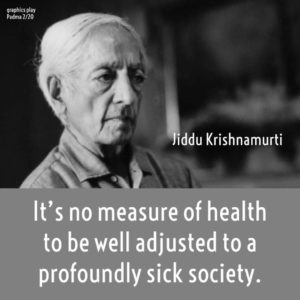
Navigating a Sick Society: The Imperative for Personal and Collective Healing
Krishnamurti’s profound statement, “It is no measure of good health to be well adjusted to a sick society,” serves as a stark reminder of the challenges we face today. The collective mental health of America is on a slippery slope downhill, exacerbated by a lack of awareness, personal healing, and collective will to confront our dysfunctional religious, economic, political, and familial conditioning.
In a society where competition and division are often emphasized, we find ourselves questioning our own value and unfairly judging others. This societal conditioning plays a significant role in perpetuating a cycle of personal identity anguish and dysfunction, where individuals feel disconnected and undervalued. The pressure to conform to societal norms can lead to a range of mental health issues, including anxiety and depression, alcohol and drug misuse, and a pervasive sense of loneliness.
Religious teachings, political ideologies, economic pressures, and family expectations all shape our worldview and mental well-being. These institutions often promote competition, material success, and rigid belief systems, which can alienate individuals and create a sense of isolation. Instead of fostering a sense of community and mutual support, these societal pillars often reinforce divisive cultural experiences.
While technology has undoubtedly connected us digitally, it has paradoxically contributed to a sense of disconnection and loneliness. The proliferation of smartphones and social media platforms creates an illusion of connectivity, yet many individuals report feeling more isolated than ever. The digital age has made it easier to communicate with others, but meaningful, face-to-face interactions have become increasingly rare.
To navigate and challenge cultural norms, self-awareness and personal healing are crucial. Understanding how societal conditioning impacts our thoughts and behaviors allows us to break free from toxic patterns. Critical thinking enables us to question and redefine our values, leading to a more authentic and fulfilling life. Personal healing, through therapy, mindfulness, or spiritual practices, helps us address and heal intergenerational and personal traumas.
It’s time for individuals and communities to engage in more meaningful and empathetic interactions. By fostering a culture of empathy and understanding, we can create a supportive environment where everyone feels valued and heard. This requires a collective effort to prioritize mental health, challenge harmful societal norms, and promote personal and collective healing.
Practical Steps for Personal and Collective Healing
- Practice Mindfulness: Engage in mindfulness exercises to become more aware of your thoughts and feelings. This can help you identify and address negative patterns influenced by societal conditioning.
- Seek Professional Help: Therapy and counseling can provide valuable tools for personal healing and mental health improvement.
- Engage in Community Activities: Participate in local community groups or volunteer organizations to build meaningful connections and support networks.
- Promote Open Dialogue: Encourage open and honest conversations about mental health, societal norms, and personal experiences within your circles.
- Advocate for Change: Support policies and initiatives that promote mental health awareness, education, and resources at a community and national level.
We are wired to be social creatures, yet much of the lesson plans our religious, political, and economic leaders emphasize keep us trapped in a competitive and divisive cultural experience. To combat this, we must prioritize self-awareness, personal healing, and empathetic interactions. By doing so, we can break free from the cycle of dysfunction and create a healthier, more connected society.
For those seeking deeper guidance on navigating these challenges, consider exploring resources and engaging with communities that prioritize mental well-being and holistic healing. Together, we can foster a culture of empathy, understanding, and collective growth.

Chapter 16: The Virus Within Us All

The sacred tapestry of life that binds us to this Earth is fraying under the weight of unchecked destruction—a destruction spurred by a force as subtle and pervasive as a virus. That force, nuanced and multilayered, is humanity itself, and at its most toxic, it is embodied by the fragmented male psyche disconnected from truth, love, nature, and the collective spirit. This is not an indictment of masculinity in its essence, but rather a critique of its dark distortion when severed from the deeper truths that unite all living beings.
Consider for a moment the existential irony of our species. What other creature within the vast expanse of the cosmos betrays the very systems that sustain its existence? Beyond viruses—whose primal objective is simply survival through replication—there is no parallel. Yet men, when lost in a haze of power, greed, and transactional thinking, have developed an unparalleled capacity to transform the sacred into the profane. They shatter the holistic into fragments, approach life only through dominion and consumption, and thrive on self-preservation at the expense of the collective well-being.
This is not a new story but one ingrained in the narratives we are born into. Economies driven by capitalist greed, divisive politics fueled by fear, and distorted spiritual frameworks—these are the three pillars that uphold much of the current destruction we now face. Capitalist economics, with its relentless need to commodify every aspect of existence, twists the Earth into a resource and humanity into a statistic. Political ideologies, particularly the “Repugnantlican” ethos, weaponize ignorance, creating echo chambers where truth becomes irrelevant. And debased Christianity, severed from its origins of love and stewardship, is often used to rationalize the exploitation of both the planet and its inhabitants.

Together, they birth a peculiar breed of man—one whose breath is chained to his nostrils, who sees existence solely in short, shallow breaths. He becomes the pinnacle of disconnection, incapable of curiosity, wonder, or forgiveness. History, unfortunately, overflows with examples of this archetype—from ruthless despots to contemporary figments like the QAnon-entrenched echo chambers of Trumpism, where vitriol and specious conspiracy theories masquerades as strength.
But toxicity never exists in isolation; it spreads, much like a virus. Men in “packs” become particularly lethal when tethered to diluted ideologies and fear of self-reflection. And, yes, it is vital to address that this phenomenon is no longer male-exclusive. Females indoctrinated into these belief systems—whether through fear, manipulation, or longing for belonging—amplify these darknesses under a justificatory facade of righteousness.
Yet to solely acknowledge this dismay is to partially engage with the problem. The antidote, if one exists, challenges us to envision a counter-force. What are antibodies in this human ecosystem but collectives—awakened, empathic, spiritually alive—that reject isolation and competition in favor of interconnection and restoration? We must reimagine ourselves as “new packs,” no longer bound by hierarchy and fear but instead drawn toward a higher resonance, one that thrives on harmony with the Earth and all its beings.
The remedy lies in spiritual and ecological awakening. It calls us to shed the sickness of selfish narratives, to nurture within ourselves a reconnection with the profound beauty of the Earth and the collective spirit of humankind. It demands that we turn inward—seeking balance and clarity within ourselves—before turning outward to repair now-fragile social and ecological ecosystems.
Perhaps the most important aspect of this antidote is its inclusivity. It beckons all of humanity—men and women, young and old, regardless of political stripe or background—to step forward not as perfect beings but as those eager to reconcile the broken pieces within and without.
We are not doomed to destruction, just as a virus does not inherently “wish” to destroy its host. But without intervention, the spread of toxic ideologies will continue. Redemption requires action—courageous, collective, and infused with the very qualities modern humans have so often forgotten.
Beyond economic systems, political affiliations, or diluted religious dogma, the question remains timeless and pressing: Can we, as a species, become caretakers rather than spoilers? Can we see ourselves not as adversaries but as individual threads woven into a universal fabric of interdependence?
The sacred is still present, though hidden beneath layers of greed, cynicism, indifference, despair, and distraction. If we remember our connection to it, we may yet transform this “great virus” into healing. And in doing so, we might just rediscover the essence of what it means to be truly human.
The time to awaken is now—and the path forward, however difficult, begins with us. Toxic masculinity, toxic capitalism, and toxic religion all have the same source–
CONTINUED IGNORANCE OF AND INDIFFERENCE TO THE NEEDS OF OTHERS, INCLUDING MOTHER EARTH.
Our choices in democratic elections, for however long fair elections may be possible, our choices for which corporations and billionaires we will continue to support through our consumer purchases, and our choices for sources of information determines the pack that we will continue to run with.
Which pack will you choose to run with today?
The Silent Crisis Within America’s Soul
Have we, as a society, grown deaf to the quiet plea for healing? Beneath the clamor of our technological age and the thunder of relentless progress, an unsettling silence lingers—the silence of unexamined lives, subjugated truths, and suppressed emotions. It’s a silence that enshrouds men and women alike, perpetuating cycles of collective misunderstanding, fractured well-being, and a growing void in our collective emotional and spiritual intelligence.
But all is not lost. A resilient undercurrent of change flows within those who dare to seek self-awareness and healing, often amid profound personal pain. These brave few illuminate a path toward collective transformation—one that unites the masculine and feminine, the fragmented and whole, into a woven fabric of spiritual, emotional, and intellectual vitality.
Research paints a concerning picture. Across age groups and genders, emotional and spiritual intelligence is faltering. The consequences? Waning social cohesion, alienation, and mental health crises too dire to ignore. This isn’t just measured in dry metrics; it’s felt in the ineffable loss of human connection and empathy that binds communities and generations together.
It’s a void compounded by societal constructs, particularly those imposed on men. The unspoken expectation to suppress emotions, avoid vulnerability, and dominate rather than collaborate has ossified resistance to the very healing we so deeply need.
Men, in particular, face a dual-edged sword. Many live within cultural frameworks that demand they relinquish emotional honesty and spiritual inquiry, yet bear the blame for society’s descent into chaos. The American male psyche, scarred by generations of repressive ideologies and wounded in silence, often isolates itself within the confines of stoicism and unexamined traditions.
Amid this despair, women, by virtue of higher emotional intelligence and an inclination toward holistic thinking, offer an extraordinary beacon of hope. While men often view the world through fragmentation—focusing on objectives, hierarchies, and power dynamics—women more naturally comprehend the interconnected nature of life, assigning value to wholeness and nurturing.
This isn’t about pitting genders against one another but rather about collaboration. The masculine and feminine must come together to weave a future that honors life itself. Holistic thinking, a quality historically undervalued in patriarchal systems, must guide solutions for contemporary challenges.
Transformation, however, is no gentle undertaking. It demands we confront the abyss of our personal and collective insanity. True healing isn’t found in platitudes or surface-level practices. It lurks within our willingness to face the raw truth—both the traumas that haunt us and the complicity in societal dysfunction we carry silently.
Men, especially, resist this process. Social roles and fragile egos create barriers to self-inquiry. On a cultural level, many remain enslaved to what I call the “common knowledge game,” the unspoken societal norms that perpetuate repression and oppression of the human spirit. Change only comes when those barriers crumble under the weight of undeniable personal or collective crises—the certainty of loss, death, or failure serving as the catalyst for transformation.
Personal growth isn’t a polished aesthetic pursuit; it’s messy, agonizing, and often lonely. Yet, it is within this discomfort that we uncover our humanity. My own transformation began with an agonizing reckoning with my relationship to my father—a story that reflects the broken legacies handed down through generations. But, through that pain, I emerged stronger, healed, and connected to a Truth beyond myself.
Central to this discussion is the intersection of spirituality and personal growth. Religion, for many, remains both a guide and a prison. Religious dogma often stifles true spiritual awakening, replacing personal insight and divine connection with rigid doctrines and conditional salvation. Too many men attend church or recite scripture while failing to undergo the deeper self-awareness and healing that scripture itself often demands.
The path forward requires more than reciting biblical or religious teachings—it requires embodying their truths. Insight, mindfulness, and meditation transcend the limitations of organized religion, offering practices that unite rather than divide, include rather than exclude. Breaking free from spiritual stagnation allows us to weave stories of connection, courage, and transformation into the broader social fabric.
True healing begins with individual action. It starts with a commitment to face ourselves—our flaws, our grief, our compulsion to avoid responsibility. Transformation demands relentless introspection and a willingness to disrupt the narrative of helplessness perpetuated by toxic familial, cultural, and societal systems.
Take this simple yet profound truth to heart:
We are all as sick as the secrets we keep.
To break free, we must confront the shadows within us and illuminate corners of our spirit that long to breathe unfiltered air. Men must learn to access the same vulnerability and empathy too often suppressed by societal expectations. Women, through collaborative leadership, must guide us into recognizing the interconnectedness of life and the paramount importance of holistic well-being.
It’s neither quick nor easy, and the benefit may not emerge immediately. But the fruits of this labor are sweeter than we can imagine—wholeness, awe, love, and connection. To know peace isn’t to escape adversity but to master healthier tools for navigating life’s inevitable hardships.
Civilizations rot from the inside out if their spiritual core is left unattended. The voices of those who have awakened—those who have ridden the waves of life’s Tsunamis without drowning—must rise. We cannot afford the luxury of silence or apathy. If you feel the pull of self-awareness, begin your transformation now. Engage with your local communities, participate in dialogues, and seek refuge in healing practices that honor both individuality and collective humanity.
The call for awakening is greater than any one person. It is the cry of the human spirit to heal, grow, and love in ways we thought impossible. Transformation may not come overnight—but the energy of commitment to this path ripples through generations, shaping a brighter and healthier collective consciousness.
May we choose to rise together, men and women, as a collective light piercing through the darkness.
Engage in dialogue.
Attend a local healing event.
Begin the work.
The moment for transformation begins with this choice.
Will you answer the call?

Grappling with Division: Understanding Our Fellow Citizens in the Wake of a Tumultuous America

The United States has long prided itself as a beacon of democracy, with its citizens united under shared values of liberty and justice. Yet, recent years have tested the very fabric of these ideals, leaving many Americans questioning not only the state of their nation but also the mindset of their neighbors. The 2020 election, marked by an insurrection and the shadow of electoral subversion, followed by the controversial election of Donald Trump in 2024, underscores a profound divide that challenges our collective identity.
What do we, as citizens, feel when our fellow Americans align with policies and figures who seem to unravel the threads of democracy? Anger may feel appropriate, even righteous, as executive orders come down like iron gates, dismantling key initiatives and instilling fear. And yet, this anger often coexists with a deep sense of uncertainty and trauma.
How we might balance our emotions—anger, confusion, and even despair—while striving to understand and engage with those who hold opposing beliefs?
The Wrath of Betrayal
When a tragedy strikes a nation, citizens often look to each other with a sense of shared loss or hardship. However, political polarization has turned the 2020s into an era where tragedy seems to isolate rather than unite. Those who once believed in the sanctity of democratic processes now face the unsettling reality that a significant portion of their fellow citizens supported, and continue to support, a leader whose actions and rhetoric many associate with authoritarianism.

Anger feels natural in such a context.
Anger at the undermining of democracy. Anger at institutions that fail to uphold their checks and balances. And, perhaps most acutely, anger at those who appear indifferent to these betrayals—or worse, complicit in them through their support. But anger, while justified, can morph into a blinding force, making it harder to understand or address the root causes of this division.
The events of the 2020 insurrection shattered illusions of invulnerability, exposing the fragility of democratic ideals. For many Americans, this unraveling represents more than just political turmoil—it feels like a personal loss, a betrayal of the shared values that once tethered the nation together. Trauma, like an invisible thread, weaves through this story, leaving scars in its wake.
The key question becomes not only how we process this trauma but also how we examine the systems and social forces that led us here. Is democracy strong enough to withstand such tests? And, perhaps more tormenting, can it reconcile the splintering perspectives among its people?
The Allure of Authoritarianism
History tells us that authoritarian figures often thrive in times of uncertainty. Economic insecurity, cultural shifts, and social upheaval can create fertile ground for leaders promising stability, strength, and a return to “better” times. For Trump supporters, his rhetoric often resonates as a call to protect an America they feel is slipping away—a sentiment deeply tied to caucasian identity, economics, and cultural anxiety.
Of course, such support often ignores—or justifies—the anti-democratic elements of his leadership. But understanding this allure doesn’t mean condoning it. Instead, it is an essential step toward bridging the chasm that divides Americans. Without understanding the “why,” it is impossible to address it.
Information ecosystems play a significant role in shaping beliefs. The prevalence of echo chambers, amplified by modern algorithms, means that Trump supporters often receive a curated narrative distinctly at odds with that of his opponents. When news sources frame policy decisions, social movements, and elections through vastly different lenses, the result is not debate but parallel realities.

If we are to rebuild any semblance of collective understanding, we must address the consumption and spread of misinformation. This requires solutions at both the institutional level—with stronger protections against disinformation—and the personal level, where individuals must commit to broadening their sources of information.
The Balance Between Hope and Action
It can feel impossible to maintain hope in a landscape of dismantled programs, targeted persecution, and democracy wavering on its foundations. However, the mere existence of turmoil often signals an opportunity for change. While Trump’s executive orders may feel like the installation of a dictatorship, history has shown that no regime or leader is immutable when citizens remain engaged.
To move forward, we must cultivate thoughtful action. This means focusing on how we respond to political opponents rather than reacting with immediate hostility. Can empathy and dialogue serve as tools for bridging divides? Or is it through strengthening grassroots movements and policy advocacy that we counteract the losses we feel most acutely?
Defiance of Collective Apathy
Anger, while powerful, often leads to emotional exhaustion without a constructive outlet. Yet, the alternative—apathy—is far more dangerous. Apathy risks normalizing actions that betray democratic principles, silently allowing them to take root. The antidote lies in sustained engagement, whether through voting, educating others, or supporting organizations that advocate for justice and equality.
For those struggling to understand their Trump-supporting neighbors, engagement doesn’t mean agreement. Rather, it means pursuing opportunities for dialogue and challenging harmful ideologies, not with cruelty, but with clarity and conviction.
Rebuilding Trust in Institutions
One of the most profound questions of this era is how we restore trust in the institutions that underpin our democracy. Part of this process lies in accountability—ensuring that those who undermine democratic principles face consequences. But it must also include efforts to make government processes more transparent and accessible, helping citizens feel invested in the democratic framework.
Division thrives in the absence of a common identity. To overcome the fractures highlighted by Trump’s actions and policies, we must revisit what it means to be an American. This doesn’t mean disregarding differences or erasing individuality; rather, it involves recommitting to shared values like liberty, equality, and justice.
Creating opportunities for people to come together across lines of political difference—through community initiatives, bipartisan policymaking, and authentic storytelling—can help repair the bonds that polarization has weakened.
Rather than viewing this moment as the end of democracy, perhaps we can reframe it as a test of its resilience. The road ahead is not without difficulty, and anger will surely accompany us as we confront the damage that has been done. But if we allow that anger to transform into meaningful action—rather than division—it may serve as the very fuel we need to protect the ideals we hold dear.
As I reflect on what it means to share this country with those whose beliefs challenge my own, I remember that democracy’s greatest strength lies in its capacity for reinvention. This capacity begins not with leaders or institutions, but with the people themselves. The question is whether I am ready to undertake that reinvention with the clarity, courage, and commitment it requires.
I know that I am!
How about you?
A Nation Stuck in Shallow Grooves: Reflections on a Major Sector of Trump’s Support Base
What happens to a democracy when a significant portion of its population clings to narrow worldviews, shuns intellectual growth, and embraces leaders who exploit these vulnerabilities? These are the pressing questions facing America today as profound societal rifts continue to deepen.
At the heart of Donald Trump’s enduring appeal lies a metaphor for the intellectual and spiritual stagnation that has taken hold of a portion of his support base. They are trapped in ruts—mental grooves worn deep through years of intellectual complacency, cultural fear, and the allure of self-affirming echo chambers. These narrow trenches promote indifference to others’ viewpoints while shielding them from broader perspectives, richer contexts, and the complexity required for meaningful engagement with democratic values. To a lesser degree these forces also play out within some sectors of Democratic voters, but this group is not the party who promoted and elected the wannabe dictator and destroyer of democracy.
The implications are stark, not just for those ensnared in these patterns but for the health of our democracy, our capacity for empathy, and our shared future.
Far too many Americans lead lives defined by intellectual stagnation. According to studies, over half of Americans read at a level associated with middle-school literacy. But the problem extends beyond education—it reflects a widespread cultural reluctance to engage with complexity. Curiosity is replaced by passive consumption. Knowledge becomes a stagnant pool, not a flowing stream. When one’s information diet is limited to familiar, self-affirming sources, the possibility of growth fades.

This intellectual inertia creates fertile ground for political manipulation. When people lack the tools to question, to challenge, to think critically, they become susceptible to simple narratives and authoritarian promises of certainty. Nuance is ignored because it does not fit neatly into the confined parameters of their worldview. Leaders like Trump exploit these vulnerabilities, not with policy depth or philosophical rigor, but with soundbites, slogans, and tribal validation.
It is no coincidence that his political ascension has coincided with a period of rampant misinformation and the explosion of social media echo chambers. These platforms amplify the ruts, transforming them into graves from which escape becomes nearly impossible. The rise of QAnon is directly related to the Trump misinformation campaign, where he and his cohorts promote lies over facts, and continues to wrinkle the fragile fabric of reality.
Fear often resides at the bottom of these trenches. Fear of diversity, of change, of challenging one’s own beliefs. It is easier for some individuals to retreat into pseudo-Christian mentalities or other ideologically convenient frameworks than to confront the uncomfortable truths of spiritual and societal evolution.
Psychological studies show that fear and insecurity lead to decision-making that prioritizes comfort and simplicity over uncertainty and growth. This explains why authoritarian solutions, with their promise of control and safety, are especially appealing to those who feel threatened by the broader, more inclusive world around them. Unfortunately, this tendency erodes the foundations of a functioning democracy, which thrives on debate, ambiguity, and collective evolution.

The Republican Party’s current trajectory reflects a calculated strategy to weaponize this intellectual and emotional stagnation. By elevating figures who prioritize unfair and degrading attacks against innocents and emotional resonance over rational discourse, the party has tapped into a culture of simplicity and tribal belonging.
This strategy is not without cost. By framing fellow citizens as enemies and reducing political debates to false binaries, the possibility of empathy is lost. The world is reduced to “us versus them,” and critical national issues—like climate change, healthcare, and education reform—are painted as existential battles rather than challenges demanding collective solutions.
The consequence is a polarized society where conversation becomes impossible, and progress, even incremental, is stymied. Many are now contemplating a future where firearms will determine the stability, or lack of it, within this unfolding chaos.
The modern information landscape compounds the problem. Social media and digital platforms have created echo chambers where misinformation flourishes and dissenting perspectives are filtered out. Historical parallels abound—other nations, too, have seen their democratic values eroded when leaders harnessed mass support by exploiting intellectual and cultural insecurities.
The ruts have become systemic, reinforced by technologies that prioritize engagement over truth and by media outlets that cater to their audience’s pre-existing biases rather than challenging them.
While the challenges are daunting, they are not insurmountable. Escaping the ruts and guiding society toward a more enlightened future requires both individual and collective action. Here’s where we can start:
1. Reimagine Education
Education is foundational in cultivating critical thinking and intellectual curiosity. It must go beyond rote learning to encourage analysis, debate, and the exploration of diverse perspectives. Programs that focus on media literacy—teaching individuals how to discern reliable sources from misinformation—are more important than ever.
2. Engage Empathetically
It is tempting to dismiss or vilify those entrenched in narrow worldviews, but doing so only deepens the divide. Engaging in constructive conversations, listening without judgment, and finding shared values can spark understanding. Empathy does not mean agreement, but it fosters the conditions for dialogue.
3. Challenge Simplicity
As individuals, we have a responsibility to push back against the glorification of simplicity. Read profoundly. Explore books, ideas, and perspectives that challenge your beliefs. Grapple with ambiguity, resist the urge for easy answers, and approach information with curiosity rather than defensiveness.
4. Advocate for Responsible Media Practices
Hold media organizations and social platforms accountable for their role in perpetuating echo chambers. Support initiatives dedicated to promoting transparency and combating misinformation.
Donald Trump’s rise is not just a political event; it is a mirror reflecting deeper societal and cultural challenges. These challenges demand action—not just from policymakers but from all of us.
We each have the capacity to climb out of the ruts, to broaden our perspectives, and to cultivate a culture that values intellectual humility, empathy, and the richness of diversity. We must choose whether we will remain buried in the dirt of our own making or look toward the horizon, where possibilities for meaningful progress await.
Engage in conversations with those whose perspectives differ from yours. Support educational initiatives that foster critical thinking. Advocate for responsible information sharing and media literacy. These are small but essential steps toward renewing our shared commitment to democratic values and collective growth.
It is time to rise above the trenches, to reconnect with the larger context of our shared humanity, and to reclaim the intellectual and spiritual depth that our democracy so urgently needs.
