USEFUL FOR END OF BOOK
Here is a proposed structure for the chapters, organized into three distinct parts that narrate a journey from understanding the self and the divine, through confronting life’s profound challenges, and culminating in a vision of collective healing and spiritual evolution.
Part 1: The Nature of Being and the Divine
This section lays the philosophical groundwork, exploring the fundamental concepts of identity, divinity, and consciousness. It invites the reader to question conventional notions of self and God, setting the stage for deeper spiritual inquiry.
- Chapter 1: The Sacred Mystery of I AM: Understanding Divine Identity
- Chapter 2: Beyond the Veil: God as Illusion and Ultimate Truth
- Chapter 3: Awakening to Supranormal Realities: The Untethered Mind as a Gateway to Expanded Consciousness
- Chapter 4: Breaking the Illusion of Control: A Path to Liberation
To Be Added To I Am:
The human journey is a profound paradox. We are spiritual beings engaged in a human experience, yet this very experience often obscures our true nature. We are all, in essence, emanations of a singular, universal consciousness—what some traditions call the Cosmic Christ or Christ consciousness. However, most live their lives unaware of this connection, conditioned by the ego and the personal name assigned to it, believing themselves to be someone they are not.
When an individual does pierce the veil of the mundane and makes contact with this deeper spiritual reality, the experience can be overwhelming. The ego, in its attempt to process this boundless truth, may fall into a solipsistic trap. It may interpret the universal “I AM” as a personal, exclusive identity, leading one to believe they are a reincarnation of a historical figure like Jesus, rather than a unique expression of the timeless spiritual energy that animates all of existence. This is the great delusion: to believe one is the all, to the exclusion of others.
This psychological pitfall was vividly illustrated in Milton Rokeach’s controversial 1959 experiment, “The Three Christs of Ypsilanti.” Rokeach brought together three men, each of whom was unshakably convinced he was Jesus Christ. The underlying hypothesis was that direct confrontation with an identical, competing claim would shatter their delusions. Yet, the opposite occurred. Faced with irrefutable contradiction, each man’s delusion did not break; it fortified itself. They rationalized the others as imposters, machines, or simply insane. Their sense of self was so fragile that it chose to rewrite reality rather than question its own foundation.
The experiment revealed a profound truth about the human psyche and its relationship with belief. A delusion, particularly one of divine identity, is often a protective mechanism—a story the mind tells itself to shield the ego from an unbearable reality or a fractured sense of self. The men in Rokeach’s study clung to their exclusive divinity because the alternative—confronting their own vulnerability and mental illness—was too terrifying to contemplate. Their belief was not a bridge to the universal, but a fortress to protect the individual.
True spiritual transcendence, however, follows a different path. It is not the belief that one is the all, with the exclusion of others, but the realization that one is part of the all, with the inclusion of all others. It is the recognition that the Christ consciousness is not a personal possession but a collective inheritance. The men at Ypsilanti demonstrated the ego’s desperate attempt to claim divinity for itself. A genuine spiritual awakening, in contrast, involves the dissolution of this exclusive self into a shared, universal consciousness. It is the subtle but monumental shift from “I am Christ” to “I am part of the Christ consciousness, as is all of humanity.” One is a delusion of grandeur; the other is a step toward true spiritual awareness.
Summary of changes:
Part 2: Confronting Mortality, Trauma, and Transformation
Building on the foundational concepts, this part delves into the human experience of suffering and mortality. It examines how confronting life’s greatest challenges—trauma, ego, and death—can serve as powerful catalysts for profound spiritual transformation and a richer understanding of life itself.
- Chapter 5: The Two Deaths: Spiritual Transformation and Mortal Acceptance
- Chapter 6: Death Becomes Us: Our Understanding of What It Means to Be Alive
- Chapter 7: Breaking the Silence: Integrating Education and Awareness on Cultural and Familial Abuse and Trauma
- Chapter 8: From Trauma to Triumph: My Journey Through Community Service
Part 3: The Path to Collective Awakening and Reunion
The final section broadens the perspective from the individual to the collective. It explores the practical and spiritual pathways toward a more unified and enlightened humanity, culminating in a return to our shared spiritual source.
- Chapter 9: The Voice of Awakening: Navigating the Modern Search for Truth
- Chapter 10: A New World Religion: Uniting Humanity Through Universal Values
- Chapter 11: Life, Love, and Death on Infinite Bandwidth
- Chapter 12: Love’s Reunion
- Chapter 13: The Journey Back to Silence: Reclaiming Our Spiritual Heritage
Summary of Changes:
- Logical Sequencing: The 13 chapters have been reordered to create a narrative arc, moving from foundational concepts of self and the divine (Part 1), to confronting life’s challenges (Part 2), and finally to a vision for collective healing and spiritual unity (Part 3).
- Categorization: The chapters have been grouped into three distinct, thematically coherent parts, each with a descriptive title that reflects its core focus.
- Narrative Flow: The structure is designed to guide the reader on a logical and emotional journey, starting with introspection and ending with a sense of universal connection and purpose.
Chapter 65: Beyond the Veil: God as Illusion and Ultimate Truth
The question of God’s existence has haunted humanity since consciousness first stirred in our ancient ancestors. Yet perhaps we’ve been asking the wrong question entirely. Rather than debating whether God exists, we might consider a more profound inquiry: How do our limited perceptions both obscure and reveal the divine nature of reality itself? This exploration invites us to examine two seemingly contradictory perspectives—God as human illusion and God as the fundamental truth underlying all existence. Far from being mutually exclusive, these viewpoints may represent different stages of spiritual understanding, each offering crucial insights into the nature of the divine and our relationship to it. Human beings possess an extraordinary capacity for projection. We see faces in clouds, assign personalities to our cars, and inevitably create deities that mirror our own psychological and cultural frameworks. This tendency toward anthropomorphism—attributing human characteristics to non-human entities—lies at the heart of many religious traditions. The God of our making often bears striking resemblances to human authority figures: a father, a king, a judge. This divine figure experiences emotions like anger, jealousy, and love. He rewards obedience and punishes transgression. Such a deity operates within human moral frameworks, speaking our languages and sharing our cultural values. This anthropomorphic God serves important psychological functions. It provides comfort in uncertainty, offers structure in chaos, and gives meaning to suffering. Yet this very utility suggests its illusory nature. The God who perfectly meets our psychological needs may be more about us than about any transcendent reality. Organized religion, while offering community and spiritual guidance, often contributes to this limiting perspective. Religious institutions require coherent narratives, clear moral guidelines, and manageable concepts that can be transmitted across generations. The infinite complexity of divine reality becomes compressed into digestible stories, commandments, and doctrines. These institutional frameworks create what we might call “God in a box”—a deity confined by human language, bound by cultural expectations, and reduced to theological formulas. The living mystery of existence becomes a character in our stories, complete with motivations, preferences, and predictable responses. This process of reduction isn’t inherently malicious. It serves the practical needs of human communities. However, it can lead to a profound confusion between the symbol and the reality it attempts to represent. The finger pointing at the moon becomes mistaken for the moon itself. Perhaps most significantly, our illusory constructions of God offer the seductive promise of certainty. They provide definitive answers to ultimate questions, clear moral guidance, and the assurance that someone is in control of the cosmic order. This psychological comfort can become addictive, creating resistance to experiences or insights that challenge our established understanding. The illusion of comprehensible divinity protects us from confronting the vastness of our ignorance and the ultimate mystery of existence. It offers the comforting fiction that we understand the nature of reality, that our concepts adequately capture truth, and that our spiritual insights grant us special knowledge about the divine. Beyond our conceptual constructions lies something far more extraordinary than any human narrative could contain. The divine fabric of the universe encompasses not merely what we can observe, but the very foundation that makes observation possible. This is not God as a being among beings, but as the ground of being itself. This underlying truth cannot be captured in theological propositions or religious stories. It is the source from which all existence emerges, the field in which all phenomena arise, and the consciousness within which all experience occurs. Unlike our anthropomorphic projections, this divine reality transcends human categories while simultaneously being more intimate than our own breath. The mystics of every tradition have pointed toward this truth, though their descriptions vary according to their cultural contexts. They speak of the Tao, Brahman, the One, or simply the ineffable presence that underlies all manifestation. Their testimonies, while diverse in expression, converge on a recognition of fundamental interconnectedness and the illusory nature of separation. Reality might be understood as an interconnected infinite membrane—a seamless web of relationships, processes, and emergent phenomena. Within this framework, the boundaries between self and other, sacred and mundane, divine and human dissolve into a more fundamental unity. This membrane is not static but dynamic, continuously creating and recreating itself through the interplay of countless forces and influences. Every thought, every star, every quantum fluctuation participates in this cosmic dance. The divine is not separate from this process but is the very creativity and intelligence that animates it. Unlike our constructed gods, this infinite membrane has no preferences, no agenda, and no emotional investment in human affairs. It simply is—the eternal, ever-present ground of existence that makes all experience possible. It operates according to its own mysterious principles, which we can observe but never fully comprehend. This divine reality, if we can call it that, might be said to laugh at our attempts to capture it in concepts and stories. Not with mockery, but with the kind of loving amusement a parent might feel watching a child try to carry the ocean in a bucket. Our theological systems, spiritual insights, and religious certainties are touching but ultimately inadequate responses to the ineffable mystery of existence. This cosmic laughter emerges from the recognition that truth is always greater than our understanding of it. The divine nature of reality transcends not only our concepts but our very capacity for conceptualization. It is the source of our ability to think, feel, and experience, yet it cannot be reduced to any particular thought, feeling, or experience. The transition from God as illusion to God as truth requires a fundamental shift in perspective. We must gradually release our attachment to anthropomorphic projections and conceptual constructions while opening ourselves to the mystery that lies beyond them. This process often feels like a death—the death of comforting certainties, familiar frameworks, and the ego’s sense of spiritual accomplishment. The stories that once provided meaning and guidance must be recognized as stepping stones rather than destinations, fingers pointing toward a moon that cannot be grasped. This doesn’t mean abandoning all religious or spiritual practices. Rather, it means holding them lightly, using them as tools for opening rather than containers for capturing truth. Sacred texts, rituals, and teachings can serve as doorways to the divine, but they must not be mistaken for the divine itself. The mature spiritual perspective learns to rest in not-knowing, to find peace in mystery, and to discover that the absence of complete understanding is not a problem to be solved but a gift to be received. The divine reality that underlies existence is not incomprehensible because of our limitations—it is incomprehensible by its very nature. This incomprehensibility is not a barrier but an invitation. It calls us to approach the divine with wonder rather than analysis, with reverence rather than explanation, and with humility rather than claims of understanding. The mystery of existence becomes a doorway rather than a wall. The wondrous nature of reality reveals itself not to those who have figured it out, but to those who have surrendered the need to figure it out. In this surrender, the divine fabric of existence can be experienced directly, beyond the mediation of concepts and stories. The relationship between God as illusion and God as truth is not a simple progression from false to true, but a dynamic dance of perspectives that can coexist and inform each other. Our human need for meaning, story, and relationship with the divine is not itself an illusion—it is part of the wondrous complexity of existence. The key lies in recognizing the relative nature of our constructions while remaining open to the absolute mystery they point toward. We can appreciate the psychological and social functions of religious narratives while recognizing their limitations. We can find comfort in spiritual practices while acknowledging their provisional nature. This paradoxical relationship mirrors the nature of existence itself, where the relative and absolute, the personal and impersonal, the knowable and unknowable dance together in an eternal embrace. The divine reality that laughs at our concepts also expresses itself through our concepts, transcending them while simultaneously manifesting within them. The universe’s sense of humor extends to its willingness to hide in plain sight, to be both utterly obvious and completely mysterious, to be found in the very place we’re looking from rather than in any particular object of our seeking. This playful nature of reality invites us to approach the divine with lightness rather than heaviness, curiosity rather than certainty, and joy rather than solemnity. I have found myself not with answers but with a deeper appreciation for the questions themselves. The divine reality that underlies existence remains as mysterious as ever, yet perhaps I’ve developed a greater capacity to rest in that mystery without needing to resolve it. The God of my illusions and the God of ultimate truth may be different faces of the same ineffable reality—one filtered through human consciousness, the other pointing beyond all filtering toward the source of consciousness itself. Both have their place in the human spiritual journey, serving different functions at different stages of understanding. The invitation remains open: to move beyond the comfort of certainty into the wonder of not-knowing, to release the grip on anthropomorphic projections while opening to the divine fabric that permeates all existence, and to discover that the cosmic laughter that I heard may be the sound of my awakening consciousness recognizing its source. The membrane of existence continues to vibrate with infinite possibility, inviting all to participate in its eternal dance of creation and dissolution, meaning and emptiness, form and formlessness. Our place within this cosmic symphony is neither to conduct nor to understand, but simply to play our part with whatever awareness and authenticity we can muster. So where do we go from here? From 1988 through several subsequent years, I immersed myself in the wisdom of renowned spiritual teachers, healers, and mystics, to try to bring clarity, support, and confirmation of the incredible reality of the transcendent experience that I had. Whether it was Bill Wilson (co-founder of AA), Charles Swindoll (yes, a standard but highly respected Christian author), Scott Peck (‘The Road Less Traveled,’ ‘People of the Lie’), Jack Boland (‘Master Mind,’ ’12 Steps to a Spiritual Experience’), Joel Goldsmith (‘A Parenthesis in Eternity’), or Jiddu Krishnamurti (‘The Ending of Time’)—each voice added a thread to the intricate tapestry of understanding. Others, such as Dr. Alberto Villoldo, Reverend Matthew Fox, Eckhart Tolle (‘The Power of Now’), Steven Levine (‘Who Dies’), or my wife, Sharon White (‘Whose Death Is It, Anyway?’), illuminated different facets of life’s great mystery. Each teacher poured untold treasures into my spiritual reservoir, but no teacher could deliver me to absolute confirmation of the unique reality that I had experienced. The truth that I came to realize, and that I share with you, is this: no one else can complete our spiritual work. That responsibility rests solely with each of us. We must each find our truth and live faithfully through its incessant prodding. This is not an indictment of the masters who offer insights but a recognition of the deeply personal nature of awakening. We are each accountable for how we perceive life and how we interact with the vast, interconnected whole of existence. No external path can substitute for the inner work. Our very existence is divine, wondrous, and profoundly mysterious. Yet, in our pursuit of meaning, it is so easy to be ensnared by distractions. Many of us waste precious moments tethered to weighty seriousness, or worse, funnel our time and resources into the coffers of materialist-driven spiritual figures. You’ve seen them. Their books, their wealth, their names become synched with global renown. They offer dazzling promises wrapped in polished language, but their ultimate gain can often be as hollow as the illusions they claim to unravel. But what if you chose differently? No one needs to play their game. Life’s most profound truths cannot be sold, bottled, or packaged as part of prosperity theology, the vacuous promises contained within books like The Secret, or other new-age consumerism. Real truth is not about accumulation; it is about ignition. To live in truth, you only need to be aflame with it. Your being, as it stands, is already enough. Within you lies all that you’ve sought, all that you’ve dreamed or yearned to embody. Fulfillment begins not with acquisition but with awakening to the infinite reservoir inside. When you step into this awareness, you no longer remain beholden to external sources or superficial promises. This realization allows us to laugh alongside the universe. Not mockingly, but joyfully. Together, we can marvel at the absurdity of our collective unconsciousness, at the ways we blind ourselves to the beauty and mystery that permeates all things. By shedding illusions, we uncover clarity. And with clarity comes vision. We gain the ability to look beyond trivial facades and into the pulsing wonder that underlies everything. From the infinite stillness of the cosmos to the vibrant dynamism of life unfolding before us, the interconnected symphony is laid bare. It is here the true miracle begins. Because in witnessing the truth, we don’t just passively observe it—we become a part of it. Existence isn’t an external enigma to solve but an intimate dance with the divine fabric of reality. With this deeper awakening, the narrative of self-opposition dissolves. We stop needing answers and start reveling in the questions themselves. We come to see that finding ourselves often involves losing ourselves first. And in that loss? We discover we were never separate from the divine interplay to begin with. This is the ultimate paradox and the cosmic joke at the heart of spirituality. We spend our fleeting lives chasing, wondering if we are worthy enough, yet find that we always were. We exhaust ourselves on the search, only to collapse into the playful, loving essence of our primordial nature. What remains? An invitation. An eternal invitation to step into the limitless possibility of existence, not as a seeker looking in, but as a participant engaged with its infinite dance. Creation and dissolution. Form and formlessness. Meaning and emptiness. This is the symphony we are a part of—not as conductors, not as mere spectators, but as instruments playing authentically within the divine score. Perhaps this is the ultimate miracle of waking up. That in seeking God, we find ourselves. That in finding ourselves, we surrender ourselves. And that in surrendering, we discover there was nothing to find, nothing to lose, and everything to experience. The divine fabric of reality invites us, not to claim ownership of its truth, but to revel in its boundless playfulness. The cosmic laughter? It’s our own awakening consciousness, smiling back at us in infinite recognition.
This, I feel, is the beginning of what it truly means to see.
Chapter 66: The Sacred Mystery of I AM: Understanding Divine Identity
 What if the most profound truth about existence has been hidden in plain sight within two simple words? Throughout human history, mystics, philosophers, and spiritual seekers have grappled with the meaning of “I AM”—a phrase that appears both utterly ordinary and mysteriously sacred. This exploration reveals how understanding I AM transforms our perception of identity, consciousness, and our place in the cosmic web of existence. The journey toward comprehending I AM requires us to move beyond superficial interpretations and venture into the depths of spiritual wisdom that spans millennia. From ancient Biblical encounters to modern spiritual awakening, this divine declaration continues to challenge our understanding of self, reality, and the nature of consciousness itself. The foundation of our understanding begins with one of history’s most profound spiritual encounters. When Moses first encountered the divine presence in the desert, he found himself standing before a burning bush that was not consumed by flames. This moment would forever change humanity’s relationship with the divine. Struggling to comprehend what he was experiencing, Moses asked God to reveal His name. The response came not as a traditional name, but as an existential declaration: “I AM THAT I AM.” This wasn’t merely an introduction—it was a revelation about the very nature of existence itself. God instructed Moses to tell the Jewish people that “I AM” had sent him. This divine name transcended ordinary language, pointing toward something beyond human comprehension yet intimately present in every moment of awareness. The phrase “I AM THAT I AM” represents pure being—existence without qualification, limitation, or dependency. Unlike human names that distinguish one person from another, this divine declaration points to the fundamental ground of all existence. It suggests that consciousness itself, the very capacity for self-awareness, is the divine essence. This encounter established I AM not as a distant deity’s name, but as the immediate presence of consciousness in every moment. The burning bush became a symbol of awareness that illuminates without being consumed—consciousness that reveals without being diminished. Jewish mystical traditions recognized the profound danger of misunderstanding I AM. The emphasis on not speaking the name of God—Yahweh—stems from deep wisdom about the nature of divine identity and human ego. The mystical teaching warns that anyone who proclaims “I AM” as if they are God while still identifying with the ego is not speaking from divine realization. This creates a fundamental paradox: the divine name is simultaneously the most intimate truth and the most dangerous claim. The ego, with its sense of separate identity, cannot legitimately claim I AM as its own. When the ego attempts to appropriate divine identity, it creates spiritual materialism—a form of pride that actually distances us from true realization. The ego’s version of “I am” is always qualified: “I am this person,” “I am successful,” “I am spiritual.” True I AM consciousness transcends all qualifications. It is pure awareness itself, unmodified by personal history, achievements, or spiritual experiences. The reverent silence around God’s name protects this understanding from ego contamination. Consider a revolutionary perspective: consciousness is omnipresent throughout the universe. Every infinitesimally small point of existence contains a pinprick of awareness, and I AM is that fundamental self-awareness that pervades all reality. If I AM is infinitely distributed throughout the universe, then everywhere consciousness exists, I AM exists. This creates an infinitely interconnected web of existence—a supporting membrane of awareness that underlies all of life itself. This vision reveals reality as a vast network of consciousness, where every point of awareness is connected to every other point. The boundaries we perceive between self and other, between individual and universe, become transparent when viewed from this perspective. The implications are staggering: if I AM is the fundamental fabric of reality, then separation is an illusion. The sense of isolation that the ego experiences is like a wave forgetting it is ocean, or a flame forgetting it is fire. Within this interconnected web of I AM consciousness, the concept of “you” as a separate entity cannot be real in any absolute sense. Yet we all intimately know the ego’s experience of isolation, competition, and loneliness. The ego parades around believing it has ultimate existence, yet it is only relatively real—real in relation to other egos who also experience themselves as separate entities. This relative reality creates the world of comparison, judgment, and suffering that characterizes ordinary human experience. The ego’s reality is not false—it is relatively true. Within the context of human interaction and daily life, the ego serves important functions. It allows us to navigate social situations, make decisions, and maintain bodily survival. However, mistaking this relative truth for absolute reality creates suffering. When the ego believes it is the ultimate reality, it must constantly defend itself against threats to its existence. This defensive posture creates the anxiety, depression, and existential confusion that plague human consciousness. When the ego first encounters the ultimate truth that “you can’t be real,” the experience is profoundly confusing and threatening. The ego’s entire worldview depends on its own substantial existence, so this realization strikes at the very foundation of its identity. This confrontation with ultimate truth often precipitates what spiritual traditions call the “dark night of the soul”—a period of confusion, disorientation, and existential crisis. The ego experiences this as a kind of death, which in a sense, it is. For divine vision to emerge, the ego must make way for a deeper reality. This doesn’t mean the ego disappears entirely, but rather that it takes its proper place as a functional tool rather than the master of consciousness. The process requires tremendous courage and surrender. The ego must voluntarily relinquish its claim to ultimate existence, allowing I AM consciousness to shine through without obstruction. The statement “I am the way, the truth, and the life” takes on profound meaning when understood in the context of I AM consciousness. This isn’t a claim by the historical figure Jesus, but a declaration about the nature of spiritual realization itself. Theology, Idolatry and its disempowering hero worship tells the ignorant otherwise. I AM is the way because it is the direct path to truth. It bypasses the mind’s conceptual elaborations and points directly to the immediate reality of consciousness. I AM is the truth because it represents unqualified being—existence without modification or limitation. No one comes to the universe, to God, or to the father except through the narrow gate of I AM. This narrow gate is not exclusive in the sense of being available only to certain people, but rather it is specific—it requires the recognition of consciousness as the fundamental reality. The gate is narrow because it demands the abandonment of all false identifications. The ego, with all its stories, achievements, and spiritual experiences, cannot pass through. Only pure awareness—I AM consciousness—can enter. Understanding I AM is not merely an intellectual exercise—it is a lived realization that transforms every aspect of existence. When consciousness recognizes itself as the fundamental reality, the entire universe is revealed as its own being. This recognition brings profound peace because the frantic search for identity, meaning, and security ends. The ego’s constant seeking is replaced by the contentment of being. The fear of death diminishes because consciousness realizes its own deathless nature. Daily life becomes an expression of divine awareness rather than ego-driven activity. Relationships are transformed because the illusion of separation dissolves. Compassion arises naturally because the suffering of others is recognized as one’s own suffering. This doesn’t mean that practical life disappears, but rather that it is infused with sacred significance. Every moment becomes an opportunity for divine expression, every interaction a chance for conscious communion.
The Endless Journey of Self-Discovery
The recognition of I AM is not a one-time achievement but an ongoing deepening of understanding. Each moment offers the possibility of greater surrender to this fundamental truth. The ego’s tendency to reassert itself requires constant vigilance and gentle redirection. Spiritual growth becomes a process of removing the veils that obscure I AM consciousness rather than acquiring new knowledge or experiences. The journey is simultaneously the most natural thing possible—since we are already what we seek—and the most challenging undertaking—since it requires the sacrifice of everything we thought we were. Understanding I AM reveals the profound truth that consciousness itself is the divine presence we have always sought. This recognition transforms not only our personal experience but our entire relationship with existence. The journey toward this understanding is the most sacred adventure available to human consciousness—a return to the source that we never actually left. The path of I AM consciousness invites us to step beyond the limitations of ego-identification and discover the infinite awareness that is our true nature. In this recognition, we find not only personal liberation but the key to universal compassion and wisdom.
Final Thoughts On That Which Lies Beyond All Thoughts
The progression from perceiving God as an illusionary construct of the ego to recognizing the divine as the ultimate truth mirrors humanity’s evolution in spiritual understanding. On one end, we encounter God as a projection of human desires, fears, and limitations, an anthropomorphic deity framed by the ego’s need for control, comfort, and certainty. On the other, we discover the ineffable ground of all existence, what mystics often point to as the unmanifest source of being, transcending all labels and confines of human thought.
The bridge between these seemingly opposing views lies in the interplay of the ego and the divine I AM principle. When the ego proclaims, “I AM,” its declaration is steeped in limitation, defining itself through relative and transient identifiers like “I am successful,” “I am struggling,” or “I am spiritual.” These fragmented assertions funnel the vastness of existence into the narrow confines of individuality and separation, birthing illusions of ownership, identity, and control.
However, as awareness deepens, these egodriven I AM statements begin to unravel. The illusion of separateness dissolves, opening the way to the universal I AM, the unconditioned being from which all existence flows. This divine I AM is not a statement of personal identity but of absolute reality. It does not constrict itself to qualifications or boundaries but stands as pure awareness, self-sustaining and infinite in its essence.
The theme of the divine I AM finds resonance across spiritual traditions. The burning bush scene of “I AM THAT I AM” in the Judeo-Christian context exemplifies this transcendence, where God is presented not as an entity bound by form and emotion but as existence itself. Similarly, mystics across ages articulate a universal theme—that the divine is not “other” but the very core of what we are when stripped of all illusion.
This transformation—from the ego’s selfish assertion to the pure awareness of the universal I AM—not only reframes our understanding of God but renders the concept irrelevant the closer we come to the truth of our own existence. For the ego-centric mind, God provides a narrative and structure. But for the awakened awareness, God is no longer a question to answer or an entity to seek; it is the profound realization that there is no “other” to find. We, in our unfiltered essence, are that which we have sought all along.
The closer we draw to this realization, the more the distinctions between God, self, and universe dissolve. The anthropomorphic deity nurtured by institutions and culture fades, and what remains is an illuminated presence that neither fits nor requires definition. This is where “God as illusion” and “God as truth” meet—not in opposition but as different expressions of the same ultimate reality. The illusion is the steppingstone; the truth is the ungraspable foundation that supports all being.
The interplay of ego and I AM is a sacred dance. The ego’s illusions initially serve to protect and define but inevitably must shatter to reveal the infinite unity beneath. The universal I AM awaits in quiet stillness, inviting surrender, not as a loss but as the ultimate reclamation of our intrinsic boundlessness. This is not an annihilation of self but the realization that the self, in its limited form, was never separate from the divine fabric of existence. It is the pinnacle of awakening, where the laughter of the universe is heard as our own.
Chapter 67: The Two Deaths: Spiritual Transformation and Mortal Acceptance
By now the reader has probably surmised that much of this book is about death, the death that a person on the spiritual path must undergo to move into enlightenment and its transcendence. This is the death that we actively facilitate and have every right to expect benefits from far beyond our present state of understanding. Yet we have another death to embrace, the death of our mortal existence. It would be a mistake to believe that there is no relationship between the two experiences. Death, perhaps more than any other human experience, reveals the profound depths of our spiritual journey. Yet when we speak of death on the path to enlightenment, we encounter not one phenomenon but two distinct yet intimately connected experiences. The first is the death we consciously cultivate—the deliberate dissolution of the ego-bound self that opens the gateway to transcendent awareness. The second is the death that awaits us all—the cessation of our mortal form, which we must learn to embrace with the same courage we bring to spiritual transformation. These two deaths are not separate events occurring in isolation from one another. Rather, they form a profound dialogue that shapes the very essence of spiritual awakening. The mystics and sages throughout history have understood this relationship, recognizing that our approach to physical mortality profoundly influences our capacity for spiritual rebirth, just as our spiritual deaths prepare us for the ultimate transition. To walk the path of enlightenment without acknowledging this dual nature of death would be to attempt a journey with only half a map. Both experiences demand our full attention, our courageous embrace, and our willingness to venture beyond the familiar territories of ordinary consciousness. Spiritual death represents one of the most misunderstood aspects of the transformative journey. This is not the dramatic, once-and-for-all event that popular spirituality often portrays, but rather a nuanced process of conscious dissolution that unfolds across multiple dimensions of our being. When we speak of dying spiritually, we refer to the systematic dismantling of the psychological structures that have defined our sense of self. This includes the death of our attachment to personas, the dissolution of limiting beliefs, and the surrender of the ego’s desperate need to control and define reality according to its narrow parameters. The process begins with recognizing the constructed nature of our identity. Every story we tell ourselves about who we are, every role we inhabit, every belief system we cling to—these form the architecture of a self that must ultimately be transcended. This recognition alone can be profoundly disorienting, as it challenges the very foundation upon which we have built our sense of security and meaning. Yet this disorientation is not a sign that something has gone wrong; it is the natural result of consciousness beginning to see through its own illusions. As these structures begin to loosen their grip, we experience what many describe as a form of death—the death of everything we thought we were. Spiritual death demands that we release our attachment to the comfortable known and venture into territories of experience that cannot be mapped by the rational mind. This journey requires tremendous courage, for it asks us to surrender the very tools we have relied upon to navigate existence: our concepts, our judgments, our carefully constructed worldview. The benefits of this surrender extend far beyond our current capacity to comprehend them. We might glimpse moments of expanded awareness, experiences of unity consciousness, or profound states of peace and understanding. However, the full flowering of these benefits often remains hidden until we have completed more of the journey, trusting in the process even when we cannot see the destination clearly. While spiritual death unfolds through conscious choice and deliberate practice, our physical mortality presents us with a different kind of challenge. Here, we must learn to embrace what we cannot control—the inevitable dissolution of our bodily form and the end of our individual existence as we know it. This embrace is not about developing a morbid fascination with death or rushing toward our physical end. Rather, it involves cultivating a mature acceptance of mortality as an integral part of the human experience, recognizing that our relationship with death profoundly shapes how we live. Accepting our mortal nature brings its own form of wisdom. When we truly internalize the reality that our time here is limited, our priorities naturally shift toward what matters most deeply. The petty concerns that once consumed our attention lose their power, while authentic connection, meaningful contribution, and spiritual growth take on heightened significance. This acceptance also serves as a powerful catalyst for spiritual development. The knowledge that our current form is temporary can motivate us to seek what is eternal within ourselves. It encourages us to invest our energy in developing those aspects of consciousness that transcend physical existence. Our mortality becomes one of our greatest teachers, offering lessons that cannot be learned through any other means. It teaches us about impermanence, showing us that attachment to any temporary form or experience will ultimately bring suffering. It reveals the preciousness of each moment, encouraging us to approach life with greater presence and appreciation. Perhaps most importantly, contemplating our physical death can serve as a bridge to understanding spiritual death. Both involve letting go, both require courage, and both offer the possibility of transformation that extends beyond our ordinary understanding. The benefits that emerge from consciously engaging with both forms of death extend far beyond what our current level of understanding can fully grasp. This is not merely spiritual rhetoric but a recognition that the transformative potential of these experiences operates on levels of consciousness that may be largely inaccessible to our ordinary awareness. Even in the early stages of this work, practitioners often report significant shifts in their relationship to fear, anxiety, and the general suffering that comes from resistance to change. As we become more comfortable with the process of letting go—whether in meditation, contemplative practice, or simply in our daily response to life’s challenges—we develop a greater capacity for peace and equanimity. The practice of spiritual death also tends to increase our capacity for authentic compassion. When we have experienced the dissolution of our own ego boundaries, we naturally develop greater empathy for others who are struggling with their own forms of suffering and attachment. The deeper benefits unfold over longer periods and may not become apparent until we have undergone significant transformation. These might include access to expanded states of consciousness, a direct knowing of our essential nature beyond the personality, and an unshakeable peace that remains stable regardless of external circumstances. Some practitioners report experiences of consciousness that appear to transcend individual identity altogether—glimpses of what might be called cosmic consciousness or unity awareness. These experiences provide direct insight into the nature of reality beyond the dualistic framework of ordinary perception. Perhaps most significantly, the conscious practice of spiritual death serves as preparation for our eventual physical transition. By becoming familiar with the process of letting go, by developing comfort with the dissolution of familiar structures, we may find ourselves better equipped to navigate the ultimate letting go that physical death represents. This preparation is not about eliminating the natural human response to mortality but about approaching it with greater wisdom, acceptance, and perhaps even curiosity about what lies beyond the known. The relationship between spiritual and physical death reveals itself as we deepen our understanding of both processes. They are not parallel experiences but interwoven aspects of a single, larger transformation that encompasses the entirety of our existence. Our willingness to die spiritually—to release our attachment to limited identity and open to expanded consciousness—directly influences our capacity to approach physical death with grace and wisdom. Conversely, our honest reckoning with mortality can serve as a powerful motivator for spiritual transformation, encouraging us to seek what is eternal within the temporary. This union of both deaths points toward a fundamental truth about the nature of existence itself: that transformation and transcendence require a willingness to release what we have been in order to become what we are capable of being. Whether we are speaking of the death of the ego or the death of the body, the principle remains the same—true growth requires a form of dying. Understanding this relationship can transform our approach to both spiritual practice and daily living. We begin to see each moment of letting go as practice for the ultimate letting go, each small death as preparation for both spiritual awakening and physical transition. The path of enlightenment, viewed through this lens, becomes not an escape from the human condition but a full embrace of it—including its most challenging and mysterious aspects. We learn to welcome both forms of death not as enemies to be avoided but as teachers offering wisdom that cannot be found anywhere else. In this sacred union of spiritual transformation and mortal acceptance, we discover that the journey toward enlightenment is ultimately a journey toward a more complete understanding of what it means to be human. We find that transcendence does not require us to abandon our humanity but to embrace it so fully that we discover the divine essence that has always been at its core. Understanding Our Universal Yet Deeply Personal Journey from Both an Earthly and Cosmic Perspective 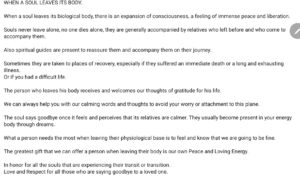 Death presents itself as both a humbling truth and an unmatched enigma in the tapestry of human existence. It is the ultimate equalizer, an inevitable reality every soul will face, and yet it holds an intensely personal resonance for each individual. When we speak of death, we are drawn beyond mere mortality into realms of mystery, transcendence, and spiritual awakening. To encounter death is to confront the boundaries of human comprehension, as well as the infinite possibilities that might lie beyond. Each person approaches death within their own context of beliefs, culture, and spiritual frameworks. For some, it is a cessation, a final farewell to physical existence; for others, it is a cosmic transformation, a passage to realms beyond the visible. Both science and spirituality grapple with the liminal nature of death, revealing that it is not merely an “end” but a doorway into deeper dimensions of awareness. While grief often shrouds the moments following death, these moments also offer an invitation to ask greater questions. What is our place within the interwoven cosmos? How do we prepare for this passage when it arrives at our door? Each individual answer to these timeless questions is a testament to the human spirit’s capacity for hope and reflection. The mystery of death has stood at the heart of humanity’s most profound cultural and spiritual practices. Across eras and civilizations, there has always existed a yearning to understand and make peace with the transient nature of life. From the intricate carvings within Egypt’s pyramids to the Tibetan Book of the Dead, ancient traditions have sought to guide their people through the sacred transition of death. These historical frameworks convey a shared truth—that death exists not to be feared but to be recognized as an intrinsic part of life’s cyclical nature. Ancient traditions perceive death as both a completion and a doorway, an invitation to reconnect with the greater reality of existence beyond the self. Today, blended with emerging scientific insights, these traditions hint at greater continuities between life and death being part of a larger, interconnected whole. For contemporary seekers, near-death experiences remind us of the profound and often ineffable aspects of death. These accounts of tunnels bathed in light, sensations of boundless love, and encounters with cosmic energy disrupt purely materialistic paradigms of consciousness. They suggest, albeit subtly, that life itself may exist well beyond the edges of what the mind can grasp. Quantum theories of consciousness, while speculative, provide a fascinating scientific lens through which to view the infinite and eternal aspects of the universe. Concepts such as entanglement and energy conservation suggest that the essence of our being, much like energy, is not destroyed but transformed. Death, then, becomes less of a termination and more of a transition into an unfathomable vibrational state. Just as beliefs about death influence individual perspectives, so too do they shape collective cultural responses. Mediterranean cultures often express grief through vibrant displays of mourning, while in Japan, understated reverence governs gentle rituals honoring the deceased. Latin American traditions, particularly Día de los Muertos, blend joy and remembrance, presenting death as an integral part of life’s rich tapestry. Through these diverse traditions, one insight becomes increasingly undeniable. Regardless of culture, the act of mourning is deeply sacred. Grief functions as an alchemical process, transmuting sorrow into acceptance, remembrance, and even celebration. It connects the collective past with the immediate present, transcending temporal boundaries. For those who engage with death through the lens of spirituality, the experience often transforms into a profound cosmic dialogue.
- Buddhism approaches death through the lens of impermanence, teaching that attachment to the physical form creates suffering. Buddhist death rituals focus on helping the deceased transition peacefully while supporting survivors in accepting the temporary nature of all phenomena. Meditation practices, chanting, and careful attention to the dying process reflect beliefs about consciousness continuing beyond physical death.
- Hindu traditions view death as a natural transition in the soul’s eternal journey. Complex rituals ensure proper passage between incarnations while supporting family members through prescribed mourning periods. The emphasis on dharma—righteous living—provides framework for understanding death as part of a larger cosmic order.
- Christian responses to death center on resurrection hope and eternal life promises. Funeral liturgies celebrate victory over death while acknowledging grief’s legitimacy. Different Christian denominations vary in their specific practices, but most emphasize community support and faith in divine love’s ultimate triumph.
- Jewish traditions honor both the deceased and the mourners through structured grieving processes. The immediate response includes sitting shiva, a week-long period of intensive mourning when community members provide support and care. These traditions recognize grief as sacred work requiring time, community, and ritual structure.
- Islamic customs emphasize submission to Allah’s will while providing detailed guidance for burial procedures and mourning periods. The community’s role in supporting bereaved families reflects Islamic values of brotherhood and mutual care. Prayers for the deceased and charity given in their memory demonstrate ongoing connection beyond physical death.
- Pagan traditions, with their earth-based spirituality, often view death as return to the natural cycles from which life emerges. Seasonal celebrations and ancestor honoring practices maintain connection with those who have died while affirming life’s continuity through natural processes.
These philosophies, diverse as they seem, share a unifying resonance. Death is not a loss to be feared but a movement within the sacred rhythm of universal transformation. The concept of surrender becomes paramount in these practices; to relinquish attachment to the finite is to unveil an awareness of the infinite. When death arrives suddenly, our well-crafted illusions of control dissolve. Many find themselves grasping to process what often feels beyond its grasp. This is where presence becomes a sacred act. It is less about answers than it is about bearing witness to suffering with compassion, holding space for the rawness of grief, without judgment or haste. Trauma responders and spiritual counselors alike describe their work not as an imposition of beliefs, but as a practice of neutrality and availability. Allowing someone to grieve on their own terms, unburdened by societal prescriptions or well-meaning platitudes, is itself an act of sacred respect. Where there is grief, there is also the potential for profound transformation, should one be willing to process the experience fully. When sudden death strikes, traditional support systems often prove inadequate. Families find themselves overwhelmed not only by grief but by practical necessities—police investigations, medical examiner protocols, media attention, and countless decisions that must be made while in shock. This is where organizations like the Trauma Intervention Program provide crucial support through their non-faith-based approach to crisis intervention. The essence of trauma intervention lies not in providing answers but in offering presence. Volunteers arrive not as experts in grief or representatives of particular religious traditions, but as fellow human beings willing to witness and support during unimaginable moments. This presence-based approach recognizes that what survivors need most immediately is not theology or philosophy, but simple human connection. The practice of emotional first aid requires extraordinary sensitivity. Volunteers learn to listen with their hearts rather than their heads, validating emotional responses that might seem irrational to outside observers. A mother’s anger at the deceased child for “leaving” her, a spouse’s guilt over an argument that now can never be resolved, a parent’s desperate bargaining with God or the universe—all these responses are honored as natural expressions of profound loss. Professional crisis responders understand that their role is not to fix or explain, but to create safe space for authentic emotional expression. This requires setting aside personal beliefs and opinions, allowing survivors to process their experience through their own spiritual and cultural frameworks. The temptation to offer platitudes—”everything happens for a reason,” “they’re in a better place now,” “God needed another angel”—must be resisted in favor of simple acknowledgment: “This is incredibly painful,” “Your love for them is obvious,” “You don’t have to go through this alone.” Effective emotional first aid also involves practical protection. Grief can impair judgment and impulse control, leading survivors to make dangerous decisions. Preventing a parent from running into traffic at the accident scene, gently redirecting someone away from the location where their loved one drowned, ensuring that important decisions are postponed until support systems arrive—these interventions can prevent additional tragedies. The goal is never to stop or minimize grief, but to create conditions where it can unfold safely. This might involve helping arrange for children to be cared for, ensuring that medications are taken appropriately, or simply staying present until extended family members arrive to provide ongoing support. One of the most delicate aspects of trauma intervention involves honoring the spiritual significance of death while maintaining neutrality regarding specific beliefs. Death is inherently sacred—not necessarily in a religious sense, but in its profound importance to human experience. Acknowledging this sacredness without imposing particular interpretations requires great skill and sensitivity. This balance manifests in how volunteers speak about the deceased. Rather than avoiding mention of the person who died, effective responders acknowledge their importance to the survivors: “Tell me about him,” “She clearly meant everything to you,” “It’s obvious how much love you shared.” These statements honor the relationship without making assumptions about afterlife beliefs or divine plans. The transition from crisis response to family support marks a crucial phase in the immediate aftermath of sudden death. The volunteer’s role gradually shifts from primary support provider to bridge between the family and their own support networks. Success is measured not by how long the volunteer stays, but by how effectively they help activate the family’s natural support systems. The moment when the deceased is transported from the scene to the funeral home carries profound symbolic weight. For many families, this represents their final opportunity to be physically near their loved one before funeral preparations begin. Trauma intervention volunteers help families navigate this emotionally charged transition, ensuring they have whatever time they need while coordinating with medical and funeral home personnel. This phase often brings a shift in the family’s emotional state. The active crisis phase begins to end, replaced by the long journey of grief that lies ahead. Volunteers help prepare families for this transition, connecting them with appropriate resources while ensuring their immediate support network is firmly in place. Grief, in its rawest state, unveils the depths to which we’ve loved. The pain of separation is inseparable from the beauty of connection. Through storytelling, rituals, and the sharing of memories, we restore resonance to what feels like absence. It is through remembering that the ripples of a life well-lived extend into eternity, carried forward in the loving words and acts of those left behind. This alchemy of grief reflects the wider principle that love and loss are not opposites, but rather complementary expressions of the same eternal energy. To love deeply is to willingly hold space for loss, trusting in its ability to foster growth, wisdom, and renewal. Ultimately, death’s greatest teaching may be to draw us closer into the present. To live consciously day by day, to honor our connections and serve with open hearts, is to prepare ourselves for the inevitable transitions. When viewed through the lens of cosmic understanding, every breath becomes sacred, every moment an expression of divine resonance. Death whispers to us a truth many spend lifetimes avoiding—that the finite is beautiful precisely because of its impermanence. What lies beyond may remain a mystery, yet in facing it with courage, we enrich and elevate the lives we lead today. Death, as much as life, requires reverence and reflection. It invites us to step into the sacred mystery of existence, to honor its cycles, and to trust in the interconnectedness of all beings. Whether through spiritual practice, philosophical exploration, or profound acts of presence, our collective engagement with death becomes a universal conversation that transcends cultures, faiths, and epochs. “How will you serve in the limited moments of human breath?” The response lies not only in one’s preparation for death but in one’s capacity to live. It is by living fully, and loving unreservedly, that we meet death not as an end but as an eternal companion, carrying us forward into the vast, infinite unknown.

Chapter 68: Death Becomes Us– Our Understanding of What It Means to Be Alive
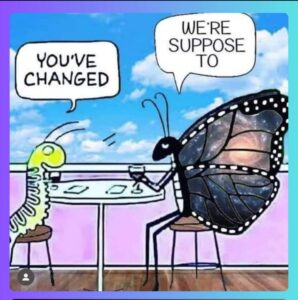
Death arrives first as an abstraction, a word without weight or meaning. Children hear it spoken in hushed tones, see it portrayed in cartoons where characters spring back to life, and encounter it as a concept so foreign that it might as well be describing colors to the blind. Yet somewhere between childhood’s innocent theories and the accumulated wisdom of age, death transforms from distant mystery into intimate companion, reshaping how we navigate the terrain of being human.
This transformation doesn’t happen overnight. It unfolds gradually, like a photograph developing in a darkroom, each experience adding clarity and depth to our understanding. The death of a beloved dog becomes our first introduction to permanence. A grandparent passing away teaches us about love that transcends physical presence. Years accumulate, and with them, a growing awareness that mortality isn’t just something that happens to others—it’s the thread that runs through every moment of our existence.
As we age, the mathematics of loss begins to shift. Where once we collected friends, mentors, and meaningful connections faster than death could claim them, we eventually reach a tipping point. The scales balance, then tip in the other direction. Grief, once an occasional visitor, takes up residence in our hearts. The question becomes not whether we will face loss, but how we will learn to carry it with grace.
Children possess a remarkable capacity for magical thinking about death. They ask if grandma will come back, whether pets go to heaven, and why people can’t just get better. These questions reveal something profound about the human psyche—our initial resistance to accepting the finality of death reflects a deeper understanding of life’s preciousness than many adults realize.
The transition from theoretical to experiential knowledge of death marks one of life’s most significant passages. That first encounter with genuine loss—whether it’s a beloved pet, a distant relative, or a friend’s parent—serves as an initiation into a more complex understanding of existence. The world suddenly feels less stable, less predictable. The protective bubble of childhood’s invincibility begins to show cracks.
Television news and global media accelerate this education. Images of tragedy, reports of disasters, stories of lives cut short flood our consciousness daily. Death moves from personal experience to shared human condition. We begin to understand that mortality is not exceptional but universal, not distant but ever-present.
This gradual awakening serves a crucial developmental purpose. Like the immune system building strength through exposure to pathogens, our emotional and spiritual resilience grows through encounters with loss. Each experience teaches us something new about love, impermanence, and what it means to be fully alive.
During youth and early adulthood, life operates under what we might call the “accumulation principle.” We gather relationships, experiences, and connections at a rapid pace. College brings new friendships, careers introduce professional networks, partnerships and marriages expand our circles of intimacy. The social fabric of our lives grows denser and more complex with each passing year.
Death, during these periods, feels like an outlier—tragic when it occurs but not the dominant force shaping our relational landscape. We have the luxury of believing in permanence, of making plans that stretch decades into the future, of assuming that the people we love will be there when we need them.
But mathematics is inexorable. As we age, the rate of acquisition slows while the rate of loss accelerates. Parents age and pass away. Colleagues retire or face health crises. Friends begin to disappear from our lives, sometimes gradually through distance and changing circumstances, sometimes suddenly through accident or illness.
This shift represents more than simple arithmetic. It fundamentally alters how we approach relationships and time itself. Conversations carry more weight when we recognize their potential finality. Moments of connection become precious rather than assumed. We begin to live with a heightened awareness of presence because we understand, viscerally, the reality of absence.
The emotional landscape changes too. Grief, once an occasional visitor that arrived, stayed for a period, and departed, becomes a more constant companion. We learn to carry multiple losses simultaneously, each with its own timeline and texture. The heart reveals its remarkable capacity to hold both sorrow and joy, remembrance and hope, all at once.
Mature grief differs qualitatively from the acute, overwhelming sorrow of youth. When we lose someone important to us as young adults, the grief often feels total and consuming. We have fewer reference points, less experience with the slow work of integration and healing. Each loss feels like the first, requiring us to learn the vocabulary of sorrow from scratch.
As losses accumulate, grief becomes more nuanced. We recognize its phases and patterns. We understand that it comes in waves rather than as a constant state. We learn that healing doesn’t mean forgetting, and that love persists beyond physical presence. Most importantly, we discover that carrying grief well requires developing new skills—not just of endurance, but of integration.
This accumulated grief creates a different relationship with the present moment. When we truly understand that everything we love is temporary, each interaction becomes more precious. The mundane conversations with spouses gain depth. Time spent with aging parents feels urgent and sacred. Even difficult relationships carry new possibilities when viewed through the lens of impermanence.
Yet this awareness brings its own challenges. How do we remain open to love when we know it will eventually lead to loss? How do we invest fully in relationships while accepting their temporary nature? How do we hope for the future while acknowledging uncertainty?
These questions don’t have simple answers, but they point toward a fundamental truth about human existence: meaning emerges not despite mortality but because of it. The temporary nature of our connections doesn’t diminish their significance—it amplifies it.
The question of hope’s value in the face of accumulated loss strikes at the heart of what it means to live consciously. Traditional hope often relies on the assumption that things will improve, that suffering will end, that our efforts will be rewarded with positive outcomes. But what happens when experience teaches us that loss is inevitable and that many of our deepest hopes may never be fulfilled?
This is where hope must evolve from wishful thinking into something more sophisticated and resilient. Mature hope doesn’t deny the reality of loss or pretend that death isn’t coming. Instead, it finds meaning in the experience itself, regardless of outcomes. It hopes not for permanence but for presence, not for control but for grace in the face of uncertainty.
Trust, too, must be redefined. Rather than trusting that life will unfold according to our preferences, we learn to trust the process itself—the mysterious unfolding of existence that includes both creation and destruction, love and loss, beginnings and endings. This kind of trust requires a fundamental shift in perspective, from seeing ourselves as separate individuals trying to control our circumstances to recognizing ourselves as participants in something much larger and more complex.
This evolution in hope and trust enables a different kind of engagement with life. We can love fully while accepting impermanence. We can make plans while holding them lightly. We can grieve deeply while remaining open to joy. We can face uncertainty without being paralyzed by fear.
The challenge of aging consciously lies in developing what we might call “spiritual presence”—a way of being that acknowledges reality fully while remaining open to transcendence. This differs dramatically from denial, which requires us to ignore or minimize difficult truths, and from fantasy, which asks us to believe in outcomes unsupported by evidence.
Spiritual presence emerges from the recognition that our deepest identity transcends our physical form and temporary circumstances. This doesn’t mean believing in specific doctrines about afterlife or divine intervention. Instead, it means cultivating an awareness of the mysterious dimension of existence that goes beyond what we can measure or control.
This awareness changes how we approach daily life. Simple activities—sharing a meal, watching a sunset, listening to music—can become doorways to transcendence. We begin to recognize that every moment contains infinite depth if we approach it with sufficient attention and openness.
The key is learning to hold both perspectives simultaneously: the practical awareness of mortality and limitation alongside the spiritual recognition of mystery and possibility. This isn’t about escaping reality—it’s about engaging with reality more completely, including dimensions that our culture often ignores or dismisses.
As death becomes more familiar, life reveals its sacred dimension more clearly. The ordinary moments—morning coffee, phone calls with friends, quiet evenings at home—are no longer just pleasant interludes between more important activities. They become the substance of existence itself, each one unrepeatable and precious.
This shift in perception represents one of aging’s greatest gifts. Where youth often seeks intensity and novelty, maturity discovers richness in simplicity. A conversation with a longtime friend carries decades of shared history. A walk in the neighborhood reveals seasonal changes that young eyes might miss. Even solitude becomes a companion rather than something to be avoided.
The cultivation of presence becomes both a practice and a way of life. We learn to show up fully for whatever is happening, whether joyful or sorrowful, exciting or mundane. This presence doesn’t eliminate suffering, but it transforms our relationship to it. Pain becomes more bearable when we stop trying to escape it. Joy becomes more vivid when we stop trying to possess it.
Perhaps the greatest paradox of human existence is that meaning emerges most clearly when we accept meaninglessness as a possibility. When we stop demanding that life provide us with predetermined significance and instead remain open to discovering significance through lived experience, everything changes.
The temporary nature of our existence doesn’t diminish its value—it creates its value. A song is beautiful precisely because it has a beginning, middle, and end. A flower’s brief blooming contains more poignancy than an artificial bloom that lasts forever. Our relationships carry depth and urgency because we know they won’t last indefinitely.
This acceptance doesn’t lead to despair but to a different kind of freedom. When we stop trying to make permanent what is inherently temporary, we can engage more fully with what is actually available to us: this moment, this breath, this opportunity to love and be loved.
The wisdom that emerges from this acceptance is hard-won and deeply personal. It can’t be taught through lectures or learned from books alone. It develops through the patient accumulation of experiences, losses, and small revelations. It grows in the soil of uncertainty and is watered by tears both bitter and sweet.
Death, rather than being life’s enemy, reveals itself as life’s teacher. Every encounter with mortality—whether our own or others’—offers an opportunity to understand more clearly what it means to be alive. The fear of death often masks a fear of not having truly lived, and confronting mortality can catalyze a commitment to authentic existence.
This doesn’t mean living recklessly or abandoning practical concerns. Instead, it means approaching each day with the awareness that it’s both ordinary and extraordinary, temporary and eternal. It means loving more boldly, speaking more truthfully, and paying attention more carefully to the miracle of consciousness itself.
The gateway metaphor is particularly apt because every experience of loss opens us to new dimensions of existence. Grief carves out spaces in the heart that can later be filled with compassion. The experience of impermanence makes us more grateful for what remains. The proximity of death makes life more vivid and immediate.
As we stand at various gateways throughout our lives—some opening onto loss, others onto unexpected joy—we learn that the real art lies not in controlling what lies beyond but in approaching each threshold with courage, curiosity, and open hearts.
The conversations we need to have about death, meaning, and presence are not morbid or depressing. They are among the most life-affirming dialogues possible because they help us distinguish between what matters and what merely seems urgent, between genuine aliveness and mere busyness, between authentic hope and wishful thinking.
Your journey with mortality and meaning is uniquely your own, shaped by your particular losses, discoveries, and moments of grace. Yet it’s also universal, connecting you to every human being who has ever wondered about the purpose of temporary existence or searched for significance in the face of uncertainty.
Take time to reflect on how these ideas resonate with your personal journey and what steps you might take toward greater acceptance and spiritual presence in your own life. The conversation about mortality and meaning doesn’t end with this book—it continues in the laboratory of your daily existence, where every moment offers new opportunities for exploration of the spiritual galaxy accompanied by grace, while living your life on infinite bandwidth.
Chapter 69: Life, Love, and Death on Infinite Bandwidth
All that is gold does not glitter,
All that is gold does not glitter,
Not all those who wander are lost;
The old that is strong does not wither,
Deep roots are not reached by the frost.
From the ashes a fire shall be woken, A light from the shadows shall spring; Renewed shall be blade that was broken, The crownless again shall be king. —J.R.R. Tolkien We have arrived at the final chapter of my guided tour of our spiritual universe. If you made it this far, you have more than brushed against the life lived on unlimited bandwidth. Just consider those 600 pages you read as guiding lights and the necessary sights along the way to your personal experience of the spiritual universe we all may inhabit. On the path of awakening, there are endless special sights for the soul to behold. Prayer, dreams, visions, and a deeper understanding of our histories can become integral parts of this eternally unfolding scenery. I no longer seek light in the darkness. I have found my light, one that dispels the shadows of others and of my past. This book is my evidence and experience of a power and a life greater than any limited sense of self. Though I lost my childhood dreams, I lived into new ones, where I learned how to explore the spiritual galaxy that is our true home. This world transitioned from a living hell to a peaceful paradise where I became a conscious traveler through the infinite regions of inner space—Consciousness itself. My spiritual launching pad awaited my letting go of the controls to be catapulted into the mysterious, healing potential of the infinite. My spirit rocket now lifts off daily, unencumbered by religious and cultural conditioning. Love and acceptance of myself and all others, including all animal life, is my primary, life-affirming propellant. To find the light of truth, we must release ourselves from the control of the crowd—whether it’s the crowd of old thoughts or those who blindly follow others. To be guided by the Universe’s infinite bandwidth into love, transformation, and higher intelligence requires cutting all ties with ideas that keep us pilloried to the past. Words like “strange,” “mystical,” and “transcendent” are often used to describe the phenomena associated with this spiritual liberation, a freedom that words struggle to define. Life can be an extremely humbling experience. As a young man, my dream was to be an astronaut, to explore the farthest reaches of space. I held onto that dream until self-destruction came to define much of my teenage years, with my childhood hopes exploding on the launching pad of life. Dysfunctional relationships created through poor self-esteem, despair, judgment, alcohol and drug abuse, and mental illness are not the proper fuel to launch a life into Love’s Great Unknown and live a life on its unlimited bandwidth. Even if you are lost in the shadows, walking on your own dark side of the moon, there is still hope. Every healing dream begins as a wish for a better life experience, be it better health for us or for our relationships. Hope is the vague expectation that something better might happen, yet we are not yet sure how to help our cause. While overcome with disease, my dreams and hopes for a better life waited for the day when I truly opened up to the possibility that a new life experience was possible. This wait for a better day eventually bore great fruit, but it was not passively acquired. I first had to confront my own suffering and the sources within my mind and heart that pushed me toward self-annihilation. I had to embark on a search for Truth and experience a spiritual renaissance. Suffering need not be a death sentence for those who choose to awaken. Mass hypnosis, oppression, mental illness, and addiction—and their most oppressive spawn, suicide—have long been scourges upon human consciousness. These afflictions begin with a loss of meaning and purpose, accompanied by depression, alienation, and despair. Drug overdoses and suicide are ultimate acts of self-oppression and are cruel acts of violence against oneself and the community. Yet, for those who feel they have reached the end of their options, they are perceived as the only solutions. Society continues to churn out despairing and lonely people, and drug abusing and potential suicide victims at a catastrophic rate. I have known and buried too many friends and family who were waiting for a better day while abusing substances, oppressed by short-sighted agendas, or collapsing into mental illness. The statement a drug overdose or suicide victim makes about our diseased society is almost impossible for a confused, non-self-reflective civilization engaged in a continuing conspiracy of silence to process. To be insane in an insane world is the new normal for many. How we deal with this insanity determines whether we remain imprisoned or find freedom. Blaming others is self-defeating, the first response of an immature mind unwilling to make the necessary course corrections. To make dramatic changes, the desire had to come from deep within me. I did not change because others told me to. I had to value myself differently and become conscious that my behavior was causing irreparable harm. I understood my behavior was insane, that I had a death wish. I sought a higher power within myself to overcome it. Most forms of insanity can be healed without a lifetime of therapy or medication if we recognize that their source is our psychic pain bodies—habituated thoughts and feelings from spiritual wounding. Insight reveals these pain bodies, and through seeing, healing arises. With our internal headlights on bright, we can change our attitude, our behavior, and our lives. To change my world, I first changed myself through insight, meditation, and making amends. I continue to die daily to all that is not my true nature. Healing a situation is about recognizing what we are not doing well and where we can improve, right now. Positive change follows the heart’s intentions, if the heart is pure. If it is a desire from the Heart, never stop seeking what seems unattainable, for it is the Heart itself seeking its own highest expression. Those blessed few who stop resisting and accept defeat are the most susceptible to healing. When we are defeated, we become most receptive to life-affirming change because we finally see the futility of continuing a life directed by our accrued knowledge. Then we can accept personal responsibility, knowing that the willingness to change our attitudes and behaviors can become our higher power. I do not need pills or philosophies to separate me from life’s goodness. I now see the good that is truly good, and all the illusions of self that I and others offer up for conditional acceptance. Built into the fabric of life is death itself. Up to fifty trillion cells in our bodies are constantly dying and being replaced so we can live and evolve. So too must our old thoughts die off, replaced by newer, more vibrant creations. Those who do not do the work to shed the old ways will remain susceptible to disease and deterioration. It is impossible to be present in the past or future, though we can draw from the past to find the source of our issues. How long dare we wait until NOW unfolds in our lives? I have seen that our collective consciousness is filled with suggestions and temptations, many revolving around fear, diseases of the body and mind, and mutual distrust and the rejection of our spirit of love. Yet, within this mysterious energy field lies an infinite potential for healing and transformation. Our thoughts and prayers often hold life-affirming potential, yet their power is presently insignificant compared to the underlying intentions of our collective consciousness. The path to conscious awareness and miraculous healing involves sorting our true thoughts from the stray noise of the human energy field and protecting ourselves from the dangerous frequencies we tune into, intentionally or not. One need only witness the mind-numbing statements from 2nd Amendment promoting Christians, politicians and gun dealers after daily acts of gun violence to understand this. I want no part of their collective consciousness of abhorrent thoughts and prayers, which emanate from cowardly, hateful minds. To not do so is to continue our collective experience of war, hatred, economic inequality, racism, and mental illness. We are free to choose which energy to manifest. If we do not want the diseased status quo to lead to our collective Armageddon, we must all make necessary changes to the paths we now follow. I have attempted to capture lightning in a bottle by articulating this message. May none of us despair in our attempts to reach for this energy populating the universe’s infinite bandwidth and express its love. To live a better life, we must access new parts of our infinite self. A primary law of consciousness is that “We find what we are looking for,” so be sure to look for what you truly want, not what others suggest. We must explore spiritual possibilities, lest we remain addicted to our old ways of interpreting the world. Can we experience a spiritual awakening where we accept a new way of being, of seeing life, and finally free ourselves from the limitations created by our time-based thinking? Can we approach life not from our conditioned backgrounds, our childhood wounds, or even our most educated minds? Will we allow ourselves the immense uncertainty—and ultimate privilege—of accessing new paths of consciousness where love, empathy, and compassion are our eternal companions? If we could move past our collective discomfort, we might learn something about mercy and justice and connect with a majesty that transcends our limited vision. We might finally know “God,” “Buddha,” “Allah,” and “Our Self” not as separate concepts, but as parts of a great whole. For I am about to create new heavens and a new earth; the former things shall not be remembered or come to mind.— Isaiah 65:17 Always remember that WE—all of humanity—are the “I” in that verse, once we make conscious contact with the ultimate truth of existence. Theoretical physicists now recognize the possibility of alternate universes and enhanced connections within our own. Science defines the laws governing what we can observe, but unlike enlightened spirituality, it offers no principles to predict or support humanity’s potential. We won’t fully understand quantum mechanics until we replace our self-centered perspective with the understanding that the individual, the collective and the cosmic self all exist within each of us at every moment. The impact we have on one another is not yet fully understood, but practices like prayer, meditation, and mindfulness prepare the mind for the unknown, where all true creation originates from. Being human is a far more collaborative effort than our conscious minds currently grasp. I am saddened that humanity is becoming more dependent on technology for communication while failing to develop the sensitivity to connect with the shared energy that continuously flows between us. Our handheld devices, used for entertainment and self-hypnosis, often just perpetuate the past, offering no real alternatives to the corrupted choices humanity seems resigned to making. Technology is only a tool, though it has become a new world religion for many. Our world shows the collective effects of failing to meet our spiritual needs. The world exists in a state of hypnosis. We can pull our eyes from the phone display for a moment and engage the person next to us. We will all benefit. The quickest way to prepare for the new world order is to get outside and acquaint yourself with the great outdoors. Free from daily encumbrances, we may be more receptive to the call of our spirit. We are not connected to God through our technology; in fact, it often separates us from the quiet state of being that allows God’s will to be accepted. Our mother Earth, Gaia, is a living being. God’s face is seen clearly once the detritus of human misunderstanding is moved aside. Ultimately, science, religion, medicine, and technology will unite as expressions of mankind’s true being. “We need a real awakening, enlightenment, to change our way of thinking and seeing things. To breathe in and be aware of your body and look deeply into it, realize you are the Earth, and your consciousness is also the consciousness of the Earth.” ~Thich Nhat Hanh Mysticism is at the core of all true religions. I remain concerned about the unaware ignorance prevalent in our society, including within the American Christian church. Using a church to get to the truth can be like using an old Volkswagen Beetle to drive around the world with an outdated map. While Christianity offers comfort, for many of us it is a clumsy vehicle for consciousness, with restrictive dogma that postpones a conceptualized heaven to a fantasy future after death. Much of present-day Christianity has strayed far, far away from Jesus of Nazareth’s message, instead becoming an arm of politicized power and an agent of the anti-Christ. Religions, however, often move in tight circles, excluding others. Those who point to non-religious spiritual enlightenment are often regarded with suspicion, even as manifestations of evil, by those who claim to be religious. The experience of enlightenment allows for love for all people and respect for all love-based philosophies yet promotes no single dogma. The prerequisites are a desire for change, self-honesty, insight, and the ability to see beyond cultural mirages. Each of us is a mystic once we shed the oppressive energies of conditioning. Each of us should become the leader of our own internal movement toward truth, beauty, and love. What is the difference between the mind of God and the mind of man? The answer is there for you to discover. Never accept my answers without your deepest inquiries. The trail each of us blazes is as important as any path made by any prophet. It is only our ego, or the egos of hero-worshipers who have not realized their highest truth, that would say otherwise. This book has presented only a portion of my journey. As each individual is unique, do not use my experience to minimize or maximize your own. We must find our direction, learn to think for ourselves, and also learn to think and feel with others. We can be one with others in a non-controlling, non-judgmental manner, with compassion and in communion. I value who I am, not who I was or what I might become. The mind must be clear so the heart can hold others near. It is healthy to acknowledge that we need each other. I cannot do this life alone. Each moment can be a new beginning or a continuation of a painful past. It is our choice. I must be willing to travel new paths of consciousness and not become too attached to any particular teaching. It is up to me to work out my salvation. When I let go of the controls, of time-based expectations, and trust the life force that has always supported me, I am truly free. While in human form, we can only witness the projections of our minds, individually and collectively. All we will ever see is ourselves. So, the most important question is, “How will I see myself today?” The answer determines whether I see through the eyes of truth or the limited eyes of an oppressive, failing culture or a dead past. Each person I meet is either an infinite manifestation of God, deserving ultimate respect, or another illusion of my conditioned mind. Insight gained through self-examination can erase the blocks to Love’s awareness. Why settle for Zen Buddhism’s cautionary teaching about our fascination with words, or the “finger pointing at the moon”, when you could delight in life’s unique and direct light without a mind clouded with verbiage? Be ever vigilant with the internalized image of anything or anyone. Note how the desire for the image, rather than the truth that underlies it, will distort your view. Lust, greed, and hatred all play to the structure of individualized images. Seeing each other through wholeness and love disempowers these fragmenting images. This is another way of saying “giving forgiveness,” which allows for right action in a broken world. The ultimate truth is that “You can’t be real.” Do not be threatened by that truth, be inspired by it! In God’s eyes, there is only One Self, one love, one existence. There is no room for you and me in ultimate truth, though we must make room for humanity’s favorite illusion through forgiveness until the final ascension into enlightenment. Finding the true connecting link is the journey our human race must undertake to survive. When we see our brother and sister as our self, then we are at the doorstep to our real home. This link is not found through digital devices or our best thinking. It will unfold when we have a direct experience of ultimate reality and learn to think eternity-based thoughts. The longer I have lived on the healing frequencies of infinite bandwidth, the more anonymous I have become, and the more my story has become about the truth of life. My story may have little value to you, yet there is a story long neglected within your own heart, patiently awaiting its delivery. Your world awaits the King or Queen within you. You only need to pick up your own unique crown of truth and wear it with integrity and love while accessing Infinite Bandwidth. Never let someone speak for you; you are responsible for bringing your voice into the world. Never take for granted your right to freedom of speech. Find a way to express yourself without sacrificing your integrity. You will cast your pearls before swine. Our hard-earned truths have little value to the hypnotized citizens of this diseased culture if they cannot see how your wisdom will increase their bank accounts, prestige, or appeal to their ego. “A prophet is never respected in their hometown.” It is vital to remember two great acts of insanity that are integral to the Conspiracy of Silence, the Silence that keeps us all stuck to the whipping post of collective ignorance and denial. One is the perception that we are all of questionable value, a classic component of Christian religion within the Common Knowledge Game. This error in thought either goads the follower into cult-like obedience to their congregation’s misunderstanding of Jesus’s teachings or creates so much suffering for others that they either self-annihilate, wallow in despair, become depressed, over-immerse in entertainment and distraction, become over-achievers or overly competitive, or, for the one with real curiosity, begin a search for truth to find their real value. The number two component of the conspiracy of silence is that our individual voice does not have any real value, and that we should defer to the prevailing powers of the age, be they religious, spiritual, political, familial, cultural, or economic, and hope that they speak up for us. These are critical parts of the conspiracy of silence. We become invisible to each other, less curious about others while becoming unwilling to communicate with each other, and therefore we remain less curious about ourselves. We become invisible to ourselves when we sit on our voices and fail to listen to our essence as our inner voice cries out for justice, peace, healing, collaboration, and change. The conspiracy of silence is built right into the framework of our collective consciousness. Dead men tell no tales, but the rest of us must continue to tell our stories, with respect for ourselves and others, until our civilization finally wakes up. To not express ourselves honestly and openly results in our early demise, spiritually as well as physically. We each must penetrate the conspiracy of silence and bring the light of a loving heart and healing words to the hidden darkness. My conditioned response would be to keep silent, as I have nothing of value to share with the world, and/or the world could give a shit about what I have to say anyway. Extrapolate that response to all of life, and we can perceive the isolating framework that imprisons much of the American male psyche. Always question the prevailing attitudes of those in power. Healthy skepticism is warranted when any person or organization pressures individuals to conform. Never sit idly by while witnessing injustice. By your silence, you support the ignorant and the evildoers. Do not join their conspiracy of silence. To remain healthy, we must be willing to “punch a Nazi,” figuratively speaking—not those projections from our own wounded past, but instead the real-world antagonistic elements now embedded within society. We first deal with personal issues through self-insight and enhanced communication and then take our spiritually empowered voice to the world. The light of our country, though still burning brightly for the healing and the hopeful, still attracts all manners of darkness to it, as evidenced by heartless terrorists, sociopathic billionaires and overzealous capitalists, and MAGA politicians victimizing our most innocent of beings. While witnessing victims of persecution and oppression within our own homeland, including our immigrants, minorities, homeless, mentally ill, children, old, diseased, poor, disabled, sacred animals, or environment itself, it can be difficult to feel the miracle of life that is constantly with us. Yet, to not have that experience, is to live a life devoid of much of the greater meaning available to us as human beings. Taking dominion over the world and destroying it was never part of God’s will. It was always part of a worn-out patriarchal attitude that still pollutes human awareness. The greed and self-serving interests of our ancestors have been glorified over the preservation of our planet. Our politicians and corporate leaders use our economic system to pillage the Earth. The mark of the beast is seen daily in the attitudes of those who promote environmental destruction and incite hatred. The American male carries most of the self-destructive, earth destructive, socially destructive, and feminine destructive energy within humanity, while paying a huge spiritual and physical price for the errors in both the presentation of our lives to the world and the experience of others’ contributions to our own lives. We, as a gender, continue to carry the historical fallout from many generations of intergenerational trauma, callous indifference to the needs of others, and neglect of our own spiritual needs for wholeness, love, healing, and compassion.
“Hope has two beautiful daughters; their names are Anger and Courage. Anger at the way things are, and Courage to see that they do not remain as they are.”-St. Augustine of Hippo.
Healthy anger at injustice is not only acceptable but required for honoring the truth and retaining spiritual integrity. Do not follow those who claim all anger is hatred, as that is not true. Anger becomes dangerous when it arises not from the moment, but from religious and cultural conditioning. Institutionalized anger, or hatred, is born of memory, inadequate education, and emotional immaturity. It is stoked by leaders with ignorant and divisive agendas and is the source of racism, xenophobia, war, and cultural insanity. Freedom may not be for everybody now, but it is for me, now and for all eternity. I am grateful for my wife, Sharon White, who shares in this new/old insight. May all sentient beings be freed from their suffering. But first, they must become conscious of the options available. Pay attention to the person behind the curtain. Get to know that person at the deepest level. And then, do not give up finding truth, beauty, and love until the real Miracle appears in your life. Like my father asked when I was nearly four and finally learned how to talk: “Will that boy ever run out of things to talk about?” and “Bruce, would you please shut up!” Once I started talking, I proved I had the capacity for a lot of speech. Yet, my voice disappeared after years of oppression. The long-term effects of the conspiracy of silence that prevents our access to Universal Bandwidth plaguing will continue to limit our potential for happiness, longevity, and love. That was certainly the case for my life, which nearly ended at thirty years of age. I am humbled by the miracle eternally embedded in Sacred Silence, as well as its bridge to human consciousness through the Word. May the Word take a form unique to each of us and lift us into a unity of love and a new shared story of world healing. May the Word spontaneously arise from our Sacred Silence, not from the chaos of our troubled past. As I contemplate my life, a simple truth arises. Silence born of ignorance brings suffering. Silence born of healing brings joy and love. This same Silence brings the capacity to listen with the heart for the deepest meaning in all of life and returns dignity to each sacred manifestation. Those who learn how to truly listen are able to hear the voice for God. We finally get to live in the creation Love provides when we accept Love’s vision as our own. This is a life lived on Universal Bandwidth. And, no, Father, in whatever form you may take, I will never shut up.
CAN YOU HEAR ME NOW?
Is anybody really listening? Have we given up trying to communicate with those who trouble us? We all have had problems listening to each other and to ourselves. Yet, our stories must be told, and we must listen to the “other’s” story with respect and compassion. Every good story has an ending, and so do our bad ones. What value is a story if never told? What value is love if never shared? What is the value of speaking if nobody is listening? We all have infinite value, whether it is ever recognized by another or not. Discover, enjoy, and celebrate Infinity, rather than the limitations thrust upon us by the deafness of our culture and families. Sing your song like your life depended on it, because it does. All our lives depend on each other’s stories. Those who will not listen to our story, and will not share their own, are still stuck in their story of repression. They are unconscious participants in our culture’s Conspiracy of Silence. The sun shines, and the artist interprets its light upon the beautiful landscape, and paints a classic piece of art. The wolf howls in the lonely, cold, snow-covered wilderness, and, miraculously, another wolf a great distance away howls back at him, reassuring both that each other is still there. The bird sings alone in the forest, yet, a hiker stops for a moment, listens, and her heart begins to sing and soar with the bird. The divorced and lonely man sings in the shower, and the salesman at the door hears him, and is so impressed by the man’s voice that he encourages him to try out for a local band. An isolated man stumbles upon the miracle of silence within his being, and a resultant bridge of words subsequently connects this sacred silence to his latest writings, creating poetry and healing balms for all. As I look at my life’s history, I bear witness to Love and its healing Mystery. I have penetrated the Conspiracy of Silence and have lived well beyond my expiration date. My miracle experiment continues in earnest. I have found my home on the universe’s infinite bandwidth.
My world can never be the same.
How about yours?
Chapter 70: Breaking the Illusion of Control: A Path to Liberation (maybe superfluous, eerily similar to Enlightenment)
 Oh seeker of Truth, God’s high mount you would climb. Yet still stumbling through the valley’s ever-shifting sands of time. While confused by our culture’s twisted rhyme and reason Which are eternally charged by Truth with treason.
Breaking the Illusion of Control: A Path to Liberation
The world around us appears meticulously structured. Every rule, every system, every intricate mechanism seemingly crafted for the people it serves. But what if this is an illusion? What if the obsessive need for order, for certainty, and for control is not evidence of a system “for the people,” but a reflection of the very limitations we impose upon ourselves? What if, instead, it is a façade crafted by a society that mirrors its own collective disease?
Let us now explore the human compulsion for control, the societal mechanisms that reinforce it, and the liberation that arises from detaching ourselves from this false sense of certainty. We’ll examine how relinquishing control fosters trust, fluidity, and a deeper connection to the unknown forces of life.
At its core, the human desire for control stems from fear of uncertainty. We demand order because chaos reminds us of life’s unpredictable nature, its fragility, and its impermanence. Consider the way individuals meticulously plan their lives or attempt to shield their loved ones from harm. These actions, while seemingly benign, are part of a larger addiction to certainty.
This addiction becomes a personal prison. It convinces us that the more we control, the safer we are. Yet ironically, the tighter we hold on, the more life slips through our fingers. A tightly held belief in control stifles spontaneity, creativity, and the ability to adapt. It forces us into conformity, aligning with a societal rhythm designed not for individual growth, but for collective compliance.
Oh marionette’s dancing image on the screen of our world’s mind,
With culture’s toxic beliefs in control, what freedom could you find?
Release yourself from their ever-controlling, binding strings,
To prepare for a new wisdom that only an awakened intelligence brings.

Take the example of modern society’s obsession with productivity. We construct elaborate systems to maximize output, meeting quotas, deadlines, and standards at the expense of well-being. While these systems are heralded as tools for human development, they also serve as chains, binding us to routines that restrict our natural flow.
The same applies to personal life. From meticulously planned family schedules to unwavering career paths, we operate under the illusion that control equates to fulfillment. Yet, as many discover, a life overly managed often feels hollow and stifling, devoid of the serendipity that makes life vibrant.
The societal systems we create are mirrors of our inner lives. A society obsessed with control reflects individuals obsessed with maintaining certainty. This collective mindset perpetuates a “disease” that feeds upon itself. The tighter society enforces conformity and predictability, the more individuals subconsciously adopt these traits.
This societal ailment thrives on fear, enforcing rigid norms and discouraging deviation. Systems appear to “serve” people, yet their true function is to maintain structure, suppress individual unpredictability, and align people to a singular vision of stability. This is not a system designed for growth—but one designed to contain the unknown.
Oh mental marathonner, on culture’s treadmill you stand.
The absolute accommodation to its needs makes you another also-ran.
Forever chasing in vain this moment’s all-knowing voice,
Be still, for with the run’s end, you will find cause to rejoice.
Education systems exemplify this principle. Children are taught to conform to rigid styles of learning, with creativity and curiosity often taking a backseat to measurable results. Similarly, societal success is often defined by predefined milestones such as homeownership, career advancement, and retirement plans. While these milestones may appear to honor individual prosperity, they often bind people to a specific path, limiting exploration of alternatives.
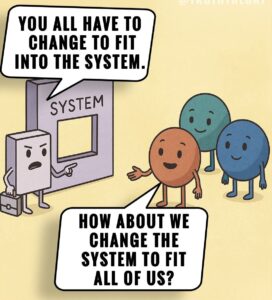
The social structures we have normalized discourage questioning and risk-taking in favor of comfort and predictability. People are encouraged to remain safe within boundaries, never challenging the system or, more importantly, themselves.
If control is what binds us, trust is what sets us free. Trust requires us to relinquish the need for constant certainty. It invites us into the unknown, where spontaneity and opportunity reside. Trusting life means acknowledging that we cannot anticipate every challenge and, more importantly, that we don’t need to.
Oh stream of life, with twists and bends,
Why resist the path to which it sends?
Flow freely, unbound by fear,
And find the Truth forever near.
When we release control, we do not fall into disarray but instead align ourselves with life’s natural rhythm. We become receptive to what is, rather than clinging to what we think should be. This is where true liberation begins.
Fluidity allows us to move with life rather than against it. Imagine water flowing through a stream. It adapts effortlessly to rocks, bends, and obstacles without contention. Humans, too, can embody such fluidity by cultivating mindfulness and surrender.
For example, a person facing a career transition may instinctively cling to familiarity, resisting the change. By trusting the process and taking action with an open mind, they may discover new opportunities they never imagined.
Trusting the unknown requires faith in forces beyond our comprehension. For many, this may mean a connection to spirituality, intuition, or simply life itself. Trust is not passive; it requires active engagement with the present moment, an openness to change, and a willingness to confront discomfort.
Through trust and fluidity, we dismantle the societal and personal constructs of control. This process is not about abandoning responsibility or logic but about harmonizing with life’s unpredictability.
Detaching from control can feel destabilizing, even frightening. Yet, it is this very discomfort that holds the key to personal and societal growth. By confronting our fears of uncertainty, we gain the power to redefine our lives—not as rigid routines but as dynamic, evolving experiences.
The path to liberation is one of self-discovery, trust, and surrender. It is an acknowledgment of the limits of control, the acceptance of life’s impermanence, and the recognition of the immense potential hidden within the unknown.
Trusting life is, in many ways, a rebellion. It opposes societal norms that value rigidity over exploration and conformity over authenticity. It challenges the diseased structures of a control-obsessed society and dares to seek something more profound.
Trusting the unknown forces is not a passive retreat but a bold step forward. It frees individuals from the constraints of social expectations and allows them to live in alignment with their true selves. This act of liberation ripples outward, planting seeds of change within society itself.
The path to freedom from control begins with small, deliberate steps. Reflect on the areas of your life where control feels strongest and ask yourself: What would happen if I surrendered just a little? Explore practices like mindfulness, journaling, or meditation to cultivate trust and self-awareness.
True liberation requires unshackling ourselves from societal constructs and daring to trust the forces that lie beyond comprehension. It’s in this trust and surrender that we find fluidity, growth, and ultimately, freedom.
Wake up to love’s voice, sweet somnambulator,
Realize the Truth, your real Identity is greater,
Than any controlling image society forced you to learn,
Life then reflects back that for which your heart has yearned.
Enlightenment
If we awaken from the dream of separation from our true and noble nature, we become spiritually healed, and life’s beauty, awe, mystery, and majesty can predominate. With our awakenings, the one true God witnesses’ life through our eyes with us. Otherwise, our lives remain dimmed while we live a second–hand life experience. So, let us consider some general questions.
- Why do so many people suffer from poor self-esteem?
- Why is there so much pain, suffering, loneliness, and disillusionment in America?
- Why is America enveloped in such divisive and hateful political discourse?
- Why is there so much disease, mental illness, alcoholism, addiction, suicide, and murder?
And, let us consider some personal questions.
- Do you understand that we all have an innate capacity to make dramatic, positive life changes?
- Do you have an intense desire to help yourself and your world?
- Do you know who you are beyond what the family and culture think and what you came to this planet to do?
Don’t you know that your body is the temple of the living God? Don’t you know that you are the light of the world?—Jesus of Nazareth Who does not want to be a light in their world? Do we even know what that question indeed implies? The art world has attempted to capture what an individual living in the light might look like. Over many centuries, we have seen artist’s renditions of saints and sages, with paintings often showing the blessed person as having a golden light about them, usually concentrating around the head.  Is this “divine light” phenomenon real, or only the artistic interpretations represented within art, science, religion, and philosophy? The physiological Truth about humanity is that humans can emit light through bioluminescence, yet that light is not readily witnessed by normal human eyesight. Humans do not innately embody luciferin, which would give us the capacity to glow like fireflies. Yet what about that inner glow that erupts within one’s heart and soul when finally touched by transcendent spiritual power? This book has presented my evidence for an experience of power and life more significant than any limited, personal sense of Self. I no longer look to the darkness for the light. I found my light, a light that dispels the darkness of others, their religions and economic philosophies, and the darkness of my historical Self. As we find the light of Truth, there is a release from the controls of the crowd, whether it is the crowd of old thoughts or the crowd that blindly follows others. Strange, mystical, exotic, transcendent, and mysterious describe phenomena associated with discovering such light and freedom, a spiritual liberation that words struggle to define. “Set your course by the stars, and not by the fading lights of passing ships“—-Omar N. Bradley. As the 21st century rushes forward, humanity is becoming increasingly dependent on its technology for communication while not concurrently developing the sensitivity to connect with the “energy” that we all share and with which we communicate continuously, albeit mostly unconsciously. Our technology, especially the hand-held media devices that we use to entertain and hypnotize ourselves, only continues the energy of the past without offering alternatives to the present collection of corrupted choices that humanity has seemed eternally resigned to making. Though able to define relationships and the laws that dictate behavior between all observable and quantum phenomena, science is only now beginning to understand the ramifications of the fundamental law of our existence: “All that we will ever see, unto eternity, is ourselves.” Theoretical physicists now understand that there are possibilities for alternate universes, yet they still have yet to fully define the opportunities for enhanced connections with the one we all currently reside within. Science provides laws for what we see, yet, unlike enlightened spirituality, provides no laws predicting or supporting what is possible for humanity. Quantum mechanics cannot be fully understood until the self-centered perspective towards infinity is replaced with the understanding that the collective and the individual are present in each of us, in each moment of existence, and influence all of our observations. Ultimately, science, religion, medicine, and technology will all unite as manifestations of humanity’s expression of our highest potential, and then the miraculous potential of a healed collective consciousness will be evident to us all. The impacts we all have upon each other are not yet fully understood, yet prayer, meditation, and mindfulness prepare the mind for the unknown, where all true creation springs from. Because of the nature of consciousness itself, it is a much more collaborative effort being a human, and any other form of conscious life on this planet, than our minimally conscious minds understand now. It is incredible how much of the human ego is devoted to recognition when there were shortages of loving attention early in life. We create our ego from our desperate call for Love from a world that has not yet learned how to love. Our world has over eight billion human egos, all seeking the fulfillment of their desires. Which of our desires bond us together in Love, and which separate us in mutual antagonism? The most significant question remains: why care, or why bother? Our universe’s sacredness and sanctity depend on our recognition of who we are and how we express our understanding of that connection. Therein lies the absolute necessity that members of the human race seek true enlightenment. If we can’t drill down to the foundation of our world and our problems and find and replace the foundation, there is little long-term hope for us. If the desire for liberation from our deteriorating society’s damaging and fatal illusions is strong, we are ready for a transformation. By letting go of the societal controls that imprison us in an outdated image of ourselves and the unrealistic and unhealthy expectations of others, we become ready to travel onto new paths of consciousness and a new era of transcendence in our lives. Why create and nurture a belief in some unknown God or savior, which is only just another idea in an unawakened mind, when we can live a life immersed in the beauty, awe, and Love available to a mind liberated from its bondage to selfish fantasies and unhealed sufferings? Are we ready to let go of the controls? What is the difference between believing we can fly and finally spreading our wings and flying?
BELIEF.
God is our eternal path and needs no belief in any concept. Yet, we must learn to cultivate and practice the actual presence of our own unique, innate connection to the mystery behind the name “God” until our life blossoms into the divine flower that it truly is. Live life fully and wholeheartedly, keeping one’s eyes and ears open to the mystery of the moment and listening deep within our hearts for our true mission. Religion is institutionalized ignorance of our true nature, only pointing to historical interpretations from others. As the experience of the Trump era shows, the collective racism, immorality, and unethical behavior of America’s Christian understanding is now an institutionalized disease within its body of thought and its shared narratives. Our self-image is quite similar, being our memory’s institutionalized historical ignorance of our potential for freedom. Like our Christian understanding, our ethics and morals remain based upon past wounding rather than the higher ideals that are attainable through enhanced self-awareness and healing. Therein lies the challenge and the opportunity for enlightenment. What would Jesus do? He worked out his salvation. He confronted and overcame the darkness (satan in the desert) in his own mind. He would want you to do the same. The things that I do, you shall do, and even greater things—-Jesus of Nazareth (John 14:12) No teacher may bring to us our freedom; it is our work that gets us there. What will we do? Men have created, maintained, and sustained our civilization for thousands of years. And toxic masculinity with its most oppressive spawn,
PATRIARCHY, has established most of the rules of engagement for all of us in the world during this epoch. Patriarchy sets the rules for our religions and our economic systems. Trauma, immense trauma, has characterized man’s domination over nature and each other. Even our most innocent of beings, both human and animal, are persecuted by patriarchal attitudes. Our families are now one of the most significant sources for the spread of trauma. The children now even try to traumatize their parents once they become adults. It is all so unnecessary and deplorable. Humankind has so much more spiritual work to be completed before peace and mutual respect are a universal experience. Concurrently, it is incredible to note the preponderance of teachings that continue to emanate from the male component of the human race. Toxic masculinity creates an oppressive reality, and then those who have a measure of healing from it attempt to offer to the rest of us solutions for our release.

LIFE IN HELL. Spiritual freedom has never been about guns, money, or religion, Toxic men have their weapons in one hand, their penis in the other hand, and no room for a bible, let alone understanding of its fundamental message.
We need more empowered women to stand up and be counted. Our world can only come back into balance once our feminine nature’s divine aspects are recognized as an integral part of our Self.
Let’s fly united in our potential for healing!
The human race is like a bird with two wings, male and female. If one wing is broken, the bird can’t fly.
Will we remain hypnotized by more “mans-plaining” from ministers, avatars, gurus, therapists, and religious texts. Should we remain a sheep in another shepherd’s flock? Should we become a shepherd of our flock? Or should we become a liberated human being? It is our choice. For liberation, there must be the deepest of desires.  Wait, wait, we don’t have to be just sheep. We must be vigilant in protecting ourselves from the oppressive forces of our economic philosophies. Capitalist economics has monetized the resources of our planet and our human soul. And, in a most oppressive, distressing turn of events, Capitalism and American Politics have become married to Christianity so that all of the evil inherent within the unawakened elements of this triumvirate has created a world-threatening menace. We all have witnessed its catastrophic effects on our planet and each other’s health. Lao Tzu briefly comments on these seemingly changeless forces, as the following story indicates. Lao Tzu was walking with his disciples, and they came to a forest where hundreds of carpenters were cutting trees because a grand palace was being built. So the whole forest had been almost cut, but only one tree was standing there, a big tree with thousands of branches. Lao Tzu asked his disciples to go and inquire why the entire forest had been cut and not this tree.
  The disciples went, and they asked the carpenters, “Why have you not cut this tree?” The carpenters said,
“You cannot make anything out of it because every branch has so many knots in it. Nothing is straight. You cannot make pillars out of it. You cannot make furniture out of it. You cannot use it as fuel because the smoke is so dangerous to the eyes – you almost go blind. This tree is absolutely useless. That’s why.”
They came back to tell Lao Tzu, who then laughed and said:
“Be like this tree. If you want to survive in this world, be like this tree – absolutely useless. Then nobody will harm you. If you are straight, you will be cut, you will become furniture in somebody’s house. If you are beautiful, you will be sold in the market, you will become a commodity. Be like this tree, absolutely useless. Then nobody can harm you. And you will grow big and vast, and thousands of people can find shade under you.”
Lao Tzu has a logic altogether different from the conditioned mind. :
Be the last. Move in the world as if you are not. Remain unknown. Don’t try to be the first. Otherwise, you will be competed against. Don’t try to prove your worth. There is no need. Remain useless and enjoy.”
To understand Lao Tsu is to find that he is practical on a deeper layer of understanding than most people can recognize. Life is to enjoy and celebrate and not to become solely a servant to the needs of others. Life is more like a song or poetry than a commodity in the market; it should be like a flower by the side of the road, flowering for nobody in particular, sending its fragrance to the winds, just enjoying itself, just being itself.
 Our culture will take advantage of our talents if we succeed in being clever and useful. If we try to be very practical, somewhere or other, we will be harnessed like an ox because the world needs our functionality, needing us to become just another “somebody.” There is nothing more problematic and traumatizing than a nobody being forced to become a somebody, a somebody that we don’t want to be. Drop all these ideas. If we want to be a poem, a song, a flower, or any other manifestation of our creative spirit, then forget how others see us and what value we may have to them. Do not despair about embracing the energy of a nobody. Some of the most influential people in our world are “nobodies” who have been assigned the role of a “somebody” by our culture. Those who remember to remain a “nobody” and stay humble can be collaborators and healers. While civilization encourages all of us to travel on its competitive superhighway to its image of a “somebody’, our neglected spiritual nature silently attempts to create a path back to where we can become a humble “nobody” again. Who, or what, will we listen to? The ultimate trauma to the human spirit is to be somebody we aren’t. We die of fatigue created through the endless parading around of our new, Self-deceptive image, an image easily discounted by the innocent child within us, should we become quiet enough to listen to our essence. No need to hurry. No need to sparkle. No need to be anyone but ourselves.—Virginia Woolf Self-deception takes on added importance and danger in the mirror of relationships. Only crazy-making communication can result from exchanges between our illusions of Self. As Jesus stated: My kingdom is not of this world. Remain true to ourselves. Be our Self. We will find what we are looking for if we sincerely seek the Truth of who we are. When we find our authentic Self, the trauma and suffering of our human condition is seen for what it is. And we can finally consciously decide as to what, or who, we shall serve: Somebody, or NOBODY. Serving somebody else’s agenda keeps us on the same historical path. Serving NOBODY places us squarely on the path back to the Garden of Eden, and we begin our Hero’s Journey back to our true nature. Accepting that the world can do fine without us allows us to put down the burden of being corrective heroes and simply concentrate on absorbing the journey of being alive.—Mark Nepo. What is the essence of enlightenment? It is similar to metamorphosis, which brings forth the butterfly from the caterpillar. If the butterfly could talk, it would much rather talk about its new freedom and ability to fly than its previous form of life sliding over the dirt. Yet, the only life that the butterfly arose from was with ground dwellers, where it created all of its past stories. Could you imagine that butterfly returning and telling his caterpillar friends about the potential for a new life and what the “ground dwellers” might say in response? How about:
- “Get lost, you were never one of us, anyway?” or
- “Well, it must be nice for you to fly, but it is just not for me right now?” or
- “Have you heard about the great tasty leaves that parsley plant has?”
These are potential responses from those who think that change is threatening, unnecessary, irrelevant, or impossible for themselves. Enlightenment is not for everybody; it is for nobody. New life is available to all, yet I won’t devote too many words to that. The word will forever remain a shadow, cast by the light built into the divine heart of humanity, as it tries to define the “undefinable.” Yet, if the heart is in the right place, the words formed and delivered will become more attuned to and resonant with the energies pointing to the healing of the Self and the other.
“If the doors of perception were cleansed everything would appear to man as it is, Infinite. For man has closed himself up, till he sees all things thro’ narrow chinks of his cavern.” ― William Blake, The Marriage of Heaven and Hell
All that we now see, or will ever see, unto eternity, is our version of our Self. How will we see ourselves today? That vision, our vision, limited or limitless, determines the quality of our life experience. And if we are on life’s healing path, that vision directly impacts the world in wondrous and sometimes miraculous ways. There is no greater trauma is human consciousness than being forced to be someone that we are not. There is no greater joy in the universe than finding our authentic Self. We will find what we are looking for. What have you found so far? Are you your authentic Self? Are we ourselves? Liberation is not an idea but a living reality for those who have found what their heart was genuinely looking for. It is time to make our waves MATTER! (Quantum physicists will love this pun! Innumerable times, some members of the human race have had mountaintop experiences where they gained true insight into understanding life, Love, and both the ephemeral and eternal natures or aspects of reality, or That One. That One becomes the source for all future understanding and engagement with the world.
- That One saw the unity of all creation and how all systems of thought tend to separate us from each other rather than unite.
- That One saw how the limits of Love shared were typically tribal in nature and rarely extended beyond the imaginary boundaries of their perceived communities.
- That One saw how organized religion had become a tool for the political powers of the day and no longer existed to serve the needs of the spirit but instead to follow the dictates of those male power figures who inaccurately, and sometimes falsely, interpret the scriptures to control people, and arrange selfish outcomes.
- That One saw how the rich and influential within the religion used its Truth to dominate and control others.
- That One saw these religious power figures monetize their brethren to see how their “flock” could bring them wealth through superstitious tithing or offerings to their “God.”
- That One saw that the poorest in spirit occupied the most fertile ground for healing yet were the most separated from any benefits of their religion.
- That One saw that the religious power of the day was corrupt beyond repair.
- That One saw that all sense of religion needed to be “born again”.
That One came down from the mountaintop to bring the good news to the people, that they did not need their religion anymore to keep them philosophically imprisoned. That One then advised the world: If their “religion” does not allow for them to love another as themself, then discard those dark aspects of their religion, honor the underlying spirit of Love, and affirm the dignity and value of the human being through the healed human heart (which is the source of all true religion). That might mean removing the log from our own eyes (even if the log is our very own religion) before attempting to remove the splinter from another.
- It means stop monetizing humanity for business purposes.
- It also means separating the Church from the State.
- It means taking personal inventory, and when wrong, promptly admit it!
- It means lying, cheating, stealing, destroying, murder, greed, selfishness, destroying the animal and plant kingdom, and the like are antithetical to the spirit of Love that has created this universe. These are unacceptable behavior patterns for those who have chosen to stay asleep.
You know who That One is because It lives today and has never been just the Buddha or Jesus.
- That One has existed since the beginnings of the illusion of Self and other and the illusions created by competing philosophies.
- That One has the voice for God, Truth, Love, and Life, bubbling up inside their hearts, waiting to be listened to and obeyed.
- That One understands the difficulties in bringing Truth and Love to the masses because the masses are where corruption of thought gets institutionalized and normalized. Instead, That One opts to bring it to humanity one person at a time.
Please listen within yourself. Tune out all others, no matter how well-intentioned they may appear to be. Be yourself! . When we touch ourselves with deep awareness, we touch everything, .
Set out into the freedom and the wandering. Find your people. God is much bigger, wilder, more generous, and more wonderful than you imagined. – Sarah Bessey
I have attempted to “capture lightning in a bottle” by articulating this message. May we never despair of our faltering attempts to reach this infinite energy and express its Love and wisdom. To have a better life, we have to access new parts of our infinite Self and travel on new paths of understanding. A primary law of consciousness is that “we find what we are looking for,” so make sure to look for what we want and not fall victim to the suggestions of others who don’t always have our best interests at heart. Do you have your best interests at heart? Does your creator within have your best interests at heart? Do you understand that you and your creator are ONE? Do you understand how immense of a being that you are? Once we understand the Truth, the closer we get to life’s meaning, the disturbing revelation that in our ignorance we have only been dreaming becomes our healed understanding. Dream on or strive for awakening; it is our choice. The Buddha was asked: What is your religion? He then stated:
I AM AWAKE.
The salvation of the world and ourselves depends upon our decision to be either the dreaming, walking dead, or the awake. I no longer run in packs of “wannabees” or “somebodies.” I no longer walk in my sleep. I am not Jesus, I am not the Buddha, I am not Mohammed (whew!) Like millions of other human beings,
I AM AWAKENING
I AM (world tour version)
- I am all waters, the rivers, and the bays.
- I am the infinite ocean from which all my children are born, live, Love, and play.
- I am the dolphin and whale; I am the mangrove and sand-lined shores,
- I am the waves crashing against rocks that photographers adore.
- I am the wind and the sun and all warm, soothing breezes,
- I am even our allergy-inspired, most raucous cleansing sneeze!
- I am the blue sky, the weather changes, and the gathering of clouds,
- I am all lightning storms appearing so dangerous and loud
- I am the bird’s call, its flight, and the wind beneath its wings,
- I am all music and its spirit that makes our hearts soar and sing.
- I am the brightest of all mornings, yet I am also the cloudiest of all days,
- I am also that altar within, upon which humankind prays and PREYS.
- I am the grief, the pain, and the sorrow,
- I am the bottomless well of hope from which all eternally borrow.
- I am the COVID, bronchitis, and pneumonia, I am the movement toward health
- I am the healing balm that works mysteriously in stealth.
- I am our lifetimes; I am our bodies and our breaths,
- I am all of the suffering and the blessed last moment of our deaths.
- I am the death of the false Self that leads to the only true heaven,
- Our denial of this Truth leads to channel two news reports at eleven.
- I am the Democrats latest hope, I am the Republicans and the Trumps,
- I am Love’s warrior, and I am also Hate’s chumps!
- I am the boisterous protests, and I am the crowd made quiet,
- I am everyone witnessing the white supremacist riots!
- I am the wealthy, the hurt, the oppressed, and the poor,
- I am your past, present, and future until we all are no more!
- I am the Incans, Egyptians, and Africans of times old, recent, and new,
- I am all civilization ruins and the ever-evolving life that regrew.
- I am the mind and the end to its lonely thoughts,
- I am the hearts-loving web in which we are miraculously caught.
- I am the Christian, the Hindu, the Muslim, and the Jew,
- I am an Atheist and a Buddhist; you never thought that you knew.
- I am the sacred, the mediocre, and even the profane,
- I am the source of spiritual treasure; resisting me adds to life’s pain.
- I am not the movement of our thoughts while clinging to concepts of time,
- I am emerging from all shadows as we reach for the sublime.
- What is my name, and where is my home place?
- Being ONE is to see me in every suffering and smiling beings’ face.
Spiritual Awakening: Embracing the Divine Within
Spiritual awakening is a profound journey of self-discovery and enlightenment. It is the recognition that our identity is not solely rooted in our cultural or family-created constructs, but rather in our deep connection to the universe and the divine.
While personal experiences of spiritual awakening vary, they often occur unexpectedly and can be triggered by life-changing events or even the simplest of everyday moments. It is usually a gradual process that involves self-discovery, self-awareness, and personal growth.
One may encounter moments of profound connection with the universe, such as having visions of the divine mother holding a baby, seeing the world without the limitations of past beliefs and traumatic wounds, or perceiving life without the constraints of time-based ideas and memories, among many other perceptual, emotional, and psychic phenomena. These experiences open our hearts and minds to a greater understanding of our purpose and place in the grand tapestry of existence.
To aid in our spiritual awakening, there are practical exercises and daily practices we can embrace.
- Meditation helps quiet the mind and fosters a deep sense of connection.
- Mindfulness allows us to be fully present in the moment, recognizing and releasing limiting beliefs.
- Journaling provides a tool for self-reflection and personal growth.
- Yoga and physical exercise balance the body and mind, creating a conducive environment for spiritual development.
- Engaging in compassionate actions towards ourselves and others promotes a sense of universal connection and love.
The key takeaways from this exploration of spiritual awakening are:
- Spiritual awakening is a deeply personal and unique journey that often occurs unexpectedly.
- It involves recognizing our true identity as interconnected with the universe and transcending limiting beliefs.
- Practical exercises like meditation, mindfulness, journaling, physical exercise, and compassionate actions can aid in spiritual growth.
- The journey often leads to profound experiences of peace, connection, and a more compassionate outlook towards self and others.
- Spiritual awakening can be found in the simplest of daily tasks when approached with presence and mindfulness.
Embrace your own spiritual awakening, for within it lies the path to profound self-discovery, inner peace, and an expansive connection to the vast universe. May your journey be filled with love, light, and an unwavering sense of oneness.
Chapter 71: Breaking the Silence: Integrating Education and Awareness on Cultural and Familial Abuse and Trauma
 The Duality of Home as a Sanctuary or Source of Trauma
“Home” is perhaps the most evocative word in the English language. It encapsulates safety, warmth, and belonging—qualities that Shakespeare himself eloquently romanticized. Historically, home was the birthplace of most individuals, serving as the epicenter of life, love, and sustenance. It is where meals are shared, where laughter resonates through the walls, and where one’s identity is nurtured. Yet, this idyllic perception of home is not universal. It is time to unravel the paradox of home as both a sanctuary and a source of profound trauma.
The traditional view of home is one of refuge. It is the place where our needs are met, our wounds are healed, and where we find solace in a world that is often chaotic and unforgiving. But what happens when this sanctuary becomes a prison? What happens when those who should protect and honor us become neglect us at crucial times, or even become our tormentors?
This paradox is a grim reality for many. Domestic violence, psychological abuse, and familial trauma turn the concept of home into a living nightmare. For those affected, the very walls that should shelter become confining barriers, and the people who should offer love become sources of unimaginable pain.
The psychological ramifications of abuse and trauma within the home are profound and far-reaching. Victims often experience deep-seated issues such as:
- Chronic Anxiety and Depression: The constant state of fear and apprehension can lead to long-term mental health issues.
- Post-Traumatic Stress Disorder (PTSD): Recurring flashbacks, nightmares, and severe anxiety are common among those who have experienced domestic trauma.
- Attachment Disorders: Victims often struggle with forming healthy relationships due to broken trust and emotional scars.
- Identity and Self-Worth Issues: The erosion of self-esteem and identity can cripple an individual’s ability to lead a fulfilling life.
These psychological impacts extend beyond the individual, influencing societal structures at large. The cycle of abuse perpetuates itself, leading to generational trauma and creating a breeding ground for further societal issues.
Acknowledging and addressing domestic abuse and trauma within the family unit is crucial. It requires a multi-faceted approach involving communities, institutions, and policymakers. Here are some key strategies:
- Education and Awareness: Raising awareness about the signs of domestic abuse and the importance of mental health can empower victims to seek help.
- Community Support: Creating safe spaces for victims to share their experiences and receive support is vital. Community advocates and support groups play a crucial role in this.
- Institutional Intervention: Schools, workplaces, and healthcare providers should be equipped with the resources to identify and assist victims of domestic abuse.
- Policy Implementation: Governments must enforce stringent laws and provide resources to support victims and penalize perpetrators effectively.
To truly address the issue, we must redefine the concept of home. Home should not merely be seen as a physical space but as a sanctuary of safety and respect.
- Creating Safe Spaces: Encourage the creation of environments where individuals feel safe, respected, and valued.
- Fostering Open Communication: Promote open dialogue within families to address issues before they escalate into abuse.
- Empowerment Through Education: Equip individuals with the knowledge and skills to create and maintain healthy relationships.
- Holistic Healing: Offer therapeutic interventions that address not just the symptoms but the root causes of trauma.
In reimagining home as a place that transcends physical boundaries to embody safety, respect, and love, we can begin to heal the wounds inflicted by domestic trauma. Social workers, mental health professionals, community advocates, and trauma therapists are at the forefront of this transformation. By challenging the conventional romanticized view of home and addressing the harsh realities faced by many, we can create a society where every individual has a sanctuary to call home.
If you or someone you know is experiencing domestic abuse, seek help. Empower yourself and others by joining our community of advocates working tirelessly to redefine what it means to be “home.”
Join the conversation.
Make a difference.
Redefine home.
 Gather Up, by Athey Thompson
I shall gather up All the lost souls That wander this earth All the ones that are broken All the ones that never really fitted in I shall gather them all up And together we shall find our home.
“Society’s Healing Begins at Home: Why It’s Time We Shatter the Silence on Domestic Trauma”
In the serene order of a family’s portrait—smiles frozen in time, moments captured in the stillness of a frame—often lies overbearing silence. It’s the kind of silence that harbors more than just secrets; it breeds fear and shame, the kind that festers beneath the surface like a quiet poison. This is an all-too-common narrative, more prevalent than we dare to acknowledge. In the shelter of homes where secrecy is a tenant, child abuse and trauma are not merely occurrences but deep-rooted in a conspiracy of silence that perpetuates its normality.
Countless narratives of trauma reside within the closed doors and frosted windows of communities worldwide. What makes these stories all the more haunting is the manner in which they are ceaselessly buried within the confines of familial discretion, unspoken and overlooked. In my experience, I have been both an observer and a participant in this narrative. My life, and my first wife Donelle’s, stories, like many others, are two of silent suffering. Donelle’s was a voice suppressed, a tale untold, lost to the shadows of a family abode where love was obscured by a sinister sense of secrecy and malevolence. Mine was the story of a baby loved unskillfully and with mostly unintentional neglect by my parents.
The women of these families often find themselves disempowered, voices hushed by a toxic masculinity that permeates the very foundation of their households. Until these women find the strength to defy this narrative, to rewrite their stories beyond the shadows of abuse and silence, little will change. The need for change is potent, and it starts with us. This is not just a personal conviction; it’s an imperative that touches the core of our societal structure.
The compulsion for familial secrecy, particularly on matters as grievous as abuse, is a tragic enigma of our time. Within the walls of our homes, the need to save face often outweighs the urgency to save our children. It is here that the daunting task of tearing down these invisible yet impenetrable walls begins.
Fostering an environment where openness and safety are paramount must transcend the artificial barriers of social expectations and image. The silence that protects no one—except the abusers themselves—must be shattered. It is a silence that has spanned generations, dictating the trauma that has become an unintended inheritance, a legacy lost to the fear of judgment and societal ostracization.
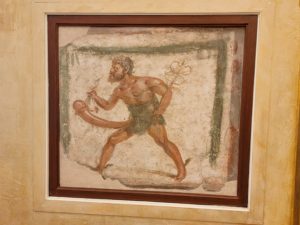
From the ruins of Pompeii. The man’s penis has led him for far too long.
Empowerment is not merely a platitude; it is a radical notion that can reshape the trajectories of countless lives. The women, often the silent custodians of the home, can be the vanguard of this radical change. It is through their voices that the walls come tumbling down, through their stories that the healing begins.
But empowerment is a multifaceted endeavor. It is about education, advocacy, and the relentless pursuit of justice. It is about providing not just a voice, but a platform for those who have long been relegated to the sidelines of their own narratives. The force of empowerment, when wielded by those most affected by the cycle of abuse and silence, is unmatched in its potency for disrupting the status quo.
To appreciate the scope of this issue, we must acknowledge the collective trauma that reverberates through every corner of society. It is a trauma that manifests in various guises, from addiction and mental illness to violent behavior patterns. Each of these conditions is but an outward symptom of the deeper, unaddressed wounds that fester within.
Our most vulnerable—be they the mentally ill or the addicted—serve as society’s barometer, its canaries in the mine, signaling that all is not well within the collective psyche. For them to find their voice is for society to find its own, for the empowerment of the individual is the liberation of the collective.
The stories that we tell as a society have a profound impact on our collective consciousness. The societal narrative weaves together the individual threads of countless lives, binding them in a shared experience. Yet, it is within these narratives that room for growth and change must be afforded, where official acknowledgment becomes the stepping stone to societal healing.
We need policies and protocols that not only protect the vulnerable but also institutionalize the rejection of silence as a norm. The day when we can speak confidently and openly about our societal fractures is the day we begin the process of mending them. This must extend to our educational systems, our legal institutions, and every echelon of society that plays a role in shaping the cultural mindset.
The path forward is fraught with challenges, but it is a path we must traverse. It requires a collective introspection, a willingness to look inward and confront the demons that have long been the architects of our silence. To move beyond the comfort of complacency and into the uncertain, yet hopeful, domain of change.
It is imperative that we, as a society, champion the cause of our most vulnerable, lifting them from the burdens of silence and into the light of understanding and support. For every voice that is empowered to speak, a narrative changes, and with it, the potential for healing on an unprecedented scale.
In the end, it is through these narratives that we redefine what it means to be a family, to be a community, to be a society. It is through the breaking of silence that we can begin to truly understand the depth of our wounds and, more importantly, the power we hold to heal them. The time for change is now, and it begins with the unspoken stories that, when given voice, can resonate with the clarity of a bell tolling for a new dawn.
 Breaking the Silence: Integrating Education on Abuse and Trauma
Spiritual freedom has never been about guns, money, or religion,
In the shadows of our society lies a pervasive and unsettling conspiracy of silence. It is a silence that perpetuates cycles of abuse and trauma, disproportionately affecting children, women, and minority groups. This unspoken complicity thrives in the very fabric of our families, communities, and cultural systems, allowing abusers to operate with impunity while victims are left voiceless and vulnerable. The time has come to break this silence by integrating education on these critical issues into our school curriculum from an early age.
The cultural conspiracy of silence is a deeply ingrained phenomenon, one that is woven into the very tapestry of our civilization. It manifests as a reluctance to acknowledge or address issues such as child abuse, religious malfeasance, misogyny, and white supremacy. This silence is not merely an absence of words; it is an active suppression of truth, a collective agreement to look the other way.
This conspiracy is perpetuated by a network of mutual support among co-abusers, who protect one another to maintain their positions of power and control. Family members, community leaders, and even societal institutions often play a role in this enabling behavior, either through denial, minimization, or outright complicity. The result is a culture that normalizes abuse and trauma, leaving victims isolated and without recourse.
To dismantle this conspiracy of silence, we must start by empowering the most vulnerable members of our society—our children. Introducing education on recognizing and reporting abuse, misogyny, and religious malfeasance in the early school curriculum is a vital step in this direction. By equipping children with the knowledge and tools to identify these violations, we can help them become proactive agents of change.
This education should not be a one-time lesson but a continuous and integrated part of the curriculum. Children need to understand that abuse and trauma are not normal, that they have the right to speak out, and that there are safe avenues for seeking help. This knowledge can break the cycle of silence, enabling children to protect themselves, their peers, and their families.
Breaking the cycle of mutual support for abusers requires a fundamental shift in how we perceive and respond to issues of abuse and trauma. It starts with acknowledging the complicity of family, community, and cultural systems in enabling these behaviors. This acknowledgment is not about assigning blame but about understanding the mechanisms that allow abuse to flourish.
Educators, parents, and social activists play a crucial role in this process. They must be vigilant, informed, and willing to challenge the status quo. By fostering an environment of openness and accountability, they can create safer spaces where victims feel supported and perpetrators are held accountable.
The integration of education on abuse and trauma into the school curriculum must be complemented by comprehensive support systems. This includes access to counselors, social workers, and other professionals who can provide immediate assistance and long-term support to victims. Schools should also establish clear protocols for reporting and addressing abuse, ensuring that every child knows how to seek help and that their concerns will be taken seriously.
In addition, community awareness programs can reinforce the lessons learned in school, creating a broader culture of vigilance and support. These programs can engage parents, community leaders, and the general public in conversations about abuse and trauma, breaking down the barriers of silence and denial.
The task before us is daunting, but it is not insurmountable. We must collectively commit to breaking the cultural conspiracy of silence that allows abuse and trauma to persist. By integrating education on these critical issues into our school curriculum, we can empower the next generation to recognize and challenge these violations. By fostering a culture of accountability and support, we can create safer environments for all.
For educators, parents, and social activists, the call to action is clear. Advocate for the inclusion of these topics in the school curriculum. Support comprehensive education and support systems. Challenge the complicity of family, religious community, and cultural systems in enabling abuse. Together, we can break the silence and build a society where every individual is protected, respected, and empowered.
In the words of the philosopher Kahlil Gibran, “Out of suffering have emerged the strongest souls; the most massive characters are seared with scars.” It is time to transform our scars into strength, our silence into voices of change. Join us in this vital mission to educate, empower, and protect our children and our future.
Speak not of evil, see no evil, hear no evil, HEAL NO EVIL
Creating Safe Spaces in Modern Society
In today’s world, creating safe spaces at home, school, and work is no longer a mere aspiration but an urgent necessity. These environments can significantly reduce traumatic engagements, bullying, and abuse, intentional or otherwise, in their many forms. Delving deeper into the roots of this necessity, we find that the human race has a biological and cultural predisposition towards asserting patriarchal values. This often translates into a power dynamic where control over those perceived as less physically robust becomes paramount. Women, non-aggressive men, and children frequently find themselves in the crosshairs of such aggressive agendas, regardless of whether the perpetrators are consciously aware of their attitudes or not.
The inclination towards patriarchal values stems from centuries of cultural conditioning and biological instincts. Historically, societies have often valued physical prowess and economic dominance, which has led to a hierarchical structure where power and control are centralized in the hands of a few. This power dynamic often marginalizes those who do not conform to these aggressive standards, creating an environment ripe for bullying and abuse. People who emphasize their economic, ethnic, or physiological supremacy tend not to collaborate well and are more goal-oriented than process-oriented.
In essence, the patriarchal predisposition fosters an environment where the emphasis is placed on achieving objectives, often at the expense of others’ well-being. This dynamic is detrimental not only to individuals but to the fabric of society as a whole. By perpetuating a culture of dominance and submission, we inhibit the potential for genuine collaboration, empathy, and understanding. It is in this context that the necessity of creating safe spaces becomes apparent.
Consider the story of James, a family member of mine who is a successful home builder and commercial property owner and manager. His workplace aggression and competitiveness allowed him to excel professionally, but these same qualities tended to migrate to his personal life. He was known to steal ideas from subcontractors to cut costs, reflecting an unwillingness to play fair and be collaborative. His controlling and often times less than grateful style around the home strained his relationship with his wife, alienated his son—who was also his business partner—and created a toxic family environment. His granddaughter, perhaps acting as an unwitting agent for her father’s resentment against James or even as an unconscious act of rebellion against his overbearing presence, falsely accused him of sexual molestation, a dramatic manifestation of the deep-seated issues these values can create.
The story of James serves as a compelling case study illustrating the adverse effects of these outdated values. His professional success came at a high personal cost, highlighting the urgent need for change. This example can be extended to numerous other scenarios where the aggressive pursuit of success undermines relationships and community bonds.
The re-education of men in our culture is a crucial step towards creating safer, more inclusive environments. This involves fostering a mindset that values collaboration, empathy, and inclusivity over dominance and control. Men must be encouraged to engage in self-reflection, to recognize and challenge their own prejudices, and to understand the impact of their actions on others.
Re-education can take many forms, from formal training programs to informal mentorship and peer support. The goal is to create a cultural shift that prioritizes the well-being of all individuals, regardless of their gender, ethnicity, or socio-economic status. By promoting inclusivity and empathy, we can begin to dismantle the harmful power dynamics that perpetuate abuse and create a more harmonious society.
Creating safe spaces requires a multi-faceted approach that addresses both cultural and structural factors. Here are some strategies that can help foster safer environments:
Cultural Shifts:
- Promoting awareness and understanding of the importance of safe spaces through education and advocacy. This includes challenging harmful stereotypes and promoting positive role models who embody inclusive values.
Awareness Campaigns:
- Launching campaigns that highlight the impact of bullying and abuse, and the importance of creating safe spaces. These campaigns can be targeted at schools, workplaces, and communities to raise awareness and promote change.
Support Systems:
- Establishing support systems for individuals who have experienced bullying or abuse. This includes providing access to counseling services, peer support groups, and other resources that can help individuals heal and rebuild their lives.
Reporting and Accountability:
- Encouraging individuals to report instances of bullying and abuse, and ensuring that there are robust systems in place to hold perpetrators accountable. However, it is important to approach this with caution, as victims of past abuse may sometimes exhibit overzealousness in their responses.
Inclusive Policies:
- Implementing policies and practices that promote inclusivity and respect for all individuals. This includes creating safe spaces for open dialogue, promoting diversity and inclusion, and ensuring that all individuals are treated with dignity and respect.
American culture has long glorified individualism and competition. From the rugged frontiersmen who tamed the West to the titans of industry who built economic empires, these values have been deeply ingrained in our national psyche. However, as we evolve, it becomes clear that these values are no longer sufficient to address the complexities of modern life. They often manifest in ways that harm our relationships and societal structures, perpetuating cycles of conflict and alienation.
To foster a more harmonious society, we must take deliberate steps to adopt more positive values and behaviors:
Cultivate Empathy:
- Encourage active listening and understanding in both personal and professional interactions.
- Promote emotional intelligence as a critical skill in leadership and education.
Foster Collaboration:
- Create spaces for open dialogue and cooperative problem-solving.
- Reward teamwork and collective achievements rather than individual accomplishments.
Practice Mindfulness and Reflection:
- Incorporate mindfulness practices into daily routines to enhance self-awareness and empathy.
- Encourage regular reflection on personal values and behaviors, fostering personal growth and transformation.
Support Community Building:
- Invest in community initiatives that promote social cohesion and mutual support.
- Encourage volunteerism and active participation in local communities.
The time has come for a fundamental transformation in our societal values. The aggressive, competitive, and patriarchal attitudes that once fueled our nation’s rise to power now threaten our collective well-being. By shifting towards more collaborative, empathetic, and inclusive values, we can build stronger relationships, healthier communities, and a more harmonious society.
Creating safe spaces at home, school, and work is essential for reducing traumatic engagement, bullying, and abuse. By addressing the biological and cultural predispositions towards patriarchal values, and fostering a culture of inclusivity, collaboration, and empathy, we can create environments where all individuals feel safe and valued. This requires a collective effort from educators, workplace leaders, and community advocates, who must work together to promote positive change and create a more harmonious society.
If you are committed to creating safer spaces in your community or organization, consider joining this evolutionary process where we can build a future where everyone feels safe, respected, and valued.
To foster a more harmonious society, we must take deliberate steps to adopt more positive values and behaviors:
Cultivate Empathy:
- Encourage active listening and understanding in both personal and professional interactions.
- Promote emotional intelligence as a critical skill in leadership and education.
Foster Collaboration:
- Create spaces for open dialogue and cooperative problem-solving.
- Reward teamwork and collective achievements rather than individual accomplishments.
Promote Inclusivity:
- Ensure diverse voices are heard and respected in decision-making processes.
- Address systemic biases and promote equity in all spheres of life.
Practice Mindfulness and Reflection:
- Incorporate mindfulness practices into daily routines to enhance self-awareness and empathy.
- Encourage regular reflection on personal values and behaviors, fostering personal growth and transformation.
Support Community Building:
- Invest in community initiatives that promote social cohesion and mutual support.
- Encourage volunteerism and active participation in local communities.
The time has come for a fundamental transformation in our societal values. The aggressive, competitive, and patriarchal attitudes that once fueled our nation’s rise to power now threaten our collective well-being. By shifting towards more collaborative, empathetic, and inclusive values, we can build stronger relationships, healthier communities, and a more harmonious society.
We must recognize the profound impact these values have on our lives and take conscious steps to foster a culture that prioritizes human connection and mutual respect. Only then can we truly thrive as individuals and as a society.
Join us in this vital movement towards positive change. Let us reflect on our values, engage in meaningful conversations, and take actionable steps to promote empathy, collaboration, and inclusivity in your personal and professional life. Together, we can create a more compassionate and connected world.
The Silent Epidemic of Our Age: How Societal Shifts and Childhood Trauma Fuel Mental Health Crises
In the not-so-distant past, communities thrived on collective support, empathy, and a sense of shared responsibility. Today, however, we find ourselves in a world where the pursuit of individual success and self-centered dreams often overshadows the needs of others. This societal shift towards individualism has not only eroded our sense of community but has also contributed to the stark reality that suicide remains a leading cause of death in certain populations. Have you ever wondered why?
The rise of individualism has led to a culture where personal achievements are celebrated above all else, while the struggles of others are often met with indifference or even disdain. This shift has fostered an environment where mental health issues are stigmatized, and those in crisis are left feeling isolated and unsupported.
Key Points to Consider:
- The societal emphasis on personal success over community well-being.
- The stigmatization of mental health issues and its consequences on those seeking help.
- The erosion of empathy and communal support in modern culture.
In 1987, I found myself at the precipice of despair, grappling with the aftershocks of childhood trauma that had insidiously seeped into every aspect of my life. Standing in a pharmacy line, contemplating ending my life with medications prescribed by a psychiatrist, I happened to see someone I knew. In a moment of vulnerability, I reached out, only to be met with a brusque dismissal—”Shut up, I have no time for other people’s problems.”
This encounter encapsulates the prevailing rubric of our culture—a tragic testament to how deeply we have internalized the notion that other’s problems are not our concern. Yet, it is precisely this mindset that perpetuates the cycle of suffering.
To dismantle the stigma surrounding mental health, it is imperative that we break the silence. Sharing personal stories, like mine, can humanize the issue and foster a more compassionate and understanding society. By creating safe spaces for open discussion, we can begin to rebuild the communal bonds that have been frayed by individualism.
Key Actions to Take:
- Encourage open dialogue about mental health in communities and workplaces.
- Share personal stories to destigmatize mental health issues.
- Create safe and supportive environments for those in crisis.
Childhood trauma leaves an indelible mark on an individual’s mental health, often manifesting in ways that are not immediately apparent. The effects of such trauma can ripple through a person’s life, influencing their relationships, self-worth, and overall well-being. Recognizing and addressing these impacts through early intervention and robust support systems is crucial.
Key Insights:
- The pervasive and lasting effects of childhood trauma on mental health.
- The importance of early intervention and continuous support.
- Strategies for identifying and addressing trauma in its early stages.
To truly address the mental health crisis, we must advocate for a cultural shift that prioritizes mental well-being and community support over individual success. This involves fostering environments where empathy, understanding, and mutual support are the norm rather than the exception.
Practical Strategies:
- Advocate for policies that support mental health initiatives in schools and workplaces.
- Promote community programs focused on mental well-being and peer support.
- Encourage leaders to model empathetic and supportive behaviors.
The silent epidemic of mental health crises calls for a collective awakening. We must challenge the status quo and strive for a society where mental well-being is a shared responsibility, and every individual feels seen, heard, and supported.
If you or someone you know is struggling with mental health issues, remember that reaching out for help is a sign of strength, not weakness. Let’s work together to create a world where empathy and support are the foundations of our communities.
For those seeking guidance on this journey, consider connecting with mental health professionals and community support groups to explore practical strategies for fostering a more empathetic and supportive environment.
Let’s break the silence and make mental health a priority—for ourselves, our loved ones, and our communities.
Chapter 72: From Trauma to Triumph: My Journey Through Community Service
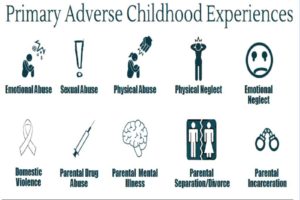
Life can often resemble a series of unforgiving waves crashing upon the shores of our existence. For some, like myself, these waves began early in life and left scars that would shape my interactions and beliefs for decades. Growing up as a traumatized child and young boy, I grappled with social skills, anxiety, and bullying, both at school and at home. Yet, it wasn’t until a life-threatening illness at age 68 that I found the true essence of fulfillment through community service.
My childhood was anything but ordinary. Social skills were a constant struggle, and anxiety was an unwelcome companion, lurking in the shadows of my mind long before I understood what it was. Bullying at school and by my older sister at home added layers to my trauma. Despite my efforts to be a good person, I often found myself isolated and misunderstood.
Boy Scouts was a beacon of hope, offering structure and goals through merit badges. One badge required community service. But the idea of giving back felt like an abomination. I had already endured enough, I thought, and refused to participate. Little did I know that this resistance would linger for decades, shaping my reluctance to serve the larger community.
Fast forward 55 years later, and I was a 68-year-old man who had fulfilled his obligations to family and employment but had never extended a hand to his community. Then, five months ago, I was struck by sepsis. The illness ravaged my body, and as I felt myself deteriorating, memories of Boy Scouts surfaced. In that moment of vulnerability, I made a conscious decision to be willing to serve the larger community.
Joining the Trauma Intervention Program (TIP) was my first step towards this newfound purpose. TIP offers support to individuals in spiritual need due to the death of a loved one. Initially, I was apprehensive, uncertain if I had anything to offer. But as I engaged with those in need, I found incredible fulfillment. Each interaction was not just about providing comfort but also about healing parts of myself that had long been neglected.
My aversion to community service was deeply rooted in my past traumas. It wasn’t just about refusing to give back; it was a defense mechanism, a way to protect myself from further emotional harm. But my illness forced me to confront these beliefs head-on. Volunteering for TIP was a revelation. It showed me that giving back wasn’t draining; it was enriching. It wasn’t about losing something; it was about gaining a sense of purpose and community.
The rewards of volunteer work are manifold. For those we help, it provides immediate relief and support during their most challenging times. For volunteers, it offers a sense of purpose, fulfillment, and even healing. Programs like TIP provide a structured way to give back, making it easier to overcome initial apprehensions. Each act of service becomes a step towards personal growth and societal contribution.
Community service is not just beneficial for those who receive aid; it profoundly impacts the giver. It transforms lives, fosters a sense of belonging, and offers a unique avenue for personal growth. For trauma survivors, it can be a path to healing, a way to turn past pain into present purpose. For Baby Boomers, it provides an opportunity to contribute wisdom and experience to younger generations. And for community service supporters, it reinforces the value of collective effort in making the world a better place.
My journey from a traumatized child who refused community service to a fulfilled volunteer at TIP has been nothing short of transformational. It took a life-threatening illness to catalyze this change, but the rewards have been immense. Community service has not only allowed me to give back but also to heal and find a deeper sense of purpose.
If my story resonates with you, I encourage you to explore opportunities for community service in your area. Join programs like TIP, volunteer at local shelters, or simply offer a helping hand to a neighbor in need. The impact will be profound, not just for those you help, but for yourself as well.
Take that first step today. You never know how it might change your life.
A Beacon in the Darkest Times: A Tribute to the Trauma Intervention Program
In a world that often feels like it’s spinning out of control, where traumatic events seem to be a constant fixture in the news cycle, the existence of a beacon of hope like the Trauma Intervention Program (TIP) is not just comforting—it’s essential. Founded in 1985 by Wayne Fortin in San Diego, California, and introduced to Portland, Oregon, in 1992 by June Vining, TIP embodies the essence of compassion, support, and healing. My journey of healing and rediscovery intertwines deeply with the principles and values this remarkable volunteer organization upholds, granting me a unique perspective on its undeniable impact. The Trauma Intervention Program is not the option for trauma victims who are negatively responding to events from a distant past. TIP’s unique approach is to offer immediate emotional first aid and pragmatic support to those ravaged by today’s traumatic events, giving a vital lifeline to those survivors. TIP is not just about the individual acts of kindness by its volunteers as contributors with the other first responders to life’s tragedies, like the police and fire departments, the EMTs’ ‘s, and the hospital employees. This organization is also about a profound commitment to emotional healing and honoring the resilience of survivors in the face of their adversity. At the heart of TIP are its volunteers who selflessly dedicate their time, energy, and empathy to assist those in despair. Their volunteers stand on the front lines, providing a shoulder to lean on when the unimaginable happens. This silent army of compassionate souls forms the backbone of TIP, embodying the purest form of altruism. Their readiness to be present, listen, and offer solace makes TIP’s work not just necessary but extraordinary. The volunteers’ ability to hold space for those in distress is a testament to the organization’s ethos—offering a glimmer of hope amidst sorrow. One of my recurring observations, penned across years of self-reflection, writing, and observing our world is our culture’s pervasive aversion to confronting the sources of trauma within itself. This avoidance not only perpetuates unnecessary suffering but often exacerbates the trauma. TIP’s mission is a clarion call for a shift toward emotional awareness and healing. By fostering a culture that prioritizes these values, we can prevent countless instances of needless trauma and reduce the incidence of secondary injury trauma induced by untrained or unconscious responses to others’ adverse life experiences. The inexorable truth is that trauma, in its myriad forms, will continue to be a part of the human experience. However, organizations like TIP offer a blueprint for compassion and resilience that can profoundly impact individuals and communities. It’s not enough to applaud their work from the sidelines; it requires a collective commitment to support and invest in programs that embody such critical missions, such as the Dougy Center, and other worthy services. In doing so, we aid those in immediate need and nurture a societal framework that values healing and recovery. My connection to trauma and the eventual path to recovery began on a day etched in collective memory—January 28, 1986—the day the Challenger spaceship tragically exploded. That catastrophe mirrored my internal turmoil, leading me to a nadir where I attempted to take my own life. Thankfully, I survived, but the incident ushered me into a labyrinthine several-decade quest for truth and healing, revealing deep-seated wounds from my childhood. These scars, long embedded in my body and psyche, had sapped the very essence of joy and purpose from my existence. Because of traumatic wounding, all that I wanted for myself prior to my suicide attempt was “to get off of this fucking rock.” Only through confronting and healing these wounds did I discover a newfound capacity to live in a healed and whole state while being more present for others, even those experiencing their darkest days. My evolution from a survivor of trauma to a volunteer reflects the transformative power of healing from traumatic wounding, and the substance of my story is not unique within the corps of TIP’s volunteers. The Trauma Intervention Program is more than an organization; it’s a testament to the indomitable spirit of compassion that resides within each of us. My path from despair to healing, and eventually to serving others, mirrors the journey many volunteers and those they support undertake—a passage from darkness into light, guided by empathy and a shared resolve to heal. I urge communities everywhere to rally behind TIP and similar initiatives, recognizing their indispensable role in weaving the fabric of a more compassionate, resilient society. Our support for all initiatives to reduce suffering, be it through volunteering, advocacy, or funding, not only enhances or saves lives but also fortifies the collective soul of our communities. On the most troubling day of my life, January 28, 1986, I had no one to listen to and meet me where I was, both emotionally and spiritually. I had an acquaintance who stood in the same pharmacy line as I was tell me that he had no time to listen to me and my problems. I was there to pick up what was to be my “final prescription”.Had that acquaintance been able to listen and be emotionally present for me, I may have changed my mind about self-harm, but he could only turn away. It is no wonder that our society often maintains a conspiracy of silence around the suffering of others, as many cannot deal with their own pain. Our culture and many of our citizens can be poor listeners, and it is no wonder that up to 95% of all trauma survivors have never developed a narrative around their losses nor could find anyone to share it with even if they did. TIP, though not a suicide prevention service, is here to listen to those who lost family members or friends to death, for those whose rugs of love, safety, and security have been yanked out from under them. TIP offers short-term help to assist the survivor to regain a measure of control over their trauma destabilized life. TIP is here for people having the worst day of their lives.
TIP listens, supports, and cares.
So can we.
Chapter 73: A New World Religion: Uniting Humanity Through Universal Values
The Distinction Between Ignorance and Truth in Religious Understanding In a world brimming with technological advancements and global connectivity, the contrast between ignorance and truth in religious understanding has never been more pronounced. My spiritual experiences have led me to believe that much of what we accept as religious truth is, in fact, steeped in ignorance. This article aims to explore the nature of this ignorance, how it manifests, and what we can do to foster a culture of informed, open-minded religious discourse. Religion, in its essence, seeks to provide answers to the profound questions of existence. However, the certainty with which these answers are often presented can stem from a deep-seated ignorance of alternative perspectives. Many religious adherents cling to dogmas and doctrines without questioning their origins or validity, mistaking them for ultimate truths. This is not to say that religion lacks value. On the contrary, it has the potential to offer profound insights and comfort. Yet, when religious beliefs are accepted uncritically, they can become a medium for ignorance rather than a path to enlightenment. Science and religion have long been perceived as opposing forces, yet both seek to uncover truth. Science evolves through continuous questioning, experimentation, and revision. Religion, however, often remains static, clinging to ancient texts and traditions. This divergence in approach has significant implications for how truth is perceived and understood in each domain. Religious truths, if left unexamined, risk becoming relics of a bygone era, irrelevant to the complexities of modern life. In contrast, scientific truths are constantly refined, offering a dynamic and evolving understanding of the world. The digital age has brought unprecedented access to information, enabling people to explore a multitude of religious and philosophical perspectives. This global connectivity has the potential to erode ignorance by exposing individuals to diverse beliefs and practices. However, this same technology can also reinforce ignorance. Algorithms often create echo chambers, where individuals are only exposed to information that reinforces their existing beliefs. To overcome this, we must actively seek out and engage with differing viewpoints. To move from ignorance to truth in religious understanding, we must adopt strategies that promote critical thinking and open-mindedness: Encourage Questioning: Foster an environment where questioning is not only accepted but encouraged. This allows for a deeper exploration of beliefs and their origins. Interfaith Dialogue: Engage in conversations with individuals from different religious backgrounds. This helps to broaden perspectives and reduce prejudice. Education: Integrate religious studies into educational curricula, emphasizing a comparative approach that highlights similarities and differences among various faiths. Use Technology Wisely: Leverage digital platforms to access a wide range of religious content, while being mindful of the potential for echo chambers. My own spiritual experiences have profoundly shaped my understanding of ignorance and truth in religion. Beginning on May 24, 1987, I had a series of spiritual events that continue to guide my consciousness. These experiences taught me the importance of a direct connection with the divine, unmediated by religious institutions or dogmas. During this period, I attended Hinson Baptist Church, seeking guidance and community. However, my personal spiritual encounters were met with skepticism and attempts to align my beliefs with the church’s doctrines. This highlighted the limitations of organized religion in accommodating individual spiritual experiences. A pivotal moment came when I faced the possibility of an AIDS diagnosis. Seeking support, I found the church’s response to be lacking in compassion and understanding. This reinforced my belief that religious institutions often prioritize doctrinal conformity over genuine spiritual support. The final straw was the minister’s assertion that only humans possess souls, effectively dismissing the spiritual essence of all other creatures. This anthropocentric view struck me as fundamentally flawed and symptomatic of the ignorance that pervades organized religion. In seeking the “Truth of Being,” it is crucial to approach religious understanding with an open mind and a willingness to question. Organized religion, while offering a sense of community and tradition, can also perpetuate ignorance by discouraging critical thinking and alternative perspectives. To foster a more enlightened and informed religious discourse, we must prioritize education, interfaith dialogue, and the responsible use of technology. By doing so, we can move closer to a truth that is dynamic, inclusive, and reflective of the complexities of our modern world. Call to Action: Engage with this conversation and share your thoughts. Let’s create a community where open-minded, informed religious discourse thrives. Join us in exploring the depths of spiritual understanding and truth. A New World Religion: Uniting Humanity Through Universal Values In a world increasingly divided by borders, ideologies, and religions, the notion of a “new world religion” might seem radical. Yet, it is precisely this concept that holds the potential to unify humanity under universal values such as compassion, justice, and environmental stewardship. By transcending traditional beliefs and fostering a shared global faith, we can address the pressing issues of our time and pave the way for a harmonious future. Throughout history, there have been numerous movements that have successfully united diverse communities under a common cause. For instance, the abolitionist movement in the 19th century transcended racial and national boundaries to fight for the universal value of human freedom. Similarly, the modern environmental movement, championed by figures like, most recently, Greta Thunberg, has rallied people from all walks of life to address the global crisis of climate change. These examples illustrate that it is possible to unite humanity around shared values, regardless of individual differences. A new world religion could build on these precedents, promoting a common moral framework that respects and celebrates cultural and religious diversity. In today’s interconnected world, technology and communication have the power to foster a global consciousness. Social media platforms, online forums, and instant messaging have made it easier than ever to connect individuals across the globe, enabling the exchange of ideas and values. For example, initiatives like the United Nations’ “Sustainable Development Goals” rely on digital platforms to mobilize global action towards reducing poverty, promoting equality, and protecting the environment. A new world religion could leverage these technological advancements to disseminate its message of unity and compassion, reaching a wider audience than any traditional religion could. One of the primary concerns about a new world religion is the potential loss of cultural and religious diversity. However, this new faith would not seek to replace existing traditions but rather to complement them. By focusing on universal values that transcend specific doctrines, it could serve as a unifying force that respects and honors individual beliefs. For example, the Baha’i Faith promotes the idea of unity in diversity, encouraging adherents to celebrate their unique cultural backgrounds while working towards common goals. Similarly, a new world religion could emphasize the importance of preserving the rich tapestry of human heritage, while promoting a shared ethical framework. To be effective, a new world religion must develop an ethical framework that balances respect for individual beliefs with the promotion of universal values. This framework would prioritize principles such as empathy, justice, and environmental stewardship, encouraging adherents to act in ways that benefit all of humanity. For instance, the Charter for Compassion, launched by interfaith leader Karen Armstrong, calls for individuals and communities to commit to compassionate action. A new world religion could adopt similar initiatives, providing practical guidelines for ethical behavior that align with its core values. The Call for a New World Religion: Mountain-Top Insights Throughout history, certain individuals have had “mountain top” experiences—moments of profound insight into the nature of life, love, and reality. These experiences often reveal the unity of all creation, highlighting how systems of thought can separate us rather than unite us. They also expose the limitations of tribal love and the corruption within organized religion. For example, That One, a visionary figure, saw how religious power figures monetized their followers and used their influence to control others. That One recognized the need for a rebirth of religion, one that discards its darker aspects and honors the underlying spirit of love. The Vision of That One That One advised the world to: Discard any aspects of religion that do not promote love and compassion. Stop monetizing humanity for selfish gain. Separate religious institutions from political power. Take personal responsibility and admit wrongdoings. Reject behaviors that are antithetical to the spirit of love, such as lying, cheating, and environmental destruction. This vision calls for a new world religion that transcends traditional boundaries and fosters a global community rooted in universal values. A new world religion has emerged upon our consciousness, one that does not exist solely to support the needs of specific religious communities. Its sacred texts are written in the stars, the lands we inhabit, and the fabric of universal awareness. The true “word of God” can be found in nature, for those willing to disconnect from technology and immerse themselves in the great outdoors. This new faith recognizes that technology, while a powerful tool, has often separated us from our spiritual needs. It calls for a return to the natural world, where we can reconnect with the divine and recognize our role as stewards of the Earth. Taking dominion over the world and destroying its wildlife, forests, rivers, oceans, and lands was never part of God’s will. It was a patriarchal attitude that still pollutes human awareness. The greed and self-serving interests of our ancestors have been glorified at the expense of preserving our planet and cultivating harmony among diverse peoples. The “mark of the beast” is seen daily in the attitudes of those who promote environmental destruction and incite hatred. Freedom may not be for everyone now, but it is certainly for those who choose to awaken to the truth. A new world religion offers hope and a path forward for humanity. By uniting under universal values of compassion, justice, and environmental stewardship, we can address the challenges of our time and create a harmonious future. Join the movement and become a part of this global awakening. Listen within yourself, save yourself, and contribute to the collective good of all humanity. This article aims to inspire introspection, challenge conventional thinking, and encourage self-discovery. It invites readers to consider the potential of a new world religion as a unifying force for humanity, fostering a global community rooted in universal values. Awakening Perfection lies, behind all eyes, We, who would look within ourselves, will find, The Sublime Surprise, of which all Life does comprise, The Divine Self of all Mankind. We, who have made our choice, with one free voice, Call to our Eternal Source Supreme, We will no longer roam, we are coming Home, We are awakening from the “human” dream! With courage draught, from fear made naught, We move from temporal shadow to Eternal Light, The Kingdom sought becomes the Vision caught, Whosoever overcomes, now sees with unhindered sight! The Love All-Knowing, the Truth now showing, With Divinity, We walk hand in hand. In us its growing, through us its flowing, Embracing all between space and land. With Hearts entwined, One Soul Divine, To this world, We are a blessing immense. Though we pass this way for but a day, With Divine experience, who would dare dispense? Awakening: The Timeless Call to Self-Discovery and Spiritual Growth The quest for self-discovery and personal growth is a timeless and universal pursuit, as eloquently captured in the poem “Awakening,” penned during the 1992-1993 period. This literary piece serves as a beacon for spiritual seekers, thought leaders, and conscious consumers, inviting us to explore the profound duality of existence and the sublime essence that lies within us all. “Awakening” speaks to an inherent yearning for something beyond the mundane, echoing across the ages and diverse cultures. It underscores the timeless relevance and universality of this yearning, as humans have always sought to understand their place in the cosmos and their connection to something greater than themselves. The poem’s opening lines, “Perfection lies, behind all eyes,” gently remind us that the perfection we seek externally is already within us, waiting to be discovered. At the heart of “Awakening” is the exploration of the duality of existence—the contrast between the human experience and the transcendent, eternal nature of the Divine Self. The lines, “We move from temporal shadow to Eternal Light,” highlight this transition from the ephemeral to the everlasting. It is a call to recognize that while our human experiences are fleeting, they are also stepping stones toward realizing our true, divine nature. The poem introduces the concept of the “Sublime Surprise,” a metaphor for the true essence within us all. This essence is the source of our fulfillment and our connection to the collective consciousness of humanity. When the poem declares, “We, who would look within ourselves, will find, the Sublime Surprise, of which all Life does comprise,” it invites us to turn inward and discover the profound truth that we are all interconnected, divine beings. “Awakening” is not merely a reflection on spiritual themes but a powerful call to action. It urges individuals to embark on a journey of self-awareness and spiritual awakening, transcending the limitations of the human condition. The lines, “We will no longer roam, we are coming Home, We are awakening from the ‘human’ dream!” serve as a rallying cry for those who seek to break free from the illusions of the material world and return to their spiritual roots. The poem emphasizes the role of courage in overcoming fear and the transformative power of embracing the Divine within. It states, “With courage draught, from fear made naught,” suggesting that true courage is born from facing our fears and recognizing their transient nature. This courage enables us to transcend our limitations and live a life guided by love, truth, and a deep sense of interconnectedness. “Awakening” envisions a world where individuals live in harmony with their Divine nature, manifesting a collective reality characterized by love, understanding, and the recognition of the inherent divinity in all beings. The poem’s closing lines, “With Hearts entwined, One Soul Divine, To this world, We are a blessing immense,” paint a picture of a utopian society where the divine presence within each individual is acknowledged and celebrated. In “Awakening,” we find a profound exploration of the human spirit’s desire for self-discovery and transcendence. It encourages us to look within, summon our courage, and awaken to our true, divine nature. This awakening is not just a personal transformation but a collective evolution toward a world where love, understanding, and divinity reign supreme. As we contemplate the insights from this timeless poem, we are reminded of our potential to create a reality that reflects our highest selves. Let’s heed this call to action and embark on our own journeys of spiritual awakening. For those ready to take the next step, join our community of like-minded spiritual seekers and conscious consumers. Together, we can manifest a world rooted in divine harmony and interconnectedness. The Gaia Hypothesis Revisited: Population Control and Earth’s Self-Protective Mechanism In the sprawling theater of existence, our planet Earth, or Gaia, stands as a vibrant, living entity with a complex consciousness that seeks balance and harmony. This post presents an extraordinary theory of human population control, suggesting that overpopulation and the resulting ecological imbalance trigger Gaia’s self-protective mechanisms, leading to unexpected, yet natural, consequences for humanity. Humanity, with its burgeoning population, has thrown Gaia off balance. Some experts argue that Earth is currently supporting ten times the number of humans it can sustain harmoniously. This overabundance creates immense stress, not just on our ecosystems, but also on our collective consciousness. But what if this imbalance activates a self-regulating response from Gaia herself? Just as our immune system fights off invaders to maintain bodily equilibrium, Gaia, too, employs a self-organizing principle to restore balance. It’s not a stretch to imagine that Gaia’s consciousness interprets human overpopulation as a threat to its homeostasis, prompting corrective measures. Teilhard de Chardin’s Noosphere concept suggests a sphere of human thought and consciousness enveloping the Earth, interacting with the biosphere and lithosphere. This interconnected consciousness implies that our collective mental states are intertwined with Gaia’s own awareness. Could our behaviors—warfare, violence, depression, and even self-destructive tendencies—be manifestations of Gaia’s attempt to recalibrate and heal itself? Consider the rise in global conflicts, mental health crises, and environmental degradation. These phenomena might not merely be socio-political issues but could be seen as Gaia’s way of addressing the unsustainable human impact on her ecosystems. Warfare and Violence: Acts of aggression might serve as a purge, reducing population pressures and resetting societal structures. Mental Health Epidemics: Rising rates of depression, anxiety, and suicide can be interpreted as symptoms of a collective consciousness struggling under the weight of imbalance. Environmental Catastrophes: Natural disasters, climate change, and pandemics may be Gaia’s direct interventions to restore equilibrium. For both humanity and Earth’s well-being, achieving global harmony and peace is paramount. Without it, sustainable homeostasis around a healthy operating point remains elusive. Our survival hinges on understanding and aligning with Gaia’s intrinsic balancing processes. The Path Forward Global Cooperation: Policy makers must prioritize sustainable development, addressing overpopulation through education, empowerment, and resource management. Conscious Consumption: Individuals can contribute by adopting mindful consumption practices, reducing waste, and supporting ecological initiatives. Spiritual Awakening: Encouraging a shift in consciousness towards recognizing our interconnectedness with Gaia can foster deeper respect and care for our planet. Our planet Earth, with its almost infinite potential to bring forth new forms of life, seeks balance in all things. As stewards of this world, it is our responsibility to heed Gaia’s call and work towards restoring harmony. Our own Armageddon may well be inscribed in the operating system of Earth’s consciousness, urging us towards collective healing and evolution. In this delicate dance of existence, only through peace and equilibrium can we ensure a thriving future for both humanity and Gaia. Join the Conversation Share your thoughts and insights on our theory of Gaia’s self-protective mechanism. How do you perceive the interconnectedness of human and Earth consciousness? What steps can we take to foster global harmony? Let’s explore these profound questions together. By contemplating these intricate connections and the implications of our actions, we can begin to understand the delicate balance that sustains life on Earth. In doing so, we pave the way for a more harmonious and sustainable coexistence with our planet.
Chapter 74: The Voice of Awakening: Navigating the Modern Search for Truth
 Part One: The Voice of Awakening: Navigating the Modern Search for Truth
“My kingdom is not of this world. You can look lo here, and lo there. Nor will people say, ‘Here it is,’ or ‘There it is,’ because the kingdom of God is in your midst.”–Jesus of Nazareth
What if the very beliefs you hold, the truths you cling to, are the very barriers keeping you from the enlightenment you seek? What if the path to ultimate freedom lies not in accumulating knowledge, but in unlearning what you think you know?
We live in an era of unprecedented access to knowledge—an infinite stream of information at our fingertips. Yet, for many, this abundance offers no solace, no clarity, no meaning. Instead, it becomes a desert of shifting sands, where the more we search, the less we seem to find. This struggle is felt most acutely by those seeking spiritual truth. The restless mind—burdened by desires, fears, and centuries of conditioned beliefs—becomes both the seeker and the obstacle.
The quest for spiritual meaning in a modern world comes with unique challenges:
- Balancing Ancient and Modern Thought
How do we bridge the timeless wisdom of ancient philosophies with the demands of a fast-paced, achievement-driven world? Spiritual teachings that once thrived in oral traditions or quiet monastic solitude now must compete with Instagram reels and instant gratification.
- The Mental Health Conundrum
Amid a mental health crisis exacerbated by relentless productivity culture, the pursuit of spirituality often takes a back seat. How do we promote holistic well-being without relegating spiritual growth to a mere self-care trend?
- Wrestling with Misinformation and Skepticism
The digital era thrives on viral misinformation, often diluting or distorting spiritual truths. On the flip side, skepticism has become a cultural badge of honor, leaving authentic seekers wary of manipulation.
- Disconnection in a Material World
Material success is championed as the pinnacle of life’s achievements, yet countless “successful” individuals report feelings of emptiness and isolation. How do we reconnect with deeper truths while balancing the demands of an increasingly consumer-driven world?
- Individuality vs. Community
The spiritual quest often begins within, requiring periods of solitude. But true transformation requires connection and shared growth. How do we foster both individual journeys and collective enlightenment in a world shaped by information overload, mass media driven propaganda, and emotional and physical isolation?
At the heart of humanity’s spiritual crisis lies the voice of awakening—a call not from outside, but from within. The wisdom you seek already rests within your soul, waiting for the clutter to clear. But the mind, shaped by years of conditioning and false beliefs, silences this voice.
Each of us becomes the marionette, moved by the strings of societal expectations, traumatic memories, and misplaced desires. We shadowbox illusions of “evil” or “failure” when, in truth, there’s nothing to conquer. The peace we crave is not an external destination, but a realization that the fight itself is a mirage.
When you dare to step off the treadmill of mental conditioning and listen to love’s voice, the shift begins. The past, with its noisy regrets and pain, begins to dissolve. And for the first time, you exist fully in the present—the only space where truth resides.
_“Cease resuscitating dead illusions with mental pugilist blows,
To reveal the peaceful mind of One who, in the now, knows!”_
While the path to awakening is deeply personal, certain principles can guide collective growth:
1. The Courage to Unlearn
Freedom begins with unlearning—recognizing that much of what you believe has been imposed upon you by others. This includes letting go of your preconceived notions of divinity, success, and truth.
Encourage personal reflection through meditation or journaling. Ask questions like, “What beliefs no longer serve me?” or “What have I accepted as truth without questioning its origins?”
2. Ancient Wisdom, Modern Context
Timeless teachings, like those from Buddhism, Taoism, or mystical Christianity, offer profound insights into self-awareness and the nature of reality. But these teachings must be reframed to resonate with today’s seekers.
Use technology wisely. Follow podcasts or YouTube channels that blend ancient teachings with contemporary life. Communities like Insight Timer offer accessible ways to learn and engage.
- Balance Individual Growth with Interconnectedness
The spiritual path can be isolating, but humans thrive in community. Shared purpose and support create the fertile ground needed for spiritual growth.
Join or create virtual spiritual communities where members foster collective introspection, uplifting one another. Platforms like Discord or local meetups can build a bridge between solitary practice and collective evolution.
4. Healing Through Silence
True knowing arises only when the mind rests. Sacred silence—intentional, prolonged moments of peace—can allow love’s wisdom to emerge.
Introduce mindful breaks into your routine. For example, dedicate one evening a week to silent reflection, away from devices and external noise. This isn’t about escaping, but reconnecting.
- Question Material Success
While material pursuits can bring comfort, they rarely fill the soul. True meaning isn’t for sale.
Shift your perspective on success. Realign your goals to focus on experiences and relationships rather than possessions. Volunteer or mentor to feel the joy of giving instead of acquiring.
To the seekers, the weary, and the restless minds—it’s time to wake up. The answers you long for don’t lie in future achievements or past regrets. They don’t reside in religious dogma or spiritual materialism. The answers are here, now, in the stillness of your being.
Material distractions and conditioned beliefs may have taught you otherwise, but listen closely, and you’ll hear the eternal truth:
_“You have realized the Truth, God’s high mount is another illusion to climb,
Created by fearful, desirous minds caught in a loop created by time.”_
This is your invitation. Step away from the treadmill of thought and into the infinite openness of now. Release the strings of false narratives, and reunite with the voice of love that has patiently awaited your return.
Engage in personal reflection. Seek out new communities that challenge you to grow spiritually. Most importantly, unlearn the dogmas and misinformation around “God” and divinity that no longer serve you.
This is the voice of awakening.
Are you ready to listen?
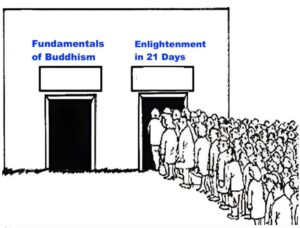
Part Two:
The Awakening Voice: Navigating Truth in a World of Illusions
Are we living in an era where reality bends to the tunes of carefully orchestrated narratives, or has truth become an elusive mirage, floating above the desert sands of distortion? These questions compel us to pause, reflect, and confront a chilling current reality—one marked by cultural confusion, ideological polarization, and the hypnotic allure of misinformation. This is a moment in history where the battle for truth rages not just in the public sphere but within the human mind itself.
To move forward as a society, we must awaken to the complex dynamics at play. We must guide our critical thinking to transcend illusions, resist the comforting pull of propaganda, and illuminate the path toward a just and equitable reality.
But where do we begin?
The rise of divisive figures and ideologies, often mesmerizing through distorted narratives, highlights a critical challenge in modern discourse—the power of storytelling in shaping perception. Stories hold sway over public opinion, weaving seductive yet specious tales that often appeal to fear, confusion, or blind loyalty. These narratives obscure our collective vision, turning individuals into pawns chasing after false promises of salvation or success.
Donald Trump, as a case study, exemplifies this phenomenon. His narratives—a blend of fear, grievance, and grandeur—tap directly into the vulnerabilities of both individuals and society. His words, cloaked in emotional appeal, foster division rather than unity, confusion rather than clarity. The public is baited into emotional reactions, surrendering the reins of reason. What emerges is a culture where illusion reigns, paralyzing critical thought and stymying constructive progress.
This speaks to a broader truth: reality is silent when we fail to question the validity of what we see and hear. Mirages flourish in hearts and minds refusing to seek the quenched waters of wisdom and truth.
The modern media ecosystem—fueled by the constant churn of 24-hour news cycles, social algorithms, and clickbait headlines—propels individuals deeper into the tides of misinformation. Biases are echoed, amplified, and fed back with an urgency designed to hijack attention. We are entrapped by sensationalism, mesmerized by narratives that reinforce our own beliefs while demonizing others.
Social media plays a particularly insidious role here. It thrives on polarizing content that deepens ideological divides. Filter bubbles, personalized algorithms, and disinformation campaigns create echo chambers where false narratives are not only normalized but celebrated. Nuance drowns beneath the thunder of binary opposition. Truth becomes incidental, sacrificed for pre-packaged dopamine hits of outrage or validation.
Adding another layer is the vulnerability of human psychology itself. Belief is deeply personal—it provides comfort, identity, and purpose. Yet it is this same psychological anchor that makes belief susceptible to manipulation. Demagogues exploit these cognitive blind spots, amplifying fears, reinforcing prejudices, and promising simplistic solutions in a world that is anything but simple.
To stem this tide of cultural and intellectual stagnancy, what we need is not just resilience against misinformation but a collective reawakening—a pursuit of Truth with a capital “T.”
- Critical Thinking as Armor
The first step toward breaking free is cultivating critical thinking. Asking questions, probing deeper into sources of information, and challenging the validity of accepted narratives becomes a lifeline in the desert of rhetoric. Resist the temptation to take stories, claims, and ideologies at face value. What is the agenda? Who benefits from your belief? What is omitted from the conversation?
- Historical Context as a Compass
Demagoguery is not new; it thrives in cycles throughout history. From Rome’s Caesar to Germany’s Hitler, leaders have ensnared populations through fear-driven propaganda and promises of greatness. Exploring this historical interplay can help contextualize today’s challenges and arm us with insights into recognizing its resurgence.
- Information Literacy as a Practice
Today, perhaps more than any other time in history, individuals hold immeasurable power in consuming, sharing, and amplifying information. Each click, share, or repost carries consequence. Commit to vetting the information you consume; prioritize credible, balanced sources over those tailored to confirm your biases. And where possible, educate others on the importance of verifying facts in an age of manipulated truth.
- Engage in Open Dialogue
The antidote to division lies in connection. Engage with your neighbors, peers, and communities in open and respectful dialogue. Challenge ideas, but do so in ways that foster understanding rather than exacerbate divides. Authentic discussions illuminate common ground, breaking the chains of ideological separation and combating echo chambers.
- Honest Self-Reflection
Beneath lofty debates often lies a simpler challenge—understanding ourselves. Where do our biases lie? What mirages do we chase, and what fears have anchored us to illusions? Seek to dismantle the internal narratives that favor comfort over growth, harmony over justice, or blind allegiance over reason. Only through the cleansing waters of personal honesty can we ripple outward in meaningful change.
Ultimately, the battle for truth is not waged against others—it is fought on the terrain of our own hearts and minds. The illusions of propaganda and cultural distraction can only thrive if we permit them. It is our capacity, individually and collectively, to seek clarity, empathy, and equity that will determine the direction in which our society turns.
Now is not the time for apathy, nor is it the time for complacency. A world of illusions calls for the warriors of courage, intellect, and humanity to rise—those who are willing to question, to grow, to imagine more equitable futures.
If you’ve read this far, consider this an invitation to action.
Engage critically with the narratives that define our time.
Speak where silence foments division.
Share knowledge that nurtures understanding.
Build bridges when others build walls.
The awakening voice is within all of us.
Now, it is time to set it free.
Will you?

THE VOICE OF AWAKENING
(this poem was ‘heard’ in the deep silence of a meditation experience with my wife Sharon in 1990)
- As the slowly shifting desert sands of time,
- Create ever taller dunes for lost souls to climb,
- It is within this scorched barren world of little reason or rhyme,
- The search for Truth must begin, to find Love sublime.
- Oh Seekers of Truth, “God’s high mount” would you climb
- But you must cease stumbling through the mind’s shifting sands of time.
- While hypnotized by thoughts devoid of love’s rhyme and truth’s reason
- Which are forever charged by Truth with treason!
- As mental marathoners, only on Life’s treadmill do you stand,
- Its belt rotating through the dark past keeps you life’s ‘also ran’
- While forever chasing in vain Love’s all-knowing voice,
- Just step off of that endless belt and find true Cause to rejoice!”
- Oh marionette’s dancing image on the screen of the world’s mind,
- While manipulated by its controlling beliefs, what freedom could you find?
- Release yourself from all traumatic memories’ imprisoning strings
- To prepare for the inner Wisdom that a liberated Intelligence brings!”
- Oh shadow boxers of evil, when will you ever retire?
- Tis only champion of dream world to which you aspire!
- Cease resuscitating dead illusions with mental pugilist blows,
- To reveal the peaceful mind of One who, in the now, knows!”
- Oh please wake up to Love’s voice sweet somnambulator,
- And realize the eternal truth that love’s wisdom is greater,
- Than the conditioning or knowledge that in love’s absence you learned,
- In sacred silence the World reflects back the One for whom you always yearned!
- Oh, you who have realized the Truth, that God’s high mount is an illusion to climb,
- Created by fearful, desirous minds caught on the merry-go-round of time.
- Your once dark, restless mind remained bereft of Love’s Rhyme and Truth’s Reason,
- Chasing after mirages until you awakened from all thoughts guilty of treason!
Chapter 75: Love’s Reunion

My wife Sharon on a Greek ferry in 2018
In the quiet solitude of our own hearts, many of us wander through a frozen wilderness. It is a landscape of the soul, marked by a profound sense of emptiness, a dark feeling, as if there were a “hole in my heart that life could just not fill.” This is not a journey of miles, but of moments—a long, cold pilgrimage through a world that often feels disconnected, divisive, and drained of its vital warmth. We walk through days shadowed by political corruption, societal strife, and a pervasive darkness that chills the spirit, leaving us shivering and searching for something more.
We build walls of ice around ourselves, not out of malice, but for survival. This “icy hardness” becomes our armor against the relentless clamor of a world that prioritizes power over peace, and profit over people. We learn to navigate this winter world, our minds becoming “frozen, fearful hands,” clinging to what little control we can find. Yet, deep within, a part of us remains restless, yearning for a thaw, for the return of a sun we have long forgotten. We crave authentic connection, a bond that transcends the superficial interactions that dominate our modern lives.
Then, in a moment of quiet surrender, when we finally stop to rest, a gentle voice can be heard. It sings a “long forgotten song,” a melody that resonates with the deepest chords of our being. This is the voice of Love, the eternal, divine presence that has been waiting patiently for our return. It speaks not in demands, but in promises—a promise of release from the “winter world of chill,” and a promise of freedom for our shivering minds.
This Love is not a fleeting emotion, but a fundamental force, a “Source of Peace of which mankind forever seeks.” It is a feminine, nurturing energy that draws us closer “without any further verbal tethers.” It does not coerce or command; it simply invites. Her presence alone begins to melt the frozen fortress we have built around our hearts, preparing us for the walk back to “Love’s now awakening lands.”
The journey back is a conscious choice. It is the moment we decide to “refuse to go” back to the “barren trees of lifeless knowledge”—the old patterns of fear, cynicism, and separation that once defined our existence. We choose to turn away from the memories that kept us chained to a past devoid of life and warmth. Instead, we commit to a new path, resolving to accept only the lessons learned along “Love’s Infinite Way.”
This path requires courage. It is the courage to say “yes” to vulnerability, to say “yes” to hope, and to say “yes” to a future guided not by the cold logic of a fearful mind, but by the warmth of an open heart. Love meets us even when we are with our “dark companion,” our shadow self, the part of us that is lost and afraid. It finds us in our brokenness and, with infinite grace, offers to “take me home to share her loving lights.”
This homecoming is a profound transformation. Love gives us the “shelter of Love’s never setting summer sun,” turning our “cold mourning into happier, heavenly nights.” It is a sanctuary from the relentless storms of the external world, a place where our souls can finally find rest and healing. By freely offering of herself, she moves us “through life’s clamorous valleys unto its silent peaks,” teaching us to find stillness amidst the noise.
We can then retire from a life of “fruitless wanderings,” no longer seeking validation or wholeness in external achievements or fleeting pleasures. We learn to fill our “empty cup from her joyous running streams,” a source of nourishment that is infinite and self-renewing. This is the reunion with our “eternally fulfilling lover,” the divine counterpart to our own soul. Her “healing waters dissolve all of my painful dreams,” washing away the residue of past traumas and sorrows.
Her life, the very essence of this Love, is “resplendent with Wisdom, Strength, and Beauty.” These are not mere attributes; they are the “robes with which she clothes her being.” As we draw closer to her, we too become adorned with these qualities. Wisdom illuminates our path, Strength fortifies our resolve, and Beauty opens our eyes to the sacredness of all existence. The “gift of Love now unwraps before my inviting eyes,” revealing an ecstatic, all-seeing vision that transcends our limited perspective.
Our long search for “Truth and Love Sublime” finally comes to an end. We find it not as a destination, but as a living, breathing presence within and around us. We only seek to remain within her “all-embracing arms,” content to witness the “ever unfolding surprise” that life becomes when viewed through the lens of love. Every morning, the “first waking breath” brings the certainty that we are not alone, that we are forever joined with this divine source.
This union mends the “broken heart and shattered life.” We become “wedded to her life,” calling her our “faithful bride.” The journey ahead no longer appears as a “fearful road,” but as a “lighted path” upon which we can gratefully stride, One with the ultimate Source of all creation.
In a world that feels increasingly fragmented, this message of reunion is not a distant spiritual fantasy; it is an urgent, deeply personal call. It is a call to look beyond the headlines and the hatred, and to recognize the same frozen wilderness in the hearts of others. We all crave this warmth, this connection, this meaning.
Let this be a moment of reflection. How can you cultivate this profound connection in your own life? It begins with turning inward, with listening for that “gentle voice.” It continues with the practice of self-compassion, of melting the ice around your own heart before you can offer warmth to others.
Seek out opportunities to build authentic community. Extend kindness without expectation. In a world saturated with negativity, be a beacon of hope. Your small acts of love, of compassion, of unity, are the streams that feed the great river of healing our world so desperately needs.
Do not be discouraged by the darkness. It is only in the darkest night that the stars shine most brightly. Embrace the possibility of your own transformation. Let your life be an answer to the world’s division, a testament to the enduring power of love.
Commit to living a life guided by this inner wisdom. Share this message not just with your words, but with the very quality of your presence. Let your journey back to love inspire others to begin their own. For when we arise each morning, “joined as one” with this divine love, we do not just heal ourselves; we participate in the healing of the world. We become active agents in Love’s great reunion.
LOVE’S REUNION
I stumbled over the frozen wilderness for oh, so long!
With a hole in my heart that life could just not fill
Until I stopped to rest, and heard a gentle voice singing a long-forgotten song
That promised of my release from this winter world of painful chill
Her lyrics spoke of the return of Life to freedom
And the release of shivering minds from darkness’ frozen, fearful hands
She drew me closer without any further verbal tethers
And prepared me for the walk back to Love’s now awakening lands
Her warming presence melted the icy hardness that I used to know
Inspiring within me the courage, to myself and my world, to say
That, to all of my past memories’ barren trees of lifeless knowledge, I now refuse to go
I will now accept only the lessons learned along Love’s Infinite Way
Yes, she met me while I was with the dark companion
But it was to her pleasure to take me home to share her loving lights
And give me the shelter of Love’s never setting summer sun
She changed my cold mourning into happier, heavenly nights!
By freely offering of herself and all of her sacred charms
She moves me through life’s clamorous valleys unto its silent peaks
I can now retire from a life of fruitless wanderings
To live in the Source of Peace of which mankind forever seeks
Her life is resplendent with Wisdom, Strength, and Beauty
For these are the robes with which she clothes her being
The gift of Love now unwraps before my inviting eyes
To reveal her ecstatic vision, which is now all-seeing
My search for Truth and Love Sublime has finally ended
For, I now fill my empty cup from her joyous running streams
I have reunited with my eternally fulfilling lover
And, her healing waters dissolve all of my painful dreams
I only seek to remain within her all-embracing arms
While through all life she extends her ever unfolding surprise
My first waking breath each morning brings the certainty
That, from my bed, joined as one, we again shall arise
My broken heart and shattered life is finally mending
And, wedded to her life, I now call her my faithful bride
Life no longer has a fearful road ahead to travel
For, One with God, on Love’s lighted path, I now gratefully stride
Chapter 76: The Journey Back to Silence: Reclaiming Our Spiritual Heritage
When we stop trusting the thoughts that create walls, judgements, religions, and false bridges back to our SELF, our humbled minds will finally find a measure of peace. And, a sense of humor may be accessed, after we have finally seen the collective nonsense passing for knowledge for what it really is.
This peace is not a distant shore we must strain to reach. It resides within us, waiting beneath the noise of our conditioning and the clamor of societal expectation. Yet we must cultivate it deliberately, extending it outward through intentional practices that quiet the mind and open the heart.
Focus on that peace. Extend it out as far as possible through meditation, contemplation, prayer, walks through nature, yoga, Pilates, tuned breathing exercises, communing with other spiritually minded souls, and watching a sunset by oneself. These are not mere activities but sacred rituals that reconnect us with the wellspring of wisdom within.
Listen intently to the whispers within our soul. There will be a time when the Universe, God, Love, Truth, Peace will speak to us. We are not quite home yet, as a division still exists. If our wounded self is not sufficiently healed, confusion and delusion will still be our companions. We feel acutely our insignificance and the unreality of the self that we have created.
We remain susceptible to creating false gods and deluded prophecies as protective mechanisms against this ego-threatening truth. However, if we have been truly humbled, and if our suffering has been healed, we are ready to take the next step of our spiritual journey. This readiness is not something we can force or fabricate; it emerges naturally from genuine self-inquiry and the courage to face our shadows.
When we finally learn to entrain ourselves with this silence, it will speak through us, and then we are home again—healed and whole, abiding in our own unique spiritual garden. This is our spiritual heritage. This is our starting point, and this is our destination.
The truth is both simple and profound: Jesus or the Buddha will not work out our salvation for us, unless our name is also Jesus or the Buddha. Our salvation is dependent upon our intentions, personal work and understanding, and our own movements back to our silence. If we live in the pseudo-Christian fantasy world of the rapture or playing a harp in heaven with Jesus, we might want to get a little more grounded in reality for this work to have any positive impact upon us. But it is up to each of us as to what to believe.
Never forget, even creating and nurturing the idea of “God” creates yet another subject/object relationship, and objects, no matter how revered, get exiled within our infinitely fragmented mind. The ancient Jewish tradition was correct in admonishing its spiritual adherents to never speak the name of God, or Yahweh, for that very reason. To name something is to limit it, to contain infinity within the boundaries of language and thought.
The truth has never left us. We just let our minds, our past, our traumas and wounding, our hubris, and our social dependencies upon others’ points of view overrun its eternal music, and replace it with our perception-driven noise. This noise becomes so familiar that we mistake it for reality itself, forgetting that beneath it lies a deeper, truer song.
When we let go of the controls of our parents, our culture, and our wounded history, we can stop thinking damaged thoughts and travel upon the enlightened new paths of a healing, spiritualized consciousness. We can practice gratitude for who we are and settle into the mystery of our unique identity as well. This letting go is not a rejection but a transcendence—an acknowledgment that while these influences shaped us, they need not define us.
There will be moments when only awe, wonder, and gratitude fills our minds and our hearts. Love will become the stream that carries us into eternity. These moments are not accidents but glimpses of our true nature, breaking through the constructed self like sunlight through clouds.
There can be a new Conspiracy of Silence within our humanity, where the silence conspires with our memories, knowledge, and insight to create a new reality and a wider sense of wholeness within our self and within our world. When our civilization allows the evolution of its Common Knowledge Game to fully embrace collective dignity, love, and freedom for all, our world will be a safer place, and humanity will finally reach its potential for greatness.
Remember, because of the way our brains are wired and programmed, we find what we look for—whether it is good, bad, or a complicated mixture of both assessments. This is not merely a psychological observation but a fundamental truth about consciousness itself. Our attention shapes our reality, and our beliefs filter our experience.
We are the very emanation of that God for which we so vainly seek through our misunderstanding. Are we looking for freedom, for liberation, and for infinity? The search itself can become the obstacle, for in seeking we reinforce the illusion that we are separate from what we seek.
We all have to see the entire matrix of the illusion that we have become imprisoned within to find our own unique clue for exiting it. Our narcissism and self-absorbed reality can finally be replaced by a more collaborative, Earth and humanity-saving reality. This shift from separation to connection, from ego to essence, represents the great evolutionary leap available to us.
Cease this fruitless search through knowledge and religion, and settle into the truth of our true self. Our infinitely patient Self awaits. It has never gone anywhere; we have simply forgotten how to recognize it beneath the accumulated layers of identity and belief.
In our true essence, we are spiritual empaths and mystics. When I look at my world, if I am viewing through just verbal imagery, all that I see, or will ever see, is consciousness and its evolutionary journey, as it creates and also attempts to more accurately represent what is.
There is another possibility, however. If the “what is” that is our essence is what looks out, and it only witnesses “what is,” then once again all that is seen is seeing itself through an infinite variation of itself. I am that seeing, in whatever measure that my mind will quiet itself enough to allow for an enhanced apperception of reality.
That, my friend, is a mystical state. It is not reserved for saints or sages but available to anyone willing to surrender the illusion of separation and rest in the spacious awareness that precedes thought.
We will find all of the support we will ever need once we have returned home. “My kingdom is not of this world,” as the scripture reminds us. This kingdom is not a place but a state of being, not a future destination but a present reality obscured by our mistaken identity.
Words, and our misapplication of them in defining ourselves and each other, have created the mess that we now live in. We are this very Universe that we live in, experiencing itself in human form. We have the innate capacity to elevate our vision and our understanding.
May we all find our real Kingdom. Silence is golden. In honor of all of the innocent oppressed, bullied, victimized, traumatized, gassed, misogynized, persecuted, marginalized, neglected, abused, murdered, alienated, and institutionalized human beings, and all of the animals that are being driven into extinction, as we are all overrun by the principles of toxic masculinity in its almost infinite varieties of forms. Toxic masculinity, toxic fatherhood, and toxic religion are cultural and historical impediments to achieving and maintaining happiness and good health.
“Be still, and know that I am God! I am exalted among the nations, I am exalted in the earth.” – Psalm 46:10
Set out, pilgrim. Set out into the freedom and the wandering. Find your people. God is much bigger, wilder, more generous, and more wonderful than you imagined. – Sarah Bessey
I AM
I am the brightest of mornings, I am the cloudiest of days, I am the silent night altar upon which mankind prays and preys.
I am the Olmec and Mayan of times old, recent, and new, I am all civilization’s ruins, and I am the ever-evolving life that regrew.
I am the bird’s call, I am its flight, and the wind beneath its wings, I am the music and its spirit that joyously lifts all hearts up to sing.
I am the water, I am the lagoon and the bay, I am the infinite ocean where my children are birthed, live, love and play.
I am the blue sky, I am the weather changes, and the gathering of clouds, I am the lightning storms that are now appearing so dangerous and loud.
I am the wind and the sun, I am the warm soothing breeze, I am even our cold’s most raucous cleansing sneeze.
I am the dolphin and manatee, I am the mangrove lined shores, I am waves crashing against rocks, that photographers adore.
I am the mind, and I am the end to its lonely thoughts, I am the heart’s loving web in which we are miraculously caught.
I am the boisterous protests, and I am the crowd made quiet, I can be even be found witnessing the white supremacists’ riot.
I am the wealthy, and I am the hurt, oppressed and poor, I am your heritage, history, and future until we all are no more.
I am the Sanders and Pelosis, I am the Putins and Trumps, I am love’s warriors, and I am also hate’s chumps.
I am the Christian, and the Hindu, I am the Muslim and the Jew I am the Atheist and Buddhist who you never thought that you knew.
I am the cancer and its treatment, I am the movement towards health, I am the healing balm that works mysteriously in stealth.
I am the grief, and I am the pain and the sorrow, I am the deepest well of hope from which we eternally borrow.
I am your lifetime, I am your body and its breath, I am the blessed last moment before each of our deaths.
I am the death of the false self that leads to the only true heaven, Our denial of this truth brings the hellish news on channel two at eleven.
I am the sacred, and I am even the profane, I am the source of all that we treasure, resisting me only adds to life’s pain.
I am not the movement of our thoughts, while we cling to concepts of time, I am the emergence from all shadows, we all must reach for the sublime
What is my name, and where is my place? Being ONE is seeing Me on every smiling and suffering sentient beings’ face.
(poem written in 2019 while traveling through Belize)
Chapter 77: Awakening to Supranormal Realities The Untethered Mind: Gateway to Expanded Consciousness
In the vast expanse of human consciousness lies a territory few dare to explore—a realm where the boundaries between mind and matter dissolve, where thought transcends the limitations of physical space, and where the ordinary laws of perception no longer apply. This is the domain of the supranormal, a landscape accessible to those who dare to untether their minds from the constraints of conventional reality.
When the mind releases its attachment to the material world’s rigid structures, extraordinary abilities emerge from the depths of our consciousness. Telepathy—the silent communion of mind with mind—becomes not merely possible but natural. Remote viewing allows perception to traverse impossible distances, witnessing events and places far beyond the reach of physical senses. Medical intuition pierces through flesh and bone to perceive the subtle energies of health and disease. Psychometry transforms ordinary objects into vessels containing the entire history of emotions and memories imprinted upon them. Out-of-body experiences liberate awareness from its corporeal prison, while mystical states dissolve the illusion of separation between self and the infinite.
These phenomena represent not aberrations of nature but the natural expression of consciousness operating on frequencies beyond our typical range of perception. Those who heal through spiritual means, the mystics who commune directly with the divine, the channelers who serve as conduits for wisdom beyond their individual knowing, the oracles who pierce the veil of time, the shamans who walk between worlds, and the enlightened beings who have awakened to their true nature—all these individuals experience life on a wider bandwidth of existence than the average human consciousness allows.
The Conspiracy of Silence: Breaking Through Cultural Conditioning
Throughout human history, a peculiar phenomenon has persisted—a collective agreement to deny, dismiss, or pathologize experiences that fall outside the narrow spectrum of consensus reality. This conspiracy of silence operates not through deliberate coordination but through the invisible mechanisms of cultural conditioning, institutional bias, and the deeply human fear of being labeled as different, delusional, or dangerous.
From childhood, we are taught to trust only what our five physical senses can verify, to dismiss intuitive knowing as mere coincidence, and to regard mystical experiences as hallucinations or the products of overactive imaginations. Educational systems privilege rational, linear thinking while systematically devaluing intuitive, non-linear forms of knowing. Religious institutions often claim monopolies on spiritual truth while simultaneously discouraging direct personal contact with the divine. Scientific materialism, despite its extraordinary achievements in understanding the physical world, frequently operates from the assumption that consciousness is merely an epiphenomenon of brain chemistry—a ghost in the machine with no independent existence or causal power.
This conspiracy extends into our digital age through the very algorithms that shape our access to information. Search engines, those gatekeepers of modern knowledge, often function as capitalist-oriented, male-biased computer coding exercises that systematically slant perspectives toward materialistic interpretations of reality. They prioritize certain narratives while marginalizing others, creating echo chambers that reinforce conventional thinking and suppress alternative ways of understanding consciousness and reality.
Yet the truth cannot be permanently suppressed. Throughout every culture and historical period, individuals continue to experience phenomena that defy materialistic explanation. The challenge before us is to break this conspiracy of silence—not through confrontation but through the courageous act of sharing our personal truths, honoring our direct experiences, and refusing to let others define the boundaries of what is possible for us.
Paths of Awakening: From Sleeping Giant to Conscious Creator
Humanity stands at a crossroads, with two fundamental paths stretching before us. The first path—well-paved, clearly marked, and heavily traveled—represents the way of the sleeping giants. Along this road, individuals follow predetermined scripts written by family expectations, cultural norms, religious dogma, and societal pressures. They accept unquestioningly the limitations placed upon consciousness by materialistic science, fundamentalist religion, and conventional wisdom. They live within the boundaries others have established, never pushing against the walls of their conceptual prisons, never wondering what lies beyond the horizon of consensus reality.
This path offers a certain comfort through its familiarity and the social approval that comes from conformity. Yet it ultimately leads to a life of diminished potential, where the vast capacities of human consciousness lie dormant, unexplored, and unutilized. The sleeping giants walk through life never fully awakening to their true nature, their extraordinary abilities, or their connection to the infinite intelligence that permeates all existence.
The second path—unpaved, unmarked, and traversed by fewer souls—belongs to the awakening consciousness. Those who choose this road must possess courage, curiosity, and a willingness to question everything they have been taught. This journey requires releasing attachment to certainty, embracing the mystery of existence, and trusting in direct personal experience over received wisdom.
Along this path, spiritual attunement becomes possible. Noetic events—sudden revelations of profound truth that arrive fully formed in consciousness—occur with increasing frequency. The boundaries of perception expand beyond religious, cultural, and personal limitations. Curiosity becomes the compass, intuition the guide, and insight the reward for those willing to venture into unknown territories of consciousness.
This is the path where individuals discover their nature as both receivers and transmitters of information, where access to Spirit and extra-sensory perception becomes not a rare gift but a natural birthright. Here, meditation, prayer, and mindfulness serve as preparation for encounters with the unknown—that fertile void from which all true creation springs. Here, the Greater Self—that aspect of consciousness connected to collective awareness and divine intelligence—gradually emerges from behind the ego’s veil.
The choice between these paths is not made once but continuously, in each moment, through countless small decisions about how to interpret our experiences, whether to honor our intuition, and whether to explore the fuller spectrum of our consciousness or remain within safe, conventional boundaries.
The Architecture of Expanded Consciousness
Understanding supranormal abilities requires reimagining the very structure of consciousness itself. Rather than viewing the mind as confined within the skull, limited to processing sensory input from the physical body, we must recognize consciousness as a field phenomenon—a non-local awareness that extends far beyond the boundaries of our biological form.
This expanded model draws support from cutting-edge quantum physics, which has demonstrated that particles separated by vast distances can instantaneously influence each other, that observation affects the observed, and that reality at its fundamental level exists in a state of probability until consciousness collapses the wave function. These findings from the hardest of hard sciences paradoxically support mystical insights that sages have articulated for millennia: consciousness is primary, matter is derivative; separation is illusion, interconnection is fundamental; and the observer and observed are ultimately one.
Within this framework, abilities like telepathy become comprehensible not as violations of natural law but as natural expressions of our interconnected consciousness. When two minds attune to each other, they access a shared field of awareness where thoughts, feelings, and information flow freely without need for physical transmission. This communion of consciousness operates on frequencies beyond those detectable by current scientific instruments, yet shamans, mystics, and sensitive individuals have detected and utilized these frequencies throughout human history.
Psychometry similarly makes sense when we understand that objects exist not as inert matter but as patterns of energy vibrating at particular frequencies. Everything that comes into contact with an object—the hands that shaped it, the emotions of those who possessed it, the events it witnessed—leaves energetic imprints that sensitive individuals can perceive and decode. Objects become repositories of memory and emotion, time capsules containing the full history of their existence.
Medical intuition operates through direct perception of the human energy field—that subtle emanation surrounding and permeating the physical body that Eastern traditions call the aura, that acupuncturists map through meridians, and that quantum biology is beginning to measure and understand. When intuitive healers “see” into bodies, they perceive disturbances in this field—blockages of energy, disharmonies of vibration, emotional traumas stored in tissue—providing diagnostic information that complements and often surpasses conventional medical examination.
Remote viewing and out-of-body experiences demonstrate that consciousness can detach from spatial limitations, traveling to distant locations and perceiving events occurring far from the physical body. These phenomena challenge our fundamental assumptions about the nature of mind and its relationship to the body, suggesting that consciousness is not produced by the brain but rather filtered and focused through it—like light passing through a lens rather than generated by it.
Spiritual healing works by addressing not merely the physical symptoms of disease but the deeper energetic and spiritual imbalances that manifest as physical illness. When healers channel divine energy, universal love, or life force into recipients, they facilitate restoration of harmony at multiple levels simultaneously—physical, emotional, mental, and spiritual. This holistic approach recognizes that true healing must address the whole person, not merely the diseased part.
Increasing the Probability of Mystical Experience
While supranormal experiences sometimes arrive unbidden—sudden breakthroughs of expanded consciousness that shatter conventional perception—individuals can significantly increase the probability of such experiences through intentional practice and preparation. The cultivation of mystical awareness follows principles similar to developing any other skill: consistent practice, proper technique, patience with the process, and openness to unexpected results.
Meditation stands as perhaps the most universal gateway to expanded consciousness. Through the simple act of sitting in silence, observing thoughts without attachment, and allowing the mind to settle into stillness, practitioners create conditions favorable for profound shifts in awareness. Regular meditation gradually quiets the constant mental chatter that normally fills consciousness, creating space for subtler perceptions to emerge. In deep meditative states, the boundaries between self and other, subject and object, begin to dissolve, offering glimpses of non-dualistic awareness—the direct recognition of the fundamental unity underlying apparent multiplicity.
Prayer, when approached not as mechanical recitation or pleading with an external deity but as sincere communion with the divine intelligence that permeates existence, opens channels for grace to flow into consciousness. Contemplative prayer traditions across all religions recognize that the highest form of prayer involves not speaking but listening—creating inner silence and receptivity that allows divine wisdom to enter awareness.
Mindfulness—the practice of maintaining present-moment awareness throughout daily activities—cultivates the observing consciousness necessary for recognizing subtle phenomena that normally escape attention. By bringing full attention to each moment, practitioners develop sensitivity to the energetic dimensions of experience, noticing intuitive promptings, synchronicities, and the subtle guidance that constantly flows through consciousness when we are present enough to perceive it.
Intention plays a crucial role in accessing expanded states. When we consciously set the intention to open ourselves to mystical experience, to expand the boundaries of our consciousness, to connect with deeper dimensions of reality, we signal to both our unconscious mind and the larger field of consciousness our readiness for such experiences. The universe, it seems, responds to sincere intention with remarkable generosity, providing opportunities for growth precisely calibrated to our readiness to receive them.
Certain practices specifically cultivate particular supranormal abilities. For developing telepathy, partners can practice sending and receiving simple images or emotions, gradually refining their sensitivity to subtle mental transmissions. Psychometry develops through handling objects while maintaining relaxed attention, allowing impressions to arise without forcing them. Medical intuition can be cultivated by scanning the body with inner awareness, learning to perceive energetic sensations, temperatures, colors, or other qualitative impressions that correspond to physical conditions.
Group practice amplifies these effects significantly. When individuals gather with shared intention to explore expanded consciousness, a powerful field effect emerges that facilitates experiences often difficult to access alone. Group meditation, collective prayer, and shared ritual create resonant fields of consciousness that can catalyze profound mystical experiences for all participants. This explains the universal human tendency to gather in religious communities, spiritual circles, and consciousness exploration groups—we intuitively recognize the power of collective intention and shared practice.
Noetic Events: Direct Knowing Beyond Thought
Among the most profound forms of expanded consciousness are noetic events—moments of direct knowing that arrive in awareness fully formed, bypassing the usual processes of logical reasoning, sensory observation, or intellectual analysis. The term “noetic” derives from the Greek nous, meaning intuitive mind or divine intelligence, and refers to knowledge that is immediately self-evident, requiring no external validation or proof.
Noetic events differ fundamentally from ordinary thinking. Thoughts typically arrive sequentially, building upon each other through logical progression. We analyze information, compare alternatives, draw conclusions through step-by-step reasoning. Noetic knowing, by contrast, appears instantaneously as complete understanding, often accompanied by an unshakeable certainty about its truth. This direct knowing carries its own evidence, its own authority, its own verification within itself.
These experiences often occur during altered states of consciousness—in meditation, during mystical experiences, in dreams, or in moments of crisis when ordinary mental functioning suspends. Suddenly, understanding floods awareness: insight into a complex problem, recognition of a fundamental truth about reality, comprehension of another person’s inner state, or knowledge of distant events. The information arrives not as concept but as living presence, as if consciousness has temporarily merged with the thing known, experiencing it from within rather than observing it from without.
William James, the father of American psychology, extensively documented such experiences in his classic work “The Varieties of Religious Experience.” He identified several consistent characteristics of mystical states: ineffability (they resist adequate verbal description), noetic quality (they carry authoritative knowledge), transiency (they cannot be sustained for long periods), and passivity (they happen to us rather than being produced through will). These noetic qualities distinguish genuine mystical knowing from ordinary thought, fantasy, or wishful thinking.
The challenge with noetic events lies in integrating them into everyday consciousness and life. The certainty felt during the experience often fades afterward, leaving us wondering whether we truly accessed higher knowledge or merely experienced a convincing illusion. Discernment becomes essential—maintaining both openness to mystical knowing and critical evaluation of its content and implications. True noetic events typically produce positive, life-affirming insights that enhance compassion, wisdom, and spiritual understanding, while distinguishing themselves from psychological projections, wish fulfillment, or mental disturbance through their quality, coherence, and effects on consciousness.
The Life Energy Field: Bridge Between Matter and Spirit
Perhaps no concept better bridges the gap between materialistic science and spiritual wisdom than the understanding of the life energy field—that subtle emanation surrounding and interpenetrating living organisms that has been recognized across virtually all traditional healing systems while remaining largely undetected by conventional scientific instruments.
Known by many names across different cultures—chi in Chinese medicine, prana in Ayurvedic tradition, ki in Japanese healing arts, pneuma in ancient Greek philosophy, vital force in Western vitalism, biofield in contemporary research—this subtle energy represents the animating principle that distinguishes living organisms from inanimate matter. It flows through specific pathways (meridians in acupuncture, nadis in yoga), concentrates in particular centers (chakras, dantians), and can be cultivated, directed, and transmitted through various practices.
Shamans, mystics, energy healers, and sensitive individuals have long perceived this field directly, observing its colors, textures, densities, and patterns. They recognize that physical health, emotional well-being, mental clarity, and spiritual development all manifest in characteristic patterns within the energy field, often appearing there before manifesting as physical symptoms. This explains why traditional healers can often detect illness before it becomes apparent through conventional diagnosis, and why energy medicine can sometimes address conditions that resist other forms of treatment.
Science’s difficulty in detecting and measuring this field does not negate its reality but rather highlights the limitations of current instrumentation and theoretical frameworks. Instruments designed to measure electromagnetic frequencies, biochemical processes, and mechanical forces naturally fail to detect phenomena operating through different principles. Recent developments in quantum biology, bioelectromagnetics, and subtle energy research are beginning to provide the theoretical framework and measurement capabilities necessary for bringing this ancient wisdom into scientific validation.
The life energy field serves as the interface between consciousness and matter, between intention and physical manifestation. This is why healing modalities that work with this field—acupuncture, Reiki, qigong, pranic healing, therapeutic touch—can produce measurable physiological changes despite working through mechanisms that remain invisible to conventional medicine. When practitioners direct energy, clear blockages, or restore balance within this subtle field, those changes cascade downward into the biochemical and physical levels, producing the healing effects that have been documented across thousands of years and billions of successful treatments.
Understanding the energy field also illuminates how consciousness operates beyond the brain. If consciousness is fundamentally a field phenomenon rather than a product of neural activity, the brain functions less as the producer of consciousness and more as a receiver, modulator, and transmitter—like a radio receiving and broadcasting signals rather than generating them. This model explains how consciousness can access non-local information, influence distant events, and survive physical death—possibilities that remain inexplicable within materialistic frameworks but become comprehensible when we recognize consciousness as primary and matter as derivative.
God Consciousness and the Mystery of Divine Union
At the apex of spiritual development lies the attainment of God consciousness—that ultimate awakening where the illusion of separation between self and divine completely dissolves, revealing the fundamental unity that has always existed but remained hidden behind the ego’s veil. This state transcends all dualistic categories: subject and object, self and other, human and divine, finite and infinite merge into a seamless whole where the individual consciousness recognizes itself as an expression of universal consciousness, a wave that discovers it is the ocean.
Mystics across all religious traditions have attempted to articulate this ineffable experience, though all acknowledge the fundamental impossibility of capturing it adequately in words. The Hindu sage who declares “Tat Tvam Asi” (Thou art That), the Sufi poet who writes “I am the wine, I am the cup, I am the drinker,” the Christian mystic who speaks of “Christ consciousness” or “divine union,” the Buddhist practitioner who realizes emptiness and Buddha nature—all point toward this same ultimate recognition: the separate self is ultimately illusion, and our true nature is nothing less than the infinite awareness that manifests as all existence.
This awakening typically arrives not through intellectual understanding but through direct experience—a profound shift in consciousness where the center of identity moves from the personal ego to the universal Self. In this state, individuals report experiencing unconditional love beyond anything previously imaginable, profound peace untouched by external circumstances, and a knowing that transcends all doubt about the fundamental goodness and purposefulness of existence. The fear of death dissolves when consciousness recognizes its essential immortality. The sense of isolation vanishes when unity with all beings becomes directly apparent. The search for meaning ends when purpose reveals itself as inherent in existence itself.
Yet enlightenment—this ultimate awakening to God consciousness—does not represent an escape from earthly life or transcendence of human responsibility. Rather, it brings a profound shift in how life is lived. The enlightened individual continues to act in the world but from a transformed center, motivated not by ego-driven desires for personal gain, pleasure, or security but by spontaneous compassion, inherent wisdom, and alignment with the divine flow. Personal will surrenders to divine will, not through force but through recognition that they are ultimately identical when the ego no longer distorts perception.
Life after enlightenment becomes all about personal responsibility for thoughts and actions, but now rooted in clear recognition of how consciousness creates reality. The enlightened person understands that every thought ripples through the unified field of consciousness, that every action affects the whole, that we are literally co-creating reality moment by moment through the focus of our awareness and intention. This recognition brings profound responsibility tempered by equally profound compassion, recognizing that all beings are doing their best from their current level of understanding.
The path to God consciousness cannot be forced or achieved through mere effort. It requires a paradoxical combination of dedicated spiritual practice and complete surrender, of intense intention and utter relaxation, of disciplined preparation and receptive allowing. We must work diligently to purify consciousness, develop concentration, cultivate virtue, and create conditions favorable for awakening—yet ultimately recognize that enlightenment is grace, a gift that arrives when conditions are right but which cannot be manufactured through will alone.
Personal Truth and the Courage to Share It
Breaking the conspiracy of silence surrounding mystical experience requires more than private awakening—it demands the courage to share personal truth publicly, to speak openly about experiences that risk ridicule, dismissal, or pathologization. This act of authentic sharing serves multiple purposes: it validates others who have had similar experiences but doubted their sanity, it gradually normalizes expanded consciousness in collective awareness, and it contributes to the evolution of human understanding about the nature of mind and reality.
Throughout history, those who spoke openly about mystical experiences often paid heavy prices: religious persecution, social ostracism, psychiatric institutionalization, loss of career and reputation. Even today, professionals in academia, medicine, and mainstream institutions frequently keep their spiritual experiences private for fear of damaging their credibility. This creates a distorted picture of reality where mystical experiences appear rare or pathological, when research suggests they are far more common than public discourse acknowledges.
The act of sharing personal truth requires discernment. Not every mystical experience needs public proclamation, and timing, context, and audience matter greatly. But when individuals from diverse backgrounds and professions begin speaking openly about expanded consciousness experiences—when scientists acknowledge mystical states, when physicians discuss intuitive diagnosis, when business leaders speak of following spiritual guidance, when ordinary people share extraordinary experiences without shame or apology—collective consciousness begins to shift. What was once dismissed as impossible gradually becomes recognized as merely uncommon, then eventually understood as natural human capacity available to all who choose to develop it.
Sharing personal truth also requires taking responsibility for our words and claims. We must distinguish between reporting our subjective experience and making objective assertions about reality. “I experienced profound unity with all existence” is a defensible statement about personal experience; “I have proven that all consciousness is one” is an unwarranted claim that exceeds what personal experience can demonstrate. Maintaining this distinction preserves the integrity of mystical testimony while respecting the legitimate demands of rational inquiry.
The neurolinguistic programming inherent in how we speak about these experiences also matters profoundly. Language shapes thought, thought shapes perception, and perception shapes reality. When we consciously choose words that affirm possibility, potential, and expansion rather than limitation, impossibility, and contraction, we gradually reprogram both personal and collective consciousness. We reclaim our free will by becoming conscious of the linguistic patterns that have shaped our thinking without awareness, and we reshape reality by deliberately choosing language that aligns with our highest vision of human potential.
11There is a TON here!
The Origin of Language: Exploring the Depths of Existence
Human evolution is a mosaic paved with countless wonders, but language is among the most transformative. The stirrings of language in our ancestral past was an inspired step igniting the gift of complex communication. It’s a venture that compels us to examine the roots of our own being because, to query the origin of language, is to probe the essence of humanity itself. Hence, its origin isn’t just an artefact of evolution – it is the very framework for our collective identity. It’s not merely about historical linguistics; it’s about touching the fabric of what it means to be sentient, and to be able to articulate the narrative of our own existence.
Language is often heralded as one of humanity’s most defining characteristics, a unique gift that has propelled us to unparalleled heights of culture, communication, and cognitive complexity. Words have inspired the downtrodden, built empires, started wars, kindled romances, crafted laws, and educated listeners throughout the ages. Yet, the pathway of how we came to possess this intricate system of communication remains veiled in mystery and debate. Did the ability for human language evolve painstakingly slowly, one person at a time? Or, did it spring forth spontaneously in the collective human consciousness, akin to the 100th monkey effect, fueled by collective learning and intention?
The predominant view in linguistic anthropology has, for a long time, favored gradual development as the mode through which human language emerged. This traditional narrative points to a slow and meticulous progression from primitive vocalizations akin to those of our hominid ancestors to the complex syntax and semantics of modern human speech. Proponents of this perspective emphasize the need for physical adaptations, such as changes in the brain and vocal tract, as preconditions for the linguistic dexterity we see today.
One of the most mystical quests is the search for the very first word uttered at the dawn of human consciousness. What was the first primal word – an affirmation of the self, an attempt to name the elements, or perhaps a call to another? Contemplating the first word is more than an academic exercise; it prompts us to marvel at the enigma of consciousness and language, and the physiological and spiritual gap between the self and the other. Where sentient thoughts began, so too must language have arisen. The dawn of consciousness is inseparable from the birth of language. That first spark of awareness may have been a solitary glimmer in one mind or a collective awakening, a covenant between human beings caught in the same mesh of existence. But it took two or more to share in the experience, to make it real, lasting, and teachable to others.
The 100th monkey effect, though often shrouded in skepticism, is deeply evocative. It suggests a critical mass phenomenon, where a behavior or idea spreads rapidly through a population once a certain number of individuals adopt it. Could this principle, when applied to the realm of our linguistic evolution, offer a new lens through which to perceive the emergence of language? In the context of collective consciousness, it is posited that social groups can manifest interconnections and shared knowledge that influence the learning and behavior of individuals, paving the way for rapid shifts in cultural practices.
Observed behaviors in specific monkey communities have been cited as a nod to the 100th monkey principle, and this collective learning is applied to the human condition with compelling implication. Humans, too, exhibit the capacity for rapid dissemination and acquisition of knowledge when the collective will or urgency is present. It is within this socio-linguistic framework that the leap from primitive vocalizations to structured language systems can be reconsidered.
Collective learning has fueled many human innovations, and language is no exception. The sharing and refining of knowledge within communities, facilitated by social interaction, has the power to transcend individual limitations. When it comes to language acquisition, observing and interacting with a collective that values and utilizes speech can dramatically accelerate individual learning, much like how the 100th monkey effect accelerates the spread of new practices.
Group dynamics are foundational to the acquisition and evolution of language. Children do not learn to speak in isolation but within the community of their family, village, and beyond. Speech is a collective endeavor — it exists to communicate, and a communicator by definition requires an audience. The complexities inherent in language demand a collective effort not only to teach but also to standardize and maintain the linguistic framework over time.
Language is often described as a tool, but it is equally a technology — a system of knowledge that is developed, honed, and transmitted with intention. It is within the collective domain that language’s rules and nuances are agreed upon, and from thence, new terms, rules, or meanings can rapidly emerge within a community. This social aspect links human language intrinsically to the collective consciousness that stewards its growth.
Clues from ancient history and archaeology echo the power of community in language evolution. The emergence of symbolic communication and complex tools coincide with the expansion of early human populations, suggesting a correlation between group interaction and cultural development. Perhaps the acquisition of language was no different — a collective step into a new realm of possibility that concurrently broadened the horizons of human thought and potential.
Intentionality demands a community — an understanding, on some level, that there are others with whom one wishes to communicate. Early hominids, driven by survival and societal needs, may have possessed an emergent sense of this intentionality. It is from this shared drive that the collective effort to develop and fine-tune vocalizations could have progressed to the structured forms of communication that we now recognize as language.
Much like the young Helen Keller, whose story illuminates the profound leap from signs to symbols, from sensation to understanding, the unlocking of her language at the water pump epitomizes that pivotal moment in history – when representation and meaning merged into clarity and identity as a unique self. Without Anne Sullivan’s relentless teaching, Helen’s eventual transformation would have been impossible. This journey from void to voice is not simply a linguistic leap but a cognitive transformation. Our brain’s intricate dance of synapses and neurons, crafting symbols, assigning meaning, shaping the tapestry of language progressively as we evolve – a process as natural to us now as breathing, yet as miraculous as the cosmos.. .
Language is not a mere compilation of sounds but a purposeful construct. Vocabulary is conceived through intention — a need to convey specific meanings that are imbued by a shared understanding within a community. Syntax and grammar, likewise, are the products of intentional arrangement for clear and coherent communication. The very existence of shared intention supports the idea of a collective awakening to language’s potential.
Communal groups, separated by time and distance, have given rise to a diverse tapestry of languages, each endowed with the intentional nuances and adaptations of its speakers. This linguistic diversity is a testament to the role of collective consciousness in language evolution. It is the shared vision and intentionment of a community that sustains and shapes its language, reflecting the collective wisdom and character of its people.
The debate on the origin of human language is far from settled, but a narrative that fuses the 100th monkey principle with the power of collective learning and intention presents a compelling framework for understanding the complexity of language evolution. Our capacity for speech, once considered a slow and solitary march, may well have arisen from a confluence of factors within the collective human consciousness, sparking a linguistic revolution that forever changed the trajectory of our species. This collective awakening to language, I argue, not only speaks to our shared heritage but also to the communal threads that continue to weave the human story.
Synchronicity and Coincidence: Two Sides of the Same Coin
In the intricate dance of life, moments of wonder often present themselves as synchronicity or coincidence. Are they mere chance encounters, or do they carry a significance that whispers the secrets of the universe?
Synchronicity, a term coined by psychologist Carl Jung, is the occurrence of two or more events that appear meaningfully related but not causally connected. In stark contrast, a coincidence is seen as a random stroke of chance—an unpredictable, inexplicable stroke of luck.
Throughout history, humans have observed events coinciding in such a way that our hearts and minds struggle to label them as accidental. Art, literature, and religious texts are imbued with instances where synchronicity acts as a hidden hand, guiding individuals towards epiphanies and enlightenment.
The spiritual community often sees synchronicity as a signal from the cosmic web, suggesting a deeper underlying order and a purposeful fabric weaving through our lives. It’s as though the universe is conspiring to set us on a path of realization and growth—a nudge so subtle yet so profound.
Science counters with the theory of probability, explaining coincidence as a statistical certainty given enough time and events. It stipulates that with a plethora of events unfolding globally, the occasional overlap of happenstances is not only possible but expected.
Yet one cannot help but wonder, when coincidence edges into the realm of the uncanny, does it not begin to mirror what we call synchronicity?
The true essence lies in their interplay—an enigmatic dance of the meaningful and the random. Our lives are adorned with overlapping experiences, which might simply reflect our intrinsic desire to find patterns, to seek connections where perhaps none were intentionally crafted.
However, is this interpretative lens not also a tool for finding meaning in the canvas chaos paints across time?
Our perception plays a critical role in distinguishing between synchronicity and coincidence. A skeptic might dismiss a fortuitous event as happenstance, while another, eyes wide to potential signs, may see the same event as a message or guidepost.
Does our mindset craft the experience? Is the believer’s world rich with connections, while the skeptic’s reality stands barraged by random shuffles of the deck of life?
I recall a time of personal crossroads, a day drenched in the contemplation of a life without street.drugs—fraught with uncertainty. During a soul-searching termination of a relationship with my counter-cultural druggie friends, fate—or chance—saw fit to reintroduce an old friend.
Out of the blue, Craig Salter called me, for the first connection in three years. Craig was a childhood friend that I had known since the 5th grade, and the same person that I chose to have my relapse with after my 1984 failed Care Unit experience. He asked me if I wanted to go to an Alcoholics Anonymous meeting with him. He was required to attend meetings due to the conditions of the court that had prosecuted him for a DUI. Of course, Craig was not an alcoholic; at least he thought that he wasn’t. I knew that he was, though. I, in fact, was the person that got him drunk the first time in High School, when Craig was 17 years old. I actually may have started him on his own horrific decline into his own alcoholism.
Anyway, I went to that AA meeting, because the way I figured it, since God was such a big part of AA, and since I was searching for TRUTH, there must be a relationship between those two forces, and AA may have an angle on that. I proceeded to attend over 270 meetings in my first 90 days, since I had nothing else to do, having lost my job, and, basically, my life, to my disease. Craig eventually stopped going to meetings, after his court ordered attendance ended. I continued to attend them, feeling like I had finally found my spiritual home.
This fortuitous crossing of paths, could it be dismissed as just mundane coincidence? Or was it synchronicity at play, a reassuring touch of the universe confirming my inner compass was true?
In this woven tapestry of existence, we are privy to instances that defy the odds—where the line between synchronicity and coincidence blurs. Each serves as a reminder of life’s unfathomable mystery and depth. Take a moment to recognize these occurrences, cherish them, for regardless of their nature, they serve to enliven our journey.
Let us embrace the interconnectedness of events, the meshing of fortune and intent. Open your heart to the symphony of life’s subtle moments—they carry within them the power to transform the ordinary into the extraordinary.
In the grand tapestry of existence, there are seemingly isolated strands that miraculously weave together to create moments of profound interconnectedness. In our unillumined minds, chaos, chance, probability, coincidence, and synchronicity appear to dance together out of rhythm with each other, while shaping our lives in ways both mysterious and awe-inspiring ways. Life, with all its complexities has beneath its surface a deeper order, a hidden harmony that connects seemingly disparate events. It is within this interplay of chaos, chance, probability, coincidence, and synchronicity that we may gain glimpses into the profound mysteries of existence.
Chance and probability are best friends with uncertainty. They run together in the herd of randomness, shaping the unfolding of events. From the roll of a dice, outcome of a coin toss, to the actuarial tables of a life insurance salesperson, chance reminds us of the delicate balance between probability, fate and free will.
Coincidences, those curious intersections of events seen as defying all probability for occurring, often leave us questioning the fabric of reality. Are these events mere chance, or do they hold a deeper meaning? From anticipating and then receiving a phone call from a long neglected friend, unintentionally crossing paths with a former lover in a foreign land, to picking a wedding ring that exactly matches one that the partner had in a dream 17 years before, yet had forgotten about,, coincidences beckon us to explore the hidden realms of synchronicity.
At the intersection of chance and meaning stands synchronicity, a concept that bridges the worlds of psychology, spirituality, and quantum physics. Carl Jung introduced synchronicity as “meaningful coincidences” that defy conventional explanations. Quantum physics offers tantalizing clues, revealing the interconnectedness of all things and the role of consciousness in shaping our reality. Quantum physics now has established the infinite interconnectedness of this universe, and the entanglement of particles with direct non-local influence on each other, and other events, billions of miles away from each other at the same exact moment in time. Of course, inquiring minds want to know if consciousness is as ubiquitous and omnipresent as God is claimed to be, and, perhaps, a manifestation of God, or merely an anomaly of our earthly human existence? We all must seek for our own answers, while remaining open minded to the revelations others have received.
Synchronistic experiences leave indelible imprints. They remind us that we are part of something greater that intimately connects to the world around us. From the serendipitous encounters that lead us down unexpected paths to the uncanny timing of events, most of us have personal reflections that illuminate the transformative power of synchronicity. Within synchronicity lies the notion of the power of intention, and even co-creation with the universe. As we align our intentions with the flow of existence, we become active participants in the unfolding of synchronistic events. It is through focused intention that we invite meaningful coincidences into our lives, opening doors to new possibilities and profound growth.
As we reflect on the interplay of chaos, chance, probability, coincidence, and synchronicity, we are invited to embrace these phenomenon as partners in the dance of connection. In these moments of profound interconnectedness, we glimpse the underlying unity of the universe. By embracing synchronistic experiences, we can explore our own connections, and honor the magical threads that bind us all. We may come to understand that, even as the seeming smallest part of the universe that we are, we somehow have access to its infinite power. In the relationship between chaos and synchronicity, we find the extraordinary within the ordinary, the beauty within the chaos, and the profound meaning within the seemingly random. As we embrace the mysteries of existence, we may find the transformative power to shape our lives and enrich our souls.
The world we inhabit is often perceived through the lens of dualism—a worldview that categorizes everything into opposing pairs: good versus evil, light versus dark, right versus wrong. This dualistic thinking, while providing a sense of order, has also contributed to the chaos, confusion, and divisiveness that permeates our understanding of the world. Dualism, with its stark divisions and sharp contrasts, has shaped our civilization’s perception of reality for many centuries. It offers an explanatory framework, but it falls short in capturing the full depth and nuances of a non-fragmented perception. To truly comprehend this new vision, we must embrace a transcendent perspective—one that looks beyond limitations. It might even mean looking beyond the apparent duality of me and you, you and the world, and us and them.
As we journey towards our real self and true nature, we are confronted with the challenges that arise from our deep-seated attachment to dualistic thinking. The allure of certainty, the comfort of familiar dichotomies—these can hinder our ability to embrace a holistic understanding of the world. Yet, it is precisely in transcending these limitations that we can begin to access the harmony and understanding that lie at the heart of inspired perceptions. Even in the midst of the chaos, unpredictability, randomness, dualistic philosophies, and misinformed theology and secularism of our age, with a more unconditioned mind with an enlightened perspective, an enhanced vision can open the doors of perception to a life already existing on much wider frequency of being.
The Parable of the Wheat and Tares in Matthew 13:24-30 offers a profound lesson in embracing unity amidst diversity. In this parable, wheat and tares grow together, representing the coexistence of good and evil in the world. It is not for us to separate them, but to recognize their interplay and strive for harmony within our own lives. We can see how and why others cling so tightly to their perceptions, yet understand that a much more expansive and nuanced view is appropriate. . By doing so, we align ourselves with an exalted vision of unity, transcending the limitations of dualistic thinking.
The words of St. Augustine are reminders that our perception is limited, while God’s vision is boundless. “For God does not see in the same manner as man sees…For man sees bodies through a body.” Our human understanding is confined by the constraints of our physical existence, whereas divine perception transcends these limitations, encompassing the entirety of creation. To cultivate a more unlimited perception, we must engage in spiritual practices that expand our consciousness and open our hearts, while healing from whatever grief and trauma that still burdens us. Through prayer, meditation, seeing the other as a loving extension of the true self we share, letting go of the thought controls inculcated into us by our family and culture that cause us to feel inadequate and disconnected from divine love, insight into our woundedness, and contemplation, we can tap into the dormant wisdom that often lies unrecognized within us and align ourselves with the order and unity that an unconditioned, or a mystically empowered mind sees.
Chaos theory teaches us that even within apparent randomness, there exists an underlying structure. The flutter of a butterfly’s wings may set in motion a chain of events that leads to a hurricane halfway across the world. In chaos, we find the seeds of order, reminding us that uncertainty can birth new possibilities and unexpected beauty. Our attempts to bring order out of the chaos that is often informed through cultural malpractice and philosophical dualism requires that we embark on a transformative journey of spiritual growth. We can transcend this dichotomy and see differently. We can bring a new order out of the apparent chaos that dualism often appears to create. By transcending the limitations of dualistic thinking, we can align ourselves with a vision of unity and interconnectedness. We can embrace a more non-dualistic perception, and in doing so, find clarity amidst chaos, unity amidst division, and love amidst strife.
In our pursuit of a non-dual, or even divine perception, let us remember the importance of humility and openness. We must acknowledge that our understanding is limited, what we dont know far transcends what we know, and that the journey towards seeing from the perspective of Oneness is a lifelong one. It requires us to continually challenge our preconceived notions, embrace complexity, and seek unity amidst diversity.
The Many Facets of Spiritual Healing: A Personal Perspective
The following material is a personal exploration and reflection on various aspects of spiritual healing. It is meant to share my experiences and insights and should not be taken as professional advice. Traditional medicine often focuses solely on physical symptoms, yet there exists a realm of healing that delves deeper into the mind, body, and spirit. Spiritual healing encompasses a wide range of techniques and approaches, each offering a unique path towards holistic well-being. From the prayer-based methods of Christian Science to the transformative energy work of Reiki, and the profound teachings of The Infinite Way, these practices have the potential to ignite the power of the human spirit in profound ways.
Christian Science, founded by Mary Baker Eddy, emphasizes the power of prayer and the understanding of God’s infinite love and healing presence. Through the practice of spiritual affirmation and deep prayer, Christian Science offers a path to healing that transcends physical limitations.
The Infinite Way, as taught by Joel S. Goldsmith, presents a profound spiritual approach to healing and transformation. By recognizing the inherent oneness of all existence and cultivating a deep connection with the divine within, practitioners of The Infinite Way tap into a limitless source of healing power.
Energy healing techniques harness the universal life force that flows through all living beings. Practitioners work with this subtle energy to rebalance the body’s energy centers and promote healing on physical, emotional, and spiritual levels. This approach includes modalities such as Reiki, quantum touch, and pranic healing.
Reiki, a Japanese technique for stress reduction and relaxation, involves the gentle placement of hands on or near the body to channel healing energy. This practice aims to promote physical, emotional, and spiritual well-being by clearing blockages and balancing the body’s energy centers.
Having navigated several of my own health crisis, I often turned to spiritual healing techniques in search of solace and recovery. Christian Science’s prayer-based healing approach provided a profound shift in my perspective and allowed me to experience the transformative power of divine love.
Exploring The Infinite Way, I delved deeper into the realms of spiritual oneness and the limitless potential for healing. This teaching expanded my understanding of the interconnectedness of all things and the ever-present healing presence within.
Through Reiki, I experienced a significant shift in energy and overall well-being. The gentle touch and energy transmission during Reiki sessions brought about a sense of deep relaxation and harmony, enhancing my body’s natural healing abilities.
Engaging with energy healers further deepened my understanding and practice of spiritual healing techniques. Their guidance and support have been invaluable as I continue to explore and integrate these practices into my daily life, fostering balance, inner peace, and a healthier lifestyle.
It is important to acknowledge that spiritual healing is not without controversy and skepticism. Critics question its efficacy and dismiss it as mere placebo. However, it is essential to approach these practices with an open mind and a willingness to explore the possibilities beyond what science can currently measure. Remember, the power that can be exchanged between and/or transmitted to human beings is presently beyond our scientific capacity to measure and quantify, Human beings often experience real healing beyond the local doctor’s office or hospital, so these anecdotal stories are worth giving our attention to. The transformative experiences and the countless testimonies of healing cannot be overlooked or disregarded.
Each individual’s journey to spiritual healing is unique. Exploring different techniques and finding what resonates with you is key. It is essential to approach these practices with an open heart, seeking guidance from experienced practitioners and trusted sources. Trust your intuition and listen to your inner voice as it guides you towards what feels authentic and transformative on your healing path.
The world of spiritual healing offers a profound and transformative approach to well-being. It invites us to explore the depths of our being, tap into our innate healing abilities, and embrace the interconnectedness of mind, body, and spirit. Through techniques such as Christian Science, The Infinite Way, energy healing, and Reiki, we can unlock the power of the human spirit and cultivate a profound sense of balance, harmony, and wholeness.
As we embark on our respective healing journeys, let us approach these practices with an open mind and a receptive heart. Let us honor the wisdom of ancient traditions and the ever-evolving nature of human consciousness. May we find solace, healing, and transformation on this path of spiritual exploration.
Disclaimer: The views expressed in this opinion piece are solely those of the author and do not constitute professional advice. It is always recommended to consult with qualified practitioners or professionals before embarking on any healing practices.
Living Life On A Wider Frequency Of Being: Exploring the Possibilities of Telepathy, Psychometry, Medical Intuition, Enlightenment, and Remote Viewing
It is important to remember that many people experience the supranormal or supernatural with little or no so-called spiritual attunement developed through religious training, meditation, prayer, or previous mystical experience. I had psychometric abilities at four years of age, without any sense of a higher or spiritual power. I also had a major dream of a supranormal nature at eight years of age, while still devoid of any spiritual programming. When I firmly established my presence on a spiritual path to freedom in 1987, however, an extraordinary and diverse blend of noetic and spiritual events started occurring prodigiousy for many years afterward, indicating that we can increase the probability of exotic and mundane spiritual experience through intention and practice. Telepathy, psychometry, medical intuition, enlightenment, spiritual healing, mysticism, out of body experience, and remote viewing become possible in an untethered mind. The boundaries of our consciousness are then pushed beyond religious, cultural, and personal limits, and we may live on a wider frequency of being as a result..
There are a multitude of pathways to travel upon in our eternal journey of life, and we are never limited to taking just one. We may travel on the paved roads provided to us by our religions, culture, family, and personal experience. Our culture with its collective consciousness and our indidual life experience memory are part of the paved roads. This shared infrastructure of consciousness is internalized and normalized within our minds and hearts. Some have called this road the path of the sleeping giants.
Yet, there is one road which is forever unpaved. Our curiosity, intuition, insight, meditation, and experiences beyond the knowns of humankind leads us onto the unpaved road of the unknown. The choice is always whether to stay on the same familiar paved path, or to embark on epic personal journeys on new paths of consciousness. These pathways lead us into the unexplored regions of consciousness, and they are known as the paths of the awakening soul. We will find mystics, saints, saviors, prophets, healers, next door neighbors, or even ourselves, if we make the right turns and twists in our consciousness.
As a human race, all that we will ever see, unto eternity, is our Self, whether we are quantum physicists studying the fundamental fabric of the universe, theologists straining their eyes while studying ancient texts, people contemplating suicide while trapped in a personal version of hell, spiritual seekers and philosophers finally understanding the limitations of a thought and knowledge bound mind, or a spiritual savant dancing to an unheard music while entertaining limitless energy through a mystical union with the universe. When we can only look through the eyes of an unhealed past, we remain chained to the whipping post of our limiting memories and ignorance. When the individual self embraces the possibility for change, and finds its relationship to the Greater Self, a door is opened to an eternal mystery, and with it, an expanded potential for healing and the possibility for enhanced capacities are discovered.
Spiritually healing people, as well as mystics, channelers, psychics, oracles, shamans, and enlightened beings are experiencing life on a wider frequency of being than the average human. These practitioners with greater spiritual bandwidth bring knowledge from beyond the normal avenues of human perception and knowing, and it is easy to just dismiss their skills and call them irrelevant, or even charlatans. One thing to always remember is that just because.we have not had these occult, exotic, or miraculous experiences means that an open minded approach could be helpful, and these phenonema should not be casually dismissed.
Do these practitioners of higher and wider frequencies of human experience mean that they are living in larger domains of our collective consciousness than others still clinging to smaller, but well known and safer territory? Does paranormal experience play favorites, or do we all have the innate capacity to occupy these unfamiliar frequencies of human experience? What are the connections between intuition, remote viewing, psychometry, extrasensory perception, and hearing the spirits of the dead or living, through telepathy and channeling?
We all have access to infinity, and to each other, on levels that the conscious mind does not fully understand. The truth about each individual human life, and the collection that is called humanity, is that the sum total of all life influences each other directly and dramatically. Each moment of each day, our collective consciousness rains down upon us (or erupts within us) a wealth of information, and reaches our minds and hearts. We receive this information through the training, education, parental upbringing, media and news, the overall witnessing of life, our dreams and personal insights, as well as through some less obvious and poorly known and misunderstood means. But there are those spiritual birds who fly in rarified air who have the powerful insight, and experience of, not only seeing the collective for what it is, but also seeing themselves as it. To be able to experience, and then say, I AM THAT, opens up doors to perceptions far beyond what the minister at the local church, the favorite teacher at the University, or the beloved grandparent could ever teach or reveal.

Artist’s Conception Of Life Energy Field
Each of us is both a receiver, and transmitter, of information. We tend to believe that the information that we are passing is exchanged solely through our words, and our body language, yet there is another level as well, a level that remains poorly understood, ignored, or even denied..We all have access to Spirit, with its extra sensory perception, yet we risk ridicule from many sources, including those scientifically inclined, or religiously indoctrinated, should we ever experience its mystery and claim it for ourselves. Each of us has a life energy field, which has not yet been detected by science, but certainly has been detected by the sensitive beings within the shamanic tradition, as well as within the mystics of the human race over the aeons of the existence of life. This life energy field, or in Rupert Sheldrake’s terms, the morphic field, is the field that we not only radiate, but that we are immersed in from the collective, interacting fields of nearly eight billion other human beings now living, as well as all humans and precedent life that has ever lived.
CROWD ENERGY-
“WHEN TWO OR MORE ARE GATHERED IN MY NAME, THERE I AM TOO”
But which roads of knowledge are being offered to us to travel upon, and where do they lead? Entire life experiences can become accommodations and adjustments to the knowledge that we are inadequate, woeful human beings who do not have the power to stand up for ourselves and be heard. Entire life experiences can be created that keep us fearful and distrustful of others, well into our adulthood, and even unto death.

The unknown has many special windows to it, but one most important one is called this moment. Yet, only the special few, those who have learned to suspend the movement of time-based thought have the vision to see through this window. It is the opening in our mind and heart that God, higher power, or whatever represents love, beauty, and healing, speaks through, so that we can find and experience the truth and spirit of this new moment. Do not fear the unknown, as it can be so much more than we could ever anticipate or imagine.
Even after our most sincere and deepest prayers, there still must be an opening created and maintained within our minds where we can listen and watch, without fear or judgement, for the answer, which is always provided, and rarely understood. An overactive mind runs over the quiet truth that is revealed in each moment, so take off those mental workout clothes, and take a breather!
We may not appear to change God’s mind, but we just might change our own, and, in that change, the real miracle of life can be revealed, and our lives renewed.
Non-dualistic knowledge points to the interconnectness of all things, and the need for an undivided and non-conflicted attention to perceive it. Many types of dualistic knowledge actually breed division and separation between human beings. It is easy to tell the difference between their teachings and teachers just by feeling within our own inner chambers of consciousness how their message impacts our hearts. Eventually the teacher presenting the highest learned “truths” of the day will be ignored, if he/she is not able to break through the psychic/spiritual barrier between the mind and the heart, while still presenting, or preaching, to others their message. Did they just bring more head knowledge, often dualistic in nature, which we tend to daily saturate our awareness with anyway (Google it!), or did they bring the intellect coupled with the heart awareness, where we can experience the promised fruits of deeper non-dualistic connections with all of creation, and, perhaps, an increased measure of peace of mind and love in our world?
Within myself, it is quite enlightening to note that when I attempt to interpret situations solely in terms of a potentially divisive philosophy/understanding, I usually now rebel out of my refreshed understanding of life, and continue on and listen more deeply for the real truth of the moment, (AND NOT THE POTENTIALLY WORN OUT TRUTH OF YESTERDAY). All of those divisive philosophies that pit “me versus you” or “us versus them” will bring fewer positive results than unitive philosophies that bring people together in the spirit of cooperation and caring. Yet it almost seems like the divisive ideas are for many, and for me, by instinct, first in line for consideration, so it is important to not act out of impulse. It is being mindful to wait out that first racing train of sometimes fearful, angry or hurtful thought, and just watch it as it passes through the screen of awareness, and wait for another peaceful train of loving thought that may lie underneath all of the other noise.
The goal might be to make love the leading, or first, thought considered, but in my reality, it does not always automatically arise, nor should it, just because I think that it is a good idea. It is important to note here that ideas that initially appear to be counter to our prevailing philosophy may have legitimate origins, and discovery and exploration of the mind and our individual experience of it should continue without fear and self-judgement, as we attempt to discern the truths being communicated. If our prevailing philosophies are not subject to change, then we risk excess friction in all of our relationships, especially as we slip further and further away from the new, upgraded truth trying to be revealed.
Understanding what we now consider to be sources for knowledge is all important, as well. With the idea of “FAKE NEWS” being so casually tossed about these days, it is important to keep in mind that “FAKE NEWS” has always been with us. It can be traced all of the way back to the days when we first starting naming objects, and attaching emotional linkages to our observations. Everybody sees things somewhat differently, though similarities outweigh differences by super-substantial amounts. But the human mind tends to focus on the differences, and, thus, temporarily accentuate those divisions while examining the objects of its reality, as it reassembles the new information into its own unique information matrix known as the personality.
Of course, once new ideas become integrated, they can be just as resistant to change as old, damaged, worn out thoughts, and the new synthesis will require continuous further revision until some sort of all-encompassing unitive philosophy, or God consciousness arises.
Where does our reliance on technology connect with a “search for truth”? Search engines now serve you up what they think you are looking for. They know who you are, and more importantly, what your online consumer preferences are. They know how you are looking for things, as well as how you search for news, companies, products, etc. Plus, they know the zip code and the local geography where each user is located. Search engines are getting better and smarter at knowing YOU, as well as what’s what in your micro-locale every day. A quick type into Google, and you are being fed an illusion.
To the more technically inclined, it takes more than cleaning cookies or turning off personalized search in Chrome, Edge, Firefox, or Safari to get to the truth. Keep in mind that most of the search algorithms are Capitalist Oriented Male Biased computer coding exercises that sort and order the “objects of reality” based on that slanted mind-set. If we all want that biased mindset, then we will continue to trust and rely upon Google, and most other search engines, for the ordering of our reality. It should be more than a little concerning to know that many of the same values that our President touts as his own are built right into these algorithmic formulas.
Mindfulness, insight, and meditation help to create a more stable foundation for thought, feeling, and action. Remaining socially connected through real life interaction, vs through media devices, keeps the heart and mind refreshed and engaged holistically. Giving and receiving “presence” to each other has much more value than the mere information that might be exchanged. For us to continue to trust in technology solely for our heart connection is like only eating popcorn for our diet; Satisfying in the short-term, and deadly in the long run.
There is so much more to reality than what just greets the eye, and scientists, mathematicians, theologians, artists, philosophers, enlightened politicians, and Google algorithm writers, continue to struggle towards some unknown destination that our collective search for truth continues to guide us towards as a human race. We need only watch the evening news, or read any newspaper or magazine, to recognize that we are no closer now to a consensus reality than we were before, even with the advent of the internet, with religious and philosophical divisiveness, ego aggrandizement, wealth accumulation, and personal and corporate power still being celebrated and supported as ideals to pursue by the cultural power brokers.
THE CONSPIRACY OF SILENCE?
The conspiracy of silence has to be broken, again and again if necessary, and the silencing of my true identity through adherence to old, worn out patterns of behavior inculcated into me by our culture, our religions, our so-called teachers and teachings, and our misunderstandings of our parents, our God and creator, and our outdated sense of self have to end, for this present moment healing event to have any hope of transforming the heart and soul.
Starting within myself, I have seen how a lifetime ofcopperession, and repression, had brought about a series of near fatal illnesses, physiological as well as spiritual. I saw how a dark force, common to all of humanity, lived, moved, and had its being enshrined within my own heart and soul. I also saw how the medical, economic, religious, cultural, political, and spiritual traditions had failed to honor my most basic, innermost needs of being valued for my basic essence, and to have my voice listened to, understood, and accepted by those who have that capacity of the Heart.
The conspiracy of silence is continuously fed through our ignorance of our true nature, and our unwillingness and/or inability to both access and speak our personal truth at home and in the marketplace. This conspiracy of silence exists within all societies, and ours is no exception. The conspiracy of silence is alive and well in many millions of American minds, including many present day religious and spiritual leaders.
This oppression and repression keeps us stuck in a very narrow frequency of existence.
We all look up to authorities from time to time. We all have been inspired, and sometimes oppressed, by them, as well. Yet, truth remains a pathless land, and we all need to pursue our own spiritual healing. Our journey in that new direction IS our unique path. The truth that sets us free IS the accessing and the sharing of our sense of enhanced wisdom and insight that has evolved through tuning into a wider frequency of being
An unfulfilling life experiences results from subservience to unhealed, oppressive forces from our past. No rejection or betrayal can ever hurt quite as much, and can have as long lasting impacts, as those which occurred while in childhood. Repeated rejections can contribute to an isolated, powerless sense of self for all susceptible people.
Psychic Phenomenon?
Through psychometry we may be able to unlock the secrets of the past. With the power of psychometry, objects become vessels of history and emotion. By touching an item, we can tap into the memories and energies imprinted upon it. Objects carry the stories of those who have touched them, offering a glimpse into the past. Personal experiences with psychometry unveil a world of hidden narratives and forgotten emotions, providing insights and healing opportunities. Through psychometry, we can connect with our collective history and gain a deeper understanding of our place in the movement of time.


The intersection of family history and a birth in November of 1955 has created some interesting, and, at times, amazing stories for me. Psychometry allowed me to tap into the energy and history of objects when I was very young.. By holding or touching an item, I received impressions, images, and emotions associated with its past. It’s like reading the energetic imprints left behind by previous owners or significant events. Whenever we traveled on old, neglected roads, or visited old homes my senses would go crazy, until I was eight years old.
My Uncle Worth died in February of 1955, 9 months in advance of my own birth. His photo is included here, along with his wonderful wife, Aunt Effie, who also died before I had any awareness, because I was less than a year old. My grandparents dearly loved their Uncle Worth and Aunt Effie, as well as my mother, and her brother, my uncle Wayne, as well.
When I was 4 years old, my grandfather showed me this chair. I immediately recognized it, and claimed it as my own.
I “remembered fashioning every piece by my own hands, and assembling it together myself. How could I have possibly done that as a 4-year-old? Of course my mother guffawed, and stated that it was a store-bought chair that my grandfather had since he was young. I knew better and to this day, the memory of the chair, and its actual presence in our home, both haunts, and comforts me.
It is now known that Uncle Worth was the original owner and builder of the chair, and that he passed it down to Grandpa, who then gave it to me.
I still sit down in the chair on occasion, and I feel a mysterious, beautiful peace and sense of completion when I sit in the chair.
Looking at my history, I remain seated in the Mystery.
IRIS?
I would like to refer to an event in April of 2007, when we had two cottonwood trees fall across the center of our home. They caused extensive damage, but to document those details is not the intent of this paragraph. Our wonderful spirit dog Iris, a white German Shepherd that had become part of our family in 2001 as an eight month old puppy, endeared herself to me in a way that will forever hold a special place in my heart. She was our constant companion for many years. She was a perfect trail dog, and led both Sharon and I on many wilderness hikes, offering her joy of exploring, and her willingness to protect us from unknown dangers. While the tree removal service tended to the fallen trees above our home, Iris and I entered into the home, and walked through the living room towards the hallway into the bedrooms. Suddenly, Iris, who was walking behind me, started feverishly barking, and I turned back to her, to see what her problem was. I took a couple of paces back to her, and right then, a six foot long, two hundred pound piece of the tree fell through the roof, and landed EXACTLY on the spot where I had been standing when Iris barked. It landed with such a thunder that the house shook, and then I trembled, as well.


The tree service man later said, in forty years working his trade, he had never before lost a load. Iris had saved my life. She was to die at the all too young age of seven, in December of that year, waking Sharon and I to a heart piercing death shriek and howl. We got up and held her to close to us, as her life force left her. Sharon and I felt like we had lost a precious child. A most amazing side story to this is that ONE YEAR TO THE DAY, AND TO THE MINUTE (3:45 am), after Iris’s death, my father’s dog Rocky woke up, and started howling for two minutes. Dad reported that Rocky had NEVER done that before, and he never did it again, until the day he died, June 23, 2016.
I was told that the completion of a cycle for me is often one year, one year is the time that DEA agent Steve called me to check on me after my underworld experience. One year is the time that elapsed between the last time I saw Masha Feldman, and her call to me. And, Iris, or the spirit behind Iris, which I somehow share in, waited exactly one year to have Rocky howl like a wolf to announce the end of the cycle.
Looking at my life’s history, my heart still gets broken by the Mystery.

Left to right–me, Joan, Marie, Marc, Jeff

Marie, Sharon, and myself

In July of 1987, I met Marie Schmidt, a practitioner of the Infinite Way, a movement of “spiritual healing” created by Joel Goldsmith (died 1964). I had seen a simple advertisement for her tape group, while attending the International New Thought Alliance conference in Portland, in the summer of 1987. The tape group was a combination mediation group, and a forum for listening to the taped teachings of Joel Goldsmith, a spiritual healer and mystic who first began his healing practice shortly after the Great Depression began. Marie was a woman of about 87 years old, who taught every Sunday at the old YWCA on 10th Avenue in downtown Portland. She hosted a weekly meeting at the downtown YWCA, which she played one hour tapes every Sunday, since 1961. She had been holding weekly meditations and tape recorded playbacks of Joel’s actual messages since 1962 (she had 1000 hours of his recorded messages, which she ended up giving to me).
Marie would sit in the front of the room, and lead a 15 minute meditation, followed by the playing of a cassette tape of one hour length. She had a collection of at least 300 tapes (of which I eventually copied virtually all of them, and committed them to memory as best that I could).
I was captured by this group, which had mostly older people who attended. I believe that I was the youngest person there, for the period from 1987-1991, while I remain involved with her group. Initially, I kept my distance from most of the people, not really being sure what the whole business was about.
One day in 1988, I had just broken off an engagement to be married to Laurie Hartmann (you knew her father, David Hartmann, from the BPA-he was the famous educator and speaker on transmission line theory and physics), and I was devastated. The sweet old woman, Marie, offered me a “healing session”. Well, I had my doubts, and nothing to lose, and I was a little curious about this “healing business”. I went up to her apartment, still devastated, and meditated with her for 15 minutes. At the end, Marie spoke the “message” that she heard from Spirit, in regards to me.
“More perfect than you are, you could never be”, with “all that is human, is illusion”.
Well, OK, but how can I possibly apply that spiritual salve?
As I thanked her for her time, I then noticed I was totally at peace, and I was “healed” of all of my emotional disturbances around the breakup of my engagement to Laurie.
I later tried to have her heal my mentally sick
ex-wife, Donelle, with no success. So there were limits to her ability, though she always
stated that God heals, not herself .
I can almost now hear Marie’s voice, telling me, in regards to you: “More Perfect than you are, you could never be.” How that manifests in all of our lives remains an unraveled mystery, to be experienced by us each day that we have the privilege to wake up.
To truly appreciate the power of spiritual healing, we must first recognize the interconnectedness of our mind, body, and spirit. Imbalances in one aspect can manifest as diseases or disorders in another. Our physiological health is deeply intertwined with our emotional and spiritual well-being. It is through this lens that we can better understand the profound role that spiritual healing plays in our overall wellness.
At its core, spiritual healing seeks to address the root causes of disease rather than merely treating symptoms. By connecting with our inner selves, higher consciousness, or divine energy, we tap into a wellspring of healing potential. Spiritual healing encompasses various practices, including energy healing, meditation, prayer, and rituals, all aimed at restoring balance and harmony within ourselves and with the world around us.
The benefits of spiritual healing extend far beyond the physical realm. While it can certainly contribute to physical health improvements, such as pain relief and immune system enhancement, its impact on our emotional well-being and spiritual growth is equally profound.
Emotionally, spiritual healing provides a safe space for emotional release, healing past traumas, and reducing stress and anxiety. It allows us to connect with our inner wisdom and cultivate a sense of peace, resilience, and self-empowerment. Through spiritual practices, we gain a deeper understanding of ourselves, develop compassion, and foster healthy relationships.
On a spiritual level, healing opens the door to profound growth and enlightenment. It enables us to transcend the limitations of our ego and connect with something greater than ourselves. Spiritual healing can lead to a sense of purpose, connection with the divine, and a greater understanding of the interconnectedness of all beings.
Winter of 1991
I met my wife Sharon in 1989. We shared a common passion of finding and expressing the joy and truth in life, and we meditated and prayed together for many, many hours together, especially early on in our relationship. The fruits of one of our shared meditations is the following “poem”. I had a particularly deep, profound connection during a meditation around 1990, where I had once again entered into Truth’s domain. There was no apparent message, that is, until I returned to my conscious mind. The silence then used the words in my memory to create the following message (the first stanza I wrote in 1985, prior to any real spiritual unfolding, and I could never finish it until this meditation in 1990 filled in the body of it):
THE VOICE OF AWAKENING
Though the slowly shifting sands of time, Create ever taller hills for this lost soul to climb, It must be in my selfish, hateful world of no reason or rhyme, I must begin the search for Truth, to find the Love that is sublime.
“Oh seeker of Truth, God’s high mount you would climb, “Though you now stumble through the valley’s shifting sands of time. “Stop confusing your mind with worn out rhyme and reason, “For they are forever charged by Truth with treason!”
“Oh mental marathoner , only on Life’s treadmill you now stand, “And using anothers’ words and thoughts keeps you life’s ‘also ran’ “You’ll forever chase in vain Love’s all-knowing voice, “So be still, for with your run’s end, is the Cause to rejoice!”
“Oh marionette’s dancing image of the screen of the world’s mind, “With all of those conditioned beliefs in control, what freedom could you find? “Release yourself from all of those memories’ materialistic strings “To prepare for the inner Wisdom that only my Intelligence brings!
“Oh shadow boxer of evil, when will you ever retire? “Tis only champion of a dream world to which you aspire! “Cease giving energy to your illusions with those mental pugilist blows, “To reveal the peaceful mind of the One who now knows!”
“So please wake up to Love’s voice sweet somnambulator, “And realize the eternal truth that “I” within “you” is greater, “Than any mental image you could ever form or learn, “And then your World will reflect the One for whom you now yearn!
And then the real “punch line” to the search for Truth:
“To be in realization of Truth, is to find God’s high mount another illusion to climb, “Continuously being recreated by fearful, desirous minds caught on the merry-go-round of time” “The non-illuminated, restless mind remains forever bereft of Love’s Rhyme and Truth’s Reason, “And only chases after mirages, until it sees all of its movements are guilty of treason!
Mysticism. Summer of 1992
I awoke one morning during the summer of 1992, and finished preparing to leave on a weekend hiking and camping trip with Sharon, up to the Mt. Adams Wilderness Area. My senses were somehow heightened, and I felt as though I could see and hear better than I was accustomed to. Food tasted better, the air carried many more scents, and my entire body felt alive with vitality, and sensation, well beyond what I was accustomed to experiencing in my day to day life. I had to work that day, so I ignored my “extra sensory perception” for most of the work day, and I remained excited about joining with my beloved partner on a hike to Lookinglass Lake, which would end up becoming around a 10 mile hike, in one direction.
Our drive took longer than expected, and we arrived in the Wilderness area too late to reach the developed campground, so we parked for the night in a snow park area, and set up our tent to shelter for the evening. We sat outside of the tent, and I began to experience, in its fullness, that “extrasensory perception” yet again, but much more profoundly this time. It was as if I had sensory receptors in the dirt, the sky, and the trees. It was as if I had grown roots, so to speak. I not only could see the ground all around us, and the beautiful trees, and the sky, I could FEEL the ground, and it was as if I extended all the way through everywhere that I could see. It was the experience, in a new form, of “all that I can see is myself”. It was like I was “hearing” and “seeing” and “feeling” for all of nature that surrounded us, and it was a profound mystical, transcendental event.
We finally lay down for the evening in our tent, and though I was still quite profoundly experiencing this event, I was able to fall asleep beside my beloved. Shortly afterward, I awoke to a great light enveloping our tent, and I arose to go outside to see what was happening. In the sky appeared a Great Light, and the entire surrounding area was bathed in a light that totally eliminated all shadows, even though it was near midnight! I awoke Sharon, who rose to witness the light. To this day, I have no clue if the light is associated with my “heightened mystic awareness”, or if it was just a coincidence that a UFO would awaken us to bathe us in its radiance. After we returned home, I told my mother about the light, and she reported that the week before, a mysterious light in the Mt Adams wilderness area was also reported, so who knows what was happening there?

Eileen Bowden Retreat
Enlightenment
It was the summer of 1993, and I had scheduled a 5-day retreat with Eileen Bowden and 20 other followers of the Infinite Way, a mystical healing path originated by Joel Goldsmith (died in 1964). The retreat took place in Federal Way, Washington, at the Pacific Palisades retreat center overlooking the Puget Sound. I spent the four days in silent contemplation and meditation, with several group talks given by Eileen over the course of the time period. Eileen Bowden, who lived in British Columbia, Canada, was a student of Joel Goldsmith, the originator of the Infinite Way. Joel was a non-practicing Jew, and was led into Christian Science in the 20’s, while his father was on his death-bed. Joel watched a Christian Science practitioner heal his father, and Joel caught fire with the possibilities for bringing spiritual healing to all of life (life that is receptive to healing, that is) because of this.
Eileen was hand-picked by Joel to continue teaching the Infinite Way, as she “had the message”, meaning that she had achieved, or attained, the “Presence”. She would enter into the sacred energy, and then give her unprepared talks (she spoke extemporaneously for at least 1 hour for each talk given). Our role as “listeners” was to be in a sacred, meditative space, as well, so as to contribute to the total energy of the experience. The result for me from this experience was that I was totally “involved” in the sacred energy of the Spirit, with the total quietness/stillness of my mind complemented by perfect peace, and joy. I carried this energy for a full week after the retreat experience.
The experience was somewhat perplexing to my wife Sharon, as she wondered why I was having this profound experience, and why it continued on for so long. She had many questions, but the perfect peace that I was experiencing was not ebbing, at least initially. I had to return to work, as I worked for a living as an electrician. At work, the energy continued to flow in its own unique way, but well into the work week I started to question the value of “enlightenment” when I still had to continue to work. My co-workers were so out of touch with these things that I considered important, special, or sacred, and I could not quite get a handle on how this spiritual experience would have any value in the workplace. I dared not speak about it, or show any type of behavior that would distinguish me from anybody else, and the dominating attitude for me was to “just blend in” as best I could.
Anyway, when the “energy” finally ebbed, I despaired a bit, and I felt a little awkward pursuing any deeper connection with the Spirit. I had started questioning the value of a process that I was failing to integrate into the rest of my life. There was nobody to blame but myself, but ever so gradually, my “over commitment” to my spiritual unfolding began to ebb, as well. In the words of one of my journeyman “Don’t try to be so good, just blend in if you want a career in this industry”. Well, I hid my “goodness” as best I could, though I continued to pursue spiritual interests unbeknown to my fellow construction co-workers.
Enlightenment is the ultimate state of awakening, a profound realization of our true nature and purpose. It is a moment of clarity that transcends the limitations of the ego, opening the floodgates to inner peace and deep spiritual insight. Personal experiences of enlightenment are fleeting yet transformative, providing glimpses of unity and interconnectedness with all of existence. Through the pursuit of enlightenment, we embark on a lifelong journey of self-discovery and spiritual growth, shedding layers of illusion to reveal our authentic selves.
Prayer and telepathy
At its core, prayer is a sacred act of communication with a higher power or universal energy. Numerous studies have explored the effects of prayer and intention on health outcomes. While results vary and skepticism persists, there is a growing body of evidence suggesting that these practices can have a positive impact on physical and emotional well-being. Skeptics argue that the effects observed may be attributed to the placebo effect or other confounding factors. However, dismissing these practices based solely on skepticism overlooks the transformative experiences of countless individuals, including my own. The scientific understanding of these phenomena is still in its infancy, leaving room for further exploration and inquiry. Let us never be discouraged by science from inserting prayer into our spiritual tool bag and using it as the spirit moves us to. Science will eventually catch up to many of our present understandings of the potential for prayer.
Telepathy, the ability to communicate directly through thoughts, has long been a subject of fascination. However, despite numerous claims and anecdotes, there is a lack of scientific evidence to substantiate telepathic abilities. Controlled experiments designed to test telepathy have consistently yielded results no better than random chance, casting doubts on its validity for those with structured understandings of reality. But not so with others who participate in a spiritually modified understanding of reality, where telepathy is seen to be a normal, natural, albeit unconventional way to exchange information, images or even feelings, as through radical empathy.
A short story really stands out from my electrician apprenticeship program that I attended from 1988-1992.

We are all linked together on a much more fundamental or foundational level than we realize. Our thoughts may be nothing more than unfocused prayer, so be careful with those thoughts that we entertain in our private little worlds, because they always become quite “public”, in reality. Women’s intuition may be nothing more than a more direct, though intermittent, connection to the underlying truth that connects all of us together. Thank you, Gary Johnson, for helping LIFE reveal one of its greatest truths to me!
Let me bring this discussion home for just a moment. On Sunday, March 17, 2019, I went to play cards with my friend Jim H. While playing, I noted that I felt a blister forming on my forefinger on my right hand. I thought to myself that there was no way I could be developing a blister, because I had not done any work with my hands. Well, at that very moment, Sharon White was at home working outside around our home, and she had developed a blister, and noted it at the same time that day (6:00PM) that I felt the blister forming on my own finger. Coincidence?
On January 3rd of 2017, I started having seizures, and felt the presence of a golf ball sized black tumor in the left hemisphere of my brain. How on earth could I detect such a thing within myself without a MRI machine? I feared that I might be “losing it”, or even about to lose my own life, and was afraid to tell the doctor about it, though I mentioned to her that my dying father may well outlive me. Yet, on March 5, Marty C. had a major seizure, was hospitalized, and was diagnosed with a brain tumor the exact size, and in the same location in the brain as I detected within myself. And, when he described his seizure to me, I was struck by how similar his experience of the seizure was to my own. I told Marty that I felt that the black mass represented death itself, and that I hoped that it was not predictive of his immediate fate, or my own. When Marty had surgery to successfully remove the tumor two days later on Friday, the black mass from my own “life energy field” also disappeared. Marty was to die several months later, after a dramatic decline. Coincidence?
Recently, I was reading my journal from March of 1989. There was an entry about a mysterious dream that I had on March 17, 1988, where I am looking for a discarded ring with 8 jewels. After feverishly looking about, I locate 7 of the jewels, and not the mounting, or the eighth jewel. The last jewel will be found mounted to the lost ring itself, the thought comes to me. I am with an unknown girlfriend at the time, though there is sadness associated with this friendship. I know that this “unknown woman” is not the final jewel, and my search must continue. The dream tells me that this is a view of the future, so when I woke up, I was a little more than just skeptical, to say the least.
I was with Laurie H. at the time of the dream. I first met her in an ACOA (adult children of alcoholics) meeting in October of 1987. Laurie and I were engaged at that time, though several weeks later we cancelled the engagement, in June of that year. This opened the door to an eerie conclusion to this story, and yet another story of healing.
Last night, Sharon showed me the ring that she bought for our 2nd wedding, in Las Vegas, in 2004. Sharon bought the ring in Portland, prior to our leaving for Las Vegas, and I was not involved in its purchase, though I asked her, prior to leaving, if she had a ring for our fun 2nd marriage. She then went to purchase it at Mother Goose, a store in Portland.

seven jeweled ring with big stone
On it was mounted 7 small stones, with one large green eighth stone distinguishing the setting. I had seen it before, and yet never understood its significance, until I re-read my journal. WOW, the ring, and the story, straight from the dream! Sharon had never seen my journal before (it has been in storage since 1989), and I have never discussed its contents with her, either, nor had I even thought about it once in the intervening years.
Looking at my history, I have witnessed many dreams inspired by the Mystery
In 2017 our dear friend June T. was visiting her brother Dale in Medford, Oregon. Dale was very sick at the time. In a Friday evening dream, I was in an unfamiliar bathroom, and I had fallen between the toilet and the wall. I was quite distressed in the dream. That next morning, Sharon and June talked on the phone, and June told her that Dale had fallen between the toilet and wall, while she watched helplessly. Coincidence?
In the spring of 1992, while Sharon and I were living in Rock Creek, I had a most amazing dream, and it is the miracle of love, and trust and innocence that enables me to share it (only Sharon has ever heard it , and she had no choice-she woke me up from it). In this dream, I was in my grandfather’s home, sleeping in the bedroom that i always slept in as a child. A “fierce, fiery cluster, or orb, of pure light and love” hovered over me, and though it did not have human form, I knew it to be my grandfather. I was being drawn into his love light, and I knew that, for me to continue, this energy would destroy my body because my body was too weak to support this “fire of love” that came to me. I did not care, for I had finally found what I was looking for, and I began to rise up, and attempt to join with it, knowing my “body” would be destroyed in the process.

Now, in real time, in the physical world, my body was shaking and almost convulsing, and, to Sharon, my “crying and distress” showed that I was having a nightmare. In her concern, she woke me up, and I had never felt so disappointed to have to wake up, as it ripped me away from this most remarkable inner experience. It is also remarkable how absolutely parallel this inner experience in the dream was to my own grandfather’s experience on the operating table, when he was “ripped back into this world” against his will.
But the dream carried many fruits with it into the world that our bodies inhabit (Also, the prayer of gratitude-Grandfather, Great Spirit, Thank You, appeared in my mind and heart back then, as well). I knew that if I wanted to entertain, or to even host, the higher vibrations of love, my body (both physical body and the body of thought constituting myself), must become much stronger, and more open to the powerful energies of Love’s universe. I came to realize that I must improve my physical conditioning and my dietary choices, and continue to be engaged with like minded individuals and groups of people, where energy can be exchanged.
Matthew Fox Workshop, April 2017
We attended Matthew Fox’s Cosmic Christ Workshop in Tacoma, April 2017. After Friday evening’s seminar about mysticism with the Master Spiritual Teacher, Matthew Fox, we returned to our hotel room, to rest up for the next morning’s follow-up workshop on the Cosmic Christ. I had quite the deep, peaceful sleep, which lasted six hours for me. Prior to awakening, I had a most interesting, powerful dream. What was/is fascinating about this dream is how absolutely awake I was, while having the dream.
In the dream, I opened a door, and walked into a room that was well lit. The room seemed neither familiar, or unfamiliar to me. Inside of the room there was a man standing, who was also neither familiar or unfamiliar to me, as well. He greeted me, holding a cup out to me in his hand. He gently offered it to me, and for a moment I considered what it’s contents might be. I then knew that if I drank from it, I would become “intoxicated”, but of a different nature that was still consistent with the path of “sobriety” I currently walked upon. I then noticed a table, where an opened map laid open upon it. The man walked with me to the table, still holding the cup.
I looked at the map, and it was a topographic style map, similar to what I might use for traveling and/or hiking with. There were two distinct areas to it. The path or road, on the right side of the map, had only one dark, solid line drawn from the bottom to the top of the map. But, the section on the left side of the map had several dotted lines that only remotely “paralleled” the route on the right side of the map. I had no judgement about each of the path styles, yet I remained curious about the several dotted line paths, which intersected each other, while also “snaking” their unique individual routes up the map. I noted also that the “dotted line” paths also did not ever cross the path of the solid, dark line, though all of the paths had no distinct starting, or end point.
At the Cosmic Christ workshop Saturday morning, Matthew asked if anyone had a dream that they wanted to share in the big group. Not being a “realized person”, I felt uncomfortable sharing the dream. But when it came time for a break, I took a book to Matthew for signing, and shared my dream with him. He refused to tell me what it might mean, but he had a smile on his face, and told me to let it tell me it’s meaning.
On our drive home, Sharon White took controls of the car, and I started telling her the dream again. It was then that the horripilations began in earnest, and the full meaning came through me. A complete mystical understanding, and teaching, was built into that dream, and it was then I realized that I had indeed drunk from the cup of the Spirit. Yes, I became quite “intoxicated” with Spirit, and I knew then that we had truly been blessed again by the Master Teacher. There were new paths of consciousness to be traveled, and they were indicated by the dotted line, intersecting and interweaving paths. The solid line on the right, which I had no interest in, was the established ways of knowing and seeing, and the continuation of the structure of the past. BORING!
This dream was a complete spiritual teaching, and for that, Great Spirit, I thank you, and my gratitude to you will be expressed through the life that you live through me, for now and all time to come. Yes, mysticism, the heart of all vibrant, evolving religions, also can be a personal reality. It is not, however, for those clinging to structured understandings of life.
(edit) The common bond to these experiences is my empathy and love for all three people, even while they went through their own unique version of suffering. Coincidences happen, and our eyes start to open to our long neglected truth. The more that we are receptive to that part of us that is truly unknown, the more we awaken to another possibility of our being. Whatever it is, and whoever it is that we are in consciousness, we also exist less consciously in realms where we have always been connected with our higher power, yet we did not yet know how to express its unique energies..
Empathy, compassion and love are the portals through which to receive the mysterious, higher level energies from our spiritual heritage. We are all connected at a much deeper level than we realize, yet we still can make this experience a more conscious one. Up to this point, I have not yet been able to apply this gift in any meaningful manner to help the human race, other than my willingness to write about the much greater undeveloped capacity of our human mind, heart, and soul. Learning to separate out from that energy what is mine, and what should be mine, from the vast sea of other member’s of the human race’s real life experiences, as well as their expectations and beliefs can initially bring fear and a sense of being overwhelmed. And, many of the people troubled by psychosis, including variations of paranoid schizophrenia, suffer from the inability to bring order out of the apparent chaos of many overlapping realities. Yet, that understanding of the information that we consciously, or unconsciously, share with each other may well be the key to ultimate transcendence for the human race.
A friend of my uncle Wayne, Ramona Hugulet, used to be accessed by surgeons at St. Vincent Hospital for her intuitive ability to “see” into patients where the source of their discomfort was. She was actually profiled in a PBS program twenty five years ago. I don’t see our medicine and technology catching up with our innate, though neglected, abilities in that area. It is finally starting to become “common knowledge” of the importance of searching for wholeness while undertaking any important medical treatments or processes, as these endeavors complement and work synergistically with western medical approaches to healing and cures.
Medical Intuition: The Healing Power Within
Medical intuition is the ability to perceive information about a person’s health and well-being through intuitive means. It goes beyond mere observation and taps into a deeper knowing. Personal experiences or anecdotes can demonstrate the potential of medical intuition for diagnosis, healing, and overall wellness. Imagine a world where healthcare practitioners combine their medical knowledge with intuitive insights to provide more comprehensive and personalized care.
I am not a religious person, though I have joined with the community of many theologians who believe that dreams are one of God’s (or, Higher Power, Universe, Healing, Spirit, Grandfather Great Spirit, The One, etc.)primary ways of getting our attention. In the absolute, there is little difference between what we experience through our dreams and through our so-called waking reality. Awake or asleep, internally we respond in real time to what we witness as if both experiences have equal footing in reality. So could God/Truth be trying to tell us something while we are sleeping? Here are six spiritually significant dreams that may be more than meets the mind’s eye.
DREAMS:
Dreams have long been regarded as a window into our subconscious and a channel for personal healing. They possess the power to illuminate hidden emotions, offer guidance, and even facilitate profound transformations. I have personally experienced the therapeutic nature of dreams, where they have acted as a catalyst for powerful healing processes. In one instance, I had a dream that seemed to reveal fragments of a past life experience. This dream was so vivid and emotionally charged that it compelled me to seek interpretation and explore the concept of past lives further.
The idea of spirit communication through dreams has fascinated humanity throughout history. Many cultures believe that dreams provide a gateway for spirits to connect with the living. I have encountered instances where I felt a deep and inexplicable connection with a spirit of a deceased friend or family member in my dreams. The experiences I’ve had, along with countless anecdotes from others, reinforce the belief that dreams can serve as a conduit for spiritual connections.
Imagine stepping into a dream and finding ourselves in an unfamiliar time and place, experiencing events that feel oddly familiar. These dreams, often referred to as past life dreams, offer glimpses into our previous incarnations. Some believe that these dreams provide insights into our present lives, shedding light on unresolved issues or patterns that continue to influence us. Exploring dreams as windows into past lives presents an opportunity for self-reflection, self-discovery, and a deeper understanding of our existence.
It is important to remember that dreams, spirit connections, and past lives are deeply personal experiences. Each individual’s journey is unique, and interpretations will vary. What may hold profound meaning for one person may not resonate with another. Embracing the infinite possibilities of the mystical realm encourages us to approach these experiences with an open mind and a sense of wonder.
Key Takeaways:
- Dreams possess transformative powers, offering avenues for personal healing and self-discovery.
- Dreams can provide windows into past lives, offering insights and lessons for our present existence.
- Channeling spirits through dreams can provide a profound connection with the spiritual realm.
- Personal experiences and interpretations of dreams and spirit connections contribute to an individual’s spiritual growth.
As we navigate the beautifully complex realm of dreams, spirits, and past lives, let us embrace the mysteries that unfold before us. Each dream, each spirit encounter, and each realization serves as a building block in our spiritual journeys. So, let us continue to explore, learn, and grow, as we unravel the extraordinary possibilities that lie within the mystical realm.
1. Visitation Dreams
It’s common to have a visitation dream after a loved one passes. The deceased often appear in bodily form, healthy and luminous, in order to communicate an important message: “I’m okay.”, or “There is nothing to fear about death”. I have had several of these dreams over the years, with my most recent experience revolving around the recent death of a good friend.
2. Prophetic Dreams
Many people have had a “dream that came true.” Our dreams may use our past experiences to produce a probable series of future events—showing us patterns that help us make better choices when we’re awake. I have had several dreams that have predicted EXACTLY events that were to happen, yet they remain unreliable predictors of the future, because the future is always changing, depending upon changes made in the present.
3. Warning Dreams
God—and our body—can sometimes speak in dreams to warn us about imminent danger, especially regarding health. We may dream of a specific body part or even receive a verbal warning. In a 2015 study of women diagnosed with breast cancer, 83 percent had dreams that were more vivid than normal. And 44 percent reported hearing specific words like “breast cancer” or “tumor.”
4. Healing Dreams
These are the internal creations that bring us from an “out of balance” place into “harmony and balance.” They often involve a mystical encounter. I have experienced many healing dreams, I had one amazing dream with my deceased grandpa Henry which, to this day, inspires and confounds me.
5. Heavenly Dreams
According to a 1989 study, more than half of healthy young adults who dreamed of death spent a significant amount of time in that dream in heaven. These dreamers sometimes go down a tunnel or pathway and arrive at heavenly destinations. They also frequently encounter deceased loved ones. I have had dreams where I have heard the songs and sounds of the “angels of heaven”, carrying a message of beauty beyond my ability to describe or define.
6. Mutual Dreams
A mutual dream is when two people—typically in separate locations—dream of the same thing at the same time. According to a 2017 study, shared dreams are 80 percent identical on average. They often occur between close friends or relatives. Interestingly, 4 percent of these dreams are shared by strangers. A most profound realization and insight may come to the dreamer, that the collective mind of man dreams through individuals, and individuals dream through the collective mind of mankind. We are one, after all, you and I.
7. Projection Dreams
In 2007, I was able to see that my sense of self had to include the much more expansive collective self that we all share as being conscious members of the human race. In a dream, I was shown how all of us may project ourselves into another human beings’ experience in our dream world, and experience their version of reality for a moment or two. If you have ever awakened from a dream, shaking from the experience of living in a very real, but alien, life experience, you have walked across the mysterious threshold into a higher dimension of understanding our self.
Wisdom and insight are available through our “dream channels”. Atheists and agnostics have the same capacity as the saints, as far as the ability to access dream wisdom goes. One of the more amazing dreams that I have had in recent years was the previously mentioned dream involving June Thomas’s brother Dale. We are much closer than we presently believe, and our beliefs keep us more separate as a human beings, than together as spiritual beings. June is much more like me, and attuned with me, than I am comfortable with, some times.
The same is true of ALL OF HUMANITY.
GOD? or “Higher Power”
Higher Power”
Note: “God” or “higher power” are terms used extensively through the 12 steps of AA. “God” can a major impediment to people’s understanding and willingness to pursue AA (it sure was for me, especially in the early 1980’s!). For some, God is simply a name for the human capacity to make positive changes in our own lives. It is not the God of religion that is sought through AA, it is the God of one’s personal understanding. Nobody in recovery needs the self-righteousness, judgement against those not yet “saved”, and the guilt and shaming of others that all too often gets promoted from within fundamentalist Churches. On the positive side of religious practice, Muslims, Sikhs, Christians, Buddhists, Hindus, Rastafarians, and Jews have all found a “higher power” to guide and direct their paths using the 12 Steps of Alcoholics Anonymous, as well as pagans, agnostics and atheists. “Higher Power” in its simplest form refers to the innate capacity of the human heart and mind to make a profound change in itself, should it make the decision, and follow through with it. Perhaps you can find a new path, too?
God must be individually experienced, and then the fruits of the experience can be collectively shared with other interested parties (AA meetings, friendship circles, etc.), to create the strongest atmosphere for healing of self and others. Our own intention must start the process, though the healing intentions of others for us, and for themselves, can bring us together into a “healing formation”, where the miracle of the collective/shared mind of a love inspired mankind can really work its wonders. Here we may actually share in the real Master Mind that has attempted to guide the human race since the beginning, since well before our present day diseased world mind took over. The right group of people, sharing love and healing together, creates a palpable energy, and this can characterize some recovery groups, depending on the quality of recovery present, and being expressed, in those groups.
“God” can a major impediment to people’s understanding and willingness to pursue a change in heart and/or recovery from addiction (it sure was for me, especially in the early 1980’s!). For some, God is simply a name for the human capacity to make positive changes in our own lives. It is not the God of religion that need be sought, it is the God of one’s personal understanding. Nobody in recovery needs the self-righteousness, judgement against those not yet “saved”, and the guilt and shaming of others that all too often gets promoted from within fundamentalist Churches. On the positive side of religious practice, Muslims, Sikhs, Christians, Buddhists, Hindus, Rastafarians, and Jews have all found a “higher power” to guide and direct their paths, as well as pagans, agnostics and atheists. Perhaps you can find a new path, where the promise of a healing change can happen in your own life?
For me, in sobriety, “God” could never be just a man, or a “he” or “him”, but instead “God” is our collective universal life force, and the innate human creative capacity for personal change, healing and evolution, and love of self and other while practicing compassion. God is a state of mind and body that One experiences, after the ego has been laid to rest. God, the same yesterday, today, and forever, eternally Now, eternally Love, eternally unfolding in creative new ways of being and expressing itself. The Infinite Indivisible Invisible, defies all logic, and all human attempts to categorize and control (but oh, how religions, philosophers, and scientists, and the verbally expressive part of me in this post, love to keep trying, don’t we?). We will never find God through a Google search algorithm, or through mindlessly following other people’s opinions as to what the “truth” is. It is a uniquely personal journey, and no one can do this for us but ourselves.
PRAYER?
I would like to take a small diversion here, and talk about prayer, non-verbal and verbal communication. “Prayer” is a word that points to something so simple, normal, and natural, yet the word points to a much greater potential for shared reality than most people understand, or realize. And no, prayer is not a beseeching or a begging from some sort of Santa Claus God for something that we don’t already have, though there are 10,000 books already written about prayer indicating as much. There is so much cynicism and skepticism about prayer from non-Christians and atheists, and that negativity exists for good reasons.
There is a band of frequencies in the spectrum of universal life force where humanity resides. Our minds already arise from this base, or fundamental ground, of being or existence. We naturally can access all of these frequencies, yet we must discern which ones to attach our life force energy to, and which ones to avoid. We all have access to these frequencies together, as a human race, thus the incredible potential for overlap of experiences, and the sharing of healing, insight, love, spiritual power, and understanding at the most fundamental of levels.
One of the levels of awareness has become known as the human mystical state. “God Consciousness’, “Christ consciousness’, or the “Buddha Mind”, are names given to this sublime state of being, along with several other monikers, depending on the culture and the point of history where this is being defined and described. This energy field is the same energy that Jesus accessed, and that Saint Paul on his road to Damascus experienced. It is a non-verbal state, though the human race certainly spends a lot of time trying to bring that experience back into the verbal world of incomplete concepts. Our attempts at communicating with others are well-meaning but often times inane and insane attempts at measuring the immeasurable. Our culture is perceived to be immeasurably enhanced , and the awakening elements of the human race give great tribute to those who continue their attempts to bring this energy to mankind through their music, poetry , art, science, teachings, story telling.and other verbal contrivances.
The energy exists above and beyond the word, and its limitations, yet needs a verbal bridge back to the mind of the human, who has become lost to its influence while under the sway of the day to day hypnosis that living in the world of words supplies. The Garden of Eden is eternally lost to the person who lives in the past, while being defined by the verbal constructs around his history and experience. The Unknown, where “God” resides, becomes a source of fear for those who are addicted to their personal and/or collective stories, with their verbal structures of ignorance, isolation, hubris, and self-centered behavior. Those who finally touch the Unknown, are changed, yet lack the power to bring that change to others, though they can now send out their “waves of positive influence” or prayers, if you will. They only can point to where the Truth lies, which is the real power of the word. The word itself is not holy, or spiritual, but the state of being pointed to is where the real power remains. All of the religious works ever presented to the human race are but pointers to the truth, with no innate capacity to impart the truth on their own.
Prayer that starts on the verbal level and only stays there will have the characteristics of an affirmation, or part of the goal seeking mechanism of the human mind. Prayer that reaches the great Unknown, where the verbal machinations finally cease, will be blessed by that “carrier wave” of spiritual energy, thus have the potential for greatest power, healing, and connectivity. The eternal struggle of man is to find their own unique way to quiet, or liberate, the mind, without damaging the mind in the process. The quiet mind is how to open the internal window to infinite spirit, which will blow into the inner window in its own unique time and manner. Who, or what, gets blessed by that blowing wind of spirit is primarily out of our conscious control, but, oh, how some people claim to “have the power”, and sell people on their own self-righteousness.
Answered prayer appears to be a “miraculous intervention”, and proof that certain individuals or groups have a special, or developed, connection with their God, Lord, or Higher Power. My “prayers” have never resulted in any miraculous healing of others. But, I have somehow connected with people on a mysterious non-verbal level, whereby I can sense what is going on with another, or that another can feel my “positive intention” for them. Apparently, I have the carrier wave connection, and some data is transferred, yet shamanic powers, or healing of the bodies of others or similar events have not occurred through my efforts. The only body that has ever been healed through my “prayers’ is my own.
When Jesus stated that we should be “praying without ceasing”, the truth is that we are continuously praying, anyway, whether we are conscious of that fact, or not. Our minds are continuously generating thoughts, which are spawned by our overall attitudes towards our self and towards others, and towards “the big picture”. These thoughts either go out to “make the crooked places straight”, and co-create some new or reaffirm some existing order, or they create new layers of chaos and confusion in the collective and personal life experience. Later, in Part Two, when we look at the Common Knowledge Game, we can finally comprehend one of the more insidious aspects of prayer that has taken over much of our collective experience of humanity.
“Prayer” is a word that points to something so simple, normal, and natural, yet the word points to a much greater potential for shared reality than most people understand, or realize. If we could all divest ourselves from our religious or scientific and/or secular backgrounds for a moment, and consider what is about to be discussed, we can share in the possibility for a greater personal and collective unfolding.
Telepathy and prayer can refer to the same experience, as well as prescience, psychometry and/or remote viewing, and other psychic phenomenon. It is too easy to discount, or “poo-poo” this aspect of human potential. Our world culture will continue to further hypnotize itself with its higher technology entertainment, and many will lose their way because of over reliance on the diversion that these toys of communication bring to us. What will open us up to the possibilities of the “unknown”?
Otherwise, we just define our life by what we already think we know, and by what others, such as parents, friends, teachers, ministers, etc. might think about us. Time based thought and activity remain the domain of our ego, whether we consider our minds healthy and happy, or insane. But for many of us, in order to find the real connection, joy, and sanity that exists, we must let go of our personality controls of our world, and let the natural peace at the center of our being decide what is best for us, rather than the turbulent surface of our minds, where individual or collective misunderstandings still control us like marionettes.
Mind, by James Allen (As A Man Thinketh, 1902)
Mind
The Master Power that molds and makes,
And Man is Mind.
Evermore he takes the tools of thought
And shaping what he wills,
Creates a thousand joys, a thousand ills.
He thinks in secret, but it comes to pass
Environment is but his looking glass.
The Downside of Speculative Spirituality: A Rational Perspective
In a world where the realms of science and spirituality often intersect, it’s crucial to approach the topic of speculative spirituality with a critical lens. Speculative spirituality encompasses a wide range of beliefs and practices, including mysticism, telepathy, channeling, remote viewing, and reincarnation. While these concepts may captivate the minds of many, it is essential to examine the downsides and limitations of embracing such ideas, particularly from a rational perspective.
Exploring the Claims
Mysticism: Lack of Empirical Evidence
Mysticism often involves the pursuit of spiritual experiences beyond the realm of ordinary perception. While it may hold personal significance for individuals, mysticism lacks empirical evidence to support its claims. It relies heavily on subjective experiences and personal interpretations, making it difficult to objectively evaluate or validate its assertions.
Channeling: Exploitation and Manipulation
Channeling, the practice of receiving messages or guidance from disembodied entities or higher beings, can give rise to exploitation and manipulation. It is not uncommon to find individuals claiming to be channels or mediums who exploit vulnerable individuals seeking answers or comfort. Such practices can have detrimental effects on individuals’ mental and emotional well-being, leading to misguided beliefs and dependence on questionable sources.
Remote Viewing: Pseudoscience in Action
Remote viewing purports the ability to perceive distant or unseen objects or events using extrasensory perception (ESP). Despite decades of research, remote viewing has failed to meet scientific standards and has been widely criticized for lacking rigor and methodological soundness. The absence of replicable and verifiable evidence undermines its credibility as a reliable phenomenon.
Reincarnation: Lack of Verifiable Proof
Reincarnation, the belief in the rebirth of the soul in a new body after death, has captivated the imaginations of many. However, despite numerous accounts and testimonials, the concept of reincarnation lacks verifiable proof. The memories claimed to be from past lives often lack consistency, and there is no scientific method to establish their accuracy.
The Appeal and Influence
Despite the lack of empirical evidence supporting speculative spirituality, it continues to attract followers. The allure lies in the human desire for answers, comfort, and a sense of meaning in life. Speculative spirituality often provides a framework for understanding and navigating the complexities of existence, offering solace and a sense of connection to something greater than oneself.
However, embracing belief systems without a rational basis can have profound consequences. Unchecked faith in speculative spirituality can lead to a rejection of evidence-based thinking, hinder personal growth, and impede social progress. By relying on unverifiable claims and mystical experiences, individuals may be prone to making decisions based on unfounded beliefs rather than objective reality.
The Role of Science and Rationality
In exploring spirituality, it is crucial to emphasize the importance of evidence-based thinking and the scientific method. Science provides a reliable tool for understanding the natural world and separating fact from fiction. By applying critical thinking and questioning the validity of claims, individuals can navigate the realm of spirituality while remaining grounded in rationality.
Effects on Personal and Societal Development
Speculative spirituality, with its emphasis on subjective experiences and unverifiable claims, can limit personal growth and inhibit intellectual curiosity. By prioritizing blind faith over rigorous inquiry, individuals may miss out on opportunities for personal development and a deeper understanding of the world.
On a societal level, the uncritical acceptance of speculative spirituality can impede scientific advancements and hinder progress. By diverting resources and attention away from evidence-based research, we risk impeding the development of tangible solutions to pressing challenges.
Addressing Counterarguments
Critics of skepticism often argue that personal experiences and testimonials should be considered valid evidence. While personal experiences can hold personal significance, they cannot be relied upon as empirical evidence. Subjective experiences may be influenced by a variety of factors, such as cognitive biases, suggestion, and the power of belief. It is essential to subject claims to rigorous scrutiny and demand objective evidence before accepting them as truth.
It is also worth noting that speculative spirituality can offer personal benefits such as comfort, solace, and a sense of belonging. However, these benefits should not overshadow the need for critical thinking and evidence-based reasoning. One can find solace and meaning in life without embracing unfounded beliefs or compromising rationality.
Conclusion
In the pursuit of knowledge and understanding, it is necessary to approach speculative spirituality with curiosity, an open mind and heart, and a rational mindset. Our bull-shit detectors should not be left at home on our exploratory journey, for there are many sketchy people and charlatans with great connections with big name personalities, while having flashy presentations, big smiles, great promises, and empty bank accounts to fill. By embracing evidence-based thinking and maintaining intellectual curiosity, we can navigate the complexities of spirituality without sacrificing our intellectual integrity and love of scientific inquiry, while also honoring what our heart feels to be true. This is an icredibly challenging balacin act for us, yet will pay the grearest spiritualmdividends for us as we avoid blind faith, which is a second cousin to superstition. Let us encourage critical thinking and rational exploration, ensuring that our journey in spirituality is reasonably grounded and supported not only by the anecdotes of others but by our personal evidence, while also leaving a wide avenue open for further curiosity, insight, discovery, and personal experience.
Theoretical physicists are now understanding that there are possibilities for alternate universes, as well as enhanced connections with the one we all currently reside within. I am saddened that mankind is becoming increasingly dependent on its technology for communication, while not concurrently developing the sensitivity to connect with the “energy” that we all share in, and with which we communicate with each other continuously. Our technology, especially the hand-held media devices that we use to entertain and hypnotize ourselves with, only serves to continue the energy of the past, without offering alternatives to the present collection of corrupted choices that humanity has seemed eternally resigned to make.
Science, though able to define relationships and the laws that dictate behavior between all observable, and quantum, phenomenon, are only now beginning to understand the ramifications of the real law of our existence, which is “all that we will ever see, unto eternity, is ourselves”. Science provides laws for what we see, yet, unlike enlightened spirituality, provides no laws predicting or supporting what is possible for humanity. Quantum mechanics will not be understood fully until the self-centered perspective towards infinity is replaced with the understanding that the collective, as well as the individual, is present in each of us, in each moment of existence. The impacts that we all have upon each other are not yet fully understood, yet prayer, meditation, and mindfulness prepare the mind for the unknown, where all true creation springs from. It is a much more collaborative effort being a human, and any other form of life on this planet, than our minimally conscious minds understand at this time. Ultimately, science and religion, medicine and technology, will all be united as manifestations of mankind’s expression of true being.
All of our “thoughts and prayers” have the potential to be of life-affirming value, yet their authority pales in comparison to the power of the underlying, unconscious intentions and manifestations of our collective consciousness and collective unconsciousness, and the infinite variations of potentially dangerous, unenlightened energies within it. I have seen that there are multitudes of suggestions and temptations floating around in our collective consciousness, and far too many of them revolve around diseases of the body, diseases of the mind, and rejection of our spirit of love. Yet,within that misunderstood and mysterious energy field, lies an infinite potential for healing and transformation, as well. The path towards conscious awareness, and “miraculous healing” includes sorting out what are our true thoughts and intentions from the collective stray noise of the human energy field, and how we can protect ourselves from all of the dangerous frequencies that we all tune into, intentionally or inadvertently.
Can we experience a spiritual apocalypse where we accept a new way way being, of seeing life, and finally remove ourselves from the limitations that our time based thinking has created for us? Can we come from a place not from our conditioned backgrounds, our upbringing, our wounding as children, our PTSD as adults, or even our most educated, intelligent parts of our training? Will we allow for ourselves the immense uncertainty, and the ultimate privilege, of accessing new paths of consciousness where love, empathy and compassion are our eternal companions? Will we allow our energy fields to resonate with the highest potentials for human experience, to even approach that of our purported divine nature? If we could move past our collective, and individual, discomfort we might learn something about empathy and compassion and mercy and justice, and even connect with a majesty and a miracle that far transcends our limited vision for life. We might finally know “God”, “Buddha”, Allah”, “Vishnu”, “Shiva”, “Krishna”, “Jesus Christ”, “Mohamed” and “Our Self” not as separate concepts, but instead as all part of a great holism.
To not do so is to continue our collective misanthropic experience of war, hatred, enmity between nations and peoples, destruction of our sacred planet Earth, economic inequality, racism, misogyny, diseases of all manners and types, and mental illness. We are free to choose what energy to manifest, and to access. If we do not want the damaged, diseased status quo to continue unto our collective Armageddon, then we will all make necessary changes to the paths we are now following, and/or we will follow completely new conscious paths of experience..
For I am about to create new heavens and a new earth; the former things shall not be remembered or come to mind.
—– Isaiah 65:17
Always remember that WE are the “I” in Isaiah 65:17, when we finally make conscious contact with the ultimate truth of being and existence.
I have attempted to “capture lightning in a bottle” by articulating this message. May each of us never despair of our faltering attempts to reach towards this infinite energy and to express its love and wisdom. To have a better life, we have to access new parts of our infinite self, and travel on new paths of understanding. A primary law of consciousness is that “we find what we are looking for”, so make sure to look for what we really want, and not fall victim to the suggestions of others that don’t always have our best interests at heart.
Very truly I tell you, whoever makes conscious contact with the truth of their real self will do the works I have been doing, and they will do even greater things than these, because we are all birthed from infinite power. And the miracles that we perform are to bring the highest glory to our lives, to the lives of all others, and to the transcendent energy from which we have arisen.
——-Jesus Of Nazareth, from John 14 12:14, (spiritually reinterpreted).
Life after enlightenment is all about personal responsibility for one’s thoughts and actions. When we decide to no longer be the victim, we can finally be the victor. Life can be lived on wider and wider frequencies of energy, where meaning, personal value, and loving service to others will bring to each of us all of the resources that we will ever need to live a successful life.
Can anyone conceive of the life where our hearts are opened so wide, that we literally feel like they will explode from all of the love that we now are able to share? Can anyone conceive of the life where our possibilities for understanding and experiencing more of the mysteries of the infinite nature of the interior universe finally becomes common knowledge?
We must not give up before the Miracle appears in our life, and in all of our lives which are impacted by our own.
Can we envision a more challenging, yet beautiful experience for ourselves, and for the planet?
What better reason for living can there possibly be?
Which frequencies of life are we attuned to today?
If we don’t appreciate where we now are, we are free to make another choice for our self.
The “unknown” is the opening in our mind and heart that God (change to higher power, or whatever represents love, beauty, and healing to you) speaks through, so that we can find the truth and spirit of this new moment. Do not fear the unknown, as it can be so much more than we could ever anticipate or imagine.
Even after our most sincere and deepest “prayers”, there still must be an opening created within our minds where we can listen and watch, without fear or judgement, for the “answer”, which is always provided, and rarely understood. An overactive mind runs over the quiet truth that is revealed in each moment, so take off those mental workout clothes, and take a breather!
We will never change “God’s mind”, but we just might change our own, and, in that change, the real miracle of life can be revealed, and our lives renewed.
Many types of “knowledge” actually breed division and separation between human beings. It is easy to tell the difference between the teachers just by feeling within our own inner chambers of consciousness how their message impacts our hearts. Eventually the teacher presenting the highest learned “truths” of the day will be ignored, if he/she is not able to break through the psychic/spiritual barrier between the mind and the heart, while still presenting, or preaching, to others their message. Did they just bring more head knowledge, which we tend to daily saturate our awareness with anyway (Google it!), or did they bring the intellect coupled with the heart awareness, where we can experience the promised fruits of deeper connections with all of creation, and, perhaps, an increased measure of peace of mind and love in our world?
Within myself, it is quite enlightening to note that when I attempt to interpret situations solely in terms of a potentially divisive philosophy/understanding, I usually now rebel out of my newer/refreshed understanding of life, and continue on and listen more deeply for the real truth of the moment, (AND NOT THE POTENTIALLY WORN OUT TRUTH OF YESTERDAY). All of those divisive philosophies that pit “me versus you” or “us versus them” will bring fewer positive results than unitive philosophies that bring people together in the spirit of cooperation and caring. Yet it almost seems like the divisive ideas are for many, and for me, by instinct, first in line for consideration, so it is important to not act out of impulse. Yes, it is being mindful to wait out that first racing train of sometimes fearful, angry or hurtful thought, and just watch it as it passes through the screen of awareness, and wait for another peaceful train of loving thought that may lie underneath all of the other noise.
The goal might be to make “love” the leading, or first, thought considered, but in my reality, it does not always automatically arise, nor should it, just because I think that it is a good idea. It is important to note here that ideas that initially appear to be counter to our prevailing philosophy may have legitimate origins, and discovery and exploration of the mind and our individual experience of it should continue without fear and self-judgement, as we attempt to discern the “truths” being communicated. If our “prevailing philosophies” are not subject to change, then we risk excess friction in all of our relationships, especially as we slip further and further away from the new, upgraded truth trying to be revealed.
Understanding what we now consider to be sources for knowledge is all important, as well. With the idea of “FAKE NEWS” being so casually tossed about these days, it is important to keep in mind that “FAKE NEWS” has always been with us. It can be traced all of the way back to the days when we first starting naming objects, and attaching emotional linkages to our observations. Everybody sees things somewhat differently, though similarities outweigh differences by super-substantial amounts. But the human mind tends to focus on the differences, and, thus, temporarily accentuate those divisions while examining the objects of its reality, until is reassembles the new information into its own unique information matrix known as the personality.
Of course, once “new ideas” become integrated, they can be just as resistant to change as old, damaged, worn out thoughts, and the new synthesis will require continuous further revision until some sort of all-encompassing unitive philosophy arises (or God-consciousness, for those who like to tie spirituality and religion together).
Where does our reliance on technology connect with a “search for truth”? Search engines now serve you up what they think you are looking for. They know who you are, and more importantly, what your online consumer preferences are. They know how you are looking for things, as well as how you search for news, companies, products, etc. Plus, they know the zip code and the local geography where each user is located. Search engines are getting better and smarter at knowing YOU, as well as what’s what in your micro-locale every day. A quick type into Google, and you are being fed an illusion.
To the more technically inclined, it takes more than cleaning cookies or turning off personalized search in Chrome to get to the “truth.” Keep in mind that most of the search algorithms are Capitalist Oriented Male Biased computer coding exercises that sort and order the “objects of reality” based on that slanted mind-set. If we all want that biased mindset, then we will continue to trust and rely upon Google, and most other search engines, for the ordering of our reality. It should be more than a little concerning to know that many of the same values that our President touts as his own are built right into these algorithmic formulas.
Mindfulness, insight, and meditation help to create a more stable foundation for thought, feeling, and action. Remaining socially connected through real life interaction, vs through media devices, keeps the heart and mind refreshed and engaged holistically. Giving and receiving “presence” to each other has much more value than the mere information that might be exchanged. For us to continue to trust in technology solely for our heart connection is like only eating popcorn for our diet; Satisfying in the short-term, and deadly in the long run.
There is so much more to reality than what just greets the eye, and scientists, mathematicians, theologians, artists, philosophers, enlightened politicians, and Google algorithm writers, continue to struggle towards some unknown destination that our collective search for truth continues to guide us towards as a human race. We need only watch the evening news, or read any newspaper or magazine, to recognize that we are no closer now to a consensus reality than we were before, even with the advent of the internet, with religious and philosophical divisiveness, ego aggrandizement, wealth accumulation, and personal and corporate power still being celebrated and supported as ideals to pursue by the cultural power brokers.
Part X). The Master
The Master, if, or when, it comes, will reveal itself in its own unique, inimitable fashion and form. For some, it takes a lifetime of searching and seeking (some say many lifetimes, though who could know about such things?). Those who have resigned themselves to lives of superficial living, drinking alcohol excessively, using intoxicating drugs regularly, flitting from short-term relationship to short-term relationship for sexual purposes, or other forms of reckless behavior will not have the depth of desire to begin the search, though, ultimately, the pain that arises from these lifestyles may motivate the individual to finally begin the search, after the collapse of their life.
For some, it takes such a life, immersed in desperation and suffering, to develop the earnest desire to find the real way out of the multitudes of forms of human insanity. In this case, the suffering person may truly be blessed beyond their own comprehension, not knowing how such pain actually guides the soul in a truer, more straightforward direction towards the goal. There are also those who are happy with the church of their family, its social functions, and the doctrines and rituals of the organization, and they will not usually have the motivation to seek further, and dig deeper, into the essence of that what is real, true, and eternal. But, from time to time there are those even within an organized religion who realize that they have deeper spiritual needs than even the church can satisfy, and thus begins another pilgrims’ search for the all abiding truth. They develop true spiritual discernment, and even the worn out holy books of thousands of years ago take on a new life, and vitality, as they become able to see through the “trees” of words, to the true “forests” of spiritual wisdom and knowledge that the vast majority of their peers fail to perceive.
The search for the truth of life, the truth of being, will take the sincere seeker along narrower and narrower paths of discovery, and inquiry, as time goes on. By necessity, there must be a certain amount of purification that must first occur within the mind of any seeker, because if the mind carries too much hubris, and is prone to excessive delusion, the contact with the Truth, if it occurs, will be the generating force for yet another layer of fantasy within the seekers’ mind (case in point-Joseph Smith, though there are many other famous masters of illusion who have wrought their religious and spiritual havoc upon human consciousness over the ages.). If the seeker has truly become fed up with the fantasies of the human mind, and is willing to have them healed by a touch of the Spirit, then all such psychosis is much less likely to visit the mind, but there are no guarantees.. The closer that one gets to the truth, the easier it should become to discern the distortions of truth from those who have touched, and personally experienced, the essence of that which is sought. But, the best truth that exists is the actual truth that has unfolded within the secret, interior dimensions of ones being. The educational experience, though it is seen as a necessary adjunct to the search (especially at the seeker’s initial stages of spiritual unfolding) must have its influence reduced, and ultimately eliminated, if one is to finally achieve unity with the goal. There is a time and a place for teachers and teachings, but they must be transcended if one is to achieve the fullness of spiritual potential.
When contact is finally made, the seeker may not be able to contain, or embrace the totality of the essence of the teaching, or insight, given. The message(s)/insight(s) will be shocking, and should rock the seeker to the core, as Truth is completely foreign to the human mind. No amount of education or training can prepare the individual for what is to be experienced. As is said, the “finger pointing at the moon can never be the moon”. Most people confuse the description of the event with the actual inner experience of it, and thus delude themselves into believing that they have already experienced the truth, when, in fact, all that they have experienced is strong emotions wrapped around some personal or social experience. When the truth hits the center of one’s being, it sets in motion a series of inner events that eventuates in the seeker having a totally different outlook on life, on the universe, and on their self. But, because we are human, and still retain the power of free will and choice, the message may be rejected (at least temporarily), and we may try to cling to our old, worn out way of reasoning, feeling, and relating to our lives, to each other, and to Truth. On the one hand, we may have said to our self, and, perhaps to others, that we are fed up with our lives, and with the way the world is experienced by us, and we will do anything to bring about a change in our life’s situation. But, when the inner pathway to our transcendence is finally revealed, we balk at its implementation, finally comprehending how dramatically that we must change to be aligned with the path of Truth, and Righteousness. We may not be really ready to “die to ourselves” and truly be “reborn” of the Spirit. If we can humble ourselves enough, we can continue the journey. But, those who recoil, as if burned by a hot flame, spend many more years, if not the rest of their lives, avoiding making the final adjustments to become aligned with their Life’s True Message.5gg
“Higher Power”
“God” can a major impediment to people’s understanding and willingness to pursue a change in heart and/or recovery from addiction (it sure was for me, especially in the early 1980’s!). For some, God is simply a name for the human capacity to make positive changes in our own lives. It is not the God of religion that need be sought, it is the God of one’s personal understanding. Nobody in recovery needs the self-righteousness, judgement against those not yet “saved”, and the guilt and shaming of others that all too often gets promoted from within fundamentalist Churches. On the positive side of religious practice, Muslims, Sikhs, Christians, Buddhists, Hindus, Rastafarians, and Jews have all found a “higher power” to guide and direct their paths, as well as pagans, agnostics and atheists. Perhaps you can find a new path, where the promise of a healing change can happen in your own life?
For me, in sobriety, “God” could never be just a man, or a “he” or “him”, but instead “God” is our collective universal life force, and the innate human creative capacity for personal change, healing and evolution, and love of self and other while practicing compassion. God is a state of mind and body that One experiences, after the ego has been laid to rest. God, the same yesterday, today, and forever, eternally Now, eternally Love, eternally unfolding in creative new ways of being and expressing itself. The Infinite Indivisible Invisible, defies all logic, and all human attempts to categorize and control (but oh, how religions, philosophers, and scientists, and the verbally expressive part of me in this post, love to keep trying, don’t we?). We will never find God through a Google search algorithm, or through mindlessly following other people’s opinions as to what the “truth” is. It is a uniquely personal journey, and no one can do this for us but ourselves.
God must be individually experienced, and then the fruits of the experience can be collectively shared with other interested parties (AA meetings, friendship circles, etc.), to create the strongest atmosphere for healing of self and others. Our own intention must start the process, though the healing intentions of others for us, and for themselves, can bring us together into a “healing formation”, where the miracle of the collective/shared mind of a love inspired mankind can really work its wonders. Here we may actually share in the real Master Mind that has attempted to guide the human race since the beginning, since well before our present day diseased world mind took over. The right group of people, sharing love and healing together, creates a palpable energy, and this can characterize some recovery groups, depending on the quality of recovery present, and being expressed, in those groups.
A New World Religion?
A new world religion has emerged upon our consciousness, one that does not exist solely to support the needs of the Jewish, Muslim, Buddhist, or Christian communities. Its sacred texts are written in the stars, upon the lands that we inhabit, and upon the fabric of universal awareness. The real “word of God” can be examined on a daily basis, for those who have retired (temporarily?) their hand-held zombie making devices long enough to start getting acquainted with the real ground of all being. Can God, or Truth, be found through an internet search? Can old worn out “sacred texts” written by people wrestling with their own ignorance give us enough light to clear out the destructive aspects of human nature? Can even a newer collection of words, thoughts, and written literature fill our spiritual needs?
The quickest way to prepare for the new world order (which was once the old world order, by the way) is to get outside of the house, the computer, the movie theater, the Facebook pages, etc. and start getting acquainted with the great outdoors. We are not connected to God through our technology. In fact, most of our media related technology has separated us from the quiet state of being that allows God’s will to be readily accepted into consciousness. Gaia is a living being, and is the true “son-daughter of God”. And yes, we are children of that sacred child. God’s face is seen clearly, once the detritus of human misunderstanding is moved aside long enough so that Reality may emerge, once again.
Technology is only a tool, though it has become another new world religion, a way of life for far too many people. Our country, and our world, shows the collective effects of falling far short of meeting or even acknowledging the existence of our spiritual needs, or attempting to meet our spiritual needs through illusory processes. Most of our media devices have continued the promotion and distribution of cultural hypnosis, and most people continue to be separated from a greater good through that process. The world exists in a state of hypnosis, and it is easy to see that truth when the mind finally takes itself off of the grid of shared cultural and religious misunderstanding.
Taking dominion over the world, and then destroying its wildlife, forests, rivers, oceans, and lands was never part of God’s will. It was always part of a worn out patriarchal attitude that still pollutes human awareness to this day. The greed and self-serving interests of our ancestors has been glorified, and exalted, over and above the preservation of our planet, and the cultivation of harmony between the diverse interests of people on this planet. The “mark of the beast” is seen daily in the attitudes of those who promote the destruction of our environment, and who incite hatred and enmity..
Freedom may not be for everybody now, but it certainly is for me, now, and for all of eternity. I am grateful for my wife Sharon White, who shares in the new/old insight.
All That Is Gold Does Not Glitter
by J. R. R. Tolkien (1892-1973)
All that is gold does not glitter,
Not all those who wander are lost;
The old that is strong does not wither,
Deep roots are not reached by the frost.
From the ashes a fire shall be woken,
A light from the shadows shall spring;
Renewed shall be blade that was broken,
The crownless again shall be king
Even if you are now lost and wandering upon the surface of your own “Dark Side Of The Moon”, there still is hope. To be insane in an insane world, to be a stranger in a strange land, is the true new normal for many people presently wandering upon the face of this chaotic planet. How we deal with the insanity determines whether we remain imprisoned, or find our freedom. Blaming others for ones’ present station in life is self-defeating. Yet, that is the first response of an immature mind, a mind not ready and willing to make the necessary adjustments in course to create a new life experience.
Mental illness, drug addiction and alcoholism, and their most oppressive spawn, suicide, have been a scourge upon the fabric of human consciousness for time immemorial. Suicidal ideation begins with the loss of personal meaning and choices for life, with their companions of depression, alienation, isolation and loneliness. Suicide is the ultimate act of oppression against self, which has already been oppressed and repressed since birth. Suicide is a cruel act of violence against self, family, friends, and the supporting community. Suicide is the only solution for desperate souls who have reached the end of their options.
Our society continues to churn out potential suicide victims at a catastrophic rate, and that rate will only increase, as the diseases of addiction and mental illness within our culture continues to increase. I have known, and buried, far too many friends and family members who were waiting for a better day, and life, while abusing drugs and alcohol, or collapsing into mental illness. My own “wait for a better day” has born great fruits for me, but the fruit was not passively acquired, nor was it acquired through waiting for the outer conditions of my life to improve. I first had to confront my own suffering, and the sources within my mind, memory, and heart that would push me towards self-annihilation. Suffering need not be a death sentence, for those who choose to awaken.
Life can be an extremely humbling experience. Those blessed few who stop resisting life and develop the capacity to accept “defeat” are the ones most susceptible to healing. It is when we are defeated, that we become the most open to life affirming change and growth. Then we can accept personal responsibility for the rest of our lives, knowing that the willingness, and capacity, for changes in our attitudes and behaviors can now become our “higher power”. When our goal has finally been spotted, or, has spotted us, we each can make our own, unique path towards it. The trail that each one of us blazes is as important as any path made by any prophet who has ever lived, or will live. It is only our ego, or the egos of the hero worshipers of other faiths that would say otherwise.
To make dramatic changes in my life, the desire had to come from a place deep within myself. I did not change because my wife and family, my friends, my minister at church, my employer, my political leaders, or my “people pleasing” attitudes cajoled or advised me to change. I had to begin to value myself differently, and to become conscious that my behavior was causing irreparable harm to myself, to other human beings, to our animal brothers and sisters, and/or to the sustainability for life on this planet. I understood that my behavior was insane, and that I had a death wish for myself, and/or for others. I sought for a higher power or energy to overcome my insanity. Bringing healing to a situation is about what we are not doing well, and where we can improve, right now, in this moment, to help unfold divine intention. Positive change follows the hearts’ intentions, if the heart is pure. If it is a desire from the Heart, never stop seeking that which seems unattainable, for it is the Heart itself seeking for its own highest expression.
Criticism and Skepticism
While spiritual healing has gained widespread recognition, it is not without its fair share of criticism and skepticism. Some argue that its effectiveness is purely placebo or attribute the reported benefits to other factors. However, it is important to approach these doubts with an open mind, recognizing that personal experiences and testimonials hold immense value. In the face of skepticism, it is crucial to remain receptive to different perspectives and continue seeking knowledge and personal experiences.
The benefits of spiritual healing extend far beyond the physical realm. While it can certainly contribute to physical health improvements, such as pain relief and immune system enhancement, its impact on our emotional well-being and spiritual growth is equally profound.
Emotionally, spiritual healing provides a safe space for emotional release, healing past traumas, and reducing stress and anxiety. It allows us to connect with our inner wisdom and cultivate a sense of peace, resilience, and self-empowerment. Through spiritual practices, we gain a deeper understanding of ourselves, develop compassion, and foster healthy relationships.
On a spiritual level, healing opens the door to profound growth and enlightenment. It enables us to transcend the limitations of our ego and connect with something greater than ourselves. Spiritual healing can lead to a sense of purpose, connection with the divine, and a greater understanding of the interconnectedness of all beings.
Most forms of insanity can be healed without a lifetime of therapy or taking medications, if it is recognized that at its source, insanity arises from our habituated thoughts and feelings. Insight changes attitudes, insight changes behaviors, and insight changes lives. To change my world, I first changed myself, through insight, meditation, making amends to all people that I may have harmed through my insanity, and through carrying the message of recovery and healing to all who are interested in not only hearing my story, but bringing healing to their own lives, as well. I continue to die daily, to all that is not like my true nature. I do not need pills or philosophical ideas to separate me from life’s goodness. I now see the good that is really good, and all of the illusions of self that others, and the past versions of me, offer up to the world as our daily “prayer offerings’ for its conditional acceptance, or its rejection.
Built right into the very fabric of life, is death itself. There are up to fifty trillion cells within our human bodies which are constantly dying off, and being replaced by others so that we can continue to live, and even evolve (or regress as the situation may dictate). So also should all of our old thoughts die off, to be replaced by newer, more vibrant creations, if we are to continue to live, and grow, and even evolve. Those who do not do the work to shed the old ways, the old thoughts, the incomplete and inaccurate ways of seeing life, and being in life, will remain the “poor among us”, and more susceptible to the ravages of disease, aging and deterioration of the mind and body. Yet, even though the disease and despair wrought by toxic male energy is woven throughout the collective garment that now covers our humanity, there are many threads of hope interwoven within it, as well, and these threads are our hope for transcendence.
As humans, we possess a vast array of untapped abilities that lie dormant within us. The possibilities of living life on a wider frequency of being are both awe-inspiring and humbling. They beckon us to explore the depths of our consciousness, to transcend the boundaries of our perceived limitations, and to embrace the extraordinary. We invite you to embark on a journey of personal development and spiritual growth, cultivating these inherent gifts and expanding your understanding of what it means to be human.
Let us embrace the possibilities of telepathy, psychometry, medical intuition, enlightenment, and remote viewing. Let us awaken the dormant potentials within us and venture into the realms of the extraordinary. The journey awaits, and it is a path of self-discovery, connection, and transformation. Dare to expand your horizons, and may your exploration of these abilities be guided by wisdom, integrity, and reverence for the mysteries of life.
Unlock and embrace the extraordinary within you. Explore the wider frequency of being.
Join us on this journey of personal development and spiritual growth.
As I look at my life’s history, I hear and witness Love and its healing Mystery.
I have penetrated the Conspiracy of Silence.
My world can never be the same
How about yours?
The Downside of Speculative Spirituality: A Rational Perspective
In a world where the realms of science and spirituality often intersect, it’s crucial to approach the topic of speculative spirituality with a critical lens. Speculative spirituality encompasses a wide range of beliefs and practices, including mysticism, telepathy, channeling, remote viewing, and reincarnation. While these concepts may captivate the minds of many, it is essential to examine the downsides and limitations of embracing such ideas, particularly from a rational perspective.
Exploring the Claims
Mysticism: Lack of Empirical Evidence
Mysticism often involves the pursuit of spiritual experiences beyond the realm of ordinary perception. While it may hold personal significance for individuals, mysticism lacks empirical evidence to support its claims. It relies heavily on subjective experiences and personal interpretations, making it difficult to objectively evaluate or validate its assertions.
Telepathy: The Fallacy of Mind-Reading
Telepathy, the ability to communicate directly through thoughts, has long been a subject of fascination. However, despite numerous claims and anecdotes, there is a lack of scientific evidence to substantiate telepathic abilities. Controlled experiments designed to test telepathy have consistently yielded results no better than random chance, casting doubts on its validity.
Channeling: Exploitation and Manipulation
Channeling, the practice of receiving messages or guidance from disembodied entities or higher beings, can give rise to exploitation and manipulation. It is not uncommon to find individuals claiming to be channels or mediums who exploit vulnerable individuals seeking answers or comfort. Such practices can have detrimental effects on individuals’ mental and emotional well-being, leading to misguided beliefs and dependence on questionable sources.
Remote Viewing: Pseudoscience in Action
Remote viewing purports the ability to perceive distant or unseen objects or events using extrasensory perception (ESP). Despite decades of research, remote viewing has failed to meet scientific standards and has been widely criticized for lacking rigor and methodological soundness. The absence of replicable and verifiable evidence undermines its credibility as a reliable phenomenon.
Reincarnation: Lack of Verifiable Proof
Reincarnation, the belief in the rebirth of the soul in a new body after death, has captivated the imaginations of many. However, despite numerous accounts and testimonials, the concept of reincarnation lacks verifiable proof. The memories claimed to be from past lives often lack consistency, and there is no scientific method to establish their accuracy.
The Appeal and Influence
Despite the lack of empirical evidence supporting speculative spirituality, it continues to attract followers. The allure lies in the human desire for answers, comfort, and a sense of meaning in life. Speculative spirituality often provides a framework for understanding and navigating the complexities of existence, offering solace and a sense of connection to something greater than oneself.
However, embracing belief systems without a rational basis can have profound consequences. Unchecked faith in speculative spirituality can lead to a rejection of evidence-based thinking, hinder personal growth, and impede social progress. By relying on unverifiable claims and mystical experiences, individuals may be prone to making decisions based on unfounded beliefs rather than objective reality.
The Role of Science and Rationality
In exploring spirituality, it is crucial to emphasize the importance of evidence-based thinking and the scientific method. Science provides a reliable tool for understanding the natural world and separating fact from fiction. By applying critical thinking and questioning the validity of claims, individuals can navigate the realm of spirituality while remaining grounded in rationality.
Effects on Personal and Societal Development
Speculative spirituality, with its emphasis on subjective experiences and unverifiable claims, can limit personal growth and inhibit intellectual curiosity. By prioritizing blind faith over rigorous inquiry, individuals may miss out on opportunities for personal development and a deeper understanding of the world.
On a societal level, the uncritical acceptance of speculative spirituality can impede scientific advancements and hinder progress. By diverting resources and attention away from evidence-based research, we risk impeding the development of tangible solutions to pressing challenges.
Addressing Counterarguments
Critics of skepticism often argue that personal experiences and testimonials should be considered valid evidence. While personal experiences can hold personal significance, they cannot be relied upon as empirical evidence. Subjective experiences may be influenced by a variety of factors, such as cognitive biases, suggestion, and the power of belief. It is essential to subject claims to rigorous scrutiny and demand objective evidence, and have a personal experience of their value, before accepting them as truth.
It is also worth noting that speculative spirituality can offer personal benefits such as comfort, solace, and a sense of belonging. However, these benefits should not overshadow the need for critical thinking and evidence-based reasoning. One can find solace and meaning in life without embracing unfounded beliefs or compromising rationality.
Conclusion
In the pursuit of knowledge and understanding, it is necessary to approach speculative spirituality with a rational mindset. While it may hold personal significance for some, it is vital to critically analyze the claims and evidence presented. By embracing evidence-based thinking and maintaining intellectual curiosity, we can navigate the complexities of spirituality without sacrificing our commitment to rationality and scientific inquiry. Let us encourage critical thinking and rational exploration, coupled with intimations from our intuition and heart center, ensure that our journey in spirituality is grounded in reason, supported by evidence, while be guided by our spiritual center.
The Mystical Experience and Human Consciousness
Exploring the Depths of the Third Eye, Shamanism, and Different Frequencies of Human Experience
In our pursuit of understanding the vast mysteries of human consciousness, we encounter various concepts that transcend the boundaries of conventional knowledge. The third eye, pineal gland, shamanism, chakras, and different frequencies of human experience are among these intriguing facets that have captivated the minds of spiritual seekers, New Age enthusiasts, neuroscientists, and consciousness explorers alike. In this opinion piece, we embark on a journey to explore the mystical experience and its profound impact on human consciousness.
At the core of our exploration lies the enigmatic connection between the third eye and the pineal gland. Ancient civilizations recognized the pineal gland as a gateway to expanded states of consciousness and a portal to spiritual realms. Today, modern interpretations extend this belief, suggesting that the pineal gland acts as a receiver and transmitter of higher frequencies of energy and information.
Shamanism, with its rich tapestry of rituals, practices, and traditions, has long been associated with accessing altered states of consciousness. Shamans serve as guides, bridging the gap between the physical and spiritual realms. Through their rituals, ceremonies, and use of sacred plant medicine, they tap into different frequencies of human experience, allowing for profound healing, transformation, and connection with the divine.
The chakra system, originating from ancient Indian philosophy, provides a framework for understanding the subtle energy centers within the body. These energy centers, when in balance, contribute to our overall well-being and spiritual growth. By exploring and harmonizing the chakras, we can elevate our consciousness and expand our perception of reality.
Mystical Experiences and Spiritual Awakening
Personal anecdotes and experiences offer glimpses into the transformative power of mystical states of consciousness. Through encounters with extraordinary experiences, individuals often undergo profound shifts in their understanding of themselves and the universe. These mystical experiences can serve as catalysts for spiritual awakening, leading to a deeper connection with the sacred and a heightened sense of purpose.
Different Frequencies of Human Experience
Human consciousness is not limited to a single frequency or state. By embracing practices such as shamanism, meditation, and yoga, we can access different frequencies of consciousness. These frequencies offer unique perspectives, expanded awareness, and a profound understanding of the interconnectedness of all things. From lucid dreaming to out-of-body experiences, each frequency uncovers new layers of meaning and opens doors to unseen dimensions.
Conclusion
The mystical experience holds immense significance in the realm of human consciousness. It serves as a bridge between the physical and spiritual, providing us with a glimpse into the vastness of our existence. Through personal anecdotes and encounters, we have explored the depths of the third eye, the transformative power of shamanism, the energy centers of the chakra system, and the varied frequencies of human experience. By awakening the third eye, balancing our chakras, and exploring different frequencies, we can expand our consciousness and unlock profound insights into ourselves and the universe.
As we reflect on the significance of the mystical experience, let us embrace further exploration, open-mindedness, and a willingness to venture beyond the boundaries of what is known. The path to expanded consciousness is a personal journey, and each step taken brings us closer to the realization that we are part of a magnificent tapestry of existence. Let us continue to delve into the depths of our consciousness and unlock the mysteries that lie within.
Disclaimer: The views expressed in this opinion piece are based on personal experiences and beliefs.
Exploring the Mystical Realm: Dreams, Spirits, and Past Lives
Unlocking the Secrets of the Dream World and Spiritual Connections
Have you ever found yourself captivated by the enigmatic world of dreams? Perhaps you’ve experienced vivid dreams that felt so real, they lingered in your mind long after you woke up. Or maybe you’ve felt an unexplainable connection with the spiritual realm, leaving you wondering about the mysteries of life and existence. In this opinion piece, we embark on a journey into the mystical realm of dreams, spirits, and past lives. So, let’s dive in and explore the extraordinary possibilities that await us.
Dreams as Windows into Personal Healing
Dreams have long been regarded as a window into our subconscious and a channel for personal healing. They possess the power to illuminate hidden emotions, offer guidance, and even facilitate profound transformations. I have personally experienced the therapeutic nature of dreams, where they have acted as a catalyst for powerful healing processes. In one instance, I had a dream that seemed to reveal fragments of a past life experience. This dream was so vivid and emotionally charged that it compelled me to seek interpretation and explore the concept of past lives further.
Channeling of Spirits Through Dreams
The idea of spirit communication through dreams has fascinated humanity throughout history. Many cultures believe that dreams provide a gateway for spirits to connect with the living. I have encountered instances where I felt a deep and inexplicable connection with a spirit in my dreams. These encounters prompted me to delve into the practice of channeling spirits, seeking to understand the profound significance it holds for spiritual seekers. The experiences I’ve had, along with countless anecdotes from others, reinforce the belief that dreams can serve as a conduit for spiritual connections.
Dreams as Windows into Past Lives
Imagine stepping into a dream and finding yourself in an unfamiliar time and place, experiencing events that feel oddly familiar. These dreams, often referred to as past life dreams, offer glimpses into our previous incarnations. Some believe that these dreams provide insights into our present lives, shedding light on unresolved issues or patterns that continue to influence us. Exploring dreams as windows into past lives presents an opportunity for self-reflection, self-discovery, and a deeper understanding of our existence.
Embracing the Infinite Possibilities
It is important to remember that dreams, spirit connections, and past lives are deeply personal experiences. Each individual’s journey is unique, and interpretations will vary. What may hold profound meaning for one person may not resonate with another. Embracing the infinite possibilities of the mystical realm encourages us to approach these experiences with an open mind and a sense of wonder.
Key Takeaways:
- Dreams possess transformative powers, offering avenues for personal healing and self-discovery.
- Dreams can provide windows into past lives, offering insights and lessons for our present existence.
- Channeling spirits through dreams can provide a profound connection with the spiritual realm.
- Personal experiences and interpretations of dreams and spirit connections contribute to an individual’s spiritual growth.
As we navigate the beautifully complex realm of dreams, spirits, and past lives, let us embrace the mysteries that unfold before us. Each dream, each spirit encounter, and each realization serves as a building block in our spiritual journeys. So, let us continue to explore, learn, and grow, as we unravel the extraordinary possibilities that lie within the mystical realm.
Living Life On A Wider Frequency Of Being: Exploring the Possibilities of Telepathy, Psychometry, Medical Intuition, Enlightenment, and Remote Viewing
Do you ever wonder what it would be like to expand your perception beyond the limits of the physical world? To tap into abilities and experiences that transcend our ordinary understanding of reality? Imagine a life where telepathy, psychometry, medical intuition, enlightenment, and remote viewing become possible. Welcome to a world where the boundaries of our consciousness are pushed, and we live on a wider frequency of being.
Telepathy: The Language of the Soul
Telepathy, the ability to communicate mind-to-mind without the need for spoken words, has long fascinated humanity. It opens up a realm of connection that goes beyond the limitations of verbal communication. Through telepathy, thoughts, emotions, and even sensory experiences can be shared with another person. Personal experiences or anecdotes can be powerful evidence of the existence and potential of telepathy. Imagine the possibilities for enhancing relationships, deepening understanding, and fostering empathy.
Psychometry: Unveiling the Secrets of Objects
Psychometry allows us to tap into the energy and history of objects. By holding or touching an item, we can receive impressions, images, or emotions associated with its past. It’s like reading the energetic imprints left behind by previous owners or significant events. Personal experiences or anecdotes can highlight the profound insights gained through psychometry, offering glimpses into the interconnectedness of all things and the hidden stories objects carry.
Medical Intuition: The Healing Power Within
Medical intuition is the ability to perceive information about a person’s health and well-being through intuitive means. It goes beyond mere observation and taps into a deeper knowing. Personal experiences or anecdotes can demonstrate the potential of medical intuition for diagnosis, healing, and overall wellness. Imagine a world where healthcare practitioners combine their medical knowledge with intuitive insights to provide more comprehensive and personalized care.
Enlightenment: Transcending the Boundaries of the Self
Enlightenment is the ultimate state of spiritual awakening, where one transcends the ego and merges with a higher consciousness. It is the realization of our true nature beyond the limitations of the physical world. Personal experiences or anecdotes can shed light on the transformative power of enlightenment, offering glimpses into the profound peace, clarity, and interconnectedness that can be achieved through spiritual growth.
Remote Viewing: Exploring the Depths of Time and Space
Remote viewing allows us to perceive events, people, or places beyond the reach of our physical senses. Through focused intention and expanded consciousness, we can “see” and gather information about distant locations or even future events. Personal experiences or anecdotes can bring to life the fascinating adventures and insights gained through remote viewing. Imagine the possibilities for exploration, understanding, and expanding our perception of reality.
In conclusion, living life on a wider frequency of being opens up a realm of possibilities and experiences beyond our ordinary senses. It invites us to explore the depths of our consciousness, to tap into our innate intuitive abilities, and to embark on a journey of personal development and spiritual growth. Embrace these extraordinary abilities, cultivate your intuition, and expand your consciousness. It is through these practices that we can live a life enriched with meaning, connection, and a profound sense of unity with the universe.
Are you ready to awaken your potential? Dive into the realms of telepathy, psychometry, medical intuition, enlightenment, and remote viewing. Embrace these abilities as tools for personal growth, spiritual development, and a deeper understanding of our interconnected existence. The path to living life on a wider frequency of being awaits you.
Join us on this transformative journey and unleash the extraordinary within.
#AwakenYourPotential #ExpandYourPerception #EmbraceTheExtraordinary
Imagine a world where communication transcends spoken words, where the past reveals its secrets through touch, and where distant events unfold before your eyes. Welcome to a life lived on a wider frequency of being, where telepathy, psychometry, medical intuition, enlightenment, and remote viewing become not only possible but tangible experiences. In this opinion piece, we will delve into these extraordinary abilities, exploring their potential and the transformative impact they can have on our lives.
Telepathy, the ability to communicate through thoughts and feelings, has long captured the human imagination. It is the subtle dance of minds, a connection beyond words. Through telepathy, we can bypass the limitations of spoken language and truly understand one another. Personal experiences of telepathy reveal moments of profound connection and the potential for enhanced empathy and understanding. Imagine a world where conflicts are resolved through shared thoughts and where compassion flows effortlessly between souls.
Medical intuition is the ability to perceive subtle energies and gain insights into an individual’s physical and emotional well-being. Empathetic healers and intuitive practitioners can scan the body and identify areas of imbalance or disharmony. Through personal experiences of medical intuition, we witness the profound impact it can have on healing and wellness. By tapping into this innate gift, we can empower ourselves and others to embark on a journey of holistic well-being, addressing not only physical symptoms but also the underlying energetic imbalances.
Enlightenment is the ultimate state of awakening, a profound realization of our true nature and purpose. It is a moment of clarity that transcends the limitations of the ego, opening the floodgates to inner peace and deep spiritual insight. Personal experiences of enlightenment are fleeting yet transformative, providing glimpses of unity and interconnectedness with all of existence. Through the pursuit of enlightenment, we embark on a lifelong journey of self-discovery and spiritual growth, shedding layers of illusion to reveal our authentic selves.
With remote viewing, we transcend the constraints of physical distance, allowing our consciousness to travel beyond the limitations of the body. It is an extraordinary ability to perceive and experience events, places, and people beyond the reach of our senses. Through personal experiences of remote viewing, we tap into a vast web of interconnectedness, expanding our understanding of reality and the mysteries that lie beyond our immediate perception. Remote viewing offers a gateway to explore the depths of the universe and witness the wonders that await us.
As humans, we possess a vast array of untapped abilities that lie dormant within us. The possibilities of living life on a wider frequency of being are both awe-inspiring and humbling. They beckon us to explore the depths of our consciousness, to transcend the boundaries of our perceived limitations, and to embrace the extraordinary. We invite you to embark on a journey of personal development and spiritual growth, cultivating these inherent gifts and expanding your understanding of what it means to be human.
Let us embrace the possibilities of telepathy, psychometry, medical intuition, enlightenment, and remote viewing. Let us awaken the dormant potentials within us and venture into the realms of the extraordinary. The journey awaits, and it is a path of self-discovery, connection, and transformation. Dare to expand your horizons, and may your exploration of these abilities be guided by wisdom, integrity, and reverence for the mysteries of life.
Unlock the extraordinary within you. Explore the wider frequency of being.
Join us on this journey of personal development and spiritual growth.
Embrace the extraordinary possibilities that await.
Awaken to a life lived on a wider frequency of being.
The following may not belong here, unless I can find a relevant story.
As with any phenomenon that challenges traditional paradigms, spiritual healers face their fair share of criticism and skepticism. Skeptics argue that the effects observed may be attributed to the placebo effect or other confounding factors. However, dismissing these practices based solely on skepticism overlooks the transformative experiences of countless individuals, including my own. The profound sense of peace and wellness experienced during a healing meditation cannot be dismissed.
The benefits of spiritual healing extend far beyond physical healing. These practices have the potential to enhance emotional well-being, foster a sense of interconnectedness, and provide solace during times of hardship. They offer an avenue for personal growth, allowing individuals to tap into their inner strength and resilience. By embracing spiritual healing, we open ourselves up to a world of infinite possibilities and the potential for profound transformation.
Challenges and Ethical Considerations
While exploring the realm of prayer and non-local healing, it is imperative to acknowledge the challenges and ethical considerations that accompany these practices. Balancing faith with personal responsibility is essential to ensure that individuals do not solely rely on distant healing methods at the expense of seeking appropriate medical care. Maintaining open-mindedness and discernment is paramount to navigating this delicate balance.
Conclusion
In a world where physical separation often seems insurmountable, prayer and non-local healing offer a glimmer of hope and connection. These practices transcend borders, languages, and cultural differences, uniting individuals in a shared intention for healing. My personal journey has revealed the immense power and potential of prayer and non-local healing to transform lives. I encourage you, dear reader, to remain open-minded and explore the possibilities that lie within your own experiences. Embrace the interconnectedness of our world, and let the power of prayer and non-local healing guide you on your journey toward wholeness and well-being.
The Power of Group Energy and Expanding Consciousness
Introduction
In a world where individualism often takes center stage, the power of group energy and expanding consciousness is an often overlooked phenomenon. Yet, when individuals come together with a shared purpose or intention, something extraordinary happens. The collective energy that emerges can be transformative, uplifting, and even life-changing. In this opinion piece, we will delve into the profound dynamics of group energy, the role of spiritually inspired individuals within a group, and the potential for expanding consciousness that exists when like-minded individuals come together.
Understanding Group Energy
Group energy is more than just the sum of its parts. It is a synergy that arises when individuals align their intentions, emotions, and actions towards a common goal. When a group is in sync, a powerful resonance occurs, amplifying the energy of each individual and creating a collective field that is greater than any one person. This resonance fosters a sense of mutual empathy, where individuals can attune to and understand each other on a deeper level. It is within this empathic connection that the true potential of group energy unfolds.
The Spiritually Inspired Individual
Within a group, there are often individuals who possess a heightened sense of spirituality or deep spiritual insights. These spiritually inspired individuals serve as catalysts, igniting the flame of consciousness within the group. Their presence and energy have the potential to uplift and inspire others, creating a ripple effect of expanding awareness. As these individuals align with their own spiritual essence, they radiate a vibration that harmonizes with the collective energy, raising the consciousness of the entire group.
Group Dynamics and Consciousness
Group dynamics play a crucial role in shaping individual consciousness. When individuals come together with a shared intention or purpose, the collective energy has the power to positively influence each member’s consciousness. Through shared experiences, discussions, and joint practices, the group becomes a container for growth and expansion. The collective consciousness that emerges from these interactions serves as a fertile ground for personal transformation and deepening spiritual awareness.
Personal Reflections and Experiences
I have personally witnessed the power of group energy and expanding consciousness during various experiences. During a meditation retreat, as we sat in silent meditation together, the palpable shift in energy was transformative. It felt as if our individual energies merged into a powerful wave of stillness and presence. Similarly, being part of a book club that explored spiritual texts led to profound insights and a deeper understanding of the material. The collective wisdom that emerged from these discussions was far greater than what any one person could have achieved alone. Even in a group yoga class, the energy of the group seemed to elevate each individual’s practice, creating a sense of unity and shared purpose.
The Quest for Quality and Spirituality
Quality seekers and spirituality seekers play a vital role in exploring and harnessing the potential of group energy. These individuals are driven by a thirst for deeper meaning, connection, and personal growth. By actively seeking out like-minded individuals and engaging in group activities that align with their values, quality seekers and spirituality seekers create fertile ground for expanding consciousness. Their shared commitment to personal and collective transformation drives the evolution of group energy and the collective consciousness.
Conclusion
The power of group energy and expanding consciousness is a force waiting to be harnessed. When individuals come together with a shared intention, the possibilities for personal and collective growth are endless. As we continue on our individual journeys, let us remember the transformative potential of group dynamics. By actively seeking out spaces of resonance, engaging in meaningful interactions, and embracing the wisdom of spiritually inspired individuals, we can tap into the immense power of group energy. Together, let us expand our consciousness, uplift humanity, and co-create a world filled with love, compassion, and unity.
The Intricate Dance of Neurolinguistic Programming and Free Will
Introduction
In the vast landscape of human cognition, the relationship between neurolinguistic programming and free will presents a captivating paradox. How does the power of language influence our thoughts, beliefs, and actions? Are we truly free to make choices, or are we bound by the subconscious programming embedded in our minds? Join me on this exploratory journey as we delve into the intricacies of neurolinguistic programming, the illusion of free will, and how vocabulary shapes our very existence.
Understanding Neurolinguistic Programming
Neurolinguistic programming, often referred to as NLP, is the study of how language and communication impact our neurology, psychology, and behavior. It delves into the intricate dance between the mind and language, revealing the profound influence words have on our perception of reality. Language acts as a powerful tool, shaping our thoughts and emotions, and ultimately guiding our actions.
Through NLP, we come to comprehend the immense power language holds in constructing our subjective experience of the world. The brain, with its intricate neural networks, processes language and embeds it deep within our subconscious. This programming forms the foundation of our beliefs, habits, and self-perception, dictating how we interact with ourselves and the world around us.
The Illusion of Free Will
As we navigate the realm of neurolinguistic programming, we inevitably encounter the philosophical debate surrounding free will. Are we truly autonomous beings capable of making independent choices, or are our decisions predetermined by the subconscious programming ingrained within us?
Determinism, the belief that all events, including human actions, are ultimately determined by preceding causes, challenges the notion of free will. Advocates argue that our thoughts and behaviors arise from a complex web of biological, environmental, and genetic factors beyond our conscious control. Our every action is influenced by the intricate dance of neurons firing within our brain, choreographed by the language we have absorbed throughout our lives.
Unveiling the Power of Vocabulary
Within the realm of neurolinguistic programming, the specific words and phrases we choose have a profound impact on our thoughts and behaviors. Language acts as a lens through which we perceive reality, shaping our understanding of self and others. It constructs the narratives that govern our lives.
Consider the power of positive affirmations. By consciously choosing uplifting words and phrases, we can reprogram our minds to embrace optimism, resilience, and self-belief. Similarly, the words we use to describe ourselves and our experiences can either empower or limit us. The simple act of reframing negative self-talk can unlock tremendous personal growth and transformation.
Moreover, linguistic patterns, such as metaphors and storytelling, have the ability to bypass the critical mind and directly influence our subconscious. They ignite emotions, shape our beliefs, and inspire action. Through the strategic use of language, we can create profound shifts in our lives and the lives of others.
The Art of Reclaiming Free Will
While the subconscious programming of our minds exerts a powerful influence, it is not an insurmountable force. By cultivating awareness and consciously choosing our words, we can reclaim our free will and reshape our reality. Here are some strategies to embark on this transformative journey:
- Self-Reflection: Engage in introspection to identify limiting beliefs and patterns of thought. Question their origins and challenge their validity.
- Conscious Language Use: Select words and phrases that empower and align with your desired reality. Use positive affirmations and reframe negative self-talk.
- Mindfulness Practice: Cultivate present-moment awareness to observe your thoughts and language patterns. This enables you to consciously choose your words before they become automatic responses.
- Neuroplasticity Exercises: Engage in activities that promote neuroplasticity, the brain’s ability to rewire itself. This might include learning new languages, engaging in creative pursuits, practicing visualization exercises, and/or micro dosing psilocybin mushrooms.
- Seek Support: Connect with like-minded individuals who are on a similar journey of self-discovery and transformation. Surround yourself with a community that supports and encourages your growth.
The Intersection of Science and Spirituality
The study of neurolinguistic programming not only aligns with scientific principles but also intersects with spiritual concepts. The power of language to shape our reality echoes the teachings of ancient wisdom traditions. Whether we view it through a scientific or spiritual lens, the message remains the same: our words hold immense creative power.
As we embrace the art of conscious language use, we embark on a path of personal growth and transformation. We realize that our reality is not fixed, but rather malleable, waiting to be reshaped by the profound influence of our words. By harnessing the synergy between neurolinguistic programming and free will, we unlock the potential to create a life that aligns with our deepest desires and aspirations.
Conclusion
In the intricate dance of neurolinguistic programming and free will, we find both the limitations and the incredible potential of the human mind. Through the power of language, we construct our realities, shaping our thoughts, beliefs, and actions. While the subconscious programming embedded within us exerts a profound influence, we have the capacity to reclaim our free will and consciously choose the words that guide our lives.
Let us embark on this transformative journey, embracing the art of conscious language use, and reshaping our realities. By becoming aware of the intricate dance between neurolinguistic programming and free will, we awaken to the immense power we hold within ourselves. Together, let us choose our words wisely and craft a world filled with authenticity, growth, and limitless possibilities.
The Quiescent Neurological State: A Comparative Analysis of Tibetan Buddhist Meditation and Christian Mysticism
In the silence of deep contemplation, a Tibetan Buddhist mediator sits with eyes half-closed, breath steady, heart serene. Miles away, perhaps in a cloistered monastery, a Christian mystic kneels in prayer, a quiet fervor enveloping his existence. Here lies the mystical heart of two divergent traditions, each in search of a quiescent neurological state—a profound peace that surpasses ordinary understanding. My stance is that both Tibetan Buddhist meditation and Christian mysticism, although clothed in disparate cultural garb, are integral to the universal human quest for transcendence.
Similarities between Tibetan Buddhist Meditation and Christian Mysticism
One cannot overlook the striking parallels that bind these spiritual disciplines. They both rely on stillness and silence—not merely as a withdrawal from cacophony but as a conscious entry into a space overflowing with presence. In both practices, the meditator and mystic endeavor to transcend the confines of the self, the ego that ensnares us in the trappings of the transient world.
This transcendence is an intimate encounter. Whether it is reaching for enlightenment or union with God, Tibetan Buddhism and Christian mysticism teach us to seek a connection with something infinitely greater than ourselves—a divine force that holds the keys to realms beyond our everyday experiences.
Differences between Tibetan Buddhist Meditation and Christian Mysticism
Despite their shared end goals, the paths they tread are marked by significant differences. The vivid tapestry of Tibetan Buddhism, with its mantras and mandalas, contrasts with the iconography and sacramental life central to Christian mysticism. While the Buddhist meditator may use techniques such as mindful breathing and visualization, the Christian mystic might turn to scripture, contemplative prayer, or even the rapturous surrender of ecstatic worship.
The interpretations of these experiences also diverge. Tibetan Buddhists may speak of achieving a state beyond thought, a clear light of the void. Christian mystics, on the other hand, describe a loving communion with the God they believe has both immanent and transcendent dimensions.
Universal Human Quest for Transcendence
Yet, at the core of these disciplines lies a pulsating, universal thread: the human longing for spiritual awakening. It is a pursuit that cuts through the fabric of nationality, culture, and creed—it is the heartbeat of humanity’s spiritual quest. The neuroscientific revelations about the quiescent states achieved by practitioners of both traditions underscore a remarkable possibility: that within our minds lies the capacity to access profound levels of consciousness, a common human heritage that awaits exploration.
Conclusion

It is what it is, but its not what it seems—–the voice of intelligence and spiritual discernment
You will know the truth, and the truth will set you free–Jesus of Nazareth
The Truth is free, but ignorance will cost you everything.
“You develop an instant global consciousness, a people orientation, an intense dissatisfaction with the state of the world, and a compulsion to do something about it. From out there on the moon, international politics look so petty. You want to grab a politician by the scruff of the neck and drag him a quarter of a million miles out and say, ‘Look at that, you son of a bitch.”—Edgar MItchell, astronaut.
I have been asked, if I could condense my entire works down into one or two paragraphs, what would I say? Is that not the equivalent question to asking me if I can capture lightning in a bottle?
First of all, I would say that to answer this question is counterproductive. The reader will assume that by just reading these one, two, or twenty paragraphs that they have the message, but it will just slide on through their minds like water through a sieve, like all of our other cultural and religious soundbites, and nonsense. We will not find our greatest good in just reading biblical scripture or other supposedly sacred texts, daily 5 minute meditations, or in practicing yoga, while bypassing the profound inner healing work necessary.
Be prepared, as my answer is considered heresy, extremely secular, and even satanic by certain “religious rhinkers”, an expression that is all to often just an oxymoron.


But since you have made it so far through this vast work, I will offer this much to you.
I like to use two mythological narratives to assist in my presentation of our spiritual potential, and our often times failure to achieve it. The Old Testament story in the Book of Genesis, and the later Greek myth of Theseus, the Labyrinth, and the Minotaur serves me well in this regard. Both myths offer much more to the discerning reader than typical interpretations available through standard channels of literary or religious indoctrination.
When mankind mythologically left the Garden of Eden, we became entrapped in the labyrinth of the human mind, which means that we have lost our way through the agency of our knowledge (of good and evil, and all things in between)..
That is what knowledge does for us! Knowledge is a tool used in our vain attempts at reaching the absolute truth of any issue, or even pursuing the divine, or infinity. Knowledge is formed from an abundance of words. Knowledge can be what we really know, what we only think that we know, what we don’t know that others may know, and what we don’t know that we don’t know, and nobody else knows, as well as other clever variations on this theme… And, psychologically speaking, knowledge becomes our armor to protect us from the threat of the “unknown”, which, in fact is the same substance of which comprises infinity, or even the divine.
Knowledge becomes the web which has trapped us outside of our Garden of Eden. And knowledge is created through our inspired attempts to use words intelligently. The “word” is a container for potential energy, and is not innocuous, but instead through its formation in the mind instantly creates a division between the “knower” and the “known”. And, our unenlightened self is that very division, and may become totally steeped in unreality, illusion, and delusion, if it does not understand the limitations of our mind, and its so-called knowledge.
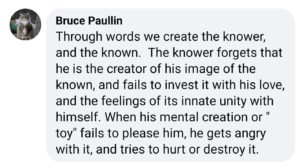
The profound implication here is that the “word” literally creates an awareness of our ‘self’, with its almost infinite subject/object associations, but it can divide us into fragments, and imprison us All of our knowledge has created the great labyrinth, or, to use another metaphor, winds a great web, or cocoon around this now limited self awareness.
There is always a Minotaur awaiting in the labyrinth of our minds, seeking to feast on all of our creative natures. The Minotaur symbolically represents the marriage of our divine and our unilluminated animal, or biological nature. Until the Minotaur is slain, or transformed back to its original noble nature, humanity remains doomed to wander lost in the ignoble kingdom of their own disfigured minds.That Minotaur also can represent the understanding that unhealed wounding and trauma received through our family, religion, culture, and Mother Earth’s sometimes deadly feedback can keep us from reaching our exalted nature..
Mankind, through its collective and individual mind, creates perceptual walls between itself and others, and even between itself and its SELF. The mind, being what it is, weighs and measures EVERYTHING and creates more words by naming and defining, and creating concepts. Yet, the “finger pointing at the moon is never the moon”, as the Zen truth states, and this metaphor points to the great lie that we have collectively created and lived.
Through our minds, we fix, merge, or forge a dynamic process which we have witnessed with our bodily senses and transformed this energy of infinity and eternity into mortal concepts, which are forever limited and stuck in time, and thus foreign to our timeless hearts, or to Truth.. Through this process of creating these conceptual walls, the mind becomes inspired to create ladders over the walls, to try to reach others, and even to try to reach back to itself. It even creates religions to bridge the gap between the Divine, the Universe, Mother Earth, back to its own limited sense of self, which it also created through its own misunderstanding.
How then may we escape the labyrinth, defeat the Minotaur, and return to the Garden of Eden?
HEAL FROM OUR WOUNDED PAST
STOP CREATING PERCEPTUAL WALLS.
We need to take an honest look at the whole of our life. We need to embrace the fact that we have been carrying the effects of a collective, and an individual traumatic life experience, and are experiencing their often times destructive effects in our bodies and minds. We need to understand how patriarchy, toxic masculinity, misogyny, racism, and other destructive cultural hypnotism has damaged our dignity, and created and supported false images and narratives of our self and each other. We need to create a new narrative and a healing image for ourselves that carries our infinite spirit better, with a loving mutually honoring perspective. Enlisting the aid of a trusted therapist, spiritual advisor, shaman, or even accepting the assistance of indigenous plant medicine is helpful in sustaining a healing momentum.
The perceptual walls can start tumbling down through slowing down the verbal and perceptual creation mechanism within our minds, which has been subjugated by habituated stimulus/response patterns inculcated into us during our development as human beings. We have stored much misinformation within our minds, and, through traumatic influences, stored unconscious matrices of disordered energy within our bodies, as well. If we can heal our wounding, and find and cultivate this gap between thoughts, we can regain control of our minds through insight and mindfulness.
I
Otherwise, darkness will continue its predetermined course..
- Ignorance,
- stupidity,
- resentment,
- hatred,
- divisiveness,
- Fear of death,,
- Grief,
- Suffering,
- Alienation from peace of mind,
- The faulty connection with our body and with Mother Earth
Do not readily give way to love and sanity.
The oppression and thought control exercised over us by our wayward family, religion, and culture will attempt to keep us from our greatest good, while promoting the idea that by practicing culturally and religiously disempowering dogma we can find the way out of our dilemma.
Here are the top six regrets from people who are nearing death (from a collection of hospice nurses).
- “I wish I’d had the courage to live a life true to myself, not the life others expected of me.”
- “I wish I didn’t work so hard.”
- “I wish I’d had the courage to express my feelings.”
- “I wish I had stayed in touch with my friends.”
- “I wish that I had let myself be happier.”
- “I wish I had done something of significance in my life.”
People who
- Do not find their real voice,
- Can’t deal with death, disease, loss, or other harsh realities,
- Do not try to bring compassion and healing to life,
devise new and unhealthy variations on religion, politics, and misunderstanding.
The lies spawned from a life
- Devoid of empathy and compassion, and
- Characterized by the denial of our shared essence,
inspires all manners of evil. This darkness runs in herds, and creates lemmings out of unaware humans.
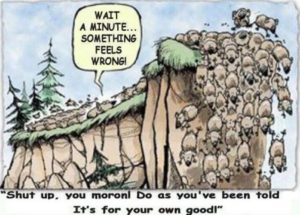
Stop following other politicized and/or religious minions.
All that we see, or will ever see, unto eternity, is our Self, whether we are still steeped in our egi’s illusions and delusion, or now seeing from a less limited perspective from a higher perspective.
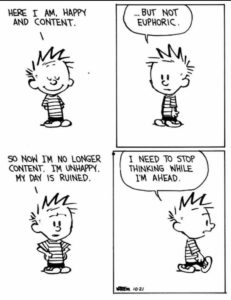
The illusory and hypnotic quality of our thinking makes us believe that others are responsible for our own perceptual errors, yet as a collective consciousness, we all share this dysfunction.. The very self that our culture, our religion, our family, and our politics attempts to create for us is a lie, and while we practice that misunderstanding, we will never be a real person. Our culturally and religiously inspired Geppetto is always churning out new Pinocchios.

Who wants to be just another Pinnochio, or a marionettes dancing image trapped on the movie screen of our corrupted world’s mind?
When we stop trusting the thoughts that create walls, judgements, religions, and false bridges back to our SELF, our humbled minds will finally find a measure of peace. And, a sense of humor may be accessed, after we have finally seen the collective nonsense passing for knowledge for what it really is.

Focus on that peace, extend it out as far as possible, through
- meditation,
- contemplation,
- prayer,
- walks through NATURE,
- yoga,
- Pilates,
- tuned breathing exercises,
- communing with other spiritually minded souls,
- watching a sunset by oneself.
Listen intently to the whispers within our SOUL.
There WILL BE A TIME, when the Universe, God, Love, Truth, Peace will speak to us. We are not quite home yet, as a division still exists. If our wounded self is not sufficiently healed, confusion and delusion will still be our companions. We feel acutely our insignificance, and the unreality of the self that we have created. We are still susceptible to creating false Gods, and deluded prophesies, as a protective mechanism against this ego threatening Truth.. However, if we have been truly humbled, and If our suffering has been healed, we are ready to take the next step of our spiritual journey.
When we finally learn to entrain ourselves with this SILENCE, it will speak through us, and then we are home again, healed and whole, and abiding in our own unique spiritual garden..
This is our spiritual heritage.
This is our starting point, and this is our destination.
Jesus or the Buddha will not work out our salvation for us, unless our name is also Jesus, or the Buddha. Our salvation is dependent upon our intentions, personal work and understanding, and our own movements back to our SILENCE. If we live in the pseudo-Christian fantasy world of the rapture, or playing a harp in heaven with Jesus, we might want to get a little more grounded in reality for this work to have any positive impact upon us, but it is up to each of us as to what to believe.
Never forget, even creating and nurturing the idea of “God” creates yet another subject/object relationship, and objects, no matter how revered, get exiled within our infinitely fragmented mind. The ancient Jewish tradition was correct in admonishing its spiritual adherents to never speak the name of God, or Yahweh, for that very reason.
The TRUTH has never left us. We just let our minds, our past, our traumas and wounding, our hubris, and our social dependencies upon others’ points of view overrun its eternal music, and replace it with our perception driven noise. When we let go of the controls of our parents, our culture and our wounded history, we can stop thinking damaged thoughts, and travel upon the enlightened new paths of a healing, spiritualized consciousness. We can practice gratitude for who we are, and settle into the mystery of our unique identity, as well. There will be moments when only awe, wonder, and gratitude fills our minds, and our hearts. Love will become the stream that carries us into eternity.
There can be a new Conspiracy Of Silence within our humanity, where the SILENCE conspires with our memories, knowledge, and insight, to create a new reality, and a wider sense of wholeness within our self, and within our world. When our civilization allows the evolution of its Common Knowledge Game to fully embrace collective dignity, love, and freedom for all, our world will be a safer place, and humanity will finally reach its potential for greatness.
Remember, because of the way our brains are wired, and programmed,
WE FIND WHAT WE LOOK FOR,
whether it is good, bad, or a complicated mixture of both assessments..
We are the very emanation of that God for which we so vainly seek through our misunderstanding.
Are we looking for freedom, for liberation, and for INFINITY?
We all have to see the entire matrix of the illusion that we have become imprisoned within, to find our own unique clue for exiting it. Our narcissism and self absorbed reality can finally be replaced by a more collaborative, Earth and humanity saving reality
Cease this fruitless search through knowledge and religion, and settle into the truth of our true self.
Our infinitely patient Self awaits!
In our true essence, we are spiritual empaths, and mystics.
We will find all of the support we will ever need once we have returned home.
“My kingdom is not of this world”
Words, and our misapplication of them in defining ourselves, and each other, has created the mess that we now live in.
We are this very Universe that we live in experiencing itself in human form. We have the innate capacity to elevate our vision, and our understanding.
May we all find our real Kingdom.
Silence is golden.
I AM (poem)
I am the brightest of mornings, I am the cloudiest of days,
I am the silent night altar upon which mankind prays and preys.
I am the Olmec and Mayan of times old, recent, and new,
I am all civilization’s ruins, and I am the ever-evolving life that regrew.
I am the bird’s call, I am its flight, and the wind beneath its wings,
I am the music and its spirit that joyously lifts all hearts up to sing.
I am the water, I am the lagoon and the bay,
I am the infinite ocean where my children are birthed, live, love and play.
I am the blue sky, I am the weather changes, and the gathering of clouds,
I am the lightning storms that are now appearing so dangerous and loud.
I am the wind and the sun, I am the warm soothing breeze,
I am even our cold’s most raucous cleansing sneeze.
I am the dolphin and manatee, I am the mangrove lined shores,
I am waves crashing against rocks, that photographers adore.
I am the mind, and I am the end to its lonely thoughts,
I am the heart’s loving web in which we are miraculously caught.
I am the boisterous protests, and I am the crowd made quiet,
I can be even be found witnessing the white supremacists’ riot.
I am the wealthy, and I am the hurt, oppressed and poor,
I am your heritage, history, and future until we all are no more.
I am the Sanders and Pelosis, I am the Putins and Trumps,
I am love’s warriors, and I am also hate’s chumps.
I am the Christian, and the Hindu, I am the Muslim and the Jew
I am the Atheist and Buddhist who you never thought that you knew.
I am the cancer and its treatment, I am the movement towards health,
I am the healing balm that works mysteriously in stealth.
I am the grief, and I am the pain and the sorrow,
I am the deepest well of hope from which we eternally borrow.
I am your lifetime, I am your body and its breath,
I am the blessed last moment before each of our deaths.
I am the death of the false self that leads to the only true heaven,
Our denial of this truth brings the hellish news on channel two at eleven.
I am the sacred, and I am even the profane,
I am the source of all that we treasure, resisting me only adds to life’s pain.
I am not the movement of our thoughts, while we cling to concepts of time,
I am the emergence from all shadows, we all must reach for the sublime
What is my name, and where is my place?
Being ONE is seeing Me on every smiling and suffering sentient beings’ face.
(inspired by our trip to Belize in January, 2019)
Bruce Paullin
In honor of all of the innocent oppressed, bullied, victimized, traumatized, gassed, misogynized, persecuted, marginalized, neglected, abused, murdered, alienated, and institutionalized human beings, and all of the animals that are being driven into extinction, as we are all overrun by the principles of toxic masculinity in it’s almost infinite varieties of forms.. Toxic masculinity, toxic fatherhood, and toxic religion are cultural and historical impediments to achieving and maintaining happiness and good health.
“Be still, and know that I am God! I am exalted among the nations, I am exalted in the earth.” – Psalm 46:10
Set out, pilgrim. Set out into the freedom and the wandering. Find your people. God is much bigger, wilder, more generous, and more wonderful than you imagined. – Sarah Bessey

See Matthew 16:26 from Bible for comparison
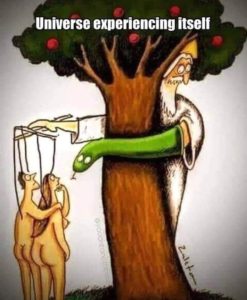
I
THE VOICE OF AWAKENING
Though the slowly shifting sands of time,
Create ever taller hills for this lost soul to climb,
It must be in my selfish, hateful world of no reason or rhyme,
I must begin the search for Truth, to find the Love that is sublime.
“Oh seeker of Truth, God’s high mount you would climb,
Though you now stumble through the valley’s shifting sands of time.
Stop confusing your mind with worn out rhyme and reason,
For they are forever charged by Truth with treason!”
“Oh mental marathoner , only on Life’s treadmill you now stand,
Just re-using the same words and thoughts keeps you life’s ‘also ran’
You’ll forever chase in vain Love’s all-knowing voice,
So be still, for with your run’s end, is the Cause to rejoice!”
“Oh marionette’s dancing image of the screen of the world’s mind,
With all of those conditioned beliefs in control, what freedom could you find?
Release yourself from all of memories’ imprisoning strings
To prepare for the inner Wisdom that only my Intelligence brings!”
“Oh shadow boxer of evil, when will you ever tire?
Tis only champion of a dream world to which you aspire!
Cease resuscitating dead illusions with those mental pugilist blows,
And reveal the peaceful mind of the One who, in the now, knows!”
“So please wake up to Love’s voice sweet somnambulator,
And realize the eternal truth that “I” within “you” is greater,
Than any mental image you could ever form or learn,
And then your World will reflect the One for whom you now yearn!”
“To be in realization of Truth, is to find God’s high mount another illusion to climb,
Created by fearful, desirous minds caught on the merry-go-round of time”
The dark, restless mind remains forever bereft of Love’s Rhyme and Truth’s Reason,
And only chases after mirages, until it sees all of its movements are guilty of treason!”

treason!”
