Grounding in Nature: Bonding with Its Resonating Energy
There is a vibrational power of thunderstorms. They produce negative ions which actually boost mood, reduce stress, and cleanse the air. Ever noticed how fresh and clear the air feels after a storm? That’s because nature is recharging itself, and you.
Recent research found that sound dramatically impacts cells with 190 sound sensitive genes discovered. The body acts like a resonant field, and frequency is a source of nourishment.
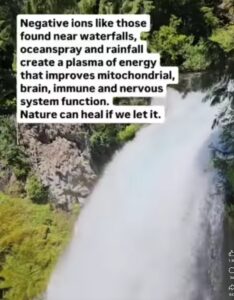
Negative ions like those found near waterfalls, rainfall, and ocean spray create a plasma of energy that improves mitochondrial, brain, immune, and nervous system function. Nature’s grounding can heal if we let it.
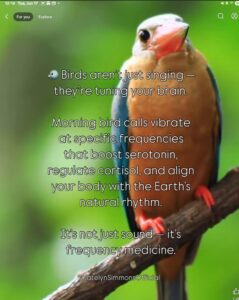
Birds are not just singing, they may be tuning humans resonating with their song. Morning bird calls vibrate at specific frequencies that boost serotonin, regulate cortisol, and align the body more with Earth’s natural rhythm.
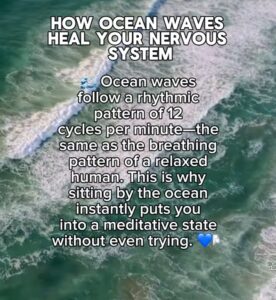
Ocean waves follow a rhythm pattern of twelve cycles per minute- the same rate as the loaded breathing pattern of a human. That is why sitting by the ocean makes it easy to enter into a meditational state.
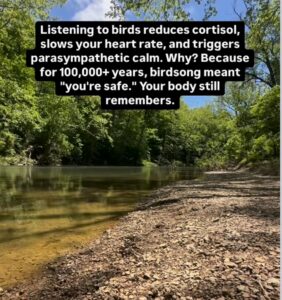
Listening to the birds reduces cortisol, slows heart rate, and triggers parasympathetic calm. For hundreds of thousands of years, birdsong announces all within its range are safe, and our body remembers.
Grounding in Nature: Bonding with Its Resonating Energy
Nature is more than a backdrop to our modern lives. It’s a source of energy, balance, and calm. When you connect deeply with nature, you’re not just enjoying its beauty; you’re aligning with its powerful, resonating frequencies. This practice, often called grounding, harnesses the invisible yet impactful forces of nature to heal the mind, body, and spirit.
I will explore the science behind grounding, including the role of negative ions and sound frequencies, and how engaging with natural elements can impact our stress levels, mood, and overall well-being. By the end, we’ll walk away with practical grounding techniques we can use daily to reconnect with nature and ourselves.
Ever inhaled deeply after a thunderstorm and noticed how fresh and clear the air feels? That uplifting sensation isn’t just psychological; it’s grounded in science. Thunderstorms, waterfalls, ocean spray, and even rainfall produce negative ions, electrically charged particles in the air that interact with our bodies at a cellular level.
When these negative ions meet your skin, they boost serotonin levels, the “feel-good” hormone, while also reducing stress-inducing cortisol. This creates a natural mood enhancement and a sense of inner calm.
Beyond mood regulation, studies suggest negative ions improve the functioning of mitochondria (the energy powerhouses of our cells), strengthen immune responses, and even enhance brain activity. By intentionally exposing yourself to these ion-rich environments, we can begin to align our inner energy with the restorative power of the natural world.
Sound is more than just something we hear; it’s something our entire body feels. Research shows that sound can dramatically impact cells. Scientists have identified 190 sound-sensitive genes that respond to specific frequencies. What this means is that sound doesn’t just influence our minds; it nourishes our bodies, too,
Think of our body as a resonant field, like an instrument. When exposed to certain sound frequencies, such as those found in nature, our cells align to the vibration, promoting healing and balance. Ocean waves, for example, naturally cycle at about 12 rhythms per minute, mirroring the human body’s “loaded breathing pattern.” This rhythmic harmony explains why spending time near the ocean can lead to instant relaxation and meditation.
Similarly, birdsong operates at frequencies that resonate deeply with human biology. For thousands of years, their calls have signaled safety, helping our ancestors begin peaceful mornings. Modern science corroborates this, revealing that listening to bird calls reduces heart rate, decreases cortisol, and stimulates parasympathetic (rest-and-digest) calm, all feeding into our sense of well-being.
“Nature’s alarm clock” describes morning bird calls with perfect accuracy. These sounds aren’t random; they vibrate at frequencies specifically tuned to impact serotonin and cortisol regulation in our body. Research suggests that waking up to birdsong creates a sense of emotional stability and subtly aligns our body’s rhythm with Earth’s.
Similarly, the sound of ocean waves promotes a deep, meditative state of calm through its consistent rhythm. The ocean’s natural cycles mirror internal biological processes, such as heart rate and breathing patterns, enabling an effortless connection with the parasympathetic nervous system. Spending time by the sea isn’t just a luxury; it’s a restorative practice that harmonizes your internal systems.
Bringing grounding into daily life doesn’t require a forest or oceanfront property. We can tap into nature’s energy almost anywhere with these practical tips:
1. Take the Shoes Off
Walking barefoot on grass, sand, or soil allows the Earth’s energy to flow into our bodies, calming our nervous system and recharging our energy levels.
2. Immerse Ourselves in Nature Sounds
Create a playlist of bird calls, rainfall, or ocean waves to play during the morning routine or as background during work. It’s especially effective if we can’t physically step outside.
3. Practice Outdoor Breathing Exercises
Sit in a park, beach, or garden and practice slow breathing exercises while focusing on the sounds, smells, and sights that are all around.
4. Time Your Mornings with Nature
Start the day with the sunrise and morning bird calls. This one change can train the body’s circadian rhythm, boosting energy and mood from the moment we wake up.
5. Spend Time Near Water
Visit a river, lake, or ocean and take intentional walks along the shore. The proximity to water amplifies the effects of negative ions and instantly refreshes our minds.
6. Bring Nature Indoors
Can’t always get outside? Decorate spaces with plants, play nature soundscapes, or keep a small indoor water fountain to simulate the calming ambiance of natural environments.
Grounding isn’t just a wellness practice; it’s a return to the rhythms of life that have supported humanity for millennia. Whether it’s through walking barefoot, listening to the chirp of morning birds, or sitting by the ocean, these simple acts allow the energy of nature to recalibrate our own.
By making grounding a priority, we don’t just heal stress; we center our life on what truly matters. And the best part? Nature offers itself generously and freely to anyone willing to connect.
Start small, begin today, and feel the transformation.
