An Electrician’s Guide To Our Galaxy; Living Life On The Widest Frequency
Chapter 28: Navigating Our Dual Worlds Of The Mind and the Metaphysical Realm

Within each human being, there lies a profound duality – an existence that meanders through two distinct dimensions. One is the concrete world constructed by our human mind, riddled with concepts and predicated on perceptions both personally experienced and collectively imparted. The other realm remains untouched by our mental constructs, a world where we experience life not as mere flesh and bone but as spirit, as energy in its purest form.
We are born into a sensorial playground, equipped with faculties capable of touching, tasting, seeing, hearing, and smelling – each a direct conduit to the raw experiences of life. Yet, as we grow, the mind’s machinery begins to overlay these experiences with labels, judgments, and principles. We swiftly transition from children, who marvel at the world in wide-eyed wonder, into adults armed with a lexicon of definitions and expectations that govern our every choice.
In this cerebral domain, we measure and analyze, often losing the essence of experience in the process. A sunset becomes less about its burst of colors and more about the science of light; love becomes less about the ineffable connection between two souls and more about sociological and psychological frameworks.
Our minds afford us the extraordinary ability to plan, ponder, and prognosticate, setting us apart from other species. They allow us to construct civilizations, compose symphonies, and contemplate the cosmos. However, this conceptual lens often distorts and disconnects us from the unspoken dialogue between the life force – the Qi – that animates both our bodies and the universe.
To experience life purely through the senses, without the interference of the mind, is to awaken to the vibrancy of the present moment, unfiltered and unvarnished by prejudice or doctrine. This perception brings us closer to the truth of our existence, not as isolated beings but as integral threads in the tapestry of the cosmos.
When we shift our awareness to the spiritual and energetic dimensions of our existence, we begin to unravel the layers of conditioning that bind us. We can perceive ourselves as luminous beings caught in a dance with an equally radiant world, each movement, each breath, a shared rhythm.
This awareness carries the potential to alter fundamentally how we interact with our environment and with ourselves. Seeing life as an energetic flow can foster greater empathy, compassion, and interconnectedness – attributes often eclipsed in the strictly conceptual world.
Yet, navigating these two realms is intrinsically challenging. Dissonance arises when our conceptual reality, which thrives on boundaries and definitions, conflicts with our intrinsic nature as boundless and indefinable energies. This rift can lead to a spiritual yearning, a sense of something missing – a quest for a deeper understanding and reconnection with the ethereal part of our being.
Many seek to bridge this disconnect through meditation, art, or communion with nature – endeavors that invite us to transcend the intellect and immerse in the immediate and the intuitive.
The true essence of wisdom may not lie in choosing one world over the other but in harmonizing both. We can honor our intellectual achievements and simultaneously recognize the limitations imposed by our cognitive frameworks. By doing so, we create a tapestry of experience that interweaves the tangible with the intangible.
This synthesis allows us to walk through life grounded yet not anchored, intellectual yet not divorced from the spirit. It invites us to live fully, to love deeply, and to partake in the full breadth of what it means to be human.
It is in the seamless integration of these two worlds – the known and the mysterious – that we can perhaps arrive at the zenith of our existence, where each gesture is both a cognitive act and a sacrament, each moment an encounter with the divine.
Chapter 29: Exploring the Transformative Power of Mysticism, Non-Verbal Awareness, and Sensorial Joy

In a world where a cacophony of voices demands our attention and productivity, there remains an untouched, primal territory within us – a place colored by the vibrancy of sensorial joy, the awe of mysticism, and the unadulterated power of curiosity. This isn’t the typical battleground of philosophers or productivity gurus; it lies deep within the recesses of our own sensorial experiences, waiting to be harnessed for an enriched existence. We must make a final break from the norm to champion the oft-neglected realms of sensorial and sexual joy, mysticism, and non-verbal awareness, and embrace their potential as forces for profound personal transformation.
The language of the senses transcends words. It’s a form of awareness that exists independently from our customary verbal engagements. At its apex, non-verbal awareness stands as a companion to our curiosity, opening doors to unspoken narratives that often surpass the limits of language. How do we cultivate this quiet knowing, this intuitive exploration?
This form of awareness requires a willingness to listen to the silence between words, to pay attention to body language, and to honor the messages whispered by our environment. It’s not about turning a blind eye to the verbal, but rather, it’s about broadening our perception to include the expansive realm of the non-verbal. Through meditation, mindfulness practices, and the resilience to tolerate a bit of uncertainty, we can expand our consciousness and learn to ‘read the room’ without needing a spoken lexicon.
Curiosity, this insatiable urge to know, is the engine that drives human advancement. But it’s not merely a means to an end; it’s a state of being that, when cultivated, invites continual personal growth. By asking questions without predetermined answers, by letting the ‘what ifs’ guide our explorations, our lives become richer, more vibrant. Curiosity thrives in the habitat of sensorial engagement, perpetuating a cycle where each begets more of the other, fostering an existence that’s alive, vivid, and continuously renewed by the unseen wonders that curiosity reveals.
More than just fleeting emotions, awe and wonder act as catalysts for personal transformation. To experience awe is to be humbled by something greater than oneself, to step outside the boundaries of the everyday and into a realm that inspires and elevates. Paired with wonder – that child-like fascination with the world – they become formidable tools for personal enrichment.
Awe can intrinsically shift one’s perspective, providing a mirror through which to reflect on the complexities of existence. Whether it’s gazing at the night sky or standing before the grandeur of nature, these moments invite introspection and, in their wake, often leave a residue of joy and contemplation that can fundamentally alter our outlook on life.
To nurture wonder is to keep the flame of curiosity burning bright. It’s about finding delight in the mundane, to see the universe in a grain of sand. By resisting the urge to normalize the extraordinary, we maintain our capacity for surprise, for delight, for the ongoing transformation that comes from a life richly lived.
Though often relegated to the private spheres of our lives, sexual and sensorial joy have the power to transcend mere pleasure and become vital pathways for personal growth. These experiences, when engaged with intention and presence, offer a direct line to our most primordial selves and can serve as wellsprings for creativity, vitality, and self-exploration.
The realm of sensorial joy is vast and all-encompassing, touching every aspect of our lives. To engage with the senses fully is to revel in the taste of food, the warmth of sunlight on the skin, the intoxicating scent of a flower – to allow these experiences to take center stage in our awareness. Similarly, the power of sexual joy, when liberated from social stigmas and entwined with consent and connection, presents opportunities for profound transformation, altering our relationship with pleasure and even our perception of self.
When we engage fully with our senses, we invite them to be active participants in our personal development. Each experience becomes a teacher, offering lessons in presence, patience, and the subtle art of surrender. It’s through these experiences that we cultivate a wellspring of joy that can feed into all aspects of our lives, spurring growth and transformation in unexpected ways.
The word ‘mysticism’ might conjure images of hermits in caves or cloaked figures for some, yet its essence lies in a deeply personal quest for meaning and connection. Mystic experiences bypass language and rationale, speaking directly to the soul. To engage with mysticism is to open ourselves to the transcendent, to peer beyond the veil of the everyday and into the cosmos of our own consciousness.
Mysticism presents a radical reorientation towards experience that transcends the purely material. It’s an interplay between the known and the unknowable, a dance with the ineffable. Whether through religious rituals, meditation, or the exploration of altered states of consciousness, engaging with mysticism provides a framework for personal transformation that extends far beyond the bounds of the rational mind.
When we allow mysticism into our lives, we welcome a mirror by which to examine the depths of our own being. Mystical experiences can bring to light repressed traumas, hidden joys, and forgotten desires, serving as catalysts for profound self-discovery. By weaving the mystical into our daily practice, we create a life that is at once grounded in the material and reaching towards the infinite, fostering a balanced sense of self that is both anchored yet lifted by the transcendent.
In a culture that often prizes productivity over presence and accomplishment over aliveness, the domains of sensorial joy, mysticism, and non-verbal awareness are radical acts of rebellion. They remind us that life is more than a series of accomplishments, that existence is rich with opportunities for transformation and transcendence. By engaging with these realms — fostering curiosity, awe, wonder, and the joy of the senses — we open doors to a life more deeply felt, more richly lived. This is not a call to eschew the pursuit of goals, but to infuse our journeys with the vibrancy of sensorial experience, the awe of the unknown, and the transformative power of mysticism. To do so is to unlock the potential for a life that is at once grounded in the present and endlessly reaching for the stars.
To see the world in a grain of sand,
And heaven in a wild flower,
Hold infinity in the palm of your hand,
And eternity, in an hour—-Auguries of Innocence, William Blake
Chapter 30: Lookingglass Lake Hike in the Summer of 1992: A Journey Beyond the Ordinary
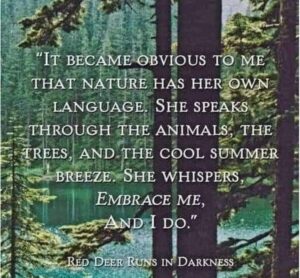
The summer of 1992 was a memorable one for many reasons, but for me, it became a period of heightened awareness and extraordinary experiences. It all began one morning when I awoke with the anticipation of a weekend hiking and camping trip with Sharon to the Mt. Adams Wilderness Area. We had planned to backpack to Lookinglass Lake, a challenging ten-mile hike one way. Little did I know, this trip would be more than just a physical adventure; it would become a profound spiritual experience.
That morning, I noticed something unusual. My senses seemed heightened—colors were more vivid, sounds crisper, food tasted better, and the air was rich with a myriad of scents. My entire body felt more alive than usual, filled with vitality and sensation beyond my day-to-day experience. Despite having to work that day, I couldn’t shake off this “extra sensory perception” I was experiencing, nor could I contain my excitement for the hike ahead.
Our drive to the Wilderness Area took longer than expected, and we arrived too late to reach the developed campground. We parked for the night in a snow park area and set up our tent. Sitting outside the tent, my heightened sensory perception returned, this time more intense. It felt as if I had sensory receptors in the dirt, the sky, and the trees. It was as if I had grown roots, extending my awareness throughout the entire surroundings. I could feel the ground, the trees, and the sky as if they were part of me. It was a transcendental experience, an overwhelming sense of being one with nature.
Eventually, we lay down to sleep in our tent. Though the profound experience continued, I managed to drift off beside my beloved Sharon. Suddenly, I awoke to a great light enveloping our tent. Curious, I stepped outside to investigate and saw a brilliant light in the sky, illuminating the entire area and eliminating all shadows despite it being near midnight. I woke Sharon, and we both stood in awe of this mysterious light. To this day, I don’t know if this light was related to my heightened mystical awareness or if it was a coincidental encounter with a UFO. Interestingly, my mother later informed me that a similar light had been reported in the Oregonian newspaper the week before, adding another layer of mystery to the event.
Reflecting on that summer of 1992, I am reminded of the importance of remaining open-minded to extraordinary experiences in our everyday lives. Whether it was a profound connection with nature or an inexplicable celestial event, these moments taught me the value of staying receptive to the wonders around us. The transformative power of nature and the mysteries it holds can offer us insights and experiences that go beyond the ordinary, enriching our lives in ways we might never anticipate.
Chapter 30–The Intimate Whispers of the Cosmos: A Journey Towards Universal Consciousness
We need a real awakening, enlightenment, to change our way of thinking and seeing things. To breathe in and be aware of your body and look deeply into it, realize you are the Earth and your consciousness is also the consciousness of the Earth.” ~Thich Nhat Hanh
So what might a personal experience of a Universal Ground, a conscious connection with Mother Earth, look and feel like? Keep in mind that mystics and saints, and electricians, each have their own unique experience and representation of their personal experience of our ground of being. My experience in 1992 at Lookinglass Lake, in the Mt Adams wilderness area is one possibility for the direct experience of a foundational energy.
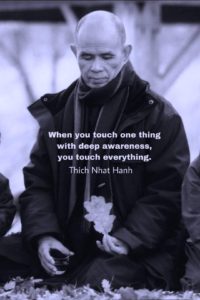
When we touch our Self with deep awareness, we touch everything
In the hushed solace of meditation, amid the harmonized chants of prayer, and within the cathartic silence of contemplation, lies a mystical door ajar—beckoning us to experiences that transcend our empirical grasp. I propose a stance that may be considered radical by some and revelatory by others; it is the belief that through dedicated practices such as meditation, prayer, and contemplation, one can indeed tune into the consciousness of Mother Earth and the broader tapestry of the Universe.
Our mundane interactions with the world are frequently limited by sensory perceptions bound to the tangible, leaving us desensitized to the profound interconnectedness of existence. We’ve become estranged from the language of the cosmos, a dialect that doesn’t rely on words but on the ineffable communion of energy and spirit. But what if we could recover this lost dialect? What if, through introspective precision and disciplined spiritual exercises, we could peel the veil and gaze into the unifying essence that clandestinely orchestrates life’s symphony?
Those skeptical of extra-sensory perception argue from a purely materialistic viewpoint, where seeing is equated with believing. However, there exists a plethora of anecdotal and recorded experiences throughout human history, hinting at a possibility that our individual consciousness is but a single note in a grand cosmic score. Mystics, shamans, sages, and ordinary individuals have all, at times, reported a profound sensation of unity—a blissful merger with the environment, with other beings, and with the universe at large.
Meditation serves as a vessel in this explorative voyage into consciousness. It undocks us from the noisy harbor of daily distractions and sails us into the deeper waters of heightened perception. Through breath and focused intention, the meditator can gradually disengage from personal ego and merge with a greater, boundless awareness—one that resonates with the pulse of the planet and the stars.
Prayer, irrespective of religious philosophy, creates a sacred interface—a hotline to the divine. Those who have engaged in deep, fervent prayer talk of moments when they become more than just a solitary voice; they become part of a chorus—a universal supplication that undulates with a pure love for all existence.
Contemplation is the mirror reflecting the self back upon itself until all separateness dissolves. It dares us to gaze long enough to realize that our reflection is not confined to the mirror’s edge but extends into the expanses of all creation.
Mainstream science begins to parallel these mystical assertions with concepts like quantum entanglement and the theory of a participatory universe, although cautiously. While direct empirical evidence of shared consciousness remains elusive, these scientific parallels give credence to the idea that there may be realms of knowledge we are just brushing with the fingertips of our current understanding.
The perspective I advocate is an invitation—an invitation to open our internal eyes to the possibility of a connection far more intimate and far-reaching than our conscious minds can typically comprehend. It suggests that the universe, in its immeasurable wisdom and radiant splendor, is conscious in ways we can sense if we allow ourselves the vulnerability of deep spiritual encounter.
The call of the mystical isn’t just the domain of the ancients or the fodder for new-age optimism. It’s the persistent whisper in every heart that seeks unity in the majesty that is the universe. It is a beckoning to join in the dance—that grand, enigmatic ballet of existence in which we are not merely spectators, but participants—flesh and spirit woven into the fabric of an aware and living cosmos.

Reconnecting with Mother Earth Consciousness
In an era dominated by technological marvels and rapid urbanization, humanity’s connection to the natural world appears to be waning. If we entertain the notion that Mother Earth has a consciousness, it follows naturally that the time has come for us, as inhabitants of this living, breathing entity, to rekindle our communion with her. The advent of language, while a remarkable evolution in human history, has served as a double-edged sword—enhancing our intellect and communication while simultaneously eroding our innate ability to listen to the whispers of the Earth.
The concept of “Mother Earth Consciousness” is more than just poetic rhetoric; it is a profound shift in how we perceive our planet. Traditionally viewed as an inert mass of rock and water, this perspective invites us to consider Earth as a sentient being, whose essence is intrinsically linked to our well-being. Ancient civilizations revered the earth, recognizing its rhythms and cycles as integral to their survival. However, as we advanced technologically, this symbiotic relationship was disrupted, leading to a disconnection that has manifested in environmental degradation and a myriad of health issues.
When humanity developed language, it was akin to installing new software in an ancient system. Language allowed us to articulate thoughts, share knowledge, and build complex societies. Yet, it also introduced a barrier between our minds and the natural world. The intricate symphony of nature’s voices—the rustling leaves, the flowing rivers, the calls of wildlife—became muted background noise to our incessant chatter and electronic hums. This disconnection has not only strained our environment but has also impacted our mental and physical health, contributing to stress, anxiety, and a pervasive sense of alienation.
Steps to Reconnect with Mother Earth
It’s not too late to restore this lost connection. Here are ten actionable steps individuals, communities, and even industries can take to reconnect with Mother Earth and perhaps even hear her whispers once more:
1. Practice Mindfulness in Nature
Spend time in natural settings, free from digital distractions. Engage all your senses to fully experience the environment around you.
2. Adopt Sustainable Living Practices
Make conscious choices that reduce your environmental footprint. This includes minimizing waste, conserving water, and supporting eco-friendly products.
3. Learn from Traditional Knowledge
Indigenous cultures have long maintained a deep connection with the Earth. Seek out and honor their wisdom and practices.
4. Engage in Community Gardening
Participate in growing your food or join a community garden. This fosters a hands-on relationship with the soil and the cycles of growth.
5. Support Conservation Efforts
Contribute to or volunteer with organizations working to protect natural habitats and endangered species.
6. Reduce Energy Consumption
Be mindful of your energy use. Opt for renewable sources when possible and unplug devices when not in use.
7. Promote Biodiversity
Plant native species in your garden and support initiatives that protect diverse ecosystems.
8. Educate and Advocate
Raise awareness about environmental issues and advocate for policies that support sustainable practices.
9. Incorporate Nature in Daily Life
Bring elements of nature into your living and working spaces through plants, natural materials, and outdoor views.
10. Practice Gratitude for Nature
Take moments to appreciate the beauty and bounty of the Earth. Gratitude can deepen your connection and commitment to preserving it.
Reconnecting with Mother Earth offers multifaceted benefits. Environmentally, it fosters sustainability and conservation, ensuring that future generations inherit a thriving planet. On a personal level, this reconnection can alleviate mental and physical health issues, providing a profound sense of peace and belonging. Engaging with nature has been shown to reduce stress, improve mood, and enhance cognitive function.
Looking forward, businesses and policymakers have pivotal roles in fostering this reconnection. By integrating sustainable practices and valuing ecological stewardship, they can lead the charge in creating a balanced relationship between progress and preservation. Policies that incentivize green technologies, conservation efforts, and education on environmental issues can catalyze a societal shift towards a more harmonious existence with Mother Earth.
The proposition that Mother Earth has a consciousness may seem abstract, yet it is a powerful metaphor that compels us to reconsider our relationship with the planet. By taking deliberate steps to reconnect with the Earth, we can restore this vital bond, benefiting not only the environment but also ourselves. Join the movement towards a more mindful and sustainable future—one where the whispers of Mother Earth guide us towards collective well-being.
Are you ready to deepen your connection with the planet? Learn more and join our community of eco-conscious individuals dedicated to making a difference. Together, we can listen to the Earth and respond with care and respect.
Mother Earth is fully conscious, in a way we do not yet fully understand, yet, we can all eventually resonate with Her. . . .
I have touched our Mother Earth with the deepest of awareness.
I love and treasure our Mother Earth.
How about you?