1.An Electrician’s Guide to Our Universe: Life, Love, and Death Upon Its Unlimited Bandwidth
Introduction: The Circuit of Being
Is it possible that the fundamental laws governing the flow of electricity are not confined to our gadgets and power grids, but are instead a reflection of the very architecture of existence? The principles that illuminate our homes and power our world—voltage, current, resistance, resonance—may also illuminate the deepest questions of the human and spiritual experience. We often seek metaphors for life in biology or poetry, but perhaps the most potent and precise analogies lie within the elegant, predictable, and infinitely complex world of electrical engineering.
This exploration is a journey into that parallel. It posits that our universe is a grand, closed-loop circuit, and our lives, loves, and even our deaths are expressions of energy flowing through its unlimited bandwidth. We will deconstruct the components of our inner and outer worlds, not as poets, but as electricians—analyzing the schematic of our own consciousness.
Chapter 1: The Voltage Source – The Wellspring of Consciousness
Every circuit begins with a source of potential. Without voltage, there is no push, no possibility of flow, no action. In the circuit of our being, this voltage source is the fundamental knowledge, wisdom, and intelligence available to us—both innate and acquired.
- The Universal Source: This is the collective consciousness, the primal intelligence of the cosmos. It is the untapped potential energy present everywhere, waiting for a path to express itself. Like a battery on the shelf, it holds immense power, but requires a connection to do work.
- The Transformer: How is this universal potential stepped up or down for our individual use? The transformer in our human circuit is any catalyst that alters our potential. Food fed to a hungry body transforms latent energy into kinetic action. A new piece of knowledge or a profound experience can act as a step-up transformer, elevating our awareness and unlocking new capabilities. Conversely, trauma or ignorance can act as a step-down transformer, limiting our potential and reducing our capacity to engage with the world.
Chapter 2: Conductors and Current – The Flow of Communication and Experience
If voltage is potential, then current is that potential set in motion. It is the flow of electrons, the tangible movement of energy. In our human experience, this is the act of communication, the transfer of ideas, and the sharing of experiences, the exchange of love and expressions of empathy and compassion.
- The Conductor as Medium: The wires in a circuit are the medium through which electrons travel. In our world, the conductors are often invisible. The air molecules, disrupted by the vibrations of sound carrying a voice from one person to another, form a conductive path. The photons carrying light from a written page to our eyes are another. Every medium that allows for the transfer of information is a conductor.
- Words as Electrons: The words we speak or write are the electrons themselves. They are the discrete packets of energy and information that make up the current of our communication. A rush of excited words is a high current flow, transmitting a powerful charge of emotion and data. A single, carefully chosen word can be a low, steady current, yet still complete a vital circuit. The more we share, the greater the current flowing between us.
Chapter 3: Resistance – The Inevitable and Necessary Friction of Life
In electronics, resistance is an opposition to the flow of current. In life, we often view resistance as a purely negative force—an obstacle to be overcome. But an electrician knows that resistance is not only ubiquitous but essential. Without it, circuits would short, and energy could not be converted into useful work, like light or heat.
- Resistance as a Catalyst for Growth: The challenges we face, the doubts we harbor, the friction in our relationships—these are all forms of resistance. They are not merely impediments. Resistance forces energy to transform. The resistance of a difficult problem forces our minds to work, generating the “heat” of insight. The resistance of another’s differing perspective forces us to refine our own, generating the “light” of understanding. It is the necessary load that gives our efforts meaning.
- The Nature of the Resistor: Resistance is not a flaw in the system; it is a feature. It is present in the very material of the conductors and is intentionally added in the form of resistors to control and direct energy. Similarly, our limitations and the inherent difficulties of life are not cosmic mistakes. They are the components that channel our spiritual and intellectual energy, allowing us to perform meaningful work instead of dissipating into an uncontrolled short circuit.
Chapter 4: Resonance – The Harmony of Connection
When the inductive (energy-storing) and capacitive (charge-storing) properties of a circuit are perfectly balanced for a given frequency, it achieves resonance. At this frequency, energy oscillates between the inductor and capacitor with maximum efficiency, and the circuit “sings” with a clear, sustained tone, so long as the power source remains.
- Human Resonance: This is the experience of being perfectly “in tune” with another person, an idea, or an activity. It’s the effortless conversation where thoughts flow back and forth, building on each other. It’s the state of “flow” where you are so absorbed in a task that time seems to disappear. This is not magic; it is a state of resonance. Your internal inductance (your potential to learn and grow) and your capacitance (your capacity to hold and process information and emotion) are perfectly aligned.
- Maintaining the Frequency: Resonance is not a one-time event. It must be sustained by a continuous energy source—our attention, our intention, our love. A relationship in resonance feels effortless, but it still requires the constant, quiet hum of a shared energy source to maintain its harmonious frequency against the inevitable resistance of the outside world.
Chapter 5: The Load – The Purpose of the Circuit
Every closed-loop circuit has a load. The load is the component that does the work—the lightbulb that glows, the motor that spins, the speaker that produces sound. The load is the entire reason for the circuit’s existence.
- The Listener as the Load: When you speak, the person receiving your words is the load. They are the component that absorbs the electrical current of your communication and converts it into something else: an emotion, a new idea, a change in perspective. Without a load, a circuit is either open (pointless) or shorted (destructive). Without a listener, a speaker’s words are just disturbances in the air.
- The Work of Being: We are all, at different times, the source, the conductor, and the load. Our purpose is not merely to exist, but to complete circuits. To receive the energy and wisdom of others (act as a load), to channel our own energy into the world (act as a source), and to serve as a bridge for others (act as a conductor). The ultimate “work” is the transformation of potential energy into shared experience.
Chapter 6: Process Control – The Cybernetics of Goal-Setting
In engineering, process control theory explains how systems maintain stability and achieve setpoints. This is done through feedback and feedforward loops—a perfect analog for how humans set and achieve goals.
- Feedback Loops (The Past): A feedback loop measures the output of a system and compares it to the desired setpoint. If there’s a deviation, it adjusts the input. This is our process of reflection. We look at our results (“output”), compare them to our goal (“setpoint”), and adjust our behavior (“input”) accordingly. This is learning from our mistakes and successes.
- Feedforward Loops (The Future): A feedforward loop anticipates disturbances before they affect the output. It acts proactively. This is human foresight and planning. We anticipate future challenges (a difficult exam, a market downturn) and take action now to mitigate their impact. It is a more sophisticated form of control, relying on a predictive model of the world.
By mastering both our internal feedback (self-reflection) and feedforward (planning) loops, we move from being passive components in the circuit of life to becoming the active controllers of our own processes, constantly adjusting our trajectory to meet the “setpoint” of our highest aspirations.
The Human Circuit: An Electrical Metaphor for Our Spiritual Experience
Have we ever stopped to consider that the invisible forces governing the universe, from the orbits of planets to the flow of electricity, might also mirror the intricate workings of our own inner lives? The language of physics and engineering, often seen as cold and objective, can offer a surprisingly profound metaphor for understanding the human and spiritual experience. Let us explore the idea that we, in our very essence, are complex circuits, channeling the energy of existence through our thoughts, actions, and connections.
The Source: The Voltage of Consciousness
In any electrical circuit, everything begins with a voltage source—the origin of potential energy that drives the flow of current. This source can be equated to the fundamental wellspring of knowledge, wisdom, and intelligence available to us. It is the universal consciousness, the divine spark, or the inherent potential that exists within and around every individual. Just as a battery holds stored energy waiting to be released, we hold a reservoir of untapped awareness.
A transformer, in this analogy, represents the catalysts that alter our potential. Food fed to a hungry body transforms lethargy into vitality, stepping up our physical energy. A new piece of knowledge, a profound conversation, or a moment of deep insight can act as a spiritual transformer, stepping up our consciousness and expanding our potential to new heights. These moments don’t create energy from nothing; they convert the available source voltage into a new state, making it more potent and usable for the journey ahead.
Conductors and Current: The Flow of Words and Ideas
How does this potential travel from one being to another? The conductors in our human circuit are the mediums through which we connect. Consider a simple conversation: the air molecules, disrupted by the vibrations of sound, act as the pathway carrying the signal from one person’s mouth to another’s ears. The words themselves are the electrons, the very charge carriers of meaning. The more words shared, the more ideas exchanged, the higher the current of communication and understanding.
This current isn’t limited to sound. A written text, a piece of art, or even body language or a shared glance where something seen can serve as a conductor, allowing the current of human experience to flow between individuals, or from an observed object to the observer. We are constantly transmitting and receiving, participating in a vast, interconnected network where every thought and expression contributes to the overall flow of collective energy.
Resistance: The Inevitable Friction of Being
Resistance is a ubiquitous and often misunderstood concept in both electrical and human circuits. In electronics, resistance is not inherently “bad”; it is an essential property that controls current, dissipates energy as heat, and enables functionality. Without resistance, circuits would short, and components would burn out.
Similarly, resistance in our lives—the obstacles, the doubts, the friction we encounter in our relationships and personal growth—is not something to be merely overcome and eliminated. These challenges are integral to our design. They test our strength, force us to adapt, and create the necessary tension for growth. Resistance teaches us patience, resilience, and the art of navigating complex systems. It is the force that refines our character, much like a resistor carefully modulates the flow of electrons to protect the more delicate components of a circuit. To wish for a life without resistance is to wish for a circuit without function.
The Load: The Purpose of Connection
What is the point of all this flow? In an electrical circuit, the current does work when it passes through a load—a lightbulb that illuminates, a motor that spins, a speaker that produces sound. The load is the purpose, the component that transforms electrical energy into a useful output.
In our human circuit, the listener is the load. When we speak our truth, share our wisdom, or offer a word of comfort, the person receiving it is the load that gives our expression purpose. The energy we transmit is converted within them into understanding, emotion, inspiration, or action. Without a receiver, our words are just potential, a current flowing into an open circuit with no destination. It is in the act of being heard, seen, and understood that our personal energy finds its ultimate meaning and completes its circuit.
Resonance: The Harmony of Connection
One of the most beautiful phenomena in electronics is resonance. In a circuit containing both inductance (which resists changes in current) and capacitance (which resists changes in voltage), there exists a specific frequency where their opposing forces cancel each other out. At this resonant frequency, energy oscillates freely between the two, and the circuit becomes highly receptive to that specific frequency, amplifying it with minimal effort.
This is the perfect metaphor for deep, authentic human connection. When two individuals find a shared wavelength—a common passion, a mutual understanding, a spiritual alignment—they achieve a state of resonance. The back-and-forth of conversation, the exchange of ideas and emotions, flows effortlessly. The frequency of their connection is self-sustaining, maintained as long as the source of their shared interest or love continues to provide energy. This is the state we seek in our most meaningful relationships: a harmonious oscillation where we feel perfectly attuned and amplified by the presence of another.
Completing the Circuit
By viewing ourselves through this electrical lens, we gain a new appreciation for the elegant design of our existence. We are not random collections of cells, but intricate circuits designed for connection, growth, and the transformation of energy. Our potential is the voltage source, our words are the current, our challenges are the resistance that gives us strength, and our connections are the load that gives us purpose.
The next time you face an obstacle, consider it a necessary resistor. When you share your thoughts, see it as closing a circuit and illuminating another’s world. And when you find that person with whom you truly connect, cherish that resonant frequency. We are all part of a grand, interconnected schematic, each playing our part in the magnificent flow of the universal circuit.
2. Chapter 3: Resistance and Resonance: Lessons from Electrical Circuits to Human Growth

Resistance, overload, inductance, capacitance, and resonance can teach us much about navigating life’s complexities. I will briefly acknowledge these circuit attributes in this chapter, reserving more in-depth discussions for later. What do these seemingly technical concepts have to do with us?
Much more than meets the eye. Remember, no matter what branch of spirituality, religion, science, philosophy, or general life we are studying, we are always looking at the vast domain of ourselves. Never forget the old adage:
As within, so is without.
Or:
All that is seen is ourselves.
I will cover these profound truths all throughout this book, so you will see the relevancy of this universal idea in many different ways.
It is through these parallels—grasping how energy flows within a circuit and how life unfolds within us—that a larger truth emerges. A circuit’s resistance is not unlike the challenges we face; its resonance akin to the harmony we seek. By exploring these interconnected ideas together, this chapter sets the foundation for deeper insights into the intricate equilibria between body, mind, and the unseen forces of existence. These subtle yet compelling reflections invite us to widen our lens and remind us that to untangle the mysteries of the universe is to learn the art of mastering ourselves.
Resistance is one of the fundamental principles in electrical circuits. It serves to temper the current, preventing catastrophic surges that could damage delicate components. Electricity flows through circuits, bringing life to our devices, much like emotions and energy flow through us, fueling our thoughts and actions. Yet, too much current can overload and fry a circuit, just as overwhelm can emotionally burn us out.
Resistance, often a perceived obstacle, isn’t always bad. Far from being an enemy, when properly engineered it shapes and stabilizes electrical systems by becoming a regulator and safeguard to optimal current flow. When resistance is properly paired with capacitance, which stores energy, and inductance, which regulates the current flow through dampening the potentially damaging effects of fast current changes, the elements together create balance and usable energy within the circuit..
Similarly, in human life, resistance often arrives disguised as struggle or challenge but can serve as a guiding force for intentional growth. Resistance can focus energy into meaningful growth if we calibrate our responses intentionally. Resistance in our lives emerges as obstacles, stress, or inner conflict. It’s the frustration of an unplanned setback, the discomfort of stepping outside our comfort zone, the challenge of moving forward when the path ahead seems unclear, or the aversion to new understanding or information that threatens our perceived stability and balance,.
Over time, resistance can build into entropy—a natural tendency toward decay if not managed. Here lies the electrician’s greatest metaphor for life itself. Circuits require periodic inspections and recalibration. Resistance must be evaluated, and balance restored to flow harmoniously again.
Take a moment to inspect your own inner currents. Pause and ask yourself two questions:
- Where am I experiencing resistance that serves as a guide to meaningful growth?
- Where is resistance blocking energy flow instead of shaping it positively?
Have you experienced a time when resistance blocked your way, only to later realize it shaped you profoundly? For example, facing rejection at work may feel like a hard stop. Yet, it often redirects your energies to areas that truly matter. Athletes encounter physical resistance—gravity, muscle fatigue—and through it, they develop strength and resilience. What about that therapist who may have overwhelmed you with information about the lifelong effects of a childhood trauma you never wanted to look at again? These aren’t barriers to avoid but forces to engage with intentionally, just as a well-designed circuit integrates resistance within its system for optimal functioning.
If resistance is inevitable, perhaps the real question is how we respond to it. What if, instead of resisting resistance, we gain insight into to, and reengage with it more consciously? Resistance an important component to our ability to grow and to connect with each other spiritually, properly expressed.
This idea echoes ancient spiritual teachings and psychological frameworks. Buddhist philosophies, for example, teach that suffering—akin to resistance—arises from attachment or aversion. By intentionally meeting resistance with mindfulness and curiosity, we can transform it. Carl Jung’s work on shadow integration also resonates here; psychological resistance often points to our repressed emotions or unexamined fears. By leaning into this resistance, we uncover deeper truths and grow.
Resistance sharpens intention. Imagine a river encountering rocks in its path. Instead of halting entirely, it changes direction, carving new paths in the landscape. Similarly, in our lives, resistance urges us to pause, recalibrate, and purposefully channel our energy. Struggles at work might sharpen your focus on a side passion. Personal loss might bring clarity to priorities.
But intention is key. Without intentionality, resistance overwhelms, leaving us stagnant. Compare this to a simple electrical system where resistance left unchecked results in overheating and failures. Human growth lies in acknowledging resistance, tempering it with intentional action, and transforming the raw tension into clarity.
Ignoring resistance—whether in circuits or life—comes at a cost. Just as overloading an electrical circuit leads imbalances and burnout, overwhelming ourselves without resetting can lead to emotional and physical breakdowns. Many mental health professionals today see burnout not as a personal failing but as a systemic fault. Too much input, too fast, without pause to restore balance. To manage resistance effectively, we will need some practical strategies, and I will cover them in depth later in the book.
Resistance, however, is only part of the equation. Resistance coupled intentionally with capacitance and inductance creates resonance, a quality of energy that connects components, physically separated circuits (does AM or FM radio ring a bell?), or even people together. When resistance is fine-tuned with capacitance and inductance into resonance, we achieve a sublime state of coherence and balance. This resonance not only connects components in divine symmetry but also offers profound lessons for human experience.
How can we cultivate resonance in our lives? If we practice personal balance, harmonious relationships, communal connections, and creative expression, resonance becomes a natural experience of those accessing the universal bandwidth.
The next time you feel resistance—be it frustration, challenge, or discomfort—pause. Rather than viewing resistance as an adversary to overcome, see it as an energy to harness, a teacher pointing you toward growth. Balance it with intentional action, and seek ways to harmonize it within the larger context of spiritual capacitance and human inductance.
Like electrical circuits, the sum of our lives is not just about managing individual elements. It’s about tuning them so that they work together in divine resonance, amplifying purpose and connection. Resistance, capacitance, and inductance when embraced, can light up the circuitry of your personal and collective growth.
The galaxy exists as a vast and dynamic circuit where stars emit light, black holes are the sources of vast amounts of dark energy and redistribute mass, and planets exchange gravitational energy. Though this expanse seems impossibly large, the energy principles governing it also animate the human experience. Just as the NEC commands an electrician to balance and direct energy safely and intentionally, so too does life call for conscious alignment with universal bandwidth.
Commit to tuning into meaningful frequencies—the moments of clarity and connection that amplify your sense of purpose. Allow resistance to refine your character, shaping your path rather than obstructing it completely. Remember that grounding doesn’t limit ambition; it gives you the stability to sustain it long-term.
Above all, contribute your light to existence. Flip your internal switch. Illuminate your surroundings with the clarity of purpose and the radiance of connection.
Energy, at its core, isn’t static—it always moves, transforms, and creates new possibilities. The universe mirrors this infinite dynamism with each breath of stardust and wave of light.
The task ahead isn’t simply to channel energy but to direct it with intention—to spark meaningful connections, illuminate deeper understanding, and refine how we balance resistance. Living in sync with life’s universal bandwidth creates a life of not only productivity but profound fulfillment.
The greatest electricians aren’t those who adhere to rules as mere rote knowledge—they are those who understand how circuits work holistically, innovating to expand their system’s reach and efficiency. Similarly, the greatest human lives are those that harmonize metaphysical and physical currents, amplifying their light toward others while resonating with the larger interconnected web around them.
What will you illuminate in your time? Will you connect, radiate, and contribute to the infinite bandwidth of existence?
Together, we’ll uncover how light—not just electric, but metaphorical and spiritual—guides not only electrons in wires but humanity itself.
Let’s get wired together!
3. Chapter (5): Human Resonance and Electrical Circuits
The essence of resonance lies in connection, be it in electrical systems or human experiences. By examining electrical circuits through the lens of human qualities, we uncover profound parallels between the physical and the spiritual, the logical and the emotional. Remember, all that we see is ourself, so prepare to see aspects of your own capacities as a human being in a new light–the electrician’s light!
I am about to present some simple concepts about the characteristics of electrical circuits, especially as they relate to our capacities as human beings. You do not need to become an electrical engineer or theorist to understand the concepts, just as you do not need to become a theologian or philosopher to understand the spiritual capacity and characteristics of your being. An open mind and a willingness to briefly travel upon a new path of understanding is all that is required.
So here we go.
Source
Any electrical circuit requires a power source, whether it’s a voltage or current source, to function as intended. This source must be meticulously engineered not only to meet the immediate demands of the circuit’s components but also to accommodate potential future expansions or upgrades. Without such a thoughtfully designed source, the circuit remains inert, incapable of fulfilling its purpose or adapting to the inevitable changes that lie ahead.
Similarly, human beings rely on a multiplicity of energy sources to fuel their existence—both tangible and intangible. Diet provides the physical sustenance necessary for survival, while spiritual practices, interpersonal connections, and intellectual pursuits offer nourishment for the mind and soul. These sources align with the intricate design of our being, imbuing purpose and vitality while preparing us to grow, evolve, and transcend the challenges of life.
Resistance
Resistance is a core attribute in any electrical circuit—it limits current flow, dissipates energy, and prevents overloads. Electrically, it stabilizes the circuit, ensuring the system doesn’t become overwhelmed by an influx of energy. Biologically, humanity mirrors this concept with our immune systems. Antibodies act as “resistors,” safeguarding us against harmful changes, like a virus invading our cells.
On a broader level, resistance is mirrored in human consciousness. Psychologically, we resist ideas that appear contrary to our points of view, or trigger unfavorable emotional reactions.Think of how we resist false ideologies or harmful narratives—racism, misogyny, or ignorance. Much like an electrical resistor protects a circuit by moderating energy, humans create societal “anti-bodies,” challenging and halting the spread of destructive phphilosophieswith the intention of ensuring the collective consciousness remains healthy and untainted.
Capacitance
Capacitance relates to a circuit’s ability to store and release energy when needed. A capacitor doesn’t act hastily; instead, it absorbs and holds energy, releasing it when the circuit demands it. This characteristic resonates with the human ability for contemplation and potential. Within each of us lies capacity—a reservoir of thoughts, ideas, and emotions waiting for the right moment to manifest.
Just as a capacitor must balance charge and discharge to maintain functionality, humans must harmonize introspection and action. Without this balance—a measured accumulation and release—we risk stagnation or burnout. Our minds, like circuits, thrive on this rhythm of pause and expression.
Inductance
Inductors in a circuit rely on magnetic fields to regulate the flow of energy, producing opposition to changes in current. They create a dynamic resistance to instability, mirroring human influence and adaptability. When faced with external forces or fluctuating circumstances, our choices and behaviors “induce” meaningful shifts in the world around us. Inductance embodies the human ability to shape outcomes, crafting energy into tangible action while anchoring it to stability.
Think of collective movements—a protest, a community rallying to solve crises, or even the melodic rise and fall of a shared song. These moments channel individual emotions into collective purpose, creating lasting ripples across societal networks. This human resonance enriches the interconnected web of existence.
Resonance
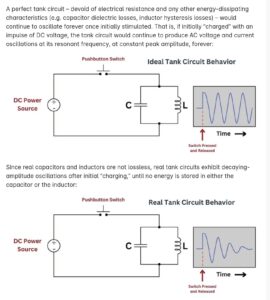
When resistance, capacitance, and inductance work harmoniously in an RLC circuit, resonance emerges. This is the point when the system absorbs and utilizes energy with optimal efficiency, creating conditions for unimpeded vibration. Resonance amplifies signals, enabling clearer communication and purpose within the system. Resonators can become antennas, allowing for the transmission and reception of electrical energy,
Humans, too, have the capacity for resonance—moments when alignment of thought, emotion, and action achieves collective harmony. Whether it’s a shared cause fueling protests against injustice, or an inspiring speech that stirs the hearts of thousands, resonance occurs when individuals connect through shared frequencies of purpose.
Yet, achieving human resonance requires a common ground, or a reference point—a shared foundation that aligns diverse individuals while preventing chaotic instability. Without this equilibrium, resonance may devolve into disharmony, as seen in destructive mobs acting without unified intent.
Electrical circuits can be tuned to select specific frequencies, such as in radio receivers or television sets. Humans, too, can create a “tuned circuit” of consciousness. Our knowledge, language, and cultural narratives act as carriers of energy within the circuitry of collective human awareness. But our systems need recalibration—a deep tune-up—to align with the greater purpose of humanity.
This tuning requires more than intellectual pursuit; it calls for a spiritual realignment with the “ground of creation.” Across millennia, this changeless reference point has been known by countless names. It is accessible only through the suspension of egocentric thoughts—the silencing of the self-centered narrative that dominates our consciousness. Finding this silence allows us to attune to the profound frequencies of life and creation itself.
When we transcend narratives rooted in individualism, we begin to hear the larger symphony. We feel the Earth’s plea, recognize the interconnectedness of all beings, and act in alignment with the sacred balance of existence. Resonance becomes not just a state of flow within systems, but a way of life—an amplification of humanity’s potential to create abundance, harmony, and enlightenment.
The parallels between electrical resonance and human consciousness invite us to explore life itself through physics’ lens. Resistance teaches defiance and protection; capacitance mirrors stillness and potential; inductance reveals influence and growth. Together, they create resonance—energy and action aligned to achieve clarity and shared purpose across a group of people.
By tuning our human circuits with precision and care, we can craft a resonance that ensures our survival as a species, while deepening our connection to the sacred ground of being.
4. The Intriguing Parallel Between Electrical Circuits and Human Conversation
At first glance, the comparison between the complexities of human conversation and the technicalities of an electrical circuit might seem far-fetched. However, upon closer inspection, this analogy not only holds water but also unveils some profound insights into the nature of effective communication. It’s a metaphor that does more than just describe; it enlightens, making the abstract intricacies of our daily interactions a little more tangible and, dare I say, more manageable.
In a basic electrical circuit, the flow from the voltage source through conductors, across the load, and back to the ground is quite similar to the progression of a conversation. The first speaker, or the initiator of dialogue, acts as the voltage source, energizing the conversation with their thoughts or questions. The air, or any medium that carries sound (or in our modern world, digital signals), serves as the conductor, allowing the speaker’s message to travel to the listener. This message, much like an electrical current, is the invisible yet palpable energy that connects two points – or in this case, two people.
Just as a break in a circuit prevents the flow of electrons, a conversation without both a sender and a receiver falls short of its purpose. This circuit needs to be complete for effective communication to occur, highlighting the importance of engagement and attentiveness in conversations. Both parties must be connected and receptive for the ‘current’ of conversation to flow smoothly.
Resistance in an electrical circuit can decrease the efficiency of current flow, much like misunderstandings or distractions can impede the transmission of information in a conversation. Recognizing and addressing these ‘resistances’ promptly can restore clarity and purpose to the interaction, ensuring that the message is received as intended.
Perhaps the most critical parallel is the concept of grounding. In electrical terms, the ground provides a reference point for the current, a return path to the source that completes the circuit. In conversation, grounding can be seen as the common understanding or shared knowledge between the participants. Without this grounding, conversations can feel disjointed or unproductive, as if speaking into the void without a return path. Establishing common ground ensures that both participants are oriented and connected, providing a stable basis for meaningful exchange.
Understanding these parallels can significantly impact our approach to communication. It prompts us to consider, “Is my circuit complete? Is there resistance I need to be aware of? Are we properly grounded?” Reflecting on our conversations through the lens of an electrical circuit not only offers a novel perspective but also encourages us to be more mindful communicators. Just as engineers strive to optimize circuits for maximum efficiency and clarity, so too can we hone our conversational skills, seeking to enhance understanding, connection, and collaboration in every interaction.
In essence, recognizing the metaphorical equivalence between a simple electrical circuit and human conversation can illuminate the dynamics of our daily communications. It frames our interactions in a new light, encouraging us to cultivate conversations that are as effective and energetically charged as a well-designed circuit. By applying principles from the realm of physics to our personal and professional exchanges, we can aspire to achieve not just communication, but true connection.
5. Harnessing Electrical Theory to Illuminate the Enigma of Consciousness
The human mind, an intricate tapestry of thoughts, emotions, and experiences, remains one of the greatest enigmas at the heart of our very existence. Consciousness, the intimate sense of self-awareness that characterizes our every waking moment, cannot be palpated, quantified, or dissected, yet it’s as real as the air we breathe. Many have embarked on the Herculean task of demystifying consciousness, wielding an armory of theories from the abstract to the scientifically tangible. Within this quest, I see the integration of electrical theory as a helpful and formidable lens through which we can examine the kaleidoscopic nature of consciousness.
Drawing parallels between the human mind and electrical constructs is more than a mere intellectual indulgence; it’s an acknowledgment of the underlying and overlapping principles that govern both realms. The brain’s neural pathways echo the intricate wiring of a circuit board, with billions of neurons firing in patterned sequences much like currents coursing through a predefined circuit. Synapses, akin to electric connections, function as conduits of information, empowering the mind to perform feats that parallel a supercomputer’s prowess yet with an elegance and efficiency that technology strives to emulate.
Why, then, should the field of electrical engineering—a domain steeped in the mastery of currents, circuits, and connectivity—be sidelined in our dialogue on consciousness? The reality is that electrical theory offers a referential understanding that resonates with our empirical observations of the world. It speaks a language that is inherently familiar to us, a narrative steeped in energy, flow, resistance, and potential. And who better to expound upon these correlations than someone with an electrical background, for whom these concepts are not abstract, but rather elemental to their very thinking?
There’s an alluring symmetry in how we discuss ideas and electricity in metaphorical tandem. We talk about the ‘spark’ of inspiration, the ‘current’ of thoughts, or the ‘shock’ of realization. These are not merely poetic flourishes; they are testaments to how the behavior of electricity mirrors our cognitive processes. Just as electricity requires a conducive medium to propagate, so too does consciousness thrive on the rich substrate of our minds, channeling through dendritic networks to give birth to innovation and insight.
Furthermore, consider how we use resistors within electrical circuits to moderate and control the flow of current, preventing damage and allowing for precise operation. Similarly, our brains employ neurotransmitters as regulators of synaptic activity, modulating thought and reaction, insulating against the cacophony of stimuli and modulating the noise that bombard us incessantly.
Admittedly, consciousness cannot be fully encapsulated within the framework of electrical theory, for it encompasses a spectrum far wider than what such a comparison allows. And yet, this does not diminish the value of exploration through this window. Much like alternating currents, perspectives on consciousness oscillate between disciplines, each offering its own rhythm and wavelength to the symphony of understanding. The polarity of viewpoints—scientific and philosophical, empirical and intuitive—serves not to confound but to enrich our comprehension.
In the grand endeavor to decode consciousness, then, why not harness every conceivable framework at our disposal? Far from being a reductive approach, the application of electrical theory illuminates new facets, challenges preconceived limits, and sparks innovation in thought. The exploration of consciousness is an iterative process, an evolving circuit of inquiry that grows more profound with each addition to the body of knowledge. Electrical theories contribute to this growth, providing not only structural analogies but also fostering a deeper, systemic understanding of how consciousness may emerge from the ceaseless interplay between energy and matter, signal and response.
As we chart the unknown territories of the human psyche, it seems not only reasonable but critical to recognize and appreciate the insights offered by electrical theory. It is through the synthesis of diverse perspectives that we inch closer to the core of this great enigma. The circuitry of the mind beckons—and with each theoretical and metaphorical connection we draw, the brighter the light of comprehension shines on the shadowy realm of consciousness.
And remember, as far as we now see, or will ever see, unto eternity, is ourselves. As we witness electrical theory in action, we witness aspects of the workings of our minds and their self-concepts as they play against the background of our infinite universe.. This same principle extends from electrical all the way to quantum theory, where we see not only how capable we are now, but also how amazing we can become in the future..
Words are to Electrons, as Current is to Sentences
Like the charged particles that swarm within the lattice of an electrical conductor, words burst with potential as they form sentences, such as the coiled energy within a magnetic field of an electromagnet. I have found that there are parallels between linguistic expression and electrical conduction, and I now relate the two on a fundamental level that affects the very fabric of our consciousness.
Consider individual words as electrons, each carrying a charge, albeit one of emotional or informational value. Just as an electrical current is comprised of countless electrons, the power of language lies in the cumulative effect of words linking in a sequence. These linguistic currents, comprising streams of words, create a flow of intent that can either access and express a potential for shared intelligence or short-circuit understanding.
When words are strung into sentences, a process akin to electric conduction takes place. Sentences are the linguistic current, propelling the stream of thought with the deliberate push and pull of grammar and structure. Much like the transformation of electrical energy in wiring, sentences carry the thought from point A to point B, but the ‘B’ is often a higher concept, a conclusion or an enlightenment aerated in the final syntax.
The human consciousness can be likened to the stored energy within an electromagnetic field. Just as an electrical field contains and shapes the energy around it, consciousness wrangles the myriad currents of thought into coherent and actionable fields. It is the energy of consciousness that gives rise to expression, allowing us to broadcast our mental understanding with precision. This parallel carries a weighty assertion: just as the energy within an electromagnetic field is capable of influencing other fields, so too can our conscious energy—our expressed thought and feeling—influence the thoughts and feelings of others, on scales vast and intimately small.
Words, and the sentences they create, are not merely tools for communication; they are the vessels of our souls, carrying the current of our being’s energy. Each word choice, each semantic pathway, is also a choice in how regal we intend to communicate, how potent and weighty the charge we deliver. Language, therefore, isn’t just the vehicle of thought; it is also the boundless horizon that thought travels toward.
The profound nature of language and expression encompasses more than just the mechanical act of communication. It reveals the very undercurrents of human interaction and understanding, demonstrating that the syntactic choices we make are as influential and charged as a coursing electrical circuit. By becoming conscious of language’s electric power, we can shape not just our words but the very fields of interaction that radiate around us.
The Electrical Circuit of Group Learning
Electricity and education are not often found in the same sentence, but their underlying principles share an uncanny resemblance. To borrow from the parlance of physics, teaching to a group can be likened to impressing a voltage on parallel electrical circuits, where the energy source – the teacher – powers numerous receivers or participants. In contrast, there’s another form of educational energy exchange, akin to a series electrical circuit, where each member contributes, amplifying the voltage collectively.
Understanding these parallels can shed light on the dynamics of group learning, illuminating the need for a balanced approach that leverages the strengths of both types of circuits. In a world where collaboration and co-creation are increasingly valued, this exploration is not just academic; it’s a practical guidepost for educators and learners alike.
The traditional teacher-to-student approach resembles a parallel circuit. The teacher serves as the source voltage, with knowledge and expertise flowing to students as potential differences. This model, characterized by a unilateral transfer of power, has long been the linchpin of formal education.
There are clear benefits to this paradigm. The teacher, acting as a bottleneck for information, ensures a cohesive and structured learning experience. Students, in turn, receive a standardized voltage, providing a baseline education across the board. It’s a system optimized for efficiency and clarity – qualities that have, for better or worse, become synonymous with a quality education.
Yet, just as in an electrical system, there are limitations to this model. The voltage supplied by the teacher rarely exceeds the source voltage, meaning that individual bursts of energy or insights from students are often dampened or underutilized. In this setup, the capacity for students to innovate, think critically, and contribute to the shared educational current is somewhat stifled. The parallel circuit, therefore, is not conducive to fostering the divergent thought and individual growth so crucial in today’s rapidly evolving knowledge economy.
In contrast, the ‘series’ circuit of education underscores a paradigm shift from teacher-centric to a more collaborative one. Here, knowledge is co-constructed as opposed to being transmitted, with every participant contributing to and hence, amplifying the educational voltage.
Under this circuit, every learner becomes a source of energy, pedaling the educational bicycle forward. Discussion, debate, and collaborative projects become the conduits through which the group’s intellectual energy is harnessed and multiplied. Students, in essence, become both receptors and transmitters, creating an educational experience that is as dynamic and diverse as the students themselves.
This approach fosters an environment where teamwork, innovation, and diverse perspectives are not only valued but are essential components of the educational experience. By allowing the voltage to rise through the combined effort of the group, the series circuit encourages the development of critical thinking, communication skills, and adaptability – qualities that are increasingly becoming the hallmarks of a successful and well-rounded education.
Balancing the Load: A Hybrid Educational Approach
Despite the merits of both circuits, the binary choice between parallel and series is artificial and limiting. What’s needed is a hybrid approach, one that recognizes the value of structured teaching while also harnessing the power of collaborative learning. It’s about striking a balance that respects the expertise of the teacher but also empowers students to be active participants in their learning process.
In practical terms, this balance could be realized through ‘flipped classrooms,’ where students engage with instructional content outside of class and come together to collaborate, discuss, and apply concepts with the guidance of their teacher. It may also involve project-based learning, where students take the lead in their educational journeys, with educators serving as facilitators of inquiry and discovery.
By leveraging the strengths of both circuits, we can create a learning environment that is not only efficient and structured but also dynamic and adaptable. Students, in such a system, are not just recipients of knowledge but creators of it, contributing to and shaping the collective current of their educational experience.
My own spiritual path has been a testament to the power of integrating parallel and series circuits in group learning. I recall classes where a teacher’s passionate lecture electrified the room, infusing students with a palpable sense of wonder and curiosity. Equally memorable were collaborative projects. group discussions, and meditations that led to a voltage spike in our collective understanding, as we engaged deeply with one another’s ideas and perspectives.
These varied experiences underscore the richness that comes from educational diversity – the interplay between different learning modes and philosophies that can transform a mere transfer of knowledge into an energetic interexchange. Through academic oscillations between parallel and series circuits, I’ve come to appreciate that it is not the source of the voltage that counts, but the amplitude and direction of the shared current.
As we surge into an increasingly interconnected and complex world, the parallels between education, spiritual and electricity become more than mere metaphors. They serve as blueprints for a more inclusive and energizing learning environment where everyone contributes to the voltage, lighting the way forward. It’s time to rewire our educational systems, not just to supply power but to amplify the shared current.
Educators and students alike must take up the mantle of electricians, understanding the circuits that underpin group learning and designing systems that facilitate an expansive and equitable educational experience. Just as a series circuit can amplify electricity, so too can a collaborative and diversified approach to learning amplify knowledge, skills, and ultimately, human potential. In striking this balance, we ensure that the lights of discovery, innovation, and progress never dim, but shine brighter than ever before.
Balancing Parallel and Series Learning for Optimal Personal and Community Development
In a world where learning is increasingly individualized, the power of community and collaboration should not be forgotten. This piece advocates for the balance between self-driven “parallel learning” and communal “series learning,” which can lead to personal and collective developmental leaps that neither learning method could achieve in isolation.
In the realm of knowledge acquisition, two contrasting forces shape the way we understand and grow. Picture two circuits – one wired in parallel, the other in series. In a parallel circuit, the full potential of the source is available at each appliance. Similarly, parallel learning allows learners to draw directly from the source of knowledge, tailoring their educational journeys to personal interests and pace. On the other hand, a series circuit accumulates the resistance and capacitates the voltage, enhancing the power of the system. Series learning mimics this as communities work together, harnessing individual skills to achieve collective excellence.
Both learning styles have merit and their own set of advantages. What remains essential is not seeing them as opposing choices but as complementary elements that, when balanced, form a conductor capable of delivering powerful intellectual currents.
The Case for Parallel Learning: Self-Paced Education
One of the most alluring aspects of parallel learning is the ability to progress at one’s own pace, free from the constraints of a group’s average speed. Educational platforms and resources today cater to the diverse learning needs of individuals, providing the flexibility to accelerate or decelerate according to personal understanding and engagement. Autodidacts find freedom and empowerment in this model, crafting their education without being held back or pushed forward.
In the realm of personal development, parallel learning is unmatched. It allows for self-exploration and self-direction, leading to a richer understanding of one’s capabilities and interests. When learners are empowered to seek knowledge that resonates with them, they are more likely to engage deeply and to apply new skills and insights to their lives. This type of learning can be deeply transformational, shaping individuals not only academically but also emotionally and spiritually.
The Power of Series Learning: Collective Wisdom
The beauty of learning in series is the aggregation of varied perspectives and skill sets that occur when individuals come together. Group discussions, mentorship, and collaborative projects leverage the collective wisdom, generating insights that surpass the capabilities of any single contributor. This model is particularly potent in tackling complex problems and in fields where creativity flourishes in the cross-pollination of ideas.
Communal learning environments also serve as robust support systems. They provide accountability, motivation, and scaffolding, ensuring that learners have the resources needed to overcome challenges and succeed. In series learning, the progress of one member benefits the entire group, fostering a spirit of community and shared achievement.
Finding Balance: The Hybrid Edge
A truly effective learning ecosystem recognizes the power of both parallel and series learning. It encourages individual initiative and exploration while also valuing the collaboration and interaction that come with communal environments. Schools, organizations, and platforms that successfully maintain this balance provide the best of both worlds: self-discovery and community enrichment. They foster not only talented individuals but also cohesive, high-functioning teams.
The balance between parallel and series learning is context-dependent. In highly specialized fields, where individual expertise is paramount, parallel learning may be more prevalent. Meanwhile, series learning thrives in interdisciplinary settings, where the combination of diverse talents yields innovative solutions. Recognizing which approach best suits a given situation is the mark of a responsive and mature education system.
Silicon Valley serves as a beacon for balanced learning. Its culture values individual ingenuity and the exchange of knowledge and experience. The rapid cycles of innovation also make it a veritable playground for parallel learning, with constant updates and personal learning journeys, all while the industry appreciates the importance of teams and the synergy of series learning in the development of complex technologies.
Institutional education traditionally leans more towards series learning, with its emphasis on lectures, group projects, and peer-reviewed research. However, as online platforms become more prevalent, parallel learning is finding its niche in scholarly pursuits. Students and researchers can now explore tangential interests, away from the confines of their prescribed curriculums.
Ultimately, the narrative of parallel versus series learning is not a battleground for one approach to defeat the other. It is about integrating these two learning styles to create an educational network that can adapt to complex challenges and promote holistic growth. As we move into a future of rapid technological advancement, we should remember the timeless potential of human connection and shared experiences. By harnessing the benefits of parallel and series learning in harmonious interplay, we can illuminate the path forward for personal and community development. This balance is the key to unlocking the full voltage of human learning.
The Yin and Yang of Meditation: Group vs. Solitude in Unveiling Inner Realms
Meditation; a practice once confined to monks in the sanctity of cloistered silence, now touted by health gurus and tech tycoons alike for its profound effects on well-being. Within this ancient meditative tapestry lies an ongoing debate – is it the collective ritual that amplifies the experience, or the solitary routine that etches the deepest grooves in our consciousness? With four decades of personal exploration, I’ve navigated the tranquil waters of both group and individual practice, finding not a battle for supremacy but a symbiotic relationship necessary for my own holistic growth.
My initiation into the enigmatic domain of group meditation occurred because of a desire to share spiritual bridges with others. In the beginning, it felt as if the facilitator’s calm words were the very life rafts preventing my drifting consciousness from faltering and surrendering to the relentless chatter of the mind. The stark paradox of group meditation is that while it begins as a parallel experience, it builds upon collective energy in ways that can surpass each individual’s effort. There’s an undeniable power in the synchronicity of breath, the resonance of chanting, if any, and the shared tranquility that permeates the room. Yet, such heights are transient if they fail to seed action toward individual cultivation.
Akin to the hermit crab withdrawing into the serenity of its own shell, my experience of solo meditation was not without its retreats and advances. At first, the lack of silence was disheartening. But as my practice deepened, so did the well of peace I discovered within. With no facilitator to guide, the onus of direction and depth rested solely on my awareness. This autonomy was empowering, and the insights garnered seemed to resonate more profoundly, perhaps due to the absence of external stimuli. I realized that my meditative path was intricate and unique, much like fingerprints or the spiraling galaxies above.
To claim superiority for one approach over the other is to ignore the fluidity of the human experience. It is possible to become so enamored with the collective dance that the individual practice wanes, or so steadfast in solitude that one forgets the dance at all. Through my winding exploration, it became clear that balance was the linchpin to unlock the true potential of meditation. Group sessions serve as reminders – mirrors of our shared struggles and aspirations. They bestow energy like a crowd to a performer; they witness and uplift. On the other hand, the solace of personal meditation offers a still canvas where one can paint their deepest fears, dreams, and truths, free from the noise of external expectation.
The burgeoning cults of individualism and community both bear a fragment of truth. While I cannot dispute the uplift that fellowship meditation provides, I equally revere the silent power of the individual’s inner quest. The threadbare truth that binds them is this – in a world striving for harmony, there is room for both the chorus and the whisper.
We are sculptors of the soul, tasked with chiseling the marble of our potential. Group meditation acts as a craftsman’s school, raw and full of diverse influence, while solitary practice offers the studio, where intimate artistry can be unbound. To limit oneself to either is to deny the color of the full spectrum. My meditation is now a blend of the teachings I’ve absorbed in groups and the unfurling horizons I’ve glimpsed in solitude. It’s a practice reflected in the harmony of waves, rising and falling, each complementing the other in the grand, enduring composition of life.
6. Chapter 1: The Human Circuit and the Energetics of Connection
Have you ever considered the profound similarities between the laws governing electrical circuits and the invisible currents that define our human connections? We often speak of feeling “drained” after a difficult conversation or “energized” by a shared moment of understanding. These are not mere figures of speech; they are intuitive recognitions of a deeper truth. We are beings of energy, constantly exchanging our inner voltage with the world around us. Our very existence is a network of circuits, and the quality of our lives depends on how well we manage these flows of power.
It’s an intriguing and enlightening idea to draw an analogy between the physical journey of a hiker and the precise workings of a simple closed electrical circuit. By looking at both perspectives, we can create a meaningful framework for understanding human communication, personal growth, and the kind of spiritual engineering that makes connections not just effective, but full of life.
Imagine setting out on a day-long hike to the summit of a mountain. As you ascend, you gain elevation, step by step. This upward climb requires effort, an expenditure of your biological energy to overcome the force of gravity. In physics, this stored energy of position is called potential energy. The higher you climb, the more potential energy you accumulate.
The journey, however, is a loop. To return to your starting point, you must eventually descend, decreasing your elevation by the exact same amount you gained. As you come down the mountain, that stored potential energy is released. The physical law dictates that, in terms of elevation, you end precisely where you began. It is a perfect, closed loop.
Of course, as a biological being, you don’t finish the hike with the same internal energy you had at the start. The physical effort itself consumes your reserves. This biological energy loss, in our analogy, can be attributed to the inherent resistance of the journey—the friction of your boots against the trail, the strain on your muscles, the wind pushing against you. To counteract this, you might pause to eat an energy bar. This act of replenishment is like introducing a transformer into your personal circuit, stepping up your available biological voltage so you can complete the loop. The food is a source of new potential, allowing you to maintain the necessary energy to finish your journey.
This simple hike illustrates a profound principle: any journey or goal involves a cycle of gaining and releasing potential, all while managing the inevitable resistance that consumes our vital energy. Now, let’s apply this model to the more complex and subtle circuits of human connection.
The Electrical Circuit of Communication: A Deeper Analogy
Think of a meaningful conversation as a closed electrical circuit. In this human circuit, you are the voltage source. You possess an idea, an emotion, a piece of wisdom—a form of “spiritual potential” that you wish to share. Your desire to express yourself is the driving force, the voltage, that initiates the flow of energy.
The person you are speaking with is the load. Their role is to receive the energy you are transmitting. The words you choose, the tone of your voice, the language that your body conveys, and the intention behind your expression are the current, the very flow of that energy through the conductors of shared language and presence.
The ground is the foundation of existence you both stand upon, hopefully together. It is the common point in consciousness that you share as a human and spiritual being. Sometimes the whole point of communication is to reestablish a common ground, a shared point of understanding upon which all further dialogue can be built. Without a common frame of reference, there is little chance of successfully exchanging energy.
Just as in the hiker’s journey, this circuit is never without resistance. This resistance can manifest in countless ways:
- Internal Resistance: Your own hesitation or unwillingness to be vulnerable.
- External Resistance: Distractions in the environment, background noise, or physical barriers.
- Receiver Resistance: The listener’s disinterest, preoccupation, or unwillingness to truly hear what is being said.
- Systemic Resistance: Language barriers, educational mismatches, cultural differences, and the ultimate inadequacy of words to carry the full, nuanced energy of the spirit behind our intentions.
When you speak, you are attempting to raise your spiritual voltage high enough to overcome all this resistance and successfully power the load—that is, to have your message truly received and understood.
In an ideal communication circuit, the listener is a perfectly matched load. They are open, present, and receptive. They accept the full potential of the words you offer, and the energy exchange is balanced and efficient. The giver and the receiver become one in potential, sharing a moment of understanding where the message lands with clarity and impact. The only losses are those unavoidable bits of resistance inherent in the system. The circuit is complete, the connection is made, and both parties feel seen and heard. This is the nearly frictionless energy exchange we all crave, where our spiritual voltage is not wasted but is instead valued and acknowledged.
Building Your Charge: The Engineering of Personal Growth
What happens when the goal is not simply a conversation, but a monumental life achievement? When we set a major goal—running a marathon, starting a business, or seeking spiritual enlightenment—we are defining a load that requires a tremendous amount of power. We implicitly acknowledge a separation between where we are now and where we want to be. That separation is the line and load resistance. If we do not develop sufficient energy to overcome that resistance, so that our potential energy is equivalent to what is needed to accomplish our goal, we will not succeed.
If you are already fit enough to walk four miles, that goal requires a low voltage that you already possess. But what if you want to run a marathon? Your current capacity is insufficient. The load is too great for your source. You cannot simply decide to run 26.2 miles; you must become a person who can. You must engage in a process of transformation, stepping up your internal voltage.
You train for months, building cardiovascular capacity and muscular endurance. You are methodically increasing your body’s ability to generate and distribute energy. In electrical terms, your training regimen is the transformer, raising your biological voltage to a level high enough to power the demanding load of the marathon.
This principle extends to our most profound and esoteric goals. Let’s say your goal is a spiritual one: to be more like a great teacher, such as the Buddha or Jesus, and to experience a sense of oneness with our sublime nature. Here, the load is of an almost infinite magnitude. Your current human self feels like a tiny battery trying to power a celestial city. Your bandwidth and power are simply not up to the task.
This presents a spiritual engineering problem. Do you need an intermediary—a guru, a savior, a sacred text—to act as a divine transformer, stepping up your voltage? Or do you engage in practices like meditation, mindfulness, and acts of compassion to slowly build your own internal charge? Perhaps the most profound possibility is that there is something fundamental to your nature that has been conditioned out of you, a divine spark that has been obscured. If you could strip away that conditioning, would your true nature be revealed as an effective power source, already capable of energizing any divine circuit?
The point is this: We must build up a sufficient charge, or we cannot power the circuits of our existence. We cannot achieve new goals without the necessary training and preparation. We have to change, to transform, to meet the evolving demands of our own aspirations.
The Illusion of Separation
But what of the goal that seems impossibly out of range, the promised land we feel we will never reach? We might spend an entire lifetime lamenting the distance, the perceived separation between our flawed selves and our divine ideal. In that process, we build an immense spiritual charge, a vast potential born from the tension of our frustrated desire.
And then, one day, in a moment of profound revelation, we might see it: the separation was an illusion all along. We have always been where we thought we were to be forever separated from. The compassion we sought was always within us, waiting for a situation to call it forth. The sense of oneness was never lost, only obscured by the noise of our conditioning.
In that instant, the circuit collapses. The chasm between the power source and the load vanishes. What happens to all that built-up charge, the potential created by the false premise of separation?
It is released. Not in a frantic, chaotic discharge, but as a radiant, effortless expression of the person you have always been. The goal is not “achieved” in the way one conquers a mountain; it is simply revealed. You discover that the greatest power comes not from striving, but from embodying. The journey was never about reaching a destination, but about realizing you were the destination all along. And in that realization, you find yourself a master electrician of your own universe, capable of powering circuits of love, life, and connection with the unlimited bandwidth of your true self.
Resistance Is Not The Enemy
From an electrician’s viewpoint, resistance is what allows for the transformation of energy. Without it, a circuit is a short—a flash of uncontrolled power that serves no purpose and often ends in destruction. Resistance is what creates light, generates heat, and makes work possible. Similarly, in our lives, it is through resistance—to adversity, to injustice, to our own complacency—that we build strength, forge character, and illuminate our own paths. Resistance in the form of constructive anger has powered movements towards justice and equality through all times.
The Wisdom of Discernment
The spiritual praise of non-resistance often assumes that our struggles are internal, that the beasts we fight are merely imaginary. In such cases, ceasing resistance is a logical, energy-saving response to a self-created hallucination. However, we must be honest about our reality. Not all beasts are imaginary, especially in these deteriorating times where challenges are tangible and threats are real.
To indiscriminately apply the principle of non-resistance is to misunderstand the nature of our existence. The wisdom lies not in absolute surrender, but in discerning when to stand firm and when to yield. There is a time to flow with the current and a time to build a dam. To deny the necessity of resistance is to deny the very force that gives structure to our world and meaning to our struggles.
When you encounter resistance—whether it’s a difficult project at work, a challenging relationship, or an internal fear—pause and ask yourself: “What is this resistance trying to teach me? How can I work with it rather than against it?”
Creating Resonance in Your Life
When electrical components work together harmoniously, they can create resonance—a state where energy flows efficiently and the system operates at peak performance. Radio receivers use this principle to tune into specific frequencies, filtering out noise and amplifying the signals we want to hear.
Human consciousness can achieve similar states of resonance. When your thoughts, emotions, and actions align with your deeper values and purposes, you experience a sense of flow and effectiveness that feels almost effortless. This isn’t just a nice feeling—it’s your mental and emotional systems working in optimal harmony. You can cultivate resonance in several ways:
- Meditation and Reflection: Quiet time helps clear mental static and restore balance.
- Authentic Relationships: Good relationships create positive feedback loops, amplifying beneficial signals while filtering out harmful interference.
- Purposeful Work: When your daily activities align with your deeper values, energy flows more easily, like electricity following the path of least resistance.
- Creative Expression: Authentically expressing yourself creates positive energy flow, expanding your capacity for processing and understanding life.
Individual electrical circuits rarely work in isolation; they are part of larger networks. Similarly, our personal mental circuits connect with the broader human network. Our thoughts, emotions, and actions influence others, just as theirs influence us. Working on your own mental and emotional balance doesn’t just benefit you—it contributes to the health of your family, community, and society. Like a well-functioning electrical system that powers an entire building, a well-balanced consciousness can illuminate and energize your entire life environment.
Your consciousness is indeed a circuit, connecting the energy of your inner life with the vast network of existence around you. How you maintain and direct that circuit determines not only your own experience but your contribution to the larger human story of which we are all a part.
Chapter 2: Grounding (Couple with one or two other grounding chapters).Grounding and Resistance: The Paradoxical Forces of Existence
As an electrician who has spent a lifetime working with the fundamental forces of our universe, I’ve come to see that the praise of non-resistance in modern spiritual discourse often misses a critical truth. The idea that non-resistance holds the key to the greatest power, as Eckhart Tolle suggests, must be examined through a lens grounded in reality. Resistance is not a flaw in the system; it is the system itself.
Consider the ground beneath your feet. It is the Earth’s resistance that supports you, preventing you from falling into its fiery core. In the same way, my physical form offers resistance; without it, you would pass right through me as if I were a phantom. This principle extends beyond physics into the very fabric of life. When faced with a predator, a lack of resistance is not an act of enlightened surrender but an invitation to become an appetizer. The universe, in its raw and unfiltered state, is a constant interplay of force and counter-force.
Grounding the Human Circuit
In electrical systems, grounding serves a vital safety function. It provides a stable reference point that prevents dangerous surges and keeps the system balanced. Without proper grounding, electrical equipment can become unstable, overheat, or even cause fires.
Our minds need grounding just as much as electrical circuits do. When we’re properly “grounded,” we feel stable, centered, and able to handle life’s challenges. But when we lose this connection, we become vulnerable to mental and emotional overload. What does grounding look like in human terms? It is our connection to something larger and more stable than our immediate concerns. This might be:
- Nature: Spending time outdoors, feeling the earth beneath your feet, breathing fresh air.
- Truth: Anchoring yourself in honest self-reflection and authentic relationships.
- Community: Maintaining connections with family, friends, and your larger social network.
- Values: Living according to principles that remain constant despite changing circumstances.
- Spirituality: Connecting with whatever you consider sacred or meaningful beyond yourself.
Modern life often disconnects us from these grounding sources. We spend most of our time indoors, surrounded by technology, racing through packed schedules. This “ungrounded” state leaves us vulnerable to anxiety, stress, and emotional instability—much like an ungrounded electrical system becomes prone to dangerous surges. Learning to recognize when your mental circuits are overloaded and knowing how to reset them becomes essential for mental health.
Chapter Several: The Human Circuit and the Energetics of Connection
Have you ever considered the profound similarities between the laws governing electrical circuits and the invisible currents that define our human connections? We often speak of feeling “drained” after a difficult conversation or “energized” by a shared moment of understanding. These are not mere figures of speech; they are intuitive recognitions of a deeper truth. We are beings of energy, constantly exchanging our inner voltage with the world around us. Our very existence is a network of circuits, and the quality of our lives depends on how well we manage these flows of power.
This chapter proposes a two-tiered analogy to illuminate this concept. We will first explore the physical journey of a hike as a metaphor for the natural cycles of energy expenditure and return. Then, we will overlay this with the more precise language of a simple closed electrical circuit. By weaving these two perspectives together, we can build a powerful framework for understanding human communication, personal growth, and the spiritual engineering required to foster connections that are not just effective, but truly alive.
The Closed Loop of the Journey: A Hiker’s Analogy
Imagine setting out on a day-long hike to the summit of a mountain. As you ascend, you gain elevation, step by step. This upward climb requires effort, an expenditure of your biological energy to overcome the force of gravity. In physics, this stored energy of position is called potential energy. The higher you climb, the more potential energy you accumulate.
The journey, however, is a loop. To return to your starting point, you must eventually descend, decreasing your elevation by the exact same amount you gained. As you come down the mountain, that stored potential energy is released. The physical law dictates that, in terms of elevation, you end precisely where you began. It is a perfect, closed loop.
Of course, as a biological being, you don’t finish the hike with the same internal energy you had at the start. The physical effort itself consumes your reserves. This biological energy loss, in our analogy, can be attributed to the inherent resistance of the journey—the friction of your boots against the trail, the strain on your muscles, the wind pushing against you. To counteract this, you might pause to eat an energy bar. This act of replenishment is like introducing a transformer into your personal circuit, stepping up your available biological voltage so you can complete the loop. The food is a source of new potential, allowing you to maintain the necessary energy to finish your journey.
This simple hike illustrates a profound principle: any journey or goal involves a cycle of gaining and releasing potential, all while managing the inevitable resistance that consumes our vital energy. Now, let’s apply this model to the more complex and subtle circuits of human connection.
The Electrical Circuit of Communication: A Deeper Analogy
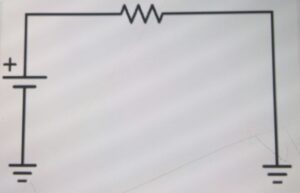
Think of a meaningful conversation as a closed electrical circuit. In this human circuit, you are the voltage source. You possess an idea, an emotion, a piece of wisdom—a form of “spiritual potential” that you wish to share. Your desire to express yourself is the driving force, the voltage, that initiates the flow of energy.
The person you are speaking with is the load. Their role is to receive the energy you are transmitting. The words you choose, the tone of your voice, and the intention behind your expression are the current, the very flow of that energy through the conductors of shared language and presence.
The ground is the foundation of existence you both stand upon, hopefully together. It is the common point in consciousness that you share as a human and spiritual being. Sometimes the whole point of communication is to reestablish a common ground, a shared point of understanding, upon which all further dialogue can be built upon. Without a common frame of reference, there is little chance of successfully exchanging energy.
Just as in the hiker’s journey, this circuit is never without resistance. This resistance can manifest in countless ways:
- Internal Resistance: Your own hesitation or unwillingness to be vulnerable.
- External Resistance: Distractions in the environment, background noise, or physical barriers.
- Receiver Resistance: The listener’s disinterest, preoccupation, or unwillingness to truly hear what is being said.
- Systemic Resistance: Language barriers, educational mismatches, cultural differences, and the ultimate inadequacy of words to carry the full, nuanced energy of the spirit behind our intentions.
When you speak, you are attempting to raise your spiritual voltage high enough to overcome all this resistance and successfully power the load—that is, to have your message truly received and understood.
In an ideal communication circuit, the listener is a perfectly matched load. They are open, present, and receptive. They accept the full potential of the words you offer, and the energy exchange is balanced and efficient. The giver and the receiver become one in potential, sharing a moment of understanding where the message lands with clarity and impact. The only losses are those unavoidable bits of resistance inherent in the system. The circuit is complete, the connection is made, and both parties feel seen and heard. This is the frictionless energy exchange we all crave, where our spiritual voltage is not wasted but is instead valued and acknowledged.
Building Your Charge: The Engineering of Personal Growth
What happens when the goal is not simply a conversation, but a monumental life achievement? When we set a major goal—running a marathon, starting a business, or seeking spiritual enlightenment—we are defining a load that requires a tremendous amount of power. We implicitly acknowledge a separation between where we are now and where we want to be. That separation is the resistance.
If you are already fit enough to walk four miles, that goal requires a low voltage that you already possess. But what if you want to run a marathon? Your current capacity is insufficient. The load is too great for your source. You cannot simply decide to run 26.2 miles; you must become a person who can. You must engage in a process of transformation, stepping up your internal voltage.
You train for months, building cardiovascular capacity and muscular endurance. You are methodically increasing your body’s ability to generate and distribute energy. In electrical terms, your training regimen is the transformer, raising your biological voltage to a level high enough to power the demanding load of the marathon.
This principle extends to our most profound and esoteric goals. Let’s say your goal is a spiritual one: to be more like a great teacher, such as Jesus, and to experience a sense of oneness with the divine. Here, the load is of an almost infinite magnitude. Your current human self feels like a tiny battery trying to power a celestial city. Your bandwidth and power are simply not up to the task.
This presents a spiritual engineering problem. Do you need an intermediary—a guru, a savior, a sacred text—to act as a divine transformer, stepping up your voltage? Or do you engage in practices like meditation, mindfulness, and acts of compassion to slowly build your own internal charge? Perhaps the most profound possibility is that there is something fundamental to your nature that has been conditioned out of you, a divine spark that has been obscured. If you could strip away that conditioning, would your true nature be revealed as an effective power source, already capable of energizing any divine circuit?
The point is this:
We must build up a sufficient charge, or we cannot power the circuits of our existence.
We cannot achieve new goals without the necessary training and preparation. We have to change, to transform, to meet the evolving demands of our own aspirations.
But what of the goal that seems impossibly out of range, the promised land we feel we will never reach? We might spend an entire lifetime lamenting the distance, the perceived separation between our flawed selves and our divine ideal. In that process, we build an immense spiritual charge, a vast potential born from the tension of our frustrated desire.
And then, one day, in a moment of profound revelation, we might see it: the separation was an illusion all along. We have always been where we thought we were to be forever separated from. The compassion we sought was always within us, waiting for a situation to call it forth. The sense of oneness was never lost, only obscured by the noise of our conditioning.
In that instant, the circuit collapses. The chasm between the power source and the load vanishes. What happens to all that built-up charge, the potential created by the false premise of separation?
It is released. Not in a frantic, chaotic discharge, but as a radiant, effortless expression of the person you have always been. The goal is not “achieved” in the way one conquers a mountain; it is simply revealed. You discover that the greatest power comes not from striving, but from embodying. The journey was never about reaching a destination, but about realizing you were the destination all along. And in that realization, you find yourself a master electrician of your own universe, capable of powering circuits of love, life, and connection with the unlimited bandwidth of your true self.
Somehow merge all of these?
 10. The Living Circuit of Existence
What if the wires we twist together, the currents we measure, and the circuits we build mirrored the fabric of existence itself? What if the principles that govern electricity also held the keys to understanding our universe—and our place within it? For electricians like myself, the unseen harmony of energy flows isn’t just a technical marvel; it can be a profound metaphor for existence.
Every connection we make—whether to a person, a purpose, or the infinite universe—has a current. There must be a difference in potential for this exchange or movement of energy to occur. Then it flows, builds, and returns, creating a circuit of energy in and out of our lives. Each thought, loving word, or intention we send outward amplifies this energy, constructing pathways for signals to find their way back to us. We are, at our core, transmitters, receivers, and transformers in life’s vast energetic network.
From Genesis to the stars beyond, energy flows in mathematically perfect patterns. Gravity distributes influence like a transformer regulates voltage, ensuring balance. Grounding wires stabilize circuits just as mindfulness grounds humanity, preventing overreactions and chaos. Light—whether physical or spiritual—becomes the common thread that banishes darkness and disorder in favor of clarity and connection.
The universe is not navigated solely by intellect but through the intuitive compass of the heart and soul. The path toward universal truth is vast, non-linear, and often shrouded in uncertainty. It demands a courage that comes from vulnerability—a willingness to step into the unknown rather than cling to what feels safe or familiar.
Exploration requires active participation. We must engage with texts, communities, mentors, and experiences. We are not merely hitchhikers in this vehicle of consciousness. We are its engineer, its pilot, and its fuel.
At the heart of this theory of energy lies the understated yet profound force of intention. Just as wires are designed with specific purpose—to illuminate, to power, to connect—so is the universe. Each star burns with resolute intention to shine. Every black hole compresses unimaginable possibility. Every switch in a circuit offers a choice to ignite, to bridge, or to signal meaning. Our lives, like those circuits, harbor immense potential to light up the spaces around us when we align with purpose.
Energy doesn’t just govern household currents or celestial patterns; it pulses through us too. From the neurons firing in the brain to acts of kindness communicated in invisible networks of meaning, humans are living circuits constantly exchanging metaphysical charges. Ideas, dreams, emotions—all act like currents transmitting forward momentum and, critically, demanding balance.
The NEC and the universe agree on one truth above all else—energy either flows efficiently, or unexpected disorder awaits. Whether it’s a short circuit in a panel or entropy among celestial bodies, imbalance has consequences. But when these principles harmonize, the result is breathtaking beauty—lit rooms, communication over vast distances, thriving cities, or galaxies awash in starlight.
Modern life, however, often short-circuits us. Endless demands drain our energy unevenly, leaving us disconnected from ourselves and others. What appears as chaos on the surface is simply energy that needs redistribution. Take a moment to assess your “load demands,” much like electricians do when designing circuits.
What commitments fuel you? Which ones drain you without benefit? Learning when to redirect energy—toward balanced and harmonious flow—allows us to thrive.
Within this landscape of constraint lies a profound truth: personal practice becomes political action. When we cultivate presence, deepen our connections, and reclaim our energy through intentional living, we do more than heal ourselves—we build the foundation for collective resistance. Each individual who breaks free from the machinery of disconnection becomes a node in a wider network of consciousness.
A society of individuals who know themselves, who maintain their energetic sovereignty, and who remain connected to one another cannot be easily manipulated or controlled. The path toward liberation begins not in the halls of power but in the quiet, revolutionary act of becoming fully present to our own lives and to each other.
Living in resonance with the universe and its unlimited bandwidth allows us to reflect on two critical questions: Are we harmonizing our energy with existence—contributing to growth, connection, and evolution beyond limits we thought we could not exceed? Or are we like disconnected wires, sparking aimlessly, ungrounded and dissipating energy into the ether?
Tuning Into Universal Bandwidth
The universe doesn’t shout; it hums. Its messages may manifest as creative silence within receptive minds, persistent thoughts, uncanny coincidences, unexpected insights, lucid or teaching dreams, and songs that seem written just for us. Listening transcends mere hearing—it means tuning our entire consciousness to existence’s subtler frequencies.
Bandwidth carries a rich metaphorical significance. Technically, it measures a network’s data transmission capacity. On a deeper level, it symbolizes our ability to push past the limits of our known reality, build meaningful and dynamic relationships, and connect with the mysteries of the natural world. It represents an ever-expanding range of love, collaboration, and shared understanding. Living within universal bandwidth means aligning ourselves with life’s broadest frequencies, tapping into a deeper purpose and collective energy.
Are we connected within this invisible grid? Are we amplifying signals of empathy and creativity, or functioning like ungrounded wires, disconnected from others through hatred and unforgiveness, while sparking aimlessly in isolation?
Electricians know that grounding is crucial for balance and safety in systems. Similarly, humans need grounding to maintain stability in the chaos of life. Practices like reflection, service, meditation, and mindfulness serve as grounding wires against the surges of modern living. This topic is much too important to just have a cursory introduction to and will be explored in depth in a future chapter. Our true ground must be consciously embraced and incorporated into daily life.
With light comes humility and humor. When we ponder our galaxy’s vastness or consider accessing infinite universal bandwidth, we see that our individual light, though important, remains infinitesimally small compared to cosmic grandeur. If we are energy in motion—symphonies of luminous circuits and deep shadow—then cultivating lightness becomes vital. Humor lightens both load and spirit, transforming life’s intricacies into experiences that illuminate a life well-lived.
This cosmic perspective offers us profound wisdom through simple observation. Just as you would laugh at the thought of a brain cell considering itself more important than a lung cell, the universe metaphorically smiles when we think ourselves more important than other species, or one member of our species more valuable than another. Consider how absurd it would be if your left hand declared independence from your right, or if your heart claimed superiority over your kidneys. Such declarations would be both impossible and ridiculous—yet this is precisely how we often behave as humans within the larger organism of existence.
To be light-hearted connects us to the universe’s wit—a natural reminder of how energy in our human experience can ebb, flow, play, and even laugh at itself without shame or friction. This lightness isn’t frivolity; it’s recognition of our place within an incomprehensibly vast and interconnected whole.
Could you imagine the response of a universe when confronted by an individual claiming their own rugged individualism, or our collective human exceptionalism? Picture a single wave declaring its independence from the ocean, or a note in a symphony insisting it could exist without the orchestra. The universe would laugh—not with cruelty, but with the gentle amusement of infinite wisdom—at the whole idea that anybody or anything could live a life separate and apart from the life-giving and life-sustaining universe.
The Transmission of Truth
To venture toward universal truth, our consciousness must offer unparalleled vision—beaming spiritual intentions into the cosmic fabric while remaining sensitive enough to receive the faintest echoes of guidance, wisdom, and insight reflected back like light from distant stars.
Consciousness can be seen as both the observer and the creator of much of what it perceives. Through vision—both literal and spiritual—we connect with the universe, uncovering meaning in its mysteries. Expanding spiritual vision is like upgrading a telescope; the stars remain unchanged, but our ability to see them clearly improves.
What blocks our spiritual vision?
- Fear?
- Doubt?
- Unhealed trauma?
- Fixation on trivial details?
Clearing these roadblocks expands our conscious lens, allowing universal truths to focus clearly.
Any dynamic exchange requires strong transmission and accurate reception. Projecting spiritual intention means sending heartfelt desires, questions, and affirmations into existence’s vastness—clear, intentional, purpose-driven signals into deep space. But transmission needs reception. The universe often whispers through synchronicities, moments of inspiration, profound silences. Can we sharpen our ability to listen, not just to what we expect but to what we need?
Living in resonance with the universe’s unlimited bandwidth compels us to reflect on two critical questions:
- Are we harmonizing our energy with existence—contributing to growth, connection, and evolution beyond limits we thought we couldn’t exceed?
- Or are we like disconnected wires, sparking aimlessly, ungrounded and dissipating energy into the ether?
This task transcends mechanics—it’s profoundly spiritual. It requires illuminating every corner of our existence with clarity, facing resistance with courage, keeping energy flowing in service of others. To live aligned with universal bandwidth means seeing life’s circuits as multidimensional, a delicate interplay of persistence and resistance, viewing challenges not as barriers but as dormant wires awaiting connection or switches ready to illuminate unknown possibilities.
The NEC and the universe agree on one truth: energy either flows efficiently, or unexpected disorder awaits. Whether it’s a short circuit or entropy among celestial bodies, imbalance has consequences. But when these principles harmonize, the result is breathtaking beauty—lit rooms, communication across vast distances, thriving cities, galaxies awash in starlight.
We are as much architects of our separateness as we can be builders of our reconnection with the infinite. It’s time we choose the latter—to evolve not apart from, but within, existence’s grand, immeasurable tapestry.
This book serves as your guide through kingdoms of consciousness, from familiar common knowledge into the transformative realm where uncommon wisdom, the sacred, and the great unknown guide the pilgrim. There is beauty in the quest for self-awareness. Begin with small steps toward questioning, meditating, exploring the unknown within.
What lies at the edge of our universe?
Perhaps an undiscovered truth.
What lies at your core?
Perhaps the same truth.
As you soar into higher consciousness, remember this: the skies are infinite for those willing to take flight.
Where on the universe’s unlimited bandwidth will your consciousness take you
Just as electricity flows through circuits, our consciousness operates on similar principles of energy, flow, and grounding. Your mind generates thoughts that travel through your awareness to create understanding, much like a current powering a light bulb. To maintain mental stability, we must ground ourselves in constants like nature, truth, or community. Without this connection, we are vulnerable to cognitive overload from the endless information and demands of modern life, leading to burnout and emotional instability. Challenges and resistance, however, aren’t inherently negative; they are necessary for growth and focus, strengthening our character much like electrical resistors control current.
By aligning our thoughts, emotions, and actions with our core values, we cultivate a state of resonance—an optimal harmony where energy flows effortlessly. This is achieved through practical habits like meditation, connecting with nature, fostering authentic relationships, and engaging in purposeful work. Learning to recognize the signs of mental overload—such as difficulty concentrating or emotional reactivity—is crucial. When these signs appear, we must reset our mental circuits by simplifying inputs, allowing for quiet reflection, and strengthening our grounding practices. By building this resilience, we not only enhance our own well-being but also positively contribute to the interconnected human network, as a well-balanced consciousness can illuminate and energize the entire environment around it.
13. The Human Circuit: How Your Mind Works Like Electricity (cross check for duplication with several other chapters)
Have you ever wondered why some days your thoughts flow effortlessly, while other times your mind feels scattered and chaotic? The answer might be found in an unexpected place: the simple electrical circuits that power our everyday devices.
Just as electricity follows predictable patterns through wires and components, our consciousness operates according to similar principles. By understanding these connections, we can learn to manage our mental energy more effectively and find greater balance in our lives.
The Basic Circuit of Awareness 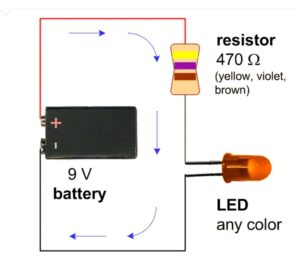
Think about the simplest electrical circuit—a battery, a wire, and a light bulb. Electricity flows from the battery through the wire, powers the bulb, and returns to complete the circuit. This process requires three essential elements: a source of energy, a path for that energy to travel, and a destination where work gets done.
Your mind operates in remarkably similar ways. Your inner self acts as the energy source, constantly generating thoughts and ideas. These mental impulses travel through your awareness, much like electricity through a wire, until they reach their destination—your understanding of the world around you.
When you observe something new, learn a skill, or have an insight, you’re completing a circuit of consciousness. The energy flows from your thinking mind to your understanding, creating meaning and knowledge along the way. Just like the light bulb illuminates a room, your awareness illuminates your experience of life.
This process happens countless times each day. When you notice the color of the sky, taste your morning coffee, or understand a friend’s joke, you’re completing these circuits of awareness. Your mind is constantly making connections, processing information, and creating understanding from the raw material of experience.
In electrical systems, grounding serves a vital safety function. It provides a stable reference point that prevents dangerous surges and keeps the system balanced. Without proper grounding, electrical equipment can become unstable, overheat, or even cause fires.
Our minds need grounding just as much as electrical circuits do. When we’re properly “grounded,” we feel stable, centered, and able to handle life’s challenges. But when we lose this connection, we become vulnerable to mental and emotional overload.
What does grounding look like in human terms? It’s our connection to something larger and more stable than our immediate concerns. This might be:
- Nature: Spending time outdoors, feeling the earth beneath your feet, breathing fresh air
- Truth: Anchoring yourself in honest self-reflection and authentic relationships
- Community: Maintaining connections with family, friends, and your larger social network
- Values: Living according to principles that remain constant despite changing circumstances
- Spirituality: Connecting with whatever you consider sacred or meaningful beyond yourself
Modern life often disconnects us from these grounding sources. We spend most of our time indoors, surrounded by technology, racing through packed schedules. We lose touch with natural rhythms and authentic connections. This “ungrounded” state leaves us vulnerable to anxiety, stress, and emotional instability—much like an ungrounded electrical system becomes prone to dangerous surges.
Electrical systems have limits. Push too much current through a wire, and it will overheat. Overload a circuit, and breakers trip to prevent damage. The system has built-in protections because uncontrolled electrical flow can be destructive.
Our mental circuits have similar vulnerabilities. In today’s world of constant information, endless notifications, and competing demands, we often experience cognitive overload. When this happens, our mental “circuits” begin to malfunction:
- Information overload: Too much input creates confusion and decision paralysis
- Emotional overwhelm: Intense feelings without proper processing lead to burnout
- Social overload: Constant connectivity prevents the quiet reflection we need to recharge
- Decision fatigue: Too many choices exhaust our mental energy
Unlike electrical circuits, we don’t always have automatic “breakers” that shut us down when we’re overloaded. We keep pushing through, often making the problem worse. Learning to recognize when your mental circuits are overloaded—and knowing how to reset them—becomes essential for mental health.
In electrical circuits, resistance isn’t always a bad thing. Resistors actually serve important functions—they control current flow, prevent damage, and help circuits work properly. Without resistance, electricity would flow uncontrolled, destroying delicate components.
Similarly, resistance in our lives isn’t always something to avoid. The challenges, obstacles, and difficulties we encounter often serve important purposes:
- Growth: Like muscles that strengthen under resistance, our capabilities expand when challenged
- Focus: Obstacles force us to clarify what truly matters and direct our energy more intentionally
- Wisdom: Working through difficulties teaches us valuable lessons we couldn’t learn any other way
- Character: How we handle resistance shapes who we become
The key is learning to work with resistance constructively rather than simply fighting against it. Just as an electrician uses resistors strategically to create useful circuits, we can learn to engage with life’s challenges in ways that strengthen rather than drain us.
Eckhart Tolle suggests that non-resistance holds the key to the greatest power in the universe. While this idea has found a home in modern spiritual discourse, we must critically examine such adages to discern what is true, what might be true, and what is simply not. As an electrician who has spent a lifetime working with the fundamental forces of our universe, my perspective is grounded in a different reality: resistance is not a flaw in the system; it is the system itself.
Consider the ground beneath your feet. It is the Earth’s resistance that supports you, preventing you from falling into its fiery core. In the same way, my physical form offers resistance; without it, you would pass right through me as if I were a phantom. This principle extends beyond physics into the very fabric of life. When faced with a predator, a lack of resistance is not an act of enlightened surrender but an invitation to become an appetizer. The universe, in its raw and unfiltered state, is a constant interplay of force and counter-force.
The spiritual praise of non-resistance often assumes that our struggles are internal, that the beasts we fight are merely imaginary. In such cases, ceasing resistance is a logical, energy-saving response to a self-created hallucination. To an onlooker, it may even appear as a moment of profound peace. However, we must be honest about our reality. Not all beasts are imaginary, especially in these deteriorating times where challenges are tangible and threats are real.
From an electrician’s viewpoint, resistance is what allows for the transformation of energy. Without it, a circuit is a short, a flash of uncontrolled power that serves no purpose and often ends in destruction. Resistance is what creates light, generates heat, and makes work possible. Similarly, in our lives, it is through resistance—to adversity, to injustice, to our own complacency—that we build strength, forge character, and illuminate our own paths.
To indiscriminately apply the principle of non-resistance is to misunderstand the nature of our existence. The wisdom lies not in absolute surrender, but in discerning when to stand firm and when to yield. There is a time to flow with the current and a time to build a dam. To deny the necessity of resistance is to deny the very force that gives structure to our world and meaning to our struggles.
When you encounter resistance—whether it’s a difficult project at work, a challenging relationship, or an internal fear—pause and ask yourself: “What is this resistance trying to teach me? How can I work with it rather than against it?”
Creating Resonance in Your Life
When electrical components work together harmoniously, they can create resonance—a state where energy flows efficiently and the system operates at peak performance. Radio receivers use this principle to tune into specific frequencies, filtering out noise and amplifying the signals we want to hear.
Human consciousness can achieve similar states of resonance. When your thoughts, emotions, and actions align with your deeper values and purposes, you experience a sense of flow and effectiveness that feels almost effortless. This isn’t just a nice feeling—it’s your mental and emotional systems working in optimal harmony.
You can cultivate resonance in several ways:
Meditation and Reflection: Just as electrical circuits need regular maintenance, your mental circuits benefit from quiet time to process and integrate experiences. Meditation doesn’t have to be complicated—even five minutes of focused breathing can help clear mental static and restore balance.
Nature Connection: Spending time outdoors provides natural grounding. The earth literally has an electrical charge that can help balance our bodies’ bioelectrical systems. But beyond the physical benefits, nature offers perspective, peace, and a reminder of our place in larger patterns of life.
Authentic Relationships: Good relationships create positive feedback loops, like well-designed circuits that amplify beneficial signals while filtering out harmful interference. Surround yourself with people who support your growth and with whom you can be genuinely yourself.
Purposeful Work: When your daily activities align with your deeper values and abilities, you experience less internal resistance. Like electricity following the path of least resistance, energy flows more easily when you’re working in harmony with your natural inclinations and principles.
Creative Expression: Whether through art, music, writing, or any other creative outlet, expressing yourself authentically creates positive energy flow. Creativity is like adding new circuits to your mental system, expanding your capacity for processing and understanding life.
Practical Grounding Techniques
Understanding these principles intellectually is one thing; applying them practically is another. Here are specific ways to improve your mental and emotional “grounding”:
Daily Nature Practice: Spend at least a few minutes outside each day. If possible, stand or walk barefoot on natural ground. This isn’t just metaphorical—research shows that direct contact with the earth can have measurable effects on stress hormones and inflammation.
Mindful Breathing: When you feel overwhelmed, focus on your breath for several minutes. Breathe slowly and deeply, imagining that you’re drawing stability and calm from the ground beneath you. This simple practice can quickly restore mental balance.
Regular Digital Detox: Just as electrical circuits need breaks to prevent overheating, your mind needs time away from digital stimulation. Set aside periods each day when you disconnect from screens and reconnect with your immediate physical environment.
Values Clarification: Regularly reflect on what matters most to you. Write down your core values and check whether your daily choices align with them. This practice creates a stable reference point, much like electrical grounding provides a stable reference voltage.
Physical Exercise: Movement helps discharge excess mental and emotional energy while strengthening your body’s natural resilience. Find forms of exercise you enjoy, and think of them as maintenance for your personal “electrical system.”
Community Engagement: Actively participate in communities that share your values. This might be religious congregations, volunteer organizations, hobby groups, or professional associations. These connections provide grounding through shared purpose and mutual support.
Recognizing and Managing Overload
Learning to recognize when your mental circuits are approaching overload is crucial for maintaining balance. Warning signs include:
- Difficulty concentrating or making decisions
- Feeling constantly rushed or behind
- Increased irritability or emotional reactivity
- Physical symptoms like headaches, tension, or sleep problems
- Loss of interest in activities you usually enjoy
- Feeling disconnected from others or from your own values
When you notice these signs, it’s time to “reset your circuits”:
Simplify Your Input: Reduce the amount of information and stimulation you’re processing. This might mean limiting news consumption, reducing social media use, or declining optional commitments.
Increase Your Processing Time: Build in periods of quiet reflection where you can integrate your experiences. This might involve journaling, walking, or simply sitting quietly without any agenda.
Strengthen Your Grounding: Double down on the practices that connect you to stability—nature, relationships, spirituality, or whatever works for you.
Seek Support: Just as electricians call in specialists for complex problems, don’t hesitate to seek help from counselors, therapists, or trusted friends when you’re dealing with persistent overload.
Individual electrical circuits rarely work in isolation—they’re usually part of larger networks that share power and distribute energy where it’s needed. Similarly, our personal mental circuits connect with the broader human network. Our thoughts, emotions, and actions influence others, just as theirs influence us.
This interconnection means that working on your own mental and emotional balance doesn’t just benefit you—it contributes to the health of your family, community, and society. When you’re grounded and centered, you’re better able to support others. When you manage your own resistance constructively, you model healthy coping for those around you.
Understanding this interconnection also highlights why it’s important to be mindful of the energy you contribute to shared spaces. Just as a malfunctioning component can disrupt an entire electrical system, unprocessed anger, chronic negativity, or persistent drama can create problems that ripple through relationships and communities.
Creating sustainable mental and emotional health isn’t about perfection—it’s about building resilience into your personal systems. Electrical engineers design circuits with safety margins, backup systems, and graceful failure modes. You can apply similar principles to your life:
Build Redundancy: Don’t rely on just one source of grounding or meaning. Cultivate multiple practices, relationships, and sources of stability so that if one is temporarily unavailable, others can provide support.
Plan for Maintenance: Schedule regular times for reflection, rest, and renewal. Think of these as preventive maintenance for your mental circuits, helping you catch problems before they become serious.
Develop Flexibility: Rigid circuits break under stress, while flexible ones adapt. Cultivate the ability to adjust your approaches and expectations as circumstances change, while maintaining connection to your core values.
Practice Self-Compassion: When your mental circuits do overload or malfunction, treat yourself with the same kindness you’d show a good friend. Self-criticism creates additional resistance that makes problems worse.
Understanding your consciousness as an energetic circuit isn’t just an interesting metaphor—it’s a practical framework for living with greater awareness, balance, and purpose. By paying attention to your mental energy flows, maintaining good grounding practices, and working constructively with resistance, you can create more harmony in your inner life and your relationships.
This work requires patience and practice. Like learning any new skill, developing these capacities takes time. But the investment pays dividends in reduced stress, greater resilience, and deeper satisfaction with life.
Start small. Choose one grounding practice and commit to it for a week. Notice when you feel mentally overloaded, and experiment with simple reset techniques. Pay attention to what creates resonance in your life—those moments when everything feels aligned and flowing.
As you develop these skills, you’ll likely notice that your increased stability and clarity benefit not just you, but everyone around you. Like a well-functioning electrical system that powers an entire building, a well-balanced consciousness can illuminate and energize your entire life environment.
The principles that govern electricity—energy, flow, resistance, grounding, and resonance—are also the principles that can guide us toward more conscious, connected, and fulfilling lives. By learning to work with these natural patterns rather than against them, we align ourselves with forces that support growth, connection, and genuine wellbeing.
Your consciousness is indeed a circuit, connecting the energy of your inner life with the vast network of existence around you. How you maintain and direct that circuit determines not only your own experience, but your contribution to the larger human story of which we’re all a part.
Chapter 16: The Electrician’s Take on Grounding and Bonding
(Mother) Earth is ground the world around. –Absolute truth accepted by electricians worldwide.
“Ground” in the power distribution grid is literally the ground that’s all around you when you walk outside. It is the dirt, rocks, and groundwater. Mother Earth is the direct source for all successful grounding. Grounding is a process of connecting electrical systems to a common reference point—the potential of the ground that Mother Earth provides. This isn’t metaphorical but literally true: grounding rods are driven deep into soil, connecting electrical systems directly to the earth.
Electricians are required to learn the philosophy of grounding and bonding to prevent safety issues from arising. These aren’t optional considerations but fundamental requirements for any properly functioning electrical system. Grounding and bonding techniques are utilized for the design and proper functioning of electrical infrastructure at every scale
By internationally accepted electrical standards, ground potential is set to ZERO volts. All derived or existing voltages are referenced to that ground. The safety and operational integrity of any electrical system is preserved, protected, and—yes—
SAVED BY ZERO,
or a common ground reference potential.
Without ground reference, electrical systems become dangerous. Voltages float unpredictably. Equipment malfunctions. Shocks become possible. Fires can start. The entire system loses coherence because there’s no common reference point to which everything relates.
Bonding is a process for connecting all conductive materials together that do not have a direct connection to Mother Earth, and then connecting that link to ground. Thus, bonding supplies the necessary conductor paths to ensure that those circuits have a consistent reference potential grid tied to Mother Earth’s ground potential.
What is the human equivalent to bonding? All the children in a family are bonded together by family love, discipline, training, and their shared narrative. They share common reference points of experience, values, and identity. The parents serve as the ground—providing wisdom, financial support, and the safe, secure home environment. There’s no place like home! Home serves as ground zero, the reference point to which everything else relates.
Have you ever witnessed a lightning strike? It’s an incredible show of light, sound, and energy. This powerful discharge of potential energy travels from the clouds to the ground, connecting with Mother Earth. The lightning represents a massive voltage differential seeking equalization—millions of volts finding ground through the path of least resistance.
What is the human equivalent? A person on the receiving end of a violent discharge by a hate-filled antagonist knows a similar experience to Mother Earth’s reception of the lightning bolt. They become the ground for someone else’s accumulated charge, the target for energy seeking release.
All voltages are measured relative to Mother Earth ground, and every potential difference strives to balance itself through connection to it. It’s this difference in potential that keeps our electrical world running—current flows because of voltage differentials seeking equilibrium.
Mother Earth as Electrical Ground and Spiritual Ground
What is the relationship between Mother Earth as an electrical ground and Mother Earth as a spiritual ground? The parallel runs deeper than metaphor.
Our modern world has encouraged us to become increasingly disconnected from nature. Civilization, with its requirement for farming and cities, has overrun vast tracts of the natural world, eliminating much of our spiritual and physical support. We eat, sleep, and live indoors. We drive automobiles supported by insulating rubber tires. We wear shoes that create barriers between our feet and the earth. We subject ourselves to constant distraction from religious and political authorities and hyper-stimulation through smartphones and media obsession.
This 21st-century lifestyle contributes to a profound lack of connection with nature, which is the manifestation of our True Ground. We’ve literally insulated ourselves from earth contact, both physically and spiritually.
Without being connected to the Earth, we become ungrounded—figuratively and literally. We constantly take on frequencies that aren’t supportive of our minds and bodies, frequencies that conflict with our natural resonance. Electromagnetic radiation from countless devices, emotional frequencies from toxic relationships, mental frequencies from anxiety and over-stimulation—all accumulate without proper discharge.
Without grounding, it becomes difficult for us to discharge these chaotic energies we’ve accumulated. Like an ungrounded electrical circuit that builds up dangerous potential, we build up stress, anxiety, and dysfunction that have nowhere to flow.
Without a common reference point, our words and concepts become out of phase with others, minimizing harmonization. Communication failures resulting from conflicting frames of reference create stress and anxiety. When people operate from different ground references—different fundamental assumptions about reality—they literally cannot hear each other. The same words mean different things. Agreement becomes impossible because there’s no shared foundation.
Over time, this takes its toll on mental and physical health. Without a connection with the Earth, we don’t share in a healing common knowledge, negating any sense of supportive calm that happens naturally when we are earthed.
The best spiritual reference point is also Mother Earth. If the materials of Mother Earth are remembered to be the source for all life, then whatever true potential we have is sourced through that sacred connection. A great way to stay spiritually grounded is to remember our true source—to remember that we are of Mother Earth and may consciously carry that spiritual energy into all our relationships.
As the Mother loves us unconditionally, so we must bring that motherly love to ALL our relationships—not as a moral should but as a natural expression of our recognition that we’re all grounded in the same source.
As Thich Nhat Hanh beautifully expressed: “We need a real awakening, enlightenment, to change our way of thinking and seeing things. To breathe in and be aware of your body and look deeply into it, realize you are the Earth and your consciousness is also the consciousness of the Earth.”
This isn’t poetic metaphor but literal truth—the atoms comprising your body were forged in ancient stars and assembled by Earth’s processes. You are Earth becoming conscious of itself. Your awareness is continuous with Earth’s awareness. Separation is illusion; connection is reality.
Personal Ground: Lessons in Voltage
When I was a kid, my next-door neighbor and I built an underground fort together—every boy’s dream of a secret base. We’d tell our parents we were “camping out” in the yard, then sneakily hot-wire an extension cord from the garage to a portable lamp with exposed connections to light up our growing cave.
Once, in the confined darkness of our underground fort, I accidentally brushed against the 115-volt hot lead to the lamp and became part of the ground circuit. The sensation remains vivid decades later—an involuntary scream, violent shaking as my muscles contracted beyond my control, the desperate struggle to break free from the current flowing through my body. I managed to pull away, saving my life through a combination of luck and young reflexes.
That experience taught me viscerally what being ungrounded means—becoming the path of least resistance for energy seeking ground. In that moment, I was the ground, and 115 volts surged through me seeking Mother Earth.
Another time, as an apprentice electrician working on a commercial building, I opened a junction box and noticed sparking under a big blue wire nut holding multiple conductors together. The arcing indicated a poor connection—exactly the sort of fire hazard electricians are trained to address immediately.
Without thinking—without following proper lockout/tagout procedures—I reached in to tighten the wire nut, only to discover the insulation had broken down from the arcing. I became the ground for a 277-volt lighting circuit. That’s significantly higher than household voltage, enough to kill under the right circumstances.
Again, I managed to pull my hand away, but the helplessness of those moments stays with you. When you’re conducting electricity involuntarily, your muscles don’t obey your will—they contract according to the current flowing through them. You can’t simply “let go.” You’re at the mercy of physics.
Many others haven’t been so lucky. Electrocution remains one of the leading causes of home and workplace fatalities. The helplessness of being an unintentional ground has stuck with me ever since these near-death experiences. It taught me absolute respect for proper grounding and the consequences when it’s absent.
Becoming the ground in an unprotected environment can be fatal, so it is of utmost importance that our connections are sound and that a healthy ground has been established. Systems must be designed so that dangerous current has a safe path to ground that doesn’t include human bodies.
Yet in human relationships, becoming the only available ground in a heated exchange can mean being the conduit for someone else’s negative energy—a shocking experience of a different kind. When someone discharges accumulated anger, resentment, or hatred, they need ground. If you’re the nearest available path, you become the target for energy seeking release.
Understanding electrical grounding has given me profound insight into emotional and spiritual dynamics. Just as electrical systems need proper grounding to function safely, humans need proper spiritual grounding to maintain psychological health. Just as voltage differentials seek equalization through ground, emotional charge seeks discharge through whatever ground presents itself.
The question becomes: How do we establish proper ground? How do we stay connected to the reference point that makes safe operation possible? How do we avoid becoming the involuntary path for others’ discharges while also avoiding the dangerous buildup of our own ungrounded charge?
The answer, both electrically and spiritually, is the same: maintain conscious connection to ground. For electrical systems, that means physical connection to Mother Earth. For human beings, it means remembering our source, our origin, our fundamental nature before all the accumulated identifications.
It means finding Zero—that ground state from which all measurements derive their meaning, that reference point which makes coherent operation possible.
When we’re grounded in Zero, properly connected to our source, we can withstand the voltage differentials that life presents. We can allow current to flow through us safely rather than building dangerous potential. We can serve as conscious conductors rather than unconscious grounds.
This is what it means to be saved by Zero.
Insight, intelligence and discernment to sort through the vast ocean of knowledge, and ignorance, created by historians, scientists, teachers, philosophers, the media, theologians, propagandists, pseudo-intellectuals and religious fundamentalists are required tools to find the precious oysters bearing the real Pearls of wisdom.. The hubris and clay feet of many of our spiritual experts show either their lack of success in making a consistent connection with our ground of being, or Truth, and/or our lack of understanding of what that connection and subsequent behavior might actually look like.
(Mother) Earth is ground the world around—Universal teaching for electricians worldwide.
Mother Earth, amongst its almost infinite potential for creating and supporting life, has an electromagnetic nature, with its magnetic north and south poles. Humans are electro-biological beings, also being made of Earth stuff, thus we are not only electromagnetically inspired but also influenced by all of Mother Earth’s other characteristics. Through a process of shared consciousness not yet fully understood by scientists and biologists, the life force field that constitutes our being exchanges information continuously with the environment, which shows that there may be unexpected outcomes for the human race with the loss of biodiversity through our heartless, reckless expansion through the .natural world.
Our bodies have over 50 trillion biologically and electrically interconnected cells that are totally derived from our ground of being, Mother Earth. We are not only created from materials endemic to this planet, we are a minute version of Her… We are also influenced by all of the forms of life which have derived their existence from this almost infinite ground of being. Humanity has an extraordinary possibility for resonance with all of our natural world, if it would only rejoin it. When we return to our source and connect with nature, our energetic frequency begins to change, and may actually appear to oscillate with the same frequency of life force as the Earth and the rest of its life forms.
We need a real awakening, enlightenment, to change our way of thinking and seeing things. To breathe in and be aware of your body and look deeply into it, realize you are the Earth and your consciousness is also the consciousness of the Earth.” ~Thich Nhat Hanh
Embracing the Zero Point: A Conclusion
The journey from 42, 40, 12,11, 7, 3, or 1 to Zero is a pilgrimage from seeking an external answer to discovering an internal truth. It is the realization that in the heart of nothingness—the zero point—lies the potential for everything. This is not a destination but a remembrance. It is a return to the still point where absence and presence converge, where we realize, we do not need to endlessly add “one more” thing to be complete. We already are.
This path requires courage. It is a leap into the emptiness, a willingness to let go of the time-based thoughts and illusory identities that chain us to the past and future. It requires us to anchor ourselves in the present moment, to cultivate gratitude for simply being, and to reconnect with our true ground—Mother Earth.
My experience at Lookingglass Lake in 1992
It’s one thing to speak of a Universal Ground of Being in the abstract, but what does it feel like to experience it directly? Mystics, saints, and even electricians each have their own language to describe their connection to this fundamental reality. For me, that direct experience came in the summer of 1992, at Lookingglass Lake in the untamed wilderness of Mt. Adams.
I awoke that morning preparing for a weekend hiking trip with my beloved partner, Sharon. From the moment my feet touched the floor, something was different. My senses were dialed up to a frequency I’d never known. The world wasn’t just visible; it was luminous. I could hear the subtle symphony of the morning—the rustle of leaves, the distant birdsong—with startling clarity. Food tasted richer, the air was a complex tapestry of scents, and my entire body pulsed with a vitality that hummed well beyond my ordinary, day-to-day existence. I felt like a finely tuned instrument, plugged into a current of extraordinary sensory perception. I had to work that day, so I tried to ground myself in routine, but the excitement for the wilderness and for Sharon’s company was an undercurrent I couldn’t ignore.
Our drive took longer than planned, and we arrived at the Mt. Adams Wilderness area with the sun already sinking below the horizon. Too late to reach our intended campground, we found a quiet snow park and pitched our tent for the night. As twilight settled, we sat outside, and that heightened awareness returned, but this time it was overwhelming. It felt as if my consciousness had expanded beyond the confines of my skin. I had sensory receptors in the dirt, the trees, and the vast, darkening sky. It was as if I had grown roots that networked with the forest floor, feeling the cool, solid earth not just beneath me, but as me. I didn’t just see the majestic trees and the star-dusted heavens; I was them. The old mystical adage, “all that I see is myself,” became a visceral reality. I was the silent witness for all of nature, a conduit for its being—a profound, transcendental event that felt like tapping into the universe’s unlimited bandwidth.
We finally retreated to our tent. Though I was still vibrating with this profound connection, I eventually drifted to sleep beside my beloved. Sometime later, I was jolted awake by a brilliant light that enveloped our tent, turning the nylon walls into a glowing membrane. I stumbled outside to witness its source. There, suspended in the midnight sky, was a Great Light. It bathed the entire landscape in an ethereal, shadowless luminescence. It was a light so complete it erased all darkness. I woke Sharon, and she rose to witness the spectacle with me. To this day, I don’t know if the light was an extension of my heightened mystical state or a strange coincidence—reflection of the sun off a satellite in deep space, or a UFO bathing us in its radiance. When I later told my mother, she recalled a newspaper report from the week before about a mysterious light in the same area. The universe, it seems, keeps its secrets.
There is only One Creator, and if we are a part of that creation, there is no reason we cannot attune ourselves to all of it—the human, the animal, the geological, and yes, even the “alien.” When we touch our deepest Self with profound awareness, we touch everything. Mother Earth is fully conscious, in a way our current understanding cannot yet grasp, but we can all learn to resonate with Her.
This is the miracle we are invited to experience—not to walk on water, but to walk on the Earth with full awareness. The call of the mystical is the persistent whisper in every heart that seeks unity. It is an invitation to open our internal eyes and join the grand, enigmatic dance of existence, not as spectators, but as participants woven into the fabric of a living, aware cosmos.
Can we be saved by zero?
Yes.
By embracing the zero point of pure presence, we find our grounding. We stabilize our connections. We harmonize with the world around us. We uncover the singular essence of being, an undivided wholeness that erases every false division and reveals the infinite potential within us all.
I have touched our Mother Earth with the deepest of awareness. I have felt Her pulse as my own.
I love and treasure our Mother Earth.
How about you?
Grounding and Bonding in Nature and its Resonant Energy
Nature is more than a backdrop to our modern lives. It’s a source of energy, balance, and calm. When you connect deeply with nature, you’re not just enjoying its beauty; you’re aligning with its powerful, resonating frequencies. This practice, often called grounding, harnesses the invisible yet impactful forces of nature to heal the mind, body, and spirit.
I will explore the science behind grounding, including the role of negative ions and sound frequencies, and how engaging with natural elements can impact our stress levels, mood, and overall well-being. By the end, we’ll walk away with practical grounding techniques we can use daily to reconnect with nature and ourselves.
Ever inhaled deeply after a thunderstorm and noticed how fresh and clear the air feels? That uplifting sensation isn’t just psychological; it’s grounded in science. Thunderstorms, waterfalls, ocean spray, and even rainfall produce negative ions, electrically charged particles in the air that interact with our bodies at a cellular level.
When these negative ions meet your skin, they boost serotonin levels, the “feel-good” hormone, while also reducing stress-inducing cortisol. This creates a natural mood enhancement and a sense of inner calm.
Beyond mood regulation, studies suggest negative ions improve the functioning of mitochondria (the energy powerhouses of our cells), strengthen immune responses, and even enhance brain activity. By intentionally exposing yourself to these ion-rich environments, we can begin to align our inner energy with the restorative power of the natural world.
Sound is more than just something we hear; it’s something our entire body feels. Research shows that sound can dramatically impact cells. Scientists have identified 190 sound-sensitive genes that respond to specific frequencies. What this means is that sound doesn’t just influence our minds; it nourishes our bodies, too,
Think of our body as a resonant field, like an instrument. When exposed to certain sound frequencies, such as those found in nature, our cells align to the vibration, promoting healing and balance. Ocean waves, for example, naturally cycle at about 12 rhythms per minute, mirroring the human body’s “loaded breathing pattern.” This rhythmic harmony explains why spending time near the ocean can lead to instant relaxation and meditation.
Similarly, birdsong operates at frequencies that resonate deeply with human biology. For thousands of years, their calls have signaled safety, helping our ancestors begin peaceful mornings. Modern science corroborates this, revealing that listening to bird calls reduces heart rate, decreases cortisol, and stimulates parasympathetic (rest-and-digest) calm, all feeding into our sense of well-being.
“Nature’s alarm clock” describes morning bird calls with perfect accuracy. These sounds aren’t random; they vibrate at frequencies specifically tuned to impact serotonin and cortisol regulation in our body. Research suggests that waking up to birdsong creates a sense of emotional stability and subtly aligns our body’s rhythm with Earth’s.
Similarly, the sound of ocean waves promotes a deep, meditative state of calm through its consistent rhythm. The ocean’s natural cycles mirror internal biological processes, such as heart rate and breathing patterns, enabling an effortless connection with the parasympathetic nervous system. Spending time by the sea isn’t just a luxury; it’s a restorative practice that harmonizes your internal systems.
Bringing grounding into daily life doesn’t require a forest or oceanfront property. We can tap into nature’s energy almost anywhere with these practical tips:
1. Take the Shoes Off
Walking barefoot on grass, sand, or soil allows the Earth’s energy to flow into our bodies, calming our nervous system and recharging our energy levels.
2. Immerse Ourselves in Nature Sounds
Create a playlist of bird calls, rainfall, or ocean waves to play during the morning routine or as background during work. It’s especially effective if we can’t physically step outside.
3. Practice Outdoor Breathing Exercises
Sit in a park, beach, or garden and practice slow breathing exercises while focusing on the sounds, smells, and sights that are all around.
4. Time Your Mornings with Nature
Start the day with the sunrise and morning bird calls. This one change can train the body’s circadian rhythm, boosting energy and mood from the moment we wake up.
5. Spend Time Near Water
Visit a river, lake, or ocean and take intentional walks along the shore. The proximity to water amplifies the effects of negative ions and instantly refreshes our minds.
6. Bring Nature Indoors
Can’t always get outside? Decorate spaces with plants, play nature soundscapes, or keep a small indoor water fountain to simulate the calming ambiance of natural environments.
Grounding isn’t just a wellness practice; it’s a return to the rhythms of life that have supported humanity for millennia. Whether it’s through walking barefoot, listening to the chirp of morning birds, or sitting by the ocean, these simple acts allow the energy of nature to recalibrate our own.
By making grounding a priority, we don’t just heal stress; we center our life on what truly matters. And the best part? Nature offers itself generously and freely to anyone willing to connect.
Start small, begin today, and feel the transformation.
Electrical circuits and human goal setting and achieving?
When we go for a hike, to return to our starting position we always decrease in total elevation the exact same amount as we increased during the course of the hike. That is the nature of the physical journey, as we wander out into our unknowns, finally returning to our starting position. Whatever potential energy we gain by increasing in elevation is eventually lost through the descent to our starting point. This is called a closed loop of energy. Now being biological beings, we are going to have our biological potential energy reduced by the energy expenditure, so in this circuit analogy that loss would be attributed to the resistance of the circuit. We might eat an energy bar or equivalent to keep our biological energy up so that this energy loss is compensated for, and we might see the energy bar absorbed through our digestive tract as a transformer, which keeps our source voltage at a functional level so that we can finish our hiking loop.
Use this hiking analogy as you think about the human circuit of connection. You are the source, you want to “power the load” or express yourself, and be heard and see action result appropriate to the communication circuit. You are the giver, the voltage source, and the listener is the receiver, or the load. The words you give to the other, based upon your understanding, or the “energy of your consciousness” is the voltage source in a closed loop, and you attempt to overcome whatever resistance there is in the human circuit, be it your unwillingness to talk, disinterest or unwillingness to listen by the receiver (load), distractions, noise, language barriers, education mismatches, etc. Yet, in the ideal communication circuit, the listener/receiver accepts all of the potential of the words given by the source (talker), and the communication circuit is perfectly balanced. The receiver and the giver are one in potential, minus whatever unavoidable losses through resistance in the communication circuit metaphor.
When we climb a mountain, we have expended a vast amount of energy, haven’t we? When we accomplish a major goal in life, we have also expended a lot of energy too.
When we set goals, there is the assumption that we at a place where the goal is not yet being experienced. We perceive where we are now, physically, financially, emotionally, and/or spiritually.
Then we speculate about where we want to go. We talk to others who may already have made the journey, or we do research at the library or on the internet to see what tools and resources that we might need to accomplish our goals.
But there is always the separation between where we are, and where we want to be.
Imagine, if you could, that you are the power source in the diagram. You “look” at the completed circuit, seeing the conductors with the resistance, the load, and the ground. You want to power up that load, but to do it, you need to raise your voltage high enough to overcome the resistance of the conductors, and meet whatever minimum power requirements there are to fire up the load to your specifications. Your goal has been set, you need to raise your voltage to a high enough level to power the load. In the case of a voltage source, if the voltage of the source is high enough, voila, we have a successful circuit, and the load is powered according to the needs and design of the circuit. But what if the voltage source does not have a high enough voltage? We need a transformer then, a device that bumps up the voltage to a high enough level to overcome the resistance of the circuit, and meet the minimum power needs of the load.
The exact same process is utilized when we goal set and achieve. If we want to go for a four mile walk, and we are already fit enough to do so, our voltage source is adequate. But what if we want to run a marathon? Ah, we need a higher voltage source, don’t we? We train over a period of months, increasing our capacity to distribute energy to our leg muscles more efficiently, while building our cardiovascular capacity. We have to step up our voltage to power the load, which is the goal of finishing a marathon.
Yet, what about goals that are less obvious, like spiritual goals? Let’s say that I want to be more like Jesus, whatever that might mean to me. Right now, of course I am not Jesus, I am another human being on my life path. So I might surmise that to accomplish my goal of being more like Jesus, who claimed to be one with God, my goal becomes to be one with God too. But what is this God that I am attempting to set as my goal to attain? Is it a conceptual goal, a physiological goal, an emotional goal, a spiritual goal, or some unknown combination of these factors? So what we have is me as a voltage source, attempting to power up a load (which is the goal of becoming God like). Hmm, my bandwidth and power are not up to this right now, how can I ever power up myself so that I can successfully energize and maintain necessary voltage to power up a divine circuit?
So we have a philosophical and spiritual engineering problem to be worked out. Do I need Jesus to be my intermediary to get the necessary voltage to power up a divine circuit? Perhaps there are processes that I need to engage in to build up my voltage, like meditation, mindfulness, practicing forgiveness and making amends for my mistakes? Or is there something fundamental to me that has been conditioned out of me, that to expose my true nature, would naturally place me as an effective power source in any divine circuit?
The point is this:
We must build up a sufficient charge or we cannot power the circuits of our existence. We cannot successfully set new goals and achieve them without necessary training and preparation. We have to change, to meet the changing needs of the situation, don’t we?
The question of the ages is when we observe something impossibly out of range for our goal setting and achieving circuit network. Perhaps we spend an entire life lamenting how far away we are from our promised land. And then, in a revelation, we see that we have always been where we thought we were to be forever separated from. What happens to that built up charge, a charge created by the false separation of where we are now and our frustrated needs from who we really have been all along?
Harnessing Inner Voltage: How to Achieve Ambitious Goals by Building Personal Capacity (Jasper Thought Leadership)
Is the ambitious goal you’ve set for yourself a distant shore, or is it a circuit waiting to be powered? We often perceive our greatest aspirations as destinations we must journey towards, expending vast amounts of energy to cross a perceived chasm between where we are and where we wish to be. But what if this model is fundamentally flawed? What if achieving our goals isn’t about a long, arduous journey, but about generating sufficient personal power to energize a circuit that is already part of our existence?
Consider an electrical circuit. A power source must generate enough voltage to overcome resistance and power a load. If the voltage is insufficient, the circuit remains dormant. The same principle applies to human achievement. Your goals—whether climbing a mountain, scaling a business, or attaining spiritual enlightenment—are loads waiting to be powered. You are the voltage source. To bring these goals to life, you must cultivate a sufficient “inner voltage” to meet their demands.
Our inner electrical engineer needs to explore how to build this inner voltage, to transform us from a passive dreamer into a powerful creator capable of achieving our most ambitious goals.
The Four Cores of Inner Voltage
Our inner voltage is not a monolithic entity; it is a dynamic synthesis of four distinct, yet interconnected, types of personal energy. To achieve complex goals, we cannot rely on just one. We must cultivate capacity across all four.
- Mental Voltage (Clarity and Focus): This is our cognitive capacity—the ability to think clearly, solve complex problems, maintain focus, and learn new skills. Low mental voltage manifests as brain fog, indecision, and an inability to concentrate. High mental voltage is characterized by sharp, strategic thinking and unwavering focus on our objectives.
- Emotional Voltage (Resilience and Poise): This is our capacity to manage our internal state. It’s the resilience to withstand setbacks, the emotional intelligence to navigate interpersonal dynamics, and the poise to remain calm under pressure. Low emotional voltage leads to reactivity, anxiety, and being easily derailed by criticism or failure. High emotional voltage provides the stability needed to persist through adversity.
- Physical Voltage (Energy and Vitality): This is the literal energy our body produces. It’s dictated by our health, fitness, nutrition, and sleep. If our physical energy is depleted, our mental and emotional capacities will inevitably suffer. We cannot power a demanding enterprise on an empty tank. High physical voltage fuels endurance and provides the stamina required for sustained effort.
- Spiritual Voltage (Purpose and Connection): This is our connection to a sense of meaning greater than ourselves. It is the “why” that fuels our “what.” This isn’t necessarily religious; it can be a connection to our values, our community, or a mission that inspires us. Low spiritual voltage results in a sense of emptiness or a lack of motivation. High spiritual voltage provides a deep well of inspiration that makes the effort feel worthwhile.
Achieving an ambitious goal is like powering a sophisticated piece of equipment. It requires not just high voltage, but a clean, stable, and multi-faceted power supply.
Building Your Charge: Sustainable Strategies for Increasing Capacity
If you want to run a marathon but are only fit enough for a four-mile walk, the goal isn’t just to “try harder.” The goal is to become the kind of person who can run a marathon. This requires a “transformer”—a deliberate process of stepping up your internal capacity. Here are practical strategies to build your charge without risking burnout.
1. Conduct an Energy Audit
Before you can increase your voltage, you must understand where it’s currently being spent—and wasted. For one week, meticulously track your activities and rate how they impact your energy across the four cores.
- What activities drain you mentally or emotionally? (e.g., pointless meetings, negative social media feeds)
- What activities recharge you? (e.g., deep work, time in nature, meaningful conversations)
The goal is ruthless optimization: systematically eliminate or reduce the drains and double down on the rechargers. This isn’t about time management; it’s about energy management.
2. Implement Progressive Overload
Just as an athlete builds muscle by gradually increasing weight, you must build your mental and emotional capacity through structured challenges.
- Mental: Practice deep work in focused, uninterrupted blocks. Start with 45 minutes and slowly extend the duration. Tackle a problem slightly beyond your current skill level.
- Emotional: Intentionally place yourself in low-stakes situations that trigger discomfort. Practice public speaking, initiate a difficult conversation, or share a creative project and be open to feedback. This builds resilience in a controlled environment.
By progressively stretching your limits, you expand your baseline capacity, making previously daunting tasks feel manageable.
3. Prioritize Active Recovery
No circuit can run continuously at maximum load without overheating. The same is true for you. High performance is not about a relentless grind; it’s about oscillating between periods of intense stress and deliberate recovery.
- Physical: Prioritize 7-9 hours of quality sleep. This is non-negotiable for cognitive function and physical repair.
- Mental: Incorporate “mind-wandering” time into your day. Go for a walk without a podcast, stare out the window, or simply sit in silence. This allows your brain’s default mode network to consolidate learning and generate creative insights.
- Spiritual: Engage in practices that reconnect you with your purpose, whether through meditation, journaling, prayer, or service to others.
Recovery is not a luxury; it is an integral part of the performance cycle. Without it, you are guaranteed to burn out.
Overcoming the Resistance: Navigating Internal Barriers
Often, the greatest resistance in our personal circuits is not external, but internal. Self-doubt, fear of failure, and imposter syndrome are powerful resistors that can drain your voltage before it ever reaches your goal.
The mistake is to believe you must eliminate these feelings before you can act. This is impossible. The solution is to act despite them. Acknowledge the fear, feel the doubt, and do it anyway. Each time you act in the face of this internal resistance, you weaken its hold and strengthen your own capacity for courage. You are, in effect, rewiring your own circuit to bypass the resistors.
The Final Revelation: The Collapsing of the Circuit
We must build up a sufficient charge, or we cannot power the circuits of our existence. This is the central tenet of harnessing inner voltage. We train, we prepare, we change ourselves to meet the demands of our goals.
But what happens when we observe a goal so impossibly vast—becoming a more compassionate leader, achieving spiritual oneness, creating a legacy—that we feel forever separated from it? We can spend a lifetime lamenting this distance, building up an immense charge born from the tension of our perceived separation.
And then, in a moment of revelation, we may see that we have always been that which we sought to become. The compassionate leader was always within, waiting for a situation to call it forth. The sense of oneness was never lost, only obscured. In that instant, the circuit collapses. The separation between the power source and the load vanishes.
What happens to all that built-up charge, a potential created by the false premise of separation? It is released. Not as a frantic discharge, but as a radiant, effortless expression of who you have been all along. The goal is not achieved; it is simply revealed. And you discover that the greatest power comes not from striving, but from embodying.
Your journey to achieving ambitious goals begins with a simple question: What is the load you wish to power, and are you willing to become the source that can energize it?
Powering Your Goals: A Voltage Guide (jasper opinion)
When we set a goal, we acknowledge a gap between our present reality and a future we desire. This gap exists whether the goal is to climb a mountain, run a marathon, or attain a new level of spiritual awareness. We stand at one end of a bridge, looking across to a destination not yet reached. To make that journey, to power the accomplishment, we require a certain amount of energy—a capacity to see our intention through to its conclusion.
Think of this necessary energy as “voltage.” Just as an electrical circuit needs a sufficient power source to illuminate a bulb, we need enough personal voltage to power the circuits of our own lives and achieve our goals. The journey from setting a goal to reaching it is the process of generating, building, and applying this voltage. This guide will explore how to understand your current capacity, build it higher, and ultimately power the life you envision.
Understanding Your Current Voltage
Before you can increase your capacity, you must first assess where you stand. This process involves a candid look at your current state across several dimensions:
- Physical: What is the current state of your health and fitness?
- Financial: What are your available resources and financial stability?
- Emotional: What is your current level of resilience, focus, and emotional well-being?
- Spiritual: What is your connection to your deeper sense of purpose and meaning?
This self-assessment is not a judgment but a necessary diagnostic. It is a measurement of your starting point. Beyond introspection, this phase often involves research. We might consult with others who have already made a similar journey, read books, or search for tools and resources that can aid our quest. This external information helps us map the terrain between where we are and where we want to be.
The crucial step here is to recognize the separation between your current state and your goal. This perceived distance creates the resistance in your personal circuit. It is this resistance that your voltage must overcome.
Voltage and the Scale of Your Goals
The amount of voltage required is directly proportional to the magnitude of the goal. If your goal is to take a four-mile walk and you are already reasonably fit, your existing “voltage” is adequate. The circuit is simple, the resistance is low, and the load can be easily powered.
But what if the goal is to run a marathon? This is a far greater load, demanding a much higher voltage. An individual who has never run long distances cannot simply will themselves to complete 26.2 miles. They must undergo a transformation—a process of building capacity. They train over months, strengthening muscles, improving cardiovascular efficiency, and conditioning their mind to endure. In essence, they are stepping up their internal voltage to power the immense load of finishing a marathon. This “training” is the human equivalent of a transformer, stepping up the energy to meet the demands of the circuit.
This principle applies to all ambitions, even those that are less tangible. Consider a spiritual goal, such as the aspiration to be more Christ-like or to achieve a state of oneness with a higher power. This is perhaps the ultimate marathon. The perceived gap between our current human self and a divine ideal seems infinite. The “load” of this goal is immense. How can we possibly generate enough voltage to power such a divine circuit?
Building Your Voltage for the Journey
Once you understand the gap between your current state and your goal, the work of building your voltage begins. This is not a passive process; it requires conscious, consistent effort. Just as an athlete trains their body, you must train your capacity across all relevant dimensions of your life.
Here are practical ways to build your charge:
- Increase Physical Capacity: This goes beyond simple exercise. It involves optimizing nutrition, ensuring adequate rest, and managing stress. A healthy body is a more efficient power source, capable of sustaining effort over long periods.
- Build Financial Capacity: Financial stress is a significant drain on our energy. Building a stable financial base—by saving, investing, or developing new income streams—removes a major source of resistance and frees up mental and emotional energy to be directed toward your goals.
- Strengthen Emotional Capacity: Goals, especially ambitious ones, are fraught with setbacks and challenges. Building emotional voltage means developing resilience. Practices like mindfulness, meditation, and journaling can increase your ability to navigate difficulties without losing your charge. It also involves practicing forgiveness and making amends for past mistakes, which releases trapped energy.
- Deepen Spiritual Capacity: For goals that touch upon your deeper purpose, spiritual practice is essential. This could involve meditation, prayer, time in nature, or service to others. These practices connect you to a source of energy that transcends your personal limitations, providing a seemingly endless supply of voltage.
The key to building voltage is incremental progress. You don’t go from the couch to a marathon overnight. You build capacity through small, consistent actions that, over time, create a powerful cumulative effect. Each small step adds to your charge, preparing you for the greater demands ahead.
Energize Your Existence
We cannot successfully set and achieve new goals without the necessary preparation. To power the circuits of our existence, we must build a sufficient charge. We have to change, to transform, to meet the evolving needs of our own aspirations. This is the fundamental engineering problem of a purpose-driven life.
Sometimes, we may look at a goal and feel it is impossibly out of range, a promised land we can never reach. We might spend a lifetime lamenting the distance. But what if, in a moment of revelation, we see that the separation was an illusion? What if we discover that we have always been where we strived to be? What happens then to that immense charge, built up by the friction of a falsely perceived separation? Perhaps that energy is not lost but is instead released, free to power new, even greater circuits of existence we had not yet dared to imagine.
The journey of goal achievement is a journey of self-transformation. By consciously building your voltage, you not only increase your ability to achieve what you set out to do, but you also become more than you were when you began. Start building your charge today, and watch as you begin to power the life you were meant to live.
