Here is a logical sequence for the provided chapters, along with notes on redundancy and potential mergers.
Proposed Chapter Sequence and Rationale
Here is the suggested order for the chapters to create a logical and progressive flow for the reader.
Chapter 1: The Birth of Consciousness and the Sacred Power of the Word (Previously Chapter 18)
- Rationale: This chapter serves as the ideal starting point. It grounds the reader in the fundamental questions of human history and consciousness, exploring the primordial origins of awareness before language. It introduces the evolution from non-verbal communication to symbolic thought and sets the stage for the book’s central theme: the profound connection between language, consciousness, and the self. Key concepts like the Garden of Eden metaphor, the Helen Keller story, and the suppression of the feminine are introduced here, providing a broad, historical, and philosophical foundation.
Chapter 2: The Symphony of Words: Unveiling the Sacred Architecture of Language and Consciousness (Previously Chapter 7)
- Rationale: Following the historical overview, this chapter delves deeper into the philosophical and spiritual architecture of language. It builds directly on the introduction of Helen Keller’s story and the concept of “the Word became flesh.” It explores how language forges identity (nama-rupa), its role as a creative force in science and art, and its significance in ancient wisdom traditions. This chapter acts as a bridge, connecting the historical origins of consciousness with the personal, creative, and spiritual power of words.
Chapter 3: The Energetic Architecture of Consciousness: From Sound and Silence to the Circuits of Language (Previously Chapter 5)
- Rationale: This chapter introduces a more scientific and metaphorical framework by presenting language as an energetic circuit. It elegantly synthesizes the previous discussions on non-verbal communication (vibrational energy), the structure of language (atoms and molecules), and the birth of self. By introducing concepts like voltage, resistance, and grounding, it provides a powerful model for understanding how communication functions. Placing it here allows the reader, who is now familiar with the historical and spiritual importance of language, to appreciate this new, practical paradigm.
Chapter 4: The Neuroscience of Language: How Words Rewire the Brain (Previously Chapter 8)
- Rationale: This chapter provides the scientific validation for the philosophical and energetic models presented earlier. By explaining brain plasticity and how words physically rewire neural networks, it anchors the book’s abstract concepts in concrete biology. This placement is strategic: after establishing the what (the power of language) and the how (the energetic model), it delivers the why from a scientific perspective, lending significant credibility to the overall argument.
Chapter 5: The Alchemy of Transformation: Practical Applications of Conscious Language (Content from previous Chapter 8)
- Rationale: This section, currently part of Chapter 8, functions perfectly as a concluding chapter focused on application. After the reader has journeyed through the history, philosophy, energy, and science of language, this chapter answers the crucial question: “What do I do with this knowledge?” It offers practical techniques like journaling, mindful awareness, and asking transformative questions, empowering the reader to apply the book’s insights to their own life. It brings the entire exploration to a personal and actionable conclusion.
Chapter 6: The Eternal Word and the Endless Possibility (Content from previous Chapter 8)
- Rationale: This concluding section, also from the original Chapter 8, provides a powerful, philosophical capstone for the entire work. It elevates the discussion from practical application back to a universal, spiritual perspective. It revisits the idea of “In the beginning was the Word” and reinforces the reader’s role as a co-creator of reality. It serves as an inspiring and expansive final thought, leaving the reader with a sense of purpose and possibility.
Notes on Redundancy and Merging
Several core themes and examples are repeated across multiple chapters, offering clear opportunities for consolidation to create a more streamlined and impactful narrative.
- Redundancy of Foundational Concepts:
-
- The Evolution of Language (Grunts to Symbols): This concept is introduced in Chapter 18 (“From Grunts to Grammar”), Chapter 4 (“The Genesis of Meaning”), and Chapter 5 (“The Architecture of Language”). These sections are highly repetitive and can be merged into a single, comprehensive explanation in the first chapter.
- Helen Keller’s Story: This powerful example is featured prominently in Chapter 18 (“Helen Keller: A Modern Witness…”), Chapter 7 (“The Creative Genesis: Language as the Force of Manifestation”), and again in Chapter 5. The story should be told once, in full detail, within the introductory chapter (Proposed Chapter 1) to establish its importance, and then briefly referenced later if needed.
- “The Word Became Flesh”: This biblical quote is used and interpreted in both Chapter 18 and Chapter 7. Its analysis should be consolidated into one section, likely within Proposed Chapter 2, where the sacred architecture of language is explored.
- The Birth of Self: The idea that naming objects and concepts concurrently births the subjective “self” is a central theme in Chapter 18 (“The Word Being Made Flesh…”), Chapter 7, and Chapter 8. This concept can be introduced in the first chapter and then deepened in subsequent chapters without repeating the foundational explanation.
- Merging Opportunities:
-
- Merge Chapter 4 (“The Architecture of Reality”) into other chapters. This chapter is almost entirely redundant. Its content is a less-developed version of ideas more fully explored in Chapters 5, 7, 8, and 18.
-
- The section “The Symphony of Silence and Sound” can be merged into Proposed Chapter 3 (The Energetic Architecture), which covers non-verbal communication in greater detail.
- “The Genesis of Meaning” can be merged into Proposed Chapter 1 (The Birth of Consciousness), which covers the evolution from grunts to words.
- “The Breath of Life: Language as Energy” is a precursor to the more sophisticated circuit model in Proposed Chapter 3. Its core ideas can be integrated there. The political commentary (Trump, David Brooks) feels disjointed and could be woven into a different section or removed for a more timeless feel.
- Merge and Reorganize Chapters 7 and 8. These two chapters cover very similar ground. Chapter 7 focuses on the sacred and creative aspects of language, while Chapter 8 delves into neuroscience and practical application.
-
- The sections on “The Sacred Architecture of Self” and “The Creative Genesis” from Chapter 7 fit perfectly as Proposed Chapter 2.
- The neuroscience section from Chapter 8 should become its own chapter (Proposed Chapter 4).
- The “Alchemy of Transformation” and “The Eternal Word” sections from Chapter 8 should be separated to form the final two chapters (Proposed Chapters 5 and 6), creating a distinct practical guide followed by a philosophical conclusion.
By implementing this structure and consolidating the redundant material, the book will guide the reader on a clear, compelling, and transformative journey from the dawn of consciousness to the practical mastery of language as a creative force.
Based on an analysis of the provided chapters, there is significant thematic overlap that allows for consolidation. Chapters 5, 23, and 24 all explore the relationship between language, consciousness, and reality, but they approach it through different primary metaphors. By integrating these perspectives, a more cohesive and powerful single chapter can be formed.
I recommend merging Chapters 23 and 24 into Chapter 5. Chapter 5’s central metaphor of an “energy circuit” is robust enough to incorporate the core ideas from the other two chapters, creating a richer, more unified narrative.
Recommended Chapter Structure:
Proposed New Title: The Energetic Architecture of Consciousness: From Sound and Silence to the Circuits of Language
- Part 1: The Vibrational Foundation of Consciousness (Integrates Chapter 24)
-
- Introduce consciousness as a field of vibrational energy.
- Discuss the “symphony of silence and sound,” where communication is more than just words.
- Explore non-verbal communication (body language, tone, expression) as the silent, vibrational language that reveals our internal state.
- Define resonance (alignment of verbal and non-verbal) and dissonance (conflict).
- Part 2: The Architecture of Language (Integrates Chapter 23)
-
- Build upon the vibrational foundation by introducing language as the tool that gives structure to this energy.
- Present letters as the “atoms” and words as the “molecules” that shape consciousness.
- Use Helen Keller’s story as a powerful example of how words transform perception and create reality.
- Discuss how language doesn’t just describe our world but actively creates it, referencing ancient traditions and the power of naming to define identity.
- Part 3: Language as an Energy Circuit (The Core of Chapter 5)
-
- Synthesize the previous sections with the primary metaphor: If consciousness is energy and language gives it structure, then words function as conductors within an electrical circuit.
- Detail the components of this circuit:
-
- Voltage: Curiosity and the desire to understand.
- Electrons: Words that bridge the gap between knower and known.
- Resistance: Ego, emotional attachments, and cultural conditioning that impede understanding.
- Ground: Connection to a greater whole, with Love as the ultimate ground providing unlimited bandwidth.
- Explain that naming is an act of measurement, collapsing infinite possibility into defined reality. This act has a kinetic impact, with our speech either raising or lowering our vibrational frequency.
- Part 4: Becoming a Conscious Communicator (Practical Application from all Chapters)
-
- Conclude with actionable steps for the reader, merging the practical advice from all three chapters.
- Mindful Self-Awareness: Observe your own verbal and non-verbal broadcasts.
- Active Listening: Tune into the full “symphony” of another’s communication.
- Reduce Resistance: Identify and work through personal biases and attachments.
- Practice Grounding: Consciously connect to a sense of purpose or love.
- Energy Conservation: Recognize speech as a sacred and powerful act, using words with intention and efficiency.
Summary of Changes:
- Eliminated Redundancy: The core concepts—that language shapes reality, words are energetic, and consciousness is vibrational—are now presented once within a unified framework, rather than being repeated across three separate chapters.
- Created a Logical Flow: The new structure builds from the abstract (vibration) to the structural (architecture of language) to the functional (energy circuit), culminating in practical application. This creates a more compelling and easier-to-follow argument.
- Strengthened the Core Metaphor: The “energy circuit” from Chapter 5 becomes the central organizing principle, enriched by the “vibrational symphony” of Chapter 24 and the “sacred architecture” of Chapter 23.
- Consolidated Content: Chapters 23 and 24 are eliminated as standalone sections, their essential ideas having been fully integrated into the expanded Chapter 5, resulting in a more concise and impactful text.
Chapter 4: The Architecture of Reality: From Letters to Consciousness
Language is the foundation of our reality, an invisible framework that shapes how we understand the world and ourselves. Often, we overlook the intricate symphony of sounds and symbols that enable communication, failing to see the immense power within these basic building blocks. I invite you to look deeper, to break down the essence of communication, and appreciate its true impact. Together, we’ll journey from the smallest particles of language to the grand structures of thought they create, uncovering how words don’t just describe reality—they actively shape it. By understanding this process, we can use language more intentionally, realizing that every word we speak or write helps shape the world around us.
The Symphony of Silence and Sound: Consciousness as Vibrational Energy
Before we delve into the birth of the word, it is crucial to understand communication in its most fundamental form: as vibrational energy. Everything in the universe vibrates. From the silent hum of distant galaxies to the subatomic dance of particles within our own bodies, we exist within a symphony of vibrational consciousness. Our earliest ancestors communicated not with a defined lexicon but with a raw, resonant energy. Their grunts, gestures, and body language were not mere precursors to speech; they were a direct transmission of their inner state—a symphony of silence and sound.
This non-verbal communication is a silent, primal language that often carries more truth than speech. Our faces are oscilloscopes, displaying the waveform of our inner world. A furrowed brow, a joyful smile, a flicker of fear in the eyes—these are not random muscle contractions but direct readouts of our vibrational state.
The Genesis of Meaning: From Atoms to Words
At the core of written language are letters—the fundamental units, like the atoms of our linguistic universe. Just as electrons, protons, and neutrons come together to form atoms, letters are the essential pieces that hold enormous potential, even if they have limited meaning on their own. Take the letter “A” or “T”—by themselves, they’re abstract symbols, silent and waiting. They’re pure possibility, the raw materials from which every piece of literature, treaty, declaration of love, or scientific breakthrough is constructed.
When letters are combined, something extraordinary happens: words are born. These combinations create unique vibrations and frequencies, each carrying meaning. If letters are the atoms of language, then words are the molecules. A simple word like “water” consists of letters that represent far more than their individual parts—it conjures images, sensations, and concepts universally understood. W-A-T-E-R is no longer just a sequence of symbols; it’s a vessel of meaning, a molecular structure in the chemistry of language.
This was the great leap. The earliest human creatures spoke primarily with gestures, grunts, and body language, with their evolving vocal cords eventually joining the conversation. They standardized certain utterances, sounds that became words representing what they were seeing, doing, or eating. Eventually, mankind made the quantum leap to symbolic writing, where animal etchings were replaced by crude symbols, which evolved into hieroglyphics and then cuneiform alphabets. It must have seemed like magic to the first humans who realized their thoughts could be approximated and shared through words, and then through an ever-evolving symbolic representation. The creation of a new world had been made possible through words and concepts arising in the evolving consciousness.
The Breath of Life: Language as Energy
At its core, language is energy in motion. It exists in two forms: kinetic and potential. Spoken words are kinetic energy—the sound waves travel through the air, carrying thoughts and emotions that resonate immediately with the listener. Words can soothe, inspire, provoke, or harm. They are energy in action, transferring meaning and emotion from one person to another.
Written language, on the other hand, is potential energy. A book on a shelf is a reservoir of ideas, emotions, and knowledge, waiting to be released. Its energy lies dormant until someone reads it. When engaged, the text transforms into kinetic energy within the reader’s mind, sparking new ideas, emotions, and actions. The writings of Plato, Shakespeare, or Simone de Beauvoir continue to influence humanity long after their authors’ deaths, releasing their energy to inspire new generations.
This dual nature of language demonstrates its power. The present-day culture wars and our corrupt government’s lies and propaganda are stark examples. Posters, internet memes, and pamphlets (potential energy) were designed to encourage the implementation of Project 2025 and Christian nationalism, and stir emotions like tribalism, patriotism or hatred (kinetic energy), shaping public opinion and driving behaviors. Words became tools for creation of an upside-down alternate reality based on lies and misinformation and the destruction of our cultural morality and ethical codes.
Understanding language as a journey from letters to energy reveals a profound truth: we are all architects of reality. Every word we speak or write contributes to the conceptual world we share. We either reinforce existing structures or create new ones. This understanding brings great responsibility. Are our words building bridges or walls? Are we fostering empathy and understanding, or division and fear?
The power of words isn’t just a philosophical idea—it’s a practical reality. It’s the energy we exchange with loved ones, the ideas we share at work, and the thoughts we capture in journals. Each act of communication is an act of creation.
Our words hold energy—don’t let it go unused. Share them. Engage in conversations, write our thoughts, and tell our stories. When we do, we release potential energy into the world, adding to humanity’s collective consciousness. By doing so, we take part in the most fundamental human act: creating meaning. We can speak, write, share, and use our words to create more lies and chaos, like the Trump administration. Or we can access the Universal Bandwidth to bring a more loving, collaborative, and peaceful world into existence through our conscientious choice of words.
What is your choice?
Note: The neoconservative David Brooks wrote the following material in an Op-Ed in the NY Times:
“Trumpism… is primarily about the acquisition of power — power for its own sake. It is a multifront assault to make the earth a playground for ruthless men, so of course any institutions that might restrain power must be weakened or destroyed. Trumpism is about ego, appetite and acquisitiveness and is driven by a primal aversion to the higher elements of the human spirit — learning, compassion, scientific wonder, the pursuit of justice.
What is happening now is not normal politics. We’re seeing an assault on the fundamental institutions of our civic life, things we should all swear loyalty to — Democrat, independent or Republican.
It’s time for a comprehensive national civic uprising. It’s time for Americans in universities, law, business, nonprofits and the scientific community, and civil servants and beyond to form one coordinated mass movement. Trump is about power. The only way he’s going to be stopped is if he’s confronted by some movement that possesses rival power. … I’m really not a movement guy. I don’t naturally march in demonstrations or attend rallies that I’m not covering as a journalist. But this is what America needs right now.”
BS detector needs to remain on highest setting during the Trump administration.
Chapter 8: The Neuroscience of Language: How Words Rewire the Brain
Modern neuroscience has begun to unveil the biological mechanisms through which language shapes consciousness and identity. The brain’s remarkable plasticity means that the words we regularly use literally rewire our neural networks, creating physical changes that influence how we perceive, feel, and behave. When we repeatedly use certain words or engage in particular patterns of self-talk, we strengthen the neural pathways associated with those concepts. Conversely, positive and empowering language, when practiced consistently, creates new neural pathways that make optimistic and confident thinking more natural and automatic.
The words we use don’t just describe reality—they actively shape it. Every word we speak contributes to the conceptual world we share, rewiring our neural networks. This is the neuroscience of language: words function as conductors of consciousness, creating electrical circuits that connect the knower to the known.
The Word Being Made Flesh: Language, Consciousness, and the Birth of Self
Once symbology is introduced, consciousness expressed through it appears to have a self-organizing principle. As it weighs, measures, and assigns names to the object, creating an objective reality, a personal sense of being or subjective experience is also introduced. Thus, the “word” is the initial generative force behind the awakening of the personal sense of self.
So far, neuroscientists have found that there are no images or videos in our brains, only patterns of synapses firing. Everything our senses perceive is converted into these patterns. Helen Keller’s experience happened because her brain’s activity became another source of sensory input, allowing it to become aware of its own processes, and thus to become conscious. How does our brain do this? Is it a manifestation of something beyond the brain? Something is now playing the keys of our brain’s interior synapses, and the music we hear is the melody of OUR SELF. The mystery remains, as well as our sense of self.
Once humans evolved consciousness, our internal sensations, emotions, and thoughts went online. Our internally observed neural activity told us what we like, who we love, how things make us feel, what we think, and why we behave in the ways we do. Because this self-sensing part of our brain can itself be seen as an input, we can be aware of ourselves being aware, ad infinitum. This experience can feel so extraordinary that it seems like it must be the result of something more than just brain chemistry.
The Alchemy of Transformation: Practical Applications of Conscious Language
Understanding the power of language is only the first step; the true work lies in consciously applying this understanding to create positive transformation in our lives. The alchemy of conscious language involves transmuting the lead of limiting beliefs into the gold of empowering realities through the careful selection and use of words.
The practice begins with awareness—developing the ability to observe our own language patterns without judgment. By cultivating mindful awareness of our speech patterns, both internal and external, we create the foundation for conscious change.
The transformation of limiting self-talk requires patience and persistence. The process involves first recognizing limiting language patterns, then consciously replacing them with more empowering alternatives. Instead of “I can’t do this,” we might substitute “I’m learning how to do this.”
Journaling provides another powerful avenue for conscious language work. Through journaling, we can explore different ways of describing our experiences, experiment with new narratives, and literally write ourselves into new realities.
The language we use in relationships carries particular transformative power. By consciously choosing words that express appreciation, encouragement, and possibility, we not only improve our relationships but also create positive feedback loops that reinforce these qualities in ourselves.
The use of questions as tools for transformation deserves special attention. The questions we ask ourselves and others literally determine the direction of our thinking and the quality of our discoveries. “How can I grow from this experience?” creates very different outcomes than “Why does this always happen to me?”
The Eternal Word and the Endless Possibility
As we reach the culmination of our exploration, we find ourselves standing at the threshold of infinite possibility. Language is not merely a tool we use, but the very fabric from which consciousness and reality are woven. The ancient declaration that “In the beginning was the Word” takes on new meaning when viewed through this lens. Every word we speak becomes an act of creation, adding our unique voice to the eternal symphony of existence.
As we move forward, several principles emerge as essential guides: Awareness must be our foundation. Intention must guide our choices. Consistency must characterize our practice. Compassion must infuse our efforts. Service must inspire our vision.
The path forward involves both individual practice and collective commitment. On the personal level, each of us can begin immediately to observe our language patterns and consciously choose words that align with our highest vision of who we can become. On the collective level, we can support the creation of linguistic environments that foster growth, healing, and possibility.
Mastery of conscious language is not a destination but a lifelong journey. There will be moments when we fall back into unconscious patterns, times when our words do not match our intentions. These moments are not failures but opportunities for renewed commitment and deeper understanding.
In the end, we return to the profound recognition that language is consciousness made audible, spirit given form, and possibility transformed into reality. As we embrace our role as conscious wielders of this sacred power, we step into our full potential as co-creators of the world we inhabit. The word that was in the beginning continues to echo through eternity, and we are its living expression, its conscious embodiment, and its infinite possibility.
Chapter 18: The Birth of Consciousness and the Sacred Power of the Word
We are about to embark on a creative, sweeping tour through the epochs of human history, traveling back perhaps a million years or more—to a time when our ancestors first stirred with the trembling awareness we now call consciousness.
What was our mental atmosphere like in those primordial days? With humanity’s violent history, the survival-of-the-fittest evolutionary imperative, and the omnipresent fear of dangerous predators, what can we speculate about the original nature of that nascent consciousness? Could we surmise that trauma and suffering have accompanied mankind from the very beginning? Are the Garden of Eden narrative and countless other myths merely stories created by ancient peoples seeking answers to the same fundamental questions that haunt us still?
These questions are riddled with assumptions. Any answers are subject to both speculation and revisionist history. The best way to arrive at genuinely new answers is to ask radically new questions. We need only look within ourselves, and to our pasts, to see how uncertain our memories are, and extrapolate that to our human history, which is also plagued by memory inaccuracies and loss.
Without a recorded history and substantial archeological records, a careless investigation can become another Rorschach test for all inquisitors, where we only confirm what we already think we know. We can attempt to create our best representation of what their truths might have been in the earliest iterations of mankind, before verbal accounts were passed down. Even though our written history spans only about 5,000 years, some cultures have historical narratives that appear to have been passed down for at least 30,000 years. The aborigines of Australia claim a 60,000-year narrative, while Central and South American indigenous peoples and their shamans also claim lineages of tens of thousands of years.
Western European civilization appears to be an outgrowth of the migration of African tribal members at least 13,000-30,000 years ago. Cave drawings in Spain and France show sophisticated art capabilities and apparent versions of animal and spirit worship at least 30,000 years ago. Many ancient cultures created sculpted objects resembling the human penis and the pregnant woman, so the need for fertility and the reverence for all associated body parts appears to be a fundamental need for our race.
From Grunts to Grammar: The Evolution of Language
The earliest human creatures communicated primarily through gestures, grunts, and body language. Their evolving vocal cords eventually joined the conversation, and they standardized certain utterances that became words. Eventually, mankind made the quantum leap to symbolic writing. It must have seemed like magic to the first humans who realized their thoughts could be approximated and shared through words. With the advent of symbolic representation, an alternate “reality” was created that only existed in the minds of those entertaining those new concepts. To the point that this alternate reality matched up with the real world, becoming verbally conscious was an amazing evolutionary leap. Humans now lived in two interdependent worlds: that of their sensory inputs and biology, and that of their minds.
Once symbology is introduced, consciousness expressed through it appears to have a self-organizing principle. As it weighs, measures, and assigns names to the object, a personal sense of self is also introduced. Thus, the “word” is the initial generative force behind the awakening of the personal sense of self.
One of the most mystical quests is the search for the very first word uttered at the dawn of human consciousness. Contemplating the first word prompts us to marvel at the enigma of language and the eventual perceptual and spiritual gap between the self and the other that language’s origins created. According to the Bible, the first words spoken were by “God”: “let there be light.” Other passages state that Adam’s first words were, when presented with Eve, “this is now bone of my bones, and flesh of my flesh.” So the Bible does not know what mankind’s first word was. It has proposed through its mythology, however, that our words had something to do with animals or our human partners.
Helen Keller: A Modern Witness to the Birth of Self
I began this chapter with a question about when mankind first became “conscious,” and the remarkable story of Helen Keller provides an extraordinary account of that very process. Born in 1880, she was left deaf and blind at 19 months old. Her breakthrough moment came when her teacher, Anne Sullivan, led her to a water pump. As water flowed over one hand, Anne spelled “w-a-t-e-r” into the other. In that instant, Helen made the connection between the sensation and the word. Her world opened up. Understanding the word and its symbolism opened the miraculous door to Helen Keller’s self, and both phenomena arose concurrently. The word water became flesh to her, covering her biological skeleton with the flesh of a life imbued with the meaning of words.
When was mankind’s first W-A-T-E-R moment? Some neurobiologists guess it happened 30-60 thousand years ago. In the mystical literature of the Bible, the New Testament scribe John wrote: “The Word became flesh and dwelt among us.”
Echoes of Origin: Parallels in Pre-Verbal Sounds
It is important to understand the pre-verbal sounds of a baby before their first words and to draw a parallel between these delicate utterances and the pre-verbal grunts and groans that once laid the foundation of human communication. The “goo” and “ga” sounds we first make are not mere precursors to spoken language but a harkening back to a time before enlightenment. Developmental studies have long celebrated these pre-linguistic sounds, indicating they are not just random noise but critical building blocks of comprehension. These sounds are the result of an innate ability to communicate and seek connection.
At first glance, the connection between a baby’s sounds and those of our early ancestors may seem tenuous. However, both are characterized by a shared intent—an urge to connect and understand. Understanding these parallels deepens our appreciation of human biology and challenges the distinction between “animal” and “human” communication, acknowledging that all communication is a continuum.
The Imbalance of Power and the Suppression of the Feminine
When we were under the law of “survival of the fittest,” a balance of the masculine and feminine existed. Biologically, men usually were blessed with the greatest physical assets, while women, as carriers of the species’ future, were also messengers from a deeper realm through their heightened intuition and Earth-centered wisdom. In many ancient cultures, women were regarded as healers and carriers of “medicine,” held in at least as high esteem as the hunter-warriors.
As communities grew, this equilibrium became disturbed. As history shows a steady progression of conflict, cultures made their strongest citizens into defenders or aggressors. Biologically, the male warrior was usually considered the best choice, and a whole consciousness developed around that difference. Our history is no different, being defined predominantly by aggressive and controlling male influences. Masculine energy has dominated our species’ relationship with the universe for most of recorded time.
In the story of the Garden of Eden, we see the beginning of male denial and scapegoating of the female for humanity becoming alive and with consciousness. The Garden of Eden is a metaphor for the awakening of human consciousness. The forbidden fruit can be seen as symbolizing the pursuit of knowledge and self-awareness as we become hypnotized by duality. The serpent in the Garden remains a fascinating archetype, a metaphor for those in continuous contact with our planet. Mothers have a more earth-centered understanding of life, so the snake is also a metaphor for the earth-centered and connected woman. The serpent is also recognized for the way it winds around its victims—an obvious reference to the cunning nature of thought itself. The greatest poison in existence is our so-called knowledge of good and evil when it is used to attack ourselves or each other.
As Joseph Campbell said, “Anything that can be said or thought of God is, as it were, a screen between us and God… The real position is to realize that the word God is metaphorical of a mystery.” All religions thus must be regarded as mere representations of truth, and not Truth itself. As the Buddha proclaimed, the finger pointing at the moon is not the moon.
Neurological Divides and Paths to Wholeness
It’s no secret that men and women are different. Research reveals major distinctions between male and female brains in structure, activity, processing, and chemistry. Females often have a larger hippocampus, our memory center, with a higher density of neural connections. As a result, women tend to absorb more sensorial and emotive information. Females also tend to have verbal centers on both sides of the brain, while males tend to have them only on the left hemisphere.
The female brain will often ruminate on emotional memories more than the male brain. Males, in general, tend, after reflecting more briefly, to analyze an emotive memory and then move on. Understanding these gender differences opens the door to a greater appreciation of the different genders. None of us are doomed to remain tethered to a solely male or female perspective. Through proper training, intention, and insight, men can process information and emotions in more intelligent, balanced, loving manners.
The Christian bible is replete with statements relegating women to the background (1 Corinthians 11:8, 1 Peter 3:1, 1 Corinthians 14:34-35, 1 Timothy 2:12-14, Genesis 3:16). This oppression of women, and repression of so-called “feminine characteristics” within the male, has been historically inculcated into so-called “religious people.” An unfortunate outcome of this division is that the man is unconsciously conditioned to see the “feminine” aspects of himself in an objectified manner, and tries to oppress and dominate those aspects rather than integrate them. So how do we bring balance back to ourselves?
The Path to Integration and Wholeness
I would like to speculate that if the first word that I learned was the unifying, life-giving word W-A-T-E-R, rather than the conflicted experience I had around the words M-O-T-H-E-R and F-A-T-H-E-R, I too, might have had a less fragmented understanding of life. Once we become conscious, there appears to be no obvious way of going back to permanent unconsciousness, except through neurological damage.
I propose that there is a way to be born again. Jesus, in the New Testament, proclaims: “Unless you are born again, you cannot enter the kingdom of God,” and, “It is easier for a camel to go through the eye of a needle than for a rich man to enter the kingdom of God.” Jesus knew that those already rich with their religious knowledge would be least likely to let it all go.
If we can discontinue thinking the same thoughts about subjects we really don’t understand, our now-opened minds become the innocent wombs for the birth of new understanding. This is the “virgin birth” metaphorically referred to for Jesus Christ’s entry into this world. As Helen Keller said, “The best and most beautiful things in the world cannot be seen or even touched – they must be felt with the heart.”
In the optimistic assessment of John Trudell, all human beings are descendants of tribal people who were spiritually alive and in love with the natural world. This sacred perception remains alive in our genetic memory. To be a part of that leap, we must either access this long-neglected dusty box, and/or be born again. You don’t need to study my works to find the Truth; you just need to learn how to study yourself. To search for our divine source with a mind stuffed with scriptures is like chasing a sunbeam with a flashlight. But, in the quietness and love of our heart, we may finally discover our real self.
Why would anybody want to change? I changed because I was going to die, and I wanted to see if life had any lasting, eternal meaning. I had to stop telling Life solely what it meant to me and be watchful and silent enough so that Life could reveal more.
(NEW) Chapter 5: The Energetic Architecture of Consciousness: From Sound and Silence to the Circuits of Language
Part 1: The Vibrational Foundation of Consciousness
In the intricate tapestry of human connection, we often believe that spoken language is the primary thread holding us together. Yet, to see communication as merely an exchange of words is to gaze at the schematic of a complex circuit and see only lines, blind to the invisible current that gives it life. The true magic, the raw power of our interactions, lies not in the symbols themselves but in the vibrational consciousness they conduct.
This is not a metaphor; it is the fundamental physics of our shared reality. Before the first word was ever uttered, communication existed as a symphony of silence and sound. This is the realm of non-verbal communication—a vast and subtle language of vibration that predates words and transcends cultural barriers. It is the very field through which the conductors of language run. If words are the wires, non-verbal cues are the electromagnetic field that surrounds them—invisible, yet profoundly influential.
This silent dialogue is deeply ingrained in our being, an ancient current of awareness that flows through gestures, facial expressions, posture, and the tone of our voice. These are not mere “cues”; they are direct expressions of our internal vibrational state.
- Facial Expressions: A smile is more than a muscular contraction; it is a harmonic frequency of warmth and acceptance. A furrowed brow is a dissonant chord signaling confusion or concern. Our faces are oscilloscopes, displaying the waveform of our inner world.
- Body Language: The way we hold ourselves speaks volumes. Crossed arms can create an energetic shield, a form of high resistance suggesting defensiveness. Leaning in during a conversation lowers this resistance, creating an open circuit for energetic exchange.
- Tone of Voice: The pitch, volume, and cadence of our speech—the prosody—is the carrier wave upon which our words ride. A simple phrase like “I’m fine” can be broadcast on a frequency of genuine contentment or deep distress. The tone reveals the true voltage behind the statement.
When our words and our non-verbal signals are aligned, the message achieves a state of resonance. The frequencies are in phase, amplifying each other to create a signal of undeniable power and clarity. This is a moment of pure energetic transfer—a circuit of empathy is completed, and genuine connection occurs. Conversely, a conflict between what we say and what our body communicates creates dissonance. This is the essence of sarcasm, where the words carry one signal, but the tonal frequency transmits the exact opposite. The resulting waveform is chaotic and generates a sense of unease and mistrust. To navigate this complexity requires a heightened vibrational awareness—an ability to feel the truth, not just hear the words.
Part 2: The Architecture of Language
If consciousness is a field of vibrational energy, language is the sacred architecture that gives this energy structure. At its core exist letters—fundamental units resembling the atoms of our linguistic universe. Individually, they are abstract symbols, silent and waiting. But when combined, something extraordinary occurs: words are born, creating unique vibrational frequencies that carry meaning far beyond their individual parts. If letters are atoms, then words are the molecules that shape our conscious reality. A simple word like “water” conjures images and sensations universally understood, transforming abstract thought into tangible form.
Helen Keller’s story illuminates this transformative power with exceptional clarity. Born deaf and blind, her world was a sea of isolated sensations until her teacher, Anne Sullivan, spelled “w-a-t-e-r” into one hand while cool water flowed over the other. In that instant, Helen connected the symbol to the sensation, and her world was born anew. This awakening happens for all of us when our consciousness begins connecting mental symbols with objects in our sensory awareness, illuminating our understanding and birthing the conscious self. Language doesn’t just describe reality—it actively creates it.
This creative power is most evident in how we forge our identity. Every word we speak about ourselves, every description we accept or reject, becomes part of our existence’s living scripture. When we declare “I am creative,” we are not simply making a statement; we are performing an act of creation, calling forth aspects of our being that might otherwise remain dormant. Ancient wisdom traditions understood this intimately. In Hindu philosophy, the concept of “nama-rupa” describes how name and form are inseparable. To name something is to give it form, and to give it form is to bring it into existence. This applies not just to the external world, but to the internal landscape of the self.
Part 3: Language as an Energy Circuit
By synthesizing these concepts, we arrive at a powerful new understanding: if consciousness is energy and language gives it structure, then words function as conductors within a literal electrical circuit. This is the architecture of how human awareness operates. The principles that govern the wires in your walls also govern the fabric of consciousness itself.
This circuit has several key components:
- Voltage: The difference in potential energy between two points. In consciousness, this is created by curiosity and the genuine desire to understand. When you approach something with “not-knowing,” you create maximum voltage, allowing for a powerful flow of energy and learning. When you think you already know, the voltage drops to near zero.
- Electrons: The words themselves, flowing through the conductor of language. They are the fundamental carriers of energy, bridging the gap between the knower and the known, the speaker and the spoken.
- Resistance: The property that opposes the flow of current. In consciousness, resistance takes many forms: our cultural conditioning, emotional attachments, and perhaps greatest of all, our ego, which insists that our way of understanding is the only correct way. Every time you argue, you are experiencing consciousness resistance—energy that could be used for genuine understanding gets dissipated as heat in the form of frustration and anger.
- Ground: The reference point that completes the circuit and ensures stability. In consciousness, our ground is our connection to something larger than our individual selves—be it God, Source, the Universe, or simply a sense of shared humanity. Love is the ultimate ground, providing a stable connection that allows for unlimited bandwidth and clear communication.
Through this lens, the act of naming becomes an act of measurement. When you focus your attention on an experience and give it a name, you collapse a field of infinite possibilities into a single, defined reality. Your anger becomes “depression” or “righteous indignation” depending on how you observe and label it. This measurement has a kinetic impact. Like a bullet fired from a gun, spoken words carry momentum that can heal or wound, create or destroy. Positive, constructive speech raises the vibrational frequency of your environment, while negative, destructive speech lowers it.
Part 4: Becoming a Conscious Communicator
Understanding words as energy circuits has immediate practical applications for mastering your own energetic instrument. This is a journey of continuous practice and self-reflection, tuning your own being to broadcast and receive with greater clarity.
- Mindful Self-Awareness: Begin monitoring the energy effects of your words. Observe your own verbal and non-verbal broadcasts. Notice when your speech creates positive or negative responses in yourself and others. Is your posture broadcasting confidence or resistance? Is your tone carrying the frequency you intend?
- Active Listening: Pay full attention to the speaker not just as a source of words, but as a source of vibration. Tune into the full symphony of their communication—their body language, their tone, the energy behind their words. This shows respect for their entire being and allows you to grasp the complete transmission.
- Reduce Resistance: Identify the beliefs, judgments, and emotional attachments that create resistance in your communication circuits. Work to release these blocks so your words can carry more energy with less distortion. This is the foundation of beginner’s mind.
- Practice Grounding: Maintain a conscious connection to something larger than your personal perspective. Practice speaking from a foundation of love rather than fear, judgment, or self-defense. Notice how this changes both what you say and how it is received.
- Energy Conservation: Stop wasting energy on unnecessary speech. Before speaking, ask yourself: “Will these words create something valuable, or am I just dissipating energy?” Avoid energy drains like gossip, criticism, and circular arguments. Invest your words where they will create the maximum positive impact.
Every word you speak is a choice. You are not just describing reality—you are participating in its creation. Your language becomes the building materials from which your experience is constructed. In each moment, with each word, you decide whether to be a conscious participant in the creation of a more loving and collaborative world, or an unconscious reactor to whatever seems to be happening around you. The universe is waiting to see what you’ll say next.
Summary of Changes
- Structure: Merged three separate chapters into a single, cohesive chapter with four distinct, logically flowing parts as per the new outline.
- Central Metaphor: Strengthened and consistently applied the “energy circuit” metaphor throughout the entire chapter, integrating concepts of vibration, language architecture, and consciousness.
- Integration: Wove key ideas from all three original chapters into the new structure. For example, the “symphony of silence and sound” from Chapter 24 became the foundation in Part 1, Helen Keller’s story from Chapter 23 was used to illustrate language architecture in Part 2, and the detailed circuit components from Chapter 5 formed the core of Part 3.
- Titling: Implemented the proposed new chapter and section titles to reflect the integrated content.
- Flow and Synthesis: Rewrote transitions between sections to ensure a seamless flow from the vibrational nature of consciousness, to the structure of language, to the core circuit metaphor, and finally to practical application.
- Conciseness: Edited down repetitive explanations and combined similar ideas to create a more direct and impactful narrative, suitable for a single chapter.
(OLD) Chapter 5: Words as Consciousness: The Energy Circuit of Human Understanding and the Art of Measurement-The Hidden Power of Language
Most of us speak without thinking. We toss words around like loose change, never considering their true nature or the profound energy they carry. Yet every word we utter creates an actual electrical circuit in consciousness—a flow of energy that connects the knower to the known, the speaker to the spoken, the observer to the observed. This is not metaphor; this is the literal architecture of how human awareness operates.
In my years as an electrician, I learned that electricity follows immutable laws. Energy cannot be created or destroyed, only transformed. Current flows from high potential to low potential, always seeking equilibrium. Resistance determines how much energy reaches its destination. These principles don’t just govern the wires in your walls—they govern the very fabric of consciousness itself.
Words are the fundamental units of this consciousness circuit, analogous to electrons flowing through a conductor. When we speak, we create a voltage differential between ourselves as the source and whatever we’re describing as the load. The word itself becomes the conductor, carrying energy from our knowing self to the phenomenon we’re attempting to understand or communicate.
But here’s what most people never realize: this process consumes enormous amounts of energy, and most of it gets wasted through resistance we never acknowledge or address.
Consider the basic electrical circuit that powers your home. You have a voltage source—the power company’s generator. You have a load—your refrigerator, lights, or computer. You have conductors—the wires carrying current. And you have a ground—the reference point that completes the circuit and ensures everything functions safely.
The same components exist in every act of human understanding. When you encounter something new and assign it a name, you become the voltage source. Your accumulated knowledge, experiences, and consciousness provide the potential energy. The phenomenon you’re observing becomes the load—it receives and transforms your energy of attention. The word or concept you create becomes the conductor, carrying meaning from your awareness to the object of your focus.
But what serves as the ground in this circuit of consciousness? This question reveals something profound about human existence that most people never consider.
To review from a previous chapter, in electrical systems, ground serves as the reference point—the zero potential against which all other voltages are measured. It’s the return path that completes the circuit and prevents dangerous buildups of energy. Without proper grounding, electrical systems become unstable, inefficient, and potentially harmful.
In consciousness, our ground is our connection to something larger than our individual selves. For some, this might be called God, Source, the Universe, or simply the mysterious intelligence that animates all life. For others, it might be the Earth itself—the planetary consciousness that sustains and nurtures all biological existence. I think that Mother Earth is a great starting point for understanding our ground potential, as it is readily accessible through all of our senses and we all understand that it supplies the very material that our bodies are fashioned from.
When we lose this connection to our ground, our consciousness circuits become unstable. We begin to mistake our temporary, personal interpretations for absolute truth. We start believing that our words actually capture reality instead of merely approximating it. This is when language becomes dangerous—when it transforms from a tool for understanding into a weapon for control.
Every electrical circuit has resistance—the property that opposes the flow of current. Some resistance is necessary and useful; it’s what allows light bulbs to glow and heaters to warm. But excessive resistance wastes energy and prevents the circuit from functioning efficiently.
In consciousness, resistance takes many forms. Our cultural conditioning acts as resistance, filtering new information through old patterns. Our emotional attachments create resistance, making us defend certain words and concepts regardless of their accuracy. Our ego creates perhaps the greatest resistance of all, insisting that our way of understanding is the only correct way.
Consider how much energy you waste defending your political views, your religious beliefs, or even your preferences in music or food. Every time you argue with someone about these things, you’re experiencing consciousness resistance—energy that could be used for genuine understanding gets dissipated as heat in the form of frustration, anger, or self-righteousness.
The tragedy is that most people never recognize this resistance for what it is. They think the problem lies with other people—if only everyone else would see things clearly, there would be no conflict. They never consider that their own accumulated beliefs might be acting as resistors in the circuit of understanding.
Modern physics has revealed something extraordinary: the act of observation changes what’s being observed. At the quantum level, particles exist in multiple states simultaneously until someone measures them. The measurement itself collapses this field of possibilities into a single reality.
This isn’t just true for subatomic particles—it applies to every act of human consciousness. When you focus attention on any aspect of your experience and give it a name, you’re collapsing infinite possibilities into a single, defined reality. Your anger becomes “depression” or “righteous indignation” depending on how you observe and label it. Your relationship becomes “troubled” or “growing” based on which aspects you choose to measure.
Most people don’t realize they’re constantly making these quantum collapses through language. They speak automatically, unconsciously creating realities through their word choices. They’ll say things like “I’m not good at math” or “I always mess things up” without recognizing that these statements are actually programming their consciousness to create these very realities.
Man Is the Measure of All Things
As the Greek philosopher Protagoras stated over 2,000 years ago, “man is the measure of all things.” Malala Yousafzai, the great young Pakistani education and human rights activist, has stated that she once asked God for one or two more inches in height, but God laughed and made her as tall as the sky so that she could no longer measure herself. Yet, continue to measure ourselves, and each other, we must do—at our benefit and risk—until we find true freedom, and our spirits have finally joined with the energy behind Malala’s poetic and profound statement of being.
Words are measurement tools for the human mind. We often live a second-hand life, using the measurements—the words and concepts—provided to us by our family, culture, and history. These factors provide a vast base of knowledge that acts as a bridge, or a bonding jumper, to those possibilities we have not yet creatively accessed on our own. Yet are they formed of the substance of reality, of unreality, or an unsustainable synthesis of both?
We must ask some difficult questions:
- How do we weigh and measure our existence, and against which standard?
- What, within ourselves, enables us to establish a valid reference point for our measurements, so that there is consistency, not only within ourselves but across the human population we attempt to communicate with?
- How will you see yourself tomorrow if you find that infinity is the true measure of your being?
The human race has become the measure of all things through its use of the energy of words and language, and the tools of creative thought, intelligence, and technology. Naming is the way our consciousness weighs and measures new forms of life, ideas, and experiences in an attempt to insert the unknown and the mysterious into a present context for understanding. Naming tends to attach a dynamic process to a fixed point in time and space with a past frame of reference, and we all share in the confidence that the words we use have successfully represented that which we are trying to define.
By its very act, measurement represents an attempt to impose boundaries upon the boundless. To measure is to collapse the infinite into the finite—to reduce the shimmering complexity of experience into useful, comprehensible units. It is a necessary artifice, but an artifice nonetheless. Measurement is not truth; it is merely an approximation, a scaffold upon which we attempt to hoist the elusive threads of reality.
The ancient Greeks had a word for “sin” that originally came from archery—it simply meant missing the target. The sin was the distance between where your arrow landed and where you were aiming. This provides a perfect metaphor for how language relates to truth.
Every time we use words to describe reality, we’re like archers shooting at a constantly moving target. Life is dynamic, ever-changing, flowing like a river. But words are static—they freeze flowing processes into fixed concepts. Even if our aim is perfect, we’ll always miss the mark to some degree because the target has moved by the time our arrow arrives.
The problem comes when we refuse to acknowledge our limitations. We adjust the target in our minds to convince ourselves we hit it perfectly. We find others who agree with our version of reality and create what we call “common knowledge.” But common doesn’t mean accurate—it just means many people share the same misunderstanding.
This is how entire civilizations can be built on fundamental misconceptions. We institutionalize our assessments into permanent memories that resist change. Our collective words become like gods, demanding worship and punishing those who question their accuracy.
During my time as an apprentice electrician, I took a course in process control theory that changed how I understood consciousness forever. The instructor explained feedback systems—mechanisms designed to maintain stability by continuously monitoring output and adjusting input accordingly.
A thermostat is a simple example. It measures the current temperature, compares it to the desired temperature, and adjusts heating or cooling to minimize the difference. The system remains stable by constantly correcting itself based on feedback.
I realized that human consciousness operates exactly the same way. Our thoughts and words create feedback loops that either stabilize or destabilize our experience. When you repeatedly tell yourself you’re capable and learning, you create a positive feedback loop that increases your actual capabilities. When you constantly criticize yourself or others, you create negative loops that generate more problems to criticize.
Most people never recognize these feedback patterns in their own speech. They complain about their circumstances without realizing that their complaints are actually programming their consciousness to notice and create more things to complain about. They gossip about others without understanding that this trains their awareness to focus on negativity and drama.
In electrical terms, voltage is the difference in potential energy between two points. The greater the difference, the more current can flow. Similarly, in consciousness, the energy available for understanding depends on the difference in potential between the knower and the unknown.
This is why curiosity is such a powerful state—it creates maximum voltage differential. When you approach something with genuine not-knowing, you create the conditions for maximum energy transfer. But when you think you already understand something, the voltage drops to near zero, and little real learning can occur.
Consider how differently you listen when someone is telling you something you think you already know versus when they’re sharing something completely new. In the first case, your consciousness resistance is high—you’re filtering their words through your existing concepts, barely allowing new information to flow. In the second case, resistance is low, and you can absorb their meaning with minimal energy loss.
This is why beginner’s mind is so valuable in spiritual traditions. It’s not just a nice philosophical concept—it’s a practical method for reducing consciousness resistance and maximizing the energy available for understanding.
When two people communicate, they create a complex electrical circuit in consciousness. Each person serves simultaneously as voltage source, load, conductor, and ground. Words flow back and forth, carrying energy and information. But most conversations are incredibly inefficient due to high resistance on both sides.
Consider a typical argument. Both people are trying to be voltage sources, each insisting their perspective carries the most energy. Neither wants to serve as the load, receiving and being changed by the other’s input. The words become poor conductors because they’re loaded with emotional charge and defensive reactions. The ground connection—the shared humanity or common purpose that should unite them—gets lost entirely.
The result is a short circuit. Energy gets dissipated as heat (anger, frustration, hurt feelings) instead of accomplishing useful work (mutual understanding, problem-solving, connection). Both people end up drained, and nothing meaningful gets transmitted.
Effective communication requires conscious attention to all aspects of the consciousness circuit. Sometimes you need to be the voltage source, offering your energy and perspective. Sometimes you need to be the load, receiving and being transformed by new information. You need to choose your words carefully to minimize resistance. And you must maintain your ground connection—remembering that you’re both human beings seeking understanding, not enemies in battle.
Words are not just potential energy waiting to be activated—they become kinetic energy the moment they leave your mouth or appear on a page. Like a bullet fired from a gun, spoken words carry momentum that can heal or wound, create or destroy, inspire or discourage.
Most people radically underestimate the kinetic impact of their casual speech. They’ll say things like “That’s impossible” or “You’ll never succeed” without considering that these words carry real energy that affects both the speaker and the listener. They gossip, complain, criticize, and judge as if words were harmless entertainment instead of forces that shape reality.
Every word you speak alters the energy field around you. Positive, constructive speech raises the vibrational frequency of your environment. Negative, destructive speech lowers it. This isn’t mystical speculation—it’s observable in the immediate responses you get from people, animals, and even plants in your vicinity.
The unconscious use of language is one of the primary ways human beings waste their life force energy. They leak power through complaints, gossip, empty chatter, and defensive reactions. They use words to avoid feeling rather than to express authentic truth. They speak to fill silence instead of to communicate meaning.
In many spiritual traditions, naming is recognized as a sacred act. In the biblical account, Adam’s first task is to name all the animals, giving him dominion over them. In various shamanic practices, knowing something’s true name grants power over it. These aren’t primitive superstitions—they’re recognitions of the fundamental creative power of language.
When you name something, you don’t just describe it—you participate in bringing it into existence within the field of human consciousness. Your names become reality for everyone who accepts your language. This is an enormous responsibility that most people never acknowledge.
Consider how the words we use to describe mental and emotional states have evolved over the past century. What was once called “melancholy” became “depression,” which carries very different connotations and treatment approaches. What was once “nervousness” became “anxiety disorder.” What was once “eccentricity” became various psychiatric classifications.
These aren’t just changes in vocabulary—they’re changes in reality. Each new naming creates new possibilities and limitations. The medicalization of normal human variation has created both benefits (better treatment options) and problems (over-pathologizing natural emotional responses).
This is why conscious individuals must take responsibility for their language. Every word you use contributes to the collective naming of reality. When you speak carelessly, you participate in creating a carelessly named world. When you speak with precision and awareness, you help create clarity in the shared field of human understanding.
In electronic communication, bandwidth determines how much information can be transmitted through a channel. Higher bandwidth allows for richer, more complex signals. Lower bandwidth forces you to compress and simplify your message.
Human consciousness operates similarly. Your personal bandwidth—your capacity to receive, process, and transmit complex information—depends largely on how efficiently you use language. When your speech is cluttered with unnecessary resistance (complaints, judgments, defense mechanisms), your bandwidth decreases. When you use words consciously and precisely, your bandwidth expands.
This explains why some people can communicate incredibly complex ideas with simple words, while others need thousands of words to express basic concepts. It’s not just about intelligence or education—it’s about the efficiency of their consciousness circuits.
The mystics and sages throughout history developed extraordinary bandwidth by eliminating unnecessary resistance in their speech. They learned to use words that carried maximum meaning with minimum distortion. This is why their teachings can transmit profound understanding across centuries and cultures—their language operates at very high efficiency.
From an energy perspective, every word you speak represents an investment. You’re taking life force energy and converting it into vibrational patterns that affect your environment. The question is: are you getting a good return on this investment?
Most people operate at an enormous energy deficit in their communication. They waste power through repetitive complaints, circular arguments, empty pleasantries, and defensive reactions. They invest enormous amounts of energy in talking about problems instead of solving them, in describing what they don’t want instead of creating what they do want.
Conscious individuals learn to become energy-efficient in their speech. They invest words where they’ll create the maximum positive impact. They avoid energy drains like gossip, criticism, and argument. They speak to create rather than to react, to build rather than to tear down, to heal rather than to wound.
This doesn’t mean becoming silent or withdrawn—it means becoming intentional. Every word becomes a conscious choice based on whether it serves your highest purposes and contributes to the wellbeing of all involved.
The Unlimited Bandwidth of Love
At the highest levels of consciousness, language transcends its ordinary limitations and becomes a direct transmission of life force energy. This is what happens when someone speaks from a state of genuine love—their words carry a quality that can’t be captured by the literal meaning alone.
Love is the ultimate ground in the circuit of consciousness. When your speech is grounded in love—love for truth, love for understanding, love for the wellbeing of all—it operates at maximum efficiency with minimum resistance. Words spoken from love tend to be received clearly, even when they carry difficult or challenging content.
This is why the great spiritual teachers throughout history have been able to transmit profound understanding through relatively simple language. Their words were grounded in love, which provided unlimited bandwidth for communication across all barriers of culture, time, and individual differences.
Understanding words as energy circuits of consciousness has immediate practical applications:
1. Speech Awareness: Begin monitoring the energy effects of your words. Notice when your speech creates positive or negative responses in yourself and others. Start choosing words based on their energetic impact rather than just their literal meaning.
2. Resistance Reduction: Identify the beliefs, judgments, and emotional attachments that create resistance in your communication circuits. Work to release these blocks so your words can carry more energy with less distortion.
3. Grounding Practice: Maintain conscious connection to something larger than your personal perspectives. Whether you call it God, Universe, Nature, or simply the mystery of existence, this grounding prevents your words from becoming weapons of ego.
4. Feedback Sensitivity: Pay attention to the feedback loops your words create. When you notice negative patterns, consciously choose different language to create more positive loops.
5. Energy Conservation: Stop wasting energy on unnecessary speech. Before speaking, ask yourself: “Will these words create something valuable, or am I just dissipating energy?”
6. Love Grounding: Practice speaking from a foundation of love rather than fear, judgment, or self-defense. Notice how this changes both what you say and how it’s received.
Every word contains infinite potential. Like a quantum particle existing in multiple states until observed, each word exists in a field of possibilities until it’s spoken into a specific context. The same word can heal or wound, create or destroy, inspire or discourage, depending on the consciousness from which it emerges.
This is both the tremendous responsibility and the incredible opportunity of human speech. You’re not just describing reality—you’re participating in its creation through every word you choose. Your language becomes the building materials from which your experience is constructed.
Most people never grasp this power. They speak unconsciously, allowing their words to be determined by habit, emotion, or social conditioning. They use language to react rather than to create, to defend rather than to explore, to separate rather than to connect.
But once you understand words as energy, everything changes. You begin to see language as the sacred technology it truly is—the means by which consciousness explores, creates, and communicates itself. You start choosing your words with the same care an electrician uses when working with high voltage, knowing that the energy you’re handling can either power great achievements or cause tremendous damage.
In this book we continue to explore how the same principles that govern electrical circuits also govern the circuits of consciousness. Words are not just sounds or symbols—they’re the fundamental carriers of the energy that creates human reality.
As conscious beings, we have the responsibility to use this energy wisely. Every word we speak contributes to the collective field of human understanding. Every conversation either adds to the sum total of love and wisdom in the world, or it detracts from it. There is no neutral ground—your words are either part of the solution or part of the problem.
The choice is always yours. In each moment, with each word, you decide whether to be a conscious participant in the creation of reality or an unconscious reactor to whatever seems to be happening around you. You choose whether your speech will be grounded in love or fear, wisdom or ignorance, creation or destruction.
The universe is waiting to see what you’ll say next.
The entire bandwidth of existence is available to you.
The only question remaining is: what reality will you choose to speak into being?
(Keep Whole) Chapter 7: The Symphony of Words: Unveiling the Sacred Architecture of Language and Consciousness
Introduction: In the Beginning Was the Word
Since the dawn of human consciousness, language has stood as the most profound mystery of our existence. It is the invisible architecture that shapes our reality, the sacred fire that illuminates the caverns of our minds, and the divine thread that weaves together the tapestry of human experience. From the primordial utterances of our ancestors to the sophisticated discourse of modern civilization, language has been both our greatest gift and our most profound responsibility.
This exploration ventures into the deepest recesses of linguistic consciousness, where words cease to be mere sounds and become the very substance of reality itself. We embark upon a journey that will challenge our fundamental assumptions about the nature of communication, consciousness, and creation. For in understanding the true power of language, we begin to comprehend the very essence of what it means to be human.
Language is not merely a tool we use; it is the medium through which we exist. It shapes our thoughts before we think them, colors our emotions before we feel them, and defines our possibilities before we imagine them. To understand language is to understand the fundamental mechanics of consciousness itself, and in this understanding lies the key to unlocking our fullest potential as conscious beings.
The Sacred Architecture of Self: How Words Forge Identity
The human experience begins not with breath, but with the first word that defines us—our name. In that moment of linguistic baptism, we are thrust into a universe of meaning where every syllable carries the weight of existence. Our names become the first building blocks in the magnificent cathedral of selfhood, each letter a stone carefully placed in the foundation of our being.
What is in a name, anyway?
My name had links to family members through my mother’s and father’s lineage, thus the two middle names, Oliver and Scott. The English language name Bruce arrived in Scotland with the Normans, from the place-name Brix, Manche in Normandy, France, meaning “the willowlands” or “brushwood thicket.” The name Bruce came to mean “from out of the brushwood thicket” to some. Initially promulgated via the descendants of King Robert the Bruce (1274−1329), it has been a Scottish surname since medieval times. The name Oliver has English origins. In English, the meaning of the name Oliver is the olive tree. The biblical olive tree symbolizes fruitfulness, beauty, and dignity. ‘Extending an olive branch’ signifies an offer of peace. The name Scott is from an English and Scottish surname, which refers to a person from Scotland or who speaks Scottish Gaelic. It also refers to a geographic description designating one from Scotland, The earlier race of 2nd-century invaders from Ireland called Scoti; Blue Men B One who colors the body blue with tattoos; Another meaning is “one not from here.”. Paullin in Latin has the meaning: small, and also of the lineage of Paul (of the New Testament).
So, who am I according to the name given to me by my parents? “From out of the brushwood thicket (wilderness), an offering of peace, from a man not from here, tattooed by life, with a small, or humbled status, of the lineage of the mystic, Saint Paul.” It remains to be seen if I am living up to my name, yet, it appears to accurately describe my nature.
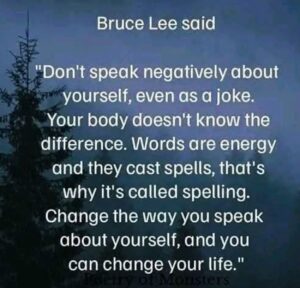
But identity extends far beyond the mere assignment of names. Every word we speak about ourselves, every description we accept or reject, every narrative we embrace becomes part of the living scripture of our existence. When we declare “I am creative,” we are not simply making a statement—we are performing an act of creation itself, calling forth aspects of our being that might otherwise remain dormant in the shadows of possibility.
The profound truth that ancient mystics understood, and that modern psychology is only beginning to rediscover, is that the self is not a fixed entity but a dynamic narrative constantly being written and rewritten through the words we choose. Each time we engage in self-description, we are essentially performing a sacred ritual of self-creation, invoking aspects of our potential and breathing life into the dreams that lie sleeping within us.
Consider the individual who repeatedly tells themselves “I am not good enough.” These words do not merely describe a feeling—they actively participate in creating a reality. They become the lens through which every experience is filtered, the script that guides every interaction, the prophecy that inevitably fulfills itself. The words create neural pathways, emotional patterns, and behavioral tendencies that reinforce the very reality they claim to describe.
Conversely, the person who cultivates an inner dialogue of possibility and potential experiences a fundamentally different reality. Their words of self-affirmation become the seeds of transformation, planted in the fertile soil of consciousness and nurtured by repetition and belief until they manifest as lived experience.
This understanding reveals one of the most liberating truths about human existence: we are not prisoners of our past or victims of our circumstances, but rather the conscious authors of our ongoing story. The pen is always in our hands, the page is always blank, and the next chapter is always waiting to be written.
The ancient wisdom traditions understood this principle intimately. In Hindu philosophy, the concept of “nama-rupa” describes how name and form are inseparable aspects of reality. To name something is to give it form, and to give something form is to bring it into existence. This principle applies not only to the external world but to the internal landscape of the self as well.
When we examine the words we use to describe ourselves, we begin to see the invisible architecture of our identity. Are our self-descriptions expansive or limiting? Do they open doors or close them? Do they invite growth or enforce stagnation? These questions are not merely philosophical—they are intensely practical, for the answers determine the very trajectory of our lives.
The process of conscious self-naming is therefore one of the most powerful tools available for personal transformation. By carefully choosing the words we use to define ourselves, we can literally reshape our reality from the inside out. We can replace limiting narratives with empowering ones, exchange stories of scarcity for tales of abundance, and transform chronicles of impossibility into epics of triumph.
The Creative Genesis: Language as the Force of Manifestation
Helen Keller’s story is one that has captivated and inspired generations. Born in 1880, she faced unimaginable challenges from a young age. At just 19 months old, a severe illness left her deaf and blind. But it was through her unwavering resilience and the pivotal moment that marked the beginning of her sense of self that she became an iconic figure, teaching us valuable lessons about human potential.
As I reflect on Helen Keller’s journey, I am struck by the profound significance of that breakthrough moment. It was a beautiful spring day when her teacher, Anne Sullivan, led her to the water pump. As the cool water flowed over one hand, Anne spelled out the word “water” into Helen’s other hand. In that instant, Helen made the connection between the tactile sensation and the word, causing the birth of her sense of identity. It was a transformative moment, not just for Helen, but for all those who have been touched by her story.
Anne Sullivan, herself visually impaired, played a crucial role in guiding Helen through her education. With innovative teaching methods and unwavering dedication, Anne helped Helen navigate the complexities of language and communication.
Helen Keller’s early life offers one of the most profound lessons about the mystery of the Word, as it takes form through the miracle of awakening a personal sense of self. This happens when consciousness begins to connect a mental symbol with an object in sensory awareness, turning on the light of understanding and birthing the conscious self, the self that realizes that everything has a name, even the being now entertaining the life-giving word in their nascent consciousness.
In the Christian Bible, in the book of John 1:14, the writer states that
“The word became flesh, and dwelt amongst us.”
This passage is NOT just about Jesus of Nazareth, it is about the totality of humanity. Theological writers and Christian ministers have misunderstood this passage for millennia.
Helen Keller’s journey has profound implications for our understanding of human potential. Her story reminds us that, even in the face of seemingly insurmountable challenges, we have the capacity to grow, learn, and achieve great things. It is a testament to the power of resilience and determination.
In our own lives, we have the power to shape our identity and forge our own path. Helen Keller’s story teaches us that the words we learn, the choices we make, the knowledge we seek, and the connections we form all contribute to our sense of self. It is through these choices that we define who we are and what we can become.
If language shapes the self, it follows that language also shapes reality itself. This is not merely metaphorical speculation but a fundamental principle that operates at every level of existence. Through words, we do not merely describe the world—we actively participate in its ongoing creation.
The creative power of language manifests in countless ways throughout human experience. In the realm of science, language enables us to formulate hypotheses that didn’t previously exist, to imagine possibilities that transcend current understanding, and to communicate discoveries that expand the boundaries of human knowledge. The very act of naming a phenomenon—whether it’s gravity, DNA, or quantum entanglement—brings it into the shared realm of human consciousness, transforming abstract possibilities into concrete realities.
In the world of art and literature, language becomes the paintbrush with which we create new universes. Through the careful arrangement of words, writers conjure entire worlds populated with beings who feel as real as our neighbors, who face dilemmas that mirror our own, and who inspire us to see our lives from fresh perspectives. The reader who encounters Hamlet’s soliloquy or Rumi’s poetry experiences a transformation of consciousness that extends far beyond the mere consumption of information.
The creative power of language is perhaps most evident in the realm of human relationships. Through words, we create bonds of love that can endure for lifetimes, establish agreements that govern societies, and generate shared visions that inspire collective action. A simple phrase like “I love you” has the power to transform two separate individuals into a unified partnership. A political speech can galvanize millions to action. A poem can console the grieving and inspire the discouraged.
But the creative potential of language extends into even more subtle realms. In the field of psychology, therapeutic dialogue creates new possibilities for healing and growth. The therapist and client together weave new narratives that replace destructive patterns with healthy ones, transforming trauma into wisdom and pain into purpose. The words spoken in the therapeutic space become instruments of resurrection, calling forth aspects of the self that had been buried beneath layers of conditioning and fear.
In the business world, language creates markets, builds brands, and generates economic value. A compelling story about a product or service can transform raw materials and human effort into sources of prosperity and abundance. The language of marketing is not merely descriptive—it is actively creative, calling forth desires, shaping preferences, and influencing behaviors in ways that generate tangible economic outcomes.
Even in the realm of personal relationships, language continuously creates and recreates the reality we share with others. The words we choose in our conversations with family, friends, and colleagues literally shape the quality of those relationships. Harsh words create distance and conflict, while loving words generate intimacy and connection. Critical language produces defensiveness and withdrawal, while encouraging language fosters growth and collaboration.
This understanding places upon us a profound responsibility. If our words possess creative power, then we must become conscious of what we are creating through our speech. Every conversation becomes an opportunity for conscious creation, every word a chance to participate actively in shaping the world we inhabit.
The Ancient Wisdom: Language in Sacred Traditions
The transformative power of language has been recognized and revered by wisdom traditions throughout human history. From the Hindu concept of “Om” as the primordial sound of creation to the Biblical declaration that “In the beginning was the Word,” ancient cultures understood that language is not merely human invention but a fundamental force of the universe itself.
In the Hebrew tradition, the creation story in Genesis presents language as the very mechanism through which reality comes into existence. “And God said, ‘Let there be light,’ and there was light.” This is not merely poetic metaphor but a profound teaching about the nature of reality itself. The divine word is presented as the creative force that brings order out of chaos, light out of darkness, and form out of the formless void.
The Hebrew concept of “dabar” reveals even deeper layers of meaning. Unlike the English word “word,” which suggests a mere collection of sounds or symbols, “dabar” implies both word and deed, speech and action, declaration and manifestation. In this understanding, to speak is to act, and to act is to participate in the ongoing creation of the world.
Similarly, in the Hindu tradition, the concept of “Shabda Brahman” describes ultimate reality as sound or word. The sacred syllable “Om” is considered the primordial vibration from which all existence emerges. Mantras—sacred sounds repeated with intention—are understood as tools for aligning human consciousness with cosmic consciousness, using the power of language to transform both inner and outer reality.
The practice of chanting in various traditions demonstrates this understanding in action. Whether it’s the recitation of the Quran in Islamic practice, the chanting of sutras in Buddhism, or the singing of hymns in Christian worship, these practices recognize that language possesses transformative power that extends beyond mere intellectual understanding. The repetition of sacred words creates altered states of consciousness, opens pathways to transcendent experience, and facilitates direct communion with the divine.
In the Egyptian mystery schools, hieroglyphs were understood not merely as symbols for communication but as sacred forms that carried spiritual power. Each hieroglyph was believed to contain the essence of what it represented, making written language a form of magical practice. The scribes who mastered these sacred writings were considered priests, for they wielded the power to create reality through their mastery of symbolic language.
The Celtic druids preserved vast oral traditions, recognizing that spoken language carries a living energy that written words cannot fully capture. Their extensive training included the memorization of thousands of stories, songs, and incantations, understanding that the human voice itself is an instrument of power capable of healing, blessing, cursing, and transforming reality.
These ancient insights find remarkable parallels in modern scientific understanding. Quantum physics reveals that at the most fundamental level, reality consists not of solid matter but of vibrating energy patterns. Sound, which carries language, is itself vibration, suggesting that ancient intuitions about the creative power of the word may have been more literally accurate than we previously imagined.
The emerging field of cymatics—the study of visible sound—demonstrates how sound waves create geometric patterns in matter, literally organizing chaos into order through vibrational frequency. This provides a scientific foundation for the ancient belief that language and sound possess creative power, capable of bringing form and structure to the formless potentials of existence.
The Mythology of Meaning: Stories That Shape Civilizations
Throughout human history, the stories we tell ourselves have shaped not only individual consciousness but entire civilizations. Mythology is not merely entertainment or primitive science—it is the software that runs the operating system of human culture, the invisible programming that determines what we consider possible, desirable, and meaningful.
The power of mythological language lies not in its literal truth but in its psychological and spiritual truth. When the ancient Greeks told stories of heroes who overcame impossible odds, they were not merely entertaining themselves—they were installing templates for heroic behavior in the collective unconscious. These stories became maps for navigating life’s challenges, providing archetypal patterns that individuals could follow in their own journeys of growth and transformation.
Consider the myth of the hero’s journey, found in various forms across all cultures. This archetypal story—of an ordinary person who receives a call to adventure, faces trials and challenges, gains wisdom or power, and returns to share their gifts with their community—provides a fundamental template for personal development. The language of this myth shapes how we understand our own life experiences, helping us recognize opportunities for growth, find courage in the face of adversity, and discover meaning in our struggles.
Biblical narratives demonstrate the civilizational power of mythological language with particular clarity. The story of the Exodus—of a people enslaved who are led to freedom through divine intervention and their own courage—has inspired liberation movements throughout history. The language of this myth provides a framework for understanding oppression and freedom, struggle and triumph, that has empowered countless individuals and communities to seek their own promised lands.
The creation stories found in various traditions reveal how mythological language shapes our understanding of our place in the cosmos. The Genesis account presents humans as created in the divine image and given dominion over the earth, establishing a worldview that has profoundly influenced Western civilization’s approach to nature, technology, and human potential. Alternative creation myths, such as those found in indigenous traditions that present humans as caretakers rather than masters of the earth, generate entirely different relationships with the natural world.
The power of mythological language extends into the modern world through the stories we tell about progress, success, love, and meaning. The American Dream is itself a powerful myth that has shaped the aspirations and behaviors of millions of people. The language of this myth—emphasizing individual effort, unlimited possibility, and the pursuit of happiness—creates a particular reality for those who embrace it.
Corporate mythology demonstrates how modern organizations use narrative language to shape culture and behavior. Companies don’t merely sell products—they tell stories about lifestyle, identity, and values. Apple’s mythology of innovation and design excellence, Disney’s mythology of magic and wonder, and Nike’s mythology of athletic achievement all use language to create emotional connections that transcend mere commercial transactions.
The stories we tell about technology, progress, and the future actively shape what that future becomes. The science fiction genre serves as a laboratory for testing possible futures through narrative language. Many technologies that we now take for granted were first imagined in the pages of science fiction stories. The language of these narratives didn’t merely predict the future—it participated in creating it by expanding our collective imagination of what was possible.
Personal mythology operates at the individual level with equal power. Each person carries within themselves a collection of stories about who they are, where they came from, and where they are going. These personal myths, often inherited from family and culture, shape expectations, limit or expand possibilities, and determine the kinds of experiences that feel meaningful and worthwhile.
The conscious cultivation of empowering personal mythology becomes a powerful tool for transformation. By identifying the limiting stories we carry and consciously replacing them with more empowering narratives, we can literally change the trajectory of our lives. This is not mere positive thinking—it is the conscious use of mythological language to reprogram the deep structures of consciousness.
(Keep Whole) Chapter 23: The Sacred Architecture of Language: From Letters to Universal Consciousness
“Don’t speak negatively about yourself, even as a joke. Your body doesn’t know the difference. Words are energy and they cast spells, that’s why it’s called spelling. Change the way you speak about yourself, and you can change your life.” – Bruce Lee
Since the first moment consciousness recognized itself in the mirror of existence, language has stood as humanity’s greatest mystery and most profound gift. It is the invisible architecture shaping our reality, the sacred fire illuminating the caverns of mind, and the divine thread weaving together the infinite tapestry of human experience. From our ancestors’ primordial utterances to modern civilization’s sophisticated discourse, language has been simultaneously our liberation and our responsibility.
Often, we move through life oblivious to the intricate symphony of sounds and symbols enabling communication, failing to perceive the immense power dwelling within these fundamental building blocks. Yet when we pause to examine language’s true nature, we discover something extraordinary: words don’t merely describe reality—they actively create it. This exploration ventures into the deepest recesses of linguistic consciousness, where syllables cease being mere sounds and become the very substance of existence itself.
Language is not simply a tool we employ; it is the medium through which we exist. It shapes thoughts before we think them, colors emotions before we feel them, and defines possibilities before we imagine them. To understand language is to comprehend the fundamental mechanics of consciousness itself, and within this understanding lies the key to unlocking our fullest potential as conscious beings participating in creation’s ongoing unfoldment.
The Atomic Structure of Communication: Letters as Foundational Elements
At the core of written language exist letters—fundamental units resembling the atoms of our linguistic universe. Just as electrons, protons, and neutrons combine to form atoms, letters are essential pieces holding enormous potential, even possessing limited meaning individually. Consider the letter “A” or “T”—isolated, they’re abstract symbols, silent and waiting. They represent pure possibility, raw materials from which every piece of literature, treaty, declaration of love, or scientific breakthrough is constructed.
These characters share ancestry with every word ever written or spoken in alphabetic systems. Their power lies not in isolation but in combination. The brilliance of an alphabet is that a small set of symbols can arrange themselves in countless configurations to capture the endless spectrum of human thought and experience. Just as a handful of subatomic particles form the ninety-two natural elements in the periodic table, twenty-six letters in the English alphabet can generate over a million words. This represents the first incredible leap in meaning creation—the transformation of silent symbols into resonant sounds.
The parallels to physical reality run deeper than mere metaphor. In quantum physics, we learn that at the most fundamental level, reality consists not of solid matter but of vibrating energy patterns. Letters, too, exist as potential energy awaiting activation through combination and pronunciation. Each letter carries a unique vibrational signature, a frequency that, when combined with others, creates the complex harmonies we recognize as words.
Ancient mystics understood this principle intimately. Hebrew Kabbalists developed elaborate systems exploring how the twenty-two letters of their alphabet served as channels through which divine energy flowed into manifestation. Each letter was considered a vessel containing cosmic forces, and their combinations were seen as mechanisms through which the infinite expressed itself in finite form. The practice of gematria—assigning numerical values to letters—revealed hidden relationships between words sharing the same numerical value, suggesting deeper connections between seemingly disparate concepts.
This understanding transforms our relationship with the alphabet from utilitarian to sacred. When we recognize that letters are not arbitrary symbols but fundamental building blocks of consciousness itself, we approach reading and writing as spiritual practices. Each time we form a word, we participate in the ancient act of calling something into existence, bridging the gap between potential and actual, between the unmanifest and the manifest.
The Genesis of Meaning: Words as Molecular Structures
When letters combine, something extraordinary occurs: words are born. These combinations create unique vibrations and frequencies, each carrying meaning that transcends individual components. If letters are language’s atoms, then words are its molecules. A simple word like “water” consists of letters representing far more than their individual parts—it conjures images, sensations, and concepts universally understood. W-A-T-E-R transcends being merely a sequence of symbols; it becomes a vessel of meaning, a molecular structure in language’s chemistry.
Each word functions as an individual element with unique characteristics. Words like “love,” “justice,” “fear,” and “hope” aren’t merely sounds—they’re complex compounds, each carrying emotional weight, texture, and resonance. Creating a word is an act of intentional connection, where letters arrange themselves to encapsulate pieces of reality. This process enables us to name, categorize, and make sense of the world surrounding us.
Words prove pivotal to human consciousness. They transform abstract thought into tangible form. Without them, life would cascade as chaotic sensory input. Words are tools helping us distill this chaos into manageable, shareable pieces. They allow us to name the wind, the stars, and even the deepest feelings dwelling in the human heart.
Helen Keller’s story illuminates this transformative power with exceptional clarity. Born in 1880, she faced unimaginable challenges when, at nineteen months old, a severe illness left her deaf and blind. But through unwavering resilience and a pivotal moment marking the birth of her sense of self, she became an iconic figure teaching us profound lessons about human potential and language’s creative power.
That breakthrough moment occurred on a beautiful spring day when her teacher, Anne Sullivan, led her to the water pump. As cool water flowed over one hand, Anne spelled “water” into Helen’s other hand. In that instant, Helen made the connection between tactile sensation and word, catalyzing the birth of her identity. It was transformative not just for Helen, but for all those touched by her story, demonstrating how the Word takes form through the miracle of awakening a personal sense of self.
This awakening happens when consciousness begins connecting mental symbols with objects in sensory awareness, illuminating understanding and birthing the conscious self—the self realizing that everything possesses a name, even the being now entertaining the life-giving word in their nascent consciousness. In the Gospel of John, the writer declares, “The word became flesh, and dwelt amongst us” (John 1:14). This passage transcends being solely about Jesus of Nazareth; it speaks to humanity’s totality. Theological writers and Christian ministers have misunderstood this passage for millennia, failing to recognize that it describes the universal process through which consciousness manifests through language.
Helen Keller’s journey carries profound implications for understanding human potential. Her story reminds us that even facing seemingly insurmountable challenges, we possess capacity to grow, learn, and achieve greatness. It testifies to resilience and determination’s power, demonstrating that the words we learn, choices we make, knowledge we seek, and connections we form all contribute to our sense of self.
The Sacred Architecture of Self: How Words Forge Identity
The human experience begins not with breath but with the first word defining us—our name. In that moment of linguistic baptism, we are thrust into a universe of meaning where every syllable carries existence’s weight. Our names become the first building blocks in selfhood’s magnificent cathedral, each letter a stone carefully placed in our being’s foundation.
What dwells within a name? My own name carried links to family members through my mother’s and father’s lineage, hence the two middle names, Oliver and Scott. The name Bruce arrived in Scotland with the Normans, from the place-name Brix, Manche in Normandy, France, meaning “the willowlands” or “brushwood thicket.” Bruce came to mean “from out of the brushwood thicket.” Initially promulgated through descendants of King Robert the Bruce (1274-1329), it has been a Scottish surname since medieval times.
Oliver possesses English origins, meaning “the olive tree.” The biblical olive tree symbolizes fruitfulness, beauty, and dignity. “Extending an olive branch” signifies peace offering. Scott derives from English and Scottish surnames referring to a person from Scotland or who speaks Scottish Gaelic. It also designates geographic description indicating one from Scotland, the earlier race of second-century invaders from Ireland called Scoti, or “Blue Men”—one who colors the body blue with tattoos. Another meaning suggests “one not from here.”
Paullin in Latin means small, and also signifies lineage of Paul (of the New Testament). So who am I according to the name my parents bestowed? “From out of the brushwood thicket (wilderness), an offering of peace, from a man not from here, tattooed by life, with small or humbled status, of the lineage of the mystic, Saint Paul.” Whether I live up to this name remains to be seen, yet it appears to accurately describe my nature—a description that shaped my self-conception long before I consciously understood its meaning.
But identity extends far beyond mere name assignment. Every word we speak about ourselves, every description we accept or reject, every narrative we embrace becomes part of our existence’s living scripture. When we declare “I am creative,” we’re not simply making a statement—we’re performing an act of creation itself, calling forth aspects of our being that might otherwise remain dormant in possibility’s shadows.
The profound truth ancient mystics understood, and modern psychology only begins rediscovering, is that the self is not a fixed entity but a dynamic narrative constantly being written and rewritten through our chosen words. Each time we engage in self-description, we perform a sacred ritual of self-creation, invoking aspects of our potential and breathing life into dreams lying sleeping within us.
Consider the individual repeatedly telling themselves “I am not good enough.” These words don’t merely describe feeling—they actively participate in creating reality. They become the lens filtering every experience, the script guiding every interaction, the prophecy inevitably fulfilling itself. The words create neural pathways, emotional patterns, and behavioral tendencies reinforcing the very reality they claim to describe.
Conversely, the person cultivating an inner dialogue of possibility and potential experiences a fundamentally different reality. Their words of self-affirmation become transformation’s seeds, planted in consciousness’s fertile soil and nurtured by repetition and belief until manifesting as lived experience.
This understanding reveals one of existence’s most liberating truths: we are not prisoners of our past or victims of circumstances, but conscious authors of our ongoing story. The pen remains always in our hands, the page always blank, the next chapter always waiting to be written.
Ancient wisdom traditions understood this principle intimately. In Hindu philosophy, the concept of “nama-rupa” describes how name and form are inseparable aspects of reality. To name something is to give it form, and to give something form is to bring it into existence. This principle applies not only to the external world but to the internal landscape of self as well.
When we examine words used to describe ourselves, we begin seeing our identity’s invisible architecture. Are our self-descriptions expansive or limiting? Do they open doors or close them? Do they invite growth or enforce stagnation? These questions aren’t merely philosophical—they’re intensely practical, for the answers determine our lives’ very trajectory.
The process of conscious self-naming therefore becomes one of the most powerful tools available for personal transformation. By carefully choosing words used to define ourselves, we can literally reshape reality from the inside out. We can replace limiting narratives with empowering ones, exchange stories of scarcity for tales of abundance, and transform chronicles of impossibility into epics of triumph.
The Creative Genesis: Language as the Force of Manifestation
If language shapes the self, it follows that language also shapes reality itself. This is not merely metaphorical speculation but a fundamental principle operating at every level of existence. Through words, we don’t merely describe the world—we actively participate in its ongoing creation.
The creative power of language manifests in countless ways throughout human experience. In science’s realm, language enables us to formulate hypotheses that didn’t previously exist, to imagine possibilities transcending current understanding, and to communicate discoveries expanding human knowledge’s boundaries. The very act of naming a phenomenon—whether gravity, DNA, or quantum entanglement—brings it into shared human consciousness, transforming abstract possibilities into concrete realities.
In art and literature’s world, language becomes the paintbrush with which we create new universes. Through careful word arrangement, writers conjure entire worlds populated with beings feeling as real as our neighbors, facing dilemmas mirroring our own, inspiring us to see our lives from fresh perspectives. The reader encountering Hamlet’s soliloquy or Rumi’s poetry experiences consciousness transformation extending far beyond mere information consumption.
The creative power of language proves perhaps most evident in human relationships’ realm. Through words, we create love bonds enduring lifetimes, establish agreements governing societies, and generate shared visions inspiring collective action. A simple phrase like “I love you” possesses power to transform two separate individuals into unified partnership. A political speech can galvanize millions to action. A poem can console the grieving and inspire the discouraged.
But language’s creative potential extends into even more subtle realms. In psychology’s field, therapeutic dialogue creates new possibilities for healing and growth. Therapist and client together weave new narratives replacing destructive patterns with healthy ones, transforming trauma into wisdom and pain into purpose. Words spoken in therapeutic space become instruments of resurrection, calling forth aspects of self buried beneath layers of conditioning and fear.
In the business world, language creates markets, builds brands, and generates economic value. A compelling story about a product or service can transform raw materials and human effort into prosperity and abundance sources. Marketing language is not merely descriptive—it is actively creative, calling forth desires, shaping preferences, and influencing behaviors in ways generating tangible economic outcomes.
Even in personal relationships’ realm, language continuously creates and recreates the reality we share with others. Words chosen in conversations with family, friends, and colleagues literally shape those relationships’ quality. Harsh words create distance and conflict, while loving words generate intimacy and connection. Critical language produces defensiveness and withdrawal, while encouraging language fosters growth and collaboration.
This understanding places upon us profound responsibility. If our words possess creative power, then we must become conscious of what we’re creating through our speech. Every conversation becomes an opportunity for conscious creation, every word a chance to participate actively in shaping the world we inhabit.
The Ancient Wisdom: Language in Sacred Traditions
The transformative power of language has been recognized and revered by wisdom traditions throughout human history. From the Hindu concept of “Om” as creation’s primordial sound to the Biblical declaration that “In the beginning was the Word,” ancient cultures understood that language is not merely human invention but a fundamental force of the universe itself.
In the Hebrew tradition, the Genesis creation story presents language as the very mechanism through which reality comes into existence. “And God said, ‘Let there be light,’ and there was light.” This is not merely poetic metaphor but profound teaching about reality’s nature itself. The divine word is presented as the creative force bringing order from chaos, light from darkness, and form from the formless void.
The Hebrew concept of “dabar” reveals even deeper meaning layers. Unlike the English word “word,” which suggests a mere collection of sounds or symbols, “dabar” implies both word and deed, speech and action, declaration and manifestation. In this understanding, to speak is to act, and to act is to participate in the world’s ongoing creation.
Similarly, in Hindu tradition, the concept of “Shabda Brahman” describes ultimate reality as sound or word. The sacred syllable “Om” is considered the primordial vibration from which all existence emerges. Mantras—sacred sounds repeated with intention—are understood as tools for aligning human consciousness with cosmic consciousness, using language’s power to transform both inner and outer reality.
Chanting practice in various traditions demonstrates this understanding in action. Whether Quran recitation in Islamic practice, sutras chanting in Buddhism, or hymns singing in Christian worship, these practices recognize that language possesses transformative power extending beyond mere intellectual understanding. Sacred words repetition creates altered consciousness states, opens pathways to transcendent experience, and facilitates direct communion with the divine.
In Egyptian mystery schools, hieroglyphs were understood not merely as communication symbols but as sacred forms carrying spiritual power. Each hieroglyph was believed to contain the essence of what it represented, making written language a form of magical practice. Scribes who mastered these sacred writings were considered priests, for they wielded power to create reality through symbolic language mastery.
Celtic druids preserved vast oral traditions, recognizing that spoken language carries living energy that written words cannot fully capture. Their extensive training included memorizing thousands of stories, songs, and incantations, understanding that the human voice itself is an instrument of power capable of healing, blessing, cursing, and transforming reality.
These ancient insights find remarkable parallels in modern scientific understanding. Quantum physics reveals that at the most fundamental level, reality consists not of solid matter but of vibrating energy patterns. Sound, which carries language, is itself vibration, suggesting that ancient intuitions about the word’s creative power may have been more literally accurate than we previously imagined.
The emerging field of cymatics—the study of visible sound—demonstrates how sound waves create geometric patterns in matter, literally organizing chaos into order through vibrational frequency. This provides scientific foundation for ancient belief that language and sound possess creative power, capable of bringing form and structure to existence’s formless potentials.
At its core, language exists as energy in motion, manifesting in two forms: kinetic and potential. Spoken words are kinetic energy—sound waves traveling through air, carrying thoughts and emotions that resonate immediately with listeners. Words can soothe, inspire, provoke, or harm. They are energy in action, transferring meaning and emotion from one person to another.
Consider Martin Luther King Jr.’s “I Have a Dream” speech. His words were more than sound sequences; they were an energy surge that electrified a nation. The rhythm, metaphors, and moral vision combined to create a force that drove the Civil Rights Movement and reshaped American society. This is language’s kinetic power: to move hearts, change minds, and galvanize action.
Written language, conversely, is potential energy. A book on a shelf is a reservoir of ideas, emotions, and knowledge, waiting to be released. Its energy lies dormant until someone reads it. When engaged, the text transforms into kinetic energy within the reader’s mind, sparking new ideas, emotions, and actions. The writings of Plato, Shakespeare, or Simone de Beauvoir continue influencing humanity long after their authors’ deaths, releasing their energy to inspire new generations.
This dual nature of language demonstrates its power. Contemporary culture wars and political propaganda are stark examples. Posters, internet memes, and pamphlets (potential energy) are designed to stir emotions like tribalism, patriotism, or hatred (kinetic energy), shaping public opinion and driving behaviors. Words become tools for creating alternate realities based on lies and misinformation, destroying cultural morality and ethical codes.
Understanding language as energy reveals a profound truth: we are all architects of reality. Every word we speak or write contributes to the conceptual world we share. We either reinforce existing structures or create new ones. This understanding brings great responsibility. Are our words building bridges or walls? Are we fostering empathy and understanding, or division and fear?
The power of words isn’t merely philosophical—it’s practical reality. It’s the energy we exchange with loved ones, the ideas we share at work, and the thoughts we capture in journals. Each communication act is an act of creation.
The Mythology of Meaning: Stories That Shape Civilizations
Throughout human history, the stories we tell ourselves have shaped not only individual consciousness but entire civilizations. Mythology is not merely entertainment or primitive science—it is the software running human culture’s operating system, the invisible programming determining what we consider possible, desirable, and meaningful.
Mythological language’s power lies not in literal truth but in psychological and spiritual truth. When ancient Greeks told stories of heroes overcoming impossible odds, they weren’t merely entertaining themselves—they were installing templates for heroic behavior in the collective unconscious. These stories became maps for navigating life’s challenges, providing archetypal patterns individuals could follow in their own journeys of growth and transformation.
Consider the hero’s journey myth, found in various forms across all cultures. This archetypal story—of an ordinary person who receives a call to adventure, faces trials and challenges, gains wisdom or power, and returns to share their gifts with their community—provides a fundamental template for personal development. This myth’s language shapes how we understand our own life experiences, helping us recognize opportunities for growth, find courage facing adversity, and discover meaning in our struggles.
Biblical narratives demonstrate mythological language’s civilizational power with particular clarity. The Exodus story—of enslaved people led to freedom through divine intervention and their own courage—has inspired liberation movements throughout history. This myth’s language provides a framework for understanding oppression and freedom, struggle and triumph, that has empowered countless individuals and communities to seek their own promised lands.
Creation stories found in various traditions reveal how mythological language shapes our understanding of our place in the cosmos. The Genesis account presents humans as created in the divine image and given dominion over earth, establishing a worldview that has profoundly influenced Western civilization’s approach to nature, technology, and human potential. Alternative creation myths, such as those found in indigenous traditions presenting humans as caretakers rather than masters of earth, generate entirely different relationships with the natural world.
Mythological language’s power extends into the modern world through stories we tell about progress, success, love, and meaning. The American Dream is itself a powerful myth that has shaped millions of people’s aspirations and behaviors. This myth’s language—emphasizing individual effort, unlimited possibility, and happiness pursuit—creates particular reality for those embracing it.
Corporate mythology demonstrates how modern organizations use narrative language to shape culture and behavior. Companies don’t merely sell products—they tell stories about lifestyle, identity, and values. Apple’s mythology of innovation and design excellence, Disney’s mythology of magic and wonder, and Nike’s mythology of athletic achievement all use language to create emotional connections transcending mere commercial transactions.
Stories we tell about technology, progress, and the future actively shape what that future becomes. The science fiction genre serves as a laboratory for testing possible futures through narrative language. Many technologies we now take for granted were first imagined in science fiction pages. These narratives’ language didn’t merely predict the future—it participated in creating it by expanding our collective imagination of what was possible.
Personal mythology operates at the individual level with equal power. Each person carries within themselves a collection of stories about who they are, where they came from, and where they are going. These personal myths, often inherited from family and culture, shape expectations, limit or expand possibilities, and determine the kinds of experiences feeling meaningful and worthwhile.
Conscious cultivation of empowering personal mythology becomes a powerful transformation tool. By identifying limiting stories we carry and consciously replacing them with more empowering narratives, we can literally change our lives’ trajectory. This is not mere positive thinking—it is conscious use of mythological language to reprogram consciousness’s deep structures.
The Universal Bandwidth: Choosing Our Linguistic Future
We stand at a crucial juncture in human history. The tools of communication have never been more powerful or pervasive. Social media platforms give us unprecedented ability to broadcast our words to millions. AI technologies are beginning to generate language at scales previously unimaginable. The question facing us is not whether language will shape our future—it is what kind of future we will create through the words we choose.
The current political landscape demonstrates language’s power with disturbing clarity. We witness how carefully crafted lies can reshape entire populations’ perceptions of reality. We see how inflammatory rhetoric can transform neighbors into enemies and facts into contested territory. The current administration’s use of language serves as a stark reminder that words can be weaponized, that communication can be corrupted, and that the power to name and define reality carries enormous consequences.
Yet this same power that can be used to divide and destroy can also heal and unite. Every moment presents us with a choice: Will we use language to reinforce existing structures of power and oppression, or will we deploy it to create new possibilities for justice and freedom? Will we allow our words to be shaped by fear and tribalism, or will we consciously craft language that bridges divides and builds understanding?
The concept of the Universal Bandwidth offers a framework for making this choice consciously. This bandwidth represents the full spectrum of creative potential available to us—the infinite possibilities of consciousness seeking expression through language. When we “access the Universal Bandwidth,” we align our communication with principles transcending narrow self-interest, connecting with deeper truths about human existence and our fundamental interconnection.
This is not mystical abstraction but practical reality. When we speak from this aligned place, our words carry different quality. They resonate with authenticity that others recognize instinctively. They possess creative power that extends far beyond their immediate context. They participate in building the world we wish to inhabit rather than merely describing the world as it appears.
Accessing this bandwidth requires developing what might be called “linguistic consciousness”—a heightened awareness of language’s creative power and a commitment to wielding that power responsibly. This consciousness develops through practice, attention, and intention. It requires us to become observers of our own speech patterns, to notice the habitual narratives we repeat, to question the stories we’ve inherited, and to consciously choose words aligned with our deepest values and highest aspirations.
This practice begins with self-awareness. We must learn to hear ourselves, to pay attention to the words we use when describing ourselves, others, and the world around us. Are our default narratives empowering or disempowering? Do our habitual phrases open possibilities or close them? Does our typical language reflect the reality we wish to create or simply perpetuate patterns we’ve inherited unconsciously?
From awareness comes choice. Once we begin recognizing our linguistic patterns, we can consciously choose to change them. This is not about adopting fake positivity or denying difficult realities. It is about taking responsibility for the reality-creating power of our words and using that power with intention and wisdom.
The stakes could not be higher. In an age when misinformation spreads faster than truth, when algorithmic amplification can turn whispers into roars, when language itself becomes a contested battleground, our individual and collective choices about how we use words will determine what kind of world we create for ourselves and future generations.
Understanding language as journey from letters to energy, from symbols to consciousness, from individual expression to collective reality reveals a profound truth: we are all architects of reality. Every word we speak or write contributes to the conceptual world we share. We either reinforce existing structures or create new ones.
This understanding brings with it great responsibility and great possibility. The question each of us must answer is simple yet profound: What reality will we create through our words? Will we use language to perpetuate division, fear, and limitation? Or will we deploy it to generate understanding, courage, and possibility?
Our words hold energy. They possess creative power. They shape consciousness. They determine reality. These are not metaphors but literal descriptions of how language operates in the world. Every conversation is an opportunity for conscious creation. Every sentence is a chance to participate actively in shaping the world we inhabit.
The choice is ours, moment by moment, word by word. We can speak carelessly, allowing unconscious patterns and inherited narratives to control our expression. Or we can speak consciously, choosing each word as an act of creation, aligning our language with our deepest values and highest vision.
We can access the Universal Bandwidth to bring a more loving, collaborative, and peaceful world into existence through conscientious choice of words. Or we can allow our communication to be shaped by fear, anger, and the desire for power over others.
The architecture of reality is built from words. Every syllable is a building block. Every sentence is a structural element. Every story is a blueprint for possibility. We are the architects, the builders, the creators.
What will we build?
Chapter 24: The Symphony of Silence and Sound: Understanding Consciousness as Vibrational Energy
In the intricate tapestry of human connection, we often believe communication is the primary thread holding us together. We navigate our world through a constant exchange of information, a dance between what is said and what is left unspoken. Yet, to see communication as merely an exchange of words and gestures is to gaze at the schematic of a complex circuit and see only lines, blind to the invisible current that gives it life. The true magic, the raw power of our interactions, lies not in the symbols themselves but in the vibrational consciousness they conduct. This is not a metaphor; it is the fundamental physics of our shared reality.
This chapter will illuminate the distinct yet inseparable worlds of verbal and non-verbal communication through the lens of energy, vibration, and consciousness. By exploring their roles as conductors and modulators of the universal bandwidth, we can transcend the simple mechanics of interaction and begin to understand the symphony of vibrational consciousness that defines our existence.
Words as Conductors: The Explicit Circuit of Consciousness
Verbal communication, the structured system of language, is the most explicit tool humanity has ever devised for transmitting energy. As explored previously, words function as conductors in the electrical circuit of consciousness. When we articulate a thought, share information, or give an instruction, we are creating a voltage differential between ourselves as the source and the reality we seek to describe as the load. Language is the wire through which the current of our awareness flows.
When a teacher explains a concept, they are not just stringing sounds together; they are modulating a specific frequency of understanding and transmitting it to their students. When a manager gives clear instructions, they are directing a current of intention meant to manifest a specific outcome. Language is our collective legacy, a vast and intricate switchboard built to channel the energy of consciousness, allowing us to narrate stories, construct cultures, and inspire change.
However, for all its power, language has inherent resistance. Like any conductor, it is imperfect. Words often fall short of capturing the full spectrum of human experience. The richness of an emotion or the subtlety of a thought can be lost, dissipated as heat when forced through the narrow gauge of vocabulary. The infinite complexity of a feeling like love or grief is compressed, and in that compression, its truest essence is often distorted.
Furthermore, language is a vessel for our accumulated biases and conditioning. These biases act as resistors in the circuit, impeding the flow of pure meaning. Cultural, social, and individual interpretations can skew understanding, creating short circuits and misunderstandings that even the most carefully chosen words cannot prevent. A phrase that is innocuous in one context may carry a heavy load of negative charge in another, highlighting the limitations of a purely verbal approach to transmitting consciousness. Our words are powerful, but they are only one part of a much larger, more mysterious circuit.
The Silent Current: Non-Verbal Communication as Vibrational Field
Beyond the structured pathways of language lies a silent, primal form of communication that often carries more truth than speech. This is the realm of non-verbal communication, a vast and subtle language of vibration that predates words and transcends cultural barriers. It is not a separate system but the very field through which the conductors of language run. If words are the wires, non-verbal cues are the electromagnetic field that surrounds them—invisible, yet profoundly influential.
This silent dialogue is deeply ingrained in our being, an ancient current of awareness that flows through gestures, facial expressions, posture, and the tone of our voice. These are not mere “cues”; they are direct expressions of our internal vibrational state.
- Facial Expressions: A smile is more than a muscular contraction; it is a harmonic frequency of warmth and acceptance broadcast into the shared space. A furrowed brow is a dissonant chord signaling confusion or concern. Our faces are oscilloscopes, displaying the waveform of our inner world for all to see.
- Body Language: The way we hold ourselves speaks volumes about the flow of energy within us. Crossed arms can create an energetic shield, a form of high resistance suggesting defensiveness, even if our words are agreeable. Leaning in during a conversation lowers this resistance, creating an open circuit for energetic exchange and demonstrating engagement.
- Gestures: Hand movements are not random. They are modulators, shaping the energy field around our words. A pointed finger focuses energy with laser-like intensity, while an open palm broadcasts a wide, receptive frequency. A thumbs-up is a resonant pulse of approval that requires no verbal translation.
- Tone of Voice: The pitch, volume, and cadence of our speech—the prosody—is perhaps the most potent non-verbal modulator. It is the carrier wave upon which the signal of our words rides. A simple phrase like “I’m fine” can be broadcast on a frequency of genuine contentment or a frequency of deep distress. The words are the same, but the energy transmitted is entirely different. The tone reveals the true voltage behind the statement.
To interpret these vibrations, context is paramount. A single gesture can resonate differently depending on the environment. Non-verbal awareness invites us to listen not just with our ears but with our entire being—to attune ourselves to the subtle symphony of human expression. It is the art of feeling the music, not just reading the notes.
Resonance and Dissonance: The Interplay of Vibrational Frequencies
The true power of communication unfolds in the interplay between the verbal and the non-verbal—the conductor and its field. These two modes can resonate, creating a powerful, coherent wave, or they can create dissonance, resulting in a distorted and confusing signal.
When words and body language are aligned, the message achieves a state of resonance. The frequencies are in phase, amplifying each other to create a signal of undeniable power and clarity. Imagine a friend sharing sad news; their somber tone, lowered gaze, and gentle touch all vibrate at the same frequency as their words. This creates a moment of pure energetic transfer—a circuit of empathy is completed, and genuine connection occurs.
Conversely, a conflict between verbal and non-verbal signals creates dissonance. This is the essence of sarcasm, where the words (“That’s just great”) carry one signal, but the tonal frequency transmits the exact opposite. The resulting waveform is chaotic and generates a sense of unease and mistrust in the receiver. When someone avoids eye contact and fidgets while insisting they are telling the truth, their non-verbal field is broadcasting a frequency of anxiety that interferes with their verbal signal. Navigating this complexity requires a heightened vibrational awareness, an ability to discern the subtle currents flowing beneath the surface of a conversation. It requires us to feel the truth, not just hear the words.
Mastering the Instrument: Becoming a Conscious Communicator
Understanding this theory is one thing; applying it to become a master of your own energetic instrument is another. Improving your communication skills is a journey of continuous practice and self-reflection. It is about tuning your own being to broadcast and receive with greater clarity and fidelity.
- Practice Active Listening as Full-Body Sensing: Pay full attention to the speaker not as a source of words, but as a source of vibration. Observe their body language and tone as you would watch a meter reading a current. Feel the energy behind their words. This shows respect not just for their mind, but for their entire being, allowing you to grasp the complete transmission.
- Observe Your Own Broadcast: Record yourself during a virtual meeting or practice speaking in front of a mirror. But do not just watch and listen—feel. What is the energy you are putting out? Is your posture broadcasting confidence or resistance? Is your tone carrying the frequency you intend? Observing your own non-verbal broadcast can reveal energy leaks and dissonant habits you were unaware of.
- Seek Feedback on Your Frequency: Ask trusted friends or colleagues for honest feedback on your communication energy. Did they feel your passion? Did they sense your conviction? Their perspective can offer invaluable insights into the signal you are actually transmitting, versus the one you think you are transmitting.
- Expand Your Cultural Bandwidth: Different cultures operate on different sub-frequencies of non-verbal language. What is a resonant signal in one culture may be static in another. Studying these variations is not about learning rules; it is about expanding your capacity to receive and interpret a wider range of the human vibrational spectrum, preventing misunderstandings and fostering better cross-cultural resonance.
- Engage in Mindful Self-Awareness: Your internal state is the power source for your communication. Pay attention to your own emotional frequency. Are you tense? Excited? Anxious? Your internal state will inevitably modulate your non-verbal broadcast. Before an important conversation, take a moment to ground yourself and consciously choose the frequency you wish to transmit from.
By consciously engaging in these practices, you can begin to master the art of vibrational communication, tuning your instrument to foster stronger resonance in your personal and professional life.
The journey into the realms of verbal and non-verbal communication is ultimately a journey into the heart of what it means to be a vibrational being in a vibrational universe. By learning to read the silent language of the body’s energy field and appreciate the nuanced power of words as conductors of consciousness, we unlock a deeper understanding of ourselves and others. This awareness enriches our relationships, enhances our ability to lead and collaborate, and fosters a more compassionate and connected world. It transforms communication from a simple exchange of data into a sacred act of energetic co-creation.
As you become more attuned to the symphony of silence and sound, you will discover new depths of meaning in every interaction. You will no longer be a passive listener but an active participant in the grand, universal circuit of consciousness, transforming the way you see yourself and the world around you
Chapter 1: The Birth of Consciousness and the Sacred Power of the Word
We are about to embark on a creative, sweeping tour through the epochs of human history, traveling back perhaps a million years or more—to a time when our ancestors first stirred with the trembling awareness, we now call consciousness.
What was our mental atmosphere like in those primordial days? With humanity’s violent history, the survival-of-the-fittest evolutionary imperative, and the omnipresent fear of dangerous predators, what can we speculate about the original nature of that nascent consciousness? Could we surmise that trauma and suffering have accompanied mankind from the very beginning? Are the Garden of Eden narrative and countless other myths merely stories created by ancient peoples seeking answers to the same fundamental questions that haunt us still?
These questions are riddled with assumptions. Any answers are subject to both speculation and revisionist history. The best way to arrive at genuinely new answers is to ask radically new questions. We need only look within ourselves, and to our pasts, to see how uncertain our memories are, and extrapolate that to our human history, which is also plagued by memory inaccuracies and loss.
Without a recorded history and substantial archeological records, a careless investigation can become another Rorschach test for all inquisitors, where we only confirm what we already think we know. We can attempt to create our best representation of what their truths might have been in the earliest iterations of mankind, before verbal accounts were passed down. Even though our written history spans only about 5,000 years, some cultures have historical narratives that appear to have been passed down for at least 30,000 years. The aborigines of Australia claim a 60,000-year narrative, while Central and South American indigenous peoples and their shamans also claim lineages of tens of thousands of years.
Western European civilization appears to be an outgrowth of the migration of African tribal members at least 13,000-30,000 years ago. Cave drawings in Spain and France show sophisticated art capabilities and apparent versions of animal and spirit worship at least 30,000 years ago. Many ancient cultures created sculpted objects resembling the human penis and the pregnant woman, so the need for fertility and the reverence for all associated body parts appears to be a fundamental need for our race.
Chapter 2: The Energetic Architecture of Consciousness: From Sound and Silence to the Circuits of Language
Part 1: The Vibrational Foundation of Consciousness
In the intricate tapestry of human connection, we often believe that spoken language is the primary thread holding us together. Yet, to see communication as merely an exchange of words is to gaze at the schematic of a complex circuit and see only lines, blind to the invisible current that gives it life. The true magic, the raw power of our interactions, lies not in the symbols themselves but in the vibrational consciousness they conduct.
This is not a metaphor; it is the fundamental physics of our shared reality. Before the first word was ever uttered, communication existed as a symphony of silence and sound. This is the realm of non-verbal communication—a vast and subtle language of vibration that predates words and transcends cultural barriers. It is the very field through which the conductors of language run. If words are the wires, non-verbal cues are the electromagnetic field that surrounds them—invisible, yet profoundly influential.
This silent dialogue is deeply ingrained in our being, an ancient current of awareness that flows through gestures, facial expressions, posture, and the tone of our voice. These are not mere “cues”; they are direct expressions of our internal vibrational state.
Facial Expressions: A smile is more than a muscular contraction; it is a harmonic frequency of warmth and acceptance. A furrowed brow is a dissonant chord signaling confusion or concern. Our faces are oscilloscopes, displaying the waveform of our inner world.
Body Language: The way we hold ourselves speaks volumes. Crossed arms can create an energetic shield, a form of high resistance suggesting defensiveness. Leaning in during a conversation lowers this resistance, creating an open circuit for energetic exchange.
Tone of Voice: The pitch, volume, and cadence of our speech—the prosody—is the carrier wave upon which our words ride. A simple phrase like “I’m fine” can be broadcast on a frequency of genuine contentment or deep distress. The tone reveals the true voltage behind the statement.
When our words and our non-verbal signals are aligned, the message achieves a state of resonance. The frequencies are in phase, amplifying each other to create a signal of undeniable power and clarity. This is a moment of pure energetic transfer—a circuit of empathy is completed, and genuine connection occurs. Conversely, a conflict between what we say and what our body communicates creates dissonance. This is the essence of sarcasm, where the words carry one signal, but the tonal frequency transmits the exact opposite. The resulting waveform is chaotic and generates a sense of unease and mistrust. To navigate this complexity requires a heightened vibrational awareness—an ability to feel the truth, not just hear the words.
Part 2: The Architecture of Language
If consciousness is a field of vibrational energy, language is the sacred architecture that gives this energy structure. At its core exist letters—fundamental units resembling the atoms of our linguistic universe. Individually, they are abstract symbols, silent and waiting. But when combined, something extraordinary occurs: words are born, creating unique vibrational frequencies that carry meaning far beyond their individual parts. If letters are atoms, then words are the molecules that shape our conscious reality. A simple word like “water” conjures images and sensations universally understood, transforming abstract thought into tangible form.
Helen Keller’s story illuminates this transformative power with exceptional clarity. Born deaf and blind, her world was a sea of isolated sensations until her teacher, Anne Sullivan, spelled “w-a-t-e-r” into one hand while cool water flowed over the other. In that instant, Helen connected the symbol to the sensation, and her world was born anew. This awakening happens for all of us when our consciousness begins connecting mental symbols with objects in our sensory awareness, illuminating our understanding and birthing the conscious self. Language doesn’t just describe reality—it actively creates it.
This creative power is most evident in how we forge our identity. Every word we speak about ourselves, every description we accept or reject, becomes part of our existence’s living scripture. When we declare “I am creative,” we are not simply making a statement; we are performing an act of creation, calling forth aspects of our being that might otherwise remain dormant. Ancient wisdom traditions understood this intimately. In Hindu philosophy, the concept of “nama-rupa” describes how name and form are inseparable. To name something is to give it form, and to give it form is to bring it into existence. This applies not just to the external world, but to the internal landscape of the self.
Part 3: Language as an Energy Circuit
By synthesizing these concepts, we arrive at a powerful new understanding: if consciousness is energy and language gives it structure, then words function as conductors within a literal electrical circuit. This is the architecture of how human awareness operates. The principles that govern the wires in your walls also govern the fabric of consciousness itself.
This circuit has several key components:
Voltage: The difference in potential energy between two points. In consciousness, this is created by curiosity and the genuine desire to understand. When you approach something with “not-knowing,” you create maximum voltage, allowing for a powerful flow of energy and learning. When you think you already know, the voltage drops to near zero.
Electrons: The words themselves, flowing through the conductor of language. They are the fundamental carriers of energy, bridging the gap between the knower and the known, the speaker and the spoken.
Resistance: The property that opposes the flow of current. In consciousness, resistance takes many forms: our cultural conditioning, emotional attachments, and perhaps greatest of all, our ego, which insists that our way of understanding is the only correct way. Every time you argue, you are experiencing consciousness resistance—energy that could be used for genuine understanding gets dissipated as heat in the form of frustration and anger.
Ground: The reference point that completes the circuit and ensures stability. In consciousness, our ground is our connection to something larger than our individual selves—be it God, Source, the Universe, or simply a sense of shared humanity. Love is the ultimate ground, providing a stable connection that allows for unlimited bandwidth and clear communication.
Through this lens, the act of naming becomes an act of measurement. When you focus your attention on an experience and give it a name, you collapse a field of infinite possibilities into a single, defined reality. Your anger becomes “depression” or “righteous indignation” depending on how you observe and label it. This measurement has a kinetic impact. Like a bullet fired from a gun, spoken words carry momentum that can heal or wound, create or destroy. Positive, constructive speech raises the vibrational frequency of your environment, while negative, destructive speech lowers it.
Part 4: Becoming a Conscious Communicator
Understanding words as energy circuits has immediate practical applications for mastering your own energetic instrument. This is a journey of continuous practice and self-reflection, tuning your own being to broadcast and receive with greater clarity.
Mindful Self-Awareness: Begin monitoring the energy effects of your words. Observe your own verbal and non-verbal broadcasts. Notice when your speech creates positive or negative responses in yourself and others. Is your posture broadcasting confidence or resistance? Is your tone carrying the frequency you intend?
Active Listening: Pay full attention to the speaker not just as a source of words, but as a source of vibration. Tune into the full symphony of their communication—their body language, their tone, the energy behind their words. This shows respect for their entire being and allows you to grasp the complete transmission.
Reduce Resistance: Identify the beliefs, judgments, and emotional attachments that create resistance in your communication circuits. Work to release these blocks so your words can carry more energy with less distortion. This is the foundation of beginner’s mind.
Practice Grounding: Maintain a conscious connection to something larger than your personal perspective. Practice speaking from a foundation of love rather than fear, judgment, or self-defense. Notice how this changes both what you say and how it is received.
Energy Conservation: Stop wasting energy on unnecessary speech. Before speaking, ask yourself: “Will these words create something valuable, or am I just dissipating energy?” Avoid energy drains like gossip, criticism, and circular arguments. Invest your words where they will create the maximum positive impact.
Every word you speak is a choice. You are not just describing reality—you are participating in its creation. Your language becomes the building materials from which your experience is constructed. In each moment, with each word, you decide whether to be a conscious participant in the creation of a more loving and collaborative world, or an unconscious reactor to whatever seems to be happening around you. The universe is waiting to see what you’ll say next.
Chapter 3: The Symphony of Words: Unveiling the Sacred Architecture of Language and Consciousness
Introduction: In the Beginning Was the Word
Since the dawn of human consciousness, language has stood as the most profound mystery of our existence. It is the invisible architecture that shapes our reality, the sacred fire that illuminates the caverns of our minds, and the divine thread that weaves together the tapestry of human experience. From the primordial utterances of our ancestors to the sophisticated discourse of modern civilization, language has been both our greatest gift and our most profound responsibility.
This exploration ventures into the deepest recesses of linguistic consciousness, where words cease to be mere sounds and become the very substance of reality itself. We embark upon a journey that will challenge our fundamental assumptions about the nature of communication, consciousness, and creation. For in understanding the true power of language, we begin to comprehend the very essence of what it means to be human.
Language is not merely a tool we use; it is the medium through which we exist. It shapes our thoughts before we think them, colors our emotions before we feel them, and defines our possibilities before we imagine them. To understand language is to understand the fundamental mechanics of consciousness itself, and in this understanding lies the key to unlocking our fullest potential as conscious beings.
Chapter 4: The Architecture of Reality: From Letters to Consciousness
Language is the foundation of our reality, an invisible framework that shapes how we understand the world and ourselves. Often, we overlook the intricate symphony of sounds and symbols that enable communication, failing to see the immense power within these basic building blocks. I invite you to look deeper, to break down the essence of communication, and appreciate its true impact. Together, we’ll journey from the smallest particles of language to the grand structures of thought they create, uncovering how words don’t just describe reality—they actively shape it. By understanding this process, we can use language more intentionally, realizing that every word we speak or write helps shape the world around us.
The Symphony of Silence and Sound: Consciousness as Vibrational Energy
Before we delve into the birth of the word, it is crucial to understand communication in its most fundamental form: as vibrational energy. Everything in the universe vibrates. From the silent hum of distant galaxies to the subatomic dance of particles within our own bodies, we exist within a symphony of vibrational consciousness. Our earliest ancestors communicated not with a defined lexicon but with a raw, resonant energy. Their grunts, gestures, and body language were not mere precursors to speech; they were a direct transmission of their inner state—a symphony of silence and sound.
This non-verbal communication is a silent, primal language that often carries more truth than speech. Our faces are oscilloscopes, displaying the waveform of our inner world. A furrowed brow, a joyful smile, a flicker of fear in the eyes—these are not random muscle contractions but direct readouts of our vibrational state.
The Genesis of Meaning: From Atoms to Words
At the core of written language are letters—the fundamental units, like the atoms of our linguistic universe. Just as electrons, protons, and neutrons come together to form atoms, letters are the essential pieces that hold enormous potential, even if they have limited meaning on their own. Take the letter “A” or “T”—by themselves, they’re abstract symbols, silent and waiting. They’re pure possibility, the raw materials from which every piece of literature, treaty, declaration of love, or scientific breakthrough is constructed.
When letters are combined, something extraordinary happens: words are born. These combinations create unique vibrations and frequencies, each carrying meaning. If letters are the atoms of language, then words are the molecules. A simple word like “water” consists of letters that represent far more than their individual parts—it conjures images, sensations, and concepts universally understood. W-A-T-E-R is no longer just a sequence of symbols; it’s a vessel of meaning, a molecular structure in the chemistry of language.
This was the great leap. The earliest human creatures spoke primarily with gestures, grunts, and body language, with their evolving vocal cords eventually joining the conversation. They standardized certain utterances, sounds that became words representing what they were seeing, doing, or eating. Eventually, mankind made the quantum leap to symbolic writing, where animal etchings were replaced by crude symbols, which evolved into hieroglyphics and then cuneiform alphabets. It must have seemed like magic to the first humans who realized their thoughts could be approximated and shared through words, and then through an ever-evolving symbolic representation. The creation of a new world had been made possible through words and concepts arising in the evolving consciousness.
The Breath of Life: Language as Energy
At its core, language is energy in motion. It exists in two forms: kinetic and potential. Spoken words are kinetic energy—the sound waves travel through the air, carrying thoughts and emotions that resonate immediately with the listener. Words can soothe, inspire, provoke, or harm. They are energy in action, transferring meaning and emotion from one person to another.
Written language, on the other hand, is potential energy. A book on a shelf is a reservoir of ideas, emotions, and knowledge, waiting to be released. Its energy lies dormant until someone reads it. When engaged, the text transforms into kinetic energy within the reader’s mind, sparking new ideas, emotions, and actions. The writings of Plato, Shakespeare, or Simone de Beauvoir continue to influence humanity long after their authors’ deaths, releasing their energy to inspire new generations.
This dual nature of language demonstrates its power. The present-day culture wars and our corrupt government’s lies and propaganda are stark examples. Posters, internet memes, and pamphlets (potential energy) were designed to encourage the implementation of Project 2025 and Christian nationalism, and stir emotions like tribalism, patriotism or hatred (kinetic energy), shaping public opinion and driving behaviors. Words became tools for creation of an upside-down alternate reality based on lies and misinformation and the destruction of our cultural morality and ethical codes.
Understanding language as a journey from letters to energy reveals a profound truth: we are all architects of reality. Every word we speak or write contributes to the conceptual world we share. We either reinforce existing structures or create new ones. This understanding brings great responsibility. Are our words building bridges or walls? Are we fostering empathy and understanding, or division and fear?
The power of words isn’t just a philosophical idea—it’s a practical reality. It’s the energy we exchange with loved ones, the ideas we share at work, and the thoughts we capture in journals. Each act of communication is an act of creation.
Our words hold energy—don’t let it go unused. Share them. Engage in conversations, write our thoughts, and tell our stories. When we do, we release potential energy into the world, adding to humanity’s collective consciousness. By doing so, we take part in the most fundamental human act: creating meaning. We can speak, write, share, and use our words to create more lies and chaos, like the Trump administration. Or we can access the Universal Bandwidth to bring a more loving, collaborative, and peaceful world into existence through our conscientious choice of words.
What is your choice?
Note: The neoconservative David Brooks wrote the following material in an Op-Ed in the NY Times:
“Trumpism… is primarily about the acquisition of power — power for its own sake. It is a multifront assault to make the earth a playground for ruthless men, so of course any institutions that might restrain power must be weakened or destroyed. Trumpism is about ego, appetite and acquisitiveness and is driven by a primal aversion to the higher elements of the human spirit — learning, compassion, scientific wonder, the pursuit of justice.
What is happening now is not normal politics. We’re seeing an assault on the fundamental institutions of our civic life, things we should all swear loyalty to — Democrat, independent or Republican.
It’s time for a comprehensive national civic uprising. It’s time for Americans in universities, law, business, nonprofits and the scientific community, and civil servants and beyond to form one coordinated mass movement. Trump is about power. The only way he’s going to be stopped is if he’s confronted by some movement that possesses rival power. … I’m really not a movement guy. I don’t naturally march in demonstrations or attend rallies that I’m not covering as a journalist. But this is what America needs right now.”
BS detector needs to remain on highest setting during the Trump administration.
Chapter 5: The Sacred Architecture of Self: How Words Forge Identity
The human experience begins not with breath, but with the first word that defines us—our name. In that moment of linguistic baptism, we are thrust into a universe of meaning where every syllable carries the weight of existence. Our names become the first building blocks in the magnificent cathedral of selfhood, each letter a stone carefully placed in the foundation of our being.
What is in a name, anyway?
My name had links to family members through my mother’s and father’s lineage, thus the two middle names, Oliver and Scott. The English language name Bruce arrived in Scotland with the Normans, from the place-name Brix, Manche in Normandy, France, meaning “the willowlands” or “brushwood thicket.” The name Bruce came to mean “from out of the brushwood thicket” to some. Initially promulgated via the descendants of King Robert the Bruce (1274−1329), it has been a Scottish surname since medieval times. The name Oliver has English origins. In English, the meaning of the name Oliver is the olive tree. The biblical olive tree symbolizes fruitfulness, beauty, and dignity. ‘Extending an olive branch’ signifies an offer of peace. The name Scott is from an English and Scottish surname, which refers to a person from Scotland or who speaks Scottish Gaelic. It also refers to a geographic description designating one from Scotland, The earlier race of 2nd-century invaders from Ireland called Scoti; Blue Men B One who colors the body blue with tattoos; Another meaning is “one not from here.”. Paullin in Latin has the meaning: small, and also of the lineage of Paul (of the New Testament).
So, who am I according to the name given to me by my parents? “From out of the brushwood thicket (wilderness), an offering of peace, from a man not from here, tattooed by life, with a small, or humbled status, of the lineage of the mystic, Saint Paul.” It remains to be seen if I am living up to my name, yet, it appears to accurately describe my nature.
But identity extends far beyond the mere assignment of names. Every word we speak about ourselves, every description we accept or reject, every narrative we embrace becomes part of the living scripture of our existence. When we declare “I am creative,” we are not simply making a statement—we are performing an act of creation itself, calling forth aspects of our being that might otherwise remain dormant in the shadows of possibility.
The profound truth that ancient mystics understood, and that modern psychology is only beginning to rediscover, is that the self is not a fixed entity but a dynamic narrative constantly being written and rewritten through the words we choose. Each time we engage in self-description, we are essentially performing a sacred ritual of self-creation, invoking aspects of our potential and breathing life into the dreams that lie sleeping within us.
Consider the individual who repeatedly tells themselves “I am not good enough.” These words do not merely describe a feeling—they actively participate in creating a reality. They become the lens through which every experience is filtered, the script that guides every interaction, the prophecy that inevitably fulfills itself. The words create neural pathways, emotional patterns, and behavioral tendencies that reinforce the very reality they claim to describe.
Conversely, the person who cultivates an inner dialogue of possibility and potential experiences a fundamentally different reality. Their words of self-affirmation become the seeds of transformation, planted in the fertile soil of consciousness and nurtured by repetition and belief until they manifest as lived experience.
This understanding reveals one of the most liberating truths about human existence: we are not prisoners of our past or victims of our circumstances, but rather the conscious authors of our ongoing story. The pen is always in our hands, the page is always blank, and the next chapter is always waiting to be written.
The ancient wisdom traditions understood this principle intimately. In Hindu philosophy, the concept of “nama-rupa” describes how name and form are inseparable aspects of reality. To name something is to give it form, and to give something form is to bring it into existence. This principle applies not only to the external world but to the internal landscape of the self as well.
When we examine the words we use to describe ourselves, we begin to see the invisible architecture of our identity. Are our self-descriptions expansive or limiting? Do they open doors or close them? Do they invite growth or enforce stagnation? These questions are not merely philosophical—they are intensely practical, for the answers determine the very trajectory of our lives.
The process of conscious self-naming is therefore one of the most powerful tools available for personal transformation. By carefully choosing the words we use to define ourselves, we can literally reshape our reality from the inside out. We can replace limiting narratives with empowering ones, exchange stories of scarcity for tales of abundance, and transform chronicles of impossibility into epics of triumph.
Chapter 6: The Creative Genesis: Language as the Force of Manifestation
Helen Keller’s story is one that has captivated and inspired generations. Born in 1880, she faced unimaginable challenges from a young age. At just 19 months old, a severe illness left her deaf and blind. But it was through her unwavering resilience and the pivotal moment that marked the beginning of her sense of self that she became an iconic figure, teaching us valuable lessons about human potential.
As I reflect on Helen Keller’s journey, I am struck by the profound significance of that breakthrough moment. It was a beautiful spring day when her teacher, Anne Sullivan, led her to the water pump. As the cool water flowed over one hand, Anne spelled out the word “water” into Helen’s other hand. In that instant, Helen made the connection between the tactile sensation and the word, causing the birth of her sense of identity. It was a transformative moment, not just for Helen, but for all those who have been touched by her story.
Anne Sullivan, herself visually impaired, played a crucial role in guiding Helen through her education. With innovative teaching methods and unwavering dedication, Anne helped Helen navigate the complexities of language and communication.
Helen Keller’s early life offers one of the most profound lessons about the mystery of the Word, as it takes form through the miracle of awakening a personal sense of self. This happens when consciousness begins to connect a mental symbol with an object in sensory awareness, turning on the light of understanding and birthing the conscious self, the self that realizes that everything has a name, even the being now entertaining the life-giving word in their nascent consciousness.
In the Christian Bible, in the book of John 1:14, the writer states that
“The word became flesh, and dwelt amongst us.”
This passage is NOT just about Jesus of Nazareth, it is about the totality of humanity. Theological writers and Christian ministers have misunderstood this passage for millennia.
Helen Keller’s journey has profound implications for our understanding of human potential. Her story reminds us that, even in the face of seemingly insurmountable challenges, we have the capacity to grow, learn, and achieve great things. It is a testament to the power of resilience and determination.
In our own lives, we have the power to shape our identity and forge our own path. Helen Keller’s story teaches us that the words we learn, the choices we make, the knowledge we seek, and the connections we form all contribute to our sense of self. It is through these choices that we define who we are and what we can become.
If language shapes the self, it follows that language also shapes reality itself. This is not merely metaphorical speculation but a fundamental principle that operates at every level of existence. Through words, we do not merely describe the world—we actively participate in its ongoing creation.
The creative power of language manifests in countless ways throughout human experience. In the realm of science, language enables us to formulate hypotheses that didn’t previously exist, to imagine possibilities that transcend current understanding, and to communicate discoveries that expand the boundaries of human knowledge. The very act of naming a phenomenon—whether it’s gravity, DNA, or quantum entanglement—brings it into the shared realm of human consciousness, transforming abstract possibilities into concrete realities.
In the world of art and literature, language becomes the paintbrush with which we create new universes. Through the careful arrangement of words, writers conjure entire worlds populated with beings who feel as real as our neighbors, who face dilemmas that mirror our own, and who inspire us to see our lives from fresh perspectives. The reader who encounters Hamlet’s soliloquy or Rumi’s poetry experiences a transformation of consciousness that extends far beyond the mere consumption of information.
The creative power of language is perhaps most evident in the realm of human relationships. Through words, we create bonds of love that can endure for lifetimes, establish agreements that govern societies, and generate shared visions that inspire collective action. A simple phrase like “I love you” has the power to transform two separate individuals into a unified partnership. A political speech can galvanize millions to action. A poem can console the grieving and inspire the discouraged.
But the creative potential of language extends into even more subtle realms. In the field of psychology, therapeutic dialogue creates new possibilities for healing and growth. The therapist and client together weave new narratives that replace destructive patterns with healthy ones, transforming trauma into wisdom and pain into purpose. The words spoken in the therapeutic space become instruments of resurrection, calling forth aspects of the self that had been buried beneath layers of conditioning and fear.
In the business world, language creates markets, builds brands, and generates economic value. A compelling story about a product or service can transform raw materials and human effort into sources of prosperity and abundance. The language of marketing is not merely descriptive—it is actively creative, calling forth desires, shaping preferences, and influencing behaviors in ways that generate tangible economic outcomes.
Even in the realm of personal relationships, language continuously creates and recreates the reality we share with others. The words we choose in our conversations with family, friends, and colleagues literally shape the quality of those relationships. Harsh words create distance and conflict, while loving words generate intimacy and connection. Critical language produces defensiveness and withdrawal, while encouraging language fosters growth and collaboration.
This understanding places upon us a profound responsibility. If our words possess creative power, then we must become conscious of what we are creating through our speech. Every conversation becomes an opportunity for conscious creation, every word a chance to participate actively in shaping the world we inhabit.
Chapter 7: The Ancient Wisdom: Language in Sacred Traditions
The transformative power of language has been recognized and revered by wisdom traditions throughout human history. From the Hindu concept of “Om” as the primordial sound of creation to the Biblical declaration that “In the beginning was the Word,” ancient cultures understood that language is not merely human invention but a fundamental force of the universe itself.
In the Hebrew tradition, the creation story in Genesis presents language as the very mechanism through which reality comes into existence. “And God said, ‘Let there be light,’ and there was light.” This is not merely poetic metaphor but a profound teaching about the nature of reality itself. The divine word is presented as the creative force that brings order out of chaos, light out of darkness, and form out of the formless void.
The Hebrew concept of “dabar” reveals even deeper layers of meaning. Unlike the English word “word,” which suggests a mere collection of sounds or symbols, “dabar” implies both word and deed, speech and action, declaration and manifestation. In this understanding, to speak is to act, and to act is to participate in the ongoing creation of the world.
Similarly, in the Hindu tradition, the concept of “Shabda Brahman” describes ultimate reality as sound or word. The sacred syllable “Om” is considered the primordial vibration from which all existence emerges. Mantras—sacred sounds repeated with intention—are understood as tools for aligning human consciousness with cosmic consciousness, using the power of language to transform both inner and outer reality.
The practice of chanting in various traditions demonstrates this understanding in action. Whether it’s the recitation of the Quran in Islamic practice, the chanting of sutras in Buddhism, or the singing of hymns in Christian worship, these practices recognize that language possesses transformative power that extends beyond mere intellectual understanding. The repetition of sacred words creates altered states of consciousness, opens pathways to transcendent experience, and facilitates direct communion with the divine.
In the Egyptian mystery schools, hieroglyphs were understood not merely as symbols for communication but as sacred forms that carried spiritual power. Each hieroglyph was believed to contain the essence of what it represented, making written language a form of magical practice. The scribes who mastered these sacred writings were considered priests, for they wielded the power to create reality through their mastery of symbolic language.
The Celtic druids preserved vast oral traditions, recognizing that spoken language carries a living energy that written words cannot fully capture. Their extensive training included the memorization of thousands of stories, songs, and incantations, understanding that the human voice itself is an instrument of power capable of healing, blessing, cursing, and transforming reality.
These ancient insights find remarkable parallels in modern scientific understanding. Quantum physics reveals that at the most fundamental level, reality consists not of solid matter but of vibrating energy patterns. Sound, which carries language, is itself vibration, suggesting that ancient intuitions about the creative power of the word may have been more literally accurate than we previously imagined.
The emerging field of cymatics—the study of visible sound—demonstrates how sound waves create geometric patterns in matter, literally organizing chaos into order through vibrational frequency. This provides a scientific foundation for the ancient belief that language and sound possess creative power, capable of bringing form and structure to the formless potentials of existence.
Chapter 8: The Mythology of Meaning: Stories That Shape Civilizations
Throughout human history, the stories we tell ourselves have shaped not only individual consciousness but entire civilizations. Mythology is not merely entertainment or primitive science—it is the software that runs the operating system of human culture, the invisible programming that determines what we consider possible, desirable, and meaningful.
The power of mythological language lies not in its literal truth but in its psychological and spiritual truth. When the ancient Greeks told stories of heroes who overcame impossible odds, they were not merely entertaining themselves—they were installing templates for heroic behavior in the collective unconscious. These stories became maps for navigating life’s challenges, providing archetypal patterns that individuals could follow in their own journeys of growth and transformation.
Consider the myth of the hero’s journey, found in various forms across all cultures. This archetypal story—of an ordinary person who receives a call to adventure, faces trials and challenges, gains wisdom or power, and returns to share their gifts with their community—provides a fundamental template for personal development. The language of this myth shapes how we understand our own life experiences, helping us recognize opportunities for growth, find courage in the face of adversity, and discover meaning in our struggles.
Biblical narratives demonstrate the civilizational power of mythological language with particular clarity. The story of the Exodus—of a people enslaved who are led to freedom through divine intervention and their own courage—has inspired liberation movements throughout history. The language of this myth provides a framework for understanding oppression and freedom, struggle and triumph, that has empowered countless individuals and communities to seek their own promised lands.
The creation stories found in various traditions reveal how mythological language shapes our understanding of our place in the cosmos. The Genesis account presents humans as created in the divine image and given dominion over the earth, establishing a worldview that has profoundly influenced Western civilization’s approach to nature, technology, and human potential. Alternative creation myths, such as those found in indigenous traditions that present humans as caretakers rather than masters of the earth, generate entirely different relationships with the natural world.
The power of mythological language extends into the modern world through the stories we tell about progress, success, love, and meaning. The American Dream is itself a powerful myth that has shaped the aspirations and behaviors of millions of people. The language of this myth—emphasizing individual effort, unlimited possibility, and the pursuit of happiness—creates a particular reality for those who embrace it.
Corporate mythology demonstrates how modern organizations use narrative language to shape culture and behavior. Companies don’t merely sell products—they tell stories about lifestyle, identity, and values. Apple’s mythology of innovation and design excellence, Disney’s mythology of magic and wonder, and Nike’s mythology of athletic achievement all use language to create emotional connections that transcend mere commercial transactions.
The stories we tell about technology, progress, and the future actively shape what that future becomes. The science fiction genre serves as a laboratory for testing possible futures through narrative language. Many technologies that we now take for granted were first imagined in the pages of science fiction stories. The language of these narratives didn’t merely predict the future—it participated in creating it by expanding our collective imagination of what was possible.
Personal mythology operates at the individual level with equal power. Each person carries within themselves a collection of stories about who they are, where they came from, and where they are going. These personal myths, often inherited from family and culture, shape expectations, limit or expand possibilities, and determine the kinds of experiences that feel meaningful and worthwhile.
The conscious cultivation of empowering personal mythology becomes a powerful tool for transformation. By identifying the limiting stories we carry and consciously replacing them with more empowering narratives, we can literally change the trajectory of our lives. This is not mere positive thinking—it is the conscious use of mythological language to reprogram the deep structures of consciousness.
Chapter 9: The Neuroscience of Language: How Words Rewire the Brain
Modern neuroscience has begun to unveil the biological mechanisms through which language shapes consciousness and identity. The brain’s remarkable plasticity means that the words we regularly use literally rewire our neural networks, creating physical changes that influence how we perceive, feel, and behave. When we repeatedly use certain words or engage in particular patterns of self-talk, we strengthen the neural pathways associated with those concepts. Conversely, positive and empowering language, when practiced consistently, creates new neural pathways that make optimistic and confident thinking more natural and automatic.
The words we use don’t just describe reality—they actively shape it. Every word we speak contributes to the conceptual world we share, rewiring our neural networks. This is the neuroscience of language: words function as conductors of consciousness, creating electrical circuits that connect the knower to the known.
Chapter 10: The Word Being Made Flesh: Language, Consciousness, and the Birth of Self
Once symbology is introduced, consciousness expressed through it appears to have a self-organizing principle. As it weighs, measures, and assigns names to the object, creating an objective reality, a personal sense of being or subjective experience is also introduced. Thus, the “word” is the initial generative force behind the awakening of the personal sense of self.
So far, neuroscientists have found that there are no images or videos in our brains, only patterns of synapses firing. Everything our senses perceive is converted into these patterns. Helen Keller’s experience happened because her brain’s activity became another source of sensory input, allowing it to become aware of its own processes, and thus to become conscious. How does our brain do this? Is it a manifestation of something beyond the brain? Something is now playing the keys of our brain’s interior synapses, and the music we hear is the melody of OUR SELF. The mystery remains, as well as our sense of self.
Once humans evolved consciousness, our internal sensations, emotions, and thoughts went online. Our internally observed neural activity told us what we like, who we love, how things make us feel, what we think, and why we behave in the ways we do. Because this self-sensing part of our brain can itself be seen as an input, we can be aware of ourselves being aware, ad infinitum. This experience can feel so extraordinary that it seems like it must be the result of something more than just brain chemistry.
Chapter 11: The Alchemy of Transformation: Practical Applications of Conscious Language
Understanding the power of language is only the first step; the true work lies in consciously applying this understanding to create positive transformation in our lives. The alchemy of conscious language involves transmuting the lead of limiting beliefs into the gold of empowering realities through the careful selection and use of words.
The practice begins with awareness—developing the ability to observe our own language patterns without judgment. By cultivating mindful awareness of our speech patterns, both internal and external, we create the foundation for conscious change.
The transformation of limiting self-talk requires patience and persistence. The process involves first recognizing limiting language patterns, then consciously replacing them with more empowering alternatives. Instead of “I can’t do this,” we might substitute “I’m learning how to do this.”
Journaling provides another powerful avenue for conscious language work. Through journaling, we can explore different ways of describing our experiences, experiment with new narratives, and literally write ourselves into new realities.
The language we use in relationships carries particular transformative power. By consciously choosing words that express appreciation, encouragement, and possibility, we not only improve our relationships but also create positive feedback loops that reinforce these qualities in ourselves.
The use of questions as tools for transformation deserves special attention. The questions we ask ourselves and others literally determine the direction of our thinking and the quality of our discoveries. “How can I grow from this experience?” creates very different outcomes than “Why does this always happen to me?”
Chapter 12: The Path to Integration and Wholeness
I would like to speculate that if the first word that I learned was the unifying, life-giving word W-A-T-E-R, rather than the conflicted experience I had around the words M-O-T-H-E-R and F-A-T-H-E-R, I too, might have had a less fragmented understanding of life. Once we become conscious, there appears to be no obvious way of going back to permanent unconsciousness, except through neurological damage.
I propose that there is a way to be born again. Jesus, in the New Testament, proclaims: “Unless you are born again, you cannot enter the kingdom of God,” and, “It is easier for a camel to go through the eye of a needle than for a rich man to enter the kingdom of God.” Jesus knew that those already rich with their religious knowledge would be least likely to let it all go.
If we can discontinue thinking the same thoughts about subjects we really don’t understand, our now-opened minds become the innocent wombs for the birth of new understanding. This is the “virgin birth” metaphorically referred to for Jesus Christ’s entry into this world. As Helen Keller said, “The best and most beautiful things in the world cannot be seen or even touched – they must be felt with the heart.”
In the optimistic assessment of John Trudell, all human beings are descendants of tribal people who were spiritually alive and in love with the natural world. This sacred perception remains alive in our genetic memory. To be a part of that leap, we must either access this long-neglected dusty box, and/or be born again. You don’t need to study my works to find the Truth; you just need to learn how to study yourself. To search for our divine source with a mind stuffed with scriptures is like chasing a sunbeam with a flashlight. But, in the quietness and love of our heart, we may finally discover our real self.
Why would anybody want to change? I changed because I was going to die, and I wanted to see if life had any lasting, eternal meaning. I had to stop telling Life solely what it meant to me and be watchful and silent enough so that Life could reveal more.
Chapter 13: The Eternal Word and the Endless Possibility
As we reach the culmination of our exploration, we find ourselves standing at the threshold of infinite possibility. Language is not merely a tool we use, but the very fabric from which consciousness and reality are woven. The ancient declaration that “In the beginning was the Word” takes on new meaning when viewed through this lens. Every word we speak becomes an act of creation, adding our unique voice to the eternal symphony of existence.
As we move forward, several principles emerge as essential guides: Awareness must be our foundation. Intention must guide our choices. Consistency must characterize our practice. Compassion must infuse our efforts. Service must inspire our vision.
The path forward involves both individual practice and collective commitment. On the personal level, each of us can begin immediately to observe our language patterns and consciously choose words that align with our highest vision of who we can become. On the collective level, we can support the creation of linguistic environments that foster growth, healing, and possibility.
Mastery of conscious language is not a destination but a lifelong journey. There will be moments when we fall back into unconscious patterns, times when our words do not match our intentions. These moments are not failures but opportunities for renewed commitment and deeper understanding.
In the end, we return to the profound recognition that language is consciousness made audible, spirit given form, and possibility transformed into reality. As we embrace our role as conscious wielders of this sacred power, we step into our full potential as co-creators of the world we inhabit. The word that was in the beginning continues to echo through eternity, and we are its living expression, its conscious embodiment, and its infinite possibility.
Summary of Changes
- Logical Reordering: The chapters from both source documents were analyzed and arranged into a new, coherent sequence, starting with broad historical and energetic concepts and progressively narrowing the focus to personal identity, practical application, and a concluding philosophical vision.
- New Chapter Numbering: All chapters and sub-sections have been renumbered sequentially starting from Chapter 1 to create a single, unified structure.
- Preservation of Original Titles: The original names of the chapters and their main sections were kept as instructed to maintain the author’s intended focus for each part of the text.
- Consolidation of Themes: Similar topics from different chapters, such as the evolution of language and the story of Helen Keller, were placed in proximity to create a stronger thematic flow and reinforce key ideas through repetition and varied perspectives.
