Consciousness and the Art of Measurement
What does it mean to truly measure reality and peer into the intricacies of consciousness?
Are the tools we use for both such endeavors qualified for use in the search for the truth of ourselves and our relationship with the Milky Way Galaxy, and the Universe that contains and sustains it?
These questions have long fascinated me, and through my experiences, I have come to view the act of measurement as more than a scientific or procedural practice—it is a deeply human endeavor intertwined with our understanding of existence. Unlocking this understanding of the fundamental attribute of consciousness offers insight into the workings of reality and reveals knowledge that, while often hidden, is accessible to those willing to seek it.
I encountered the mutual influence between human consciousness and the art of measurement in an university physics class, where I was exposed to quantum theory and the observer effect. This was my first exposure to the perplexing truth that the very act of observation of a process influences it on a fundamental level. A corollary truth was that the act of measurement also changes that which is being measured, which, at first glance, is counterintuitive.
The second time I was exposed to the relationship between the inner workings of the mind and objective processes was in a process control theory class in 1992, when I was an apprentice electrician. The course introduced me to feedback and feedforward control systems designed to maintain order, achieve goals, and correct disruptions. I was struck by their resemblance to the inner workings of the human mind. Our thoughts and actions follow similar principles, constantly adjusting to maintain balance, predict outcomes, achieve ambitions, readjust direction as needed, and respond to life’s uncertainties.
When I shared this observation with the instructor, he was receptive and praised the insight. He explained that while many of us rely on the practical applications of concepts like electrical theory in our daily lives, only a few take the time to explore its more esoteric principles. This conversation left a lasting impression on me. It reinforced an important truth: the profound knowledge of reality’s systems is often hidden in plain sight, not because it is purposefully obscured, but because most of us do not pause to look beneath the surface.
And here’s the key takeaway—no secret handshake is required to access this knowledge. The doors are open to anyone willing to observe, reflect, and seek understanding. Yet, as I learned from that teacher’s humor-filled advice, in Oregon, you need an electrical license to legally make money from its utilization.
The Observer Effect and the Art of Measurement: Bridging Science and Consciousness
The interplay between human consciousness and the processes we observe has intrigued thinkers for centuries. From spiritual seekers to physicists, this fundamental idea—the observer effect—challenges our understanding of reality. It suggests that the very act of observation can influence and alter the phenomena being studied. With its roots in quantum theory, this concept bridges the seemingly disparate worlds of science, the study of consciousness, psychology, and self-improvement.
But what does this mean for us as individuals? How do these principles shape the way we perceive the world, influence our actions, and pursue personal growth? In this section I will briefly explore the profound relationship between the observer effect, feedback mechanisms, and human consciousness, offering insights into how these scientific truths reflect the inner workings of the mind—and how they can guide us toward self-mastery. In future sections I will drill down to some of the most profound truths known to mankind on this subject matter.
At its core, the observer effect highlights a curious truth about reality: the act of observing a process inherently changes it. This idea gained prominence with the advent of quantum mechanics, where scientists discovered that particles behave differently when being measured. Take, for example, the famous double-slit experiment. When electrons are observed, they instead behave as particles, but without observation, they act like waves. This paradox stirs an essential question—how much of reality is shaped by our perception of it?
While rooted in physics, the observer effect has greater implications beyond the submicroscopic world. It invites the spiritual seeker to reflect on the nature of existence and self-awareness. If observing a system changes its behavior, might observing our own thoughts and actions spark transformation within us? Conscious attention may, in fact, be the first step toward growth. One of the great spiritual teachers of the 20th century, Jiddu Krishnamurti, stated that through the direct seeing of our minds and its chaos, we can find the path to liberation. 12 Step practitioners call this taking personal inventory, and, when wrong, admit our faults to ourselves and others.
Quantum theory offers some of the most mind-bending concepts in science, often skirting the boundary between the measurable and the metaphysical. The core question emerging from quantum experiments is this—does reality exist independent of observation, or does our awareness bring it into being?
Consider this in relation to human consciousness. Just as a quantum system collapses into a particle state when observed, our awareness may collapse infinite potentialities into a tangible reality. Every decision we make, every thought we focus on, is like observing a possibility and bringing it into form. This concept resonates deeply with spiritual teachings on mindfulness and intention—the idea that where your attention goes, energy flows.
But is consciousness merely a passive observer, or is it an active influencer in shaping the fabric of reality? This conundrum invites an exhilarating exploration, where science meets the human spirit.
Stepping outside quantum physics, a second layer of understanding emerges through feedback theory. Feedback control systems are fundamental in engineering, designed to achieve stability and accuracy by continuously adjusting output based on input. If the system deviates from its desired state, it self-corrects. One example is a thermostat, which adjusts heat based on current and target temperatures.
The human mind works in much the same way. Our thoughts, decisions, and actions create feedback loops, helping us maintain balance amid life’s uncertainties. Our mind tracks its goals and adjusts accordingly—thinking critically when something feels “off” and refocusing on objectives when distractions arise.
This overlap between machine feedback systems and mental processes reveals something profound about human cognition. Just as machines are programmed for precision, our minds unknowingly follow principles of correction and recalibration.
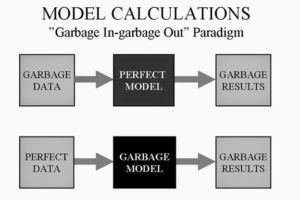
Understanding the parallels between feedback systems and mental processes unlocks a new way to approach self-improvement. If feedback loops govern both machines and the mind, we can consciously manipulate these mechanisms to drive positive change in our lives.
- Goal Setting and Adjustment: Just like a thermostat recalibrates to maintain a steady temperature, we can set specific goals and adjust our actions to stay aligned with them. Regular reflection acts as a “measurement” to track progress.
- Mindfulness and Emotional Regulation: Observing your thoughts—much like observing particle behavior—helps shift them. Mindfulness empowers you to notice intrusive or unhelpful thinking patterns and redirect your focus.
- Resilience and Adaptability: Feedback systems thrive on learning from disruption. Similarly, setbacks in life offer valuable information, allowing you to adjust and grow stronger over time.
- Creating Intentional Reality: If the observer effect influences outcomes at a quantum level, then paying conscious attention to specific goals or qualities in life can shape situations in your favor—whether through refined focus, openness to opportunities, or deeper clarity.
The observer effect doesn’t merely raise scientific curiosity—it stirs up rich philosophical debate. If the very act of observing reality alters its course, what does this suggest about free will? Are we, as conscious beings, active architects of our lives, or are we mere players in a deterministic universe where observation and change are inevitable?
To accept the observer effect also means grappling with the fluidity of reality—it’s an acknowledgment that nothing is fixed, not even ourselves. Our choices are not linear but instead a dance with infinite alternatives continually collapsing into the next moment. The deterministic view asserts that while natural laws govern outcomes, our conscious observations inject an unpredictable streak of agency into the cascade, blurring the dichotomy between preordained paths and autonomous control. This philosophical interplay fuels a dynamic dialogue between science, spirituality, and psychology.
Rather than existing as isolated fields, physics, psychology, and self-improvement can converge to illuminate a unified framework for understanding human potential. Quantum theory suggests that our thoughts influence reality, feedback systems teach us how to measure and correct our processes, and psychological principles show the capacity for awareness to foster growth.
Imagine applying this integrated model within daily life. When we align the discipline of physics with the introspection of psychology and the intentionality of self-improvement, we open the door to profound transformation—not through external change alone but by harmonizing inner and outer realities. The observer becomes the creator.
The intersection of quantum mechanics, feedback theory, and human consciousness reminds us that science and the human experience are not opponents—they are dance partners, intertwined in their exploration of galactic truths. Science provides the tools to measure and observe reality, while philosophy and spirituality interpret a reality that feels both wondrous and bewildering.
By uncovering how observation shapes outcomes, how feedback guides improvement, and how our conscious awareness opens portals to greater potential, we stand at the threshold of profound self-discovery. The systems around us—the atoms, the circuits, the machines, even our galaxy—mirror the systems within us. Both offer an invitation to reshape, recalibrate, and refine our lives with purpose.
And so, the question remains for you to ponder: in this grand interplay of science and consciousness within our Milky Way galaxy,
What reality will you choose to observe, measure, and create?
What can truly be measured?
What is left in the unmeasurable shadow of our tools and methods?
These questions might appear to belong in a philosophy or quantum theory class rather than a book about spirituality, yet they form the bedrock upon which all systems of understanding are built. Measurement, an act often regarded as mechanical and impartial, carries profound implications for how we define reality itself. Beneath its precision and utility lies a question too often sidelined in favor of practicality—what is the nature of that consciousness which observes, measures, and interprets? And most importantly, what is the nature of and how do we measure that which measures so that we may recalibrate our tools, if necessary?
To examine measurement is to untangle a web of assumptions about objectivity, perception, and existence. It brings us to a critical juncture—understanding its relationship with what some might call “foundational consciousness,” the substrate of awareness from which our capacity to know springs.
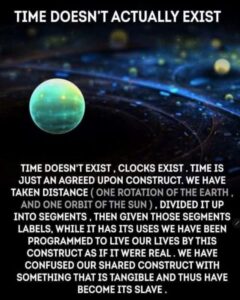
By its very act, measurement represents an attempt to impose boundaries upon the boundless. Consider the act of measuring time through the ticking hands of a clock—a sequence of discrete moments boxed and delivered as “minutes” or “hours.” Yet time itself, as lived and felt, is anything but discrete. It bends, swells, and contracts under the weight of perception—a dinner with loved ones feels fleeting, while an hour of dull labor stretches endlessly.
Herein lies the paradox. To measure is to collapse the infinite into the finite—to reduce the shimmering complexity of experience into useful, comprehensible units. It is a necessary artifice, but an artifice nonetheless. Measurement is not truth; it is merely an approximation, a scaffold upon which we attempt to hoist the elusive threads of reality.
And at the heart of that process is the observer. The human mind, the consciousness that creates the instrument, defines its purpose and interprets its results, cannot be removed from the equation. Foundational consciousness—the inner repository of awareness that recognizes and interacts with the outer world—is therefore woven into every “objective” act of measurement.
Quantum physics invites us into this space of philosophical wonder, challenging the presumed objectivity of measuring tools. Enter the previously mentioned observer effect, where particles behave differently under observation. The act of measurement collapses probabilities into singularities; possibilities into perceived realities. What was a range of potentials becomes, under the watchful eye of the observer, a defined “this” or “that.”
Is it not poetic that the universe itself seems to respond to consciousness? What we examine, we alter. What we neglect, we leave undefined—vague and free, as though awaiting the touch of awareness to take form.
This phenomenon reminds us of the fluid dance between subject and object, between seer and seen. Measurement, in this sense, is not an analytical process alone. Instead, it is a co-creative act, a conversation where reality and perception weave together into something tangible.
Might this insight not apply far beyond the subatomic? Could it suggest that every social system, every relationship, every word we form to measure the world, and every self-reflection, undergoes a similar effect? Does measurement, whether of time, progress, character, concept creation, or success inevitably reflect the conscious or unconscious frameworks of those who perform it?
If observation informs reality, then what is the state of the observer’s consciousness? This question transports us to a spiritual inquiry—into the nature of foundational consciousness itself. Can we measure that which measures?
Imagine consciousness as a mirror. Consider this potentially transformative thought: all that we see are projections of our intentions to see upon as yet undiscovered or undefined parts of ourselves.
Measuring tools, whether they count temperature, wealth, or well-being, are like etchings upon its surface. They create specific patterns, enabling us to see light differently. But these etchings are not the mirror itself. The reflective surface beneath shines beyond the constraints of grids and grooves.
Similarly, foundational consciousness is both vast and formless, a potentiality containing all possibilities. Our tools of measurement—though ingenious—are temporary layers projected over this limitlessness. Without understanding this, we risk mistaking the etchings for truth.
A great conceptualization of this concept is the Zen Buddhist truth that states that the finger pointing at the moon is not the moon. The word, the measurement, or the representation is only an image cast upon the fabric of reality and is not the reality itself.
This brings us to a challenge unique to our modern age. We worship the measurable, often at the cost of the immeasurable. Business leaders demand “metrics” of success, reducing human fulfillment to KPIs and quarterly reports. Individuals chase measurements of self-worth—bank balances, Instagram/Facebook likes, productivity software reports—as though life can be summed up by tidy graphs.
But these tools, for all their value, do not measure the soul. They cannot capture the ineffable—the texture of a quiet sunset, the depth of a healed wound, or the simple joy of being alive. Here, the art of measurement must evolve into the art of discernment.
To measure effectively, we must balance the practical with the existential. We must ask ourselves:
- What is worth quantifying? Productivity might be measured, but creativity must be nurtured without bounds.
- How should we measure? Metrics shaped by scarcity mindsets lead to competition, while those grounded in abundance foster collaboration.
- Who is the observer? Metrics often reveal more about the values of the measurer than the measured. Awareness of this opens the door to ethical, holistic measurement systems.
When approached with this awareness, measurement becomes something sacred, even meditative. It stops being a blunt tool of control and instead transforms into an invitation to understand.
Consider this analogy. A musician strikes a note upon a tuning fork, listening with care to its vibration. Such an act involves not only hearing the resonance but also the silence surrounding it. The sound becomes meaningful not simply because it is measured, but because the act of measuring is imbued with reverence.
Similarly, consciousness infused with mindfulness can illuminate measurement as more than mechanics. Whether we measure profits, performance, or personal growth, this understanding has the power to transform the relationship we have—not only with what we measure—but with ourselves and the world around us.
To reflect on foundational consciousness and the art of measurement is to challenge the rigid systems that dominate so much of modern thought. While measurement is necessary for structure, its limitations remind us of the vastness that lies beyond its reach. It is in this balance where true possibility resides.
The next time you measure something—whether it’s the length of your commute, the revenue of your company, or the moments of joy within a day—pause for reflection. Consider not only the number but also the awareness that perceives it. There, in that boundless awareness, you may glimpse a truth that no data point can capture.
And isn’t that the greatest measurement of all?
Chapter 5: Words as Measurements of Consciousness
Words are the way we categorize and name each new link between our sense of self and our environment. They are the measuring devices of consciousness, the containers for energy that bridge the gap between the knower and the known.
As the Greek philosopher Protagoras stated over two millennia ago, “Man is the measure of all things.” Through the energy of words and the tools of creative thought, we shape our reality. Naming is how our consciousness weighs and measures new ideas and experiences, inserting the unknown into a present context for understanding. Yet, this process has a limitation. Naming attaches a dynamic process to a fixed point in time, framed by our past, creating a consensus reality that may or may not be accurate.
Think of it this way: our symbols and letters are analogous to electrons in an electric circuit. An intelligent application of our perception, senses, knowledge, and intuition creates a conceptual “voltage,” or a difference in potential, between the knower (you or I) and the known (the object of our awareness). When we assign a word to a phenomenon, we complete a perceptual circuit. The knower and the known become one, mirror images of each other in potential difference. The higher the potential energy of the knower, the higher the energy imparted upon the newly known.
This is a true exchange of energy. Each verbal creation is a new iteration of our conscious self, adding to our sense of identity and increasing our potential as an energy source. But what serves as the “ground” potential in this circuit of consciousness?
Man Is the Measure of All Things (integrate with above)
As the Greek philosopher Protagoras stated over 2,000 years ago, “man is the measure of all things.” Malala Yousafzai, the great young Pakistani education and human rights activist, has stated that she once asked God for one or two more inches in height, but God laughed and made her as tall as the sky so that she could no longer measure herself. Yet, continue to measure ourselves, and each other, we must do—at our benefit and risk—until we find true freedom, and our spirits have finally joined with the energy behind Malala’s poetic and profound statement of being.
Words are measurement tools for the human mind. We often live a second-hand life, using the measurements—the words and concepts—provided to us by our family, culture, and history. These factors provide a vast base of knowledge that acts as a bridge, or a bonding jumper, to those possibilities we have not yet creatively accessed on our own. Yet are they formed of the substance of reality, of unreality, or an unsustainable synthesis of both?
We must ask some difficult questions:
- How do we weigh and measure our existence, and against which standard?
- What, within ourselves, enables us to establish a valid reference point for our measurements, so that there is consistency, not only within ourselves but across the human population we attempt to communicate with?
- How will you see yourself tomorrow if you find that infinity is the true measure of your being?
The human race has become the measure of all things through its use of the energy of words and language, and the tools of creative thought, intelligence, and technology. Naming is the way our consciousness weighs and measures new forms of life, ideas, and experiences in an attempt to insert the unknown and the mysterious into a present context for understanding. Naming tends to attach a dynamic process to a fixed point in time and space with a past frame of reference, and we all share in the confidence that the words we use have successfully represented that which we are trying to define.
By its very act, measurement represents an attempt to impose boundaries upon the boundless. To measure is to collapse the infinite into the finite—to reduce the shimmering complexity of experience into useful, comprehensible units. It is a necessary artifice, but an artifice nonetheless. Measurement is not truth; it is merely an approximation, a scaffold upon which we attempt to hoist the elusive threads of reality.
In Greek times, sin was an archery term which meant that the archer missed the bullseye. The “sin” was the distance between the bullseye and where the arrow landed. Naming is like an archer aiming his arrow at a moving target. Though the archer may have perfect aim, the target, like time itself, is always moving. He always just misses the mark, with his sin being the distance from the truth that his arrow has pierced. An aspect of “sin” in this explanation is our awareness becoming entrained with the movement of our thought to time itself. We will always “sin” while our thoughts remain hypnotized by the spell of time.
Yet we human archers never give up. In our vanity, we adjust the target in our minds to indicate that we have succeeded in hitting it. If we can find consensus with others and share in a collective misunderstanding, we have created more collective consciousness, or a “common knowledge.” Just because it is common knowledge does NOT make it accurate knowledge, however. We must keep this in mind and keep our minds open to new understandings, lest we institutionalize our assessments into permanent memories that are resistant to change. Remember, our memories are often like gods to us, always trying to convince us of their righteousness while incessantly pulling us back into a conceptual, and often illusory, past frame of view.
Our Ground of Being: Mother Earth
If observation informs reality, then what is the state of the observer’s consciousness? This question transports us to a spiritual inquiry—into the nature of foundational consciousness itself. Can we measure that which measures? Imagine consciousness as a mirror. Consider this potentially transformative thought: all that we see are projections of our intentions to see upon as yet undiscovered or undefined parts of ourselves.
We worship the measurable, often at the cost of the immeasurable. Business leaders demand “metrics” of success, reducing human fulfillment to KPIs and quarterly reports. Individuals chase measurements of self-worth—bank balances, Instagram likes, productivity reports—as though life can be summed up by tidy graphs. But these tools do not measure the soul. They cannot capture the ineffable—the texture of a quiet sunset, the depth of a healed wound, or the simple joy of being alive.
The Measurement of Reality: How We Create Our World Through Words and Observation
Introduction
Have you ever wondered why two people can witness the same event yet describe completely different experiences? Or why the words we use to describe our feelings seem to shape how we actually feel? These questions point to a fascinating truth about human existence: we don’t simply observe reality—we actively participate in creating it through the very act of measurement and naming.
Most of us live what could be called a “second-hand life,” relying on measurements, words, and concepts handed down by our families, cultures, and histories. These inherited tools provide a foundation of knowledge that connects us to possibilities we haven’t yet explored on our own. But here’s the critical question: are these tools made of genuine reality, or are they a mixture of truth and illusion that might actually limit our understanding?
This exploration will take us on a journey through the fascinating intersection of science, consciousness, and human experience. We’ll discover how the simple act of observation changes what we observe, how our words create the reality they attempt to describe, and why understanding these processes is essential for anyone seeking authentic self-knowledge and growth.
The Art of Measurement: More Than Numbers
What Does It Really Mean to Measure?
Measurement seems straightforward—we count, weigh, and quantify things to understand them better. But when we dig deeper, measurement reveals itself as something far more complex and mysterious. Every time we measure something, we’re actually imposing boundaries on the boundless, reducing infinite complexity into manageable, understandable units.
Think about measuring time with a clock. We break the flowing river of experience into discrete moments called “minutes” and “hours.” Yet time as we actually experience it behaves very differently. An hour spent with someone you love feels like minutes, while an hour in a boring meeting stretches endlessly. The measurement and the reality don’t match up.
This reveals a fundamental truth: measurement is not reality itself, but an approximation—a useful tool that helps us navigate the world, but one that can never capture the full picture.
The Observer Changes Everything
Modern physics has discovered something remarkable that challenges everything we thought we knew about objective measurement. In quantum mechanics, scientists found that particles behave differently when they’re being observed. This is called the “observer effect,” and it suggests something profound: the act of watching changes what’s being watched.
Consider the famous double-slit experiment. When scientists observe electrons, they behave like particles. When no one is watching, they act like waves. It’s as if reality itself responds to consciousness, changing based on whether someone is paying attention.
This isn’t just true in the microscopic world of atoms and electrons. Think about how you behave differently when you know someone is watching you, or how focusing attention on a problem in your life often leads to new solutions appearing. The observer effect might be a fundamental principle of existence: what we examine, we influence; what we focus on, we help create.
The Power and Limitations of Words
How Language Shapes Reality
Words are our primary tools for measuring and understanding experience. They’re like containers that hold energy and meaning, allowing us to share our inner worlds with others. When we name something, we’re trying to capture an unknown experience and fit it into our existing understanding.
But here’s where it gets interesting: naming tends to freeze dynamic processes into fixed points in time and space. When we call someone “angry,” we’re taking a flowing emotional state and turning it into a seemingly permanent label. The word becomes a snapshot of something that’s actually constantly changing.
The ancient Greeks had a word for “sin” that originally came from archery. It simply meant missing the bullseye—the “sin” was the distance between where the arrow landed and the target’s center. This gives us a powerful metaphor for how language works.
When we use words to describe reality, we’re like archers shooting at a moving target. Even if our aim is perfect, the target—like life itself—is always moving. We always “miss the mark” to some degree, and the distance between our words and the truth they’re trying to capture is our “sin.”
The problem comes when we adjust the target in our minds to convince ourselves we’ve hit it perfectly. When we find others who agree with our version of reality, we create “common knowledge.” But just because knowledge is common doesn’t make it accurate.
Our words and their meanings change over time as we strive for more accurate understanding. What we called “mental illness” fifty years ago might be understood as trauma responses today. Scientific terms evolve as our knowledge deepens. Even our understanding of ourselves shifts as we grow and learn.
This evolution is natural and necessary. The key is to keep our minds open to new understandings and resist turning our current beliefs into permanent, unchangeable monuments.
Our memories often act like gods, trying to convince us of their righteousness while pulling us back into outdated ways of seeing.
Now that we understand the power of the word, and our memories, let us consciously engage with them, so that we become the master of our words, and not the puppets of them.
Consciousness and the Art of Measurement
- What does it mean to truly measure reality and peer into the intricacies of consciousness?
- Are the tools we use for both endeavors qualified to search for the truth of ourselves, our relationship with the Milky Way Galaxy, and the Universe that contains and sustains it?
These questions have long fascinated me. Through my experiences, I have come to view the act of measurement as more than a scientific or procedural practice—it is a deeply human endeavor intertwined with our understanding of existence. Unlocking this understanding of the fundamental attribute of consciousness offers insight into the workings of reality. It reveals knowledge that, while often hidden, is accessible to those seeking it.
Before exploring the universe, it’s logical to first understand the observer. By recognizing our role as observers, we can adjust our perspective and view the infinite universe more authentically, rather than seeing it as a mere reflection of ourselves. Clarity is impossible when peering through a fog. This fog might consist of cultural and familial conditioning, unresolved traumas, or the inevitable adaptations to conventional or common knowledge.
In a university physics class, I encountered the mutual influence between human consciousness and the art of measurement, where I was exposed to quantum theory and the observer effect. This was my first exposure to the perplexing truth that observing a process influences it on a fundamental level. A corollary truth was that the act of measurement also changes what is being measured, which, at first glance, is counterintuitive.
The second time I was exposed to the relationship between the inner workings of the mind and objective processes was in a process control theory class in 1992, when I was an apprentice electrician. The course introduced me to feedback and feedforward control systems designed to maintain order, achieve goals, and correct disruptions. I was struck by their resemblance to the inner workings of the human mind. Our thoughts and actions follow similar principles, constantly adjusting to maintain balance, predict outcomes, achieve ambitions, readjust direction as needed, and respond to life’s uncertainties.
When I shared this observation with the instructor, he was receptive and praised the insight. He explained that while many of us rely on the practical applications of concepts like electrical theory in our daily lives, only a few take the time to explore its more esoteric principles. This conversation left a lasting impression on me. It reinforced an important truth: the profound knowledge of reality’s systems is often hidden in plain sight, not because it is purposefully obscured, but because most of us do not pause to look beneath the surface.
The key takeaway is clear—there’s no secret handshake needed to access this knowledge. The doors are open to anyone ready to observe, reflect, and seek understanding. However, as that teacher humorously pointed out, you’ll need an electrical license in Oregon to legally profit from its application in electrical construction.
Electricity, like language or even our connection with Mother Earth, is a foundational phenomenon. It requires no belief, only an understanding of its potential to either empower us or bring us harm if we remain ignorant of its supporting laws.
The fundamental unit of electricity is the electron, a negatively charged particle which, when moving in a coordinated fashion, will do a multitude of forms of work for us. An electron being negatively charged does not imply a value assessment; it is only a convention adopted to describe its voltage, or difference in potential, relative to a neutral or positively charged source.
Electricity is the flow of electrons driven by a difference in potential energy and a voltage source. This energy flows from the source through the “line side” of a load, passes through the load, and returns to the source via a common connection called the ground. This completed circuit allows energy from the voltage source to travel through and return, creating a continuous loop. As with any electrical circuit, there is always conductor resistance that impedes the flow, so the load never receives 100 percent of the source energy.
Energy cannot be created or destroyed, so in this simplest of electrical circuits, whatever energy is delivered by the source must be utilized by both the load and the resistance of the conductors that carry that energy throughout the closed loop. Ohm’s Law states that the sum of all voltages in any closed circuit must be zero. By Law, it is verified that the energy given by the source is utilized by the load and the conductors. To complete this simple circuit understanding, it is by convention that the ground is always connected to the negative terminal on a voltage source and to the load side of the resistor. If there is a difference in potential between the two “grounds,” there will be circuit unpredictability and unexpected degradations of performance.
Similarly, our symbols and letters are analogous to electrons in an electric circuit. They are fundamental units of consciousness and require an intelligent application of our perceptual capacity working in concert with our senses, our previous knowledge, our emotions, our insight, or even our intuition upon any object of our awareness. And guess who, or what, becomes the source for voltage in this analogy? And what may become the conductor resistance?
There is a conceptual voltage, a difference in potential, created by the action of the knower (you or I) attempting to understand the known (that which we are witnessing or perceiving). We assign a symbol, a string of characters, or a word to the phenomenon observed. This character stream is impressed upon our new “known,” which is equivalent to a load in our simplified circuit of human consciousness. This perceptual creation makes us, the knower, the electrical equivalent of the previously mentioned voltage source present in all active circuits. Like in a standard electrical circuit, there is also a reference ground that must be fundamentally connected to the voltage source—which is established or ignored by us.
The new object of perception becomes part of a perceptual circuit and reflects the difference in potential energy between the knower and the known. In this analogy, the circuit is balanced when the energy of the understanding of the knower becomes equivalent to the energy it takes overcoming the conductor resistance and the energy of the known. The higher the potential energy of the knower, the higher the energy that will be imparted upon the newly known. In other words, the knower and the known become one, minus the resistance, though nearly mirror images of each other in potential difference. Remember Ohm’s Law? The sum of voltages in any closed circuit must be zero, as energy cannot be created or destroyed. Even in our human circuit of naming and understanding, a form of Ohm’s Law is working.
Yet, two questions remain:
- What is the equivalent in consciousness to ground potential? and
- What is the equivalent in consciousness of the circuit or conductor resistance?
The answers to these two questions are going to require the reader to attain more knowledge, or there will be too much resistance to successfully transfer my knowledge to you (ooh, big hint to question number two there!).
Submit 3-4 meme sequences showing
- 0. Two babies lopking at each other and smiling
- 0. One parent talking and a baby
- 1.one parent and a 2 year old Teaching the alphabet
- 2.two 6 year olds Sharing conversation
- 3. Two adults sharing knowledge
- 5. Two adult babies seeing each other as equals and smiling
Navigating the Infinity Within Zero: A Reflection on Ego, Universe, and Existence
Words are how we categorize or name each new connecting link between our sense of self and our environment. The word we create out of our letters and symbols and use to represent the new known becomes the equivalent in consciousness of electricity, completing a circuit to connect our knowing self to the new known. This is an actual exchange of energy. Each verbal creation is a new iteration of our conscious self; it adds to our sense of self, to our potential energy as a source, and to the vast accumulation of knowledge we already possess. Our accumulation of knowledge, literally and figuratively, increases our actual energy potential as human energy sources.
