Jim Henson’s 1982 cinematic masterpiece, The Dark Crystal, remains a profound anomaly in the realm of fantasy filmmaking. Far removed from the colorful, lighthearted puppetry of his usual work, this film presents a dark, meticulously crafted universe brooding with spiritual tension. It stands as a brilliant allegory for the fractured human psyche, visualizing the painful journey toward spiritual and psychological wholeness.
Beneath the intricate animatronics and stunning world-building lies a deep well of philosophical inquiry. The film maps out a cosmos governed by ancient esoteric principles, reflecting the delicate interplay of light and dark within the human soul. It asks us to confront the terrifying realization that our deepest evils and our highest virtues share a common, hidden root.
By examining the film through the lenses of Jungian psychology and Eastern philosophy, viewers uncover a timeless map for self-discovery. This exploration reveals how the narrative transcends mere fantasy to offer a compelling framework for understanding the divine feminine, the shadow self, and the cosmic order of existence.
The World of Thra
The planet Thra is a living, breathing entity suffering from a deep spiritual sickness. A millennium ago, the shattering of the titular Dark Crystal caused the ruling beings, the urSkeks, to split into two distinct races: the cruel, decaying Skeksis and the passive, contemplative Mystics (urRu). This catastrophic event plunged the world into decay, mirroring the environmental and spiritual degradation that occurs when harmony is lost.
Thra represents the external manifestation of an internal state. The fractured crystal is the broken center of the world, a direct reflection of a collective soul torn apart by ego and attachment. The planet’s blight is a physical symptom of a metaphysical disease, illustrating how a departure from natural unity inevitably breeds suffering and ecological collapse.
Characters and Archetypes
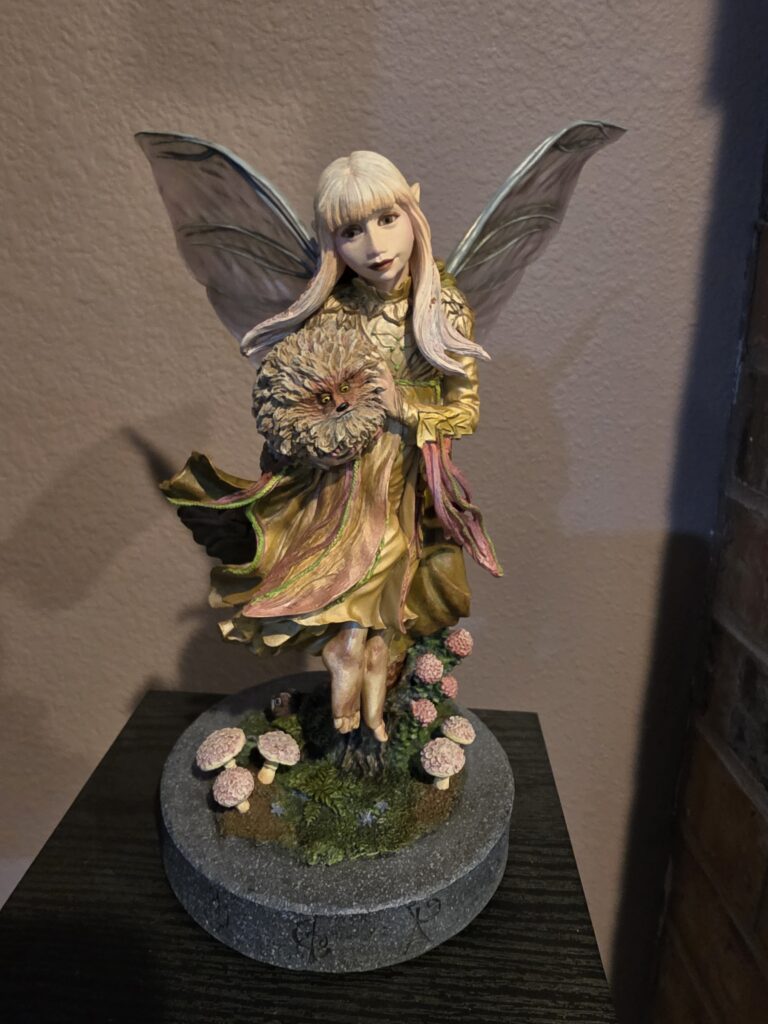
At the center of this cosmic drama are two Gelflings: Jen and Kira. Jen embodies the traditional archetype of the hero. He is the active seeker, burdened with the destiny of finding the lost crystal shard and restoring the world. Yet, Jen’s journey is incomplete without his counterpart.
Princess Kira emerges as a potent manifestation of the divine feminine. She possesses a profound, intuitive connection to the natural world. Kira communes with animals, understands the secret languages of Thra, and ultimately reveals that she has wings—a trait exclusive to female Gelflings, symbolizing spiritual elevation and freedom. She does not merely assist Jen; she provides the essential intuitive wisdom and nurturing strength required to navigate the treacherous path ahead. Together, they form a complete human psyche, requiring both active pursuit and receptive intuition to achieve ultimate realization.
Jungian Psychology in Thra
Carl Jung’s theories map perfectly onto the spiritual geography of Thra. The Great Conjunction and the healing of the Crystal serve as an allegory for individuation—the psychological process of integrating the conscious and unconscious parts of the mind to achieve true selfhood.
The Skeksis represent the shadow: the repressed, greedy, and power-hungry aspects of the psyche that refuse to acknowledge their own mortality. Conversely, the Mystics represent the overly passive, detached spiritual ideals that, while pure, lack the vitality to enact change in the material world. Jung taught that denying the shadow leads to destruction, while identifying entirely with the light leads to stagnation. The ultimate goal of the film is not the destruction of the Skeksis, but their reintegration with the Mystics. Wholeness requires the courageous acceptance of our darkest parts.
The Tao of Existence
This necessity for integration aligns seamlessly with the Taoist concept of Yin and Yang. The Tao dictates that the universe operates through the dynamic balance of opposing forces. Light and dark, activity and rest, creation and destruction are not absolute enemies but interdependent realities.
In The Dark Crystal, the tragedy of Thra is born from the illusion of separation. The Skeksis and Mystics believe they are separate entities, yet an injury to one immediately manifests as a wound on the other. This interconnectedness reflects the Taoist understanding of the cosmos: pulling one thread alters the entire fabric. Healing the world requires honoring this duality and realizing that true peace comes from balance, rather than the total eradication of the opposing force.
Symbolism and Allegory
Every element of Henson’s world pulses with symbolic resonance. The Crystal itself acts as the Axis Mundi, the center of the world and the core of the self. When the Crystal is dark, the self is ignorant and fragmented. The missing shard represents the specific, painful sliver of awareness needed to awaken the unconscious mind.
When the shard is finally restored, the Skeksis and Mystics merge back into the unified UrSkeks. The dark is not defeated; it is absorbed and illuminated. The healing of the Crystal is the healing of the divided self, a powerful metaphor for spiritual enlightenment. The film teaches that we must confront our inner Skeksis and awaken our inner Mystic, uniting them through the compassionate energy of the divine feminine.
Aughra, the ancient astronomer who guards the shard, functions as the archetype of the Crone or the Wise Old Woman. She operates outside the binary of the Skeksis and Mystics, keeping her eyes fixed on the stars and the larger cosmic cycles. She reminds the characters, and the audience, that current suffering is but a small fraction of a much grander, eternal rotation of celestial bodies and spiritual eras.
Healing the Crystal Within
The Dark Crystal invites viewers to look inward and examine their own inner fractures and imbalances. The narrative suggests that the path to spiritual maturity does not involve fighting an external enemy, but rather undertaking the difficult work of internal integration. The narrative warns against the dangers of unchecked ego and passive detachment, urging us to seek the middle path of the Tao. By embracing both the active, logical mind and the intuitive, nurturing energy of the divine feminine, we can begin to mend the fractures within our own lives. The film’s enduring message is a call to recognize our profound interconnectedness with all things.
By embracing the divine feminine, confronting the shadow, and recognizing the interconnected nature of our reality, we can begin to mend our own broken centers.
For those seeking to deepen their understanding of their own psychological landscapes, returning to the world of Thra offers profound rewards. Rewatch the film not just as a marvel of practical effects, but as a mirror reflecting the hidden depths of the human soul. Allow the journey of Jen and Kira to inspire your own path toward individuation and cosmic balance.
