Chapter 48: A Connection to the Infinite? – Psychedelics and Self-Discovery
Imagine for a moment that the universe operates on an unlimited bandwidth of information, energy, and consciousness. It is a hum of infinite voltage, a ceaseless transmission of life, love, and death. Yet, our human minds, by default, are tuned to a very narrow frequency—the restricted channel necessary for survival, navigating daily routines, and perceiving a linear progression of time. We operate like old radios, picking up only the strongest, most local stations, unaware of the symphonies broadcasting on the frequencies just beyond our reach. This is the station of ordinary reality.
However, deep within the human spirit resides an inexhaustible curiosity to adjust the dial, to explore the static and the harmonies that lie just beyond our standard perception. We yearn to understand the grid we are plugged into. Throughout history, certain substances have served as technologies of the soul, tools for accessing these wider frequencies. As we explore the vast collection of concepts inherent in this book, we must look at how we maintain the circuitry of the soul and the profound potential of psychedelics not as mere drugs, but as tools for calibrating our internal circuits to handle the full current of reality.
The Cosmic Circuitry and the Human Receiver
My intention here is to explore the profound potential of these substances to unlock healing, insight, and a more expansive experience of reality. Psychedelics have long fascinated humanity, from their integral role in ancient cultural rituals to the cutting-edge neuroscience of today. Substances like psilocybin, LSD, MDMA, and Ayahuasca possess the potential to unlock profound states of healing and insight, but with great power comes great responsibility. The modern resurgence of interest in their therapeutic applications is not just a fleeting trend; it represents a paradigm shift in how we understand and approach mental health, personal growth, and the very nature of consciousness.
Our culture often rewards avoidance and distraction, encouraging us to turn away from suffering or to numb it into silence. We are taught to keep the voltage low, to manage the currents of our lives within a safe, predictable range. Yet, as I discovered through painful trial and error, lasting healing demands the courage to face these inner ruins—not to wallow in the debris, but to clear space for new growth. Each insight, each honest inventory of the self, is like a chisel against the stone of our hardened defenses. When this work is undertaken together—in groups, in families, in classrooms, or spiritual communities—healing ripples outward, increasing the capacity of the entire circuit, transforming not just the individual, but the collective.
In writing this, I have often returned to the metaphor of connection. We are, in essence, biological conduits for a consciousness that far exceeds our physical containment. However, for most of my life, I was operating with a governor on my engine, a resistor in my wiring that prevented me from accessing the full spectrum of existence. One lesson I return to time and again is that true insight—the kind that rewires the system—is not merely intellectual. It is experiential. It is a product of quiet contemplation, open conversation, and mindful presence.

My own journey into these altered states began not with philosophical intent, but with the raw, untamed curiosity of youth. In the early 1970s, during my high school years, I used LSD (lysergic acid diethylamide) nearly twenty times. The first instance was almost accidental, a serendipitous glitch in my routine. I was fifteen, and my sister Pam’s friend had given me a small pill saturated with LSD to pass along to her. Pam, having no desire for it, returned it to me. Fearful yet intrigued, I scraped off a mere quarter of the pill and ingested it before heading to the downtown Portland library.
About an hour later, a feeling I had never known washed over me. It was pure euphoria—a profound sense of peace and an unconditional love for everything and everyone. At that tender age, having never experienced such a powerful current of energy, I felt I had stumbled upon the promised land. The dose was too low for visual or auditory hallucinations, which was perfectly fine with me. That night, sleep came late as my mind remained on high alert, vibrating with a new frequency, but there was no hangover, only the lingering memory of a beautiful, risk-taken peace.
This initial, gentle introduction was a stark contrast to later experiences. I had several extraordinary marathon acid trips of ten hours or more that exposed the unlimited creative and loving potential of the human mind, it is too bad I have no way to present the audio and video, and synesthesia that I experienced.
One time, I tried DMT, which was then called the “businessman’s LSD” because its effects lasted only a few hours compared to the all-day journey of an acid trip. Under its influence, I felt an incredible, almost telepathic kinship with every stranger I met. The usual barriers of fear and social anxiety dissolved, replaced by a sense of deep, unspoken understanding and connection. It was a chemical preview of the more natural, earned sense of unity that would come to me fifteen years later, after a long and arduous recovery from addiction.
Psychedelics, for me, were never about self-destruction. They were a delightful and eye-opening vacation from the dark certainties and crystallized structures of thought that characterized my troubled early life. They revealed a vast, creative beauty embodied within the unexplored regions of my consciousness. However, I lacked the spiritual and emotional maturity to integrate these profound experiences. My ego, while temporarily suspended, remained unexamined. It was a thrilling ride, but the real work was yet to begin.
I found that as I grew older, the experiences became less positive. In 1979, I used LSD for the last time. The trip was difficult, and it took two full days for me to feel normal again. During that second day, a terrifying fear gripped me: that I might be stuck forever in that anxious, in-between state, a short-circuited wire humming with panic. I was never tempted to use LSD again.
One of the most critical concepts in the responsible exploration of psychedelics is that of “set and setting.” First coined by Timothy Leary in the 1960s, these terms refer to the internal mindset (“set”) and the external physical and social environment (“setting”) in which the experience takes place. This isn’t a modern invention; ancient cultures understood this implicitly. The use of Ayahuasca in Amazonian tribal ceremonies, for example, is embedded in rituals, community, and the guidance of a shaman, creating a sacred container for the journey.
Modern research overwhelmingly supports this ancient wisdom. A favorable set and setting can significantly enhance the therapeutic benefits of psychedelics while minimizing the risks. This is not a reckless endeavor. Without a container of safety and support, the dissolution of the ego can be terrifying rather than transformative.
- Mindset Preparation (Set): Before embarking on such a journey, it is crucial to engage in practices like meditation, journaling, and setting clear intentions. What are you seeking? Healing? Insight? Connection? A clear intention acts as a rudder in the vast ocean of consciousness.
- Controlled Environment (Setting): The physical space should be safe, comfortable, and free from interruptions. The social setting is equally important; surrounding yourself with trusted, supportive individuals who understand and respect the process is paramount.
While the psychedelic experience itself can be transformative, the real work begins afterward. This is the process of integration—reflecting on the insights gained and weaving them into the fabric of daily life. Journaling, therapy with a trained professional, and sharing with a supportive community are all vital tools for ensuring that the journey leads to meaningful and lasting growth.
The Resistors: Alcohol and Cannabis
As we discuss the tools for accessing the universal bandwidth, we must also address the substances that often act as resistors, dampening the signal. The difference between expansion and escapism lies entirely in the intention of the user and the nature of the substance.
If psychedelics are the keys to the cosmos, alcohol is often the grease of the terrestrial realm. It is a fine social lubricant, capable of softening the rigid edges of social anxiety and allowing conversation to flow with greater ease. There is a certain camaraderie found in the sharing of wine or spirits, a ritual as old as civilization itself. However, conscious imbibing is a discipline that few master. Alcohol is seductive in its ability to numb, and therein lies its danger. While it may lower inhibitions, it also lowers our vibrational frequency if used without vigilance. The health issues that plague the habitual over-drinker are physical manifestations of a spiritual dampening. One must ask: Am I drinking to connect, or am I drinking to forget?
I drank to drunkenness every time I consumed alcohol from ages 15 through 30. I abstained from any alcohol use until 2006, when I started drinking beer again. I stopped drinking again in 2009, upon also quitting pain killer use. I drank alcohol again on a world cruise in 2023, consuming alcohol nearly every day on a 107-day around-the-world tour. I had a lot of great times with friends, and strangers, on our ocean voyage. Yet, upon rejoining my normal life, I no longer drank alcohol, other than an occasional drink with my wife Sharon. When I do drink alcohol, I mindfully embrace the whole experience, so that a historical, unconscious habitual response to alcohol does not take over. Alcohol is a dangerous drug, and our embrace of it and response to it needs to be done fully consciously and considerately.
Then there is cannabis, a plant revered by many cultures as a bridge to the divine. Many proclaim its ability to enhance spiritual connection and soften the harshness of reality. I do not deny this potential for others; however, the philosophical journey requires radical honesty about one’s own constitution. In my own exploration, I have found that cannabis does not liberate, but rather obscures. While it may offer relaxation, it extracts a heavy toll: the repression of my desire to create. The creative impulse is the deepest truth of the human experience, and for me, cannabis throws a heavy blanket over that flame. It hinders the sharing of my deepest truths with others, replacing active expression with passive observation.
Marijuana stunted my emotional and spiritual growth in the 1970s, when I smoked it nearly every day. I was an anxious and insecure teenager, and I would have been much better off had I stayed away from marijuana and dealt directly with the challenges of growing up. After total sobriety began in 1987, my mind quickly matured to the level it could have been, and should have been, years earlier.
For decades, I was satisfied with the spiritual connection I had cultivated through meditation, mindfulness, Twelve-Step work, and healthy living. But life has a way of presenting new challenges, new areas where the wiring has frayed. In October of 2022, after years of my wife Sharon and I studying the therapeutic applications of psychedelics, I attended a 14-hour spiritual retreat where an elixir made of five mushrooms, including psilocybin, was administered. It was the first psychedelic I had used since the 1970s and the most powerful and transcendent experience I had had in many years, including those manifested through meditation and nature walks.
To understand the value of this, we must look at how we typically process reality. We usually filter our existence through language. If I see a tree, my brain instantly labels it “tree,” and in that labeling, I cease to truly see the unique living entity before me. I see the concept, not the reality. Trauma and cultural conditioning operate the same way; they are linguistic and conceptual loops that tell us who we are before we have a chance to experience ourselves directly.
The true gift of the psychedelic experience is the occurrence of non-verbal insight. This is the capacity to see something directly, without the interference of the word or the concept. It is a form of “direct viewing” that bypasses the ego’s editorial department. When we access this state, we are not thinking about the universe; we are experiencing our continuity with it. This is transformative because it has the potential to change our neurobiological system.
Trauma often locks the brain into specific, rigid patterns of firing—high-alert loops that limit our consciousness to a bandwidth of survival and fear. The psychedelic experience, by dissolving these rigid networks (often referred to as the Default Mode Network), allows the brain to communicate in novel ways. It expands our consciousness away from the limitations wrought by trauma and cultural conditioning, allowing us to perceive the “is-ness” of things without the “ought-to-be” of our social programming. In this expanded state, the electrician is no longer just fixing a loose wire; he realizes he is part of the grid itself.
The Short Circuit: The Autoimmune Realization
During the retreat, Espree, the facilitator, after a period of deep meditation and extensive personal sharing, asked me a simple yet profound question: “Why do you not recognize yourself as a beautiful person?”
I replied from my conditioned mind. I told him that while I knew of my interior beauty and the beauty of my world, my body now showed the world anything but that. I am in my late 60s. I have psoriasis, skin cancer scars, and wrinkles on my neck that I often thought Botox would help. My body image acted as a static interference, keeping me from acknowledging the truth Espree wanted me to see—a truth my wife, Sharon, concurred with upon my return home.
I had long ago left that part of my biological and cultural self that sought a “perfect” body in a quest to be attractive to the opposite sex. My search had ended in that regard, as Sharon has been my life partner since 1989. Yet, I had forgotten to consciously cultivate my love for my body. I had trained it to a level of incredible fitness in previous years, yet trashed my leg bones with numerous stress fractures because of overuse. We crossed many mountains and finish lines together, often in a triumphant manner. Yet, I had failed to express gratitude for the continued miracle of its existence as the vehicle for my version of consciousness.
The facilitator stated that if I only perceived my beauty to be an interior phenomenon, I was still just living out of my “head space.” True beauty, she argued, is of THE WHOLE BEING—body, mind, and spirit. It is a reflection of our connection with Mother Earth and the Universe. We are all of immeasurable beauty and significance, and these two qualities must forever remain within our hearts, independent of our biological, social, and personal agendas, and—crucially—independent of the uninformed opinions of others.
If we do not claim this, our failure to conform to the expectations of others creates “internal informants.” These are the tricksters of the psyche. They fool us into accepting disfigured visions of ourselves, convincing us that the innate perfection of life has somehow skipped us.
Wow. That was quite a call on me.
It was in this moment that I saw it with stunning clarity: I have an autoimmune disease.
I am attacking myself.
This self-attack was manifesting physically, but its roots were in a false understanding of my body, a deep-seated self-negation born from early life trauma and reinforced by cultural conditioning. This self-negating fact was so normalized, so close to my own perception, that I had accepted it as a foundational subroutine of my identity. I was attacking myself through a false understanding of my body and its appearance to myself and to others. Should I have known better? Perhaps. But as I am an evolving consciousness, by remaining open to the wisdom of others, my own improving insight is enhanced and supported by other awakening souls and their compassionate feedback.
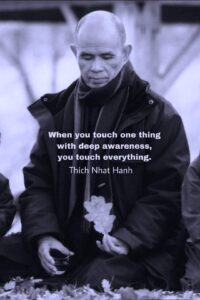
Mindfulness and meditation help keep us connected to the “what is,” and the light of that awareness can bring transformative changes to the “seer” and to our “seeing.” The psychedelic experience acted as a supercharger for this mindfulness, allowing me to see the mechanism of the attack in real-time. I saw the neural pathways of self-rejection lighting up, and for the first time, I had the choice not to travel down them. The psoriasis cleared up within six weeks, eliminating the need for $60,000-a-year biologic treatments like Skyrizi injections.
This struggle with the physical vessel is not unique to me. I was reminded of Marsha Feldman (deceased), a pulchritudinous friend of mine from the 1980s. Marsha had rejected me as a lover because I did not have the classic handsome characteristics that her heart had demanded of all her previous lovers. I was not emotionally impacted by her assessment, as I treasured her platonic friendship. Yet, I had to ask myself: Was the indifference that I exhibited only a façade? Was it an actual manifestation of some deeper denial, self-neglect, or even hatred?
Marsha had the most perfect body and face that I had ever seen. She was the picture of what society told us was the “ideal bandwidth” of human existence. Yet, even she was not happy. She suffered deeply. She even visited with her Rabbi several times, trying to get to the root of her unique problems. She, too, had an autoimmune disease and wanted her Rabbi to explain to her how she could find God and be healed of her suffering.
Her Rabbi told her, quite succinctly, that he had wasted much of his own life searching for God through scripture and laws, and he never found the Truth there. It was not until he began an intense exploration of himself that he finally arrived at the doorstep of the Truth. He advised Marsha to learn about herself—her judgments against others and against herself. He told her she must explore the darkest corners and secrets of her life: her relationship to her body, her friends, her enemies, her family, her loves, her hatreds, her employment, and her connection with Nature.
Marsha had to first see what “God” isn’t to find the path to what “God” is.
Her Rabbi stressed that if Marsha was to find the healing balm that God could provide, she had to first find herself. The Rabbi’s message is one for the ages and one for all of us. Marsha’s Rabbi recommended that even though she was not an alcoholic, she should try any twelve-step support group to begin exploration of her life at a deeper spiritual level. That is how I met her, at the 1987 International New Thought Alliance conference in Portland, at a talk given by the world-famous expert in twelve-step work, Jack Boland.
Jack Boland was a true master. Several years later, at another Portland speaking engagement, he had the temerity to tell me that I needed more pain in my life to motivate me to want to dive deeper into my true self and recovery. At the time, it felt harsh. Now, I see it as an electrical surge meant to blow a stuck fuse, forcing me to check the wiring.
Another great insight was gained through the retreat and feedback process, one that directly connects to the production of this very book. While in my spiritually adjusted state—a state of higher consciousness and wider bandwidth—I was able to see, without judgment, one of my last remaining attachments to ego identification, other than to my body.
It was my body of writing.
The same harsh judgment I heaped upon my body, I realized, I also directed at my body of writing. I had been trying to make my work more “presentable” to others, falling ill to the need to cater to external perceptions. The parallel was undeniable: my face and my writings both needed a “Botox treatment” to be acceptable. I saw how I had tried to sanitize my words, hoping to hide the evidence of our living, of our aging, of our suffering. But in doing so, we cut off the flow. We reduce the bandwidth. We present a plastic version of the universe rather than the electric, chaotic, beautiful truth of it.
In my most exalted state, I saw that my writings, just like my body, were suffering from an autoimmune disease—the disease where I permitted myself to attack myself for the failure of my self to make my appearance to others more pleasing.
This insight, delivered with the force of revelation under the influence of the medicine, was not just intellectual; it was experiential. I saw that my body and my writings are temporary containers for an infinite spiritual potential, created to serve as channels for its expression. The pain of my past, once an enemy, was now an unlikely teacher. This book is my way of rejecting gimmicky “creative botox” approaches to writing. This book has seventy chapters, and I did not hold back one iota in my “need” to protect the reader. It is up to the reader as to how far they might want to follow these verbal pathways.
The Science of Connection
This personal story mirrors a broader shift in the scientific and medical communities. Emerging research is validating what many have known for decades: psychedelics hold immense therapeutic potential. Clinical trials are demonstrating the efficacy of psilocybin, MDMA, and LSD in treating a range of mental health conditions, offering new hope where traditional treatments have failed.
- Depression: Studies show that psilocybin-assisted therapy can lead to significant and sustained reductions in treatment-resistant depression.
- PTSD: MDMA-assisted therapy is showing remarkable success in helping individuals process and heal from deep-seated trauma, even in chronic, treatment-resistant cases.
- Anxiety and End-of-Life Care: For terminally ill patients, psychedelics have been shown to dramatically reduce or even eliminate the “death terrors” that so often accompany a terminal diagnosis, providing profound spiritual guidance and a sense of peace.
These are not miracle cures. Professional guidance in a controlled environment is essential. Psychedelics are not a one-size-fits-all solution; thorough medical and psychological assessments are necessary to tailor the approach to each individual. Bill Wilson, the co-founder of Alcoholics Anonymous, engaged in psychedelic therapy for his own chronic depression twenty years into his recovery, believing it could help those who struggled to find a connection to a Higher Power. Esteemed healers and thinkers like Deepak Chopra, Gabor Maté, and Dick Schwartz are now firm proponents of this form of healing.
The Lamp and The Path
My journey has taught me that these substances are neutral tools; they are keys. It is the hand that turns the key—and the intention behind it—that decides whether the door opens to a sanctuary or a prison. Mindful use demands brutal honesty about our motivations. Are we seeking to widen the bandwidth of our experience to let more joy in, or are we trying to drown out the noise of our own suffering?
If you feel called to this path, I urge you to proceed with the utmost care and respect. Research this subject as if for a graduate degree. Seek out trained facilitators and therapists who can provide a safe and supportive container for your journey. Beware of the consequences of bringing a highly chaotic mindset to this process; I recommend that you have already experienced a measure of healing, lest you find only more chaos.
Socrates warned that “the unexamined life is not worth living,” and I would add that examination requires not just intellect but an open heart—a willingness to see and feel what we have long buried. My own odyssey has convinced me that insight and mindfulness, met with self-compassion, form the lamp and the path.
If you are a spiritual seeker, a philosopher, an educator, a mental health professional, or someone in recovery, let this be your invitation. Healing begins in the honest, unvarnished acceptance of our full humanity—in the courageous sharing of our imperfect stories. It begins when we stop attacking ourselves for being human.
When we reclaim our experiences and write new, authentic narratives, we not only transform ourselves but also shine a light that beckons others toward their own wholeness. The universal bandwidth is vast, but it is only through lucid awareness that we can truly begin to hear its music. Let the word—truth, love, healing—dwell within us, lived and embodied. As we honor our own stories, frailties, and insights, we walk together toward the oneness and peace we all deserve, and—if we’re lucky—catch a glimpse of the miracle of simply being here, awake and alive, plugged into the infinite current of the universe.
